Augustfest

Augustfest

August.
Klangvolles,
sattgoldnes Wort,
beinah orangerot.

Abend.
Wort voll blauer Ruhe,
verborgener Kraft
und süßer Verheißung.

Norden.
Ein weites graues Feld
im Winter… im Sommer aber
ein ganz grüner Horizont.

Augustabend im Norden.
Ein Fest ist uns bereitet,
herrlich wie ein Hochzeitstag.
Schau dich doch um.

Christina Egan © 2016


Some more thoughts on the north of the planet… In winter all is grey, sky and land and water alike; but in summer, the world shines in blue and green and golden. This is before you look at the flowers and fruits, and the places and things whose colours show again, and the people who have come outdoors again. Winter lasts six months in Southern Europe, like in the myth of Persephone, but seven months in Central Europe and perhaps nine in Northern Europe… All the more do we enjoy the glories of summer!

This is one of many poems I wrote for my wedding anniversaries in August; I hope plenty of other people will be able to use it for their engagements, weddings, and anniversaries! The little poem I read at my wedding is simply called I Love You.
Views of North Sea Islands

Views of North Sea Islands – Ansichten von Nordseeinseln

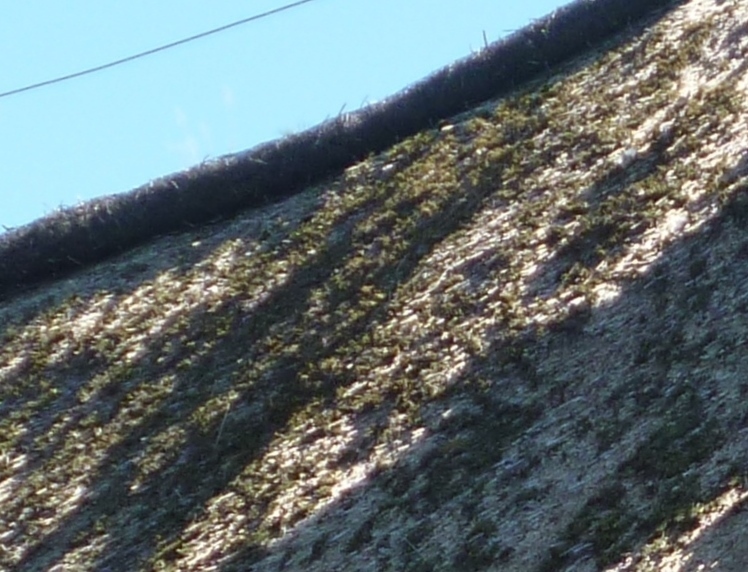
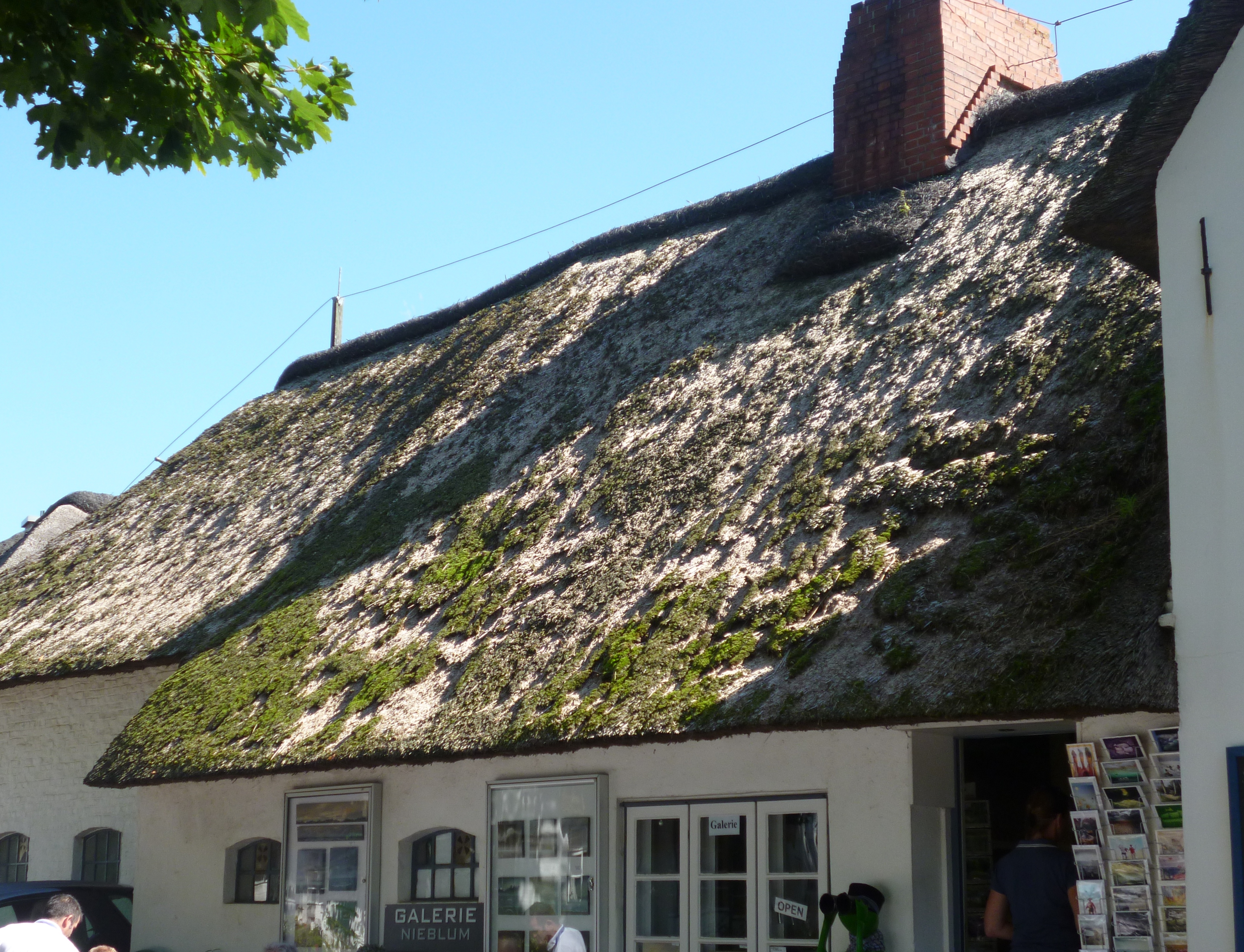
White cottage, steep thatched roof, covered with moss


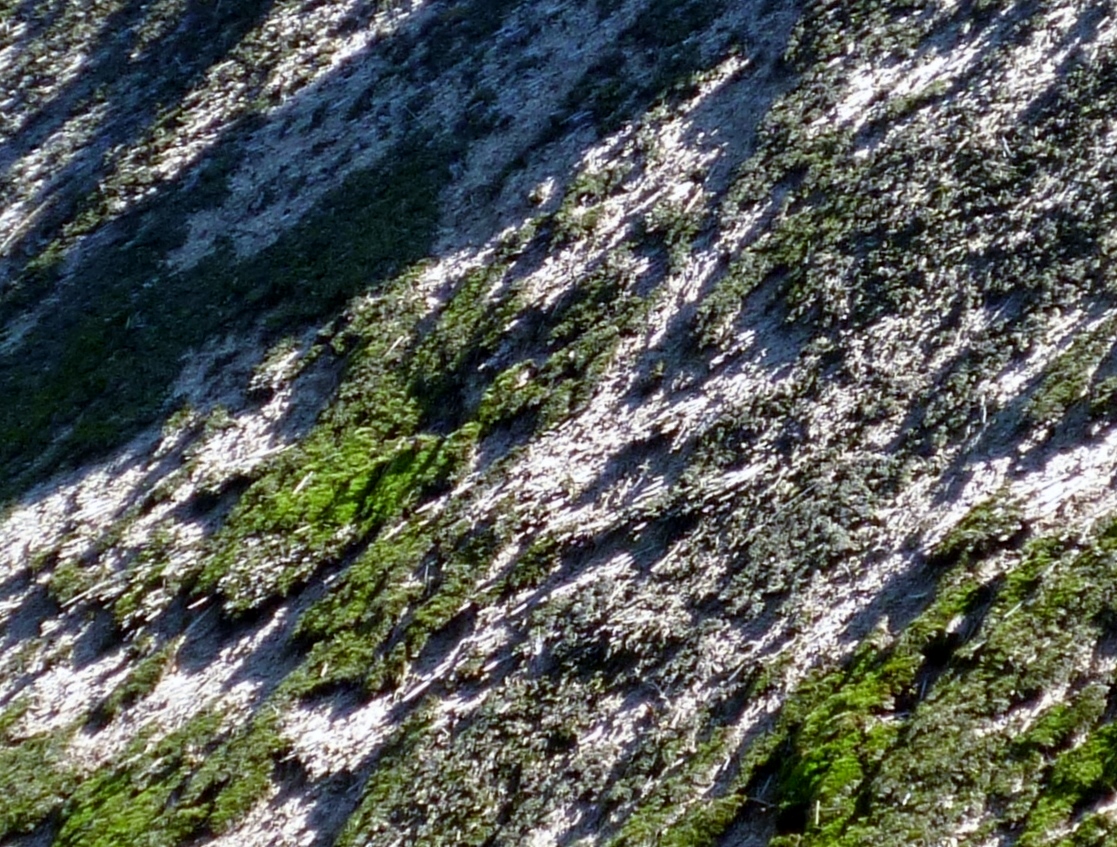
Thick patches of moss
clustering on rippled thatch
like verdant islands,
like the islands we stand on:
growing in the rough grey sea.

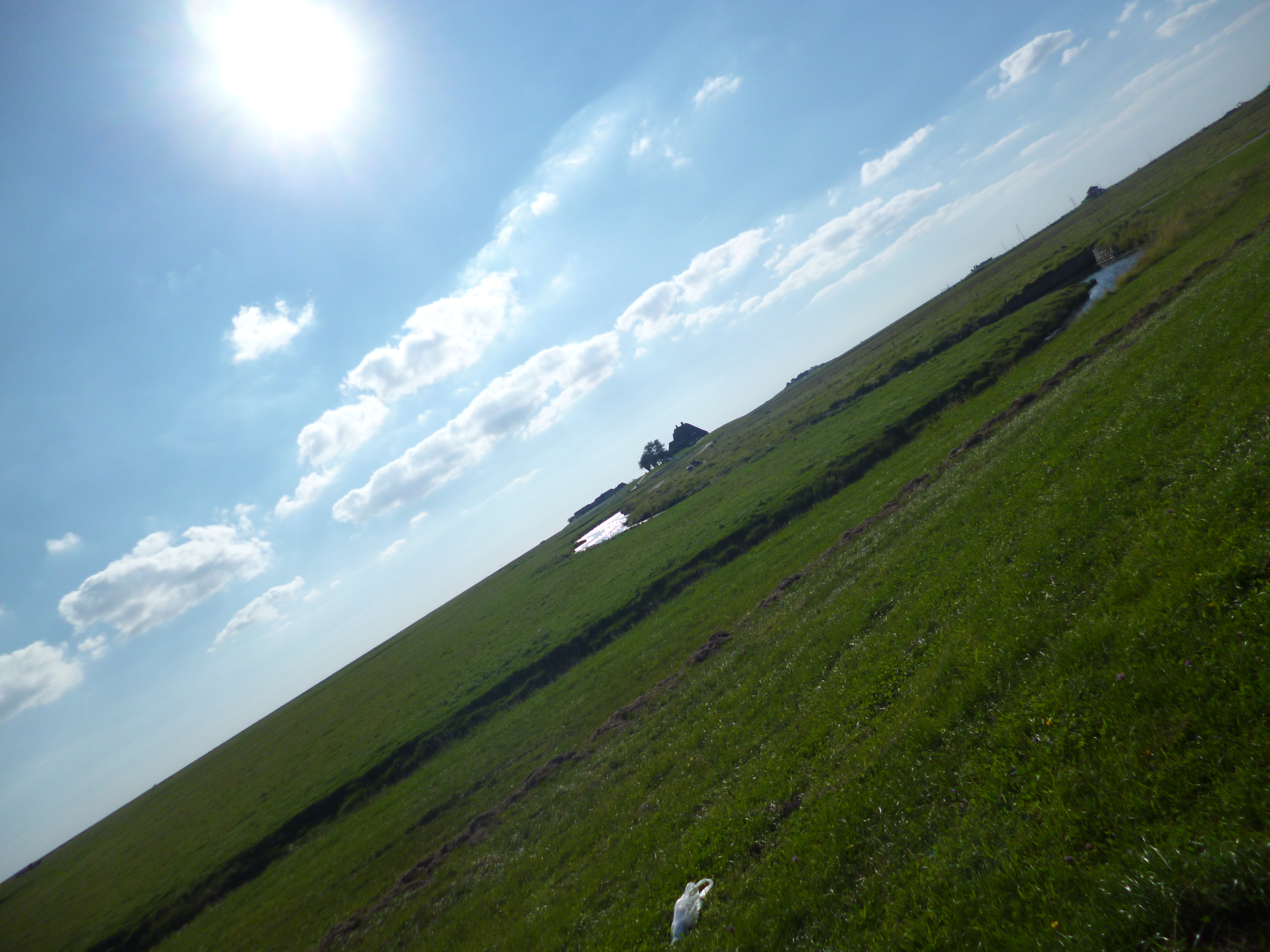
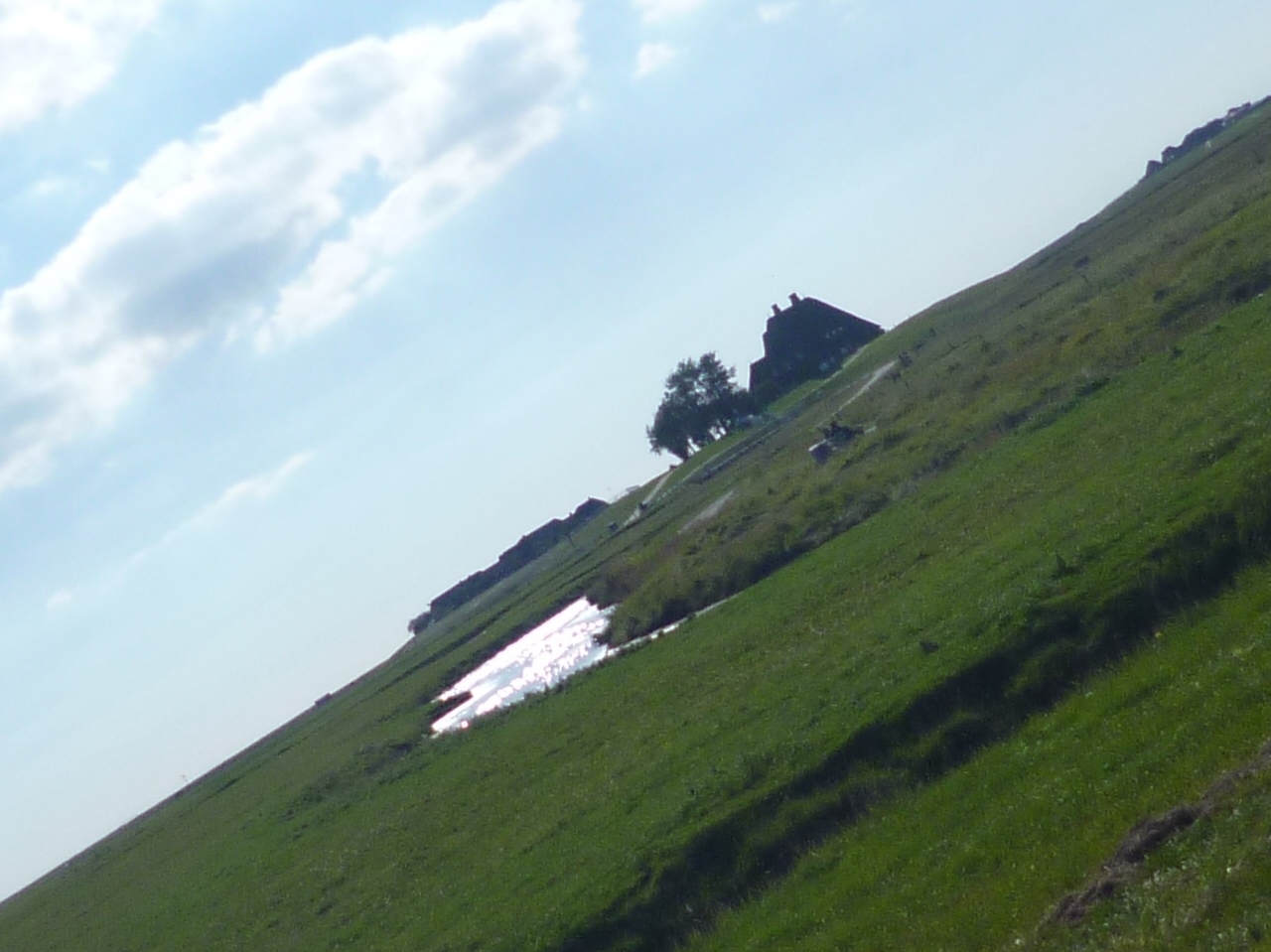
Diagonal horizon, entirely flat between green and blue, with house in middle

Dicke Moospolster
auf dem welligen Reetdach,
gleich grünen Inseln,
gleich diesen Inseln hier,
wachsend im wilden grauen Meer.

Thatched roof, covered with moss

Red clover blossom:
tiny magenta lanterns
in the green and blue,
feeding on the salty floods
across these flat floating disks.

Diagonal horizon, entirely flat between green and blue, with house in middle


Rosaroter Klee:
winzige Laternen
in all dem Grün und Blau,
genährt von Salzfluten
über schwebende Scheiben hin.

Thatched roof, covered with moss


Huge ships approaching,
or space-ships – or are they hills,
or houses on stilts?
They are houses, hamlets, islets…
a necklace of glass beads.


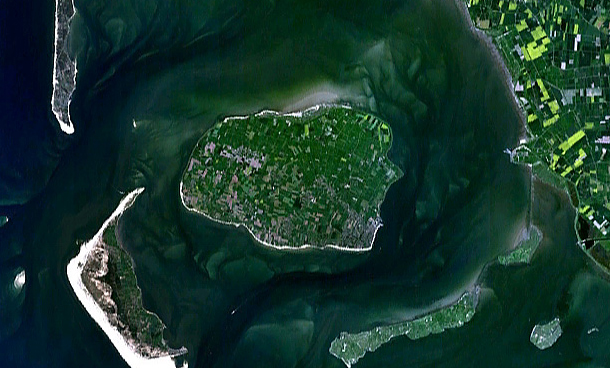
Satellite image of a cluster of small emerald green islands


Da – Riesenschiffe –
Raumschiffe – oder Hügel,
Häuser auf Stelzen?
Häuser, Dörfchen, Inselchen…
eine Glasperlenkette.

English texts: Christina Egan © 2015
German texts: Christina Egan ©2016

Photographs: Christina Egan © 2014
Galerie Nieblum on Föhr; Hallig Hooge.
Satellite picture: NASA via Wikimedia.


From the flat, small, oval island of Föhr, you spot the even flatter, even smaller islands known as ‘Halligen’: their clusters of houses and trees on little dells are visible on the horizon far across the ocean.

The Halligen still get regularly flooded and are occasionally menaced by devastation. All these islands change shape over time, when the forces of wind and water eat away at their edges or add new land.

I wrote about a similar phenomenon observed on the Baltic Sea island of the Darss in Schöpfung (Darß).

Theodor an Emilien

Theodor an Emilien

Mit tausend dicken weißen Kerzen
Prangt der Kastanienbaum am Tor;
Ich steh’ mit hoffnungshellem Herzen
Im späten Dämmer stumm davor.

Der Vogelsang ist längst versickert
Wie Silberspur ins Dunkelblau…
Doch aus dem Gutshaus tröpfelt, zittert,
Quillt das Klavier wie Abendtau.

Ich mach’ im hohen Gartensaale
Den flinken schlanken Schatten aus –
Und werf’ nach jenem Ankerpfahle
Mein Tau mit einem Male aus.

Christina Egan © 2016


The old-fashioned names and inflections signal that this is a scene which happened long ago, a romantic story from the times of Jane Austen, set in Germany. There is a true story behind it, and the ending is happy and sad: the young man waiting hopefully outside the manor house in the summer night, Ernst Theodor Echtermeyer, married Lady Emilie, and they had a child, but they both died very young.

Himmelblaue Uhr (Tottenham)

Himmelblaue Uhr
(Schloßpark zu Tottenham)

Die Dämmrung senkt sich auf die Flur.
In Vogelsang
tropft Glockenklang
von einer himmelblauen Uhr
an einem himbeerfarbnen Turm.

Die Rosen schimmern wie Laternen.
Von ringsum her
summt der Verkehr.
Ein Flugzeug funkelt zwischen Sternen
und segelt durch Kornblumenfernen…

Die Wetterfahne blinkt am Mast.
Ein Ruf, Gebell,
der Uhrschlag, hell –
Und alle Sorge, alle Hast
kommt zwischen Tor und Tor zur Rast.

Christina Egan © 2016

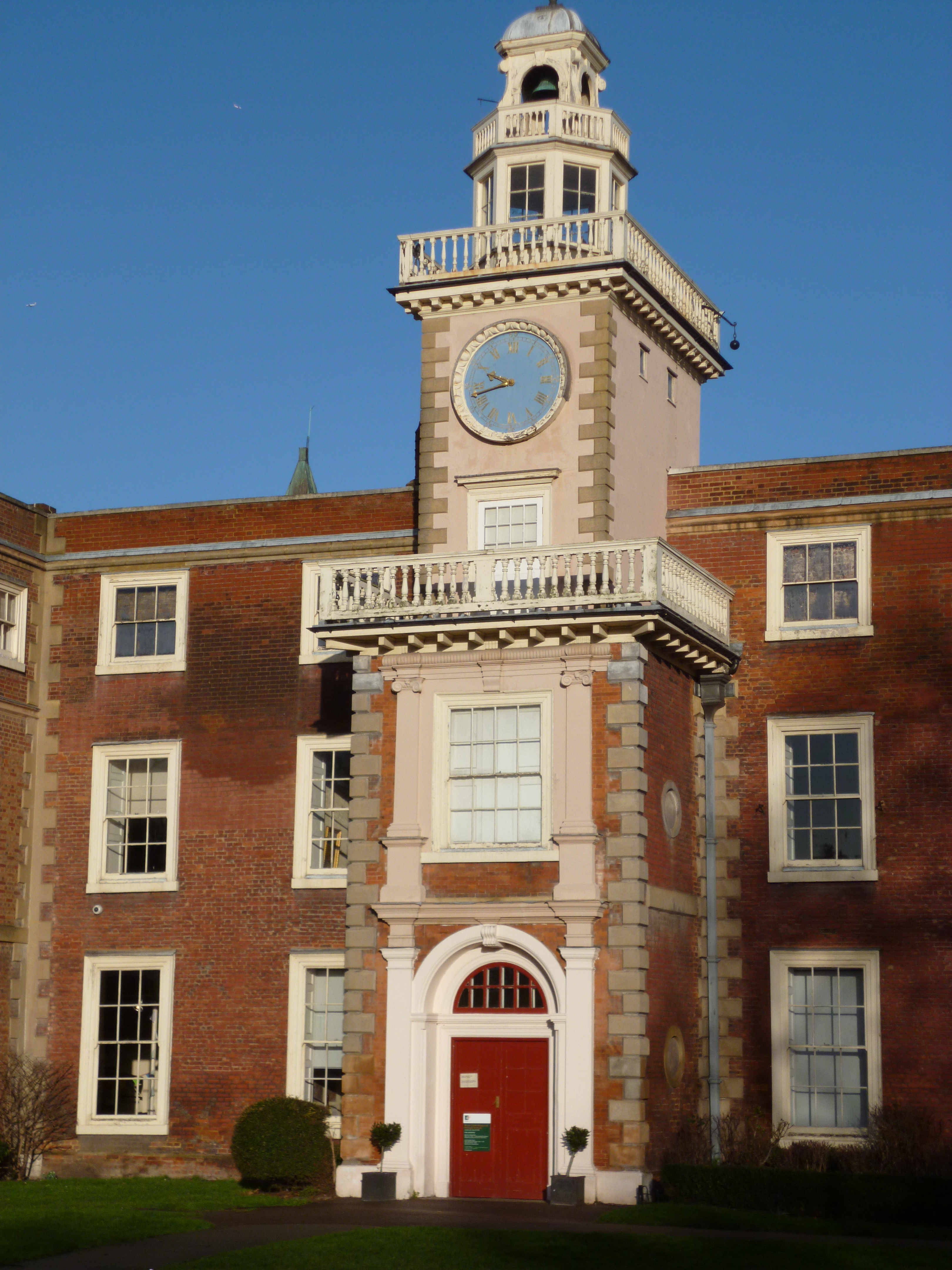
Manor house in red brick, turret painted in pink, with a red door, white decorations, and a bright-blue clockface, under a blue sky.

You can read similar poetry about a walk on a tranquil evening at May Haiku (Bruce Castle).

This is London, too — not only the steel and glass office blocks and underground tunnels I describe in höhlenmenschen / cavemen and related posts, or the bitter poverty I touch on in There’s door on door. London is, in fact, a particularly green city, and Tottenham a very green part of it.

Bruce Castle, Tottenham, London.
Photograph: Christina Egan © 2014

Der Baum im Schulhof

Der Baum im Schulhof
(Marienschule Fulda)

Das Bäumchen stand im rosa Kleid,
das Mädchen stand im blauen;
sie waren fünfzehn Jahre alt
und lieblich anzuschauen,
wenn auch noch zierlich, kindlich gar,
nichts als ein Bündel Blüten…
Im Norden lag ein gelbes Haus,
der Schulhof lag im Süden.

Und als sie sich nun wiedersehn
in eben jenen Mauern,
da sind sie fünfzig Jahre alt
und herrlich anzuschauen,
wie Wolken stattlich hingewölbt
und strahlend unter Schauern:
der Baum im dunkelrosa Kleid,
die Frau im dunkelblauen.

Christina Egan © 2015

—

You can look at the blossoming  Tree in the Schoolyard
and the yellow building online at Marienschule Fulda. 

The story of the schoolgirl and the tree, meeting at fifteen
years old and then at fifty, may work in a translation software.

The Purple Sea / Das lila Meer

The Purple Sea

I’ve seen the sea turn indigo
and greyish green and brilliant blue:
the wine-red sea that Homer saw
was not a blind man’s dream — it’s true.

I’ve swum in waves of indigo,
I’ve swum in eyes of greenish grey:
the fair-eyed gods that Homer saw
may just for moments cross your way.

Christina Egan © 2015

—

Das lila Meer

Auch indigo färbt sich das Meer
wie gräulichgrün und leuchtendblau:
Wahr war das Weinrot des Homer –
nicht eines blinden Dichters Schau.

Im Indigo schwamm ich sogar
und auch in Augen von Grüngrau:
Ein göttlich lichtes Augenpaar,
das gibt es manchmal noch genau.

Christina Egan © 2015

—

The Wine-Dark Sea

Where sky and ocean form a line
of glassy indigo,
the water looks indeed like wine,
a strong and sweet Merlot.

This is the sea that heaped up rocks
and beckoned walls to rise,
the ageless mother of these flocks
of sun-enchanted isles.

This is the sea that brought the fleets
to Carthage and to Troy
on silver-green and bright-blue sheets
which wayward gods deploy.

Christina Egan © 2012

—

These poems refer to the debate around Homer’s strange colour names: e.g. ‘wine-coloured’ (‘oinops’) and ‘purple’ or ‘maroon’ (‘porphyreos’) for the sea; ‘green-eyed’ (‘glaukopis’) for a person or god with eyes of any fair colour.

While people in antiquity were not yet interested in describing colours and —
despite their sophisticated languages — had only very few words for them, I
believe that on occasion, these can be taken literally.

The first two poems are translations of each other. The colour adjectives oscillate between the languages, and within, just like the sea does…

The Last Advent

The Last Advent

The rolling emerald hills,
the towering topaz rocks,
the earth-girding ocean
in its royal blue roar,
even the starred sky
in its silvery silence –

Like a sumptuous silk robe
and an embroidered curtain,
they will be drawn aside
to reveal the true splendour –
Then they will be discarded
like rough grey sloughs.

And new worlds will arise,
circles of festive fire.
Shadeless, doubtless,
deathless, boundless.
And we shall be alive
for the first time, forever.

Christina Egan © 2012

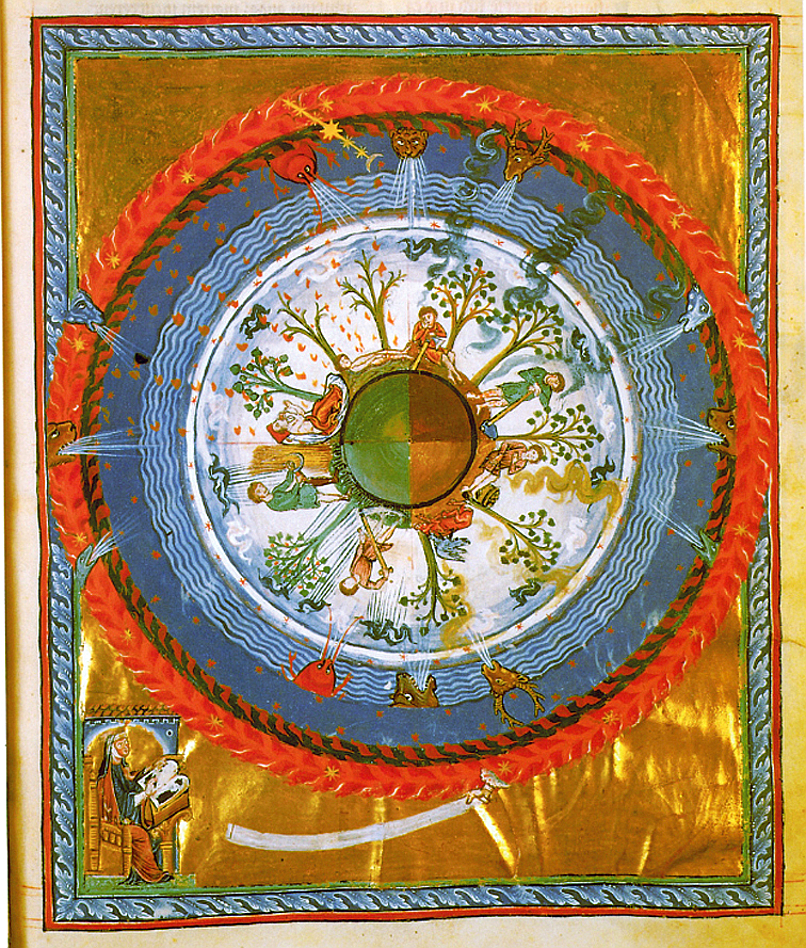
Hildegard_WerkGottes_12Jh_


These lines remind us of the double meaning of ‘Advent’: the first coming of Jesus, when he  was born to Mary, and the second coming at the end of times, when this world will be replaced by an eternal one beyond imagination.

Picture: from a 12th century codex of  Hildegard of Bingen’s Book of Divine Works.

Kretische Küste

Kretische Küste

I.

Vor mir ein grünes Meer, ein roter Strand
und hinter mir die himmelhohe Wand
der Weißen Berge, mit Gesträuch schraffiert,
mit Schluchten aufgeteilt, vom Mond berührt.

Es schwindelt mich, so schroff ist es und schön…
ich möchte mitten ins Gebirge gehn,
als sei es eines Mannes Wohlgestalt
und berge sein Gemüt in jedem Spalt.

II.

Der kupferfarbne Sand wird doch zu Gold,
wo er in steiler Woge niederrollt
und sich mit jenem Brennendblau benetzt,
das kommt und nochmals kommt… und jetzt… und jetzt.

Und Disteln starren in dem dürren Strand,
die plötzlich strahlen wie von Zauberhand,
wenn erster Regen flüchtig niedersteigt
und Brautkleidblüten aus den Blättern treibt!

III.

Wo täglich Himmel sich mit Meer vermählt
und Landes Rand von anderm Strand erzählt,
wo trockne Erde wie der Tagstern loht
von silbriggold bis zu orangerot,

wo noch bei Nacht das Wasser, kaum bewegt,
den Leib in schwerelosem Zauber trägt,
bis in das sanfte Schwarz ein Schweifstern stürzt –
dort laß uns warten auf den milden Herbst.

IV.

Mit riesenhaften grünen Pranken greift
das Meer hinein in den geschützten Kreis
des kleinen Hafens, daß die Mole schäumt
und sich die bunte Schar der Boote bäumt.

Des späten Herbstes erstes Fauchen fährt
in letzte schwere Hitze wie ein Schwert.
Fünftausend Jahre aber ragt die Stadt
ins Element, gelassen, sonnensatt.

Christina Egan © 2014

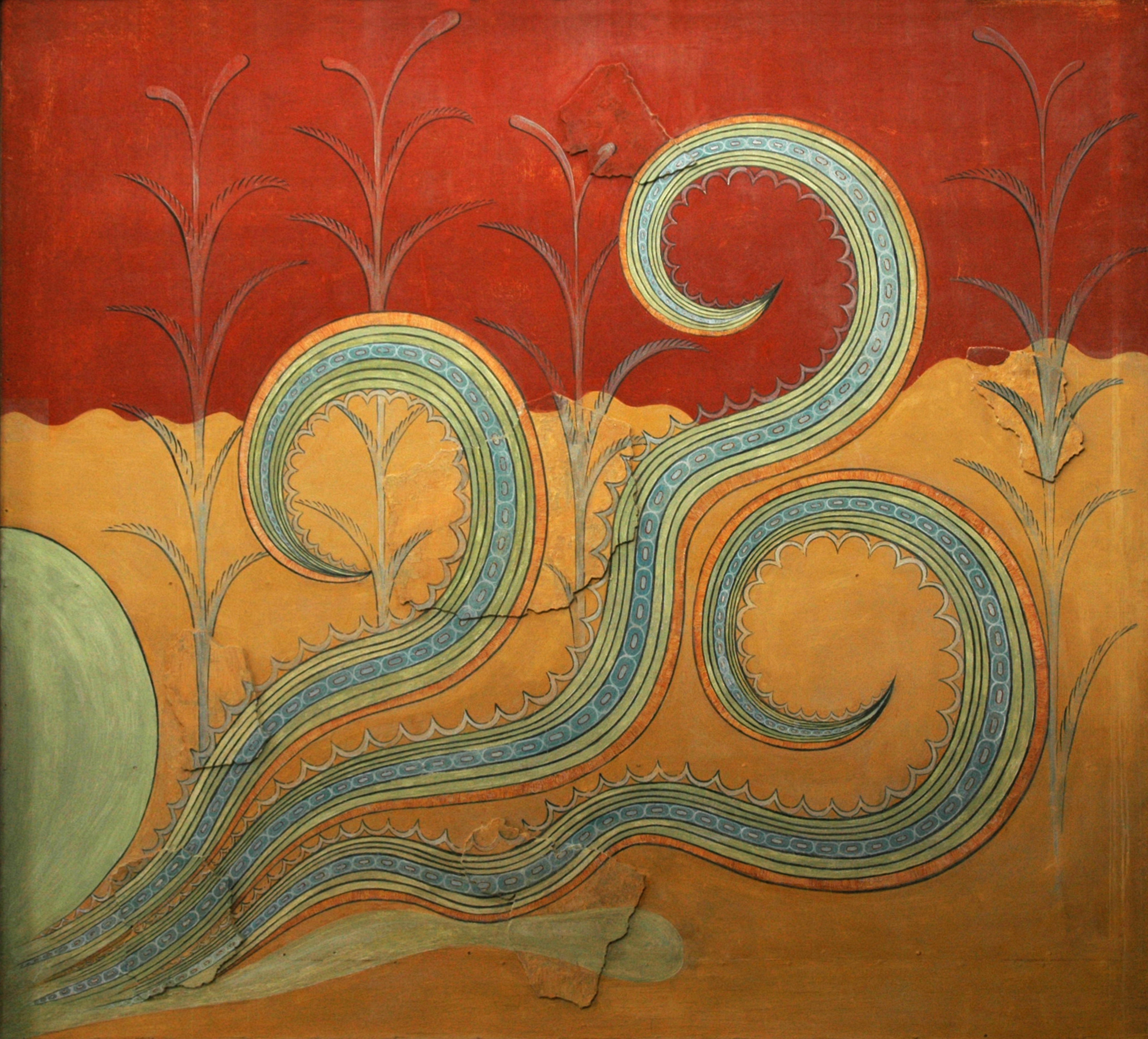
Flourishes on a mural, turquoise on luminous red and yello

For more poetry and information
on Knossos 
and Chania on Crete
see my English poems
The Pattern of a Yesterday and
Golden Dell.


Frieze in the royal palace at Knossos, Crete.
Photograph: Harrieta171 via Wikimedia.

November (Im dunkelblauen Nebel)

November

Im dunkelblauen Nebel liegen
gelöst mein Haus und Park.
Mein Herz hat einen Traum erstiegen
und hebt sich still und stark.

Der Herbst hat Gold um Gold gewonnen
mit schmerzloser Gewalt.
Das Mondlicht ist für mich geronnen
zu lieblicher Gestalt.

Christina Egan © 2010

—

This must be one of the happiest late-autumn poems ever:
exuding peace, evoking beauty, steeped in blue and gold!

Schöpfung (Darß)

Schöpfung
(Darß)

I.

schwebend zwischen ungeheuern
wassern und verwunschnen teichen
will die erde sich erneuern
wälder zeugen dünen häufen

II.

wird die see den see erwählen
kraft die ruhe salz die süße
muß sich blau dem grau vermählen
daß es ineinanderfließe

III.

wie die schaumgekrönte göttin
einst dem wilden meer entstieg
so dem bloßen sand die blüte
und dem wüsten schmerz das lied

Christina Egan © 2015


On the Darß (Darss), you can observe ‘Creation’ at work:
between ocean and ponds, between dunes and woods.

The last poem describes the ‘Creation’ of art as another
natural, elemental, process: beauty born out of pain.

You can read an English poem about the Darss at
Midsummernight Far North.

Parallel English and German poems about a similar
phenomenon on the German North Sea coast are at
Views of North Sea Islands.