Erdbeerjoghurt (Schlußverkauf I)

The Bricklayers

The Bricklayers

speaking through a mask / masked ball

The poem speaking through a mask was inspired by photographs in the Tottenham Community Press and published by the same newspaper in TCP Issue 43, February 2021. It continues as the Haringey Community Press.

Tottenham is full of art in in very bright colours: graffiti on walls, mosaics on houses, paintings on roll-shutters of shops…

Image: Red camera eye of HAL 9000 (from ‘2001: A Space Odyssey’).
Julian Mendez, CC BY-SA 3.0, via Wikimedia Commons.

Dancing on the Beach

Dancing on the Beach

I woke up to a world
where the bears and the bees
had not cast their ballots
but the humans had:

a brave brand-new world
where an abundance
of guns guaranteed
safety and peace,

where an ample range
of promises rained down
on the fields like fertiliser,
tremendous and toxic,

and where the deceitful tongue
was spreading like the olive-tree
in the house of God,
laughing us to scorn.

I woke up to a crowd
dancing on the beach, drunk,
while the floods were gathering
from the heights and the horizon,

a world watching and filming
on ten thousand screens
its boats and its bridges
falling apart. I woke up.

Christina Egan ©2024

On Nov. 5th, 2024, it became evident that the great project of democracy
is about to destroy itself, taking the whole of our civilisation with it.

Trefflich (Gazakrieg)

Trefflich

Ach, wozu noch Meeresblau
je beschwören und wozu
Wellenschlag und Morgentau,
wenn ein Paar bestickter Schuh
bunt aus Schutt und Asche schaut,
– angefaucht und fortgefegt –
und die namenlose Braut
nie mehr ihre Füße hebt,
nie ein Kind zum Himmel hält…
Ach, wie bleibt das Meer bloß blau?
Denn es stirbt die ganze Welt,
frißt der Drache eine Frau.
Fällt die Kugel einen Mann,
klagt ein ganzes Engelheer.
Lautlos schreit ein Schlüsselbund
a­­us dem Schrott,– doch hört ihn wer?
Paßt der Schlüssel auch ins Schloß,
hängt die Tür in schräger Wand,
denn ein treffliches Geschoß
riß das Haus halb in den Sand.
Immer wieder gibt es Krieg
voller Lügen, voller Lärm.
Niemals aber gibt es Sieg,
nur die Hoffnung wie ein Stern.

Christina Egan ©2024
(Gazakrieg)

In this poem, War is personalised as a hissing dragon burning, devouring, or blasting away everything in its way.

The title is a pun on an old word for “excellent”, literally “hitting precisely”: in a war, success is based on destruction.

On October 7th, 2023, the Palestinian terror organisation Hamas committed a massacre and mass abduction in Israel, whereupon the Israeli Government launched a war on the Palestinian territory of Gaza. It has since attacked the West Bank and invaded neighbouring country Lebanon, where the terror organisation Hezbollah de facto rules. The aim on both sides is evidently genocide. This is destruction against destruction, revenge upon revenge, genocide versus genocide.

The Red Helicopter (Tottenham)

I have seen the red helicopter of the emergency services land in parks in Tottenham (Lordship Recreation Ground and Bruce Castle Park). In both cases it was the middle of the day, and in both cases, a teenager had been stabbed, once fatally and once nearly so. Another young man was shot and left to die in Tottenham Cemetery. All these green spaces are vast and idyllic.

See Himmelblaue Uhr (Tottenham) for Bruce Castle Park as a haven of tranquillity and Gedächtnisgarten zu Tottenham for the old cemetery as a garden of peace.

The Komodo Dragons

The Komodo Dragons

The roots of the forest are trembling,
the branches are frosted with fear.
The jeeps and the tanks are assembling.
The komodo dragons are near.

Their skin’s like the ice on the river,
they graze and they raze all that breathes.
The roofs of the cottages shiver.
The earth has gone silent. She grieves.

The earth has lost too many children
before the full moon could return.
The komodo dragons are grinning.
The roofs of the cottages burn.

The stable aflame and the steeple –
the ice on the river now thaws.
This is not the war of the people.
This is the triumph of the jaws.

Christina Egan ©2022

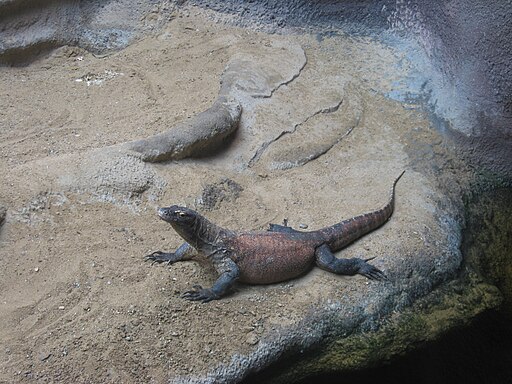
This poem was published (as The Comodo Dragons) in the Haringey Community Press (circulation 15,000) in May 2022.

Photograph: Dezidor, CC-BY-3.0, via Wikimedia Commons.

Komodo dragons got their name because they appear to be mythical creatures, but are real animals, huge lizards which can devour their prey almost without trace.

Two years ago today, the Ukraine was brutally attacked by the military machinery of another country.

When we fear with and grieve with the Ukraine, there are always echos of the Second World War, the First World War, and other wars. My verse is influenced by the famous sonnet Andreas Gryphius wrote in the midst of the Thirty Years’ War, Thrähnen des Vaterlandes / Anno 1636 (Tears of the Fatherland).

dream laundry

Front page of newspaper

This poem is also published in a local paper today, in print and online: Haringey Community Press, February 2024 (circulation 15,000).


The title is taken from Ingeborg Bachmann’s poem Reklame (1956), where she coins the word “Traumwäscherei” (dream laundry, laundry of dreams or through dreams?). The omnipresent publicity and cheerful music soothe your worries and questions – until they stop and leave you in “Totenstille” (deadly silence, or silence of the dead?).

The idea of downloading memories and dreams comes from science-fiction such as Ridley Scott’s movie Blade Runner (1982), M. T. Anderson’s novel Feed (2002), and Kazuo Ishiguro’s novel Klara and the Sun (2021). All three are superb and thoroughly disquieting.

The line “boots on the beach” comes from a particularly stupid – and sexist – video advertising hard drink by showing a young woman in a very scanty dress and very heavy boots. It played on a loop on several screens in a railway station so that there was no escape from it.

The line “music on the pillow” is inspired by Ray Bradbury’s novel Fahrenheit 451 (1953), where he predicts ceaseless entertainment broadcast onto our walls, even inviting participation, and into our ears, continuing into our sleep. The result is isolation and despair.

Die Welt ist still

Die Welt ist still

Ich sitze unter einem Baum
im Blätterzelt, im Schattenkreis;
die Welt ist still und bunt und heiß,
hoch oben wölbt sich weißer Flaum…
Ein Sommertraum.

Der stolze Pomp war Schall und Schaum,
die rasche Mode Funkenflug,
das Tretradtreten war Betrug!
Ich sitze unter einem Baum,
man glaubt es kaum.

Das Bildgewebe war ein Zaun,
ein Katzengold der ganze Schatz,
ein Karussell die ganze Hatz –
Die Ruhe schafft dem Atem Raum:
Frag’ nur den Baum.

Christina Egan © 2020

For English poems from the Covid-19 lockdown,
see Notnormal and the parallel texts Hidden Rivers /
Verborgne Flüsse
.

For those who were not ill with the terrible virus, 
the key experience may have been, paradoxically:
I can breathe… For once,
there was time to breathe —
and air to breathe!

Farbechte Hoffnung

Farbechte Hoffnung

Der Behälter enthält
eine bunte Matratze,
einen kleinen Fernseher
und eine Familie:
Mann, Frau und Kind.

Jeder von ihnen marschierte
durch Wüsten und Sümpfe
mit einem Rucksack voll Kleidern
und einer Tasche voll Träumen.

Träumen von Süßigkeiten
und Brot, von Spiel
und Arbeit, von Frieden.

Träume von Alltag.
Träume von Schlaf.
Träume von Heimat.

Der Behälter enthält
drei hungrige Menschen,
drei hungrige Herzen
und viele Ballen farbechter Hoffnung.

Christina Egan © 2016


“Dreams of everyday life. Dreams of sleep. Dreams of home.”

This poem was inspired by the photograph of a refugee family in the excellent newspaper Agora, at the end of a year of mass migration into Germany. See also my previous poem Kerzenbekrönt, which shows the idyllic side of Christmas in Germany.

The homeless family in the photo — a man, a woman and a child — will remind Christians of the ‘Holy Family’ of Joseph, Mary and Jesus, who were sheltering in a stall for animals when Jesus was born. I assume the editors of Agora chose this motif for their photo montage consciously.

This poem may work in a translation software.