The Lake and the Rain

The Lake and the Rain

The lake is a mirror
of willow and reed,
a sheet of opaque
and buckled glass
whose bulges break
the billowing leaves
and swaying stalks,
so that the strokes
of umbra and ochre,
of olive and lime
form ever new patterns…

And then the drizzle
adds ripple on ripple,
painting an intricate
pulsing design
of circles and squares,
flashing and fleeting,
never repeating…
never depleted…
never completed…
It all has a meaning,
It all, maybe, matters.

Christina Egan ©2022

Summer Rain (II)

The summer clouds, the summer sun
are dazzling on the little lake,
the summer wind, the summer rain
are writing on its shiny slate.

You need not know the ancient script,
you need not know the ancient tongue:
the message echoes in your chest,
the summer rain, the summer sun.

Christina Egan ©2023

The first poem resembles a Cubist painting of overlapping and breaking shapes in sombre earthy colours: nature viewed as an abstract painting, or rather, a composition in permanent motion.

The second poem reads the rain on the lake as a secret message, perhaps like the ancient declarations on the Rosetta Stone… We may not be able to decipher or understand the message sufficiently, but it is there!

Everything reflects everything else… and perhaps the whole world reflects a higher world. All this beauty and meaning can be found in the smallest slice of nature, in the pond down the road.
The Bricklayers

The Bricklayers

I Do Not Ask for Love / A Thousand Leaves

I Do Not Ask for Love

I do not ask for love,
for I have none to give –
and yet I beg for life,
for leave to make you live,

to live as if the day
were fitting like a glove,
to breathe as if to pray
to beauty were enough,

to tremble as if time
had finished or begun,
to let two faces shine
as if two hearts were one.

I do not ask for words
of last or lasting love,
I cannot offer worlds –
one kiss shall be enough.

Christina Egan ©2006


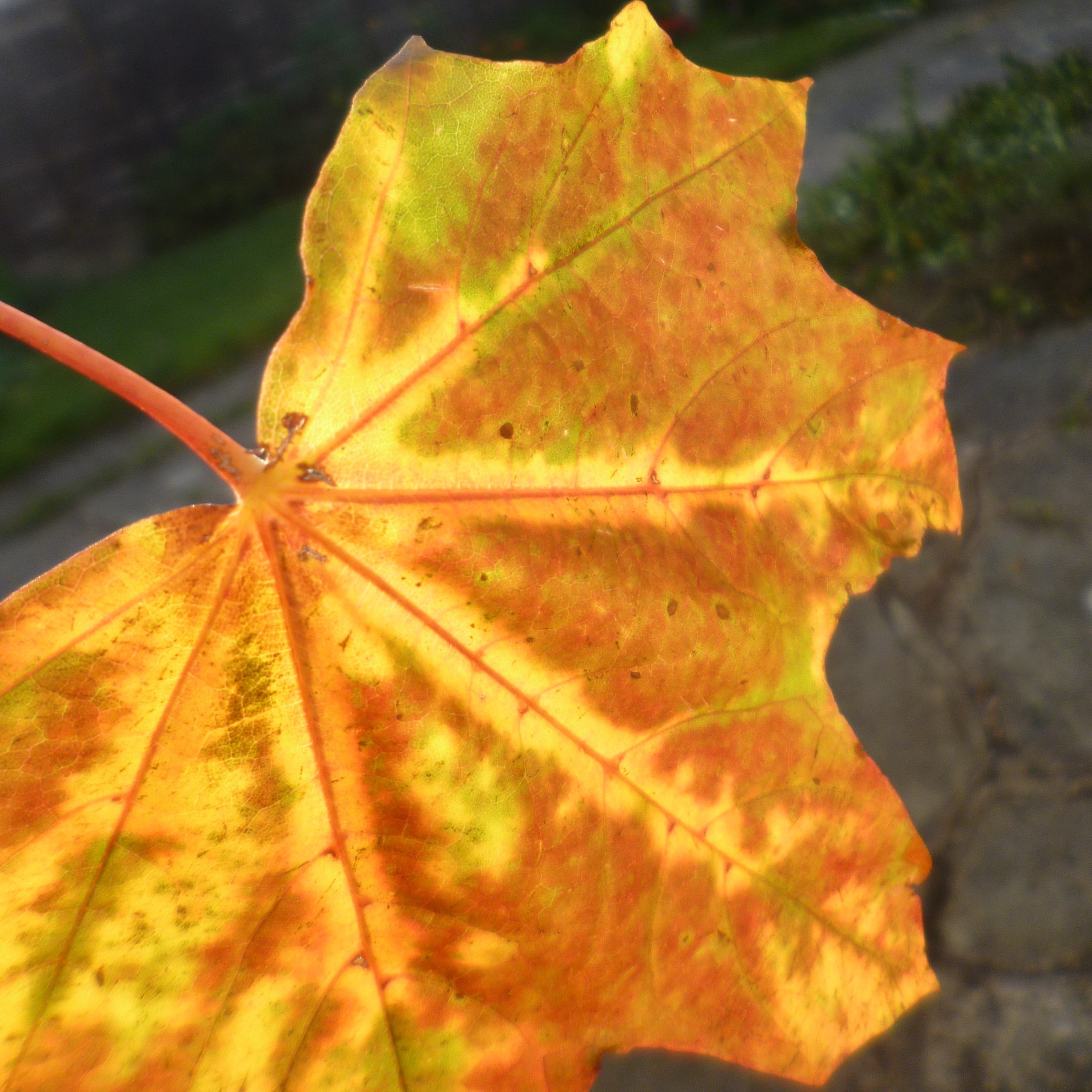
Maple leaf, close-up, flaming golden and orange against dull background.

A Thousand Leaves

A thousand leaves in brownish bronze,
a thousand leaves thrust by the wind,
a rustling sea… a jostling crowd…
And then, with sudden sunset glint,
with guileless smile, one reaches out.

Christina Egan ©2010

A Lonely Star

Decorative paper, black with ripples in grey, white, purple.A Lonely Star

A lonely star surveys the streets.
The dark is brownish, blurred by lamps.
The cold is damp and slowly creeps
through draughty windows, long-locked doors.
Bats flit about like ghostly hands.
A blinking helicopter roars;
the city stirs and sighs and sleeps.
The star looks down and frowns and stands.

Christina Egan © 2017


Decorative paper. Image provided
by British Library through Flickr.

Purple Dusk (Bankside, London)

Nocturne in Purple and Grey
(Bankside, London)

Hemmed with the sequins of lamps
the silver carpet of the river,
the lilac scarves of the bridges, the buildings.

People are blown about like brown leaves.
A few boats float, dozing,
awaiting brighter days.

The hues of lily and lavender
rise, for a moment, and blend,
with a pale memory of their scents.

Great and grey, the river strides past,
great and grey, the moment slides past,
like a graceful line of wild geese.

Christina Egan © 2005

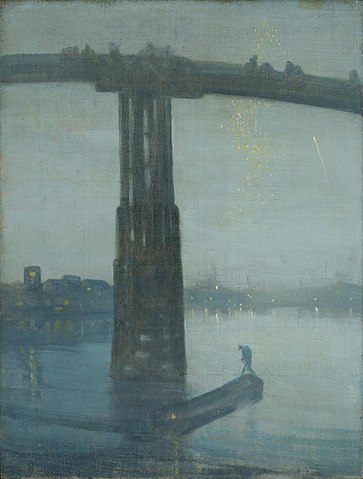
River scene in dreamy bluish hues: gigantic bridge pillar, man on small boat, city on shore.


An early-spring impression in pale lilac and silvery grey. Bankside is the southern shore of the Thames in London.

Many years after I wrote those lines, I noticed the similarity with Turner’s mesmerising Nocturnes and renamed the text!

For a German poem depicting purple dusk see ostseeschlaflied (Darß).


Nocturne in Blue and Gold. Oil painting by J. A. M. Whistler, showing Battersea Bridge in London, ca. 1872-1875. Tate Gallery, London.

Brown Butterfly / Brauner Schmetterling

Brown Butterfly


Found, found on sandy ground:
bronze brooch from an unknown age,
bright map of an unknown land,
O quivering flower,
brown butterfly!
Where have you flown…?
Little butterfly,
your mirroring wings
are dust lifted up from the earth
and assembled to beauty of heaven.
Grace, grace beyond a name.

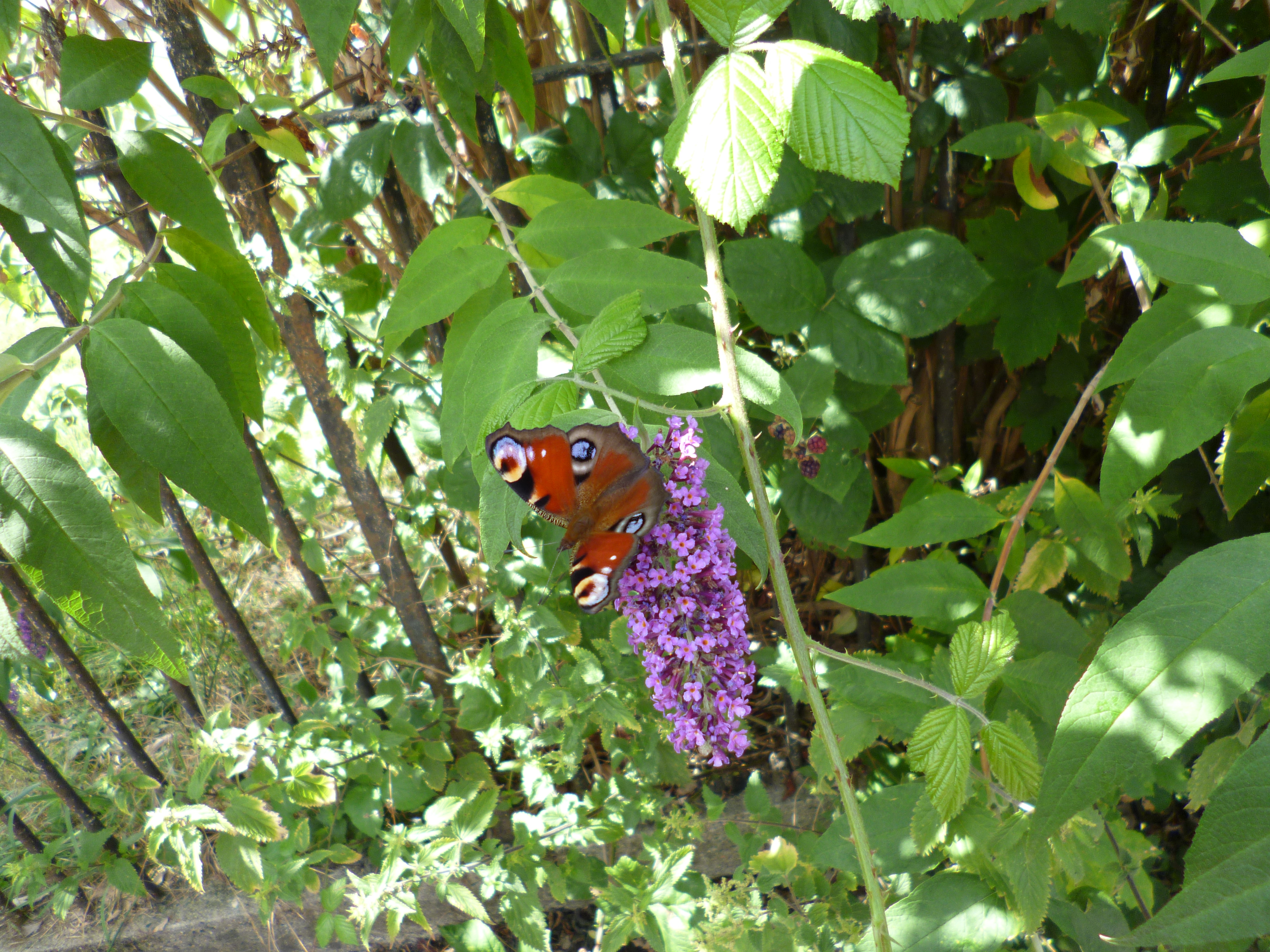
Bright admiral butterfly, maroon with 'eyes', on purple cone of flowers.

 Brauner Schmetterling


Gefunden auf sandigem Grund:
Bronzebrosche verlorener Zeiten,
bunte Karte ferner Gefilde.
Du erbebende Blume,
du bräunliche!
Wo flogst du hin…?
Schmetterling,
deine Spiegelbildflügel
sind Staub, der Erde enthoben,
gesammelt zu Himmelsschimmer.
Anmut, namenlose Anmut.

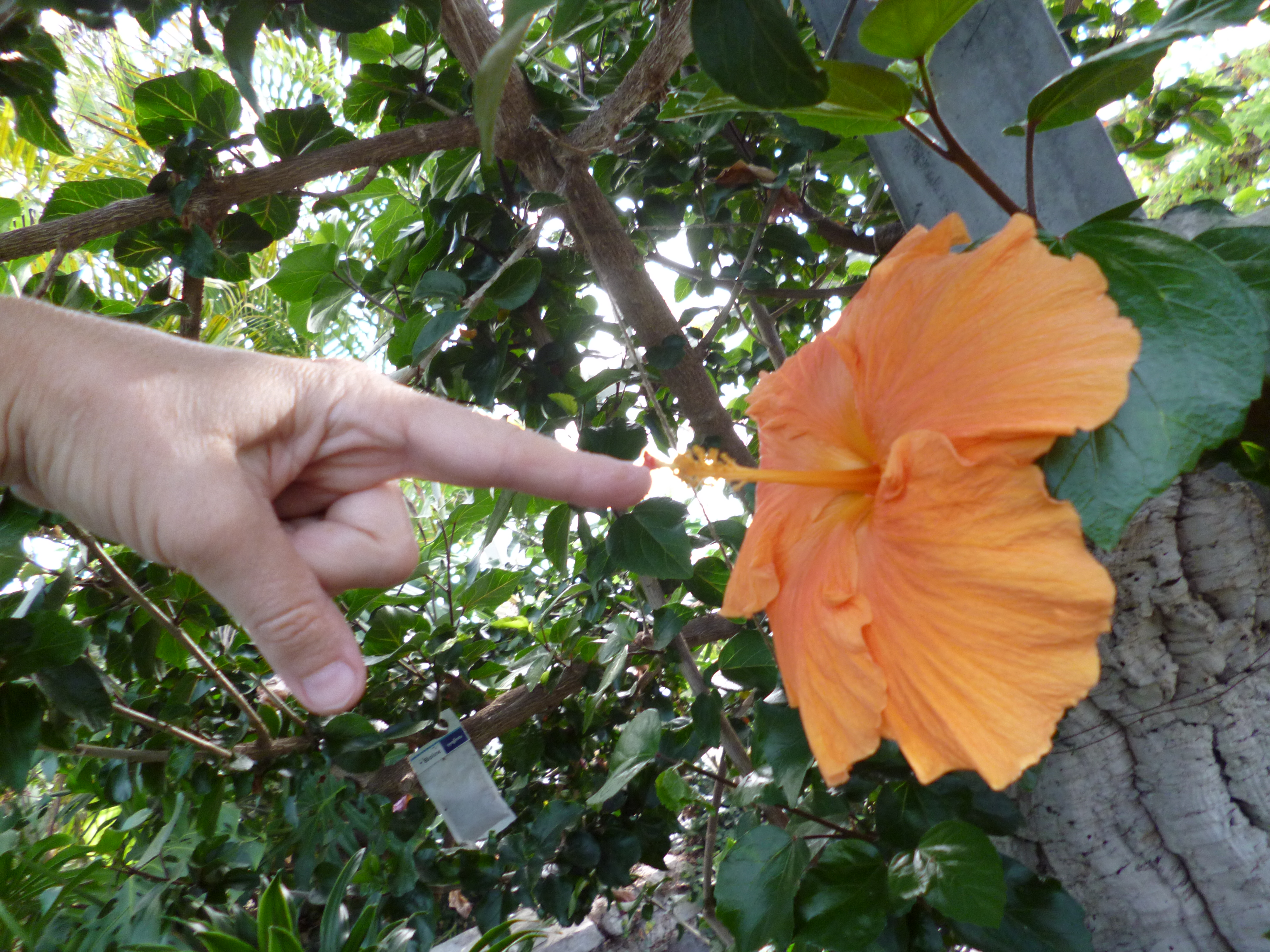
Huge tropical flower, orange and wide open, with human hand for comparison.

The shape of the poems — and their
colour — emulate those of a  butterfly.

English poem: Christina Egan © 2005. 
German poem: Christina Egan © 2017.
Photographs: Christina Egan © 2013.

geh aus mein herz

geh aus mein herz

die braunen bauklotzhäuser
mit farbenkastentüren
die weißen blütenkelche
die sich versonnen rühren

im wind aus samt und seide
die schweren purpurrosen
in Salomonis kleide
die deine finger kosen…

der sommer will dich füllen
die erde lädt dich ein
zu laufen und zu schaffen
zu schauen und zu
sein

Christina Egan © 2011


Salomonis Seide

In Purpur zog der Kaiser einst,
in Scharlachrot der Kardinal,
in Violett die Kaiserin
in einen grüngeschmückten Saal.

So prunken die Geranien
in ihrer Sommerprozession
und rufen in das Gartenrund:
“Wir übertrumpfen Salomon!”

Christina Egan © 2014


The appeal ‘Go out and seek joy’ and the metaphor of King Solomon’s silk are taken from the jubilant hymn and folksong Geh aus, mein Herz, und suche Freud, written by Paul Gerhardt in the middle of the 17th century.

The houses in uniform dull colours with front doors in different bright colours are typical for London. So are the little private gardens with geraniums.

The first poem is contemplative and intense, the second one humorous and light. The last line of the first poem is cut up on purpose: to let the word ‘to be’ resound on its own.


For an English poem about the pageant of summer see Lilac and Lime.


Der Sommer verglüht

Der Sommer verglüht

Der Sommer verglüht
in Purpur, Gold und Lapislazuli.

Die Straße erhebt sich
wie ein Tempel der Vorzeit.

Die Dinge sind rund und reif,
getränkt mit Regen, gesättigt mit Licht.

Feuchtes Gras flammt grün,
üppiges Moos überkleidet den Stein.

Wie Weihrauch steigt
der weiche Atem des Lavendel.

Die Wolken gleißen, gleiten,
Flotte ins offene Blau.

Brüchiger Backstein, zerknitterndes Laub:
Altes blättert ab, zerfällt in tausend Brauns.

Herbst, Kelter des Jahres,
Zeit, Fest der Verwandlung.

Christina Egan © 2001

A very descriptive and colourful poem with a philosophical note:

“Autumn: wine-press of the year.
Time: feast of transformation.”

Glazed Clay

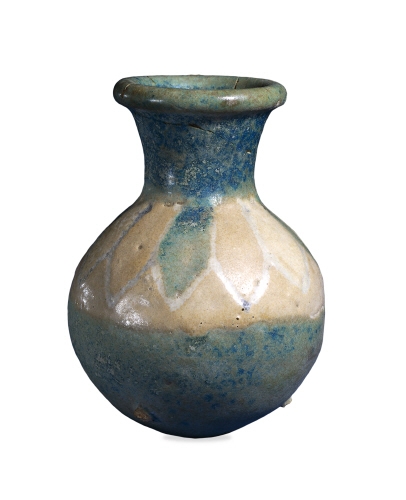
Jar, elegantly curved, with brown and blue glaze.Glazed Clay

Two mighty rivers’ ceaseless flow
beneath a high and cloudless sky;
to either side the ochre glow
of arid countries rolling by;

and here and there a golden maze,
the buildings’ cubes, the cities’ grid:
this jar with blue and brownish glaze
from Babylon still mirrors it.

Christina Egan © 2016

Mesopotamian jar (9th to 7th c. BC) Photograph: © The Trustees of the British Museum.

The city and country of ‘Babylon’ were under Assyrian rule at the time the little jar was made, but I just used the name as the most familiar for all the civilisations of Mesopotamia.

For a German poem about Babylon with the Euphrates and the Hanging Gardens, see Die Hängenden Gärten.

The perfect elegance of this tiny everyday object is an example for the simple beauty I call for in Fewer Things, where you can also see a red Roman bowl. 

By the Brittle Brown Fence

By the Brittle Brown Fence

By the brittle brown fence,
bright, arresting the eye,
an explosion of pink,
pure pink!
Low, silent, intense, incessant,
a pillow of raspberry colour,
triumphant trumpet
of early summer:
my azalea
in May!

Christina Egan © 2006


The shape of the poem emulates the content…
and in this display, it is also true for the colour!