The Lake and the Rain

The Lake and the Rain

The lake is a mirror
of willow and reed,
a sheet of opaque
and buckled glass
whose bulges break
the billowing leaves
and swaying stalks,
so that the strokes
of umbra and ochre,
of olive and lime
form ever new patterns…

And then the drizzle
adds ripple on ripple,
painting an intricate
pulsing design
of circles and squares,
flashing and fleeting,
never repeating…
never depleted…
never completed…
It all has a meaning,
It all, maybe, matters.

Christina Egan ©2022

Summer Rain (II)

The summer clouds, the summer sun
are dazzling on the little lake,
the summer wind, the summer rain
are writing on its shiny slate.

You need not know the ancient script,
you need not know the ancient tongue:
the message echoes in your chest,
the summer rain, the summer sun.

Christina Egan ©2023

The first poem resembles a Cubist painting of overlapping and breaking shapes in sombre earthy colours: nature viewed as an abstract painting, or rather, a composition in permanent motion.

The second poem reads the rain on the lake as a secret message, perhaps like the ancient declarations on the Rosetta Stone… We may not be able to decipher or understand the message sufficiently, but it is there!

Everything reflects everything else… and perhaps the whole world reflects a higher world. All this beauty and meaning can be found in the smallest slice of nature, in the pond down the road.
Hinweisschilder

Hinweisschilder

I.

Dies Gedicht hat keine Bilder,
denn die Welt ist ein Gedicht!
Überall sind Hinweisschilder,
überall Scheinwerferlicht!

Doch wir tappen durch die Tage,
rumpeln, rempeln, fallen hin.
Sehn wir je, dann ohne Farbe,
ohne Muster, ohne Sinn.

II.

Manches wird herbeigeschafft,
anderes herbeigeschaffen.
Manches wird herangerafft,
anderes herangelassen.

Manches wird herbeigeredet,
anderes herbeigeschrieben,
manches auch herbeigebetet
oder gar herbeigeschwiegen.

Christina Egan ©2024

You may wonder why I label philosophical musings “Religion” or why my poems on “Religion” do not refer more to a certain creed. Yet for me personally, there is no philosophy without religion. God is present everywhere, whether we feel it or not, and our life is a search for God, whether we know it or not.

As regards Christianity, my poetry is very much inspired by the Scriptures, the hymns, the liturgy, the imagery. I probably owe more to Martin Luther than to any other writer. All German speakers do. It also seems to me that in this secular society, I would most put people off by mentioning that I am a Catholic.

A Patterned Carpet

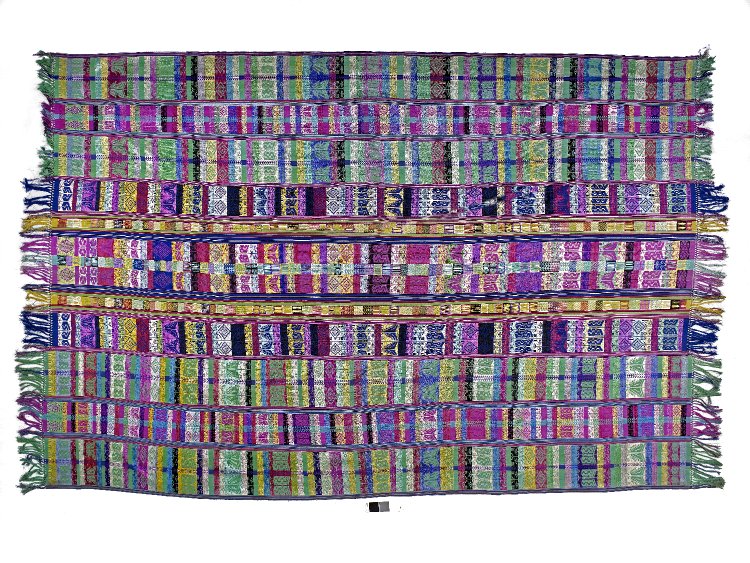
Silk cloth dominated by vivid pinks and greens.A Patterned Carpet
(July Tanka)

A patterned carpet,
the city is unrolling
between the bus stops…
I roll it up in my eye
and send it on to a friend.

*

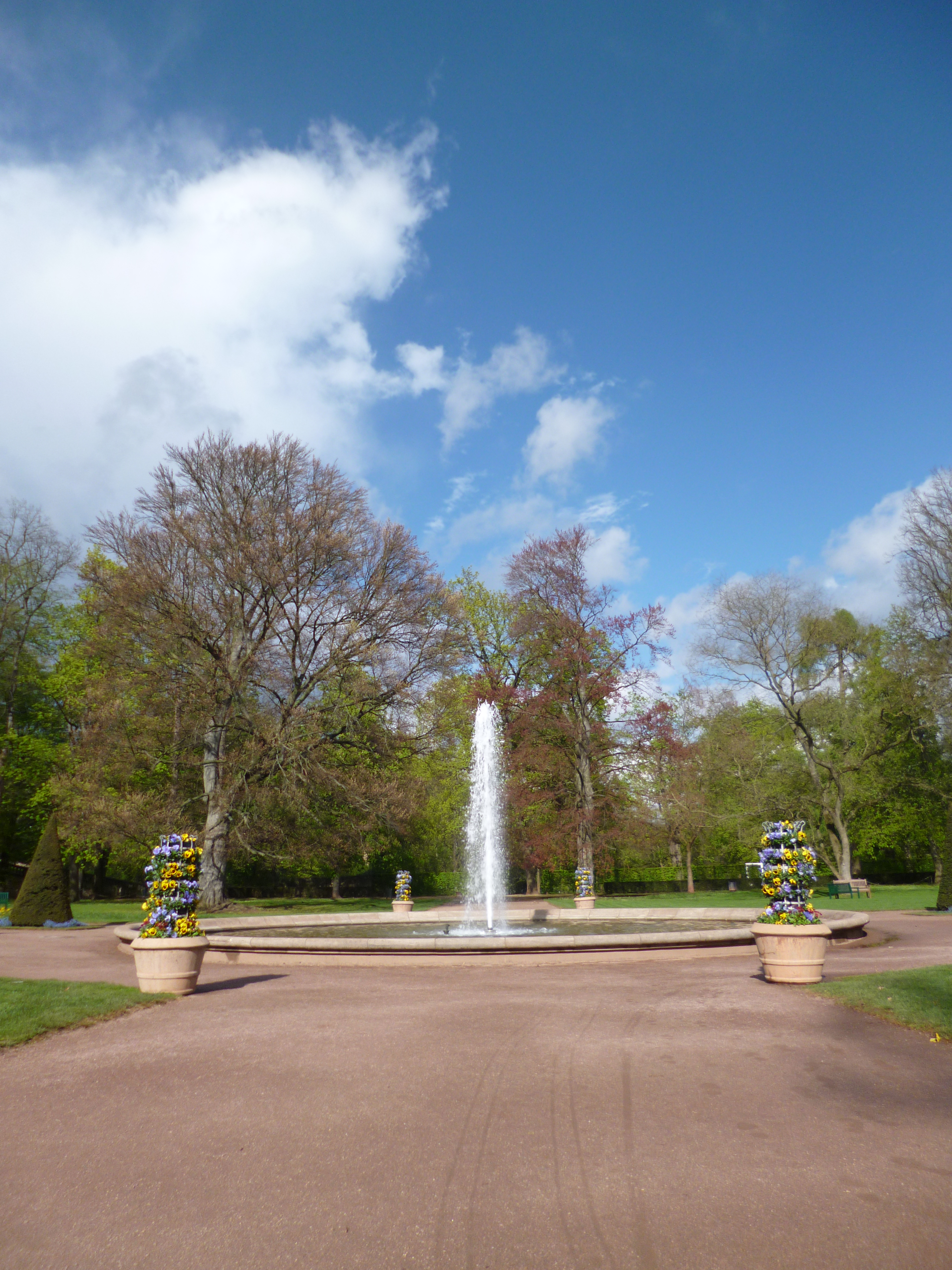
Fountain in round basin in park, flanked by large flowerpots

Clouds, high in the sky,
saturated with sunshine,
rapidly drifting –
like currents across oceans,
like thoughts across continents.

Christina Egan © 2012


The idea of the big city as a woven carpet is  also pursued in the German poem Geflechte.

Photographs: Silk cloth from Madagascar. © The Trustees of the British Museum. — Schloßgarten Fulda. Christina Egan © 2014.

Snow-White Patches

Snow-White Patches
(July Tanka)

Daisies, buttercups,
scattered across the lush green
like two galaxies:
humble, ephemeral and
full of the glory of God.

*

Those snow-white patches,
patterns on the lawn, the mulch:
hortensia flowers,
as if cut out from the world
of colours and of motion.

Christina Egan © 2012


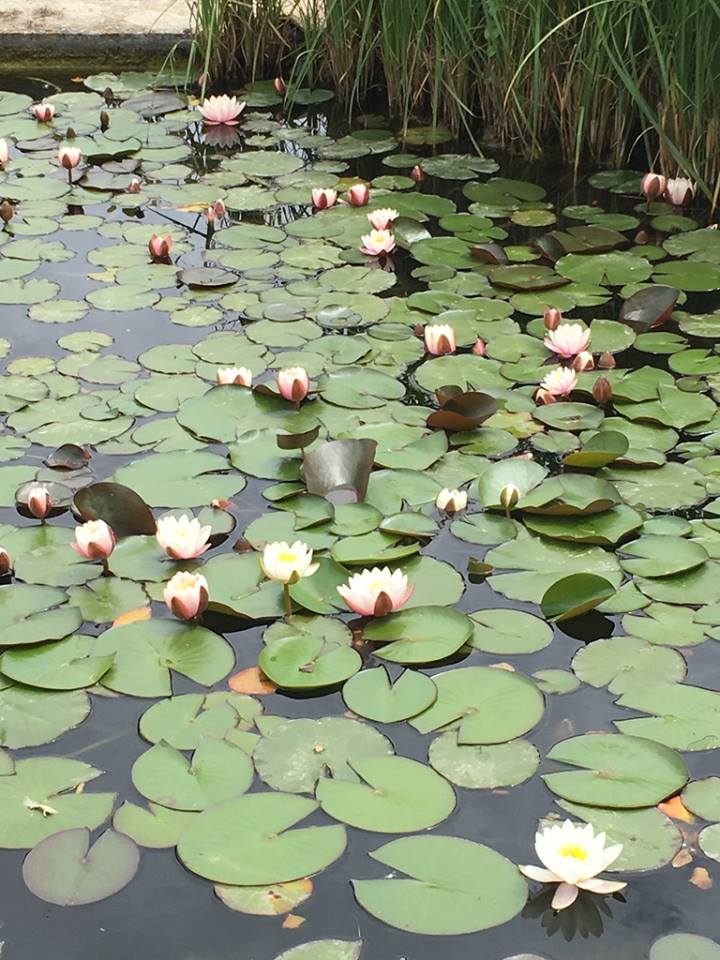
Waterlilies with half-open luminous pink and white flowers.

These poems describe the world as an ensemble of patterns. They also try to make sense of the world, and perhaps the act of discovering order also unveils meaning…

Something tiny resembles something gigantic, the whole of the known world, in fact. Something white appears as a hole or an island in the colourful picture: like a shadow of death or a gate to eternity.


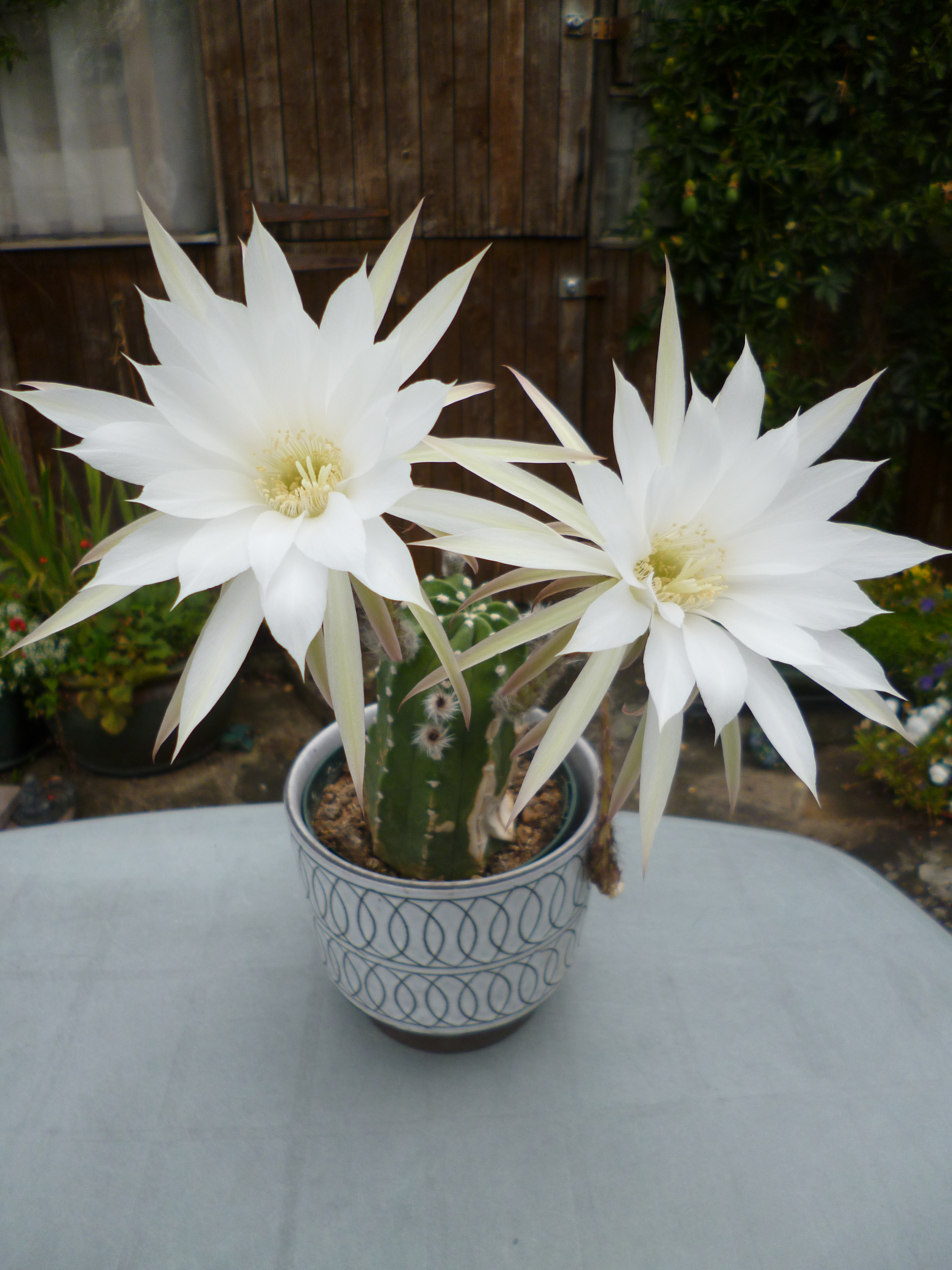
Cactus seen from above, with two star-like flowers bigger than the body of the cactusThe line ‘full of the glory of God’ was inspired by the verse ‘The world is charged with the grandeur of God‘ by Gerald Manley Hopkins.

You can truly ‘see a world in a grain of sand / and a heaven in a wild flower’, as William Blake claimed!

Photographs: Water-lilies. Liu Ye (Ye Liu) © 2016. — Queen of the night. Christina Egan © 2014.

Glasperlenlied

A dozen beads of gold, lapis lazuli, cornelian.Glasperlenlied

Die Stadt ist endlich dunkel, endlich still.
Und in der regenreinen Ruhe quillt
herauf, was unter dem Getümmel lag:
das Teppichmuster unterm Alltagstag.

Die Stunden ziehen bunt an mir vorüber,
verdichten, runden sich: Glasperlenlieder.
Mein Leben ist gering. Ich bin allein.
Doch brennt mein Herz und leuchtet wie der Wein.

Christina Egan © 2011

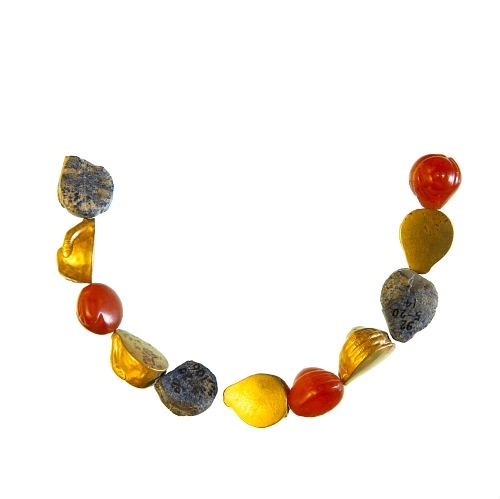
Minoan beads from Crete, of gold, lapis lazuli and cornelian, at least 3,500 years old.
Photograph
© The Trustees of the British Museum.

Ein Muster aus Muscheln / Greek Islands

Ein Muster aus Muscheln

Ein Muster aus Muscheln und Bernstein und Bein,
mit Karneol und Koralle durchsetzt,
auf lapislazuliblauem Grund:
So leuchten die Inseln im Sonnenschein,
vor dreitausend Jahren… und letzthin… und jetzt:
ein Mosaik, ein vollendeter Fund.

Vors Fenster des sinkenden Flugzeugs gespannt,
vom Guckloch des finsteren Turmes gerahmt
– nur einen Moment – nur einen Moment –
das Muster aufs wartende Auge gebannt,
die Farben ins wache Gedächtnis gemalt:
ein Bild, das nach dreißig Jahren noch brennt.

Christina Egan © 2016

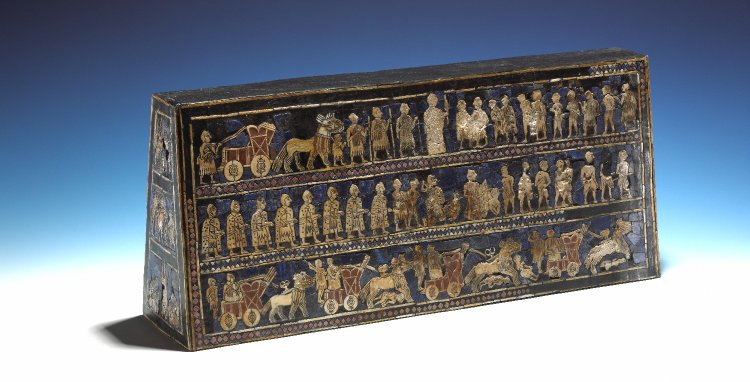
Standard_of_Ur_BM_121201

Standard of Ur (2500 BC). – Photograph© The Trustees of the British Museum.

I am showing this ancient object – twice as old as our classical antiquity – because it must have inspired my poem about Greece. The images on the box are made of shell, lapis lazuli, and red limestone, but I did not remember those details or  even think of the thing. When you have the chance to go to London, do not miss out on the Sumerian galleries of the British Museum!

The longing for a return to Greece, both for the Mediterranean environment and for the ancient civilisation, is also expressed in On Eating Olives / Beim Olivenessen  and in Greek Islands  (below). There are a number of poems about Crete in German and English on this website.


Greek Islands

There is more blue in the air
between here and the horizon,
between morning and evening,
than the cup of the eye can hold.

So my soul may flow over
into the sky,
into the sea,
into this scattered paradise…

Christina Egan © 2012 


On the topic of the blue Mediterranean Sea, see also Meine blaue Mauer  and O Heimatland aus Stein und Licht. On the manifold colours of the same sea, see The Purple Sea / Das lila Meer.