Solstice Scroll

Solstice Scroll

I break some rare and short-lived flowers,
I sacrifice some sunshine hours
for Melpomene’s altar steps.
Since Phaeton’s horses thunder higher
with ever more abundant fire,
I’ll finish ere the day-star sets.

I’ll call upon Apollo’s powers,
I’ll stand amongst the cypress towers
around my children’s hidden tomb.
I’ll write my elegy and sing it,
I’ll scroll it up, stand up and fling it
into the bright barge of the moon.

Christina Egan © 2018

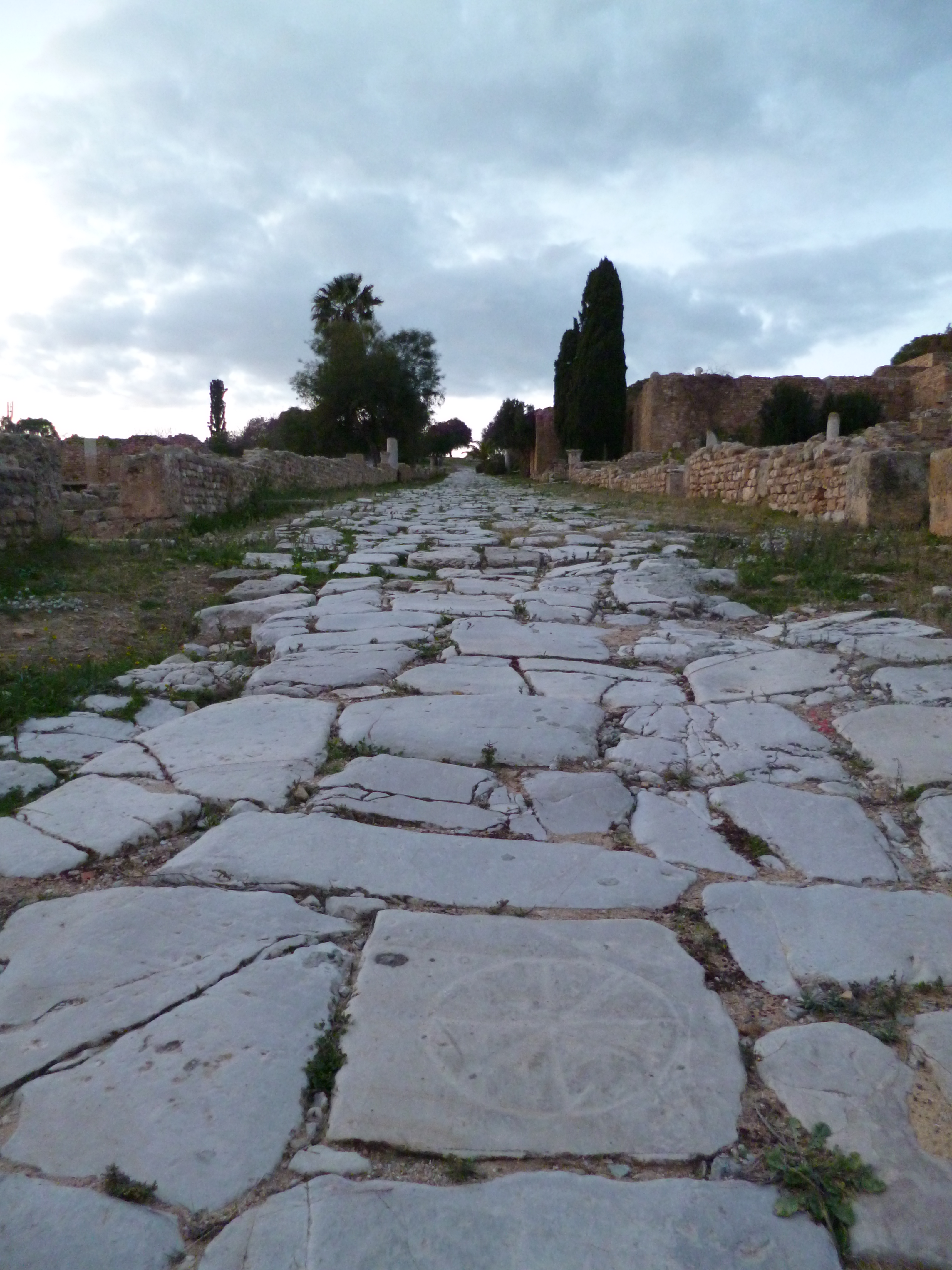
Straight Roman road with ruins and trees to the left and right, in the dusk

Roman road in Carthage, Tunisia.
Photograph: Christina Egan © 2014

By the River I was Sitting

By the River I was sitting

By the River I was sitting
Watching barges floating by
Like the clouds so full of promise
In the blue and burning sky

Bearing jewels, bearing silver
From the mountains crowned with snow
Bearing spices, sweet and fiery
From the jungles down below

By the River I was waiting
For a boat to pick me up
Till the oars were folded inward
And the city-gates were shut

On my roof-top I was watching
Night like lapis-lazuli
While the stars were slowly rolling
Round the tiny lonely me

By Two Rivers I was dwelling
In a house of golden bricks
In my dress of snow and silver
Waving to intrepid ships

When the stars had come full circle
Strangers broke my city-gate
And my boat lay by the palm-trees
Finest date-wine was its freight

And it flew against the current
And it floated with the storm
Till I climbed the purple mountains
Where the River Twins are born

Christina Egan © 2011

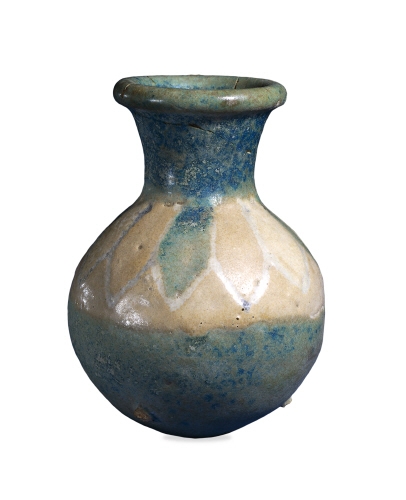
Jar, elegantly curved, with brown and blue glaze.


This song of the woman by the river is taken
from my stage play The Bricks of Ur  (© 2011).

Place: City of Ur, Mesopotamia — Time: 2000 B.C.

Photograph: Assyrian jar (9th to 7th c. BC).
© The Trustees of the British Museum.

City Made of Dreams / Stadt aus Träumen

City Made of Dreams

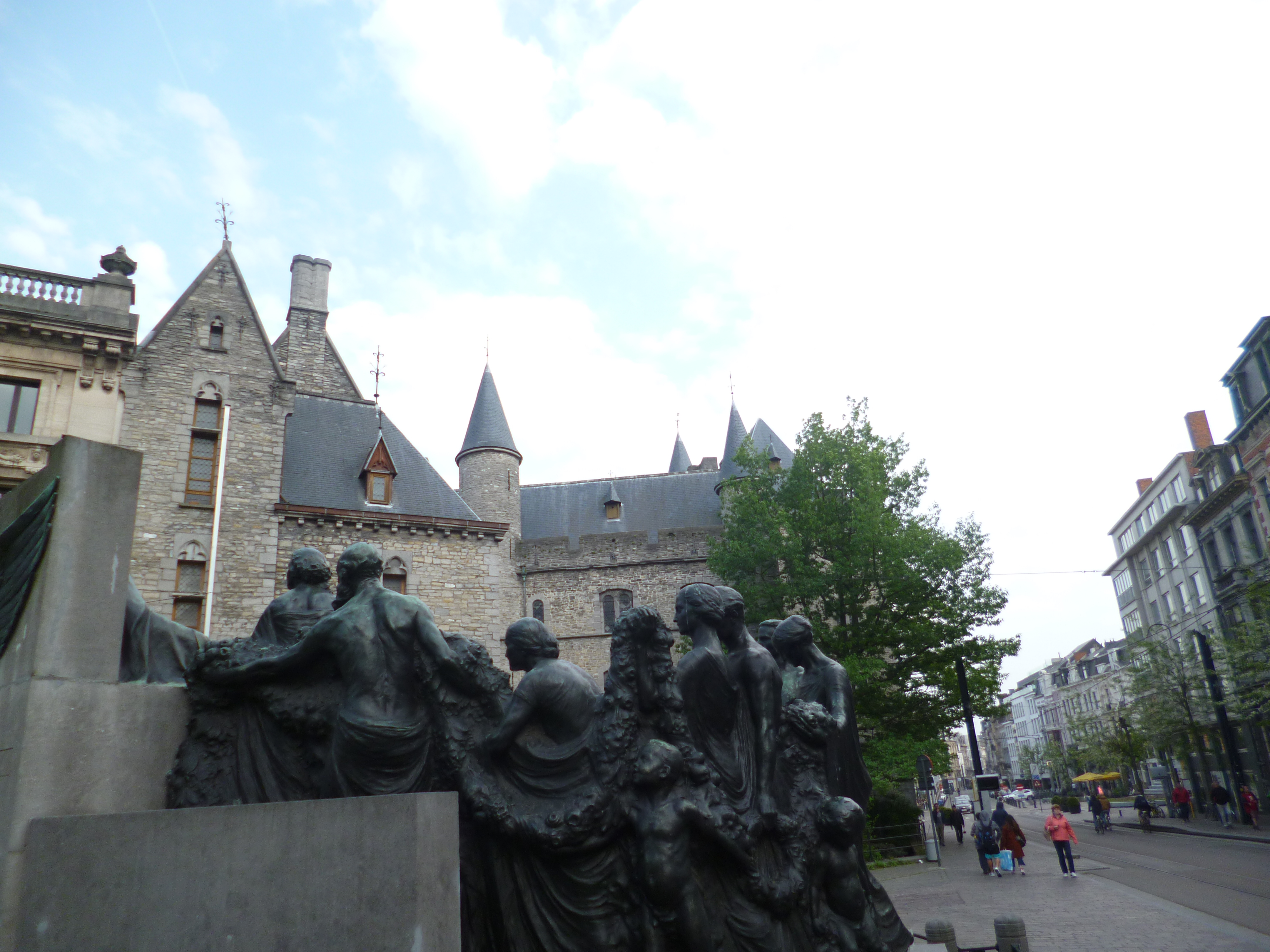
This is the city made of dreams: it knows
no end. Its splendid roads roll on and round
the bristling castles and across the mound
and down across the squares. Its fabric glows.
But right below this net of rugged ground
a second net of ample pathways flows:
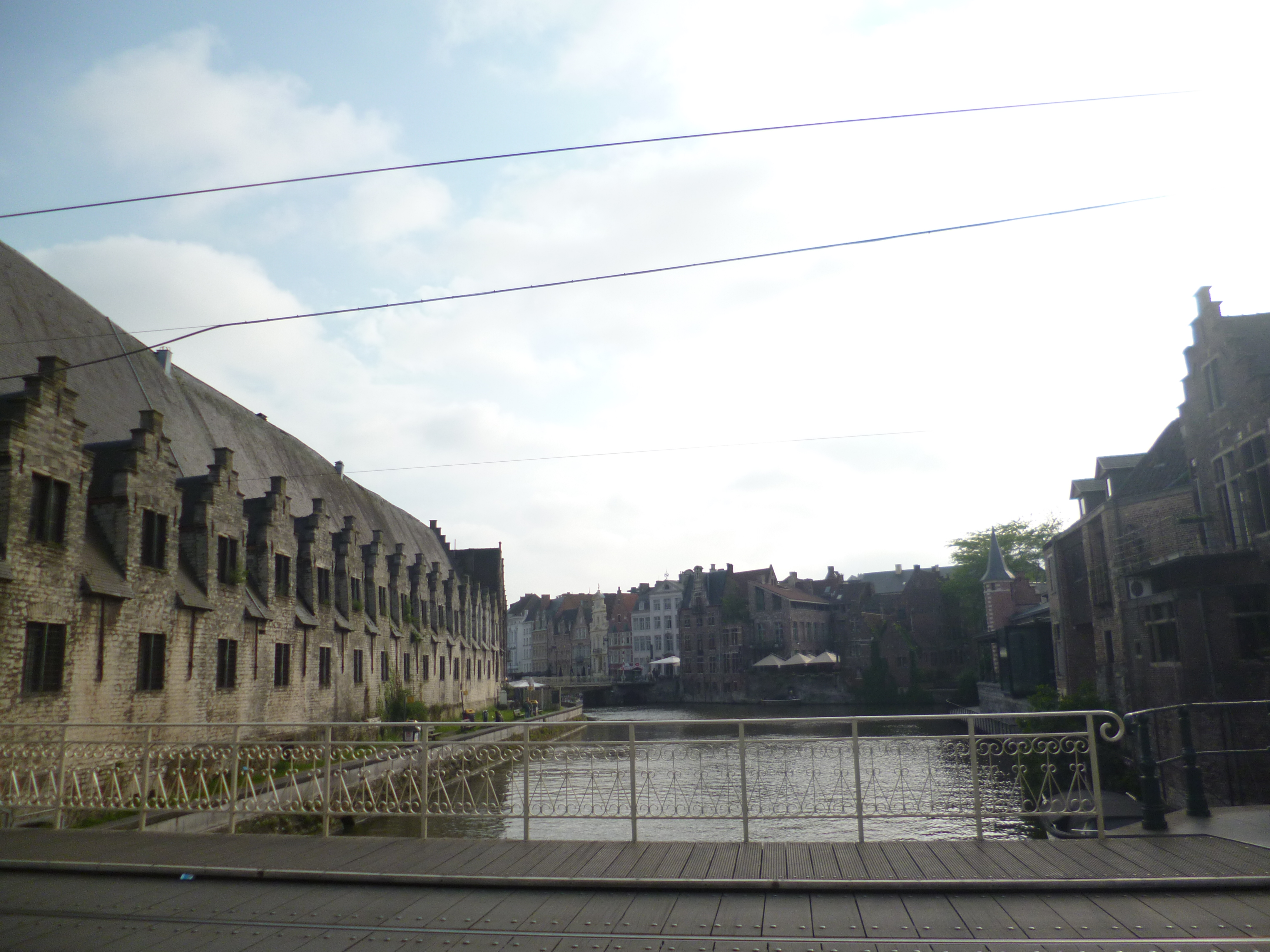
the rivers and canals in sparkling bows;
below the bridges, barges go around.
I stand astounded, lost amongst the towers
and giant spires, and walk on for hours…
This is the ancient city without end.
A steep and green embankment is resounding
with laughter and guitars, with life abounding.
This is the Queen of Flanders: this is Ghent.

Christina Egan © 2018
Castle with turrets directly on high street, with life-size statues of historical figures in front.

Stadt aus Träumen

Dies ist die Stadt aus Träumen. Ihr Gehege
ist grenzenlos. Die stolzen Straßen klimmen
empor den Hügel, strömen um die Zinnen
und über Plätze, leuchtendes Gewebe.
Doch unter jenem rauhen Netz der Wege
sieht man ein zweites weites Netz sich krümmen,
Kanäle oder Flüsse glitzernd rinnen,
und Boote gleiten unter breite Stege.
Ich steh verwundert, wandere verloren
im riesenhaften Wald von Türmen, Toren…
Dies ist die Altstadt, die kein Ende kennt.
Die steile grüne Böschung hallt mir wider
vom frohen Rhythmus der Gitarrenlieder.
Dies ist die Königin von Flandern: Ghent.

Christina Egan © 2018
Bridge over river lined by ancient stone and brick buildings with steep gables.

In both languages, the poem follows the same strict sonnet form.

There are only five rhymes, placed as: abba – baab – cce – dde. The final line is linked to one other line, with both of them carrying the main message together: “This is the ancient city without end. / This is the Queen of Flanders: this is Ghent.”

There are also enjambments, particularly “it knows / no end”: unusually, a very short sentence is cut in half so that the vastness of the place is felt in the pause at the end of the line.

The verse are also full of assonances and alliterations and other sound clusters, e.g. “verwundert, wandere” and the corresponding “stand astounded”. In this way, the form of the poem corresponds to the content, a description of a web of roads and rivers and a forest of towers and battlements.

Form and content cannot be separated. This is an essay; the above is a poem!

Photographs of Ghent: Christina Egan © 2018.

Chandelier

Chandelier

At last, the air is warm again; the sky
at last gets gradually infused with light,
the clouds are dusty blue and creamy white:
the colours, too, warm up, warming the eye.
And that pale cliff of buildings, sheer and high,
gets saturated with the same delight
and holds it up against the sinking night:
this half-forgotten gentle golden dye.
And here, above the square of glittering grass,
above the blossom bursting on the trees
which trembles when the wilful spring winds pass,
there floats another sparkling tree, it seems:
a thousand particles of precious glass
struck by the grand piano’s swelling breeze.

Christina Egan © 2013

Yellow Fire (April Haiku)

Yellow Fire
(April Haiku)

*

Little rust-red leaves,
no, blood-red in the sunlight,
there, throbbing with life!

*

White stars are floating,
above the ancient tombstones,
on the slanting tree.

*

Little lime-green leaves
running along the hedges,
look, like yellow fire!

*

Christina Egan © 2017

Drawing of three old-fashioned spinning tops.Illustration from
‘Children’s games throughout the year’ 
(1949) by Leslie Daiken.

The Aqueduct of Summer

The Aqueduct of Summer

A mighty bridge delivers, arch on arch,
the elixir of life: the light, the sun.
More yellow blossom blinks beneath each arch.
A milestone stands before arch twenty-one:
Hic aequinoctium, hinc lucis pars.
From equal night and day, the light has won.
This is the aqueduct of summer: March.
Proserpina returns with Phaeton’s run!

Christina Egan © 2016

Tiny bundle of yellow crocusses between massive tree roots, with sparse grass around.

Phaeton is an ancient sun god and Proserpina (or Persephone) a spring goddess who returns from the underworld for the duration of summer.

You will find German poems on the spring equinox at Westminster Bridge, Mitte März  and on the autumn equinox at Der letzte Tag des Sommers ist gekommen  and Hält die Waage Nacht dem Tage.

The Latin quotation is made up…!

Photograph: Christina Egan © 2017.

The Spell of Spring

The Spell of Spring

Japanese laquer picture: two flying geese above river in gold, full moon in silver.When seven geese arise and fly
in magic patterns through the sky,
the silver rings of cloud will blush,
the orb of sparse young green glow lush.

When seven geese cry out and glide
from wintertide to summertide,
we’ll pass an arbour like an arch
and be transformed by mighty March!

You have become my you, and I,
your you, and our hearts float high,
when seven geese sail out of sight
into the secrets of the night.

Christina Egan © 2015

Image from: Japan nach Reisen und Studien by J. J. Rein (1881-86). Provided by the British Library through Flickr.

Rhymes / Known

Rhymes

No, our names don’t rhyme well,
we come from far-off lands –
but neither rhyme nor reason
can censor our hands,

those hands that seem created
to grasp the chance, to grasp
each other, tight and quiet,
as if two souls could clasp.

Yes, hills from hills are distant
and can’t wed as they would,
they cannot warp and wander –
but people could and should.

Christina Egan © 2004

Silhouette of low silver-blue mountain range against silver-blue sky, just like in the poem.

Known

I’ve smelt the rarest rose of snow,
I’ve tasted of the sun’s last glow.

I’ve met you on a cloud-veiled ridge,
perhaps the planet’s highest bridge.

I’d looked out long. And now I’ve seen.
I’ve once been loved. I’ve known. I’ve been.

Christina Egan © 2004


The thought that people, unlike mountains, can get to each other across distances, goes back to a Greek proverb.

Photograph: “Kegelspiel” by N8mahl at the German language Wikipedia. Licensed under CC BY-SA 3.0 via Commons.

The Palms and the Poet

The Palms and the Poet

Short sturdy palm-trees, their leaves being blown to one side by a strong wind; blue sky, bright lawn.The palm-trees where the poet lingers
stretch out a thousand feathery fingers
and offer sweetest dates.
The shoulder-high ones’ shining tresses
give to the passing knight caresses,
the tall ones, sprinkled shades.

They weave their silken wings together
to shield him from the weighing weather
and point him to the wells.
He seems to smile, but does not notice
the leaves nor fruits, for in his throat is
a spring of syllables.

Christina Egan © 2005

Pond with weeping willow reflected and white goose crossing.


Huge Harp

The weeping willow
is smiling in the sunshine,
dancing in the wind.
You sit by the pond beneath,
as if inside a huge harp.

Christina Egan © 2017

The tanka’s image of the poet beside a large harp or lyre, as if he were sitting inside, was inspired by stained-glass windows or illuminated manuscripts showing King David performing the psalms he is said to have composed.

Photographs: Christina Egan © 2014 / © 2018.

If Only It Could Happen

If Only It Could Happen

If only it could happen
More real than before
If only it could happen
Once more, oh, just once more

More than a memory
There never to return
More than a fantasy
There never to be born

If only it could happen
More real than before
If only it could happen
Once more, oh, just once more

More than an accident
From sadness or despair
More than an overspend
Of pity or of care

More than a fairground ride
Of wild delight, distress
More than a mounting tide
Of wandering tenderness

If only it could happen
More real than before
If only it could happen
Once more, oh, just once more

If only it could happen
And swallow up the past
If only it could happen
As lasting as it’s fast

If only it could happen
As lasting as it’s fast

More than a flower, gay,
Unfurling just to die
More than a night, a day,
A lonesome lullaby

Woman in winter clothes waiting under lantern in sunlit lane.

If only it could happen
More happy than before
I think I’ll let it happen
Once more, oh, just once more

I think I’ll let it happen
Once more, oh, just once more

Christina Egan © 2006

Photograph: Montpellier, France, in midwinter. Christina Egan © 2010.