Sooft die Sonne rot

Sooft die Sonne rot

Sooft die Sonne rot
auf dem Seil des Horizontes steht
und bebt und loht
und schweigt
und steigt und steigt,
als wolle sie der Erde Angesicht entfachen,

so steht das Herz
und schaut und staunt
und schwebt
und schlägt und schlägt
und weiß: die Welt
ist ein errötendes Erwachen
und wird bald ganz in Flammen stehn…

Christina Egan © 1990

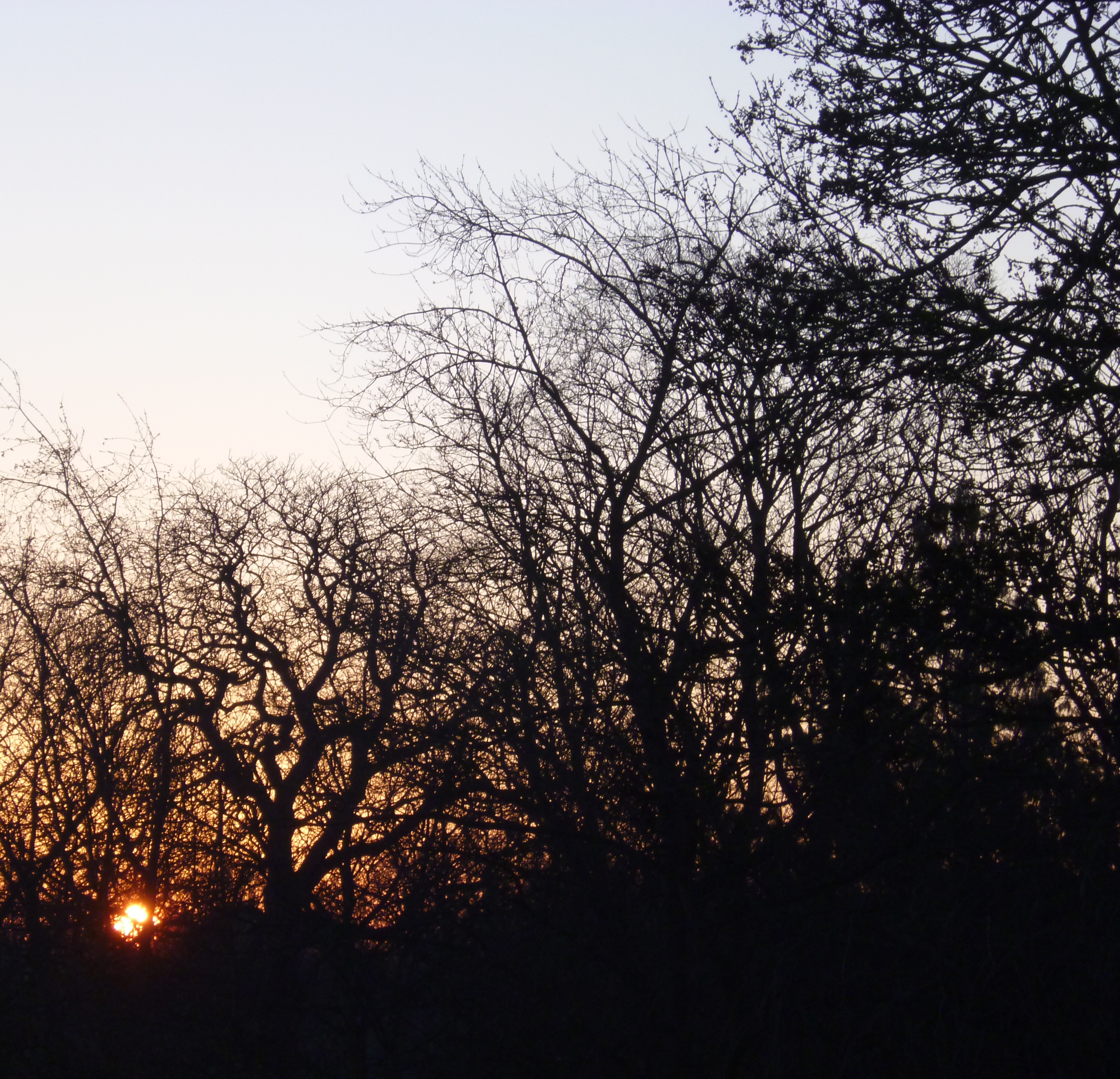
Gleam of rising sun through black web of bare branches and twigs.


You can get the sense of the text more or less through an automatic translation; but you would have to read it aloud in the original language in order to get the music of the language and the rhythm of the heartbeat…


Photograph: Christina Egan © 2017.


au jour des ténèbres

au jour des ténèbres

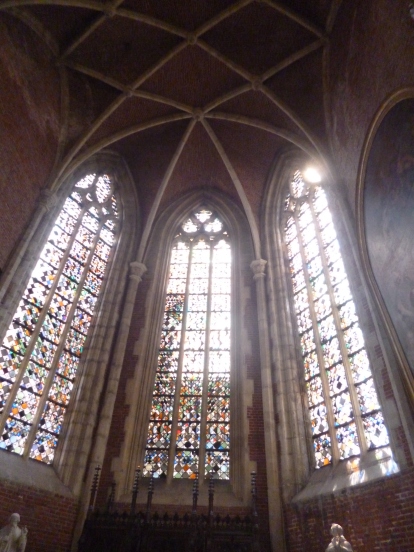
Three tall gothic windows with modern stained galss, abstract and subdued.au jour des ténèbres
une chandelle dansait
au jour des funèbres
une fleur étincelait

à l’heure de silence
une voix m’a touché
à l’heure de souffrance
une main m’a brossé

à l’aube très lente
une étoile est surgie
dans l’âme patiente
la lueur s’élargit

comme si la souffrance
se tintait de bleu
ô douce espérance
qui baigne les yeux

Christina Egan © 2018

This poem was inspired by a French church service where the words ‘souffrance’… ‘silence’… ‘patience’… seemed to echo in the dark church on a dull Good Friday…

Windows in St Nicholas, Ghent. Photograph: Christina Egan © 2018.

Beginenhof in Ghent

Beginenhof in Ghent

wie finde ich sie wieder
die reihen schwarzer türen
die zu den treppengiebeln
und tulpenbäumen führen

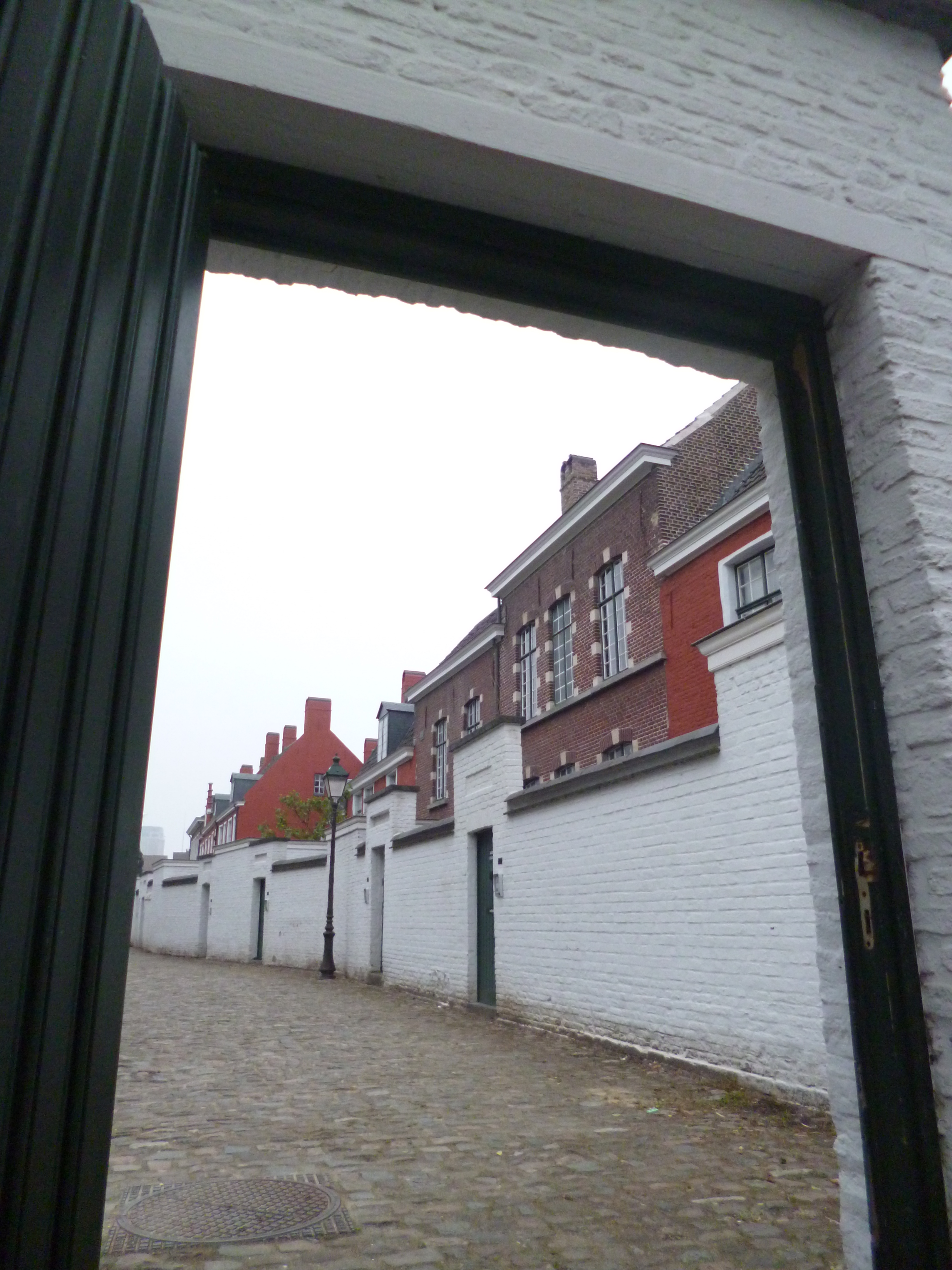
Gate into cobblestone lane with white walls, black doors, and red buildings behind.wie kann ich sie entdecken
die schlichten weißen mauern
die um erblühnde hecken
und rote häuser dauern

gewunden sind die gassen
versperrt von breiten flüssen
geborsten ist das pflaster
und meine schuh zerschlissen

wo nisten die gestalten
in schwarz und weißen trachten
wie hundert flinke schwalben
über den grauen grachten

wo sind die schönen schriftzüge
die weiß auf schwarz verkünden
die heiligen drei könige
wärn manchmal anzufinden

wie finde ich sie wieder
die schweren blanken türen
die durch bestirnte lieder
ins glühnde schweigen führen

Christina Egan © 2018

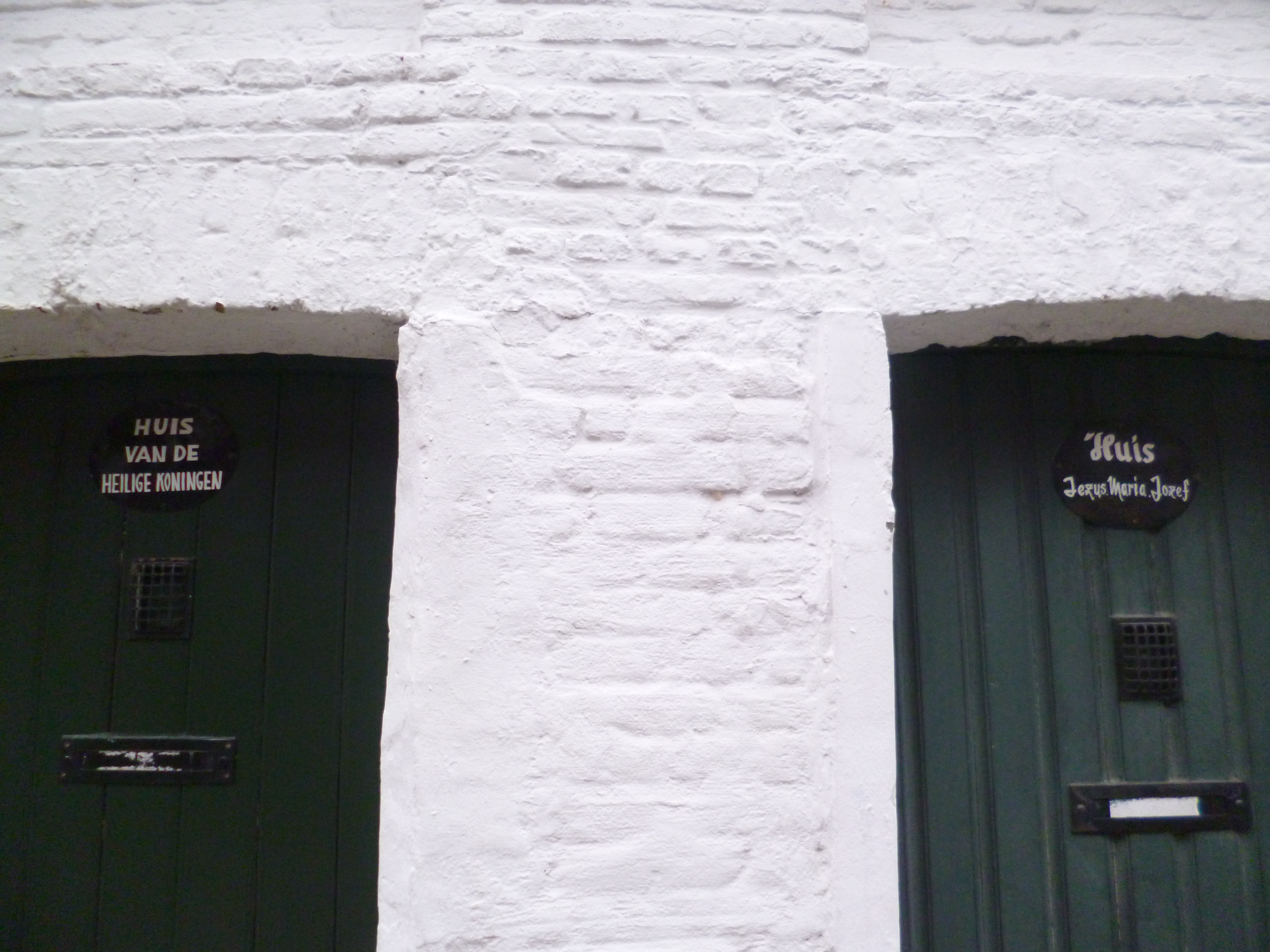
Two heavy black wooden doors in a white brick wall, with inscriptions as below.

“House of the Three Wise Men” (Three Holy Kings, in other languages) and “House Jesus, Mary, Joseph” at a former Beguinage in Ghent (Klein Begijnhof).

This was a type of convent where the sisters were allowed to go out and also to leave after each year of service. I imagined the story of a woman who wants to rejoin the community and for some reason ‘cannot find it any more’.

Photographs: Christina Egan © 2018.

The Odd Word

The Odd Word

In this noise this dust this waste
of the traffic the toil
the relationships the part-time
part-heart commitments
the remorseless rap from the radio
the news of murder and treason the trash
worth millions of dollars the scraps
of subtle philosophy the divine
passionate percussion solos
something went missing
and the problem is
we don’t miss it.

In a café full of words and music
like lightning
somebody mentions Hölderlin
(a poet who went mad
after they had treated him
in a lunatic asylum)
and I remember his odd expression
‘the God’
odd isn’t it
‘the’
must be Classical Greek
I’ll clarify that.

Christina Egan © 1998

The phrase ‘words and music’ allude to 
a poetry event where I met my partner!
At a later reading, I presented this poem.

Snow-White Patches

Snow-White Patches
(July Tanka)

Daisies, buttercups,
scattered across the lush green
like two galaxies:
humble, ephemeral and
full of the glory of God.

*

Those snow-white patches,
patterns on the lawn, the mulch:
hortensia flowers,
as if cut out from the world
of colours and of motion.

Christina Egan © 2012


Waterlilies with half-open luminous pink and white flowers.

These poems describe the world as an ensemble of patterns. They also try to make sense of the world, and perhaps the act of discovering order also unveils meaning…

Something tiny resembles something gigantic, the whole of the known world, in fact. Something white appears as a hole or an island in the colourful picture: like a shadow of death or a gate to eternity.


Cactus seen from above, with two star-like flowers bigger than the body of the cactusThe line ‘full of the glory of God’ was inspired by the verse ‘The world is charged with the grandeur of God‘ by Gerald Manley Hopkins.

You can truly ‘see a world in a grain of sand / and a heaven in a wild flower’, as William Blake claimed!

Photographs: Water-lilies. Liu Ye (Ye Liu) © 2016. — Queen of the night. Christina Egan © 2014.

Sambation

Sambation

O daß der Mühlenräderlärm der Plätze
verrauschte wie ein Sommerwolkenbruch,
das grelle purzelnde Geröll der Menge
versiegte in der Großstadtstraßenschlucht,

auf daß das Flußbett sich durchwandern ließe
an Pforten, Traufen, Blumentrog vorbei
und nur die Schwalbe in die Stille stoße,
hoch, froh, mit Sichelflug und Silberschrei.

O daß die Lichterstrecken, Lichterhaufen
verblaßten wie das Nordlicht überm Meer,
auf daß die Sterne aus dem Dunkel tauchten
wie ein mit Bronze überglänztes Heer!

Christina Egan © 2017


The mythical river Sambation at the edge of the known world cannot be crossed because it is wild and full of mud and rocks — or even consists of rocks instead of water.

Here, the busy streets of a big city are experienced as a ravine full of tumbling stones, while the screech like grinding millstones; by night, the galaxies of lamplights drown the stars.

The opposite images are the quiet riverbeds of empty streets; the silent sky punctuated by the flight and cry of a swallow; and then the stars re-emerging…

This poem will be published in the German-language calendar Münsterschwarzacher Bildkalender 2019 (available from mid-August).

Schläft ein Lied / Sleeping Choir

Schläft ein Lied von tausend Zungen

Schläft ein Lied von tausend Zungen
im geweihten Marmorrund;
und der Stein hebt an zu schwingen,
wenn die Orgel perlt und summt,
und der Stein hebt an zu klingen,
wenn die Orgel schwillt und braust –
Wird das Herz vom Ruf durchdrungen
und der Leib in Glanz getaucht.

Christina Egan © 2017


Sleeping Choir

Sleeping in the marble round
choir of a thousand tongues;
and the stone vibrates and hums,
when the organ wakes to sound,
and the stone pulsates and sings,
when the organ swells and roars –
In your heart the message soars,
steeped in splendour are your limbs.

Christina Egan © 2018


This poem is developed from a key verse of German Romanticism. Joseph von Eichendorff (popular to this day and one of my favourite poets) imagines the world dreaming and a song slumbering within; you need to find the magical word to awaken them.

Schläft ein Lied in allen Dingen,
Die da träumen fort und fort,
Und die Welt hebt an zu singen,
Triffst du nur das Zauberwort.

Joseph von Eichendorff

The lines were also inspired by a Pentecost service at Notre Dame de France at Leicester Square in London: when the organ plays at a high volume, its circular walls — not really marble, but snow-white — seem to vibrate and sing around the visitor.

The German version of this poem will be published in the calendar Münsterschwarzacher Bildkalender 2019 (available from mid-August).

Photograph: Catholic church Stella Maris, Binz on the Isle of Rügen, Germany. Christina Egan © 2016.

Inside the Rainbow

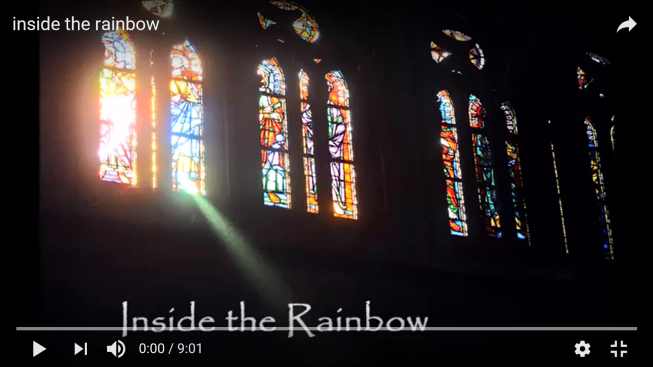
Please note the video Inside the Rainbow  by Francis Logan which was inspired by my verse on this internet site!

Im Inneren des Regenbogens describes a mesmerising encounter inside the rainbow of stained-glass windows — with a person or with God… The composer interpretes it as an encounter with Jesus, who is both a person and God himself; but you need not share this faith to be stirred by these sounds of celestial harmony.

You will find the entire text in English below. Please pass on Francis Logan’s beautiful music: tranquil and transcendent… Image: Still from Inside the Rainbow on YouTube. Music and video: Francis Logan © 2018. Also available on SoundCloud.

Inside the Rainbow

Inside the rainbow
In the glimmer of the glass windows
In the waterfall of grace
In the antechamber of the sky

I saw you
I felt you
I held you
I recognized you

In a luminous joy
In a sparkling silence
In a durable moment
In a house of light

Christina Egan © 2018

As Limpid as the Moon / Alabasterschale

As Limpid as the Moon

Some people are as luminous,
as limpid as the moon:
with truthfulness amidst the lies
or happiness in gloom.

They float and glow across the road
or mesmerise a room;
they never fade, and when they’ve died,
they leave a shining tomb.

Christina Egan © 2016


Alabasterschale

Überm schwarzen Heer der Bäume,
überm grauen Heer der Gräber
ruft durch dunkelblaue Räume
eine Glocke unbeirrt.
Balanciert auf spitzem Pfahle,
schimmert ferne feingeädert
eine Alabasterschale:
fremdes riesiges Gestirn.

Überm schwarzen Heer der Bäume,
blätterlos und blütenträchtig,
überm grauen Heer der Steine
lädt die Glocke zum Gebet.
Überm hingestreckten Tale
steigt gemessen, schlicht und prächtig,
jene Alabasterschale,
bis sich uns das Herz erhebt.

Christina Egan © 2017


As Limpid as the Moon remembers my radiant parents-in-law.

Alabasterschale compares the full moon to a bowl of alabaster; the scene is the vast old Tottenham Cemetery in London. The poem integrates awe before Nature and faith in God (as worshipped in church etc.).

This text will be printed in the Münsterschwarzacher Bildkalender 2019.

Ex tenebris (The day is like a daffodil)

Ex tenebris

The day is like a daffodil. Yet
the green garland of the garden,
the golden garland of the sunset
cannot dispel the dark of the depth.

On the crests of the hills,
tiny blue brushstrokes,
you can watch them wander,
the deceased and the unborn.

My heart is a fist in my chest.
My tears are grapes of glass.
No one sees them: no one sees me.
I am alone with the angels.

Christina Egan © 2017

Daffodils and narcissus growing thickly around a fivefold gnarled treetrunk.Photograph: Christina Egan © 2013.