On the Volcano’s Rim
Goldstaub
(Lanzarote)
Hoher blauer Himmel,
weißer Wolkenflug,
ungestüme Winde,
rascher Schattenzug
über rote Halden,
über graue Höhn,
über grüne Matten,
wo schon Sterne stehn:
abertausend Blüten
wie ein Frühlingslied,
Goldstaub, den die Sonne
aus dem Erdreich zieht!
Christina Egan © 2015
—
Gold Dust
(Lanzarote)
Blue sky, ever higher,
white clouds in full flight,
winds wilful and forceful,
swift change of the light
across the red boulders,
across the grey height,
across the green lichen,
where stars tremble bright:
a flourish of flowers
and spring in a splash,
the gold dust the sun
can draw out of the ash!
Christina Egan © 2015
—
Dreaming Dragon
(Lanzarote)
Dew-drops sparkling in all colours
on the mighty coal-black craggy
shoulder of a dreaming dragon:
so these tiny tender flowers
perch on the volcano’s terrace –
fire, earth and wind distilled
to a dainty dotted quilt.
Ceaseless gales and sleepless fire,
ashes fed with salty dew –
ocean and volcano brew
flora’s early, lacy layer,
magic carpet in the air,
in the boundless brown and blue…
Dreams are real. Dreams come true.
Christina Egan © 2015
—
The Hoard
(Lanzarote)
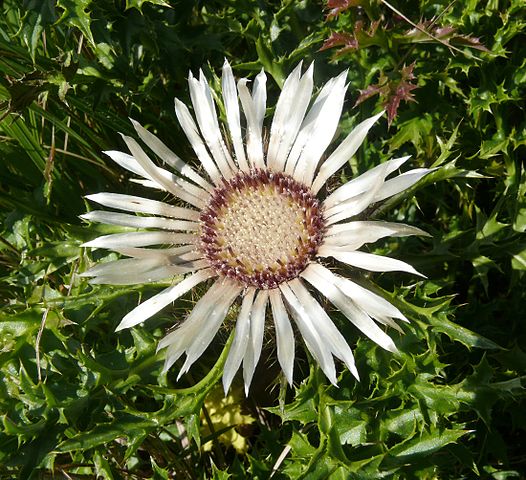
As the mountain bears the flower,
as the giant holds the gem,
so the hour bears my poem:
purple speck on silver stem.
Where a myriad wild flowers
sprout behind the dry-stone wall,
I must gather all my powers
till the heavens hear my call.
Christina Egan © 2015
—
Valentine on the Volcano
(Lanzarote)
We dance on the volcano’s rim –
although its low and sunken side,
although extinct for centuries –
tossed partly by the wild wind’s whim
and partly drunk with liquid life –
suspended over sky-blue seas!
(I found my love above Teguise!)
Christina Egan © 2015
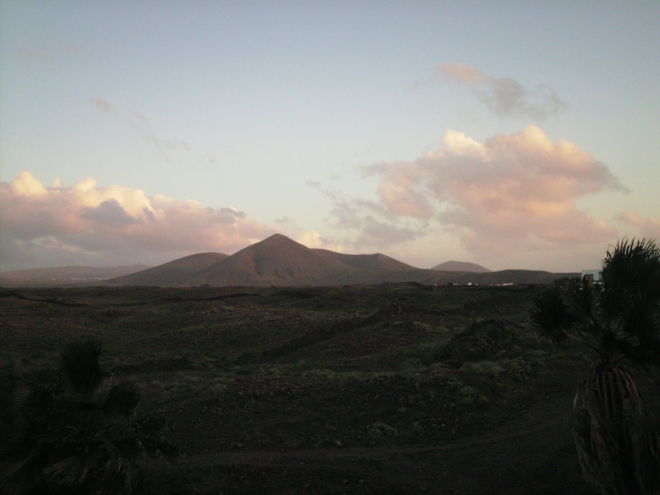
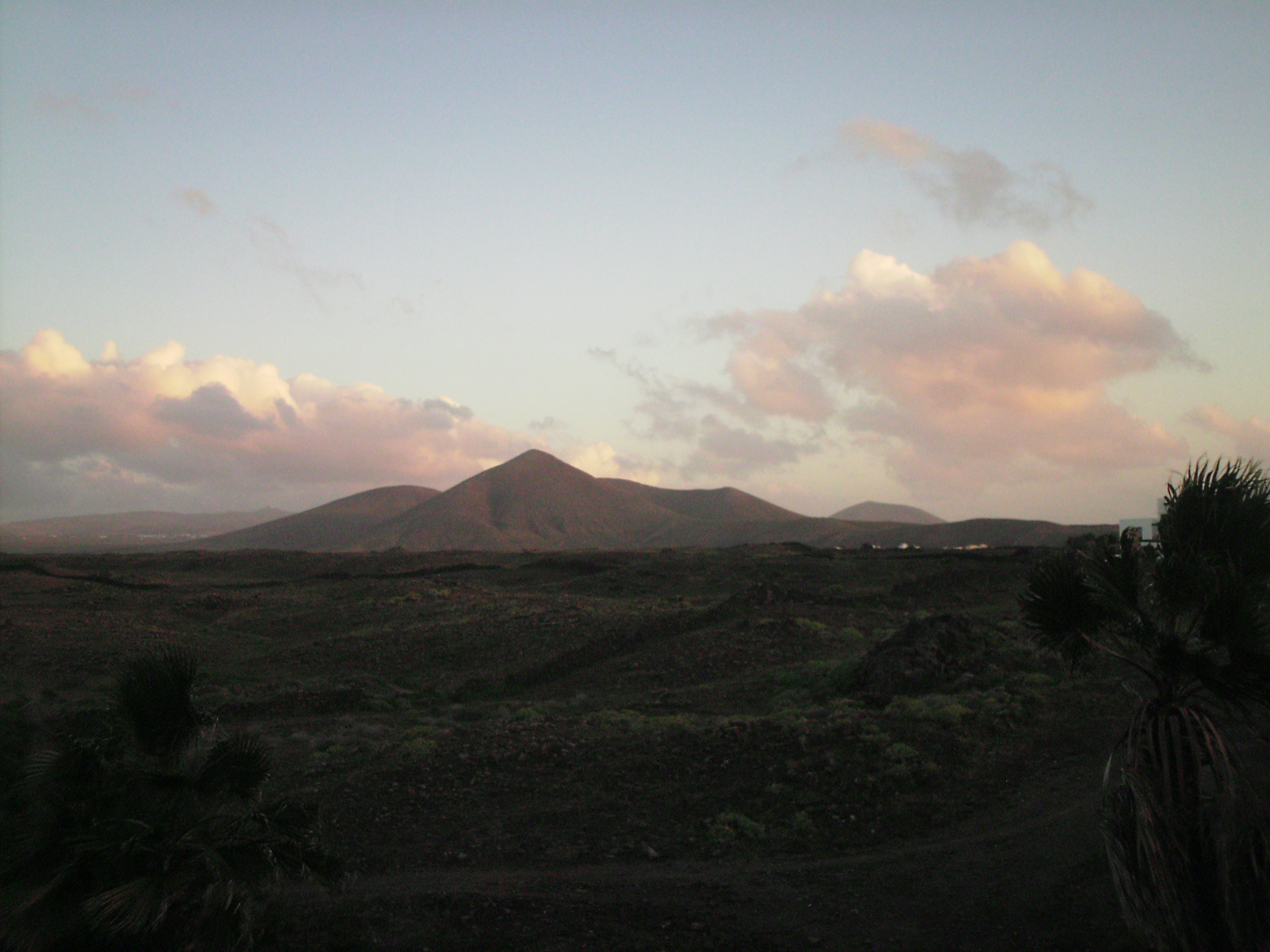
The little volcano. Photograph: Christina Egan © 2015
These lines all sprang from one of the greatest experiences of my life: climbing a little volcano on the isle of Lanzarote, about which you can find a poetic description in German and English at Isle of Bliss / Insel der Seligkeit.
Gold Dust and The Hoard could equally be set in my native Rhön Mountains, also of volcanic origin, but very far inland and much greener.
The three poems in English only may work quite well in an automatic translator. The first two poems are translations of each other, or rather, parallel creations in German and English, where rhythm and rhyme required some changes in wording. It is better to do it this way, since the message is partly conveyed by rhythm and rhyme!
You could leave out the line in brackets to use the poem for a Valentine’s or anniversary card. Copy that line, though, into your list of places to see — both little towns, Teguise and Costa Teguise, because one has got the history and the other one the beach!
This handful of poems almost sums up my work: they describe plants and mountains and the sea; they refer to most basic colours; conclude with thoughts on art and religion and love; and use the beauty of language to capture the beauty of the world.