Moment dans la mare

Moment dans la mare
(Boulogne-sur-Mer)

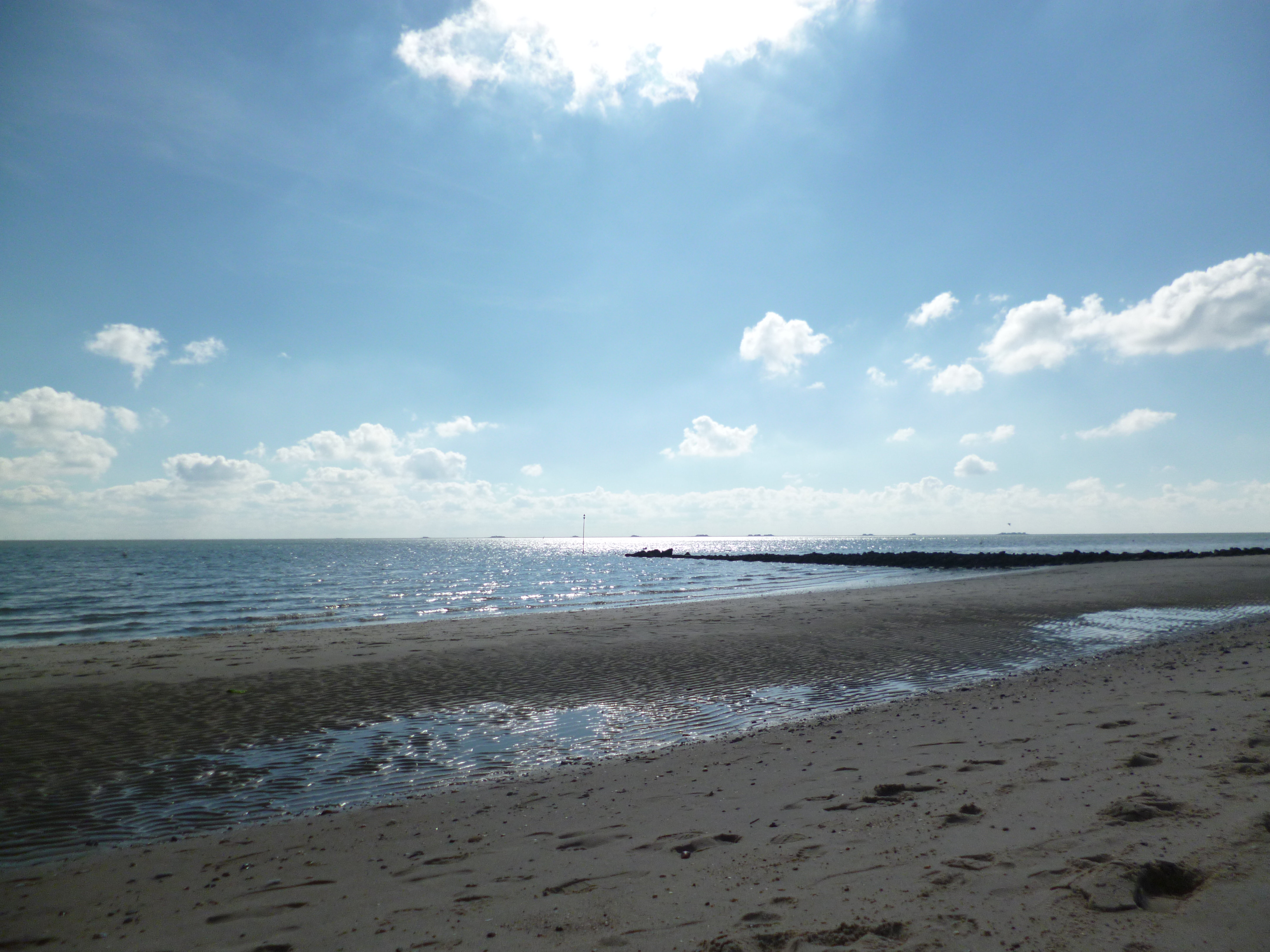
À la plage immense, vidée de la mer,
le vent est trempé du soleil et du sel :
caresse chanceuse de l’univers,
regard maternel rempli d’étincelles.

La mare autour des chevilles surprises,
le sable mouillé, moulé de soleil :
tout ça – l’océan et la boue et la brise –
tout est mêlé et tout est pareil.

Tout est tiède et tout est limpide,
tout est liquide autour des doigts…
Tout est un rêve réel, et le vide
commence à se combler de joie.

Il n’y a pas de bataille, il n’y a pas de triage
de quatre ou cinq éléments lumineux :
plutôt une étreinte éternelle, mariage
de plage et marée, bénit des cieux.

Christina Egan © 2016


The poem refers to the four or five elements which make up the universe, an ancient philosophical concept found in variations in many civilisations.

Greek philosophers held that war, or conflict, between the forces of nature generate everything and challenge us to greatness. I propose that the Greek elements of fire, air, water, earth — and spirit — exist, but work through interaction and union, and that humans grow most when working within and with nature.

This makes harmony instead of conflict the driving force of the universe. It is also a female philosophical approach rather than a traditional male one.

In French literature, the ‘void’ is essential, marking loneliness, mortality, and the pointlessness of life; I want to hold up the ‘void’ or ‘silence’ as an experience of peace and fulfilment, communion with the universe, and a foretaste of eternal life.

When I stood on the beach of Boulogne at sunset, the sky and the sea and the sand were gleaming in streaks of otherworldly purple and orange.

An automatic translation into English may convey the sense of these lines well, but in the original French, they are conceived to sound like music… like waves.

Arles im Winter

Arles im Winter

Die Fensterläden wie ein Farbenkasten,
kornblumenblau und flieder und türkis;
die goldnen Wände, die im Wind verblaßten,
die Gasse, die den kurzen Schnee verschlief.

Die Bogengänge wie bestickte Bänder,
die Krippenbilder wie ein Glockenspiel…
Und das Theater wechselnder Gewänder,
wo nie – seit Rom – der letzte Vorhang fiel.

Die weiche Luft am weiten Strom von Norden,
wo beißendkalter Wind bis eben blies,–
er wälzt sich meerwärts, kostet wohl schon morgen
Kornblumenblau und Flieder und Türkis!

Christina Egan © 2016

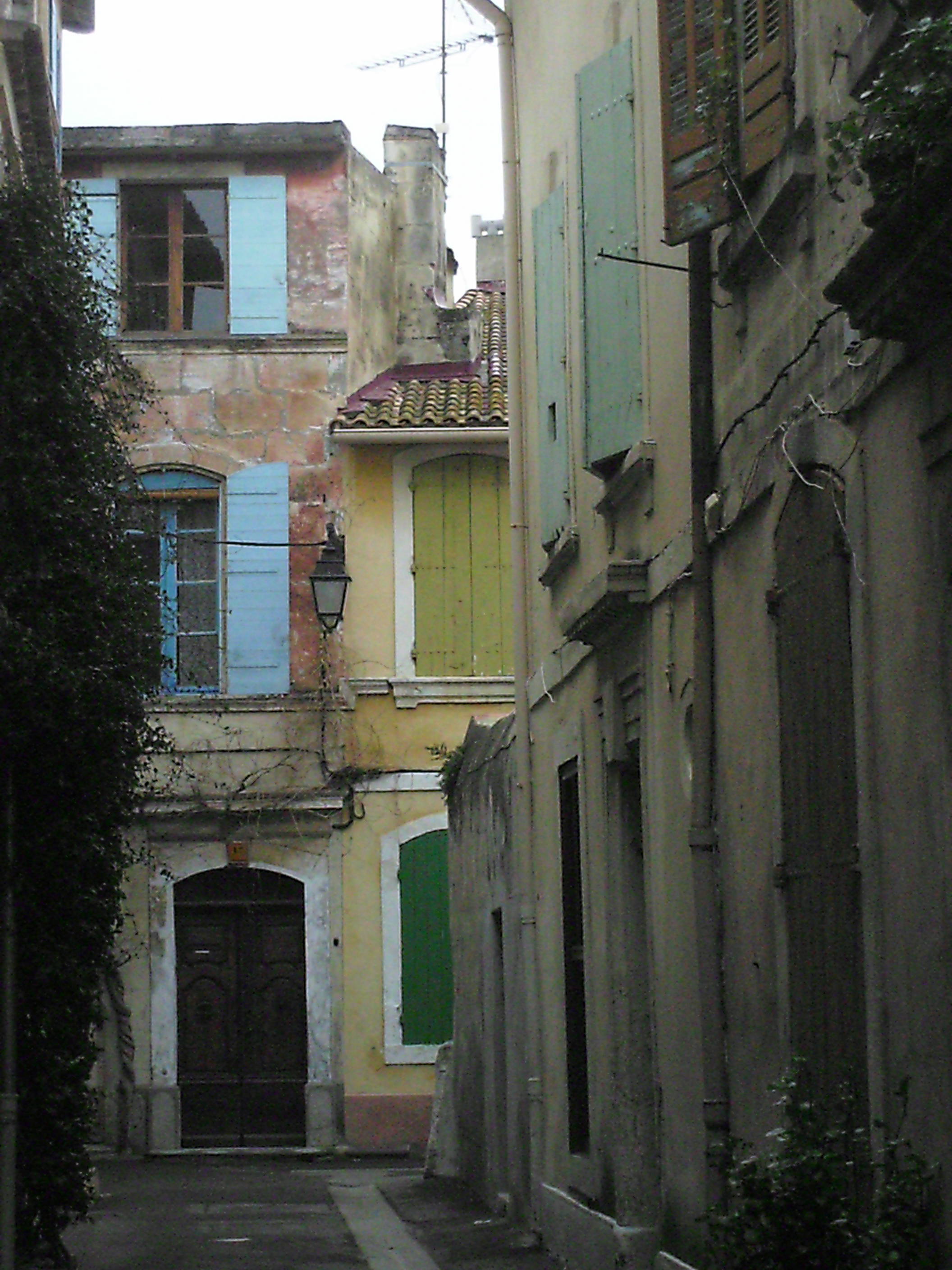
Lane with old houses, window shutters in various shades of turquoise and green.The Old Town of Arles is huddled together within the precincts of the Roman city, next to the vast River Rhône  and close to its mouth into the Mediterranean Sea – with the churches built of the stones of the temples and the houses built with the stones of the theatre.

Down the funnel of the river valley, there is a forceful and often icy wind, the Mistral; but there is also a mild wind from south, the Wind from the Sea, which may warm up the city in the midst of winter, so that you can sit in the Roman ruins…

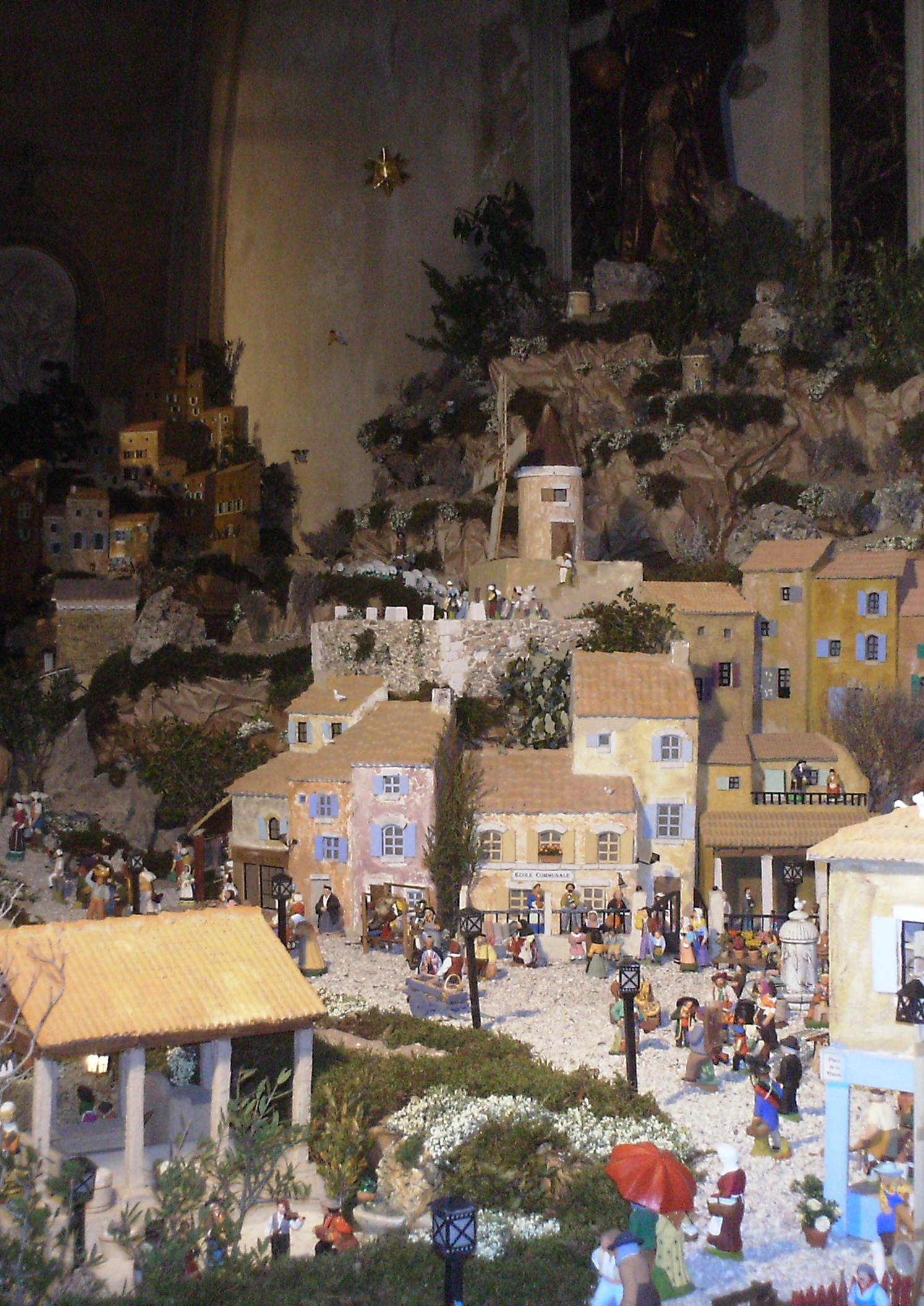
Model village on steep hills as backdrop to a nativity scene

There are exhibitions of nativity scenes and figurines in all styles, even contemporary, at Saint-Trophime; in another mediaeval church, a whole side-chapel is filled with a model village with rocks and trees, running water and flickering fire, and hundreds of tiny local people.

I have written another poem on Arles and the Vent de la mer  in French and English. This one here may work quite well in a translation software.

Photographs: Arles. Christina Egan © 2011.

Oktoberbilder

Oktoberbilder

I.

Die weiche Luft wie weißes Brot…
Das erste volle Herbstesrot
hängt überm frischgetränkten Gras.
Die Sonne bleibt durch Dunst versperrt,
doch Astern sprühn ihr Feuerwerk,
und Rosen quellen ohne Maß –
O erdgeborne Sternenpracht,
die uns am hellen Tage lacht,
o buntes Bild auf grauem Glas!

II.

Der Himmel ist mit Blau behaucht,
die Gärten neu in Gold getaucht,
mit Gelb getränkt schon manches Laub;
und selbst das Blatt, das sterbend schwebt,
ist kupferrot wie frischerregt.
Noch einmal kost das Licht die Haut…
Das Windrad saust, die Wolke fliegt,
ein weißer Blütenball zerstiebt –
Zuletzt wird jedes Ding zu Staub.

Christina Egan © 2015

This poem has meanwhile been published in the Rhönkalender 2017.

This is the Northern Land

This is the Northern Land

This is the northern land
of loose and juicy ground
where fern and forest glow
and wheat and fruit abound.

This is the continent
where mound responds to mound
and wind resounds on rock –
this is the home we found.

This is the realm of dusk
and star-embroidered night,
of fog caressing lakes…
and then the roaring light!

Christina Egan © 2013

Mountain meadow filling lower half of picture, high trees right behing and mountain range in the distance along the middle, pale blue sky above.

Dammersfeld mountain ridge, Rhön (Central German Highlands).
Two of my great-grandparents grew up with precisely this view. —
Photograph
 by GerritR via Wikimedia Commons.


This poem was inspired by the Czech national anthem, Kde domov muj, which entirely refrains from politics and warfare and mainly describes the lush landscape of Central Europe. The Czech Republic abounds with hills and lakes, forests and fields.

My lines cover the whole of Central Europe or the whole continent (including the British Isles): my home is my region, or my country, or Central Europe, or all of Europe — none more so than the other.

The claim that even those who were born there ‘found’ their land may sound strange: yet their ancestors did immigrate one day, even if it was a thousand years or two thousand ago. No one just grew out of the ground. Moreover, most people are arguably of mixed ethnic origin, in our case, Celtic, Germanic, Slavic, Jewish, Hungarian, and more. No nation is an island.

Ich steh’ im Felde wie der Lindenbaum

Ich steh’ im Felde wie der Lindenbaum

Ich steh’ im Felde wie der Lindenbaum,
im Frühlingswind verloren und im Traum…

Ich schaue auf die blauen Höhn,
die kühn wie Vorzeitbauten stehn.
Ich lausche auf den Vogelsang,
in meinen Adern steigt ein Drang!
Ich schaue auf den Horizont,
von dem mir meine Hoffnung kommt.

Ich steh’ im Felde wie der Lindenbaum,
in Frühlingsnacht verloren und im Traum…

Ich schaue auf die Stadt im Tal
mit Erdensternen ohne Zahl.
In meinen Adern steigt der Saft,
ich streck’ mich mit versteckter Kraft!
Bevor noch süß die Linde blüht,
blüht früh und süß der Linde Lied.

Christina Egan © 2012

The mountain range on the horizon is the Rhön and the city in the valley is Fulda, Germany. There are more lines to this poem to make a song of it: part wistful and part hopeful, part heavy-hearted and part light-hearted!

The phrase ‘Town in the valley’ is echoed in the poem of the same name, Stadt im Tal.

Ashen Land (For Syria)

Ashen Land
(For Syria)

The only offspring left calls from the eaves.
Some houses have a hundred hollow wounds,
and hamlets of a dozen centuries
surrender to contending winds their rooms.

The olive-trees stretch out their silver leaves
like angels’ feathers in a cry for peace.
Where is the comfort for a bird that grieves,
the peace for ashen land? Is it beneath?

It is beneath the nettles and the shards,
beneath the venom seeped into the field;
it is above the silver heaps of stars,
seed of unimaginable yield.

Christina Egan © 2016

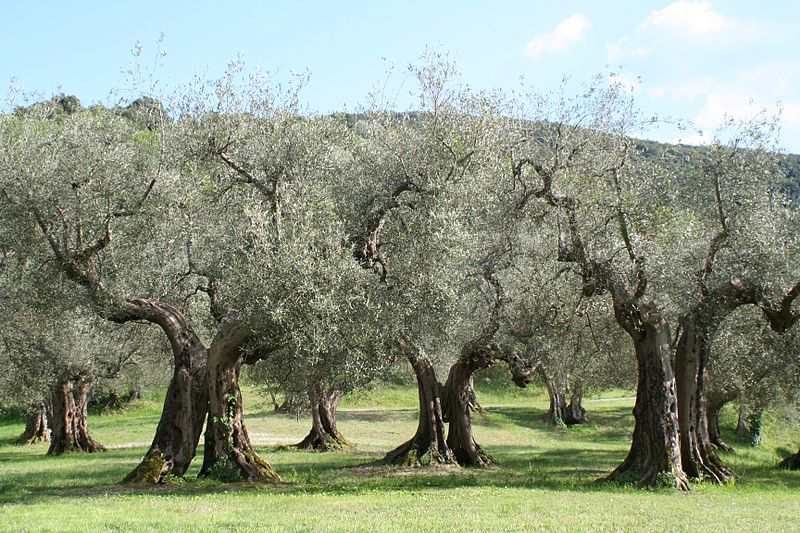
Olive grove, trunks and tree-tops silvery grey, like ashes.Photograph: ‘Olivenbäume in Umbrien’ by Adrian Michael.

I found this marvellous illustration on Wikimedia Commons long after I wrote the poem. I had not even thought of the silver bark and leaves resembling ashes…

In the past few years, millions of Syrians have lost their homes and possessions, or their jobs or studies, or their health or their limbs, or their loved ones or their own lives. The national liberation movement has turned into an apparently bottomless civil war, a literally insane religious war, and a vicarious war of outside powers. This conflict will change the face of the Near East and the face of Europe. Meanwhile, the suffering continues.

Let us pray for peace in Syria. All together.

Fastenzeit / Lent

Fastenzeit

An bitterem schwarzen Brot
nagt mein Mund.

An bitterer schwarzer Erde
nagt mein Herz.

Grauer Wind
fegt die Fluren rein.

Alles fastet
der Farbenfülle entgegen.

Christina Egan © 1985

Lent

My foot sinks
into bitter black earth.

My heart gnaws
on bitter black bread.

Grey wind
sweeps the fields clean.

Everything fasts
towards the flood of flowers.

Christina Egan © 1999

The church year mirrors the natural seasons  and symbolises our life events: voluntary renunciation in Lent corresponds to the hardships of winter or to emotional deprivation.

I shall shortly post a poem about Easter at ostermorgen, where faith in God and resurrection is linked to the renewed sunshine of spring and to the experience of communion and fulfilment.

inselstrand / mondstrand

inselstrand

der sand ist durchsponnen
von tausenden rinnen
wo winzige flüsse
perlmuttern erschimmern

sich sammeln sich teilen
erwärmen erschauern
bald rasten bald eilen
erblassen erblauen

der sand is voll salz
und voll sonne gesogen
das leben verbirgt sich
im atmenden boden

das land ist dem wind
und dem wasser verwoben
die seele der enge
der insel enthoben

Christina Egan © 2014

Shallow sandy beach and blue sea water filling lower half of picture, sky-blue sky with a few clouds above. Exudes tranquillity.

Beach of Wyk on Föhr, Germany. Photograph: Christina Egan © 2014.

mondstrand

streckt das meer sich
mondbeglänzt
wacht die erde
nachtentgrenzt

webt die wolke
geisterhaft
um der mondin
zauberkraft

schlägt die schwärze
windbewegt
auf das silber
feingeprägt

pocht die welle
unentwegt
an den sandstrand
sanfterregt

taucht die sohle
heiß und bloß
in die brandung
ruhelos

steigt der schmerz
im raschen blut
fällt die träne
in die flut

steht die hoffnung
fest und fern
hängt das herz
am höchsten stern

Christina Egan © 2014


These lines stem from a visit to two tiny round North Sea
islands, Föhr and Hooge. Besides my walks on the beach —
by day and by night — I was inspired by
Gregor Swoboda’s
paintings
 at Galerie Nieblum.

Find more poems and photos at Views of North Sea Islands
(in German and English).

Le vent de la mer se lève

Le vent de la mer se lève
(Alyscamps, Arles)

Tout doux, le vent de la mer se lève
parmi les colonnes à l’aube de l’an,
dans mon esprit réjouissant
ressuscitant mon ancien rêve,
un rêve de tuiles couleurs du couchant,
un rêve de murs couleurs océan.

Le vent se renforce et lève la sève
des hauts platanes le long de la rue,
ces forts piliers du ciel du Midi…
Mais quel tombeau révèle le rêve,
lieu lumineux et réapparu ?
Ô vent de la mer, Ô vent de ma vie !

Christina Egan © 2015

Wide avenue with sarcophagi to the left and right,leading to a mediaeval portal. Winter scene in fair weather, light-brown and light-blue.

Alyscamps, Arles. Photograph:  Christina Egan © 2010


The Wind from the Sea is rising
(Alyscamps, Arles)

The Wind from the Sea is rising, all mild,
between the columns and graves at the dawn
of the year, stirring up in my jubilant mind
my resplendent dream of antiquity,
a dream of tiles resembling the sun,
a dream of walls resembling the sea.

The wind is now swelling and ready to rouse
the sap in the plane-trees along the wide road,
those pillars supporting the sky of the South…
Which tomb may hold my mystery of old,
the luminous place that has just reappeared?
O Wind from the Sea, O wind of my soul!

Christina Egan © 2016

Painting by van Gogh: Avenue with very high trees, with path and foliage in bright orange, sarcophagi and sky in blue.

The Roman cemetery known as the Alyscamps has been immortalised by Paul Gauguin and Vincent van Gogh.

Vincent van Gogh: L’Allée des Alyscamps (1888). Photograph: Public domain, via Wikimedia Commons.

You can read an English and German poem about a Roman road in France at Where Road and River Meet / Überm Fluß .