Oktoberbilder

Oktoberbilder

I.

Die weiche Luft wie weißes Brot…
Das erste volle Herbstesrot
hängt überm frischgetränkten Gras.
Die Sonne bleibt durch Dunst versperrt,
doch Astern sprühn ihr Feuerwerk,
und Rosen quellen ohne Maß –
O erdgeborne Sternenpracht,
die uns am hellen Tage lacht,
o buntes Bild auf grauem Glas!

II.

Der Himmel ist mit Blau behaucht,
die Gärten neu in Gold getaucht,
mit Gelb getränkt schon manches Laub;
und selbst das Blatt, das sterbend schwebt,
ist kupferrot wie frischerregt.
Noch einmal kost das Licht die Haut…
Das Windrad saust, die Wolke fliegt,
ein weißer Blütenball zerstiebt –
Zuletzt wird jedes Ding zu Staub.

Christina Egan © 2015

This poem has meanwhile been published in the Rhönkalender 2017.

This is the Northern Land

This is the Northern Land

This is the northern land
of loose and juicy ground
where fern and forest glow
and wheat and fruit abound.

This is the continent
where mound responds to mound
and wind resounds on rock –
this is the home we found.

This is the realm of dusk
and star-embroidered night,
of fog caressing lakes…
and then the roaring light!

Christina Egan © 2013

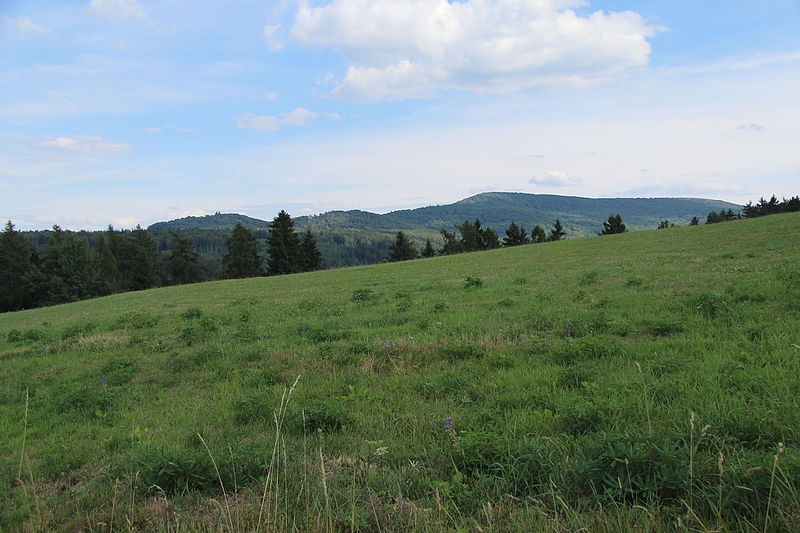
Mountain meadow filling lower half of picture, high trees right behing and mountain range in the distance along the middle, pale blue sky above.

Dammersfeld mountain ridge, Rhön (Central German Highlands).
Two of my great-grandparents grew up with precisely this view. —
Photograph
 by GerritR via Wikimedia Commons.


This poem was inspired by the Czech national anthem, Kde domov muj, which entirely refrains from politics and warfare and mainly describes the lush landscape of Central Europe. The Czech Republic abounds with hills and lakes, forests and fields.

My lines cover the whole of Central Europe or the whole continent (including the British Isles): my home is my region, or my country, or Central Europe, or all of Europe — none more so than the other.

The claim that even those who were born there ‘found’ their land may sound strange: yet their ancestors did immigrate one day, even if it was a thousand years or two thousand ago. No one just grew out of the ground. Moreover, most people are arguably of mixed ethnic origin, in our case, Celtic, Germanic, Slavic, Jewish, Hungarian, and more. No nation is an island.

Ich steh’ im Felde wie der Lindenbaum

Ich steh’ im Felde wie der Lindenbaum

Ich steh’ im Felde wie der Lindenbaum,
im Frühlingswind verloren und im Traum…

Ich schaue auf die blauen Höhn,
die kühn wie Vorzeitbauten stehn.
Ich lausche auf den Vogelsang,
in meinen Adern steigt ein Drang!
Ich schaue auf den Horizont,
von dem mir meine Hoffnung kommt.

Ich steh’ im Felde wie der Lindenbaum,
in Frühlingsnacht verloren und im Traum…

Ich schaue auf die Stadt im Tal
mit Erdensternen ohne Zahl.
In meinen Adern steigt der Saft,
ich streck’ mich mit versteckter Kraft!
Bevor noch süß die Linde blüht,
blüht früh und süß der Linde Lied.

Christina Egan © 2012

The mountain range on the horizon is the Rhön and the city in the valley is Fulda, Germany. There are more lines to this poem to make a song of it: part wistful and part hopeful, part heavy-hearted and part light-hearted!

The phrase ‘Town in the valley’ is echoed in the poem of the same name, Stadt im Tal.

Ashen Land (For Syria)

Ashen Land
(For Syria)

The only offspring left calls from the eaves.
Some houses have a hundred hollow wounds,
and hamlets of a dozen centuries
surrender to contending winds their rooms.

The olive-trees stretch out their silver leaves
like angels’ feathers in a cry for peace.
Where is the comfort for a bird that grieves,
the peace for ashen land? Is it beneath?

It is beneath the nettles and the shards,
beneath the venom seeped into the field;
it is above the silver heaps of stars,
seed of unimaginable yield.

Christina Egan © 2016

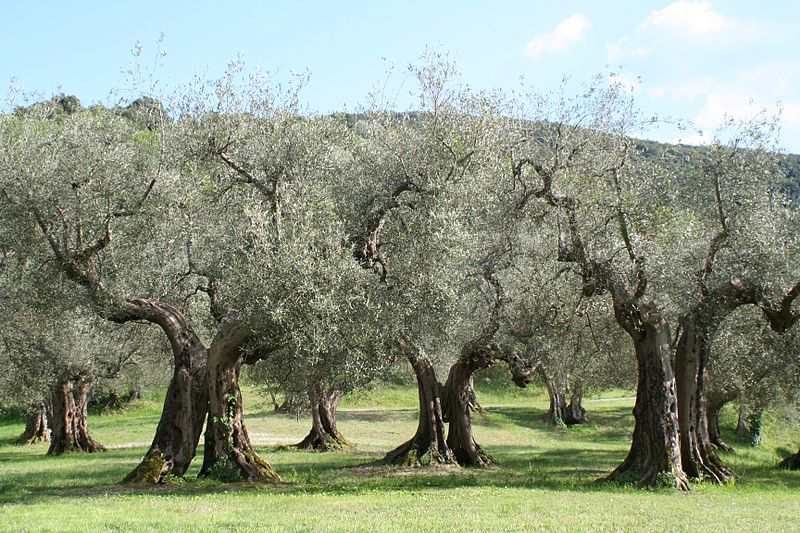
Olive grove, trunks and tree-tops silvery grey, like ashes.Photograph: ‘Olivenbäume in Umbrien’ by Adrian Michael.

I found this marvellous illustration on Wikimedia Commons long after I wrote the poem. I had not even thought of the silver bark and leaves resembling ashes…

In the past few years, millions of Syrians have lost their homes and possessions, or their jobs or studies, or their health or their limbs, or their loved ones or their own lives. The national liberation movement has turned into an apparently bottomless civil war, a literally insane religious war, and a vicarious war of outside powers. This conflict will change the face of the Near East and the face of Europe. Meanwhile, the suffering continues.

Let us pray for peace in Syria. All together.

Fastenzeit / Lent

Fastenzeit

An bitterem schwarzen Brot
nagt mein Mund.

An bitterer schwarzer Erde
nagt mein Herz.

Grauer Wind
fegt die Fluren rein.

Alles fastet
der Farbenfülle entgegen.

Christina Egan © 1985

Lent

My foot sinks
into bitter black earth.

My heart gnaws
on bitter black bread.

Grey wind
sweeps the fields clean.

Everything fasts
towards the flood of flowers.

Christina Egan © 1999

The church year mirrors the natural seasons  and symbolises our life events: voluntary renunciation in Lent corresponds to the hardships of winter or to emotional deprivation.

I shall shortly post a poem about Easter at ostermorgen, where faith in God and resurrection is linked to the renewed sunshine of spring and to the experience of communion and fulfilment.

inselstrand / mondstrand

inselstrand

der sand ist durchsponnen
von tausenden rinnen
wo winzige flüsse
perlmuttern erschimmern

sich sammeln sich teilen
erwärmen erschauern
bald rasten bald eilen
erblassen erblauen

der sand is voll salz
und voll sonne gesogen
das leben verbirgt sich
im atmenden boden

das land ist dem wind
und dem wasser verwoben
die seele der enge
der insel enthoben

Christina Egan © 2014

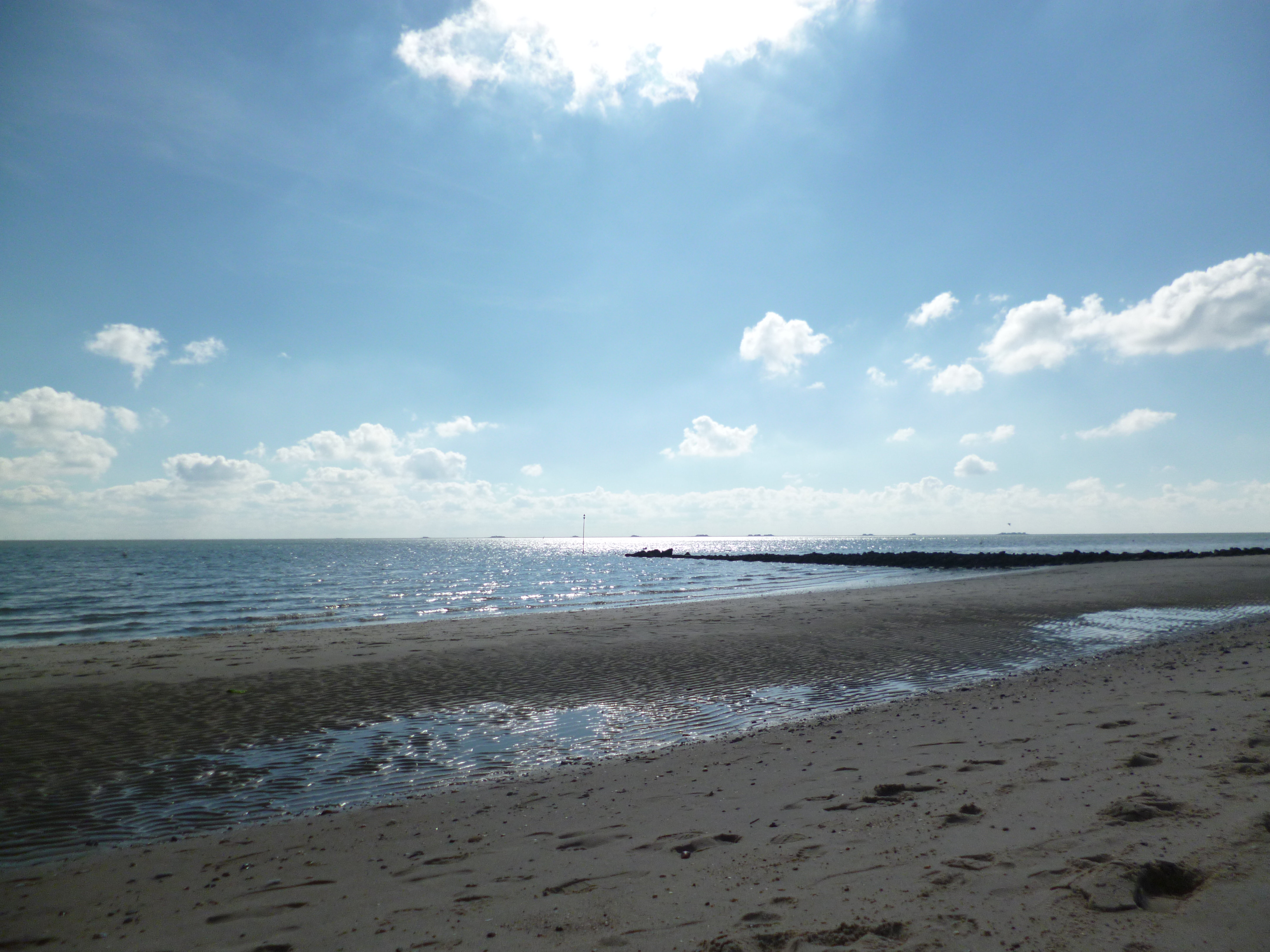
Shallow sandy beach and blue sea water filling lower half of picture, sky-blue sky with a few clouds above. Exudes tranquillity.

Beach of Wyk on Föhr, Germany. Photograph: Christina Egan © 2014.

mondstrand

streckt das meer sich
mondbeglänzt
wacht die erde
nachtentgrenzt

webt die wolke
geisterhaft
um der mondin
zauberkraft

schlägt die schwärze
windbewegt
auf das silber
feingeprägt

pocht die welle
unentwegt
an den sandstrand
sanfterregt

taucht die sohle
heiß und bloß
in die brandung
ruhelos

steigt der schmerz
im raschen blut
fällt die träne
in die flut

steht die hoffnung
fest und fern
hängt das herz
am höchsten stern

Christina Egan © 2014


These lines stem from a visit to two tiny round North Sea
islands, Föhr and Hooge. Besides my walks on the beach —
by day and by night — I was inspired by
Gregor Swoboda’s
paintings
 at Galerie Nieblum.

Find more poems and photos at Views of North Sea Islands
(in German and English).

Le vent de la mer se lève

Le vent de la mer se lève
(Alyscamps, Arles)

Tout doux, le vent de la mer se lève
parmi les colonnes à l’aube de l’an,
dans mon esprit réjouissant
ressuscitant mon ancien rêve,
un rêve de tuiles couleurs du couchant,
un rêve de murs couleurs océan.

Le vent se renforce et lève la sève
des hauts platanes le long de la rue,
ces forts piliers du ciel du Midi…
Mais quel tombeau révèle le rêve,
lieu lumineux et réapparu ?
Ô vent de la mer, Ô vent de ma vie !

Christina Egan © 2015

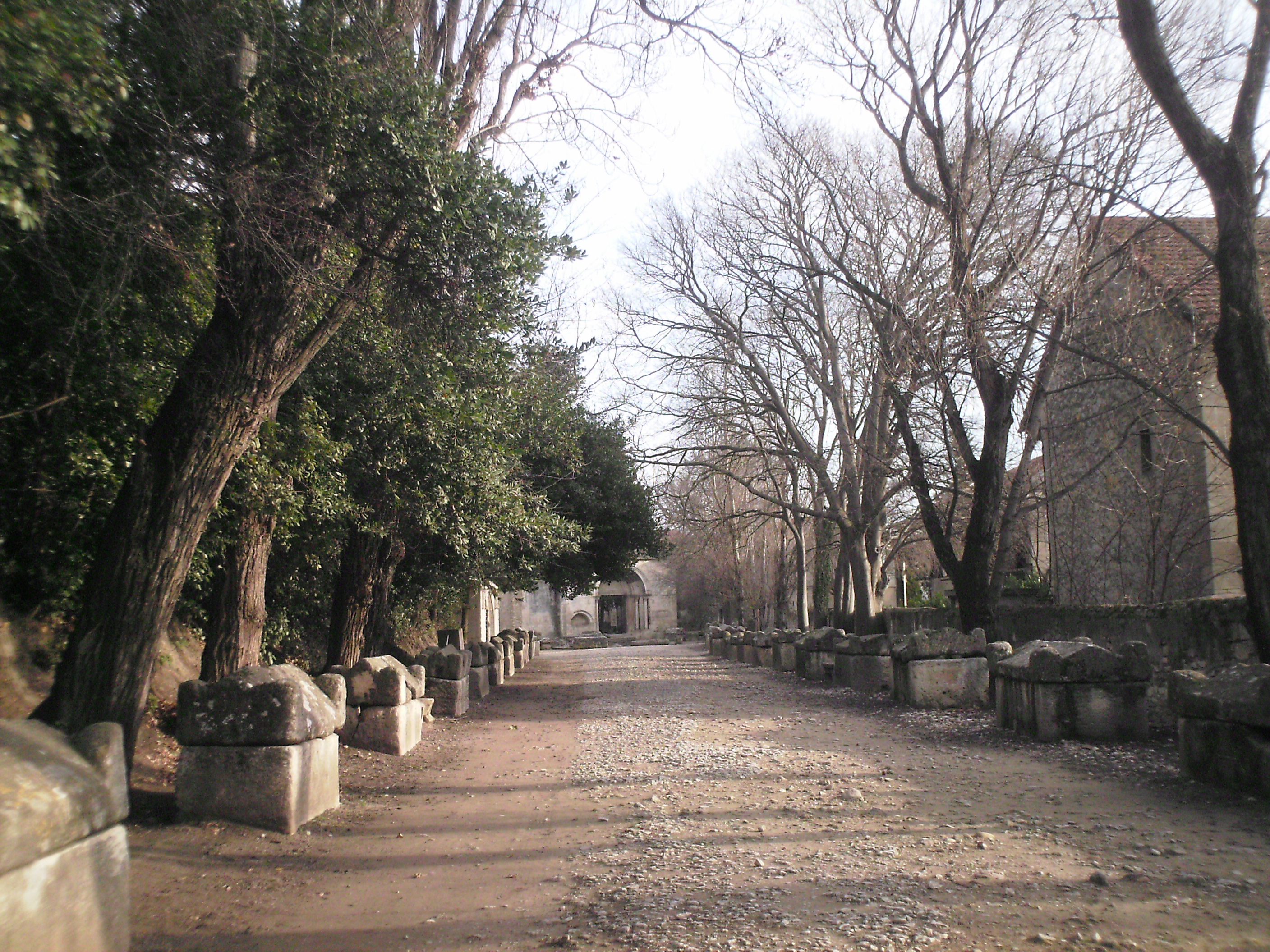
Wide avenue with sarcophagi to the left and right,leading to a mediaeval portal. Winter scene in fair weather, light-brown and light-blue.

Alyscamps, Arles. Photograph:  Christina Egan © 2010


The Wind from the Sea is rising
(Alyscamps, Arles)

The Wind from the Sea is rising, all mild,
between the columns and graves at the dawn
of the year, stirring up in my jubilant mind
my resplendent dream of antiquity,
a dream of tiles resembling the sun,
a dream of walls resembling the sea.

The wind is now swelling and ready to rouse
the sap in the plane-trees along the wide road,
those pillars supporting the sky of the South…
Which tomb may hold my mystery of old,
the luminous place that has just reappeared?
O Wind from the Sea, O wind of my soul!

Christina Egan © 2016

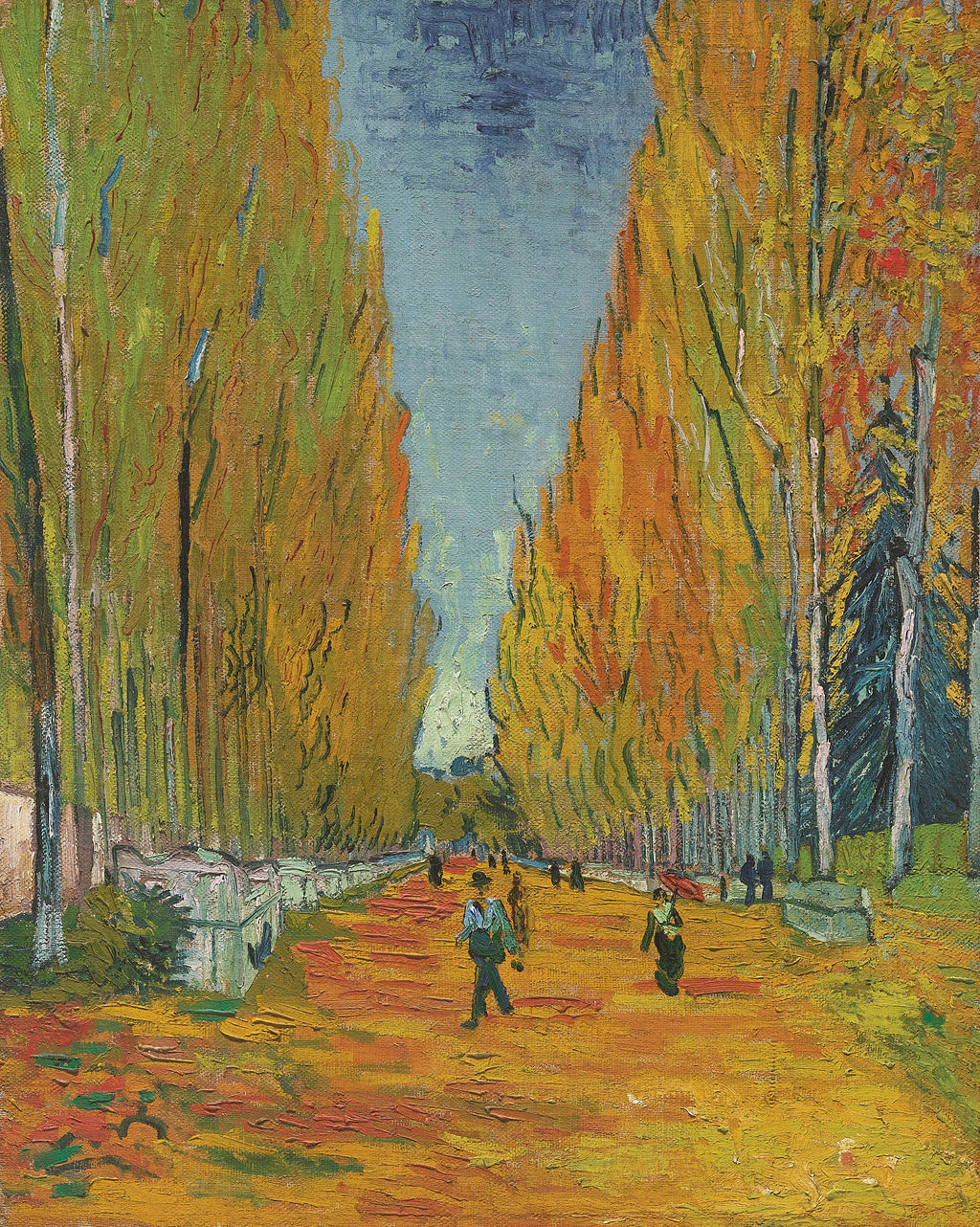
Painting by van Gogh: Avenue with very high trees, with path and foliage in bright orange, sarcophagi and sky in blue.

The Roman cemetery known as the Alyscamps has been immortalised by Paul Gauguin and Vincent van Gogh.

Vincent van Gogh: L’Allée des Alyscamps (1888). Photograph: Public domain, via Wikimedia Commons.

You can read an English and German poem about a Roman road in France at Where Road and River Meet / Überm Fluß . 

On the Volcano’s Rim

On the Volcano’s Rim

Goldstaub
(Lanzarote)

Hoher blauer Himmel,
weißer Wolkenflug,
ungestüme Winde,
rascher Schattenzug

über rote Halden,
über graue Höhn,
über grüne Matten,
wo schon Sterne stehn:

abertausend Blüten
wie ein Frühlingslied,
Goldstaub, den die Sonne
aus dem Erdreich zieht!

Christina Egan © 2015

Gold Dust
(Lanzarote)

Blue sky, ever higher,
white clouds in full flight,
winds wilful and forceful,
swift change of the light

across the red boulders,
across the grey height,
across the green lichen,
where stars tremble bright:

a flourish of flowers
and spring in a splash,
the gold dust the sun
can draw out of the ash!

Christina Egan © 2015

Dreaming Dragon
(Lanzarote)

Dew-drops sparkling in all colours
on the mighty coal-black craggy
shoulder of a dreaming dragon:
so these tiny tender flowers
perch on the volcano’s terrace –
fire, earth and wind distilled
to a dainty dotted quilt.

Ceaseless gales and sleepless fire,
ashes fed with salty dew –
ocean and volcano brew
flora’s early, lacy layer,
magic carpet in the air,
in the boundless brown and blue…
Dreams are real. Dreams come true.

Christina Egan © 2015

The Hoard
(Lanzarote)

As the mountain bears the flower,
as the giant holds the gem,
so the hour bears my poem:
purple speck on silver stem.

Where a myriad wild flowers
sprout behind the dry-stone wall,
I must gather all my powers
till the heavens hear my call.

Christina Egan © 2015

Valentine on the Volcano
(Lanzarote)

We dance on the volcano’s rim –
although its low and sunken side,
although extinct for centuries –
tossed partly by the wild wind’s whim
and partly drunk with liquid life –
suspended over sky-blue seas!
(I found my love above Teguise!)

Christina Egan © 2015
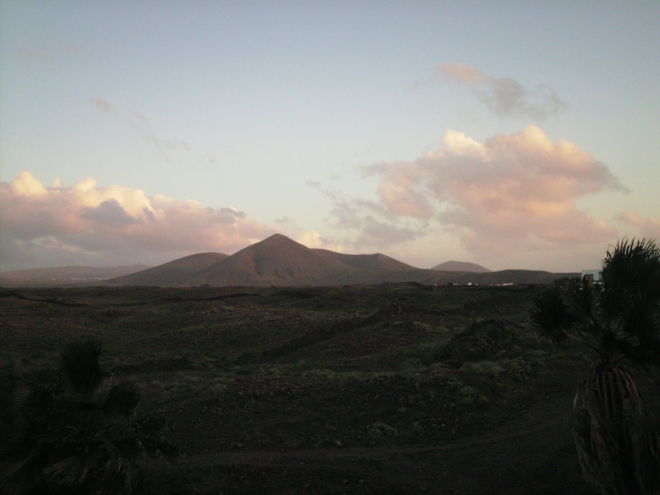
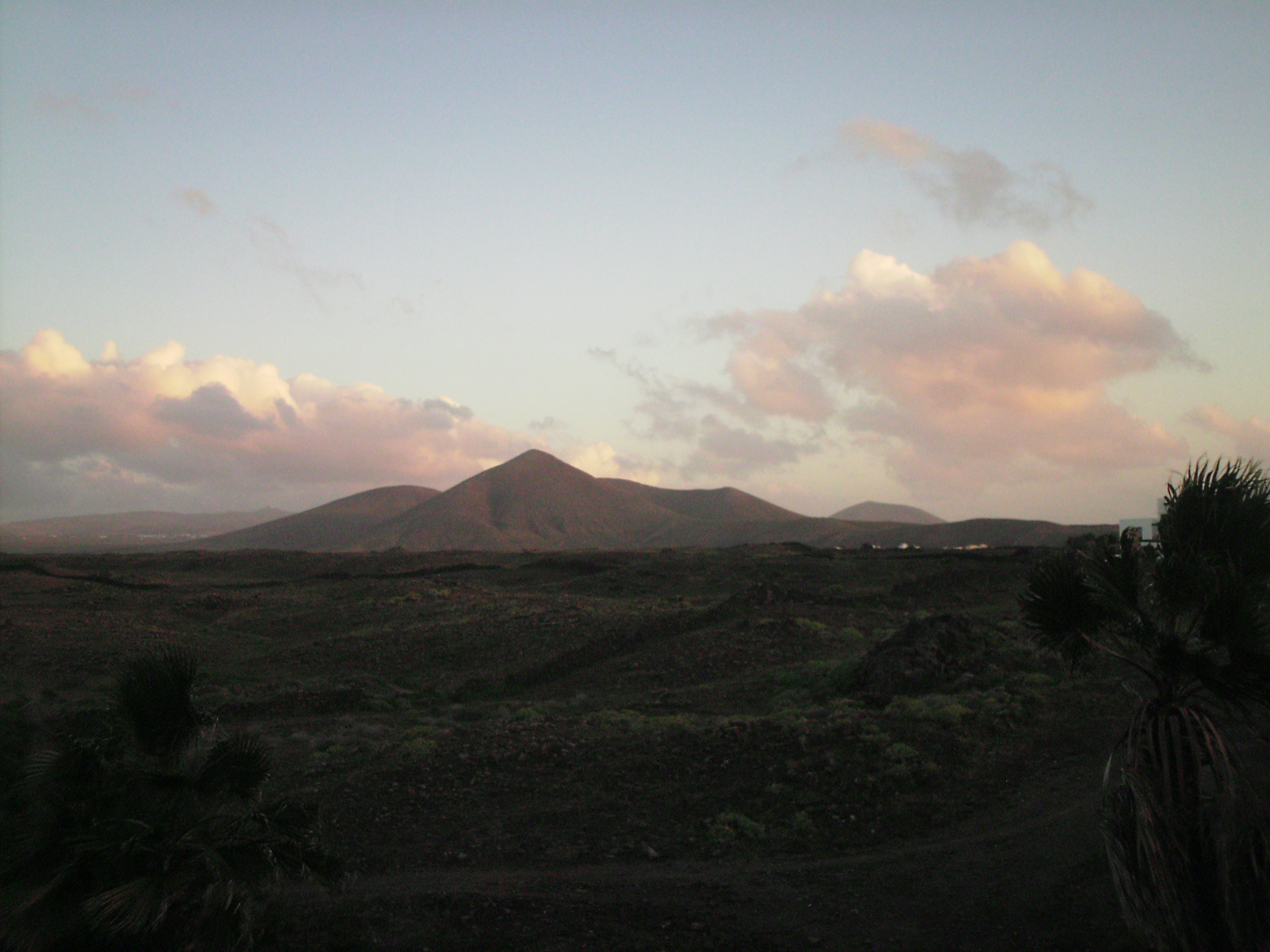
Plain and mountain range with very dark surfaces, rosy clouds in sky

The little volcano. Photograph: Christina Egan © 2015

These lines all sprang from one of the greatest experiences of my life: climbing a little volcano on the isle of Lanzarote, about which you can find a poetic description in German and English at Isle of Bliss / Insel der Seligkeit.

Gold Dust and The Hoard could equally be set in my native Rhön Mountains, also of volcanic origin, but very far inland and much greener.

The three poems in English only may work quite well in an automatic translator. The first two poems are translations of each other, or rather, parallel creations in German and English, where rhythm and rhyme required some changes in wording. It is better to do it this way, since the message is partly conveyed by rhythm and rhyme!

You could leave out the line in brackets to use the poem for a Valentine’s or anniversary card. Copy that line, though, into your list of places to see — both little towns, Teguise and Costa Teguise, because one has got the history and the other one the beach!

This handful of poems almost sums up my work: they describe plants and mountains and the sea; they refer to most basic colours; conclude with thoughts on art and religion and love; and use the beauty of language to capture the beauty of the world.

Buchenland / Heimaterde

Buchenland

Schon der Frühherbst
Schüttet Nebel aus
Über die Hügel hin
Haufenweis.

So verschwimmt mir der Pfad
Bevor noch die Buchen brennen
Und die stolzen Wiesen vergehn
Zu lustlosem Staub.

Doch unterm zerklüfteten Fels
Sitzt sommersatt das Moos
Blüht mondhell die Distel
Aufs Geheiß verborgener Geister.

Christina Egan © 2013

heimaterde

unter der haut
schimmert sie durch
die rote krume
der ich entwuchs

hinter den augen
blinzelt es vor
das urgestein
schwarz und gewaltig

unter dem haar
wirbeln sie hoch
nebel und wind
die mich umfingen

unter der zunge
schlummert sie noch
die fruchtbare sprache
die mich entfachte

Christina Egan © 2013

The first poem describes an autumnal landscape with trees in flaming colours and fog drifting in the dales. The name, Land of Beech Trees, stems from the times when most of Germany was covered by dense forests.

Nature appears as animate, sentient, and even spiritual: the meadow is proud and the moss content, while hidden spirits command a thistle to blossom bright as the moon.

The second poem reminds us that our bodies are made of the world around us — the air and water, the earth and its fruit, the flesh and bone of our ancestors while our minds are moulded by the language of our parents and ancestors.

The speaker imagines that red soil shines through his or her cheeks and black rock blinks through her pupils, while her hair is softened by thick fog and tousled by rough wind.

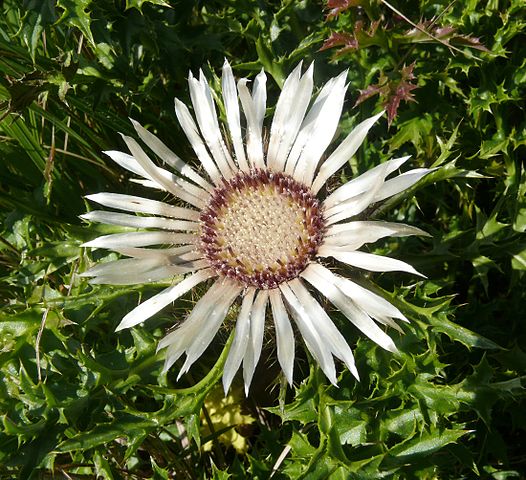
526px-Carlina_acaulis_160907These words were inspired by the landscape and climate of the Rhön Mountains in Germany.

Their symbol is a rare wildflower, the silver thistle.

Photograph: „Carlina acaulis 160907“
by Bernd Haynold via Wikimedia Commons