The Sun God’s Roads

The Sun God’s Roads

I saw them emerging from forest and fog,
the roads of the fiery barbarian god,
I saw them, I walked them, I measured them – but
I dragged on their slopes and I slipped in their mud.

They followed the creek, they followed the crest,
they followed the sun all the way to the west,
they lead to the market, they lead to the fort,
they lead all the way to the northernmost port.

My roads ran across their fords and their fields,
as smooth as a line of square Roman shields,
as straight as the flight of a sure Roman lance,
as hard as its tip, in a steady advance.

Some sauntering highways are right underneath
while others meander through meadow and heath.
I took what I needed, I bridged all the gaps,
I dropped all the rest off the Caesar’s clear maps.

Minerva brought wisdom and Mars announced peace:
we drained a few swamps and we parcelled the leas,
we left the round huts by the winding wet way
and stamped our rectangles into the clay.

My map showed a ragged and rugged old isle
with gridlines unrolling now mile after mile.
I marked it as Jove had commanded us – but
I still muse about the strange tracks in the mud…

Christina Egan ©2019

On this blog, the year always starts with a Roman road. Here, a civil engineer from antiquity reports how his straight highways and rectangular buildings cut right across the uneven and muddy terrain, winding paths, and round buildings of the native Britons. You can still observe this striking phenomenon in Stonehenge, Silchester, and many other places.

We may assume that enthusiasm for this turn of civilisation was not universal. The Celts thought, for instance, that it was silly to worship gods in temples, as if in boxes, instead of in nature. As regards the superb new roads, they were immensely useful for the transport of goods and ideas, but served first of all for the movement of the legions and of metals mined in Britain.
Parkbank im Herbst

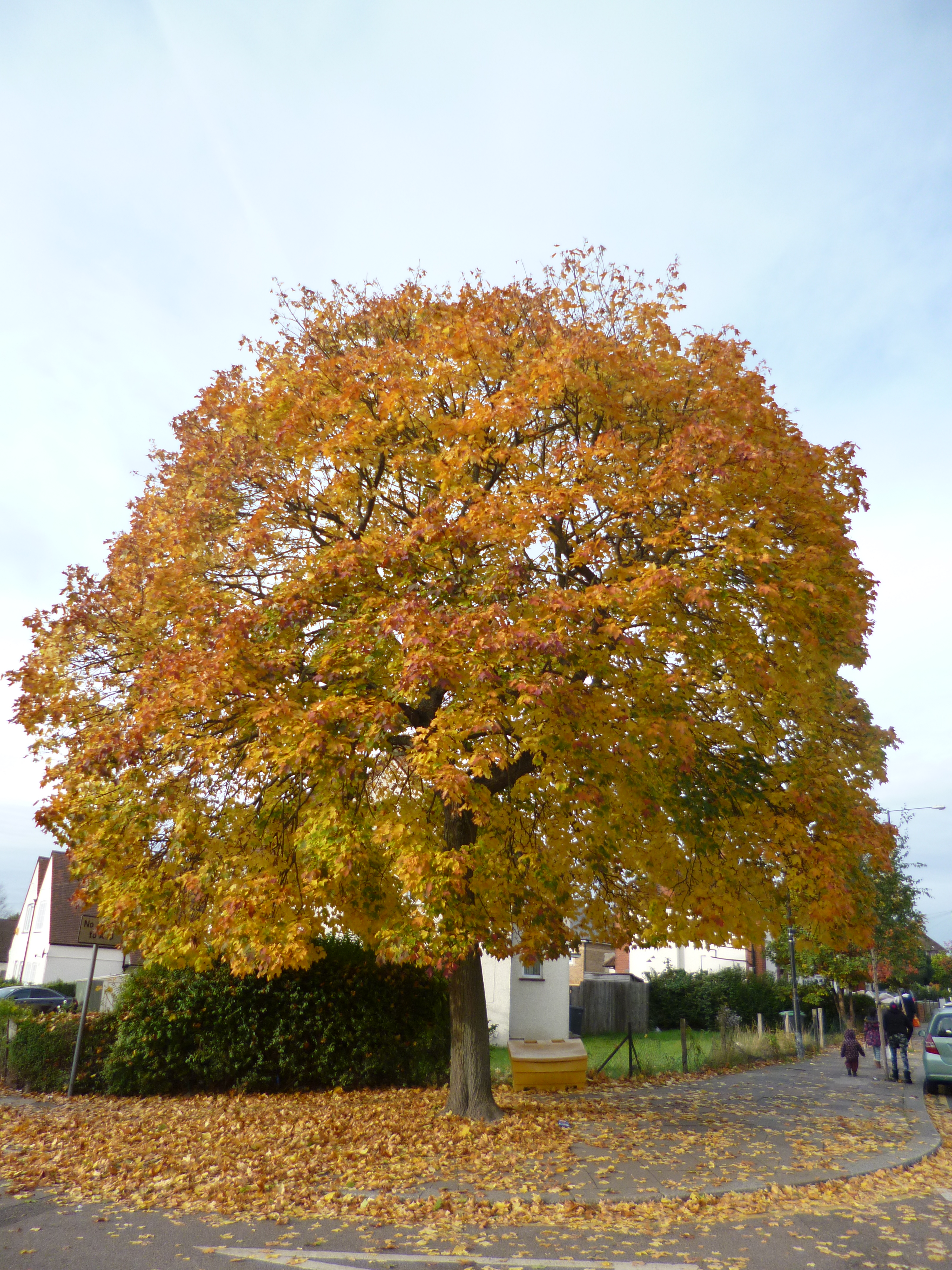
Autumn colours: tree with bright orange leaves, some fallen onto the ground.Parkbank im Herbst

Glühend hängt im Geäst,
welches sich klaglos entblättert,

das hehre Gestirn,
blendend und fern,

ein verspäteter König
ohne Gefolge rosiger Wolken… 

Und ausgeschnitten  aus den Schatten
ersteht ein Geviert von jauchzendem Glanz!

Christina Egan ©2008

Photograph: Christina Egan ©2016.

rosengarten (I. tiefversteckt)

rosengarten

I. tiefversteckt

wieviele monde sind uns noch beschieden
die ungeahnten sonnenglanz vergießen
wieviele rosen werden uns noch sprießen
aus blut und duft als wäre leben lieben?
wieviele strände dürfen wir genießen
im wilden norden und im kargen süden
wo winde endlos sich mit wellen wiegen
wieviele sommer sind uns noch geblieben?
du bist der tiefversteckte rosengarten
den ich nach langem suchen langem warten
betrübt doch immer hoffnungsvoll betrat.
du bist der mond der gleich der sonne leuchtet
du bist die brandung die den sand befeuchtet
du bist die erde wie am ersten tag.

Christina Egan ©2023

This sonnet forms the basis of a cycle of 14 poems, whereby each line furnishes the first line of a new sonnet (Continental pattern). Watch this space for the rose garden project (ROSENGARTEN).

This cycle is not about gardens alone or about islands, although many far-flung places will be reflected in these lines: it is about finding love and happiness, going through life together, finding liveable spaces…

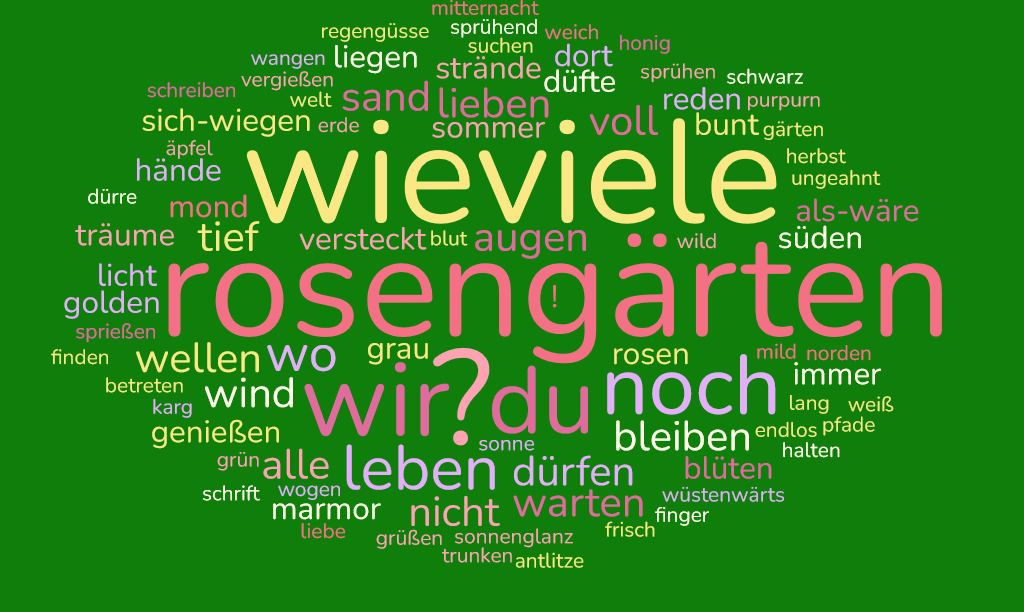
Word cloud in reddish and yellowish colours on green; in the middle, "how many" "rose gardens", and a question mark.

Word cloud of ten German sonnets (rosengarten I-X),
generated on the Simple Word Cloud Generator.
In the chance arrangement, words picked out
by size and colour form the sentence:
“how many rose gardens where we,
(O) you, may yet live?”

P.S.:
You can now view a word cloud of all 14 sonnets at WordItOut
and have it printed on a mousemat or mug or fridge magnet!

Eben habe ich das Leben entdeckt

Eben habe ich das Leben entdeckt

Eben
habe ich das Leben entdeckt.
Es lag versteckt
unter einem unscheinbaren Stein
am Straßenrand.
Ich kniete nieder,
hob ihn hoch,
und etwas leuchtete,
alles leuchtete auf –
als hätte die Sonne hinübergeschaut
in ihrem enthobenen Lauf,
als wäre der Himmel erblaut
und ich stürmte den Hügel hinauf –
doch stand ich noch
unverwandt
mit dem Stein in der Hand…

Eben
habe ich das Leben entdeckt.
Es war verdeckt
vom Geschnatter und Geknatter
von vielzuvielen Bildschirmspielen,
von Telefonen und Megaphonen
und Megamaschinenmusik.
Nur einen Augenblick
lag der Stein in meiner Hand,
graublau
und genau
und still.
So hält Gott die ganze Welt
in seiner Hand,
ins stille goldne uferlose Licht,
und sie weiß es nicht.

Christina Egan © 2016

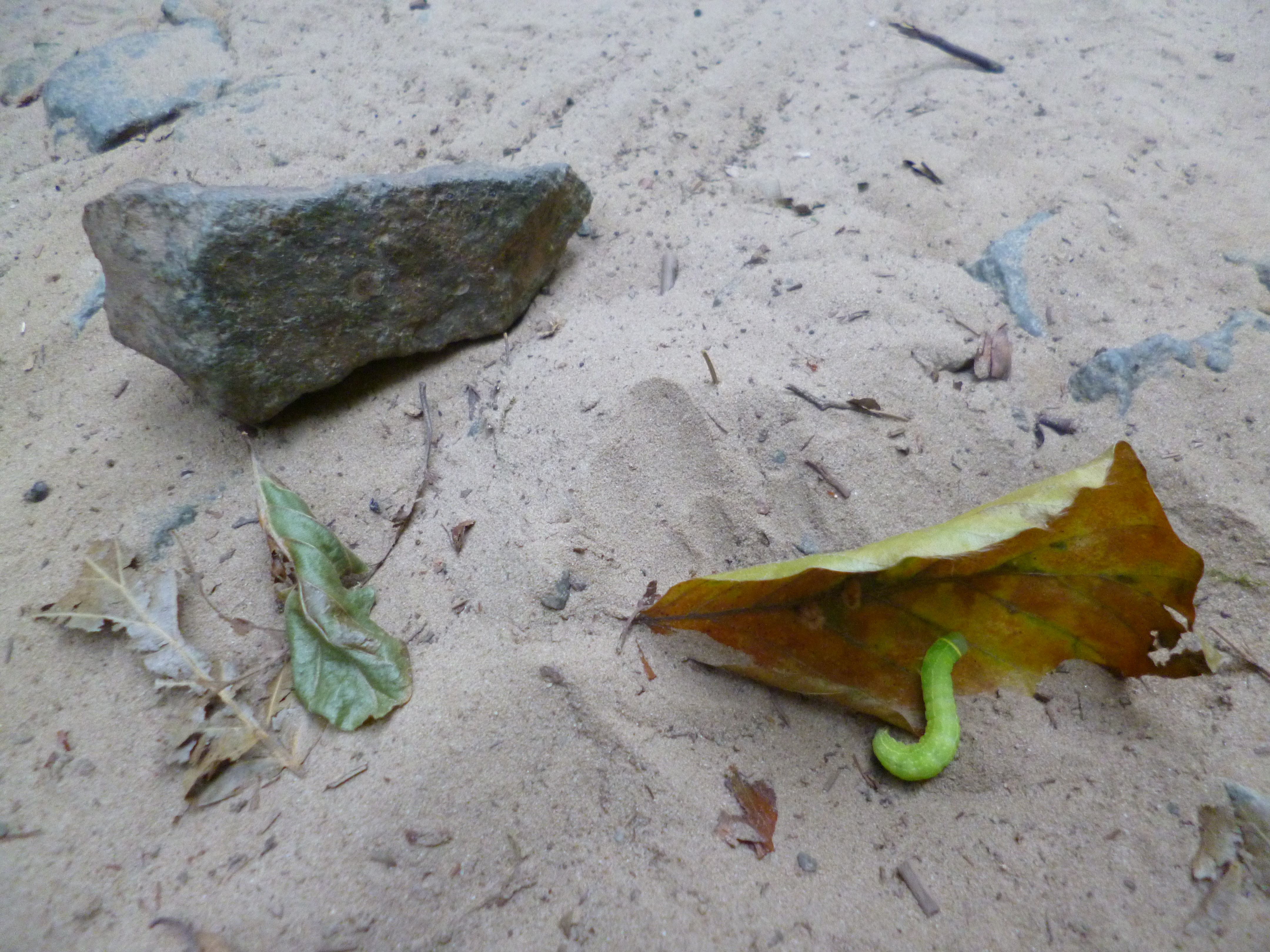
Caterpillar, very bright green, with crumpled leaf and edgy stone on sand.

Photograph:  Christina Egan © 2016.

Three Weeds

Three Weeds

(August Tanka)

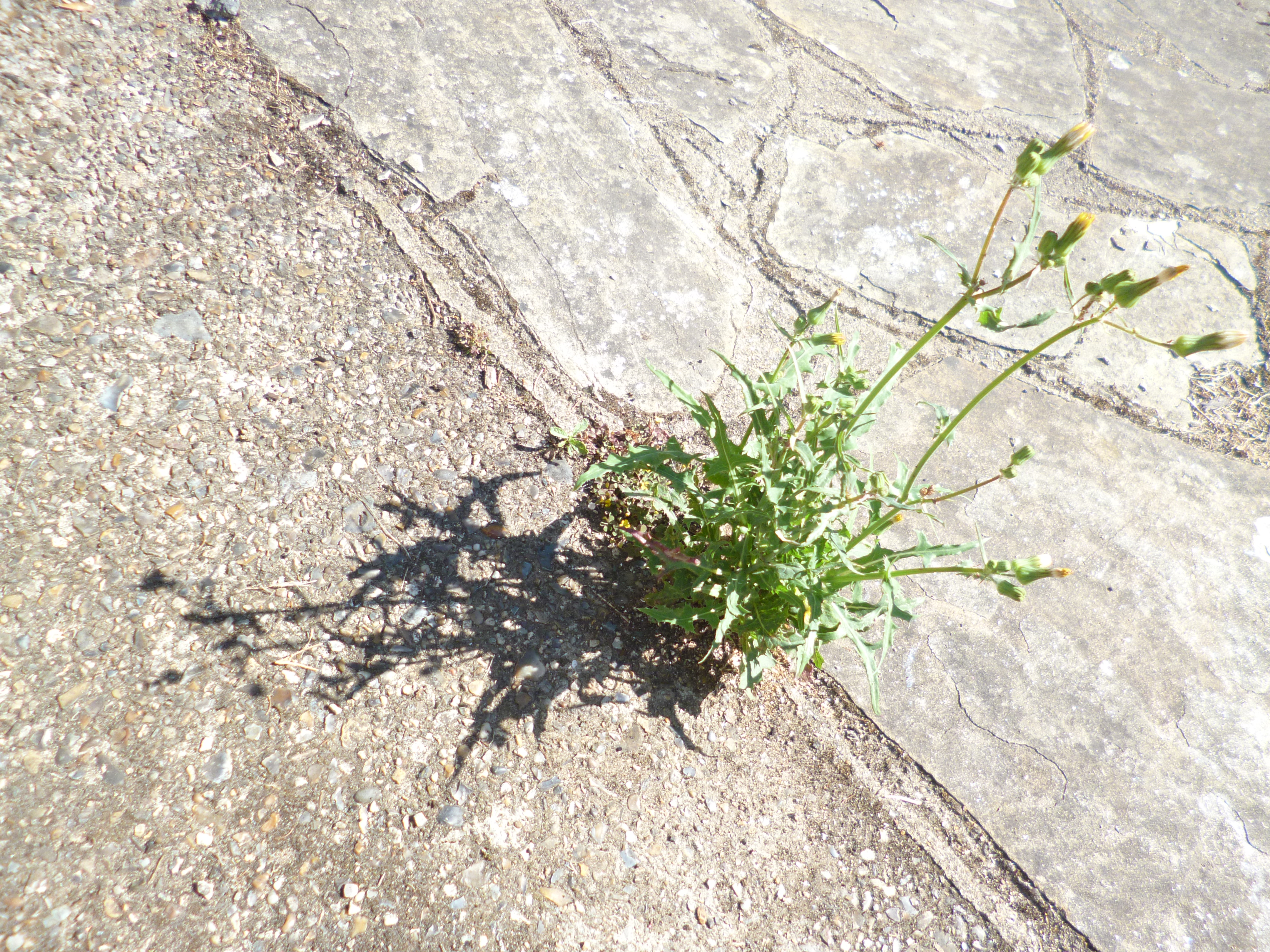
Small flowering weed coming out of a crack between concrete surfaces.I.

Tall weed in the crack,
its flowers like little suns,
its shadow of ink.
The proud weed and its shadow,
its echo: beauty enough.

II.

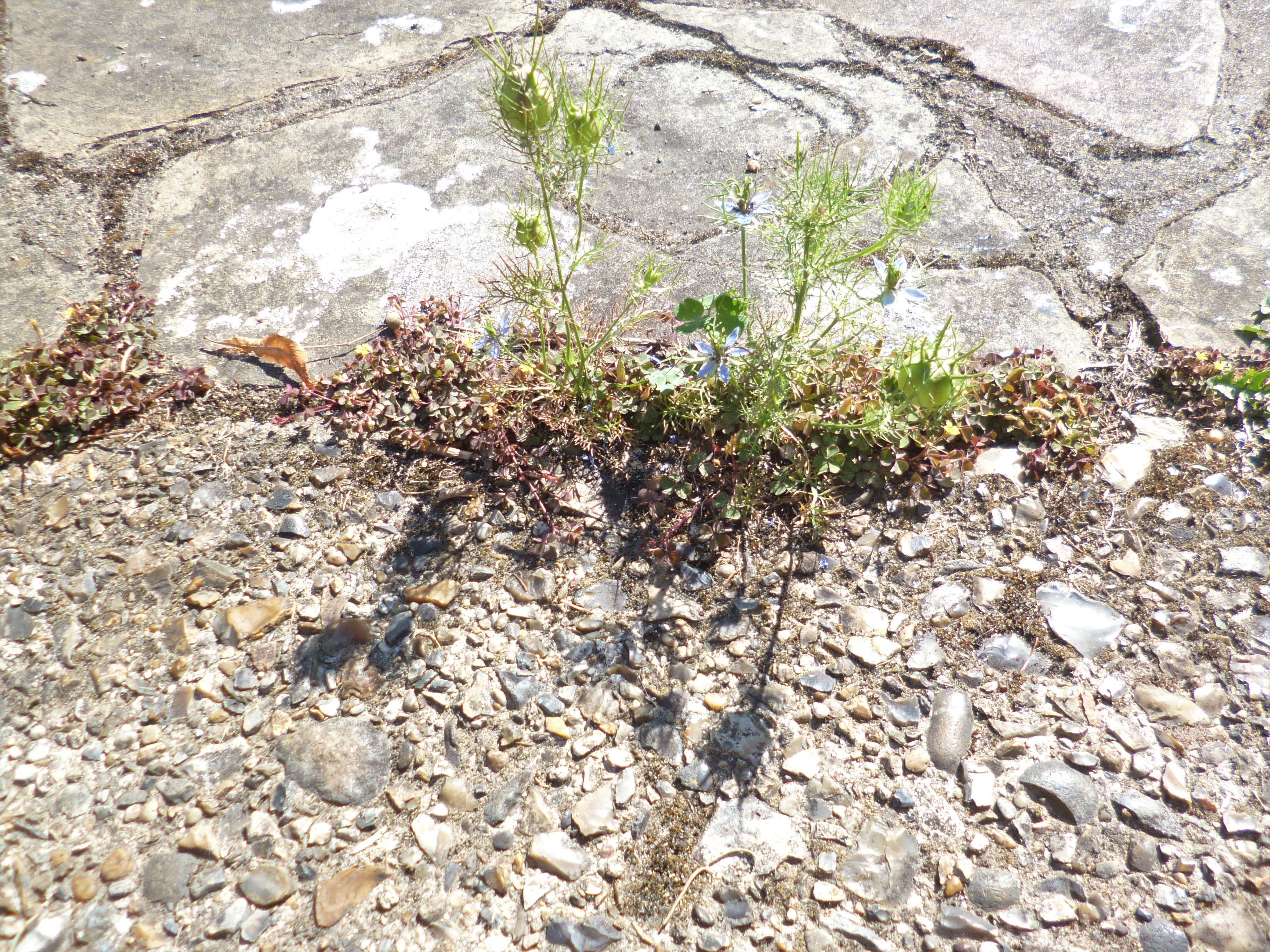
Tiny weeds coming out of cracks, with their shadows.Cushion by the path,
tiny purple trefoil leaves
embroidered with stars.
The drought has tinted the green,
drawn up the blood of the earth.

III.

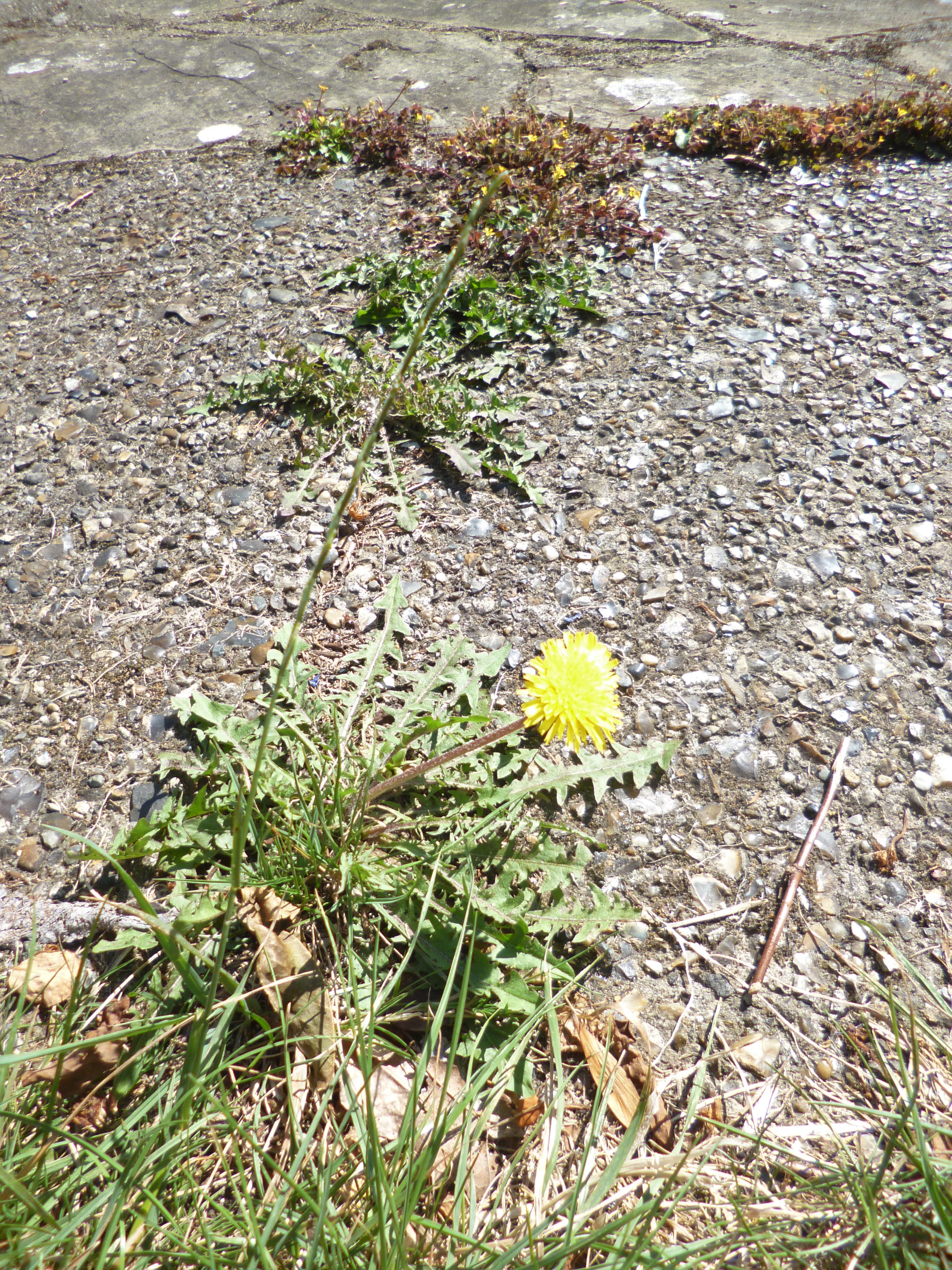
The dandelion
bursting from between the slabs,
Dandelion and other weeds coming out of cracks.yellow, pure yellow.
This brief bright blossom calls out,
clear like brass, like a tuba.

IV.

Three weeds I noticed
finely stitched onto the stone,
shreds of tapestry.
Three weeds I noticed today
and how many did I not?

Christina Egan © 2018

Observations from the great heat and drought of summer 2018. If only we took the time to see, to listen, to feel…

Unplanned addition to the garden. – Photographs: Christina Egan © 2020.

im angesicht der sonne

im angesicht der sonne

im angesicht der sonne
steht aufrecht
und einsam
die erste osterglocke

auferstanden
aus der schweren schwarzen erde
freudestrahlend
daß es endlich lichter werde

winterwendend
düftespendend
sich verschwendend
sonnengleich

Christina Egan © 2019

Für Sr. Petra de Resurgente

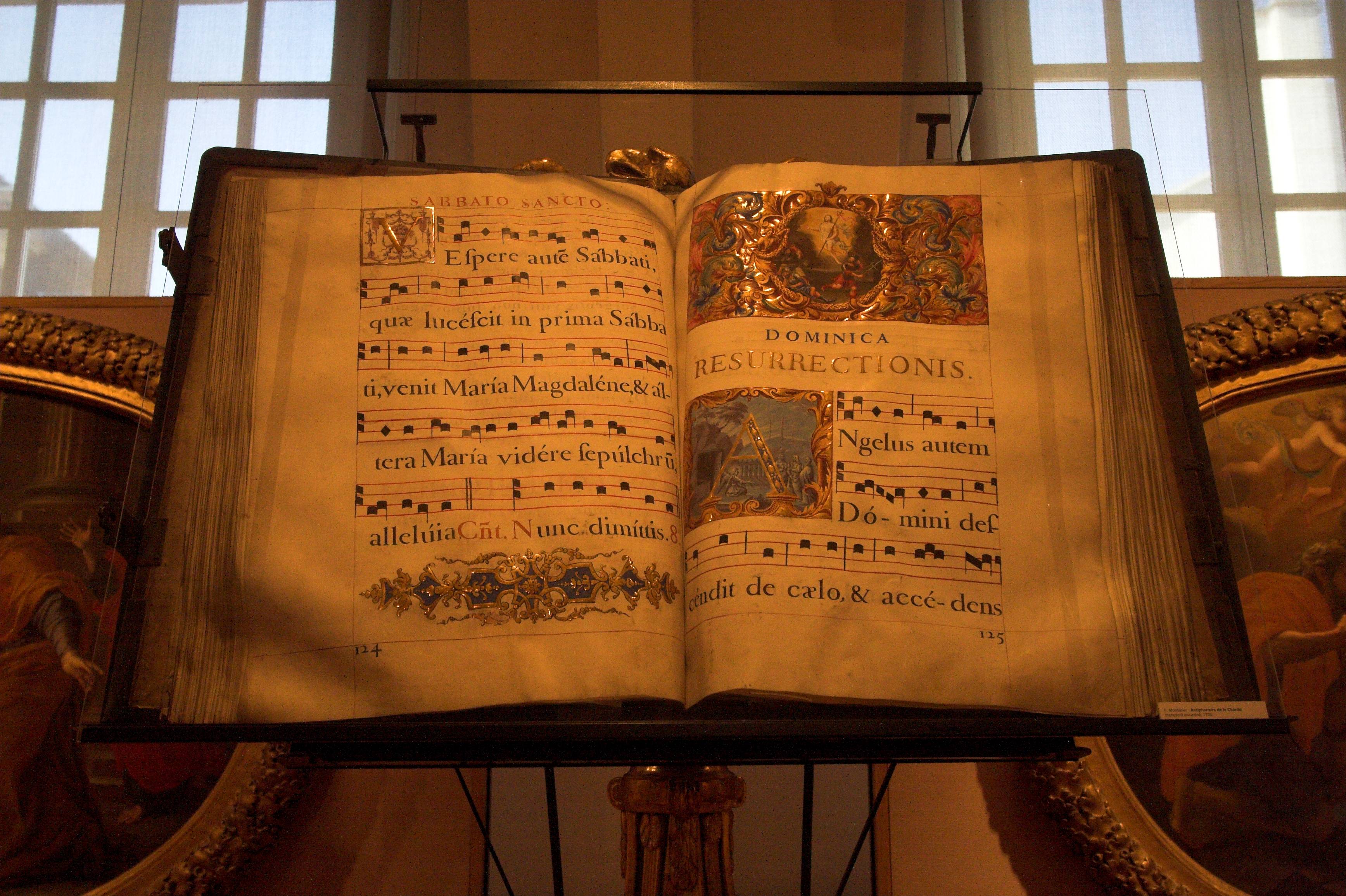
Huge liturgical book with very large writing and music, richly illuminatedServices for Easter morning: “Sunday of the Resurrection”.
Photograph: by ignis [CC BY-SA 3.0], via Wikimedia Commons.

Children of the sun and moon

Children of the sun and moon

When we drift through ink-blue dusk
under the twigs of moon-white blossom,
under the crystal orbs of street-lamps,
under the shadeless signals of neon,

when we slide across concrete squares
and sail around sharp and rounded corners,
restless and vigorous, at home in the dark,
at home in the city, nocturnal birds,

we know deep down that we are still
children of the sun and moon:
the sun must rise in our eyes,
the moon must rise in our brain;

we must admit that we are still
children of the earth and sky:
the spring must rise in our bones,
the stars must rise in our veins.

Christina Egan © 2016

Curling Up

Curling Up

I’m curling up
against the cold
against the world

its random roar
its lazy contempt
its glacial loneliness

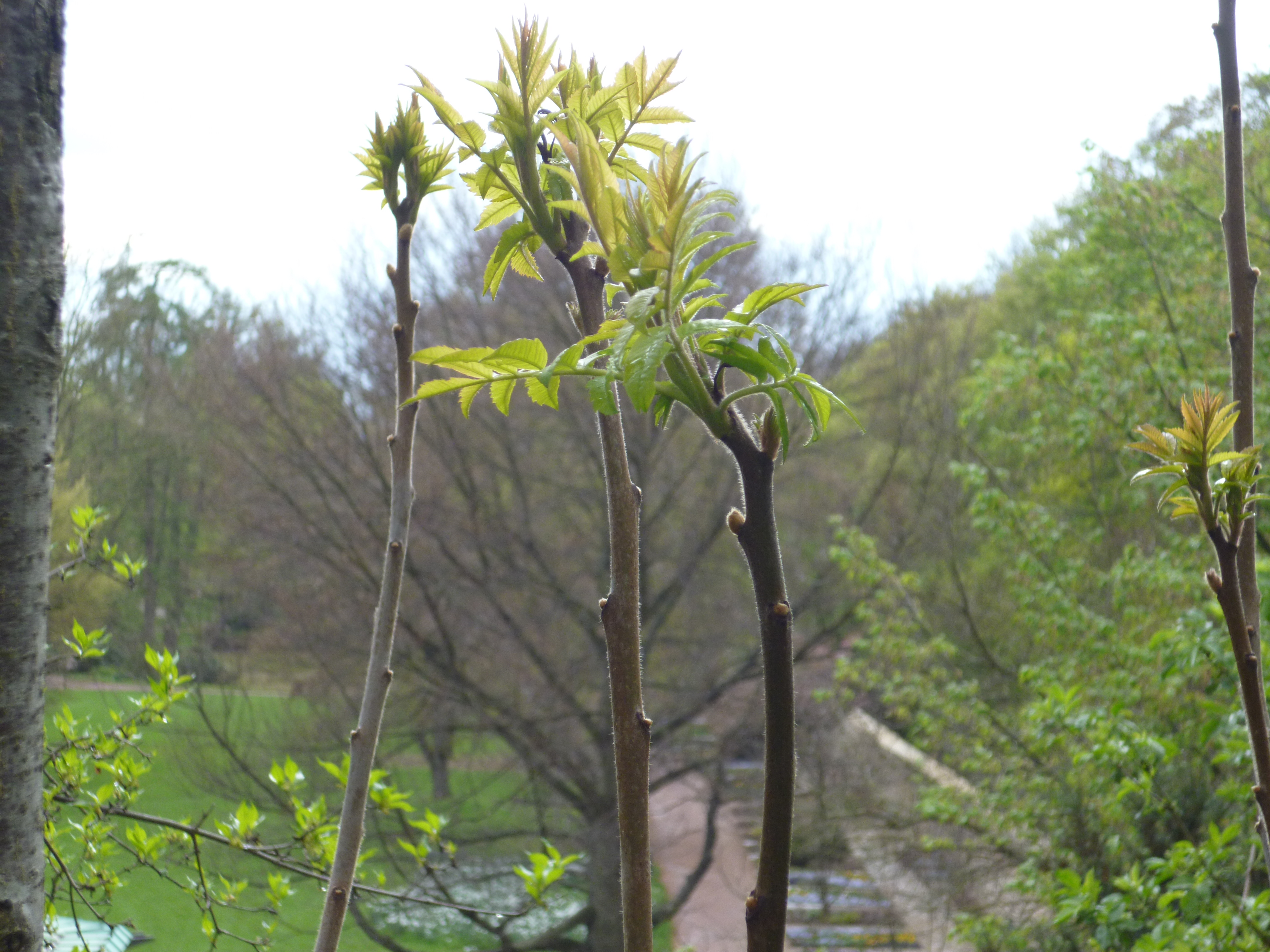
Buds and fresh leaves on top of shoots above a parkI’m curling up
with the sky in my mind
and the sun in my heart

around a seed
already unfurling
and then: uncurling

Christina Egan © 2014


I am at Home in the Darkness

I.

I am at home in the darkness.
At least, dreams shine more brightly here,
lanterns among phantoms,
gold grains in the drifting sand.

Only my dreams
are real,
are true.

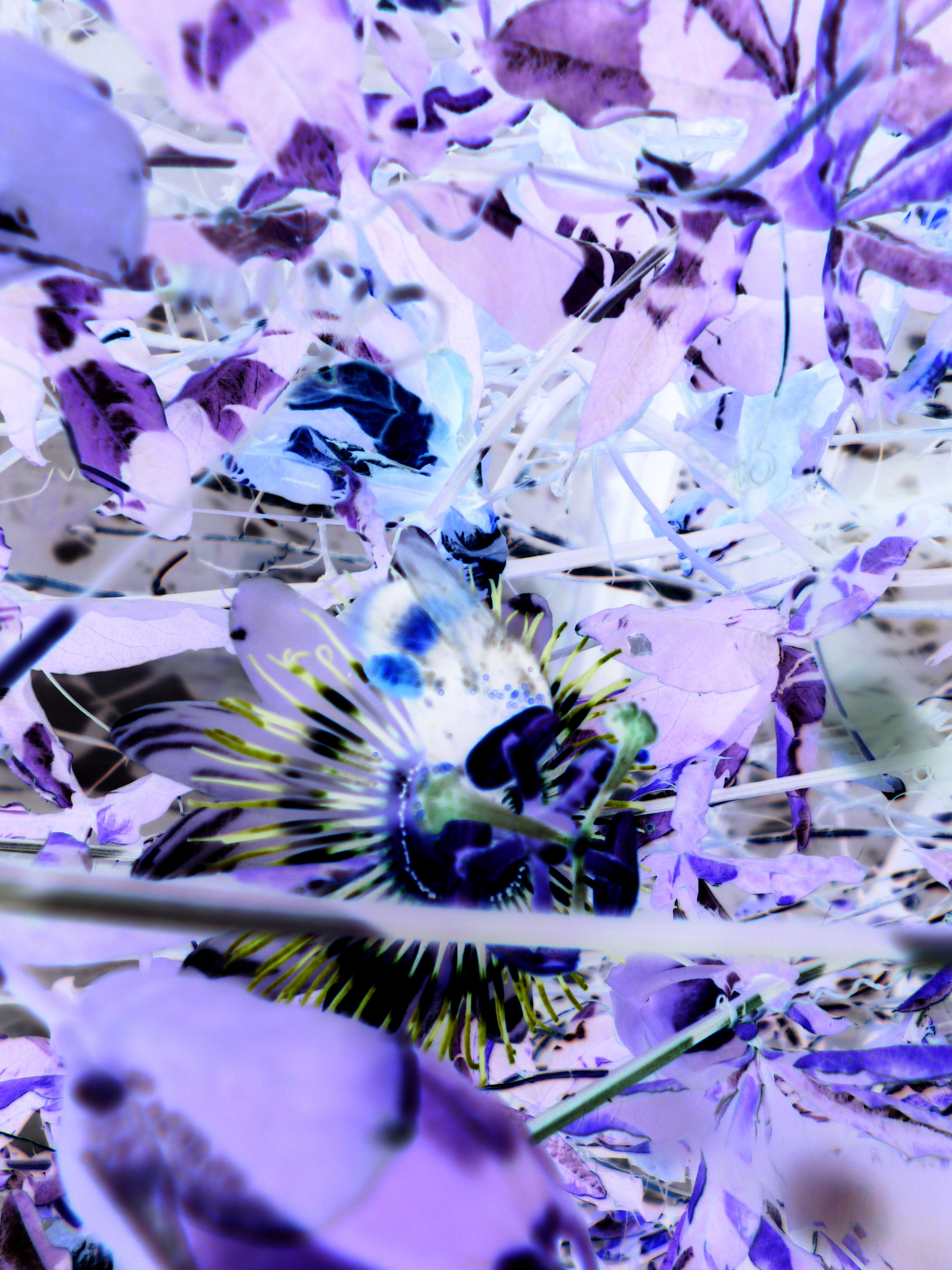
II.Passionflower with bee, colours inverted to create psychedelic purple structure.

All those who wish to die
crave for life, life, lost
in this cavern of wandering shades,
crazed by the thirst for a garden.

Only those who wish to die
are aware,
are alive.

Christina Egan © 2014

Photographs: Christina Egan © 2014 / 2016.


I assume that very, very often when someone feels they want to die or are about to die, they are simply physically unwell — or simply overtired — or simply literally in the dark. If this insight informed our science and our society, we could manage our lives so much better.

The date these three poems were written is significant: it was mid-February, which is when I (like everyone in the northern hemisphere) feels the dark and cold most bitterly, because halfway between winter solstice and spring equinox, the various reserves of our bodies are dangerously low. From late February on, things get better, and this is not a mental phenomenon (little flowers can, after all, not cure leaden fatigue) but a physical fact.

Solstice Scroll

Solstice Scroll

I break some rare and short-lived flowers,
I sacrifice some sunshine hours
for Melpomene’s altar steps.
Since Phaeton’s horses thunder higher
with ever more abundant fire,
I’ll finish ere the day-star sets.

I’ll call upon Apollo’s powers,
I’ll stand amongst the cypress towers
around my children’s hidden tomb.
I’ll write my elegy and sing it,
I’ll scroll it up, stand up and fling it
into the bright barge of the moon.

Christina Egan © 2018

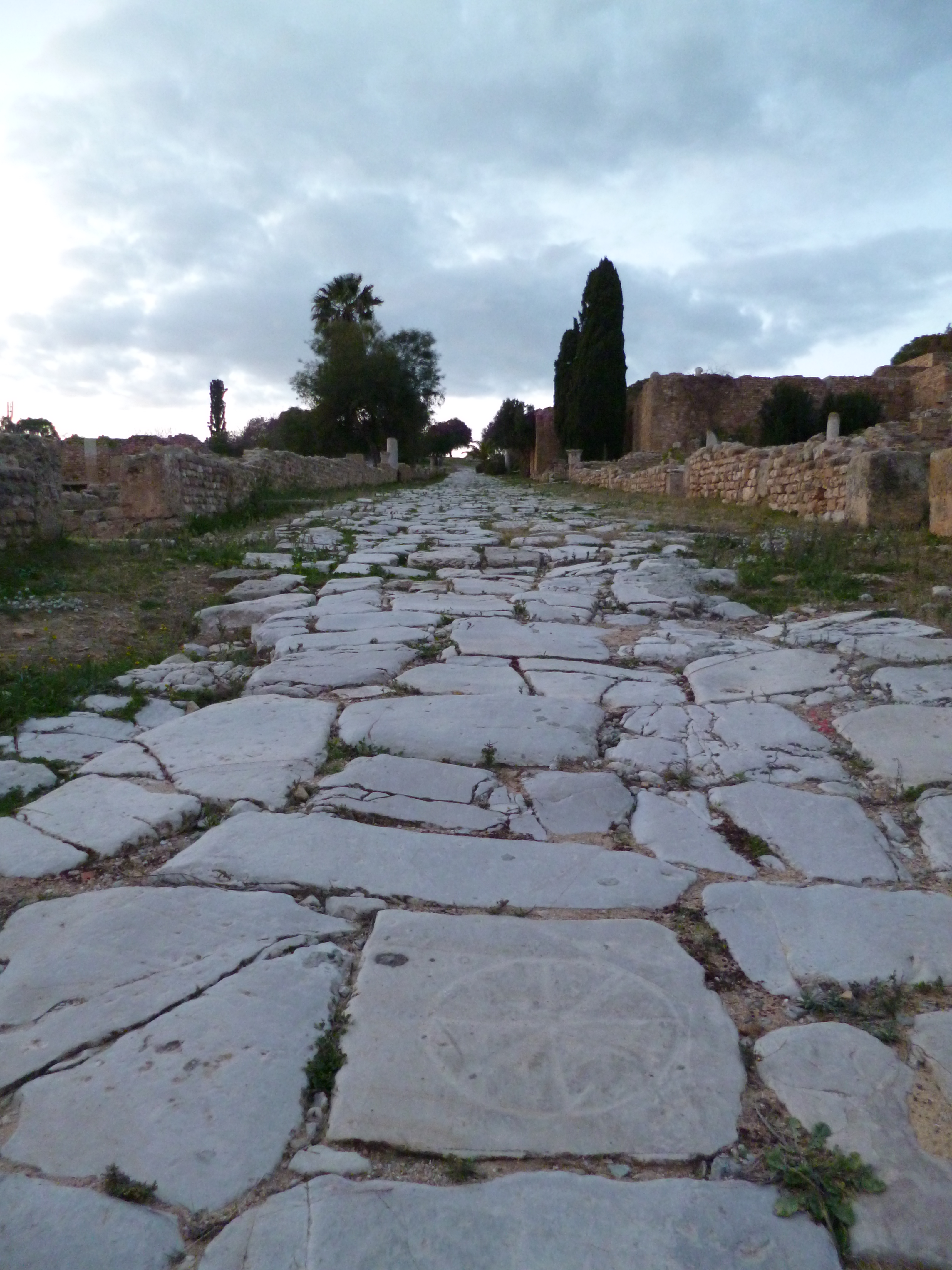
Straight Roman road with ruins and trees to the left and right, in the dusk

Roman road in Carthage, Tunisia.
Photograph: Christina Egan © 2014

Obituary (I Think I Died Last Night)

Obituary

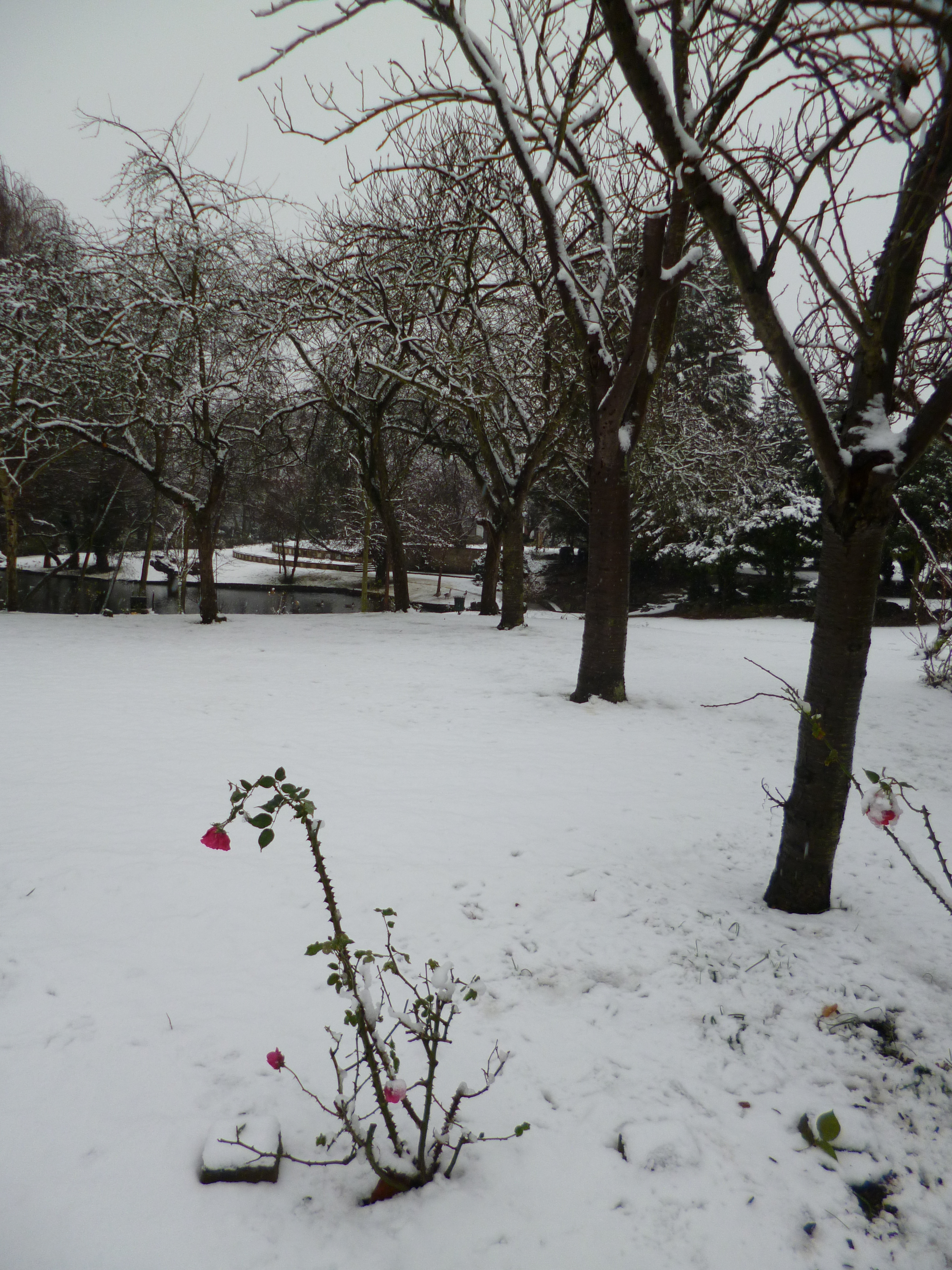
Deep-pink rose over, bent in the snow, with pond in background.I think I died last night,
but none of you noticed.

You talk to me as if
you were talking to me!

The clocks are ticking,
the coffee is dripping…

Even the sun is smiling
while I pretend to carry on.

I was a fount of life,
never looked at, never listened to.

I was an orphan on earth.
I have to write my own obituary.

Christina Egan © 2012

Tottenham Cemetery, London.
Photograph: Christina Egan © 2017.