The Sun God’s Roads

The Sun God’s Roads

I saw them emerging from forest and fog,
the roads of the fiery barbarian god,
I saw them, I walked them, I measured them – but
I dragged on their slopes and I slipped in their mud.

They followed the creek, they followed the crest,
they followed the sun all the way to the west,
they lead to the market, they lead to the fort,
they lead all the way to the northernmost port.

My roads ran across their fords and their fields,
as smooth as a line of square Roman shields,
as straight as the flight of a sure Roman lance,
as hard as its tip, in a steady advance.

Some sauntering highways are right underneath
while others meander through meadow and heath.
I took what I needed, I bridged all the gaps,
I dropped all the rest off the Caesar’s clear maps.

Minerva brought wisdom and Mars announced peace:
we drained a few swamps and we parcelled the leas,
we left the round huts by the winding wet way
and stamped our rectangles into the clay.

My map showed a ragged and rugged old isle
with gridlines unrolling now mile after mile.
I marked it as Jove had commanded us – but
I still muse about the strange tracks in the mud…

Christina Egan ©2019

On this blog, the year always starts with a Roman road. Here, a civil engineer from antiquity reports how his straight highways and rectangular buildings cut right across the uneven and muddy terrain, winding paths, and round buildings of the native Britons. You can still observe this striking phenomenon in Stonehenge, Silchester, and many other places.

We may assume that enthusiasm for this turn of civilisation was not universal. The Celts thought, for instance, that it was silly to worship gods in temples, as if in boxes, instead of in nature. As regards the superb new roads, they were immensely useful for the transport of goods and ideas, but served first of all for the movement of the legions and of metals mined in Britain.
The Path of Luck

The Path of Luck

The burnished desk of the leader groaned
under the slap of his sturdy sandal:
he brandished it over the map of Europe,
as if he signed it, large, from the left.
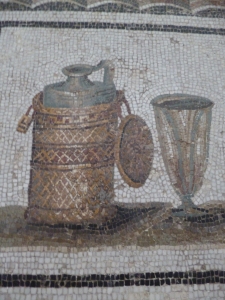
Roman mosaic of bottle and cupThe oil-lamp flickered, the officers frowned
and grinned and raised their cups of spiced wine:
“Don’t forge your luck while it’s hot and supple —

but fan your fate when you will it so!”
The earth would unroll like a scarlet carpet,
lavish her treasures before his feet:
the gold and the purple, sandalwood, snakeskin,
the pearl and the laurel, the wine from volcanoes.
His sandals mounting the snow-white steps,
he saw and saw not the pool of blood.

Christina Egan © 2008

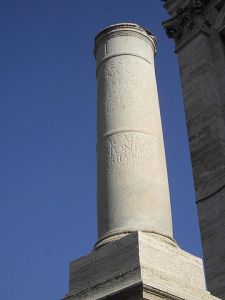
Massive smooth column with Latin inscription, including the name 'Caesar', against deep-blue sky.


Altae moenia Romae

Rome rose, looked round, and conquered all,
on loot and lies loomed square and tall,
and slowly crumbled towards its fall.
Time’s march defies the highest wall.

Christina Egan © 2008


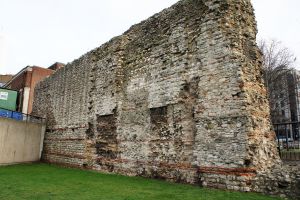
High wall of neatly piled stone and brick in the midst of the city

The first poem was written on the Ides of March and the second soon after. They reveal the dark side of Rome, the shadow of the imperial propaganda that the Empire had brought universal peace. Caesar is still celebrated as the greatest statesman ever; but he got to the top, and lifted Rome to the top, at a very great human cost.

For praise of ancient Rome, go to the narrative poem The City Lit Up about Roman London and the sonnets at The Hallowed City about the Eternal City itself.

The poem above follows the structure of an English sonnet, with three times four lines and then two in the end, with a conclusion or twist.


Illustrations: Roman mosaic, Bardo Museum, Tunis. Photograph: Christina Egan © 2014. — Milestone, Campidoglio, Rome. Photograph by Lalupa. — Roman city wall of London. Photograph by Mariordo (Mario Roberto Durán Ortiz) (Own work) via Wikimedia Commons.

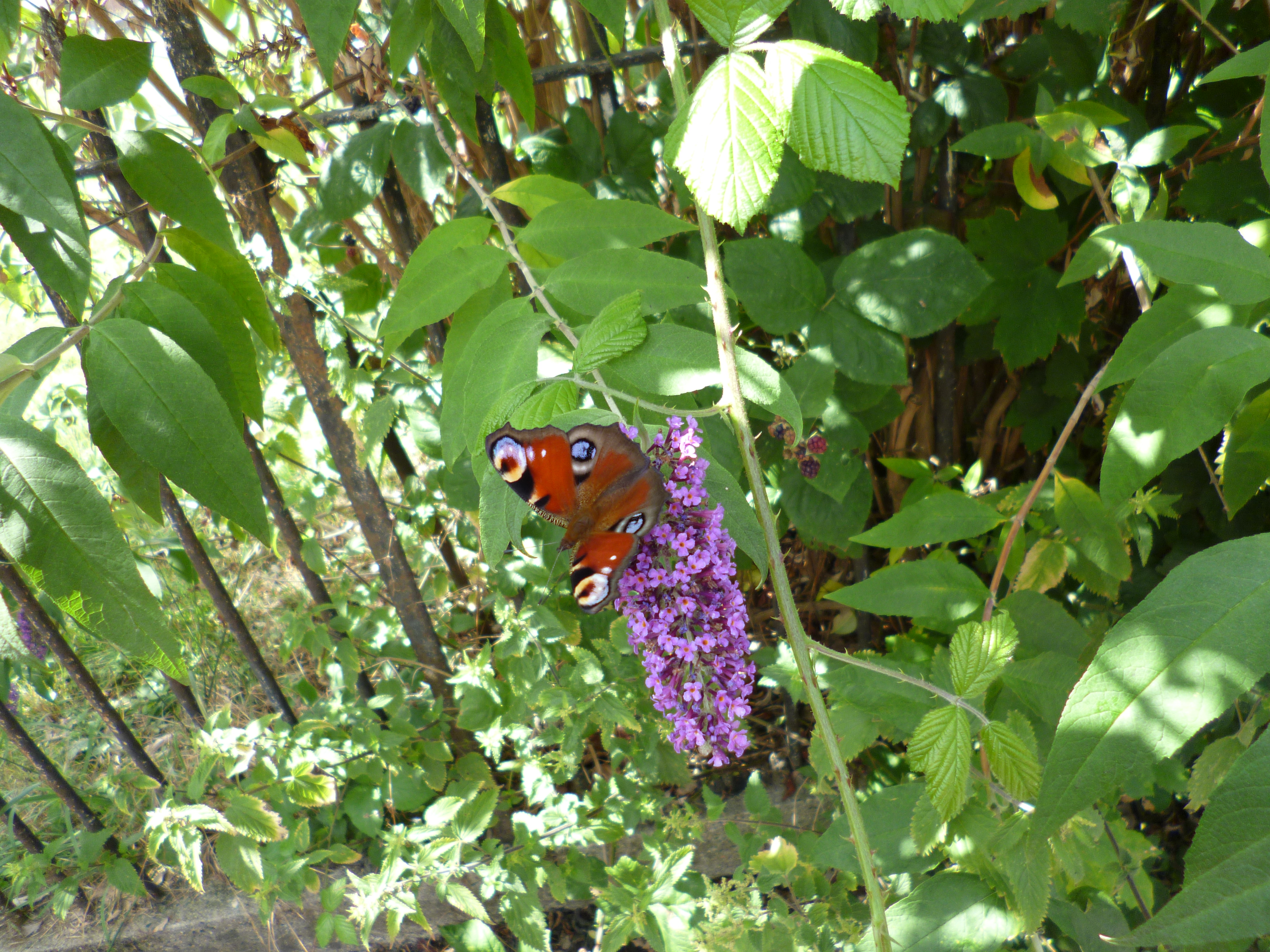
Brown Butterfly / Brauner Schmetterling

Brown Butterfly


Found, found on sandy ground:
bronze brooch from an unknown age,
bright map of an unknown land,
O quivering flower,
brown butterfly!
Where have you flown…?
Little butterfly,
your mirroring wings
are dust lifted up from the earth
and assembled to beauty of heaven.
Grace, grace beyond a name.

Bright admiral butterfly, maroon with 'eyes', on purple cone of flowers.

 Brauner Schmetterling


Gefunden auf sandigem Grund:
Bronzebrosche verlorener Zeiten,
bunte Karte ferner Gefilde.
Du erbebende Blume,
du bräunliche!
Wo flogst du hin…?
Schmetterling,
deine Spiegelbildflügel
sind Staub, der Erde enthoben,
gesammelt zu Himmelsschimmer.
Anmut, namenlose Anmut.

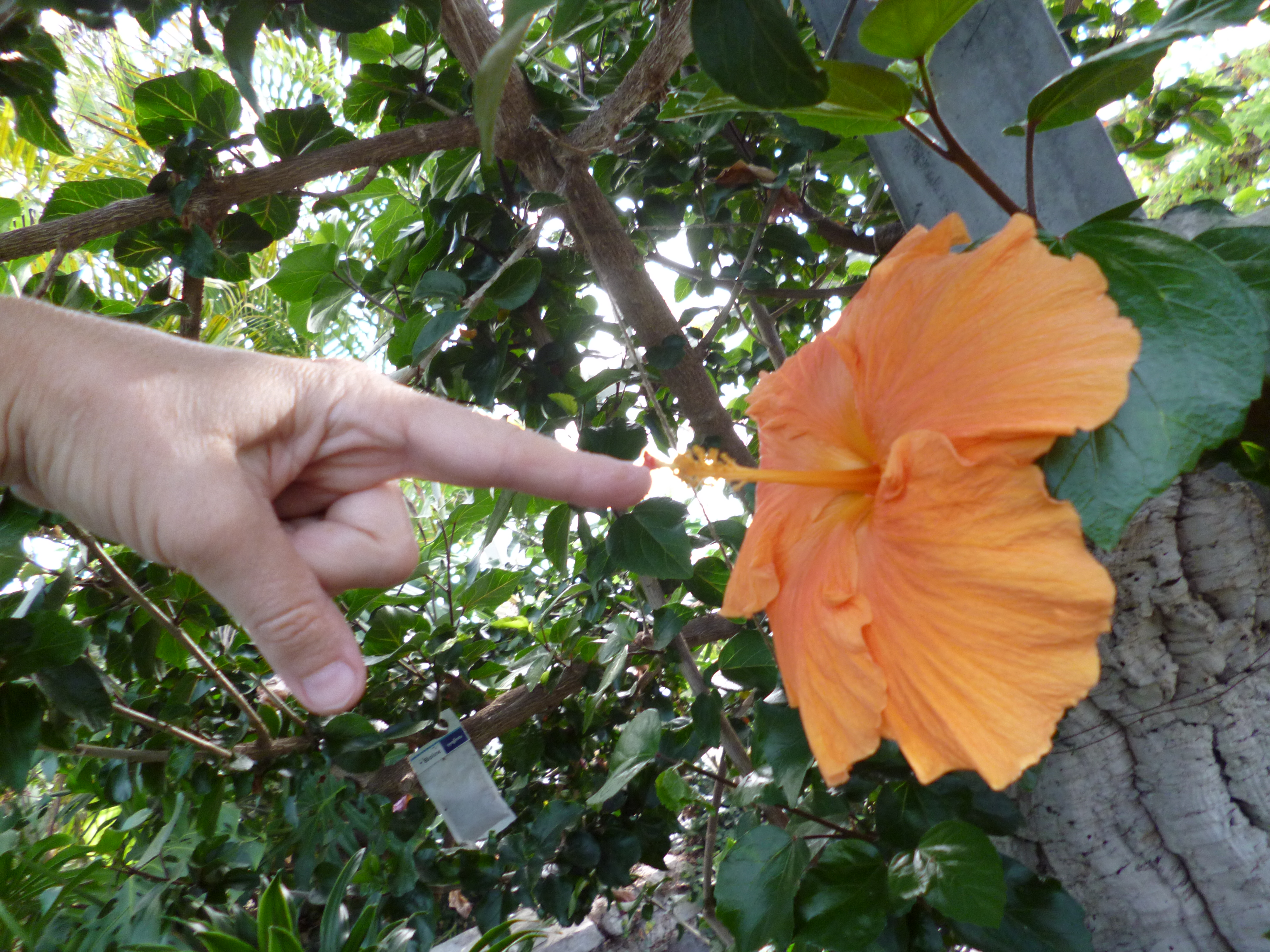
Huge tropical flower, orange and wide open, with human hand for comparison.

The shape of the poems — and their
colour — emulate those of a  butterfly.

English poem: Christina Egan © 2005. 
German poem: Christina Egan © 2017.
Photographs: Christina Egan © 2013.

An Average Life / And All My Youth

An Average Life

The admiral butterfly
a map of happiness
on the burnished green
of the ivy in May

its glamour
its poise
its place in the sun
imagine you had it

bright as a bracelet
fine as a feather
strong as a storm
imagine you were it

and you practised your movements
studied your speeches
turned up in good time –
and your part has been cancelled

the play goes ahead
with you as a servant
in black in the background
required to smile.

Christina Egan © 2010


And all my youth I have been old

Amidst the wealth of my existence
I suffer hunger dark and cold
I am invisibly imprisoned
and all my youth I have been old

On narrow shoulders I must carry
my illness like an awkward cross
I am inexorably burdened
by frailty and its offspring loss

Christina Egan © 2010