The Sun God’s Roads

The Sun God’s Roads

I saw them emerging from forest and fog,
the roads of the fiery barbarian god,
I saw them, I walked them, I measured them – but
I dragged on their slopes and I slipped in their mud.

They followed the creek, they followed the crest,
they followed the sun all the way to the west,
they lead to the market, they lead to the fort,
they lead all the way to the northernmost port.

My roads ran across their fords and their fields,
as smooth as a line of square Roman shields,
as straight as the flight of a sure Roman lance,
as hard as its tip, in a steady advance.

Some sauntering highways are right underneath
while others meander through meadow and heath.
I took what I needed, I bridged all the gaps,
I dropped all the rest off the Caesar’s clear maps.

Minerva brought wisdom and Mars announced peace:
we drained a few swamps and we parcelled the leas,
we left the round huts by the winding wet way
and stamped our rectangles into the clay.

My map showed a ragged and rugged old isle
with gridlines unrolling now mile after mile.
I marked it as Jove had commanded us – but
I still muse about the strange tracks in the mud…

Christina Egan ©2019

On this blog, the year always starts with a Roman road. Here, a civil engineer from antiquity reports how his straight highways and rectangular buildings cut right across the uneven and muddy terrain, winding paths, and round buildings of the native Britons. You can still observe this striking phenomenon in Stonehenge, Silchester, and many other places.

We may assume that enthusiasm for this turn of civilisation was not universal. The Celts thought, for instance, that it was silly to worship gods in temples, as if in boxes, instead of in nature. As regards the superb new roads, they were immensely useful for the transport of goods and ideas, but served first of all for the movement of the legions and of metals mined in Britain.

The Hallowed City

The Hallowed City

I.

Aliusque et idem nasceris

When last I looked upon that golden hill,
the only coal-grey clouds along its crest
were pine-trees of Mediterranean zest,
clear-cut against the blue, timeless and still.
When I surveyed the city from the west,
beyond the river and the seventh hill,
my thirsty eyes rejoiced and drank their fill…
A pilgrimage it was and pagan quest.
Behind me passed the Sun on wheels of fire,
accompanied by Mnemosyne’s lyre.
Was this my long-lost and recovered home?
Born here and buried, had I now returned,
the same and not the same? My eye-lids burned.
This is the hallowed city. This is Rome.

Christina Egan © 2018

Drawing of curving Roman aqueducts crossing over

II.

Pulchrae loca vertor ad urbis

My eyes have seen the marble halls of Rome,
resplendent like the mighty mistress Moon
and multi-coloured like a field in bloom;
I’ve watched the buildings grow in brick and stone.
I’ve stood beneath the proud and perfect dome
which emulates the heavens’ sparkling room
and holds our destiny from dawn to doom.
I’ve roamed those hills and called a roof my home.
I’ve heard the chanting children, sighing harps,
the darting chariots and creaking carts,
the swish of virgin water, purple wine,
I’ve seen the aqueducts descend and curve,
the roads roll into Rome, unite, disperse —
I’ve tasted all that splendour. It was mine.

Christina Egan © 2018


The first blogpost of the year deals, as always, with Roman roads!

The impression of aqueducts, which illustrated one of my parents’ books about ancient civilisations, informed my entire life. Unfortunately, I do not know the artist, but there does not seem to be a copyright on it.

The quotes are from two Roman poems about Rome, Horace’s Carmen saeculare and Ovid’s Tristia.

I apply Horace’s idea that the sun is daily reborn, another and yet the same, to a person who feels he or she was reborn into this world many centuries later, another and yet the same; and I reinterpret Ovid’s lament about remembering his home from exile as a modern person’s longing for antiquity. Mnemosyne is the Greco-Roman divinity of memory, and the Sun and Moon, of course, are mighty gods, or at least representations of gods.

Der letzte Tropfen

Der letzte Tropfen

Wein von der Farbe des Blutes, jedoch vom Dufte der Rosen,
Wein von des Abends Kühle, darauf von der Hitze des Herdes…
Halb nur bewußte Gebete murmelnd, vergieß’ ich das Opfer:
Göttern den ersten Tropfen, den letzten dem fernen Geliebten.
Unbekannt sind mir jene, nicht weniger fremd ist mir dieser,
marmornes Bildnis verborgen im Haine heiliger Pinien.
Glatt wie silberne Spiegel und pfeilgerade die Straßen,
welche das mächtige Rom über Sümpfe und Hügel geknüpft hat:
Dennoch führt nicht eine zum Ziel, zum Dache des andern,–
ewig harrt man allein, allein unter schweigenden Sternen.

Christina Egan © 2015

Roman mosaic of bottle and cup

Like every year, I begin this blog with a Roman road

The poem is written in hexametres, which I find difficult to emulate in English and German.

You can find another story with spilt wine and ancient roads, in the form of an English poem, at Quo vadis?.


Roman mosaic, Bardo Museum, Tunis.
Photograph: Christina Egan © 2014.

Minerva’s Voyage

Minerva’s Voyage

I.

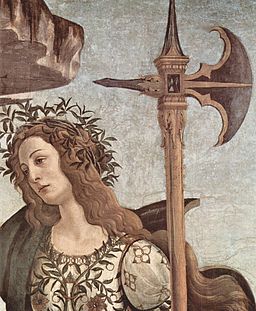
Minerva by Botticelli

Her hair is the offspring of river and fire,
her robe has been woven from flowers and wind.
Her foot cannot rest and her flesh cannot tire,
her arm is in flow and her eye will inspire
a voyage for wisdom with one  fleeting glint.

II.

Minerva on the Academy of Athens

She dived like a hawk from her shadowless sphere,
the shield on her arm like the sun in the west –
She looms on the roof with her helmet and spear
to capture the lightning, conduct it down here
and spark our restless and glittering quest.

Christina Egan © 2016

Delicate, pale, portrait of the goddess as a young woman in armour.Minerva is the Roman goddess of wisdom and knowledge, arts and applied arts; she came to be identified with the Greek goddess Athena, patron of Athens.

The two poems were  inspired by the two artworks mentioned, as well as a temple on the Agora of Athens dedicated to her as patron of artists and artisans.

Illustration: Minerva by Sandro Botticelli (ca. 1482-83), via Wikimedia Commons (Public Domain).

The Spirits of Nimrod

The Spirits of Nimrod

The Spirits of Nimrod
stood tall and stood fast
to guard empty castles
of empires past.

The spirits of marble
were shaken at last:
their wings broken off,
their beards ground to dust.

The proud heads of Nimrod
are curls without face,
their eloquent pedestals
frames without phrase.

Yet some still have lips
to whisper by dusk
and some stir their wings
deep under the mud.

The Spirits of Nimrod
will rise like the sun,
invincible eagles:
beware when they come!

Christina Egan © 2016

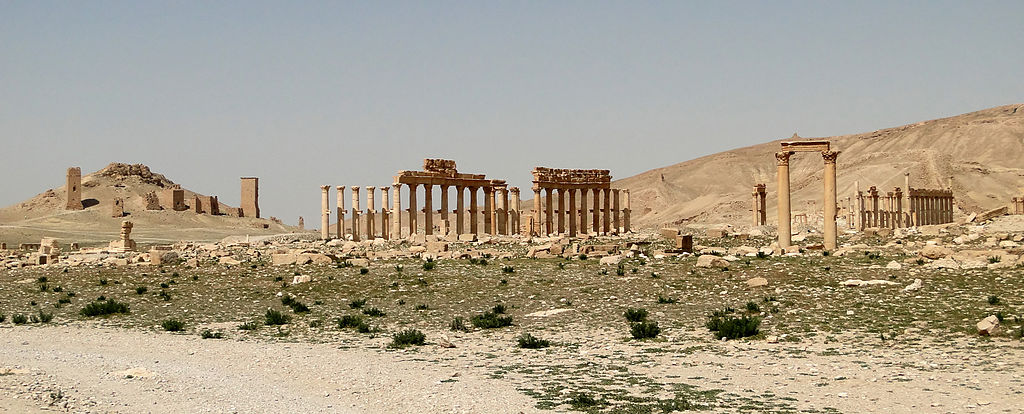
Ruins with many columns in arid, hilly land.

Invaluable buildings and sculptures of great antiquity and beauty have recently been destroyed by Daesh (so-called Islamic State). Nimrod was one place affected by those war crimes and Palmyra another.

These lines evoke the return of the gods — not as pagan deities but as statues: as witnesses of history and works of art, which we worship in our own way and will reconstruct, recreate, document, or remember.

Photograph: Diocletian’s camp in Palmyra, Syria (2010). By Bernard Gagnon (Own work) [GFDL], via Wikimedia Commons.

The City Lit Up

The City Lit Up

I lived between Ilex and Salix,
just north of Londinium Town,
and sometimes I climbed to the moss-well
between the oaks and looked down.

I looked at the thatch and the roof-tiles,
as red as the embers beneath,
I looked at the timber and marble,
the highways connecting the heath,

the gates, the walls and the broad bridge,
the fields afloat on the clay;
and I wondered if London would stretch
as vast as the valley one day,
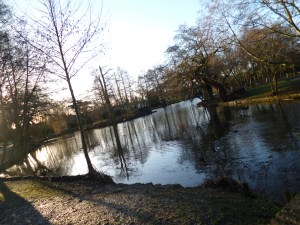
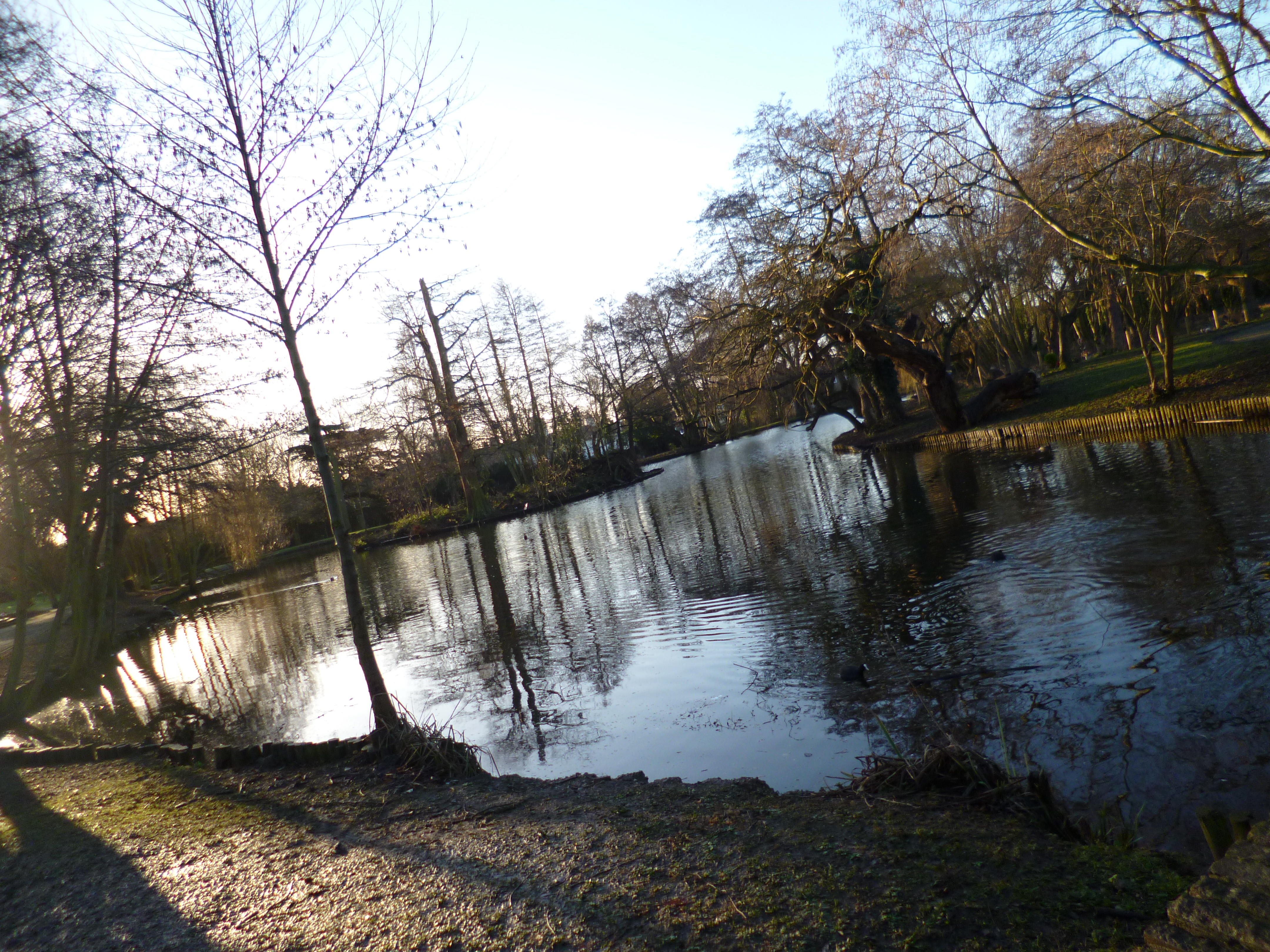
Pond in park, surrounded by bare trees, with tiny island

as vast as Rome, which had risen
from marshes and slopes long ago,
with columns touching the heavens
because the gods willed it so;

and if Rome could ever be shrinking
and sinking into the bog,
or London be burning or flooding
and melting into the fog…

The city lit up in the sunset
and faded away in the dusk;
I felt the chill in the oak-wood,
and down to my villa I rushed.

I entered the gate by the willows
and strode through the dolphins’ yard,
I passed the flickering torches
and stopped by my forefathers’ hearth.
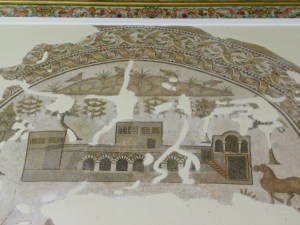
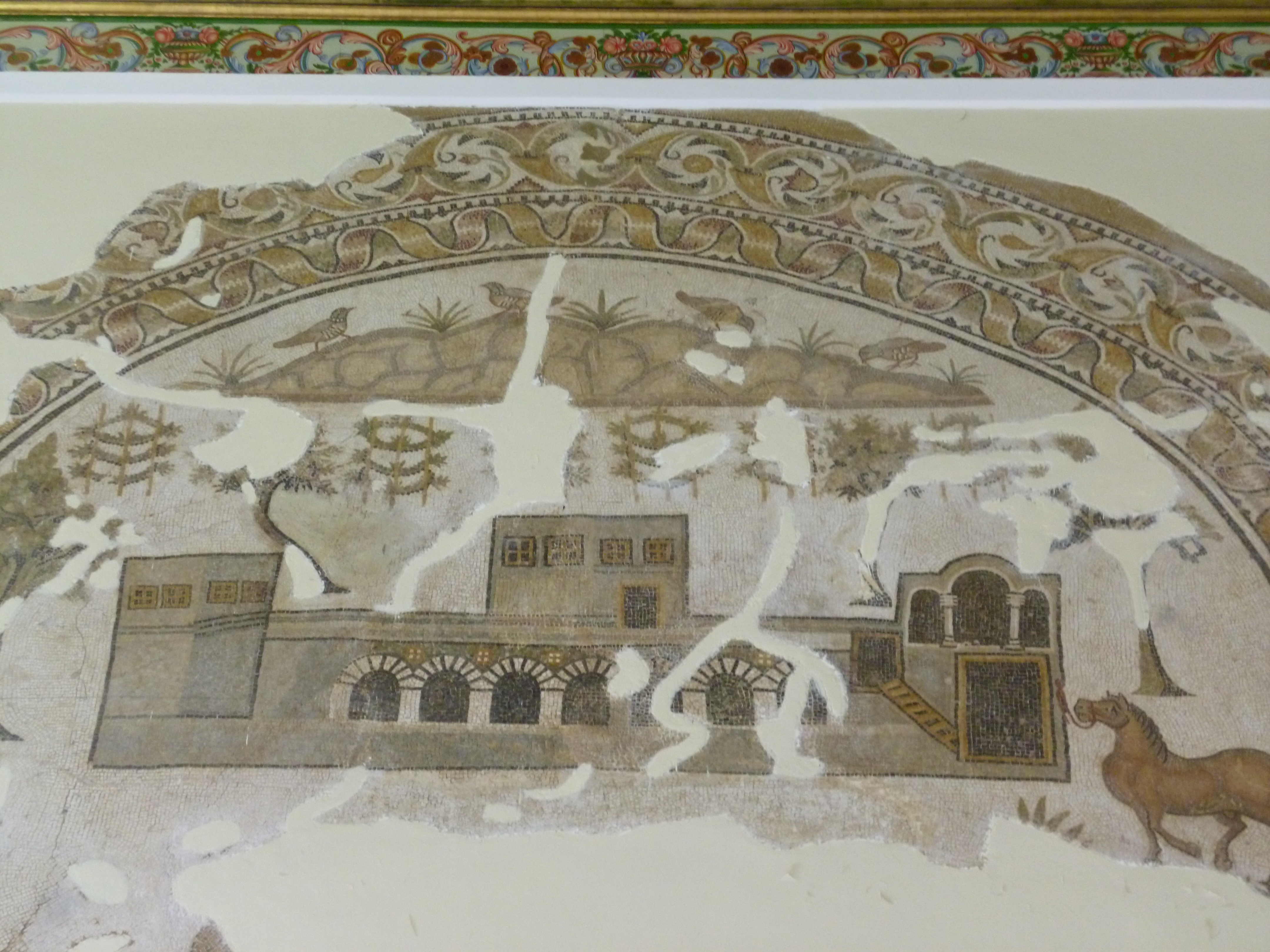
Roman mosaic of a mansion

My name was Appius Felix,
an heir to Aeneas of Troy;
I kept the seals and the idols
to pass them on to my boy.

I used the sword and the saddle,
I held the lyre and quill.
I lived between Ilex and Salix,
at the foot of the Moss-Well Hill.

Christina Egan © 2016


As you can see from the 100-metre-high summit of the Muswell Hill, London does stretch for many miles nowadays, filling the valley to both sides of the meandering River Thames.

You will also notice that there are large patches of green everywhere, some of them left over from ancient marshland and woodland. If you know your way, you can walk across London through woods and meadows, across hills and along rivers for miles!

My Roman observer lives in modern-day Wood Green or Bounds Green, near fictitious hamlets or villas called Ilex (holly or oak) and Salix (willow or osier).

This man firmly believes that gods guard his city and his country and that spirits guard his home and his family. He pursues some useful career in the service of the Empire, but he is also a bit of a poet.

I named him Appius after the statesman of the Republic who had contributed so much to Rome’s infrastructure as well as intellectual life, and Felix because he counts himself lucky.


You can find more on Londinium’s fortifications at Ode to London Wall  and more about its straight or winding highways at Quo vadis?

Photographs: Country villa, late Roman mosaic, Bardo Museum, Tunis. —  Pond in Tottenham, North London. Christina Egan © 2014

The Purple Sea / Das lila Meer

The Purple Sea

I’ve seen the sea turn indigo
and greyish green and brilliant blue:
the wine-red sea that Homer saw
was not a blind man’s dream — it’s true.

I’ve swum in waves of indigo,
I’ve swum in eyes of greenish grey:
the fair-eyed gods that Homer saw
may just for moments cross your way.

Christina Egan © 2015

Das lila Meer

Auch indigo färbt sich das Meer
wie gräulichgrün und leuchtendblau:
Wahr war das Weinrot des Homer –
nicht eines blinden Dichters Schau.

Im Indigo schwamm ich sogar
und auch in Augen von Grüngrau:
Ein göttlich lichtes Augenpaar,
das gibt es manchmal noch genau.

Christina Egan © 2015

The Wine-Dark Sea

Where sky and ocean form a line
of glassy indigo,
the water looks indeed like wine,
a strong and sweet Merlot.

This is the sea that heaped up rocks
and beckoned walls to rise,
the ageless mother of these flocks
of sun-enchanted isles.

This is the sea that brought the fleets
to Carthage and to Troy
on silver-green and bright-blue sheets
which wayward gods deploy.

Christina Egan © 2012

These poems refer to the debate around Homer’s strange colour names: e.g. ‘wine-coloured’ (‘oinops’) and ‘purple’ or ‘maroon’ (‘porphyreos’) for the sea; ‘green-eyed’ (‘glaukopis’) for a person or god with eyes of any fair colour.

While people in antiquity were not yet interested in describing colours and 
despite their sophisticated languages — had only very few words for them, I
believe that on occasion, these can be taken literally.

The first two poems are translations of each other. The colour adjectives oscillate between the languages, and within, just like the sea does…