Theodor an Emilien

Theodor an Emilien

Mit tausend dicken weißen Kerzen
Prangt der Kastanienbaum am Tor;
Ich steh’ mit hoffnungshellem Herzen
Im späten Dämmer stumm davor.

Der Vogelsang ist längst versickert
Wie Silberspur ins Dunkelblau…
Doch aus dem Gutshaus tröpfelt, zittert,
Quillt das Klavier wie Abendtau.

Ich mach’ im hohen Gartensaale
Den flinken schlanken Schatten aus –
Und werf’ nach jenem Ankerpfahle
Mein Tau mit einem Male aus.

Christina Egan © 2016


The old-fashioned names and inflections signal that this is a scene which happened long ago, a romantic story from the times of Jane Austen, set in Germany. There is a true story behind it, and the ending is happy and sad: the young man waiting hopefully outside the manor house in the summer night, Ernst Theodor Echtermeyermarried Lady Emilie, and they had a child, but they both died very young.

Himmelblaue Uhr (Tottenham)

Himmelblaue Uhr
(Schloßpark zu Tottenham)

Die Dämmrung senkt sich auf die Flur.
In Vogelsang
tropft Glockenklang
von einer himmelblauen Uhr
an einem himbeerfarbnen Turm.

Die Rosen schimmern wie Laternen.
Von ringsum her
summt der Verkehr.
Ein Flugzeug funkelt zwischen Sternen
und segelt durch Kornblumenfernen…

Die Wetterfahne blinkt am Mast.
Ein Ruf, Gebell,
der Uhrschlag, hell –
Und alle Sorge, alle Hast
kommt zwischen Tor und Tor zur Rast.

Christina Egan © 2016

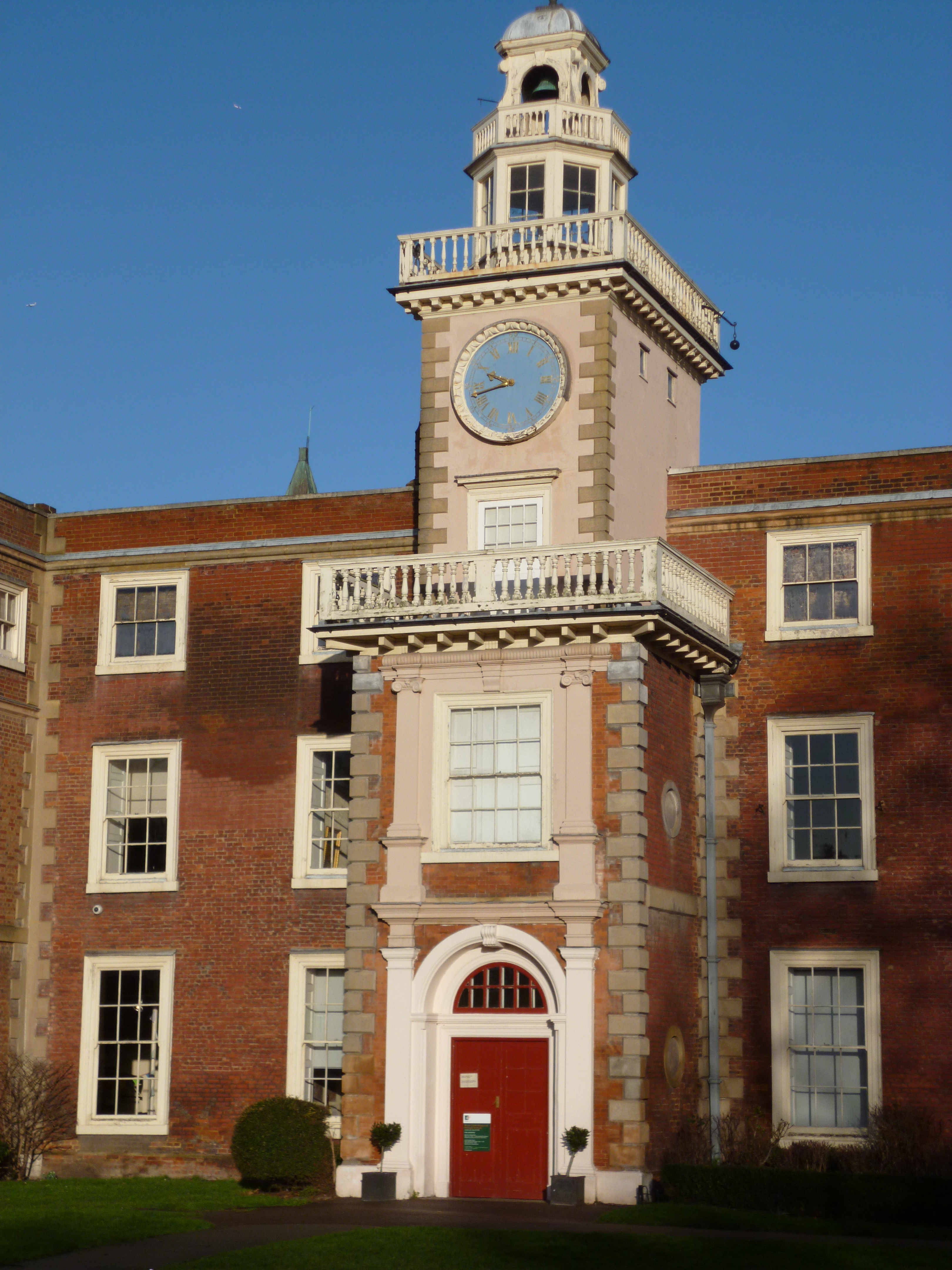
Manor house in red brick, turret painted in pink, with a red door, white decorations, and a bright-blue clockface, under a blue sky.

You can read similar poetry about a walk on a tranquil evening at May Haiku (Bruce Castle).

This is London, too — not only the steel and glass office blocks and underground tunnels I describe in höhlenmenschen / cavemen and related posts, or the bitter poverty I touch on in There’s door on door. London is, in fact, a particularly green city, and Tottenham a very green part of it.

Bruce Castle, Tottenham, London.
Photograph: Christina Egan © 2014

Der Baum im Schulhof

Der Baum im Schulhof
(Marienschule Fulda)

Das Bäumchen stand im rosa Kleid,
das Mädchen stand im blauen;
sie waren fünfzehn Jahre alt
und lieblich anzuschauen,
wenn auch noch zierlich, kindlich gar,
nichts als ein Bündel Blüten…
Im Norden lag ein gelbes Haus,
der Schulhof lag im Süden.

Und als sie sich nun wiedersehn
in eben jenen Mauern,
da sind sie fünfzig Jahre alt
und herrlich anzuschauen,
wie Wolken stattlich hingewölbt
und strahlend unter Schauern:
der Baum im dunkelrosa Kleid,
die Frau im dunkelblauen.

Christina Egan © 2015

You can look at the blossoming  Tree in the Schoolyard
and the yellow building online at Marienschule Fulda. 

The story of the schoolgirl and the tree, meeting at fifteen
years old and then at fifty, may work in a translation software.

The Purple Sea / Das lila Meer

The Purple Sea

I’ve seen the sea turn indigo
and greyish green and brilliant blue:
the wine-red sea that Homer saw
was not a blind man’s dream — it’s true.

I’ve swum in waves of indigo,
I’ve swum in eyes of greenish grey:
the fair-eyed gods that Homer saw
may just for moments cross your way.

Christina Egan © 2015

Das lila Meer

Auch indigo färbt sich das Meer
wie gräulichgrün und leuchtendblau:
Wahr war das Weinrot des Homer –
nicht eines blinden Dichters Schau.

Im Indigo schwamm ich sogar
und auch in Augen von Grüngrau:
Ein göttlich lichtes Augenpaar,
das gibt es manchmal noch genau.

Christina Egan © 2015

The Wine-Dark Sea

Where sky and ocean form a line
of glassy indigo,
the water looks indeed like wine,
a strong and sweet Merlot.

This is the sea that heaped up rocks
and beckoned walls to rise,
the ageless mother of these flocks
of sun-enchanted isles.

This is the sea that brought the fleets
to Carthage and to Troy
on silver-green and bright-blue sheets
which wayward gods deploy.

Christina Egan © 2012

These poems refer to the debate around Homer’s strange colour names: e.g. ‘wine-coloured’ (‘oinops’) and ‘purple’ or ‘maroon’ (‘porphyreos’) for the sea; ‘green-eyed’ (‘glaukopis’) for a person or god with eyes of any fair colour.

While people in antiquity were not yet interested in describing colours and 
despite their sophisticated languages — had only very few words for them, I
believe that on occasion, these can be taken literally.

The first two poems are translations of each other. The colour adjectives oscillate between the languages, and within, just like the sea does…

The Last Advent

The Last Advent

The rolling emerald hills,
the towering topaz rocks,
the earth-girding ocean
in its royal blue roar,
even the starred sky
in its silvery silence –

Like a sumptuous silk robe
and an embroidered curtain,
they will be drawn aside
to reveal the true splendour –
Then they will be discarded
like rough grey sloughs.

And new worlds will arise,
circles of festive fire.
Shadeless, doubtless,
deathless, boundless.
And we shall be alive
for the first time, forever.

Christina Egan © 2012

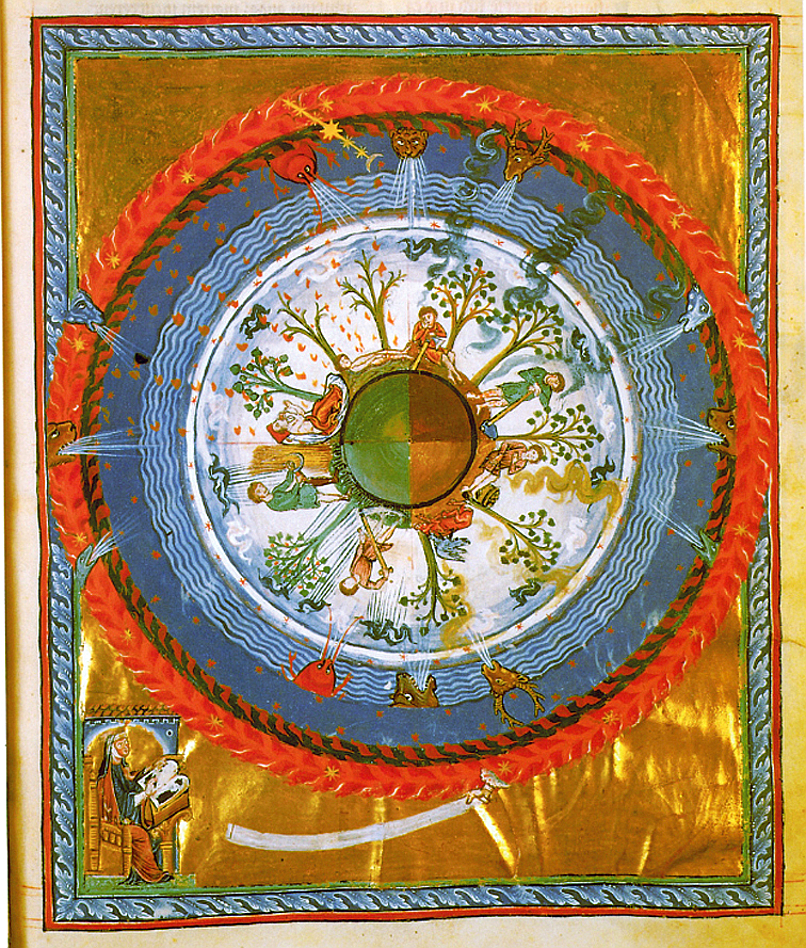
Hildegard_WerkGottes_12Jh_


These lines remind us of the double meaning of ‘Advent’: the first coming of Jesus, when he  was born to Mary, and the second coming at the end of times, when this world will be replaced by an eternal one beyond imagination.

Picture: from a 12th century codex of  Hildegard of Bingen’s Book of Divine Works.

Kretische Küste

Kretische Küste

I.

Vor mir ein grünes Meer, ein roter Strand
und hinter mir die himmelhohe Wand
der Weißen Berge, mit Gesträuch schraffiert,
mit Schluchten aufgeteilt, vom Mond berührt.

Es schwindelt mich, so schroff ist es und schön…
ich möchte mitten ins Gebirge gehn,
als sei es eines Mannes Wohlgestalt
und berge sein Gemüt in jedem Spalt.

II.

Der kupferfarbne Sand wird doch zu Gold,
wo er in steiler Woge niederrollt
und sich mit jenem Brennendblau benetzt,
das kommt und nochmals kommt… und jetzt… und jetzt.

Und Disteln starren in dem dürren Strand,
die plötzlich strahlen wie von Zauberhand,
wenn erster Regen flüchtig niedersteigt
und Brautkleidblüten aus den Blättern treibt!

III.

Wo täglich Himmel sich mit Meer vermählt
und Landes Rand von anderm Strand erzählt,
wo trockne Erde wie der Tagstern loht
von silbriggold bis zu orangerot,

wo noch bei Nacht das Wasser, kaum bewegt,
den Leib in schwerelosem Zauber trägt,
bis in das sanfte Schwarz ein Schweifstern stürzt –
dort laß uns warten auf den milden Herbst.

IV.

Mit riesenhaften grünen Pranken greift
das Meer hinein in den geschützten Kreis
des kleinen Hafens, daß die Mole schäumt
und sich die bunte Schar der Boote bäumt.

Des späten Herbstes erstes Fauchen fährt
in letzte schwere Hitze wie ein Schwert.
Fünftausend Jahre aber ragt die Stadt
ins Element, gelassen, sonnensatt.

Christina Egan © 2014

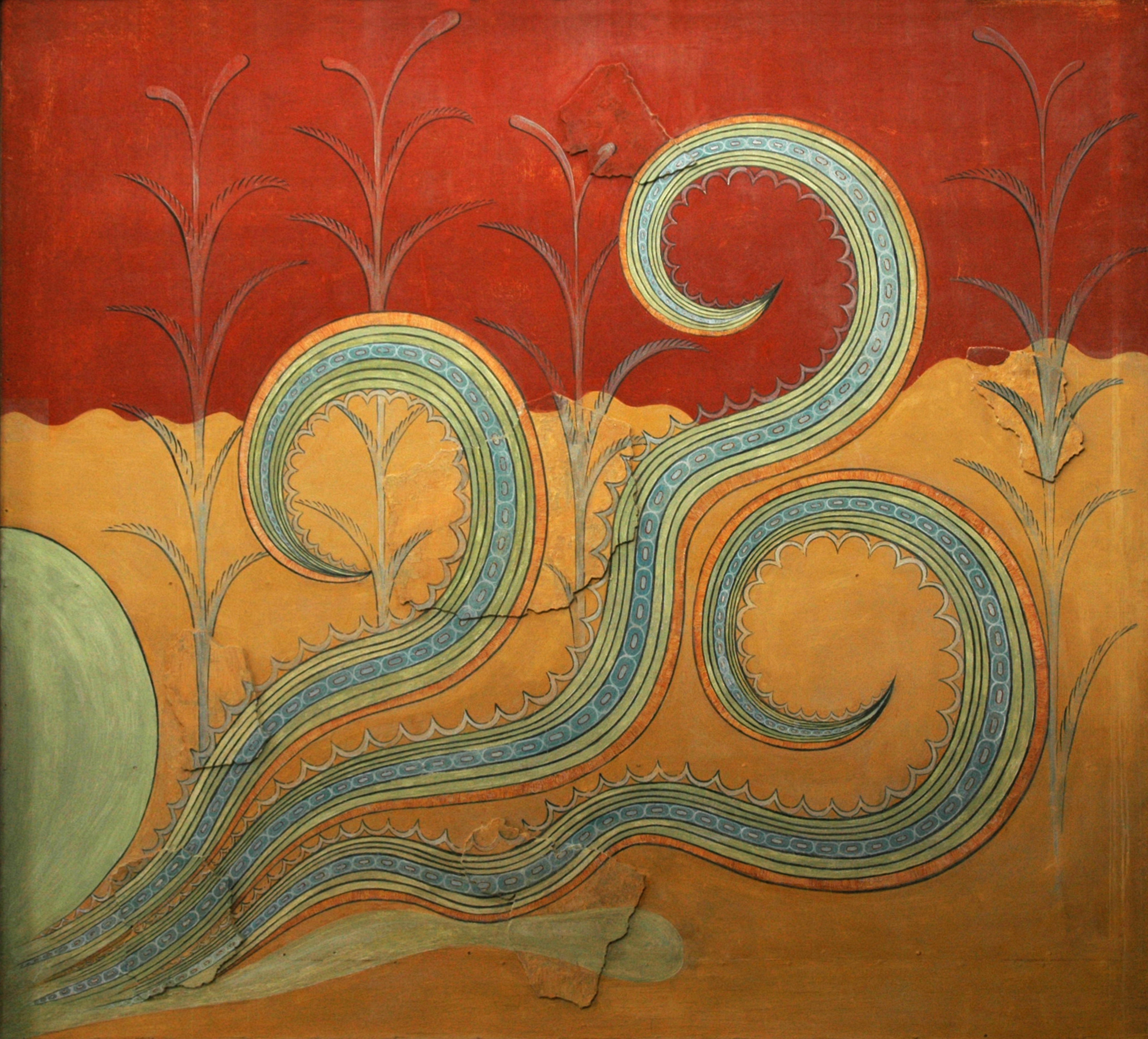
Flourishes on a mural, turquoise on luminous red and yello

For more poetry and information
on Knossos 
and Chania on Crete
see my English poems
The Pattern of a Yesterday and
Golden Dell.


Frieze in the royal palace at Knossos, Crete.
Photograph: Harrieta171 via Wikimedia.

November (Im dunkelblauen Nebel)

November

Im dunkelblauen Nebel liegen
gelöst mein Haus und Park.
Mein Herz hat einen Traum erstiegen
und hebt sich still und stark.

Der Herbst hat Gold um Gold gewonnen
mit schmerzloser Gewalt.
Das Mondlicht ist für mich geronnen
zu lieblicher Gestalt.

Christina Egan © 2010

This must be one of the happiest late-autumn poems ever:
exuding peace, evoking beauty, steeped in blue and gold!

Schöpfung (Darß)

Schöpfung
(Darß)

I.

schwebend zwischen ungeheuern
wassern und verwunschnen teichen
will die erde sich erneuern
wälder zeugen dünen häufen

II.

wird die see den see erwählen
kraft die ruhe salz die süße
muß sich blau dem grau vermählen
daß es ineinanderfließe

III.

wie die schaumgekrönte göttin
einst dem wilden meer entstieg
so dem bloßen sand die blüte
und dem wüsten schmerz das lied

Christina Egan © 2015


On the Darß (Darss), you can observe ‘Creation’ at work:
between ocean and ponds, between dunes and woods.

The last poem describes the ‘Creation’ of art as another
natural, elemental, process: beauty born out of pain.

You can read an English poem about the Darss at
Midsummernight Far North.

Parallel English and German poems about a similar
phenomenon on the German North Sea coast are at
Views of North Sea Islands.

On the Volcano’s Rim

On the Volcano’s Rim

Goldstaub
(Lanzarote)

Hoher blauer Himmel,
weißer Wolkenflug,
ungestüme Winde,
rascher Schattenzug

über rote Halden,
über graue Höhn,
über grüne Matten,
wo schon Sterne stehn:

abertausend Blüten
wie ein Frühlingslied,
Goldstaub, den die Sonne
aus dem Erdreich zieht!

Christina Egan © 2015

Gold Dust
(Lanzarote)

Blue sky, ever higher,
white clouds in full flight,
winds wilful and forceful,
swift change of the light

across the red boulders,
across the grey height,
across the green lichen,
where stars tremble bright:

a flourish of flowers
and spring in a splash,
the gold dust the sun
can draw out of the ash!

Christina Egan © 2015

Dreaming Dragon
(Lanzarote)

Dew-drops sparkling in all colours
on the mighty coal-black craggy
shoulder of a dreaming dragon:
so these tiny tender flowers
perch on the volcano’s terrace –
fire, earth and wind distilled
to a dainty dotted quilt.

Ceaseless gales and sleepless fire,
ashes fed with salty dew –
ocean and volcano brew
flora’s early, lacy layer,
magic carpet in the air,
in the boundless brown and blue…
Dreams are real. Dreams come true.

Christina Egan © 2015

The Hoard
(Lanzarote)

As the mountain bears the flower,
as the giant holds the gem,
so the hour bears my poem:
purple speck on silver stem.

Where a myriad wild flowers
sprout behind the dry-stone wall,
I must gather all my powers
till the heavens hear my call.

Christina Egan © 2015

Valentine on the Volcano
(Lanzarote)

We dance on the volcano’s rim –
although its low and sunken side,
although extinct for centuries –
tossed partly by the wild wind’s whim
and partly drunk with liquid life –
suspended over sky-blue seas!
(I found my love above Teguise!)

Christina Egan © 2015

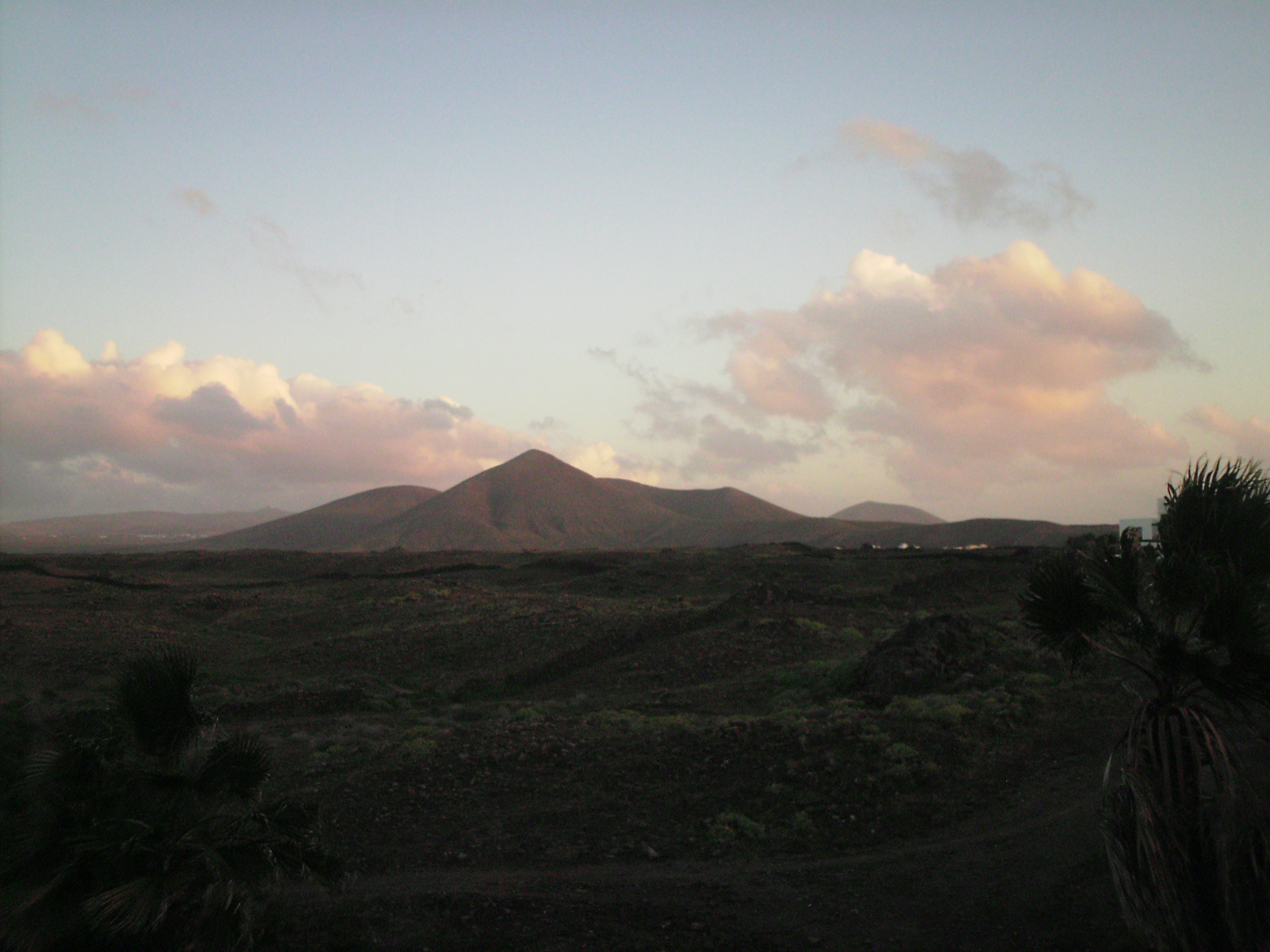
Plain and mountain range with very dark surfaces, rosy clouds in sky

The little volcano. Photograph: Christina Egan © 2015

These lines all sprang from one of the greatest experiences of my life: climbing a little volcano on the isle of Lanzarote, about which you can find a poetic description in German and English at Isle of Bliss / Insel der Seligkeit.

Gold Dust and The Hoard could equally be set in my native Rhön Mountains, also of volcanic origin, but very far inland and much greener.

The three poems in English only may work quite well in an automatic translator. The first two poems are translations of each other, or rather, parallel creations in German and English, where rhythm and rhyme required some changes in wording. It is better to do it this way, since the message is partly conveyed by rhythm and rhyme!

You could leave out the line in brackets to use the poem for a Valentine’s or anniversary card. Copy that line, though, into your list of places to see — both little towns, Teguise and Costa Teguise, because one has got the history and the other one the beach!

This handful of poems almost sums up my work: they describe plants and mountains and the sea; they refer to most basic colours; conclude with thoughts on art and religion and love; and use the beauty of language to capture the beauty of the world.

Meine blaue Mauer

Meine blaue Mauer

Oranges hanging from branches against blue sky

Ich tränke die Terrassenwand
mit Mittelmeeresblau,
denn auch im Goldorangenland
regiert zuweilen Grau.

Ich pflanze einen Ölbaumzweig
in einen irdnen Topf,
als säße ich im Römerreich
mit meinem prallen Pfropf. Fragment of a plate; fine red pottery impressed with two doves

Ich krümele den Thymian,
kaum samengroßes Laub:
Sein wilder Duft steigt himmelan –
Mein südlich süßes Kraut!

Ich leg’ ein rotes Scherbenrund
in meine Marmorhand,
als hielte der gemeine Fund
Jahrtausende gebannt…

Roof terrace with pots of little palm-trees and fence all painted in striking bright blue.Auf meiner Gartenmauer schau’
ich Städte bunt erblühn
und wachsen in das satte Blau
und wanken und verglühn.

Ich ritze meinen Namen stolz
dem Putz ein auf Latein;
ich warte aufs Olivenholz
und schlürfe Purpurwein…

Christina Egan © 2014

Photographs: Morocco
Christina Egan © 2012

Photo of Late Roman shard from Egypt used
with kind permission of the British Museum.