Views of North Sea Islands

Views of North Sea Islands Ansichten von Nordseeinseln

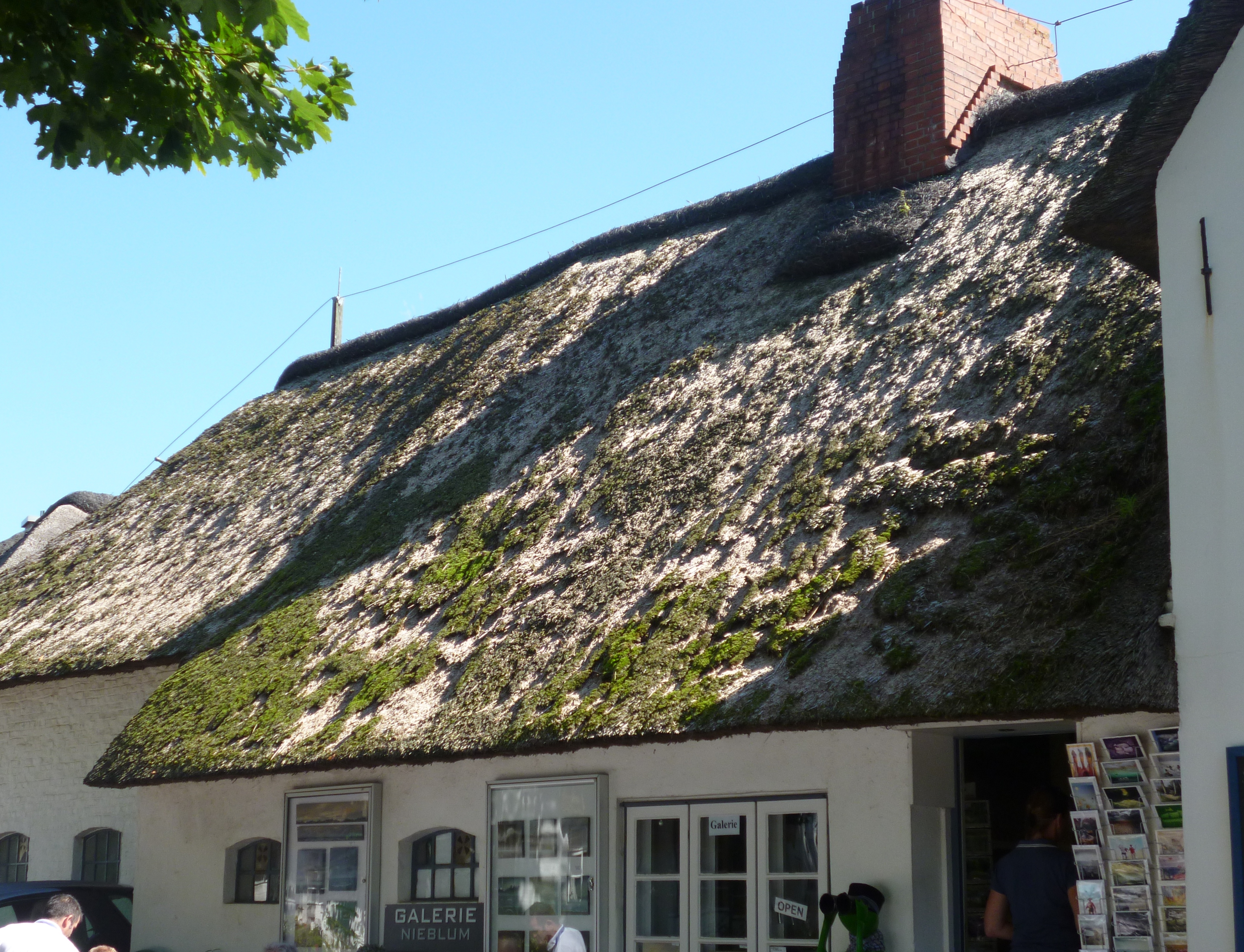
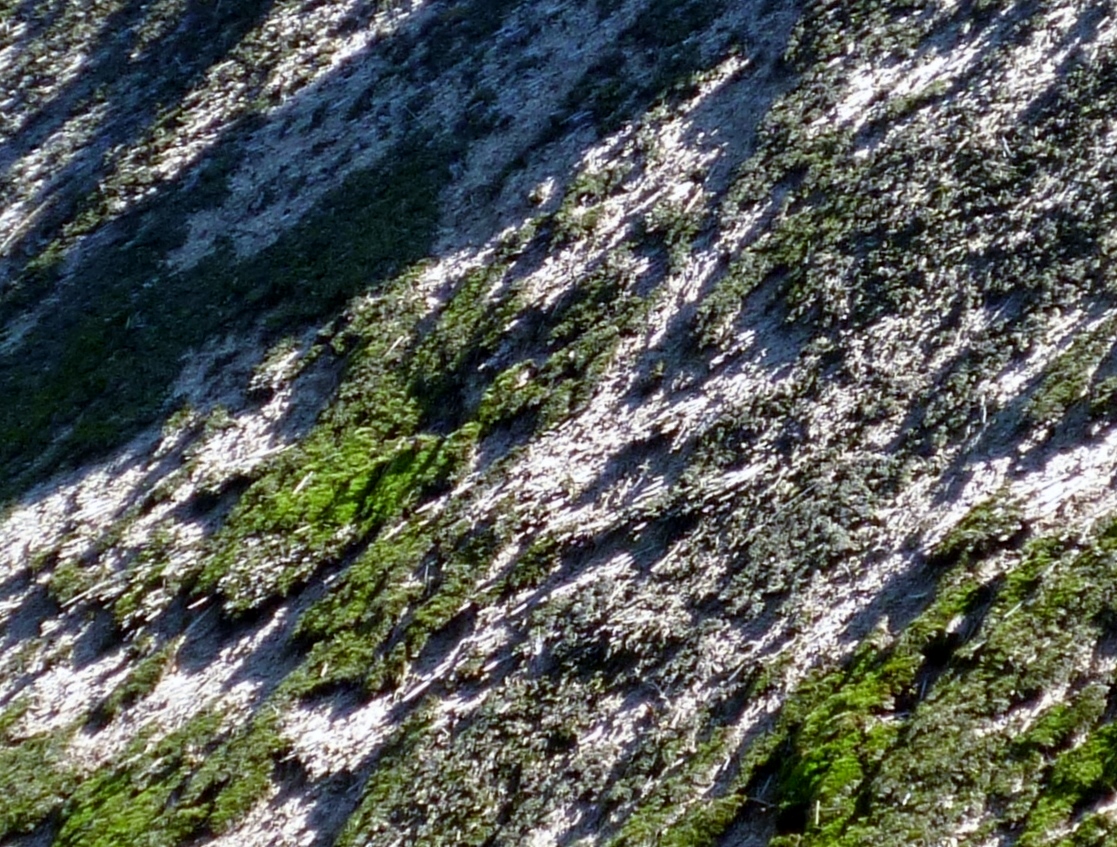
White cottage, steep thatched roof, covered with moss


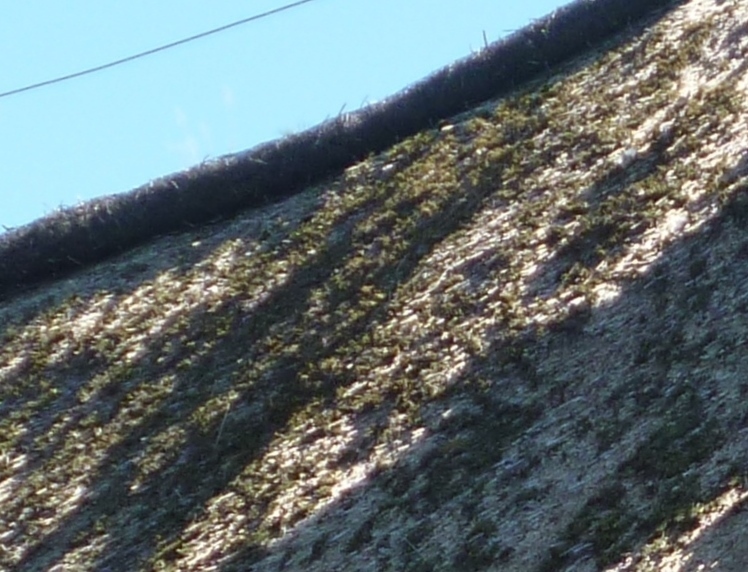
Thick patches of moss
clustering on rippled thatch
like verdant islands,
like the islands we stand on:
growing in the rough grey sea.

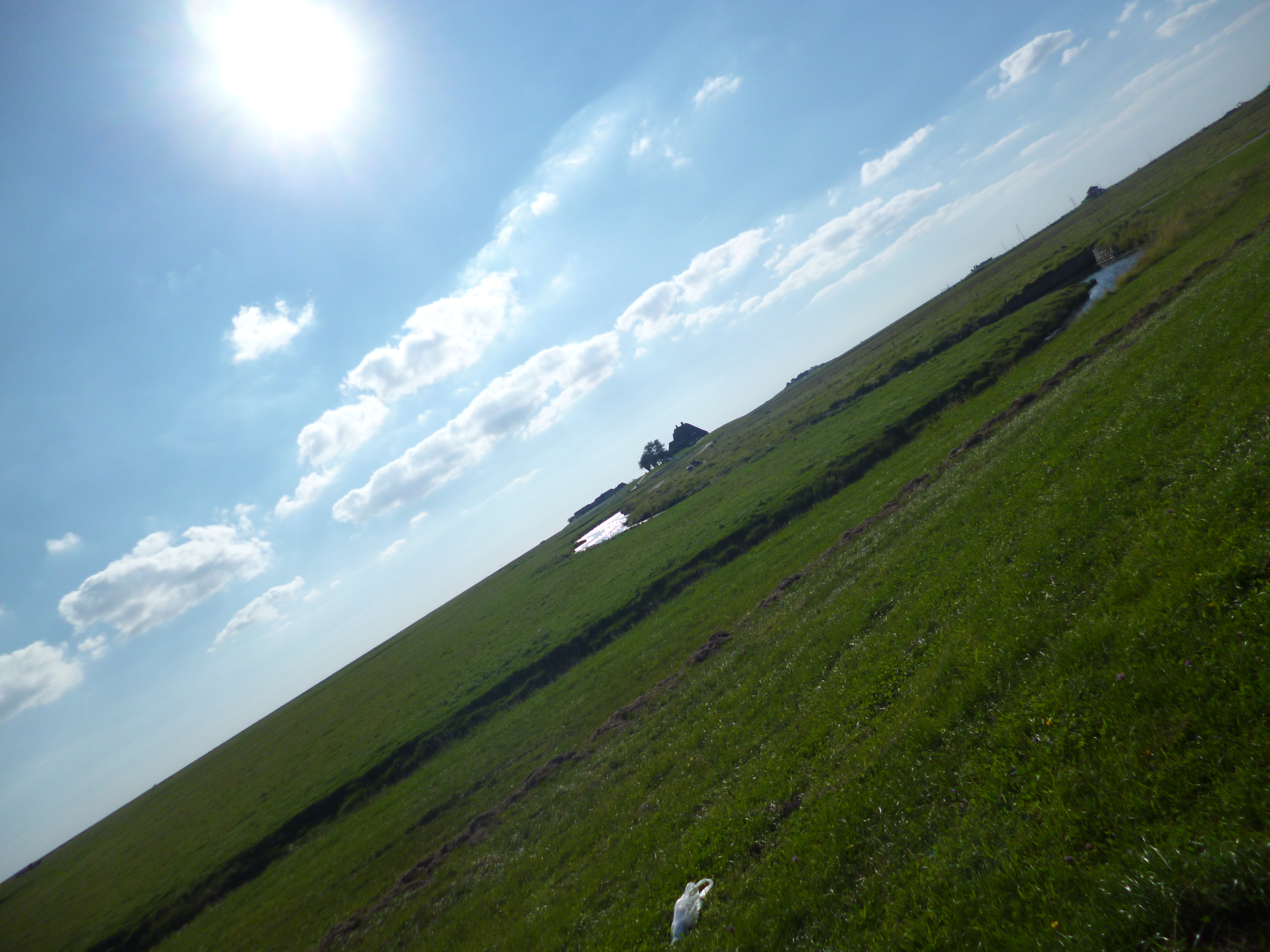
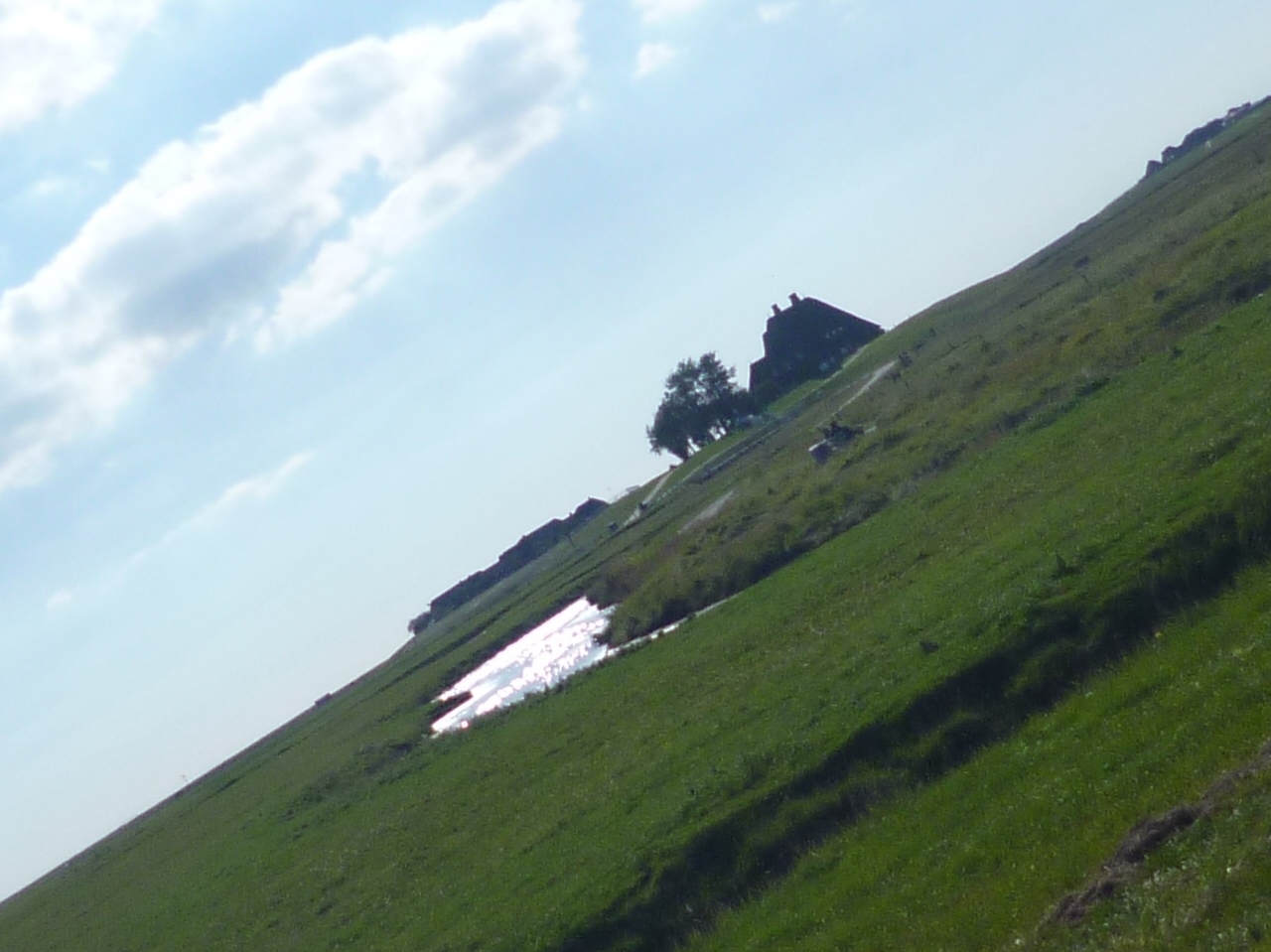
Diagonal horizon, entirely flat between green and blue, with house in middle

Dicke Moospolster
auf dem welligen Reetdach,
gleich grünen Inseln,
gleich diesen Inseln hier,
wachsend im wilden grauen Meer.

Thatched roof, covered with moss

Red clover blossom:
tiny magenta lanterns
in the green and blue,
feeding on the salty floods
across these flat floating disks.

Diagonal horizon, entirely flat between green and blue, with house in middle


Rosaroter Klee:
winzige Laternen
in all dem Grün und Blau,
genährt von Salzfluten
über schwebende Scheiben hin.

Thatched roof, covered with moss


Huge ships approaching,
or space-ships – or are they hills,
or houses on stilts?
They are houses, hamlets, islets…
a necklace of glass beads.


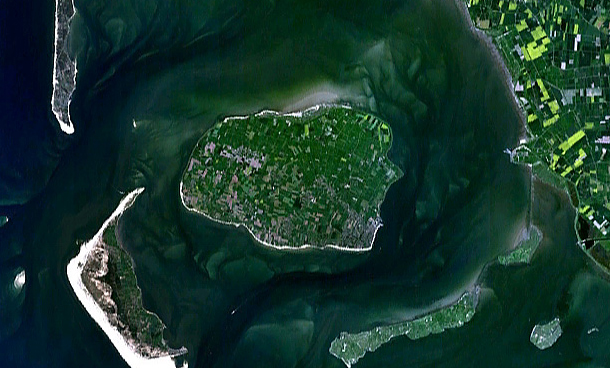
Satellite image of a cluster of small emerald green islands


Da – Riesenschiffe –
Raumschiffe – oder Hügel,
Häuser auf Stelzen?
Häuser, Dörfchen, Inselchen…
eine Glasperlenkette.

English texts: Christina Egan © 2015
German texts: Christina Egan ©2016

Photographs: Christina Egan © 2014
Galerie Nieblum on Föhr; Hallig Hooge.
Satellite picture: NASA via Wikimedia.


From the flat, small, oval island of Föhr, you spot the even flatter, even smaller islands known as ‘Halligen’: their clusters of houses and trees on little dells are visible on the horizon far across the ocean.

The Halligen still get regularly flooded and are occasionally menaced by devastation. All these islands change shape over time, when the forces of wind and water eat away at their edges or add new land.

I wrote about a similar phenomenon observed on the Baltic Sea island of the Darss in Schöpfung (Darß).

Stadt im Tal

Stadt im Tal

Sprig with tiny flowers in a deep warm yellowGleich einer Ginsterblüte flimmert,
da jetzt die Sonne steigt und sprüht,
die ganze Stadt, aus Glanz gezimmert,
sacht in die Hügel eingefügt…

Gleich einer Apfelblüte leuchtet,
da jetzt das Leben wieder siegt,
das ganze Tal, vom Tau befeuchtet,
ein Orgelklang, ein Jubellied!

Christina Egan © 2015

Dyer’s broom (Genista tinctoria).
Photograph by Christian Fischer.


This poem has recently been published in regional paper Marktkorb (circulation over 100,000).

The ‘Town in the Valley’  is also mentioned in my lyrics Ich steh’ im Felde wie der Lindenbaum’  : ‘Ich schaue auf die Stadt im Tal / mit Erdensternen ohne Zahl…’

Triumphboot des Sommers

Triumphboot des Sommers
(Chateau de Chillon, Genfersee)

Gesättigt mit Licht
der Spiegel des Sees,
die Glocke des Tals,
der lange Nachmittag
letzter Frische
vor dem bronzenen Sommer.

Hingeschüttet das ganze Geschmeide
der Erde von unter den Wurzeln,
schimmernde Schuppen
auf der Schlange Landes
zwischen Bucht und Gebirg.

Blondes seidiges Licht
fällt in die Fenster der Burg,
tief hinein ins Verlies,
reicht an den rohen Fels;
tastende Fingerkuppen
wärmen die toten Kamine,
die fernen Wände der Säle,
rufen verblichene Sänger herauf
zum zeitlosen Tanz.

Am anderen Ufer
ragen reglos die Segel
der senkrechten Felsen,
bewimpelt mit Wolken,
Triumphboot des Sommers.

Die Stunde der Sonnwende schlägt,
unhörbar,
unumkehrbar,
unzerstörbar.

Christina Egan © 2001


‘Triumphal Barge of Summer’ may work in a translation software. It is a memory of Lac Leman, a vast lake between towering mountains, around summer solstice. One of the most beautiful days of my life!

Obsidian Mirror / Orangenzweig

Obsidian Mirror Mirror made of a deep-black polished stone, on a wooden base.

The moonless night, the iron gate,
between the trees the winding path,
the nameless pond: a polished plate,
obscure and truthful looking-glass –

The moonless night, the nameless pond,
the outline of a cruel fate:
the leaves are shed, the blossom gone –
It is too late – It is too late.

Christina Egan © 2015


Orangenzweig

O Traum von Liebe, Traum von Licht
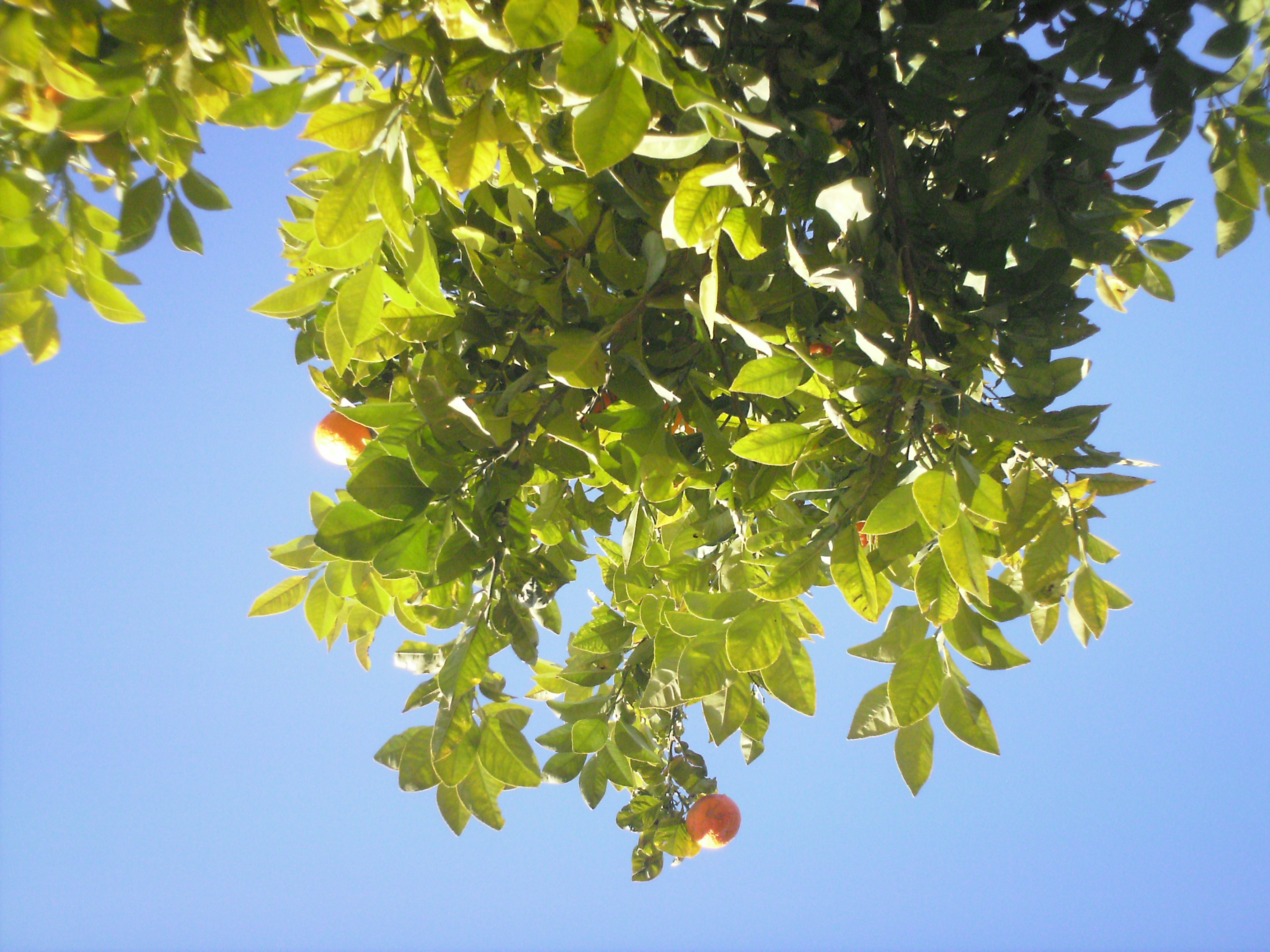
Oranges hanging from branches against blue skyauf einem duftenden Gesicht,
vom kleinen Rosengartenglück
aus einem mächtigen Geschick,
vom Dasein als Orangenzweig,
an Blüte reich und Frucht zugleich,
vom ganz bescheidnen Paradies,
das dir und mir ein Gott verhieß…
O Traum, der niemals untergeht –
Es ist zu spät. Es ist zu spät.

Christina Egan © 2016


The two poems contain an echo, and echo each other, in the phrase ‘It is too late’ — ‘Es ist zu spät’, which emphasises the futility of wishes and plans when fate is irrevocably against them.

Obsidian is a very dark and very hard stone. Some ancient civilisations used polished slabs as mirrors. Apparently, they were also employed for fortune-telling!

Photograph: Aztec mirror, Museum of the Americas, Madrid. – Simon Burchell via Wikimedia Commons. – Orange branch: Christina Egan © 2012.

Dem Herausgeber des “Echtermeyer”

Dem Herausgeber des “Echtermeyer”

Du sammeltest leuchtende Lieder,
den mannigfaltigsten Strauß,
du trugst vom Parnassus hernieder
Gedichte in jedermanns Haus.
Verklungen ist längst deine Stimme,
im Schattenreich deine Gestalt,–
doch fesselst du unsere Sinne
durch eherner Worte Gewalt.

Christina Egan © 2015


Vixi, et, quem dederat cursum fortuna, peregi;
et nunc magna mei sub terras ibit imago.

Virgil, Aeneis IV, 653–654 


The name of this writer, Ernst Theodor Echtermeyer (1805-1844), became proverbial for a standard anthology of German poetry. It went through many mutations, and the latest editions are officially titled “The Echtermeyer”. Without this book, I would not be what I am!

We know little about Theodor’s life, but I have tried to imagine two key moments in his life: when he understands he is in love and decides to marry; and when he understands he is so ill that he must die soon. Theodor an Emilien  is written in the first person singular in 19th-century German.

Theodor an Emilien

Theodor an Emilien

Mit tausend dicken weißen Kerzen
Prangt der Kastanienbaum am Tor;
Ich steh’ mit hoffnungshellem Herzen
Im späten Dämmer stumm davor.

Der Vogelsang ist längst versickert
Wie Silberspur ins Dunkelblau…
Doch aus dem Gutshaus tröpfelt, zittert,
Quillt das Klavier wie Abendtau.

Ich mach’ im hohen Gartensaale
Den flinken schlanken Schatten aus –
Und werf’ nach jenem Ankerpfahle
Mein Tau mit einem Male aus.

Christina Egan © 2016


The old-fashioned names and inflections signal that this is a scene which happened long ago, a romantic story from the times of Jane Austen, set in Germany. There is a true story behind it, and the ending is happy and sad: the young man waiting hopefully outside the manor house in the summer night, Ernst Theodor Echtermeyermarried Lady Emilie, and they had a child, but they both died very young.

Der Baum im Schulhof

Der Baum im Schulhof
(Marienschule Fulda)

Das Bäumchen stand im rosa Kleid,
das Mädchen stand im blauen;
sie waren fünfzehn Jahre alt
und lieblich anzuschauen,
wenn auch noch zierlich, kindlich gar,
nichts als ein Bündel Blüten…
Im Norden lag ein gelbes Haus,
der Schulhof lag im Süden.

Und als sie sich nun wiedersehn
in eben jenen Mauern,
da sind sie fünfzig Jahre alt
und herrlich anzuschauen,
wie Wolken stattlich hingewölbt
und strahlend unter Schauern:
der Baum im dunkelrosa Kleid,
die Frau im dunkelblauen.

Christina Egan © 2015

You can look at the blossoming  Tree in the Schoolyard
and the yellow building online at Marienschule Fulda. 

The story of the schoolgirl and the tree, meeting at fifteen
years old and then at fifty, may work in a translation software.

Ich steh’ im Felde wie der Lindenbaum

Ich steh’ im Felde wie der Lindenbaum

Ich steh’ im Felde wie der Lindenbaum,
im Frühlingswind verloren und im Traum…

Ich schaue auf die blauen Höhn,
die kühn wie Vorzeitbauten stehn.
Ich lausche auf den Vogelsang,
in meinen Adern steigt ein Drang!
Ich schaue auf den Horizont,
von dem mir meine Hoffnung kommt.

Ich steh’ im Felde wie der Lindenbaum,
in Frühlingsnacht verloren und im Traum…

Ich schaue auf die Stadt im Tal
mit Erdensternen ohne Zahl.
In meinen Adern steigt der Saft,
ich streck’ mich mit versteckter Kraft!
Bevor noch süß die Linde blüht,
blüht früh und süß der Linde Lied.

Christina Egan © 2012

The mountain range on the horizon is the Rhön and the city in the valley is Fulda, Germany. There are more lines to this poem to make a song of it: part wistful and part hopeful, part heavy-hearted and part light-hearted!

The phrase ‘Town in the valley’ is echoed in the poem of the same name, Stadt im Tal.

Die Hängenden Gärten / Palmyra Perennis

Die Hängenden Gärten

Schwarz liegt der Strom, von Gestirnen benetzt,
blendend erhebt sich der Herrscher der Nacht
über die Hängenden Gärten,
über den künstlichen Gipfel,
welcher den Hügel ins Flachland versetzt,
welcher den Wald in die Großstadt gebracht,
über die plätschernden Gärten,
über die flüsternden Wipfel…
Flimmernd erhebt sich die Harfe zuletzt,
warm liegt die Stadt in versilberter Pracht.

Christina Egan © 2015

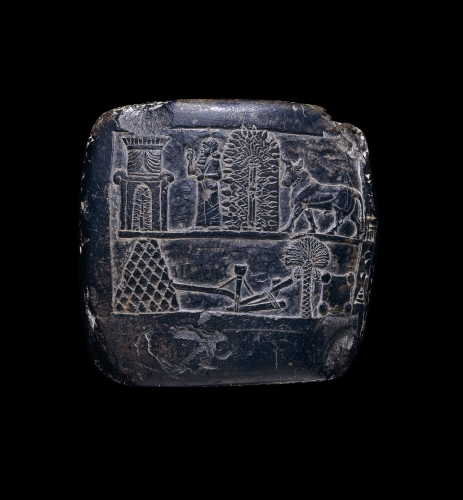
Basalt stone with carved images of trees, with a building, an animal and a man

The city of Babylon. Assyrian, 7th c. BC. —
© The Trustees of the British Museum
(Ref. no. 00032445001)

These musical lines evoke Babylon by night:
the moon and stars reflected in the Euphrates,
the Hanging Gardens rising above the big city,
murmuring fountains and a sparkling harp…
It could be the instrument which rises
sparkling like a star — or its voice.

Palmyra Perennis

Sank auch der stolze Bogen dahin mit dreifachem Seufzer,
ragt uns sein Bildnis im Geist schwerelos über dem Sand.
Sind auch zum Staube gekehrt der Ahnen goldene Hallen,
tragen das Erbe wir fort: sanften Triumph der Vernunft.

Christina Egan © 2015

For a picture of the ruins of Palmyra and a comment on
this poem on enlightenment, please look at my
MOTTO.

The view that cultural vandalism should be recognised as
a war crime akin to genocide has been discussed recently.

Die Perle im Acker

Die Perle im Acker

Die eine runde Stunde
in deinem Zauberkreis —
Das Licht im Augengrunde,
von dem du selbst nicht weißt —
Musik aus deinem Munde,
die Seligkeit verheißt —
Die Perle ist gefunden,
ich zahle jeden Preis!

Christina Egan © 2016

Wiederum gleicht das Himmelreich einem Kaufmann,
der gute Perlen suchte, und als er eine kostbare Perle
fand, ging er hin und verkaufte alles, was er hatte, und
kaufte sie.

Mt 13, 45-46

These lines may work in a translation software…
although I would not claim to find ‘salvation’ in
a human being, only ‘bliss’ (but this indeed)!