Harvest Moon

Harvest moon

A crystal ball suspended
above the park, black, blurred:
as if a god descended
onto this worn-out world.

The branches stretch their fingers,
the flowers crane their necks
towards the orb that shimmers
into the deepest cracks.

Tonight we see the largest
and brightest star that blooms:
this is the moon of harvest,
this is the moon of moons.

Christina Egan © 2015

Poems about Roses, Life & Death

Poems about Roses, Life & Death

Vase_and_rose_02Sonnengelb

Im sonnengelben Tüllgewand
mit rosarotem Rüschenrand
schwankt sie im satten Bühnenlicht
von Gleichgewicht zu Gleichgewicht:
die königliche Tänzerin,
die Rose namens Harlekin!

Sunny Yellow

Dressed in sunny yellow gauze
hemmed with ruffs like rosy haze,
perfect poise in every pose,
in the lime-light there she sways,
dancing-girl of regal grace:
Harlequin, the motley rose!

Photograph: Christina Egan © 2013  –  Texts: Christina Egan © 2015

          The Giant Rose

Gdn_RoseRed_2009June

The giant rose, pale yellow, slightly flushed,
still opens and expands and grows more lush
            with every breath.
Yet its intoxicating scent deceives:
for through her delicate and ample leaves
            runs silent death.

Photograph: Christina Egan © 2009  –  Text: Christina Egan © 2013

Crimson silk

A cushion of crimson silk
and swelling still,

a mouth of countless lips,
of soundless words,

the red rose
stands

releasing its heavy scent
like crimson streamers, crimson streams,

until I feel it on my tongue
like ivory-coloured marzipan!

Christina Egan © 2015

Gelbe Rose

In Sonnengelb und Aprikose
reckt sich die prallgefüllte Rose
in ihrem reifsten Augenblick,
als eine Frau – in gelb gekleidet,
mit goldnem Haar – vorüberschreitet
mit schwebendem und festem Schritt.

Die Rose weiß noch nichts vom Welken,
entfaltet sich im hohen gelben,
vermeintlich abendlosen Licht…
Die Frau schaut lange, hält den Atem
in jenem festtagsbunten Garten,
wo ihre Jugend jetzt zerbricht.

Christina Egan © 2011

Sonnengelb and Sunny Yellow  are parallel creations. The flower in the vase and the flower in the painting looked exactly the same in their striking shapes and colours as well as in size and maturity…  

Gelbe Rose (Yellow rose) compares a rose in shades of apricot and sunflower and a woman with similar clothes and blond hair. The flower, at the height of her life, does not know that age and death are about to strike; but the woman does.

You will find more roses in the sonnet Der letzte Tag des Sommers ist gekommen.

Anaconda, Anaconda

Anaconda, Anaconda

Slowly slides the anaconda,
through the thicket, through the grass,
undulating, scintillating,
like a rope of murky glass,
ochre and opaque and glinting,
like a river without name,
or a mountain-range in motion,
powered by a hidden flame.

Such a swerving, sparkling serpent
is the history of man,
each millennium of suffering
but a patch or pattern’s span
and each life of toil and longing
but a gold-rimmed muddy scale,
heaving, weaving through the jungle,
seeing neither head nor tail.

Christina Egan © 2015

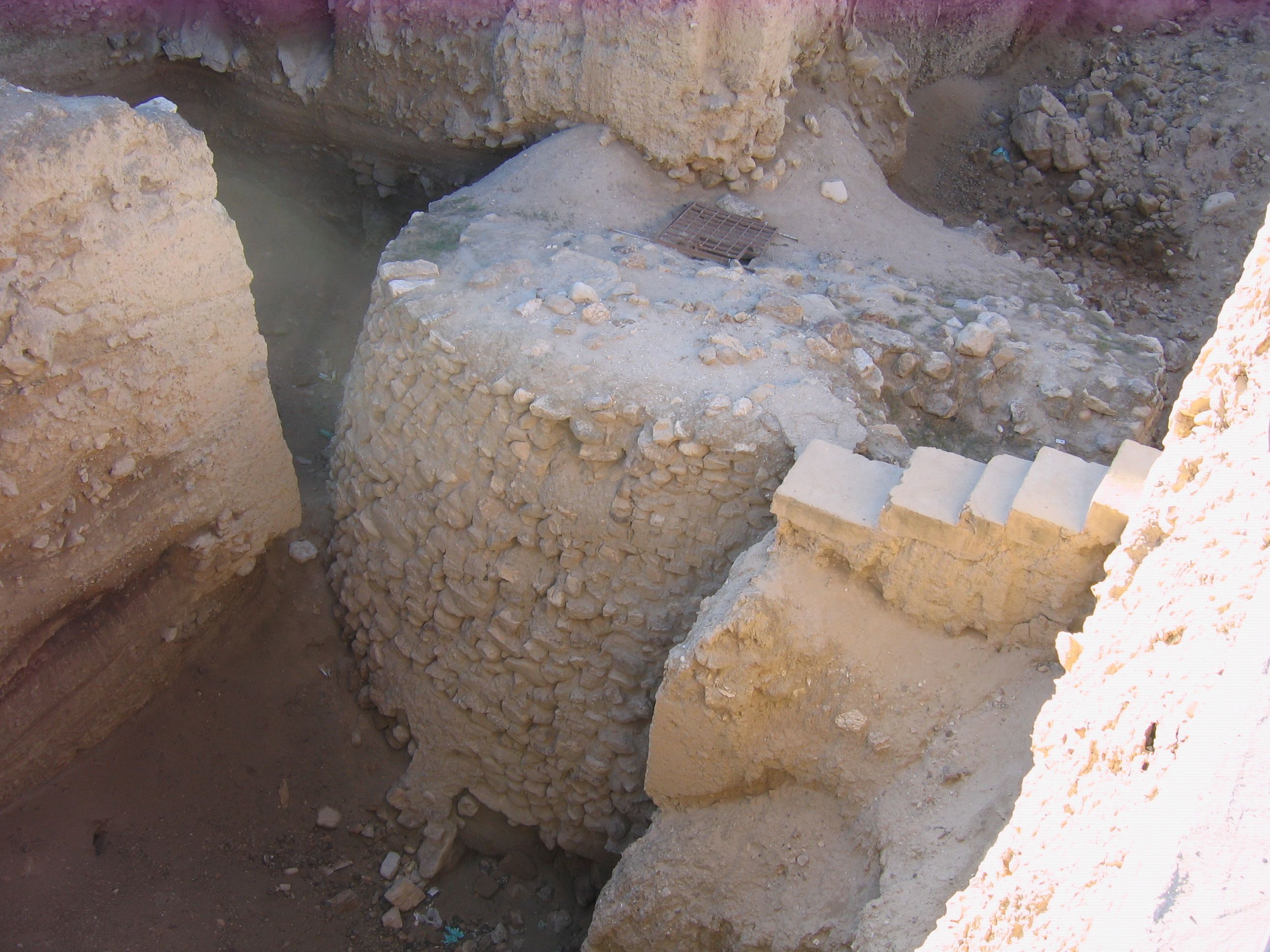
Massive stone walls piled upon each other

The Tower of Jericho, around 9,000 years old. Photograph:
Reinhard Dietrich (Own work), via Wikimedia Commons
.

Midsummernight Far North

Midsummernight Far North
(Darss)

This is the edge of the land.
The number of signals is seven:
The shimmering sand,
the green in the sea,
the red in the sky,
the crescent and star,
the bonfire’s glint,
the lighthouse’s fan,
the flashing afar —

The number of wonders is seven.
This is the midsummernight,
this is the height of the light,
this is the hem of the heavens.

We are alive.
We are together.
This is all here.
This is forever.

Christina Egan © 2015

The Darß (Darss) is a  tranquil strip of land between some lakes and the Baltic Sea.
Around summer solstice, dusk is only between ten and eleven (summertime). 
A German poem about dusk on the Darss is ostseeschlaflied (Baltic Sea Lullaby).

The Man is Not in his Seat

The Man is Not in his Seat

The coffee is still on the table,
the table is still in the street,
the seat is still in the corner:
but the man is not in his seat.

Perhaps he has gone to his office,
perhaps he has gone to the park;
perhaps he’ll be back in a minute,
perhaps he’ll be back before dark.

I think he is due in the morning,
I think he is due every day;
I think we have all of us seen him
whenever the bus passed this way.

The coffee dries out on the table,
the table is still in the street,
the seat is still in the corner:
but the man is not in his seat.

A friend may have called at the café
and lead him away with a smile;
or a man in a car brought a message,
so he said: I might be a while.

Or else he will never return here
to raise his glass to the street:
The stranger who passed was an angel
to take him away from his seat.

Christina Egan © 2015

In memoriam Erdogan Güzel
Murdered in the street in Wood Green,
London, England, on 10.7.2015
Requiescat in pace

Outrage

Outrage

Every day now, someone
amongst the suits and ties
gets up and
says something.

Something
simple,
sensible,
and inconceivable.

Something
obvious,
overdue,
and improbable.

Someone sensible,
someone overdue,
someone outrageously
decent.

People lift up their heads and
listen as if
life
were meant to grow and thrive.

Christina Egan © 2015

For Jeremy Corbyn MP

“Jeremy Corbyn does not need to be theatrical because he is charismatic.

He makes a few simple statements and a thousand people jump off their sofas. It is not his policies that got him to the top but his personality!”

Christina Egan

Letter to the Editor, Evening Standard (London), 22. September 2015

(Please note I had written: “not his policies alone”!)

Isle of Bliss / Insel der Seligkeit

Isle of Bliss
(Lanzarote)

The viscous flood of orange fire
gives birth to black and craggy rock;
The earth bereft of path and water
gives birth to wine of luscious stock!

The sweet white drop rolls on my palate,
the pure wild wind plays on my face…
And what was hurt is bound to heal here,
and what was loose falls into place.

Christina Egan © 2015

Insel der Seligkeit
(Lanzarote)

Die zähe Flut aus schierem Feuer
gebiert den schroffen schwarzen Stein;
die weg- und wasserlose Erde
gebiert den süßen weißen Wein!

Der wilde Wind kost meine Wangen
und jener Tropfen meinen Mund…
An seinem Ort liegt alles Lose,
und alles Wunde wird gesund.

Christina Egan © 2015

Lanzarote is part of the Canary Islands, off the
coast of North-West Africa.

The German and English versions of this song
of praise were created to match each other.

You can find more poems about Lanzarote in
German and English at On the Volcano’s Rim.


Ecce pratum purpuratum

Ecce pratum purpuratum

Bunte Blumen wünsch’ dir nicht,
einen Regenbogen,–
um die Farbe hat das All
bitter mich betrogen.

Weiße Blumen schick’ ich dir,
ewig unbeschrieben,
schwarze Blumen noch dazu,
schon dem Tod beschieden.

Statt der buntgefächerten
frohen sonnensatten
weiße Blumen wie der Schnee,
schwarze wie der Schatten.

Purpursamen streut der Lenz
über meine Wiese…
Bunte Blumen brech’ ich dir
erst im Paradiese.

Christina Egan © 2015

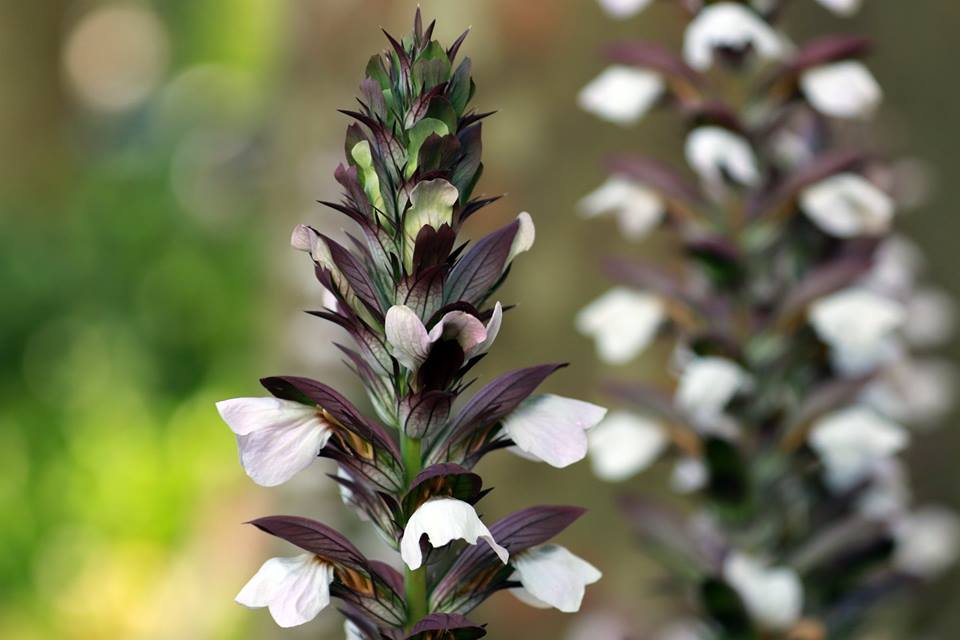
Tall flowers, each part in pale pink and deep purple - almost black and white

Photograph:  ‘Bachblüten’ (Meadow flowers). František Matouš © 2016


Ecce pratum purpuratum

Do not ask for flowers bright,
rainbow blooming boldly –
since the universe deprived
me of colours coldly.

Let me send you flowers white,
virgin leaves forever,
flowers black as sultry night,
life and death together.

From the fanned-out golden glow
on the merry meadow
take some flowers white as snow,
flowers black as shadow.

Purple blossom scatters spring
right beneath my eyes…
Purple flowers I shall bring
you in Paradise.

Christina Egan © 2015


The title is a Latin quote from the mediaeval song cycle Carmina Burana.
The German and English versions were created to match each other.

Quo vadis?

Quo vadis?

Roman mosaic of bottle and cupI drank a cup of strong red wine,
and half of it I somehow spilt…
That was still in another life,
before this winding lane was built…
It was along the straight wide road,
beneath a square of bright-red tiles…
I spilt it from a bright-red cup,
and then I walked from town for miles…
I limped along the riverside,
I lay down in the damp dark fern…
I spilt my wine, I spilt my life:
one day, I shall have to return.

Christina Egan © 2015

Roman mosaic of a mansion

This story was inspired by the winding highways and the straight Roman road meeting at Tottenham, London, England.

The Latin title means ‘Where are you going?’ and may imply a reproach to someone who is trying to flee their place in life.

See also my poem By the Highway
(in German and English versions).

Roman mosaics, Bardo Museum, Tunis.
Photographs: Christina Egan © 2014

An der breiten Straße / By the Highway

An der breiten Straße

In des Stadttors Schatten steh’ ich,
Wo die Straße sich entrollt:
Und die Stadt ist nicht von Marmor
Und das Pflaster nicht von Gold.

An der breiten Straße sitz’ ich
Eine Stunde und ein Jahr:
Und ich träume, und ich hoffe,
Und ich warte immerdar.

Händler fahren ihre Waren,
Pilger ziehen aus und ein,
Gräber reihen sich allmählich:
Und ich werde selbst zu Stein.

Eines Nachts verkünden Sterne:
Gehe aus und such’ dein Glück!
Eines Tages bringst du’s hierher,
Denn die Stadt ruft dich zurück.

Christina Egan © 2015

Straight Roman road with ruins and trees to the left and right, in the dusk

Roman road in Carthage, Tunisia.
Photograph: Christina Egan © 2014

By the Highway

In the city gate I’m standing,
Where the outbound road‘s unrolled:
And the city’s not of marble
And the pavement not of gold.

By the highway I am sitting,
First an hour, then a year:
And I’m dreaming, and I’m hoping,
And I’m waiting, sitting here.

Merchants cart their goods to market,
Pilgrims visit and go home,
Tombs line up along the highway:
Slowly, I, too, turn to stone.

Yet one night some stars announce it:
Seek your luck now, seek your track!
And one day bring back your luck here,
When the city calls you back.

Christina Egan © 2015

This poem is timeless. A similar song is part of my play The Bricks of Ur, which is set 4,000 years ago. Another story from a highway outside a Roman city is Quo vadis?.View of Roman Cologne: a large neat grid of buildings with red tiles, located on flat land by a wide river“Roman Cologne, reconstruction” by Nicolas von Kospoth via Wikimedia.

This poem or song was inspired by ancient Roman tombs along Severinstraße, the straight road leading southwards out of Cologne, Germany (left in the picture). Artistic impressions of a Cologne city gate and a highway lined by tombs are online on p. 48 and p. 28-29 of Römer Straßen Köln. When I wrote the poem, I did not know that at times, Severinstraße was known as “Lata platea” or “Breite Straße” (“Broadway”)!

Postscriptum:  This was my first post ever! Roman roads and Cologne are two of my favourite subjects; so you can link to the texts covering them directly.