Where Road and River Meet

Where Road and River Meet
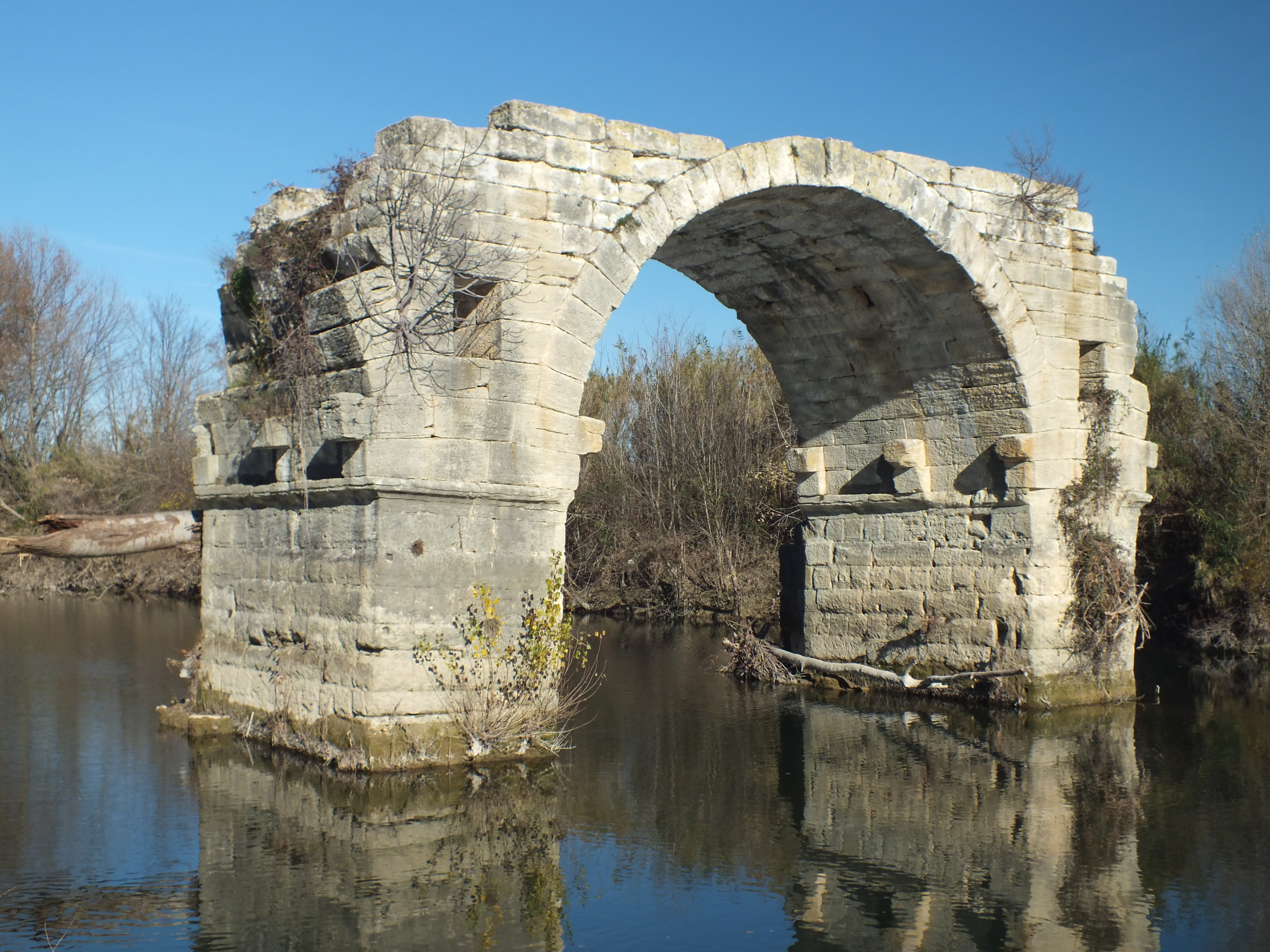
(Ambrussum, France)

I hold the echo of a thousand feet,
of hob-nailed sandals and of dainty boots;
I hold the echo of a thousand wheels,
of carts and coaches and a thousand hooves.

My inside holds the echo of the waves,
the splashing of the oars, of hands and feet,
the shouts and sighs of children and of slaves:
I am the arch where road and river meet.

I have withstood the floods, withstood the storms;
of once eleven comrades, I’m the last.
I guard the memory with sturdy arms:
I’ll hold your voices, too, when you have passed.

Christina Egan © 2015

—

Überm Fluß
(Ambrussum, Frankreich)

Den Nachhall halte ich von tausend Schritten,
Sandalen grob und Stiefeln elegant,
den Nachhall auch von tausend Rädern, Ritten,
von Karren und von Kutschen über Land.

Mein Hohlraum widerhallt vom Wellenschlagen,
vom frischen Klatsch von Ruder, Hand und Fuß,
von Seufzer oder Ruf von Kindern, Sklaven:
Ich bin der Brückenbogen überm Fluß.

Ich widerstand den Fluten und den Stürmen;
elf Kameraden einst,—nur ich blieb stehn.
Gedenken sammle ich mit starken Armen —
und eure Stimmen im Vorübergehn.

Christina Egan © 2015

Grey Roman arch on two bridge pillars between blue water and blue sky

The remaining arch of the  Pont Ambroix at Ambrussum, once part of the Via Domitia from Italy through France to Spain.


Photograph: By Clem Rutter, Rochester, Kent, via Wikimedia Commons.

I begin this year’s posts like last years’: with a Roman road !

A Faint Rainbow (Christmas Card)

A Faint Rainbow
(Christmas Card)

A faint rainbow maybe,
draped across a frozen market,
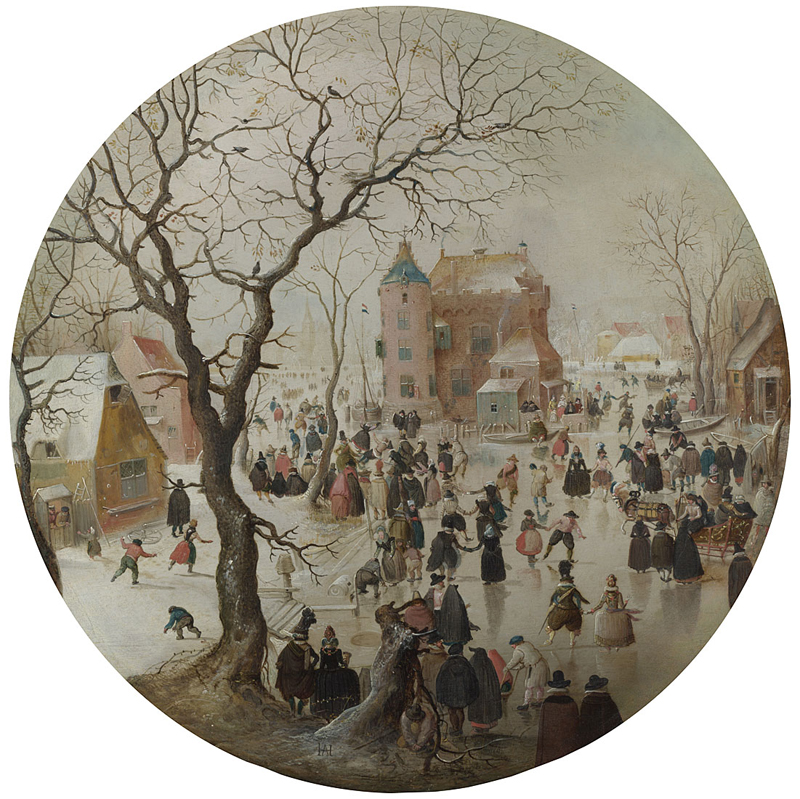
a filigree tree in the foreground,Old Dutch painting: lively scene of skaters between barren trees, steep gables and a pink manor house
some leisurely loops of skaters,
cloaked figures arranged like mute music –
that’ll do for a Christmas poem.

Good that my second-hand thoughts
and my second-rate verse
are still better than any in town
and almost as good as mulled wine…
And good that my real-life love
turns every single day into Christmas!

Christina Egan © 2012

These lines were inspired by this round painting :
A Winter Scene with Skaters near a Castle, ca. 1608-09,
by Hendrick Avercamp. — © National Gallery, London

The Last Advent

The Last Advent

The rolling emerald hills,
the towering topaz rocks,
the earth-girding ocean
in its royal blue roar,
even the starred sky
in its silvery silence –

Like a sumptuous silk robe
and an embroidered curtain,
they will be drawn aside
to reveal the true splendour –
Then they will be discarded
like rough grey sloughs.

And new worlds will arise,
circles of festive fire.
Shadeless, doubtless,
deathless, boundless.
And we shall be alive
for the first time, forever.

Christina Egan © 2012

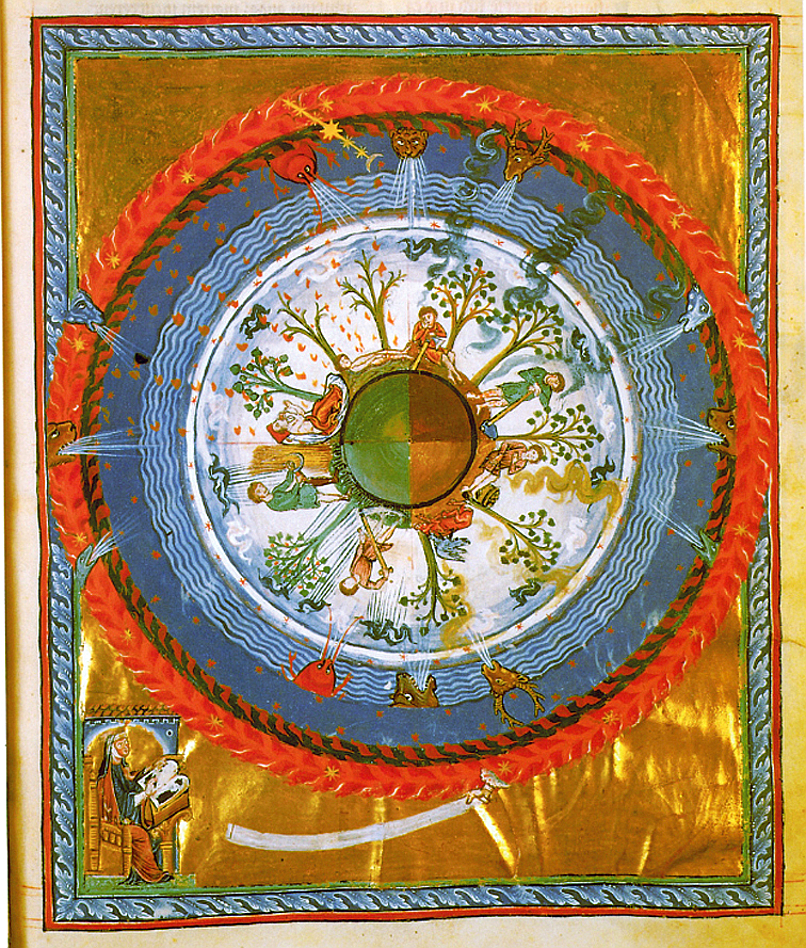
Hildegard_WerkGottes_12Jh_


These lines remind us of the double meaning of ‘Advent’: the first coming of Jesus, when he  was born to Mary, and the second coming at the end of times, when this world will be replaced by an eternal one beyond imagination.

Picture: from a 12th century codex of  Hildegard of Bingen’s Book of Divine Works.

The Pattern of a Yesterday / Golden Dell

The Pattern of a Yesterday
(Knossos, Crete)

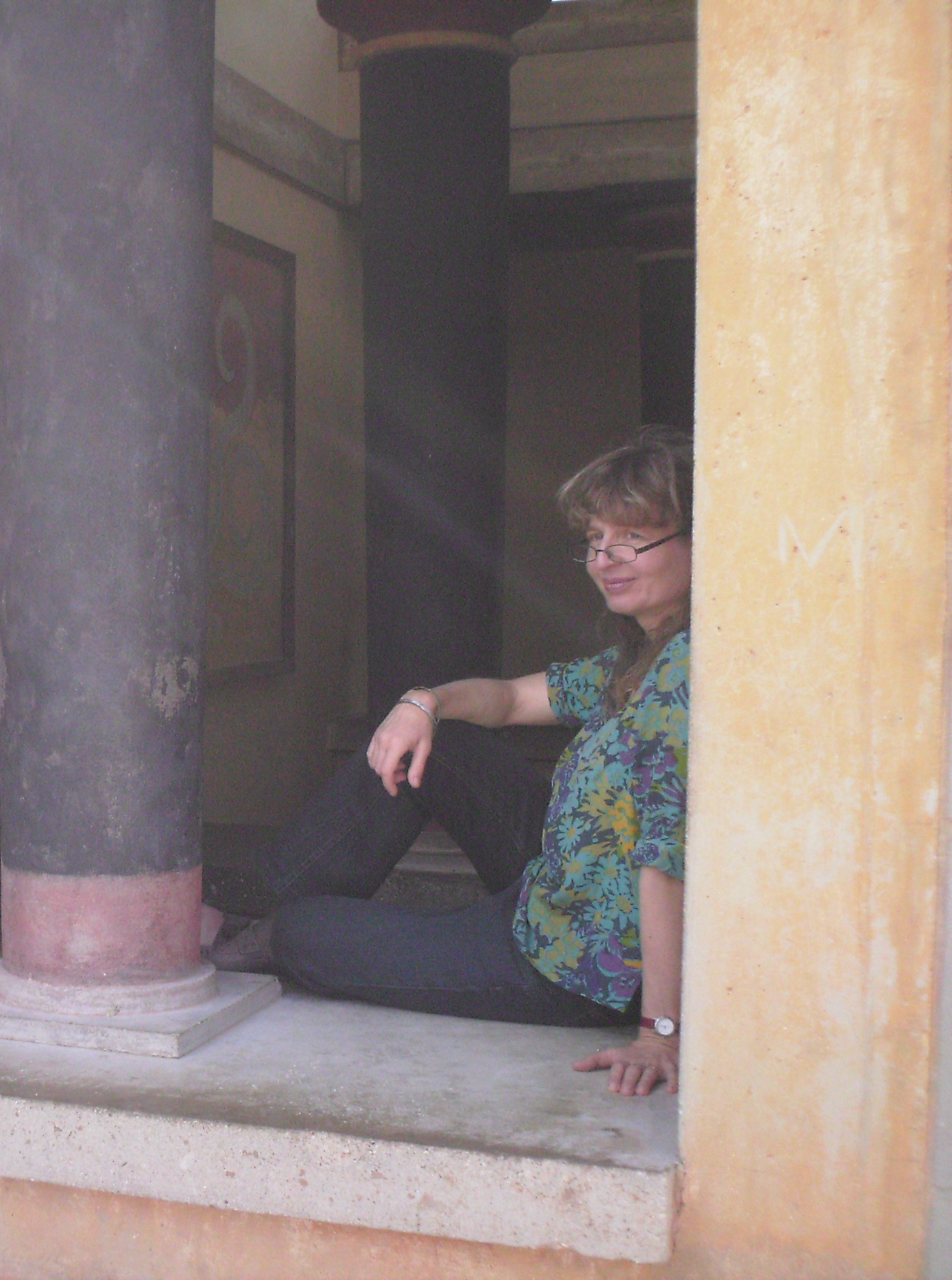
Knossos: woman in very colourful blouse sitting in a reconstructed window of the palace, in front of the same very colourful mural shown in the other photo.

the colossal columns
of the proud pine-trees
that lofty canopy offering shelter
from the flood of sun

the black and white and blood-red pillars
in the serene maze of the palace
those patches in the pattern of a yesterday
which is millennia past

Christina Egan © 2012


Flourishes on a mural, turquoise on luminous red and yello


The same mural in the palace
at Knossos, Crete. 
Photograph:
Harrieta171 via Wikimedia.

For German poems about Crete,
go to the cycle Kretische Küste.
For more about Crete, see below!


Golden Dell
(Chania, Crete)

You sip your coffee in the market-square
lapped by a sky and sea which both are blue;
you notice other folk from everywhere
and read this was the Roman forum, too.

You pass a corner with a golden dell:
stairs down and down, a hundred ages’ span…
The layers blur, solidify and swell,
and history unfolds, a dazzling fan.

Christina Egan © 2015


The Minoan civilisation is the oldest urban civilisation in Europe. The royal palace at Knossos, dating back almost 3,500 years, has the first stone street of Europe. Chania on Crete, a city of stone even 5,000 years ago, is one of the oldest continously inhabited European settlements. You look back on 100 and more generations…

My German translation of the first poem is called gesternmuster.

Zest

Zest

In splashes of fresh golden-green
the leaves cascade down the tree,
a banner of zest!
However warm, though, it grows,
however late the light flows,
still gilding the west,
the promise of lemon and lime
will never turn green in good time,
green true to a tree.
From nascent glow through the length
of summer and on to the strength
of ripe revelry,
the waves of the leaves will pour
not-yet or not-any-more
convincingly green:
The graceful acacia-tree
has the dubious destiny

of virginal sheen.

Christina Egan © 2015

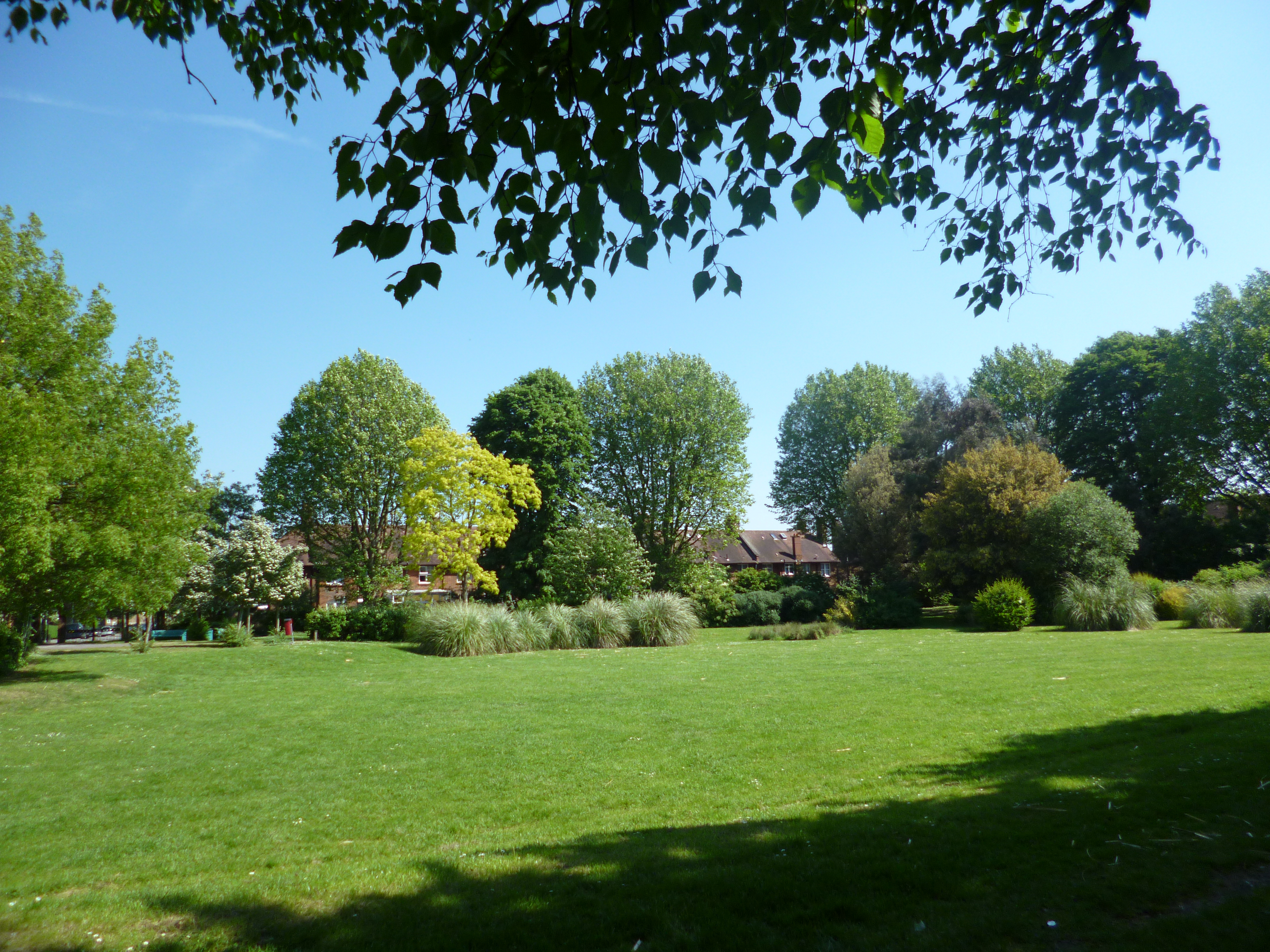
Little tree with apple-green leaves in a park in average summerly green

Photograph: Christina Egan © 2015

It was a poem by Hermann Hesse that drew my attention to the acacia tree:
September (Der Garten trauert)  is online with my rhymed English translation.

Clustering

Clustering

The world has gone weird:
When you switch the screen on,
any time, the news
contain news, the speeches
convey meaning, and the people
speak into the cameras as if
there were a point in speaking.
Can you see their smiles form dimples?

Like fog used to fill the roads,
so rumours waft and can’t be dispelled
that some representatives of the people
represent the people.
Like flocks of birds used to cover the squares,
so citizens cluster and can’t be dispersed,
until they witness those colours rising
which they have proudly painted themselves.

 Christina Egan © 2015

When Webs of Steel / Von stählernen Waben

When Webs of Steel

When webs of steel and walls of glass
confine you to a square of grass –
stand still and feel your sap pulsate:
You have a face. You have a fate.

When no one listens, no one knows you,
when no one loves you or else shows you,
take a deep breath – take two – take cheer:
I know, across the seas. I’m here.

Christina Egan © 2009

—

Von stählernen Waben

Von stählernen Waben und gläsernen Wänden
beschränkt auf ein spärliches gräsernes Eck,
steh’ stille und spüre dein Blut in den Händen:
Du hast ein Gesicht; und du hast ein Geschick.

Will keiner dich kennen, verstehen und lieben,
gibt keiner verborgene Neigungen her,
hol’ Atem – hol’ Atem – und freu’ dich am Leben:
Ich weiß es ja, bin ja bei dir übers Meer!

Christina Egan © 2015

—

In these lines, the anonymous and monotonous modern life described in Amidst the rush / Schrumpft die Welt and höhlenmenschen / cavemen
is overcome: whenever individuals become aware of themselves — and appreciate each other — as unique personalities.

This poem may be declaring love or expressing affection between family members or close friends.

Der bunte Staub / The Multi-Coloured Dust

Der bunte Staub

Der bunte Staub auf meinem Fensterbrett
– ein Häufchen Blütenblätter, ausgebleicht –
verwandelt sich im Abendsonnenlicht
in einen Schatz, dem kein Geschmeide gleicht.

Christina Egan © 2014

Little vase with flowers in lemon yellow, pale blue, deep pink and red; some petals scattered beneath; garden in background.

The Multi-Coloured Dust

The multi-coloured dust flocks on my desk 
– a heap of petals fading gradually –
gets now transformed by sunshine from the West
into a hoard surpassing jewellery.

Christina Egan © 2015

—

You can also find petals decaying to dust in the
German hymn Spiritum Sanctum vivificantem.

Photograph: Christina Egan © 2013

höhlenmenschen / cavemen

höhlenmenschen

die treppe rollt
hinab hinab
die u-bahn grollt
fährt ein fährt ab

der tunnel biegt sich
durch die nacht
der aufzug hebt sich
aus dem schacht

die masse schiebt sich
durch die schlucht
ein wabern webt sich
in die luft

ein sonnenstrahl
blitzt auf vom glas
ein vogelschwarm
stiebt auf vom gras

der rest ist schatten
stahl und stein
dies ist die stadt
tritt ein tritt ein

Christina Egan © 2015

—

cavemen

the staircase bores
into the ground
the tube train roars
goes round and round

the tunnel bends
through rock through black
the lift ascends
the narrow gap

the masses heave
through deep ravines
fumes waft and weave
through all these streams

a glint of sun
reflects off glass
a pigeon swarm
explodes from grass

the rest is shadow
steel and stone
this is the city
welcome home

Christina Egan © 2015

—

This poem — created in parallel in both languages — questions the notion of progress by observing its epitome, the world city, with its underground tunnels and dark gorges between skyscapers.

You can read more laments about the strain of our urban environment in the previous post, Amidst the rush / Schrumpft die Welt, and find some relief in When Webs of Steel / Von stählernen Waben.

Amidst the Rush / Schrumpft die Welt

Amidst the Rush

Amidst the rush, the silent crowds,
the glaring lamps, the blaring sounds,
I sink into a narrow seat,
a circling thought, a fleeting sleep…

Christina Egan © 2015

— 

Give me Two Minutes in the Sun

Give me two minutes in the sun,
give me two minutes in the breeze,
above the roofs, above the trees,
above the dust, above the din –
Give me five yards to stretch and spin,
give me a bench to look and breathe
before I must descend again –
Give me two minutes in the sun!

Christina Egan © 2015

—

Schrumpft die Welt

Hängt man vor dem Bildschirm
wie im Schattenreich,
wird das Auge müde
und der Rücken steif,

sieht man von der Weltstadt
eine Backsteinwand
und vom Erdenrunde
einen Rasenrand,

schrumpft die Welt zum Rechteck,
klickt man hin und her,
werden Leib und Seele
rastlos oder schwer…

Streift ein Strahl dein Fenster,
stürzt ins müde Aug –
Pflück den Blick des Himmels,
pflück den Tag und saug!

Christina Egan © 2015

—

By contrast to the previous post, On the Volcano’s Rim, which evokes an extraordinary experience at an exotic place, these poems describe the most mundane and repetitive of actions: commuting in a big city, working in a modern building, typing on a computer…

Schrumpft die Welt, or Shrinks the World, shows how, squeezed in front of a screen for hours, a person may only feel alive for one moment — when a ray of sunshine brushes his or her desk…

This criticism of contemporary life continues in höhlenmenschen / cavemen, where the tunnels and canyons of a world city resemble the rock dwellings of our distant forbears.