Ich steh’ im Felde wie der Lindenbaum

Ich steh’ im Felde wie der Lindenbaum

Ich steh’ im Felde wie der Lindenbaum,
im Frühlingswind verloren und im Traum…

Ich schaue auf die blauen Höhn,
die kühn wie Vorzeitbauten stehn.
Ich lausche auf den Vogelsang,
in meinen Adern steigt ein Drang!
Ich schaue auf den Horizont,
von dem mir meine Hoffnung kommt.

Ich steh’ im Felde wie der Lindenbaum,
in Frühlingsnacht verloren und im Traum…

Ich schaue auf die Stadt im Tal
mit Erdensternen ohne Zahl.
In meinen Adern steigt der Saft,
ich streck’ mich mit versteckter Kraft!
Bevor noch süß die Linde blüht,
blüht früh und süß der Linde Lied.

Christina Egan © 2012

The mountain range on the horizon is the Rhön and the city in the valley is Fulda, Germany. There are more lines to this poem to make a song of it: part wistful and part hopeful, part heavy-hearted and part light-hearted!

The phrase ‘Town in the valley’ is echoed in the poem of the same name, Stadt im Tal.

Winter Sunrise in Morocco / in England

Winter Sunrise in Morocco

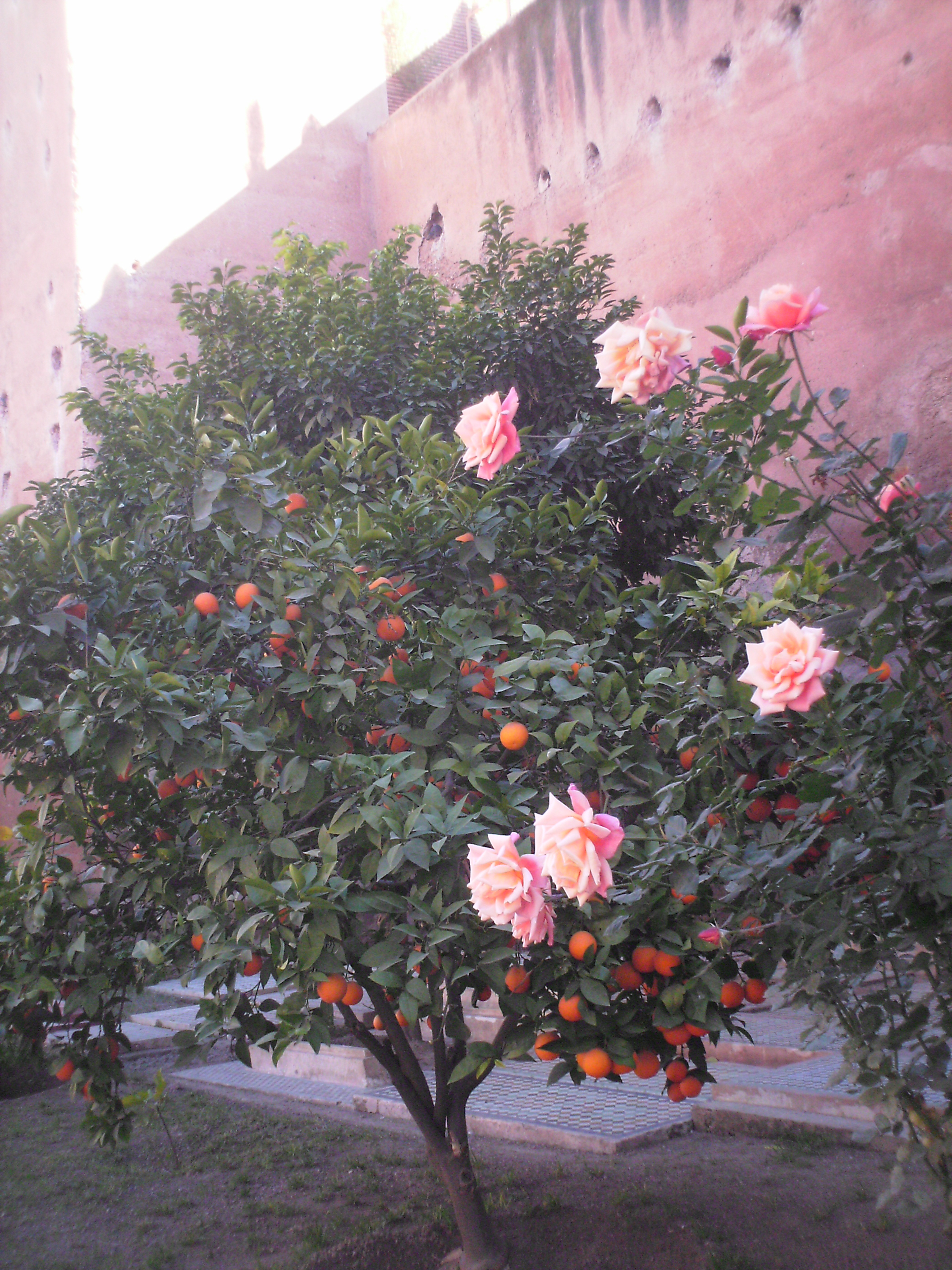
Orange tree full of fruit and rose tree with large roses in front of high pink wallsthe rainbow scarf of the sky
stretched out above the battlements

awesome and unnoticed
by the markets which never sleep

and millions of golden roses
rolled out along the highways

in the carved and inlaid caskets
of the powdery-pink courtyards

strings of peach-coloured roses
clusters of orange-blossom and fruit

Christina Egan © 2012

Photograph: Christina Egan © 2012

You can read a German poem about a Moroccan city at In Marrakesch. The buildings and walls of Marrakesh are pink by law!

Around the turn of the year, I found it warm and sunny by day and pleasantly mild by night. In fact, people were hoping for some rain…

Winter sunrise in England

at the edge of the orb of the earth
a mighty web of finest twigs

painted onto leaf gold
by a master’s hand

and then the blob of molten gold
so bright that it seems to melt them too

like a favour from the heavens
like the face of a god

as if life were possible
one more day one more winter

Christina Egan © 2012

In northern Europe, the winter is so hard that by the beginning of spring, you may feel, even if you are not at all old, that it was the last one you reached.

In Germany, it is cold by day and by night for many months, there is snow and ice, and above all, the nights are long and the days often dull so that you may not see the face of the sun for days; in England, the cold is less bitter, but — which is worse it reaches indoors…

Roof-Tile / Plateau

Roof-Tile
(Béziers)

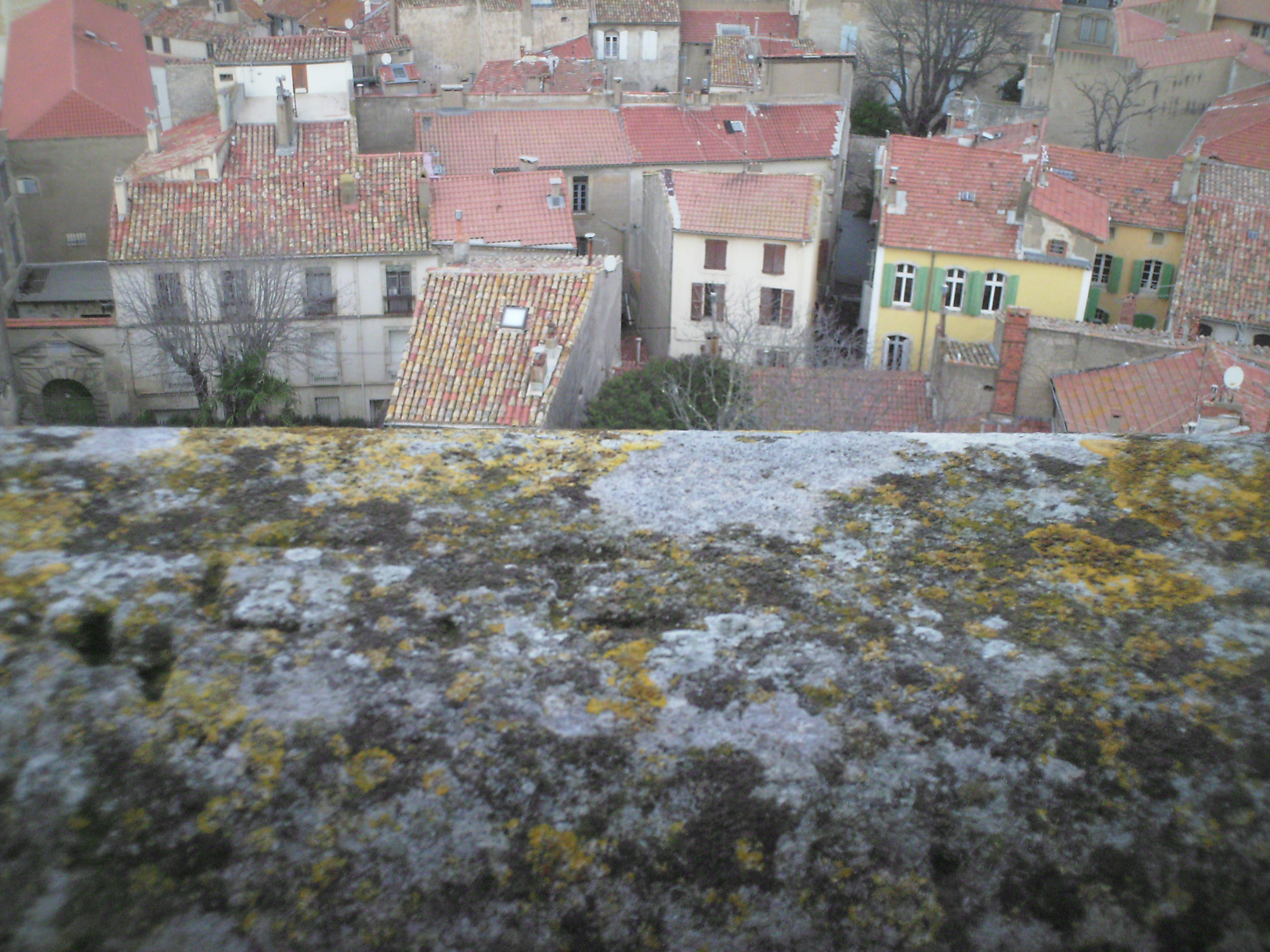
Lower half shows ancient wall with lichen and moss, upper half houses and roofs with motley tiles

A roof-tile, grooved: a hill, a dell,
in broken ochre, earthy red,
with greenish circles in between;
a piece of world, of time a shred.

And then I see: the whole old roof
is such a patch of orange clay –
the whole old town in weathered brown,
resplendent in a tender ray!

Christina Egan © 2016

Plateau
(Béziers)

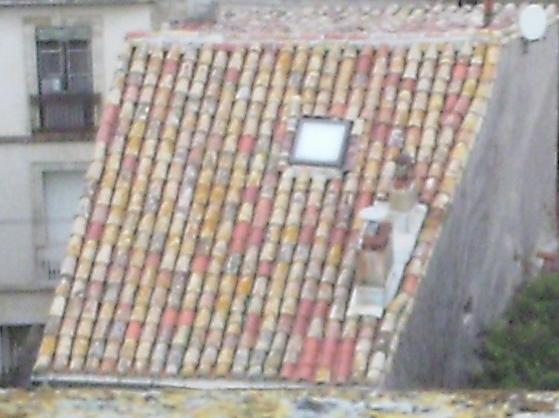
Roof with motley tiles - Detail of above photo

Life is a gnarled and narrow hill,
so steep as scarcely to be climbed:
you scramble, stumble, slide or fall,
you stay below, you stay behind.

Then opens, through a hedge or wall,
a gap, a gate, an avenue,
a whole plateau, a spilling well,
a plain beneath your startled view!

Christina Egan © 2016

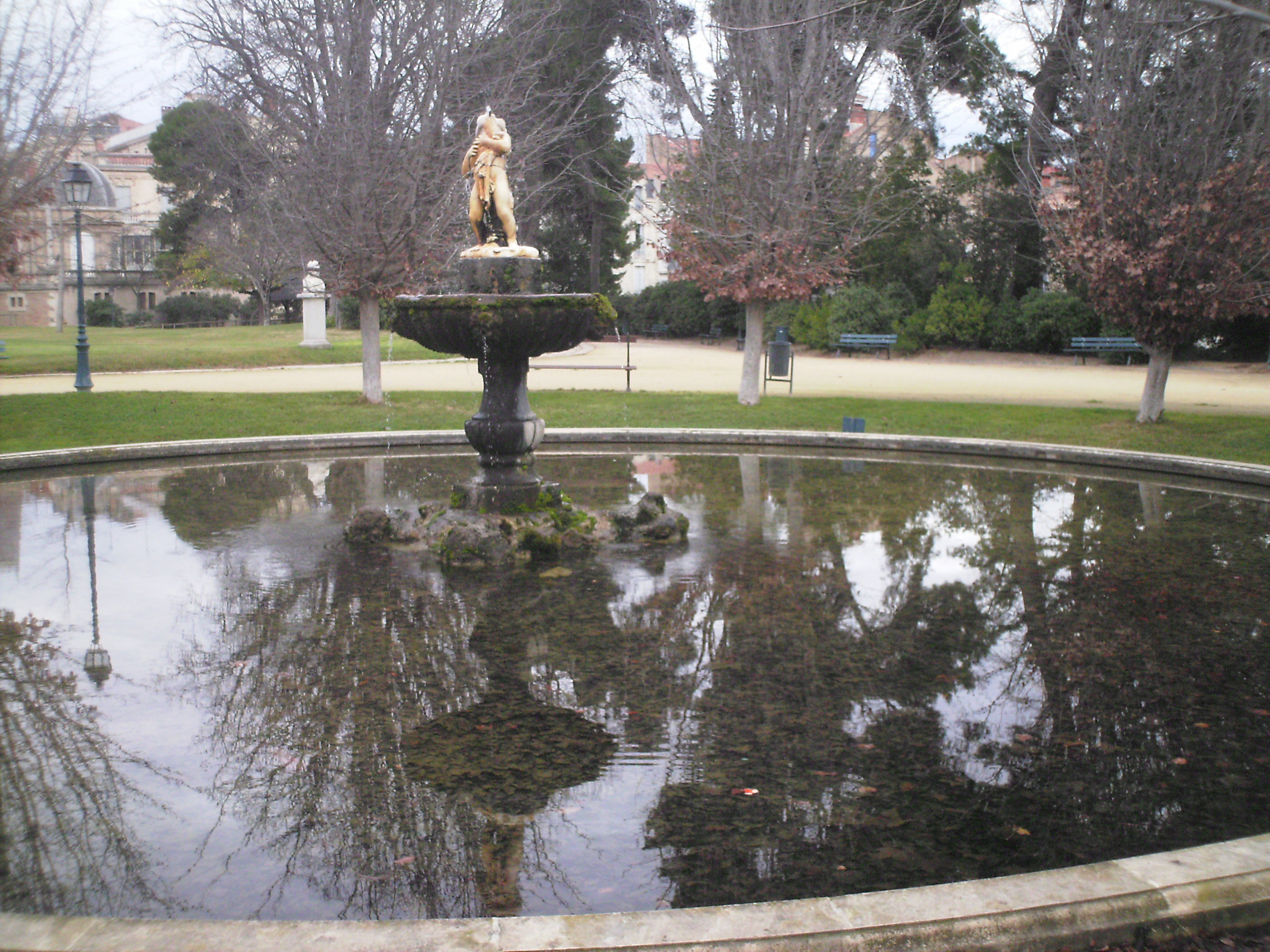
Round basin in park, with trees, houses and statue mirroredTwo views from the ancient city of Béziers in France, which is piled up
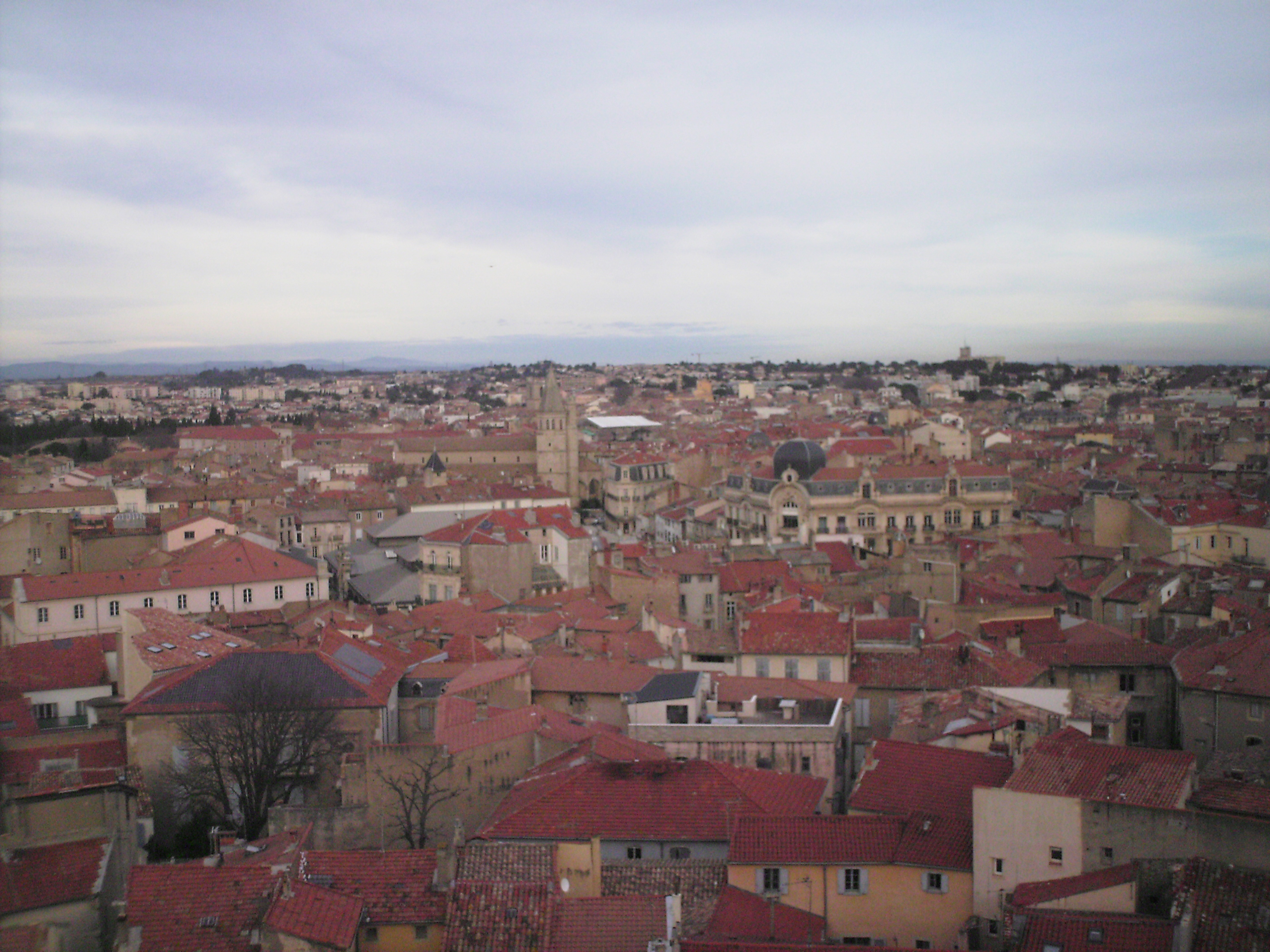
on a couple of steep hilltops: the first view is from
the Cathedral tower; the second, from the park called Parc des poètes / Plateau des poètes.

Well… the respite after struggles and setbacks might be found in enjoying or creating art — or in life itself!

Old Town of Beziers, with red roofs dominating, landscape round horizon.While getting lost and strained in the lanes of Béziers reminded me of nightmares, exploring the Cathedral like a giant Crystal Rock  induced me to create the word ‘lightmare’!

Photographs: Béziers from the Cathedral roof ; Parc des poètes. Christina Egan © 2016

The Purple Sea / Das lila Meer

The Purple Sea

I’ve seen the sea turn indigo
and greyish green and brilliant blue:
the wine-red sea that Homer saw
was not a blind man’s dream — it’s true.

I’ve swum in waves of indigo,
I’ve swum in eyes of greenish grey:
the fair-eyed gods that Homer saw
may just for moments cross your way.

Christina Egan © 2015

Das lila Meer

Auch indigo färbt sich das Meer
wie gräulichgrün und leuchtendblau:
Wahr war das Weinrot des Homer –
nicht eines blinden Dichters Schau.

Im Indigo schwamm ich sogar
und auch in Augen von Grüngrau:
Ein göttlich lichtes Augenpaar,
das gibt es manchmal noch genau.

Christina Egan © 2015

The Wine-Dark Sea

Where sky and ocean form a line
of glassy indigo,
the water looks indeed like wine,
a strong and sweet Merlot.

This is the sea that heaped up rocks
and beckoned walls to rise,
the ageless mother of these flocks
of sun-enchanted isles.

This is the sea that brought the fleets
to Carthage and to Troy
on silver-green and bright-blue sheets
which wayward gods deploy.

Christina Egan © 2012

These poems refer to the debate around Homer’s strange colour names: e.g. ‘wine-coloured’ (‘oinops’) and ‘purple’ or ‘maroon’ (‘porphyreos’) for the sea; ‘green-eyed’ (‘glaukopis’) for a person or god with eyes of any fair colour.

While people in antiquity were not yet interested in describing colours and 
despite their sophisticated languages — had only very few words for them, I
believe that on occasion, these can be taken literally.

The first two poems are translations of each other. The colour adjectives oscillate between the languages, and within, just like the sea does…

inselstrand / mondstrand

inselstrand

der sand ist durchsponnen
von tausenden rinnen
wo winzige flüsse
perlmuttern erschimmern

sich sammeln sich teilen
erwärmen erschauern
bald rasten bald eilen
erblassen erblauen

der sand is voll salz
und voll sonne gesogen
das leben verbirgt sich
im atmenden boden

das land ist dem wind
und dem wasser verwoben
die seele der enge
der insel enthoben

Christina Egan © 2014

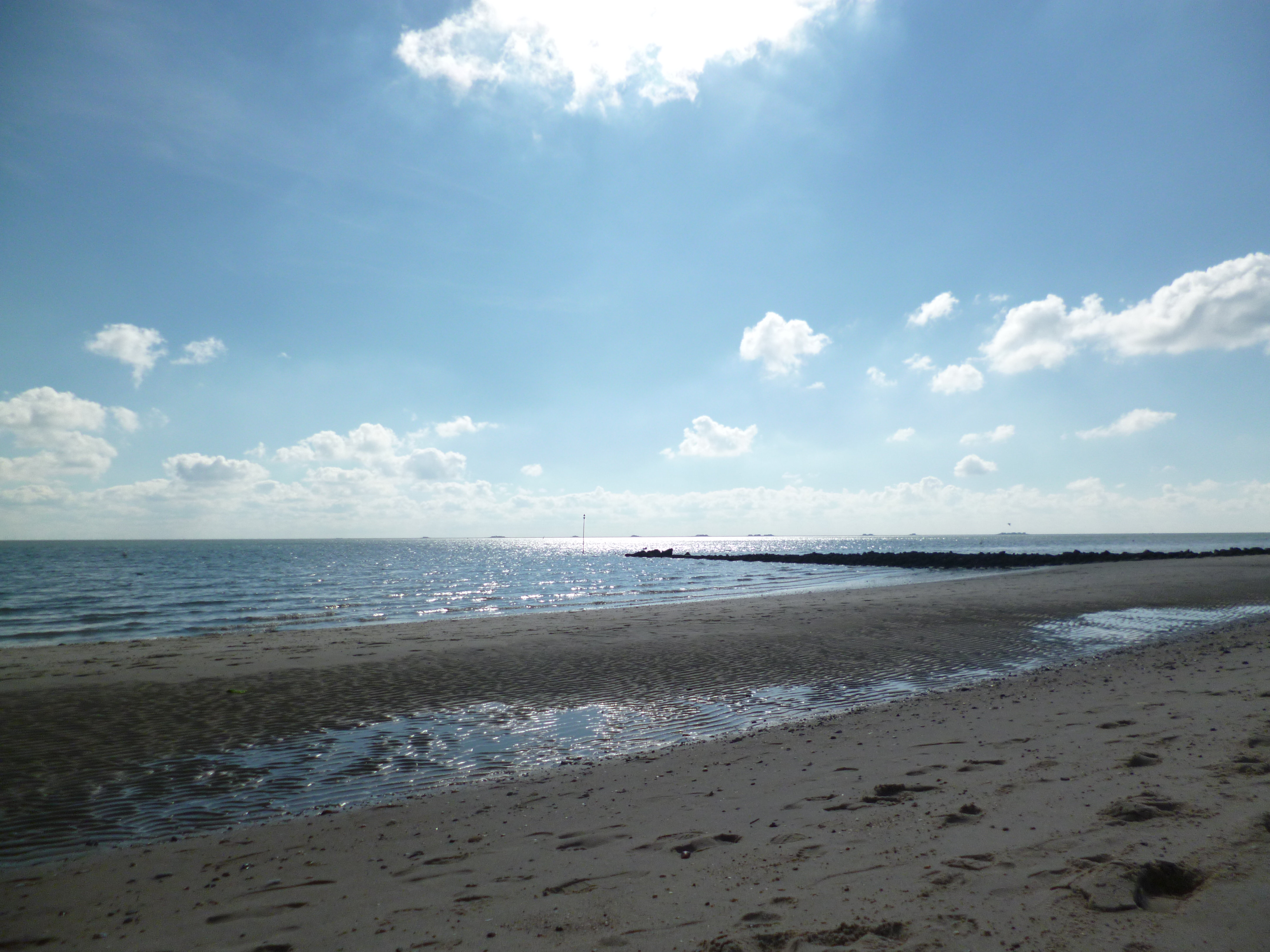
Shallow sandy beach and blue sea water filling lower half of picture, sky-blue sky with a few clouds above. Exudes tranquillity.

Beach of Wyk on Föhr, Germany. Photograph: Christina Egan © 2014.

mondstrand

streckt das meer sich
mondbeglänzt
wacht die erde
nachtentgrenzt

webt die wolke
geisterhaft
um der mondin
zauberkraft

schlägt die schwärze
windbewegt
auf das silber
feingeprägt

pocht die welle
unentwegt
an den sandstrand
sanfterregt

taucht die sohle
heiß und bloß
in die brandung
ruhelos

steigt der schmerz
im raschen blut
fällt die träne
in die flut

steht die hoffnung
fest und fern
hängt das herz
am höchsten stern

Christina Egan © 2014


These lines stem from a visit to two tiny round North Sea
islands, Föhr and Hooge. Besides my walks on the beach —
by day and by night — I was inspired by
Gregor Swoboda’s
paintings
 at Galerie Nieblum.

Find more poems and photos at Views of North Sea Islands
(in German and English).

vermächtnis

vermächtnis

und wieder dünen. wieder hohes gras.
und meer und himmel hier mit urgewalt.
und wieder du in deiner wohlgestalt.
und mein verlangen sanft und ohne maß.

ich tauch in deine lichten augen ein…
das meer entweicht. es war nur wellenschaum.
der tag verbleicht. du warst ein sommertraum.
ich bin allein am strand. ich bin allein.

wie mars in seinem kupferfarbnen glanz
entsteigt dem wall des kiefernwalds dein bild.
die brandung klopft. und klopft. der boden quillt.
ich kröne dich mit meiner verse kranz.

Christina Egan © 2015

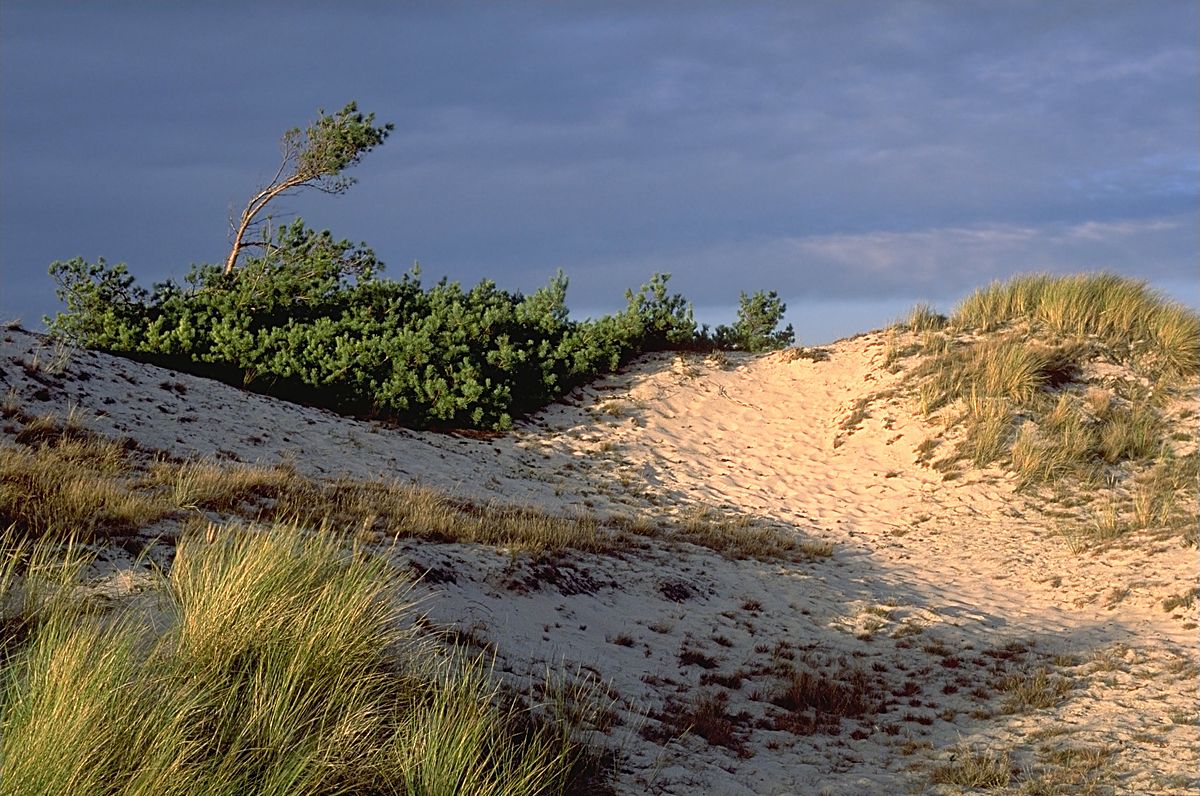
Golden dune, green grass and shrubs, deep-blue sky.


This is my poem of the year 2015! It is, as the title states, my Bequest.

Like many other poems, it was inspired by a holiday on the Darss.


“Dune in Nature reserve Darßer Ort, Baltic Sea”. Photograph: Andreas Tille via Wikimedia Commons.

Le vent de la mer se lève

Le vent de la mer se lève
(Alyscamps, Arles)

Tout doux, le vent de la mer se lève
parmi les colonnes à l’aube de l’an,
dans mon esprit réjouissant
ressuscitant mon ancien rêve,
un rêve de tuiles couleurs du couchant,
un rêve de murs couleurs océan.

Le vent se renforce et lève la sève
des hauts platanes le long de la rue,
ces forts piliers du ciel du Midi…
Mais quel tombeau révèle le rêve,
lieu lumineux et réapparu ?
Ô vent de la mer, Ô vent de ma vie !

Christina Egan © 2015

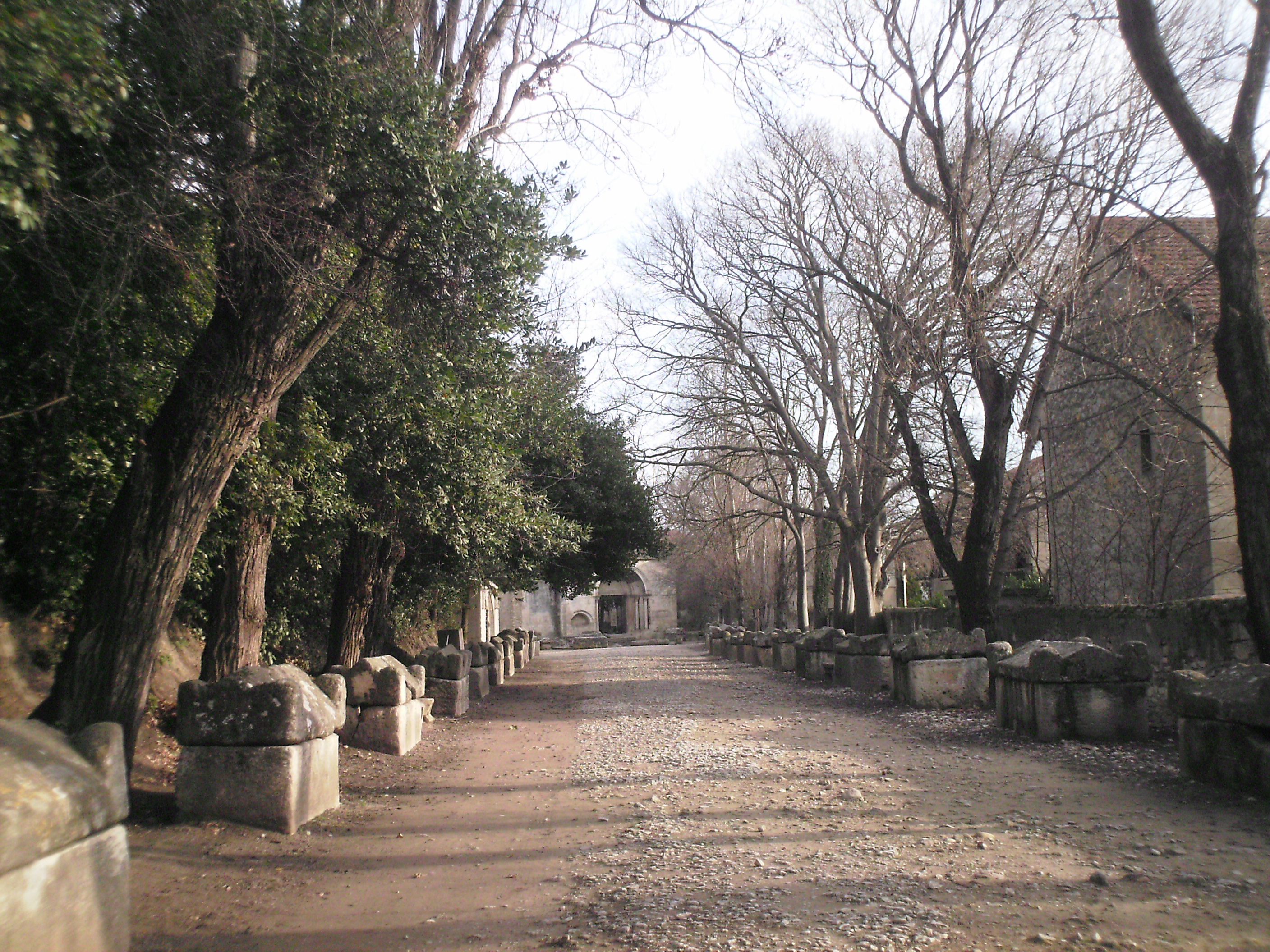
Wide avenue with sarcophagi to the left and right,leading to a mediaeval portal. Winter scene in fair weather, light-brown and light-blue.

Alyscamps, Arles. Photograph:  Christina Egan © 2010


The Wind from the Sea is rising
(Alyscamps, Arles)

The Wind from the Sea is rising, all mild,
between the columns and graves at the dawn
of the year, stirring up in my jubilant mind
my resplendent dream of antiquity,
a dream of tiles resembling the sun,
a dream of walls resembling the sea.

The wind is now swelling and ready to rouse
the sap in the plane-trees along the wide road,
those pillars supporting the sky of the South…
Which tomb may hold my mystery of old,
the luminous place that has just reappeared?
O Wind from the Sea, O wind of my soul!

Christina Egan © 2016

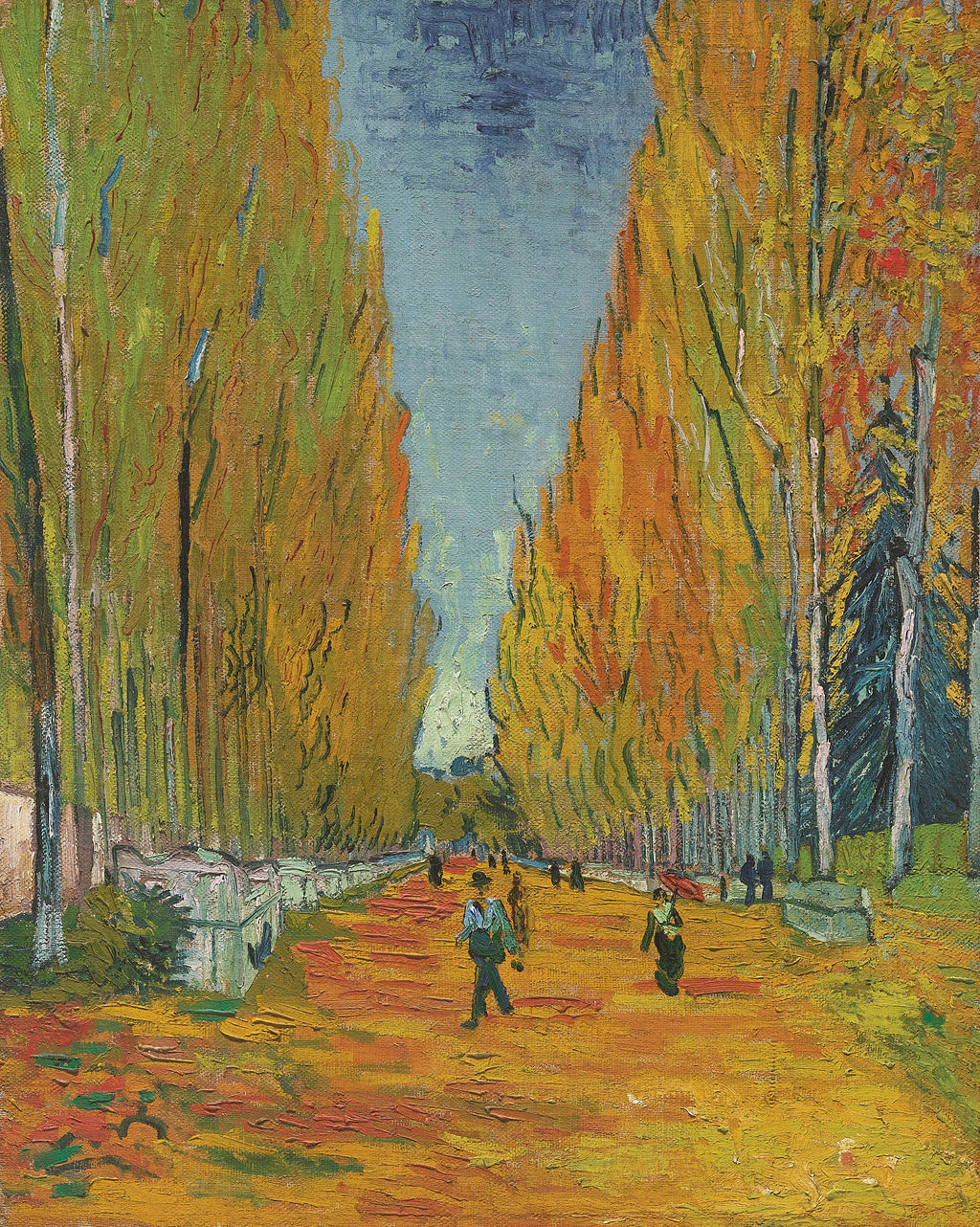
Painting by van Gogh: Avenue with very high trees, with path and foliage in bright orange, sarcophagi and sky in blue.

The Roman cemetery known as the Alyscamps has been immortalised by Paul Gauguin and Vincent van Gogh.

Vincent van Gogh: L’Allée des Alyscamps (1888). Photograph: Public domain, via Wikimedia Commons.

You can read an English and German poem about a Roman road in France at Where Road and River Meet / Überm Fluß . 

Januarsonne (Heidelberg, Philosophenweg)

Januarsonne
(Heidelberg, Philosophenweg)

Zuweilen sammelt die Januarsonne
nach dämmrigem Tag ihre sinkende Kraft
so wie nach verdorrendem Leben ein Mensch
sein Herz in die einzige Leidenschaft,

und grün flammen Hügel auf, golden die Brücke,
das Moos und die schlängelnden Stufen im Hang,–
die Salamandergewalt des Sommers
regiert eine magische Stunde lang.

Christina Egan © 2005

In the midst of winter, a grey northern valley, bridge, and
path can flare up green and golden — like salamanders!

The ‘Philosophers’ Path’ appears to work in inspiring
‘poets and thinkers’, as the Germans like to be known…!

The Pattern of a Yesterday / Golden Dell

The Pattern of a Yesterday
(Knossos, Crete)

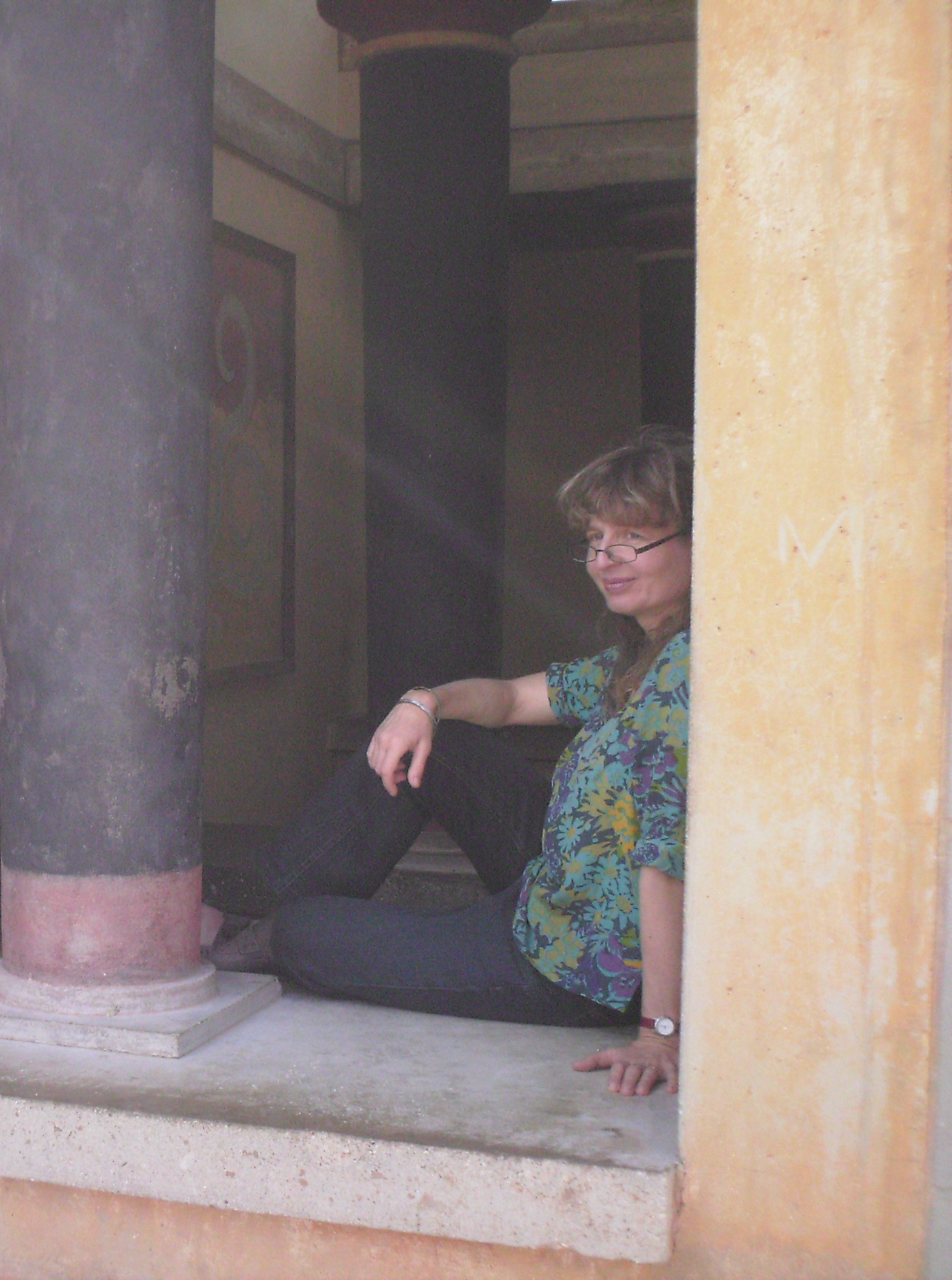
Knossos: woman in very colourful blouse sitting in a reconstructed window of the palace, in front of the same very colourful mural shown in the other photo.

the colossal columns
of the proud pine-trees
that lofty canopy offering shelter
from the flood of sun

the black and white and blood-red pillars
in the serene maze of the palace
those patches in the pattern of a yesterday
which is millennia past

Christina Egan © 2012


Flourishes on a mural, turquoise on luminous red and yello


The same mural in the palace
at Knossos, Crete. 
Photograph:
Harrieta171 via Wikimedia.

For German poems about Crete,
go to the cycle Kretische Küste.
For more about Crete, see below!


Golden Dell
(Chania, Crete)

You sip your coffee in the market-square
lapped by a sky and sea which both are blue;
you notice other folk from everywhere
and read this was the Roman forum, too.

You pass a corner with a golden dell:
stairs down and down, a hundred ages’ span…
The layers blur, solidify and swell,
and history unfolds, a dazzling fan.

Christina Egan © 2015


The Minoan civilisation is the oldest urban civilisation in Europe. The royal palace at Knossos, dating back almost 3,500 years, has the first stone street of Europe. Chania on Crete, a city of stone even 5,000 years ago, is one of the oldest continously inhabited European settlements. You look back on 100 and more generations…

My German translation of the first poem is called gesternmuster.

Kretische Küste

Kretische Küste

I.

Vor mir ein grünes Meer, ein roter Strand
und hinter mir die himmelhohe Wand
der Weißen Berge, mit Gesträuch schraffiert,
mit Schluchten aufgeteilt, vom Mond berührt.

Es schwindelt mich, so schroff ist es und schön…
ich möchte mitten ins Gebirge gehn,
als sei es eines Mannes Wohlgestalt
und berge sein Gemüt in jedem Spalt.

II.

Der kupferfarbne Sand wird doch zu Gold,
wo er in steiler Woge niederrollt
und sich mit jenem Brennendblau benetzt,
das kommt und nochmals kommt… und jetzt… und jetzt.

Und Disteln starren in dem dürren Strand,
die plötzlich strahlen wie von Zauberhand,
wenn erster Regen flüchtig niedersteigt
und Brautkleidblüten aus den Blättern treibt!

III.

Wo täglich Himmel sich mit Meer vermählt
und Landes Rand von anderm Strand erzählt,
wo trockne Erde wie der Tagstern loht
von silbriggold bis zu orangerot,

wo noch bei Nacht das Wasser, kaum bewegt,
den Leib in schwerelosem Zauber trägt,
bis in das sanfte Schwarz ein Schweifstern stürzt –
dort laß uns warten auf den milden Herbst.

IV.

Mit riesenhaften grünen Pranken greift
das Meer hinein in den geschützten Kreis
des kleinen Hafens, daß die Mole schäumt
und sich die bunte Schar der Boote bäumt.

Des späten Herbstes erstes Fauchen fährt
in letzte schwere Hitze wie ein Schwert.
Fünftausend Jahre aber ragt die Stadt
ins Element, gelassen, sonnensatt.

Christina Egan © 2014

Flourishes on a mural, turquoise on luminous red and yello

For more poetry and information
on Knossos 
and Chania on Crete
see my English poems
The Pattern of a Yesterday and
Golden Dell.


Frieze in the royal palace at Knossos, Crete.
Photograph: Harrieta171 via Wikimedia.