The Sun God’s Roads

The Sun God’s Roads

I saw them emerging from forest and fog,
the roads of the fiery barbarian god,
I saw them, I walked them, I measured them – but
I dragged on their slopes and I slipped in their mud.

They followed the creek, they followed the crest,
they followed the sun all the way to the west,
they lead to the market, they lead to the fort,
they lead all the way to the northernmost port.

My roads ran across their fords and their fields,
as smooth as a line of square Roman shields,
as straight as the flight of a sure Roman lance,
as hard as its tip, in a steady advance.

Some sauntering highways are right underneath
while others meander through meadow and heath.
I took what I needed, I bridged all the gaps,
I dropped all the rest off the Caesar’s clear maps.

Minerva brought wisdom and Mars announced peace:
we drained a few swamps and we parcelled the leas,
we left the round huts by the winding wet way
and stamped our rectangles into the clay.

My map showed a ragged and rugged old isle
with gridlines unrolling now mile after mile.
I marked it as Jove had commanded us – but
I still muse about the strange tracks in the mud…

Christina Egan ©2019

On this blog, the year always starts with a Roman road. Here, a civil engineer from antiquity reports how his straight highways and rectangular buildings cut right across the uneven and muddy terrain, winding paths, and round buildings of the native Britons. You can still observe this striking phenomenon in Stonehenge, Silchester, and many other places.

We may assume that enthusiasm for this turn of civilisation was not universal. The Celts thought, for instance, that it was silly to worship gods in temples, as if in boxes, instead of in nature. As regards the superb new roads, they were immensely useful for the transport of goods and ideas, but served first of all for the movement of the legions and of metals mined in Britain.


O Land of Ice and Fire

The Keystone of the Sky

In the Cool of the Evening

In the Cool of the Evening

In the cool of the evening, silver-lit,
when the tide of noise has receded at last,
God walks along the coal-black beach
to listen out for the whispering waves,
to listen out for prayers and sighs,
to look for golden gems in the sand,
to look for purity in the hearts.

Christina Egan © 2016

Necklace of matt black and translucent green beads.

These lines were inspired by the pristine deep-black beaches of Lanzarote, where you can find lava and, in some rare places, tiny shards of olivine.

The strange idea that God walks on earth in the evening to observe humans stems from the story of Adam and Eve, when they are still in paradise but have lost their purity of heart (Genesis 3,8).

Psalm (Lachen werden die Seen)

Psalm
(Lachen werden die Seen)

Noch einmal schlagen die Glocken
und schweigen. Tief atmet endlich der See.

Im Laube schweben gleich geronnenem Licht
Tupfer von weichem Weiß und Gelb.

Duftend, betäubend bäumt sich die Erde
ungezähmt in den späten Himmel.

Auf dunkelgoldenen Schwingen
naht von den Bergen die Nacht;

selten sanft und blau wird sie sein
und sterngeschmückt wie eine Braut.

Tanzen, tanzen werden die Berge,
und lachen, lachen werden die Seen!

Christina Egan ©2011

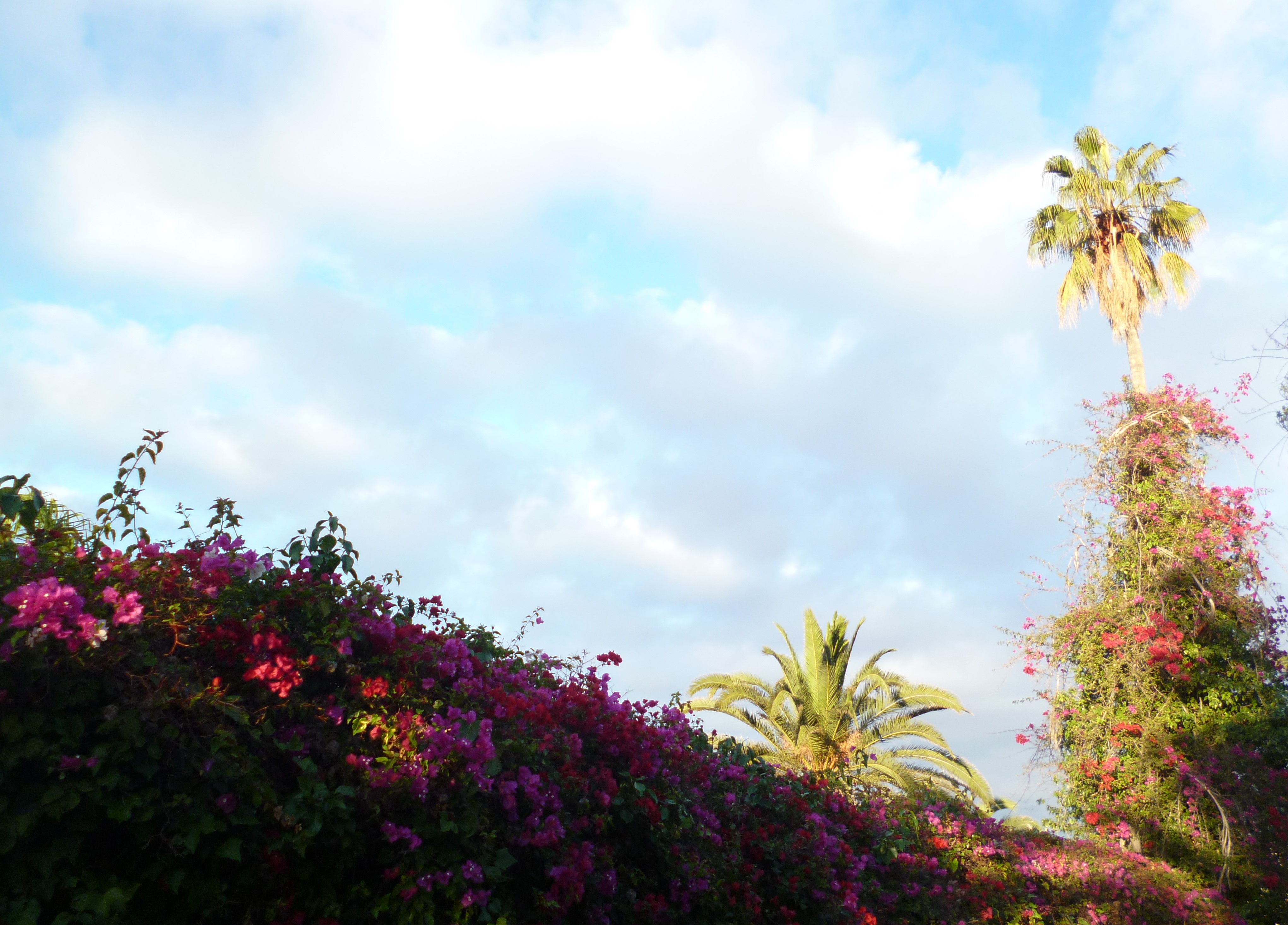
Cascades of luscious purple flowers and tall palm-trees in the sunset.

Let the floods clap their hands / let the hills be joyful together!

Die Ströme sollen frohlocken / und die Berge seien fröhlich!

Psalm 98,8

Northern Tenerife in January! Taoro Parque, Puerto de la Cruz.
Photograph: Christina Egan ©2019.

rosengarten (II. sprühendgrau)

rosengarten

II.

sprühendgrau

die ungeahnten sonnenglanz vergießen
die regenschauer und den regenbogen
zu einem milden meeresgrau verwoben
die augen sollen meine verse grüßen.
dem nebelland das immerkalte wogen
in ungestümem reigentanz umschließen
den inseln voller sprühendgrüner wiesen
sind jene augen ursprünglich enthoben.
drum frag ich nicht nach lilien und lavendel
die flammen sprühen auf gebeugtem stengel
noch nach des südens uferlosem blau
nichts brauche ich als meinen kleinen garten
wo alle wunder lächelnd meiner warten
die bunte welt geballt in sprühendgrau.

Christina Egan ©2023

This sonnet is part of a cycle of 14 poems, whereby each line of the first one (rosengarten I. tiefversteckt) furnishes the first line of a new sonnet.

The island described here is Ireland, but the cycle takes you to other islands, as well as to the palace gardens of Würzburg, Germany, which first inspired me.

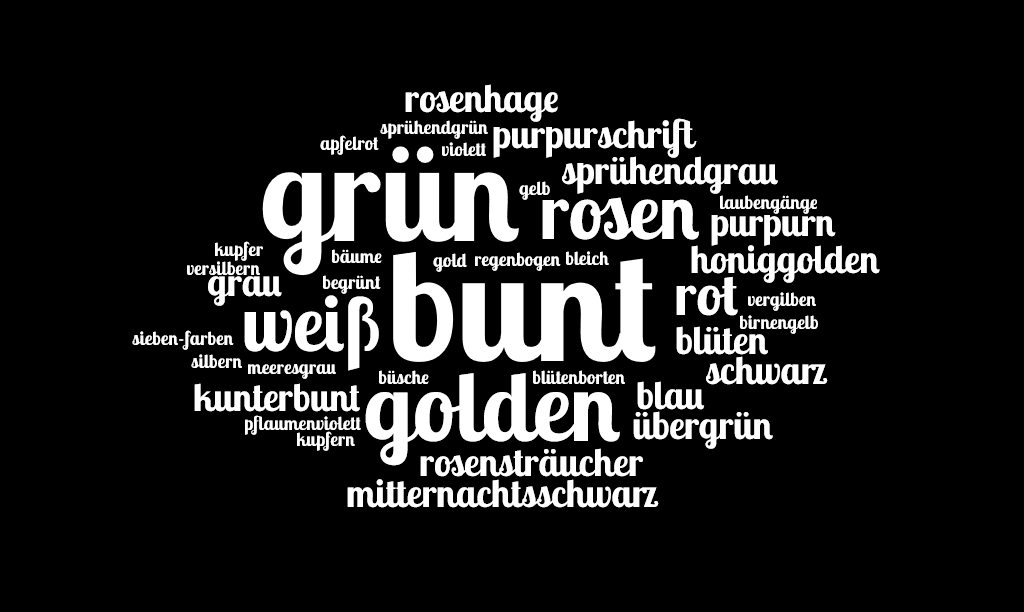
Word cloud of colours and flowers and in white on black; in the middle, "multi-coloured", "green", "golden".

Word cloud of colours in the German sonnet cycle (rosengarten I-XIV), generated on the Simple Word Cloud Generator. In the middle are “colourful”, “green”, and “golden”. Since the colours of the roses are not described, the roses themselves are added.

I am Singing my Song

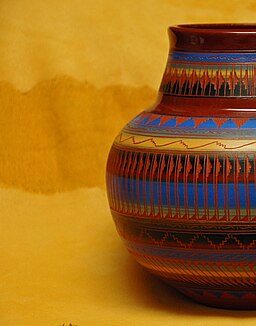
Jug in shiny bright colours (yellow, red, blue, black) in front of yellow cloth..

Navajo pottery. Photograph:
Woody Hibbard, CC BY 2.0,
via Wikimedia Commons.

Word cloud in green, red, blue, black on yellow. Words in the middle: singing, about, face, song, trees.
Word cloud in green, red, blue, black on yellow, simply typed up as a square.

Three word clouds of this poem: one typed up on a Word document with all repetitions, two designed on the Simple Word Cloud Generator (left) and WordItOut (right), with the frequency of the words represented by their size and position. (You can click on the images to enlarge them.)

Via WordItOut, you can order badges or key-rings with the right-hand word cloud.

A New Poem is Being Born

Hinter dem Olivenbaum

Hinter dem Olivenbaum

Noch hemmen Frost und Nebel allzulang
den bunten Garten,
und fast verstummt der volle Vogelsang,–
noch muß ich warten.

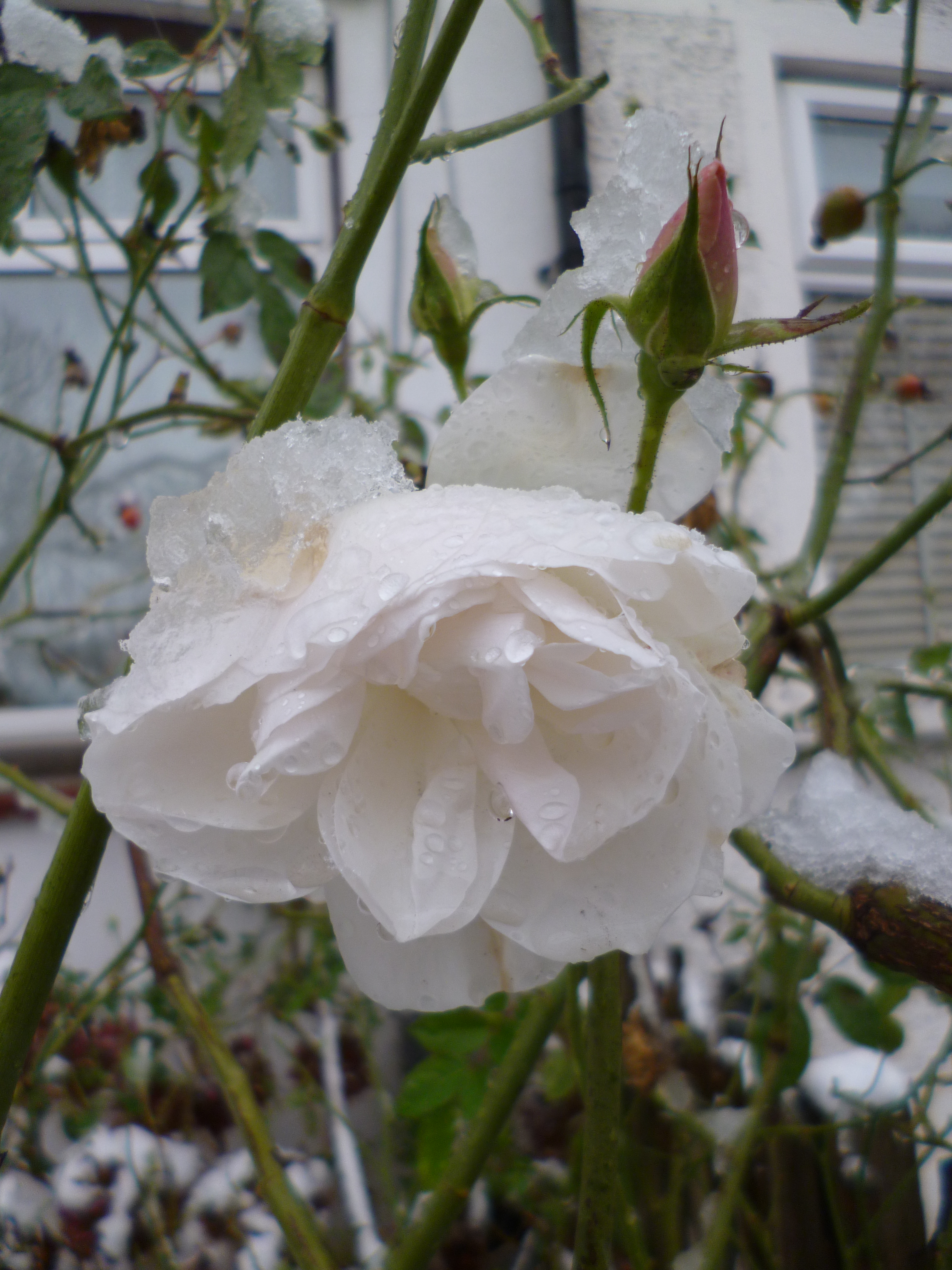
White rose, pink buds, hawthorns, all covered by melting snow.

Im Süden werd’ ich keinen Schnee mehr sehn,
bloß weiße Rosen,
die meine Lippen, wenn sie mannshoch stehn,
verstohlen kosen.

Einst wird mir hinter dem Olivenbaum
Oleander prangen,
und Blumenfluten streifen wie ein Saum
die warmen Wangen…

Christina Egan © 2017


The woman or man surrounded by frost, fog, and snow dreams of a future where she or he will kiss white roses and be caressed by oleander… The encounter with the plants is envisaged like an assignation behind a tree, an olive-tree as a symbol of the Mediterranean region.

Photograph: Christina Egan ©2017.

Tepid Tides