drachenschwanz

drachenschwanz

zehn jahre nach dem
blitzschlag
vorm bildschirm
und der wirklichgewordenen
sonnenwende
im büro mache ich schluß
mit der nichtbeziehung.

die blauen briefe
die taumelnden
niegelesenen
nieabgeschickten
fliegen endlich
in den reißwolf
denn du hast durchweg
ausdrücklich
geschwiegen.

mondenhelle augen
und kein lichtstrahl
fiel auf mich
wellenschlag der stimme
und kein wörtchen
fiel mir zu.

die aufgehäuften gedichte
geschliffen und gleißend
sind alle noch da
berstend von bildern
die sich auffächern
vom ersten goldfisch
bis zum letzten falken.

schweres gebräu
gefiltert
zum salböl
und abgefüllt in die phiolen
von zweimal zwei reimen
oder vierzehn zeilen.

den drachenschwanz
der letzten wortkette
hänge ich in die wolken
für die nachwelt.

Christina Egan ©2024

Black triangular kite with long red tail in turquoise sky.

Vigil (Du bist die Hand / Your Distant Hand)

Vigil (V)

Du bist die Hand, die mein Gebetbuch hält
in aller Frühe, wenn die laute Welt
noch schlummert wie ein müdgetobtes Kind
und wir die Stimme ihrer Träume sind.
Wir sind der Psalm, der aus der Erde steigt,
wenn Nachtwind noch die Wiesenblumen neigt,
das erste Wechsellied im Weizenfeld…
Du bist die Hand, die mein Gebetbuch hält.

Christina Egan ©1990

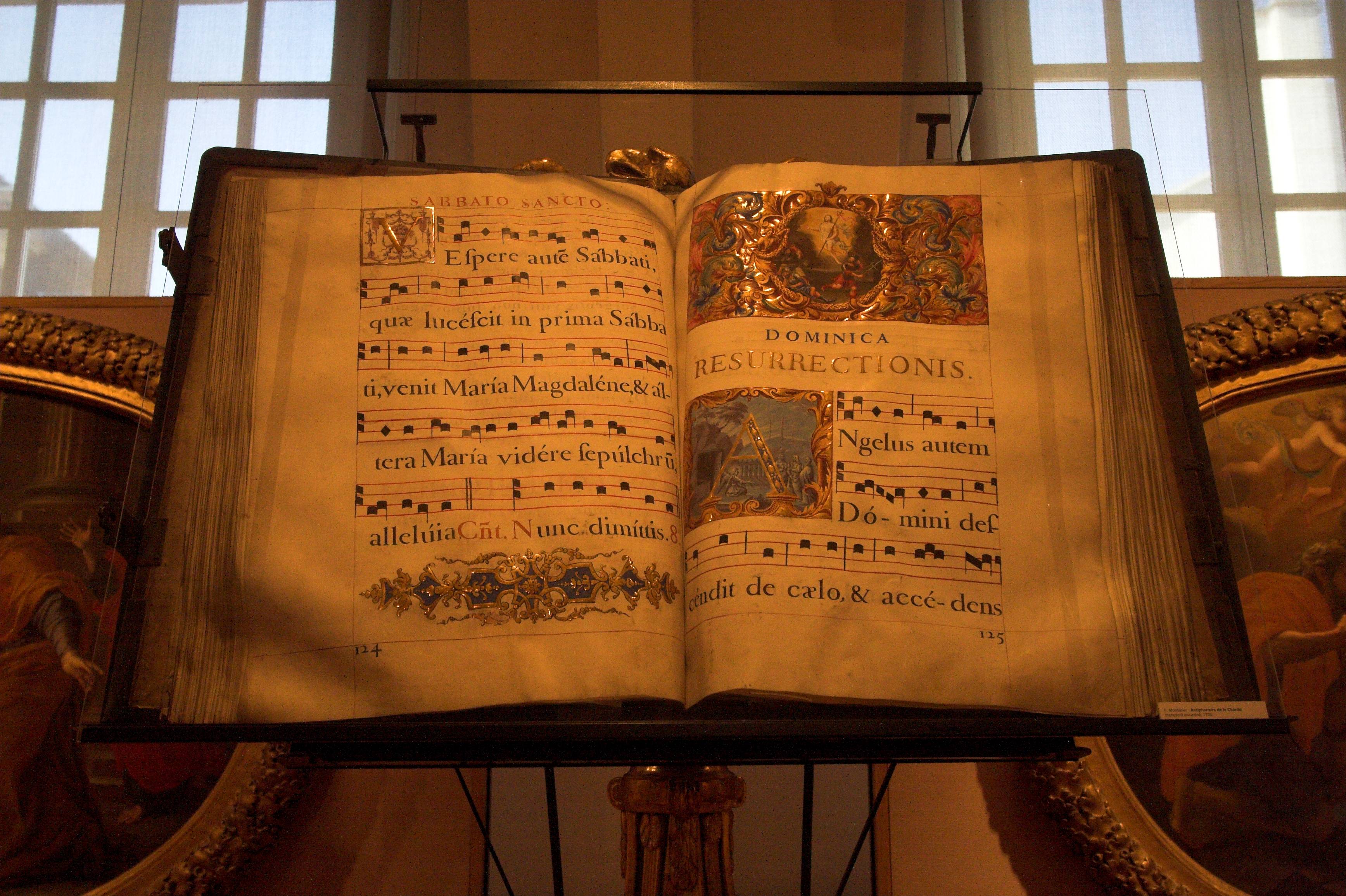
Huge liturgical book with very large writing and music, richly illuminated

Vigil (V)

At dawn, the noisy and unruly world,
just like a tired child, has not yet stirred.
We are the voice of all its dreams: we stand,
my hymnal lifted by your distant hand.
We are the psalm arising from the earth
while night wind is still bending blooming herbs.
We are the chant across the ripening land…
My hymnal lifted by your distant hand.

Christina Egan ©2018

These lines describe the early-morning prayer of Christian monks and nuns: standing up and bowing, chanting and responding to each other… They also imagine an invisible connection between two of them — good friends perhaps, close relatives, or former lovers — who feel that they are praying together across the distance between them.

Photograph: By ignis – Own work, CC BY-SA 3.0.

Tepid Tides

Gegenwart (Wie Kalksteinhügel)

Gegenwart

Wie Kalksteinhügel liegen deine Wangen
und deine Haare wie ein Pinienwald.
Schon zittert meine Seele vor Verlangen
nach deiner bloß erratenen Gestalt.

Ein dunkler Doppelsee sind deine Augen,
noch beinah unberührt und unergründlich.
Ob sie auch meine Zukunft in sich bergen,
ist beinah ungedacht und unerfindlich.

Und wie das warme Meer rollt deine Stimme,
wenn sich orangerot der Tagstern neigt…
O schautest du nur auf und hieltest inne –
und würdest niemals bloß Vergangenheit!

Christina Egan © 2014

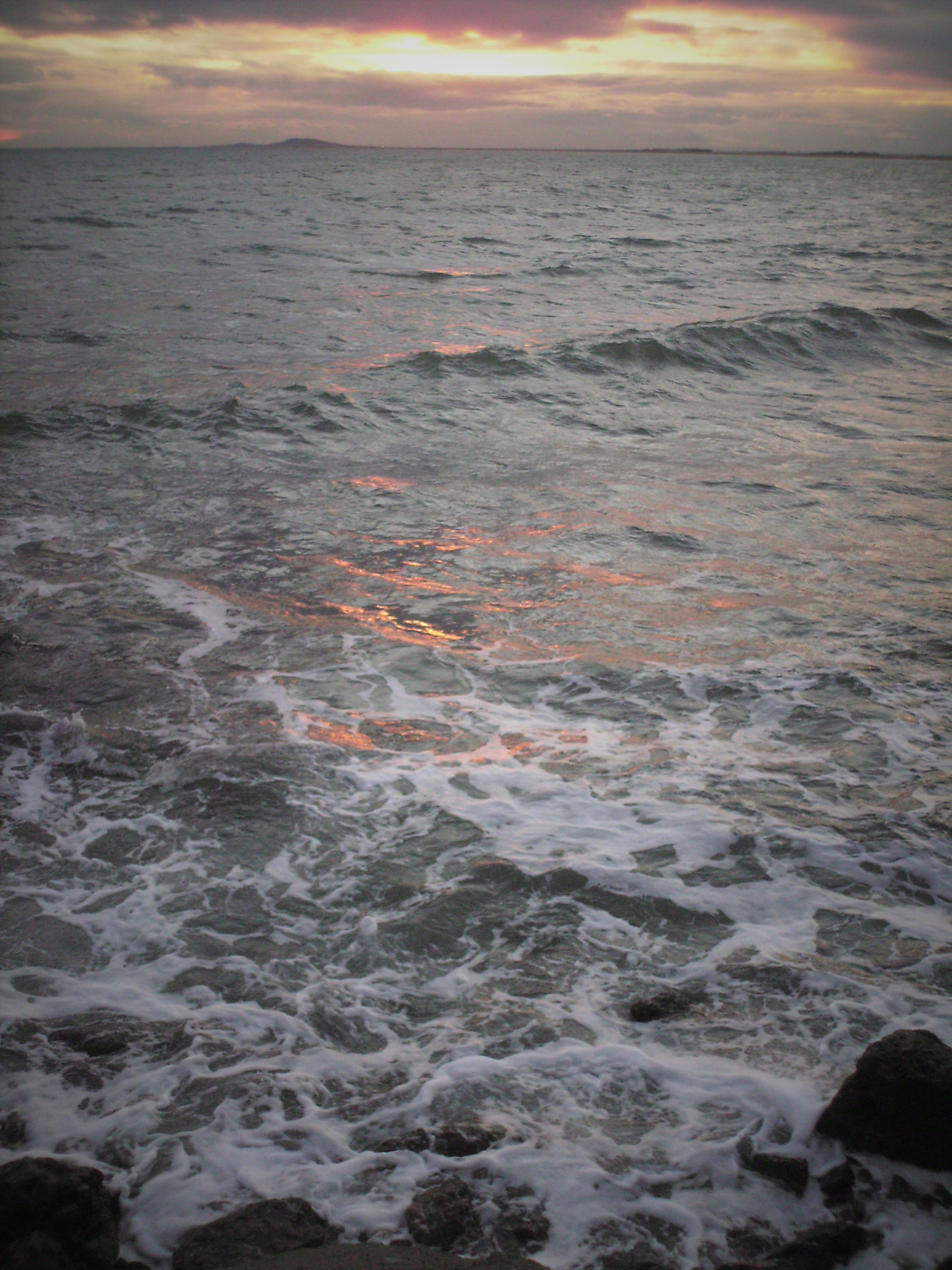
Dusk by the sea: glow of sunset amongst dark clouds and on waves lapping onto the shore.

Description of a new acquaintance in terms of a Mediterranean landscape.

The title plays on the double meaning of the German word “presence” / “present”: the speaker is mesmerised by the other person and already has a faint hope that he or she will become the future… and never slide back into the past.

Sunset on a Mediterranean shore in January. – Photograph: Christina Egan © 2016.

Grand Canyon Psalm


Grand Canyon Psalm

I.

Nothing prepares you
for the heart of the world
lying open before you:
luminous layers
of rosy rock,
jagged and rounded,
leading down, down,
right into the earth.

In the silver silence
of night, you hear
how this heart beats:
it trembles and rumbles,
it nudges your bedstead,
unsettles your cottage,
reminds you of death
and life and the earth.

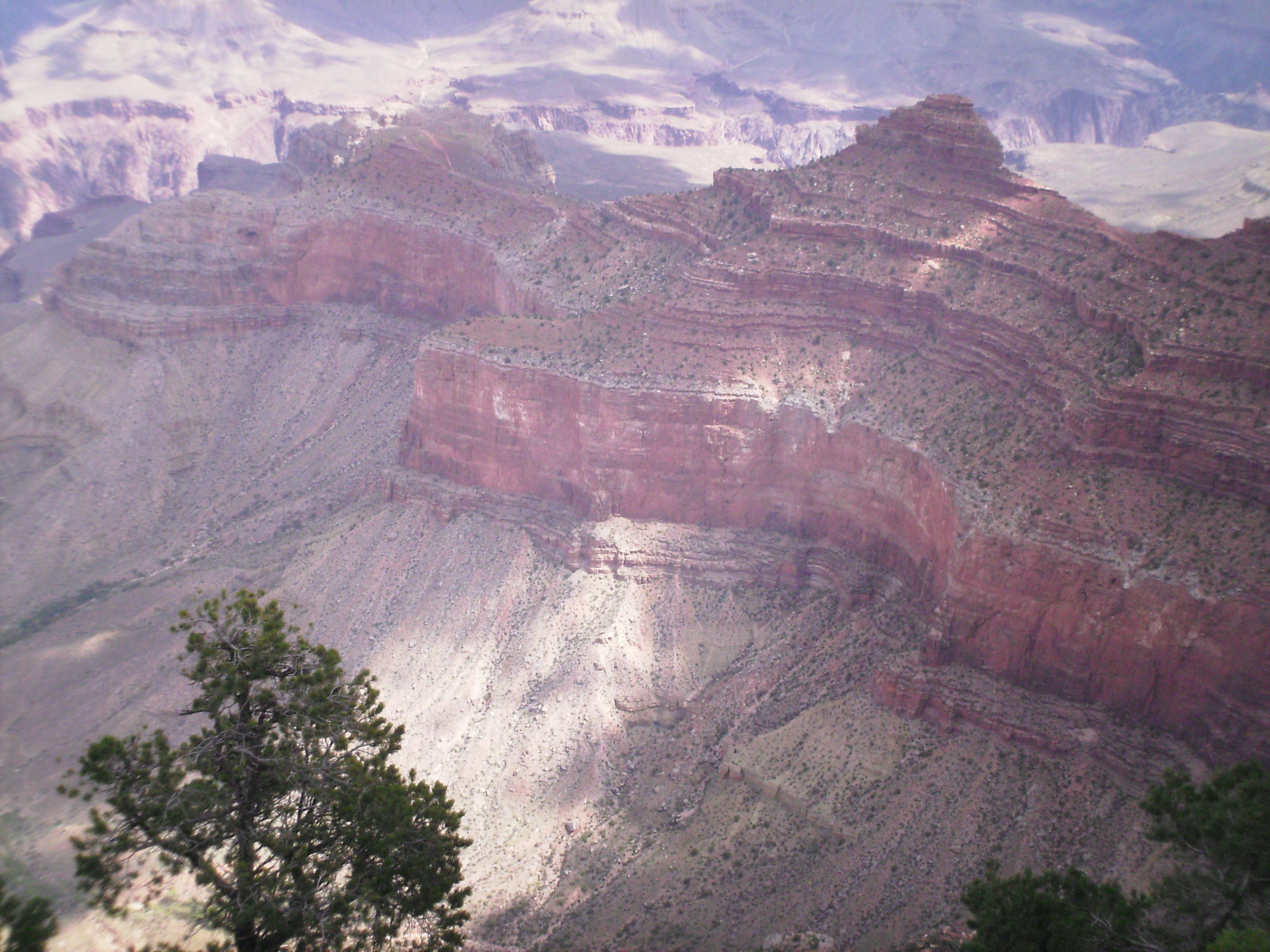
Undulating layers of pink and mauve rocks and peaks, with trees in the foreground.

II.

Nothing prepares you
for the ear of the world,
always wide open,
always upturned,
listening out
for the thud of the pine-cones,
the dance of the deer hooves,
the chant of the milky-way.

You have arrived
at the mouth of the world,
its voice of thunder,
its eloquent silence.
Here you stand, struck,
quiet at long last,
as tiny as an ant,
anointed like a king.

Christina Egan © 2018


A tiny fraction of the immense expanse of the Grand Canyon.
Photograph: Christina Egan © 2008.

Burgberg

Burgberg

I.

Aus dem Nebel tauchen Mauern, scharlachumrankt –
ein Hauch auf der Haut, ein Traum gegen Morgen.

Der Burgberg, ein Eswareinmal,
das sich eine Auferstehung ertrotzt.

Deine Stimme, eine schwingende Brücke,
golden und lockend und unbetretbar.

Dein Gesicht, von den Jahren klarer geschnitzt,
das ich lesen will, lange, wie deine Stadt –

II.

Und wieder Laubhaufen, knöchelhoch, kniehoch,
Nebelschwaden, als wanderte man durch Wolken.

Dem ungreifbaren Weiß enttaucht ein Spitzbogen,
ein Tor: Es führt nirgendwohin.

Der neben einem geht, mit einem redet,
bleibt schemenhaft. Vielleicht ist er ein Traum.

Und wieder November. Dreißig Sommer
entblätterten sich in den Wind, in den Wind.

Christina Egan © 2001 (I) / 2017 (II)

Im Spiegelsaal / Unter der Fontäne

Im Spiegelsaal
(Stadtschloß zu Fulda)

Die buntbemalten Wände spiegeln sich
mit blanken Splittern Gegenwart darin.
Sie zeigen hundertfältig dich und mich,
und hunderfach scheinst du mir auf im Sinn.

Doch die Porträts in alten goldnen Rahmen
sind ausgewischt nach einem Augenblick –––
Es bleiben nur im Buche unsre Namen
und in den Herzen hundertfaches Glück.

Christina Egan © 2000


Unter der Fontäne

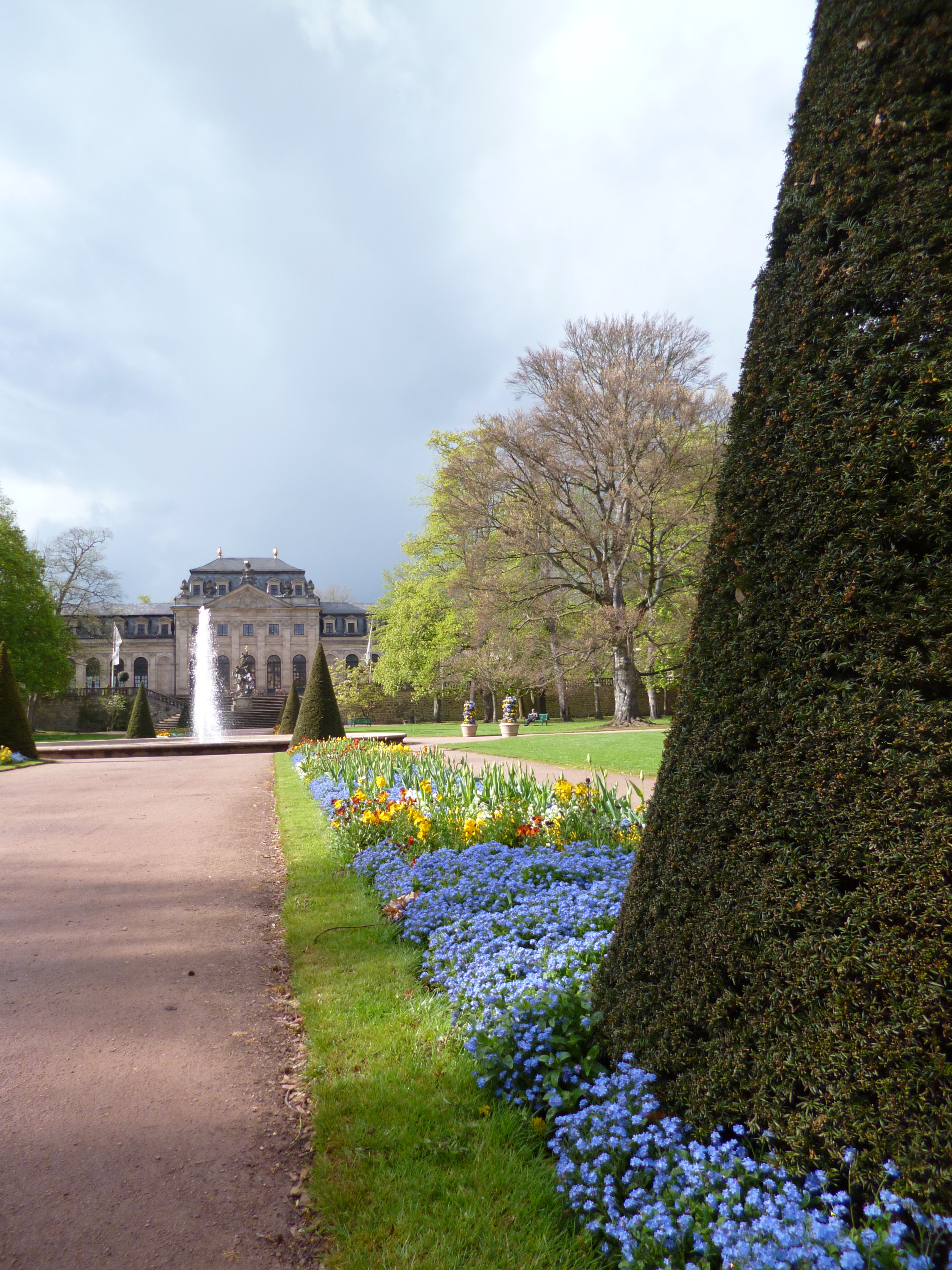
Park with flowerbeds leading to fountain and elegant rococo palace

Du stehst und schaust versunken
dem hohen Springquell zu:
die Flut von hellen Funken
strömt Leben aus und Ruh.

Der Silberstimme lauschst du,
als sei’s ein Lied für dich,
und deine eigne bauschst du

und wirfst sie über mich.

Das Lautspiel meiner Lieder
ist Widerschall von dir,
und deine Lieder wieder
nimmst, Liebster, du von mir.

Christina Egan © 2004


The first poem was written for my own wedding and the second one for one of our wedding anniversaries. We got married in a palace with mirror cabinets and with tall fountains in the gardens (see picture and link to 3D-tour of the sparkling rooms).

In the first poem, the words and sounds reflect each other, just like the people and scenes in the mirrors. Similarly, the music of the water features in the second poem is echoed in the songs or poetry which the couple compose for each other — and in the music of these lines.

Photograph: City Palace Gardens, Fulda, Germany (Schloßpark Fulda). Christina Egan © 2014.

restloslächeln

restloslächeln

von dem blütengesicht
wendest du dich ab
vor der glockenstimme
läufst du davon

denn du willst dich nicht
wundsehnen
nie mehr willst du dich
krankfragen

es ist dir zu teuer das
restloslächeln
zu gefährlich ist dir das
endlosküssen

und dein eignes blütengesicht
versteckst du sorgfältig
samt deiner glockenstimme
in deinem kopfkissen.

Christina Egan © 2012


Observations of the fear of love, the fear of falling in love, the flight from a person you would love to love…

In German, you can more easily invent new words which will be written in one word: here, it is ‘making yourself sore with longing’, ‘making yourself ill with asking’, ‘smiling without leftover’, and ‘kissing without end’. Occasionally, German is more concise than English!

The Mechanics of Love

The Mechanics of Love

the mechanics of love
have tolled the hour
have chained my heart
are pulling me towards you

the sunlit hills
of your guileless face
the turquoise surf
of your quiet voice

I cannot distinguish
what determines my steps
the mechanics of love
or your silvery forcefield

Christina Egan © 2012


These lines record some of the fundamental insights of my life: that falling in love is always a blend of true fascination with another person and of sheer emotional and physical need; and that one of the main factors attracting a woman to a man is his voice — utterly underrated throughout history! Perhaps because history has largely been written by men, and so have science and literature ? Well, I hope men are at least subconsciously drawn to a melodious voice, too!