gesternmuster / Zeit-Räume

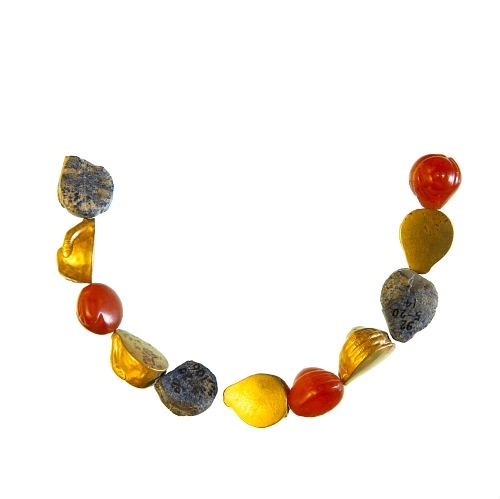
A dozen beads of gold, lapis lazuli, cornelian.gesternmuster
(Knossos)

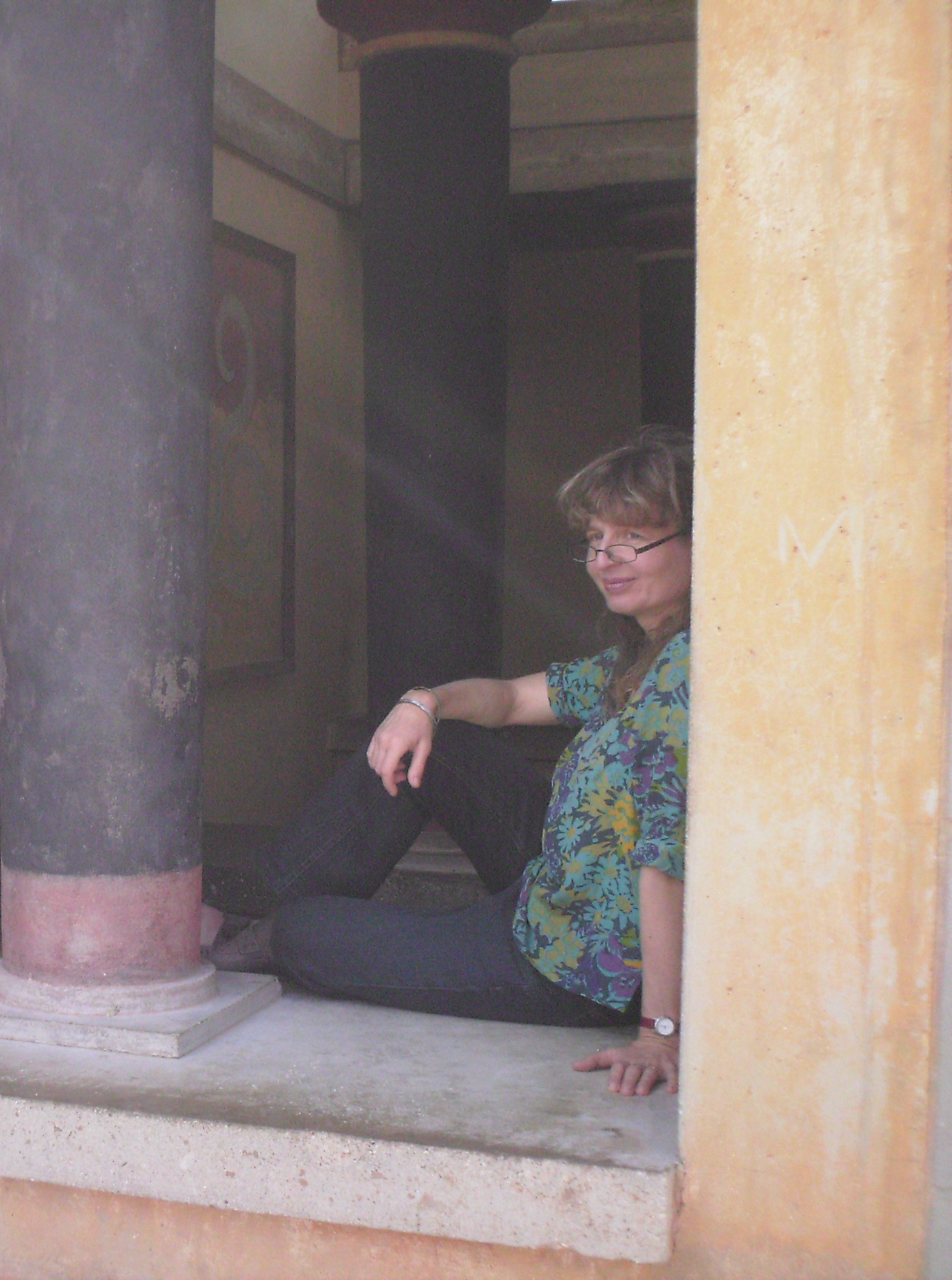
die kolossalen säulen
der stolzen pinien
jener erhabene baldachin
der schutz vor der sonnenflut bietet

die schwarzen weißen blutroten pfeiler
im heiteren palastlabyrinth
jene flecke in einem gesternmuster
das jahrtausendealt ist

Christina Egan © 2016

This is a translation of The pattern of a yesterday . At that post, you can find some photos and a link to an artistic impression of the palace 3,500 years ago.

Photograph: Minoan beads from Crete in gold, lapis lazuli, cornelian, ca. 1700-1500 BC. – © The Trustees of the British Museum.

Zeit-Räume
(Knossos)

Terrassen, Treppen, rote Säulen
zwischen himmelhohen Bäumen,
Marmorschwellen, rote Wände,
um die Ecken neue Treppen…

Wie im Traume muß man wandern
durch die Höfe, durch die Säle,
durch die Wärme, durch die Kühle,
still von einem Raum zum andern…

Schlanke Bäume, schlanke Menschen
stehn vor heitrem Himmel drinnen
in den buntbemalten Zimmern
heute wie vor tausend Jahren.

Keine Läden vor den Fenstern,
in den Türen keine Flügel,
keine Grenzen zwischen Innen,
Außen, Unten oder Oben,

keine Pforten zwischen Heute,
Gestern oder Vorvorgestern
zwischen einem bunten Zeit-Raum
unter Pinien und dem andern.

Christina Egan © 2016
Ich behaupte das Dach über Dächern

Ich behaupte das Dach über Dächern

I.

Ich behaupte das Dach über Dächern
und Wipfeln und Kuppeln der Stadt,
im sonnengeladenen Himmel
ein lebensgeladenes Blatt!

Eine Fahne in sattesten Farben,
ein Winken: „Ich bin! Ich bin hier!“
Mein Herz reißt sich los aus dem Leibe
und fliegt über Meere zu dir.

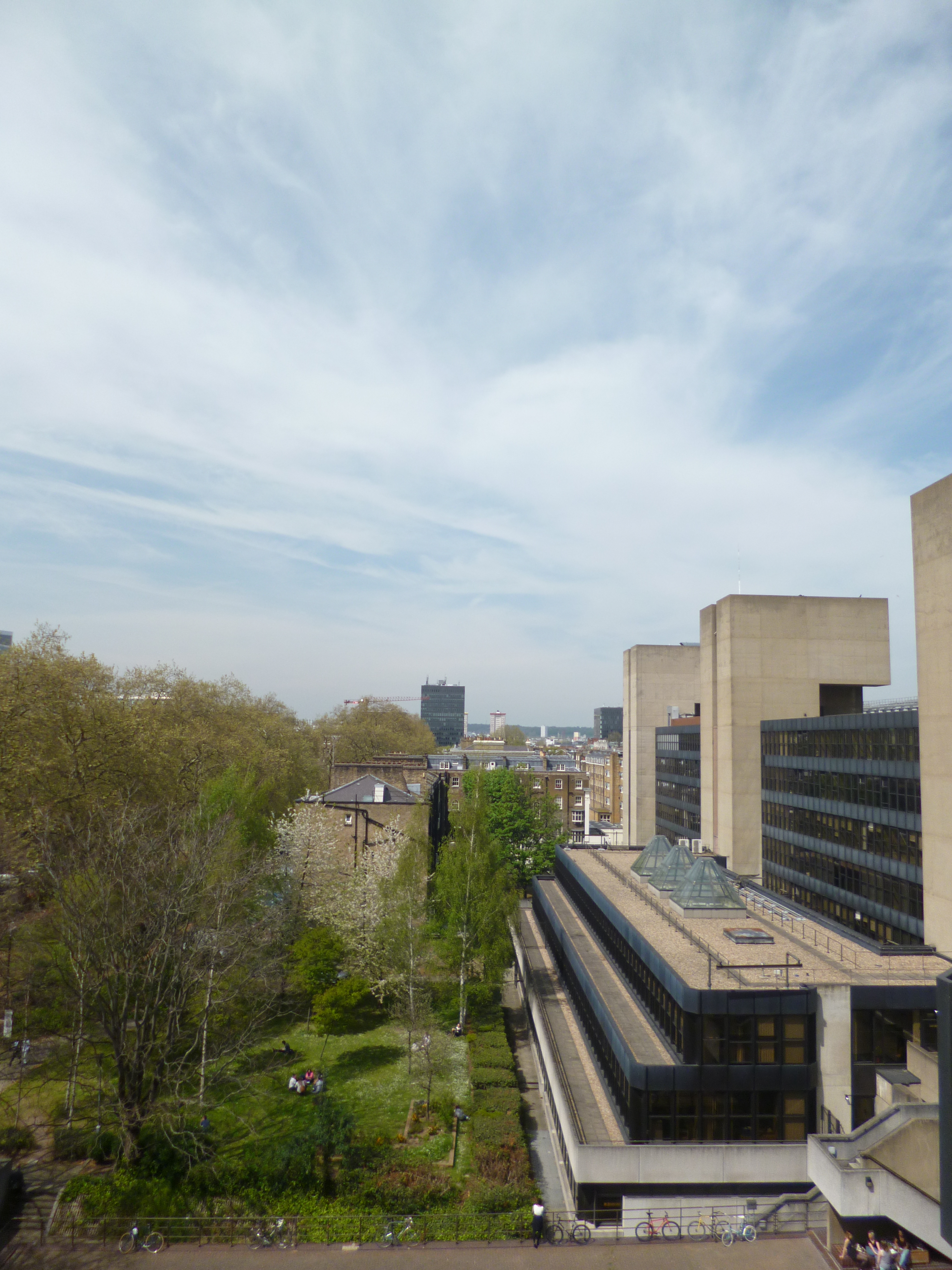
View from high up along building of concrete, steel and glass to the right, with lawn and trees to the left and clouds in blue sky above.

II.

Ich betrachte die Bäume von oben:
erst leuchtend, dann dürr und dann kahl.
Ich zeichne die Großstadt, gewoben
aus Backstein und Kalkstein und Stahl.

Mein Auge drängt aber hinüber
zum Rande der Stadt und des Lands,–
mein Herz glaubt noch immer, es fliege
zu dir mit dem Goldwolkenglanz!

Christina Egan © 2016


Photograph: Christina Egan © 2016


The person who ‘holds the position on the
roof above roofs’ gets the bigger picture:
observing the city, the sky, the seasons;  
aware of being a part of the fabric of life.

But really, she or he just wants to fly beyond
the horizon, to be united with a beloved one…
who might turn out to be an illusion of desire.
These lines evoke immanent transcendence.

These poems may work in a translation software.

Stadt im Tal

Stadt im Tal

Sprig with tiny flowers in a deep warm yellowGleich einer Ginsterblüte flimmert,
da jetzt die Sonne steigt und sprüht,
die ganze Stadt, aus Glanz gezimmert,
sacht in die Hügel eingefügt…

Gleich einer Apfelblüte leuchtet,
da jetzt das Leben wieder siegt,
das ganze Tal, vom Tau befeuchtet,
ein Orgelklang, ein Jubellied!

Christina Egan © 2015

Dyer’s broom (Genista tinctoria).
Photograph by Christian Fischer.


This poem has recently been published in regional paper Marktkorb (circulation over 100,000).

The ‘Town in the Valley’  is also mentioned in my lyrics Ich steh’ im Felde wie der Lindenbaum’  : ‘Ich schaue auf die Stadt im Tal / mit Erdensternen ohne Zahl…’

Theodor an Emilien

Theodor an Emilien

Mit tausend dicken weißen Kerzen
Prangt der Kastanienbaum am Tor;
Ich steh’ mit hoffnungshellem Herzen
Im späten Dämmer stumm davor.

Der Vogelsang ist längst versickert
Wie Silberspur ins Dunkelblau…
Doch aus dem Gutshaus tröpfelt, zittert,
Quillt das Klavier wie Abendtau.

Ich mach’ im hohen Gartensaale
Den flinken schlanken Schatten aus –
Und werf’ nach jenem Ankerpfahle
Mein Tau mit einem Male aus.

Christina Egan © 2016


The old-fashioned names and inflections signal that this is a scene which happened long ago, a romantic story from the times of Jane Austen, set in Germany. There is a true story behind it, and the ending is happy and sad: the young man waiting hopefully outside the manor house in the summer night, Ernst Theodor Echtermeyermarried Lady Emilie, and they had a child, but they both died very young.

Der Baum im Schulhof

Der Baum im Schulhof
(Marienschule Fulda)

Das Bäumchen stand im rosa Kleid,
das Mädchen stand im blauen;
sie waren fünfzehn Jahre alt
und lieblich anzuschauen,
wenn auch noch zierlich, kindlich gar,
nichts als ein Bündel Blüten…
Im Norden lag ein gelbes Haus,
der Schulhof lag im Süden.

Und als sie sich nun wiedersehn
in eben jenen Mauern,
da sind sie fünfzig Jahre alt
und herrlich anzuschauen,
wie Wolken stattlich hingewölbt
und strahlend unter Schauern:
der Baum im dunkelrosa Kleid,
die Frau im dunkelblauen.

Christina Egan © 2015

You can look at the blossoming  Tree in the Schoolyard
and the yellow building online at Marienschule Fulda. 

The story of the schoolgirl and the tree, meeting at fifteen
years old and then at fifty, may work in a translation software.

Ich steh’ im Felde wie der Lindenbaum

Ich steh’ im Felde wie der Lindenbaum

Ich steh’ im Felde wie der Lindenbaum,
im Frühlingswind verloren und im Traum…

Ich schaue auf die blauen Höhn,
die kühn wie Vorzeitbauten stehn.
Ich lausche auf den Vogelsang,
in meinen Adern steigt ein Drang!
Ich schaue auf den Horizont,
von dem mir meine Hoffnung kommt.

Ich steh’ im Felde wie der Lindenbaum,
in Frühlingsnacht verloren und im Traum…

Ich schaue auf die Stadt im Tal
mit Erdensternen ohne Zahl.
In meinen Adern steigt der Saft,
ich streck’ mich mit versteckter Kraft!
Bevor noch süß die Linde blüht,
blüht früh und süß der Linde Lied.

Christina Egan © 2012

The mountain range on the horizon is the Rhön and the city in the valley is Fulda, Germany. There are more lines to this poem to make a song of it: part wistful and part hopeful, part heavy-hearted and part light-hearted!

The phrase ‘Town in the valley’ is echoed in the poem of the same name, Stadt im Tal.

Ashen Land (For Syria)

Ashen Land
(For Syria)

The only offspring left calls from the eaves.
Some houses have a hundred hollow wounds,
and hamlets of a dozen centuries
surrender to contending winds their rooms.

The olive-trees stretch out their silver leaves
like angels’ feathers in a cry for peace.
Where is the comfort for a bird that grieves,
the peace for ashen land? Is it beneath?

It is beneath the nettles and the shards,
beneath the venom seeped into the field;
it is above the silver heaps of stars,
seed of unimaginable yield.

Christina Egan © 2016

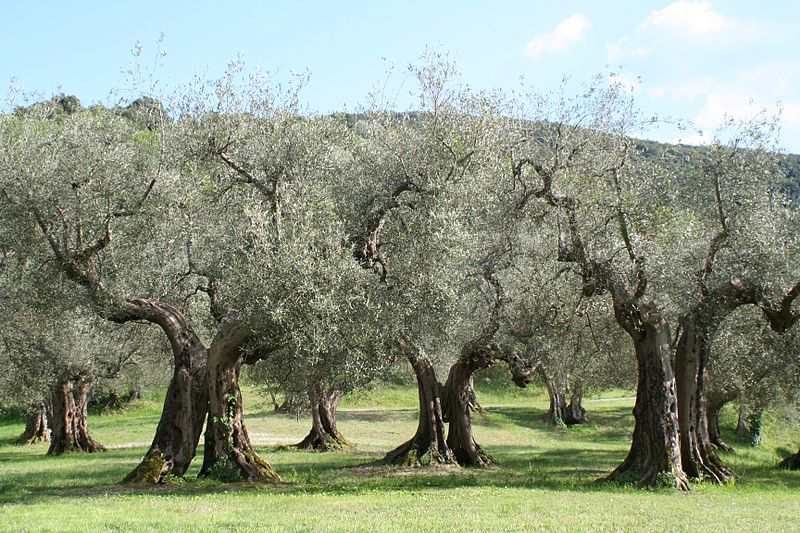
Olive grove, trunks and tree-tops silvery grey, like ashes.Photograph: ‘Olivenbäume in Umbrien’ by Adrian Michael.

I found this marvellous illustration on Wikimedia Commons long after I wrote the poem. I had not even thought of the silver bark and leaves resembling ashes…

In the past few years, millions of Syrians have lost their homes and possessions, or their jobs or studies, or their health or their limbs, or their loved ones or their own lives. The national liberation movement has turned into an apparently bottomless civil war, a literally insane religious war, and a vicarious war of outside powers. This conflict will change the face of the Near East and the face of Europe. Meanwhile, the suffering continues.

Let us pray for peace in Syria. All together.

vermächtnis

vermächtnis

und wieder dünen. wieder hohes gras.
und meer und himmel hier mit urgewalt.
und wieder du in deiner wohlgestalt.
und mein verlangen sanft und ohne maß.

ich tauch in deine lichten augen ein…
das meer entweicht. es war nur wellenschaum.
der tag verbleicht. du warst ein sommertraum.
ich bin allein am strand. ich bin allein.

wie mars in seinem kupferfarbnen glanz
entsteigt dem wall des kiefernwalds dein bild.
die brandung klopft. und klopft. der boden quillt.
ich kröne dich mit meiner verse kranz.

Christina Egan © 2015

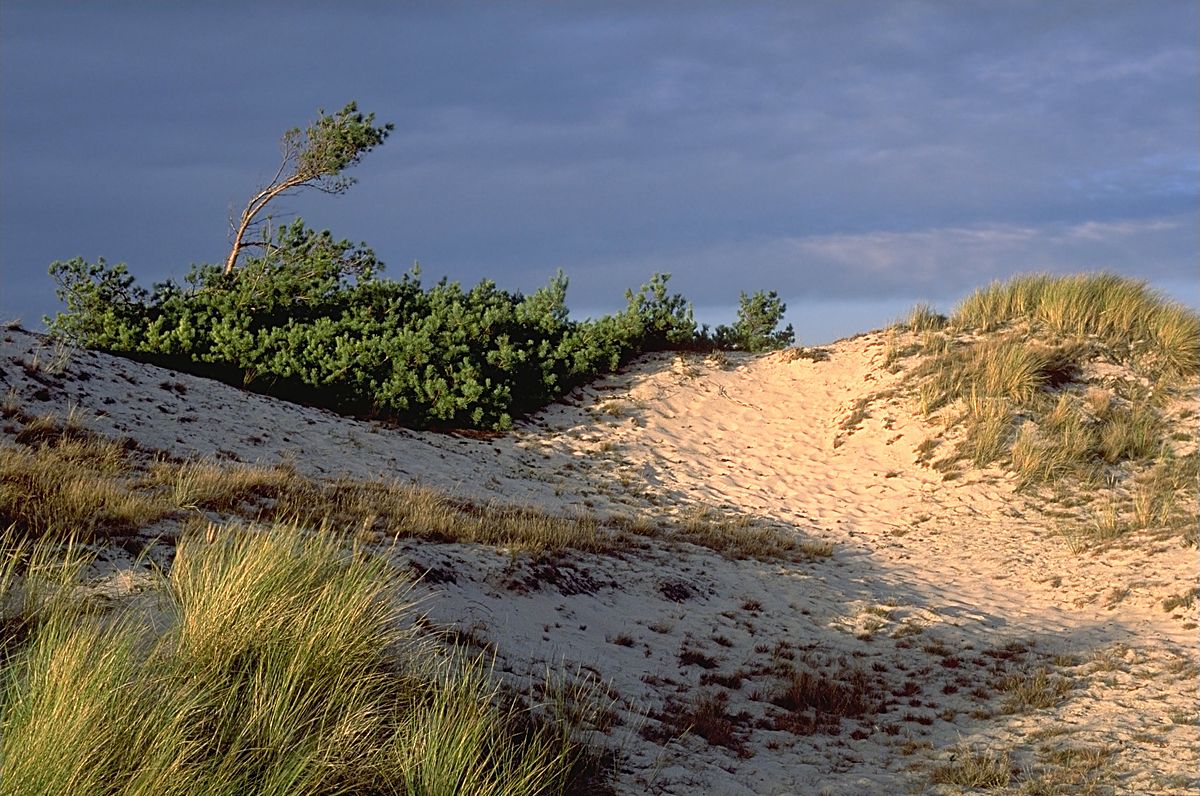
Golden dune, green grass and shrubs, deep-blue sky.


This is my poem of the year 2015! It is, as the title states, my Bequest.

Like many other poems, it was inspired by a holiday on the Darss.


“Dune in Nature reserve Darßer Ort, Baltic Sea”. Photograph: Andreas Tille via Wikimedia Commons.

Le vent de la mer se lève

Le vent de la mer se lève
(Alyscamps, Arles)

Tout doux, le vent de la mer se lève
parmi les colonnes à l’aube de l’an,
dans mon esprit réjouissant
ressuscitant mon ancien rêve,
un rêve de tuiles couleurs du couchant,
un rêve de murs couleurs océan.

Le vent se renforce et lève la sève
des hauts platanes le long de la rue,
ces forts piliers du ciel du Midi…
Mais quel tombeau révèle le rêve,
lieu lumineux et réapparu ?
Ô vent de la mer, Ô vent de ma vie !

Christina Egan © 2015

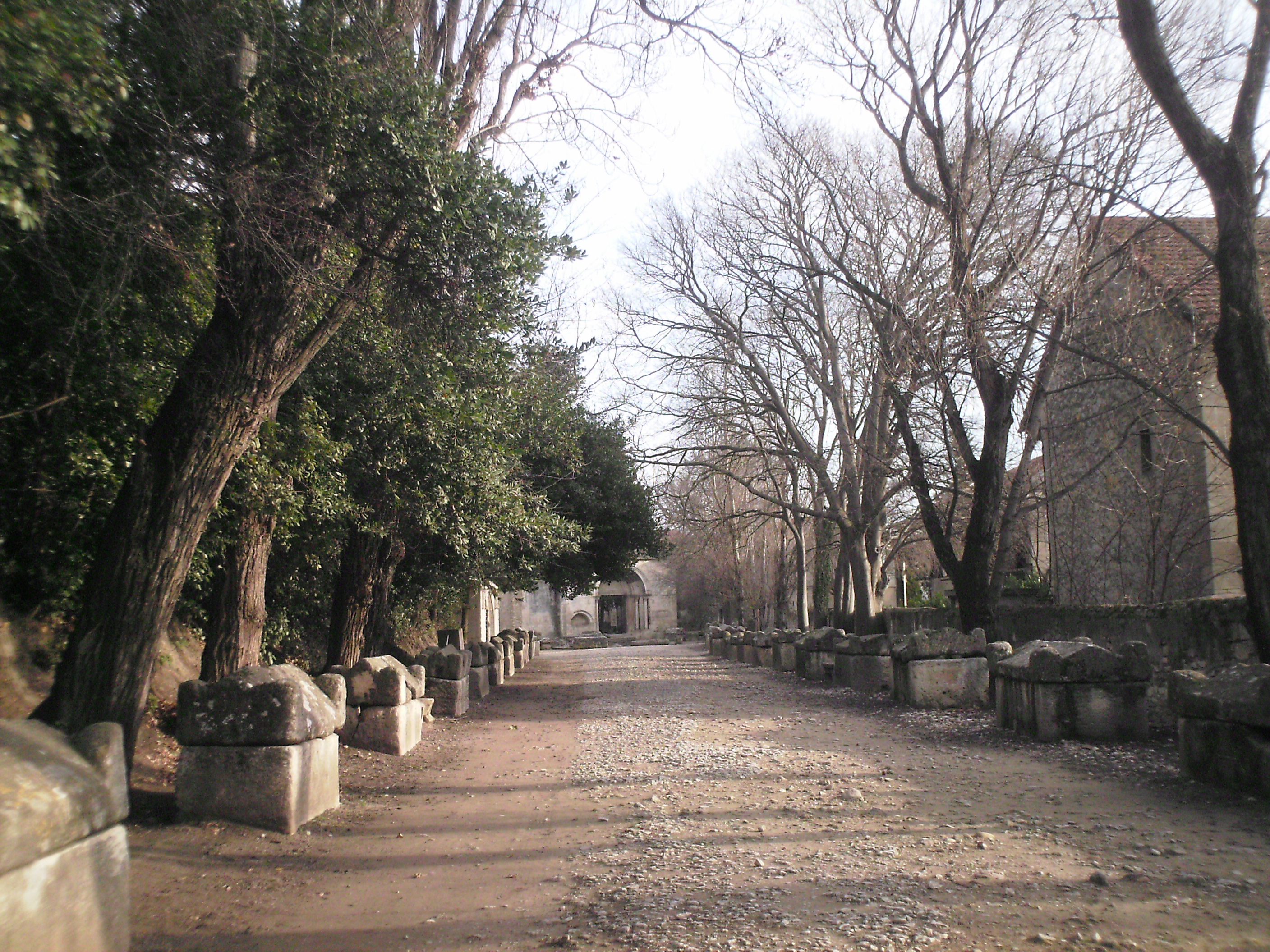
Wide avenue with sarcophagi to the left and right,leading to a mediaeval portal. Winter scene in fair weather, light-brown and light-blue.

Alyscamps, Arles. Photograph:  Christina Egan © 2010


The Wind from the Sea is rising
(Alyscamps, Arles)

The Wind from the Sea is rising, all mild,
between the columns and graves at the dawn
of the year, stirring up in my jubilant mind
my resplendent dream of antiquity,
a dream of tiles resembling the sun,
a dream of walls resembling the sea.

The wind is now swelling and ready to rouse
the sap in the plane-trees along the wide road,
those pillars supporting the sky of the South…
Which tomb may hold my mystery of old,
the luminous place that has just reappeared?
O Wind from the Sea, O wind of my soul!

Christina Egan © 2016

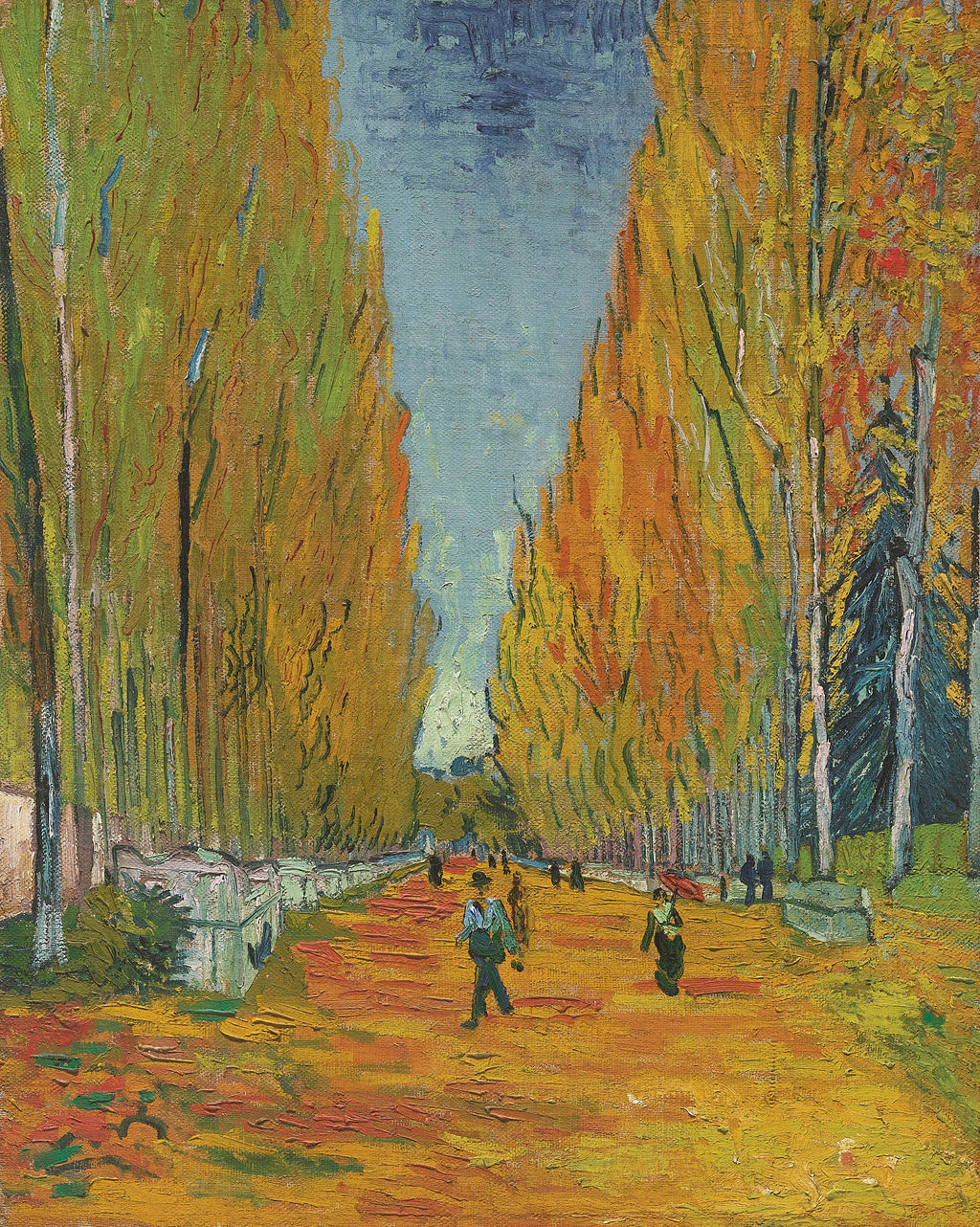
Painting by van Gogh: Avenue with very high trees, with path and foliage in bright orange, sarcophagi and sky in blue.

The Roman cemetery known as the Alyscamps has been immortalised by Paul Gauguin and Vincent van Gogh.

Vincent van Gogh: L’Allée des Alyscamps (1888). Photograph: Public domain, via Wikimedia Commons.

You can read an English and German poem about a Roman road in France at Where Road and River Meet / Überm Fluß . 

The Pattern of a Yesterday / Golden Dell

The Pattern of a Yesterday
(Knossos, Crete)

Knossos: woman in very colourful blouse sitting in a reconstructed window of the palace, in front of the same very colourful mural shown in the other photo.

the colossal columns
of the proud pine-trees
that lofty canopy offering shelter
from the flood of sun

the black and white and blood-red pillars
in the serene maze of the palace
those patches in the pattern of a yesterday
which is millennia past

Christina Egan © 2012


Flourishes on a mural, turquoise on luminous red and yello


The same mural in the palace
at Knossos, Crete. 
Photograph:
Harrieta171 via Wikimedia.

For German poems about Crete,
go to the cycle Kretische Küste.
For more about Crete, see below!


Golden Dell
(Chania, Crete)

You sip your coffee in the market-square
lapped by a sky and sea which both are blue;
you notice other folk from everywhere
and read this was the Roman forum, too.

You pass a corner with a golden dell:
stairs down and down, a hundred ages’ span…
The layers blur, solidify and swell,
and history unfolds, a dazzling fan.

Christina Egan © 2015


The Minoan civilisation is the oldest urban civilisation in Europe. The royal palace at Knossos, dating back almost 3,500 years, has the first stone street of Europe. Chania on Crete, a city of stone even 5,000 years ago, is one of the oldest continously inhabited European settlements. You look back on 100 and more generations…

My German translation of the first poem is called gesternmuster.