Die Steine sprechen

Die Steine sprechen

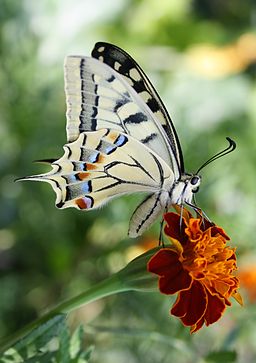
Swallowtail butterfly, cream-coloured with graceful pattern in sky-blue and burnt-orange, on a flower in burnt-orange.Die Steine künden von der jungen Braut
im dunklen buntbestickten Sonntagsstaat,
die strahlend auf die alte Schwelle trat,
und von dem Schwalbenschwanz im hohen Kraut.
Die Höfe sind auf karges Land gebaut,
wo zwischen Weizenfeld und Waldesrand
schon vor Jahrtausenden ein Flecken stand.
Die Steine sprechen, und sie sprechen laut.
Die Kannen klappern, und der Wagen knarrt,
die Gänse schnattern, und das Zugpferd scharrt.
Mit Engelsstimme schallt die Glocke hin.
Das Spinnrad schnurrt; am Brunnen seufzt der Wind;
am Feuer schreit der Bäuerin zehntes Kind.
Die Steine sprechen; hörst du aber hin?

Christina Egan © 2017
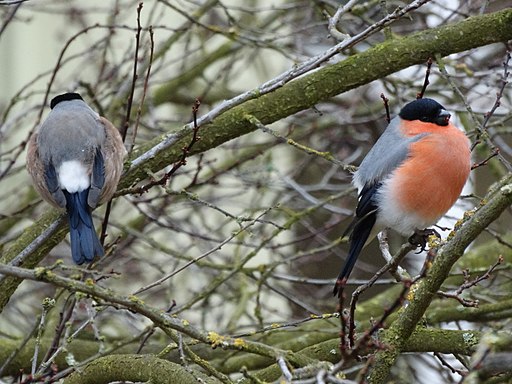

Bullfinch couple on wintry twigs; deep-blue tails and heads, the male with a bright-red breast.


This sonnet is dedicated to the farmers Maria Gutermuth and Paul Jordan, whose tenth child (not the last one) was my grandmother. I can only imagine this type of peasant life from books and pictures, but my father witnessed the very last of it.

In my great-grandparents’ village Dalherda in the Rhön mountains, where harsh conditions of soil and weather prevented prosperity through agriculture, the inhabitants had excelled at two particular crafts, carving wooden utensils and breeding bullfinches as songbirds.


Photographs: Swallowtail Butterfly (German name: ‘Schwalbenschwanz’). By Werner Pichler (Vom Autor) [CC BY-SA 3.0], via Wikimedia Commons (Featured picture). – Bullfinch couple (German name: ‘Dompfaff’ or ‘Blutfink’.) By Ἀστερίσκος (Own work) [CC BY-SA 4.0], via Wikimedia Commons.
The Eagle’s Outpost

The Eagle’s Outpost

Gently, I lay my hand upon a stone:
it snuggles up to my pulsating palm.
The last time it enjoyed the sun god’s balm,
he gilded nimble chariots of Rome,
and legionnaires patrolled the city walls
above the river of a thousand miles,
while olives, dates and spices glowed in piles
and glittering fabrics flowed from shaded stalls.
The halls were fashioned of a thousand stones;
so were the roads rolled out to many lands;
and all were laid by many thousand hands…
This eagle’s outpost held ten thousand souls –
A dream of dreams, lifted into the light:
I was in Dura Europos last night.

Christina Egan © 2018

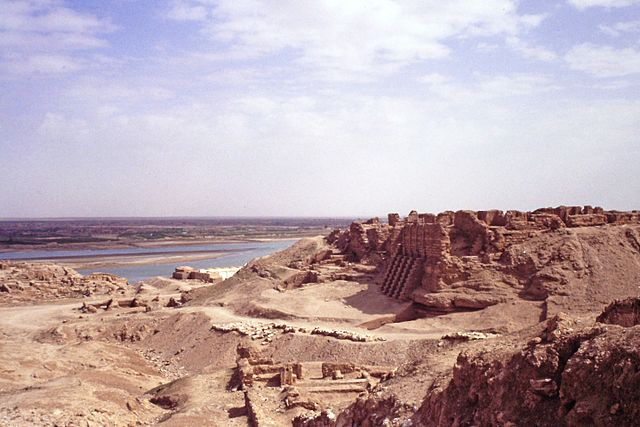
Runis of fortress on hilltop in arid land, above wide river with green fields.

The ruins of Dura Europos above the Euphrates, today in Syria, in 2016.
Photograph
 by Marina Milella [CC BY-SA 4.0], via Wikimedia Commons.


After 500 poems, the usual poem about a Roman Road to start the year!


This Day of June


My 100th post!


This Day of June

zenith of the sun
semaphore of summer

the day when the flowers start melting
into fruit into
seed

the day when the very stones come alive
with lichen with
light

this day of June is yours
this day of June is you

Christina Egan © 2012

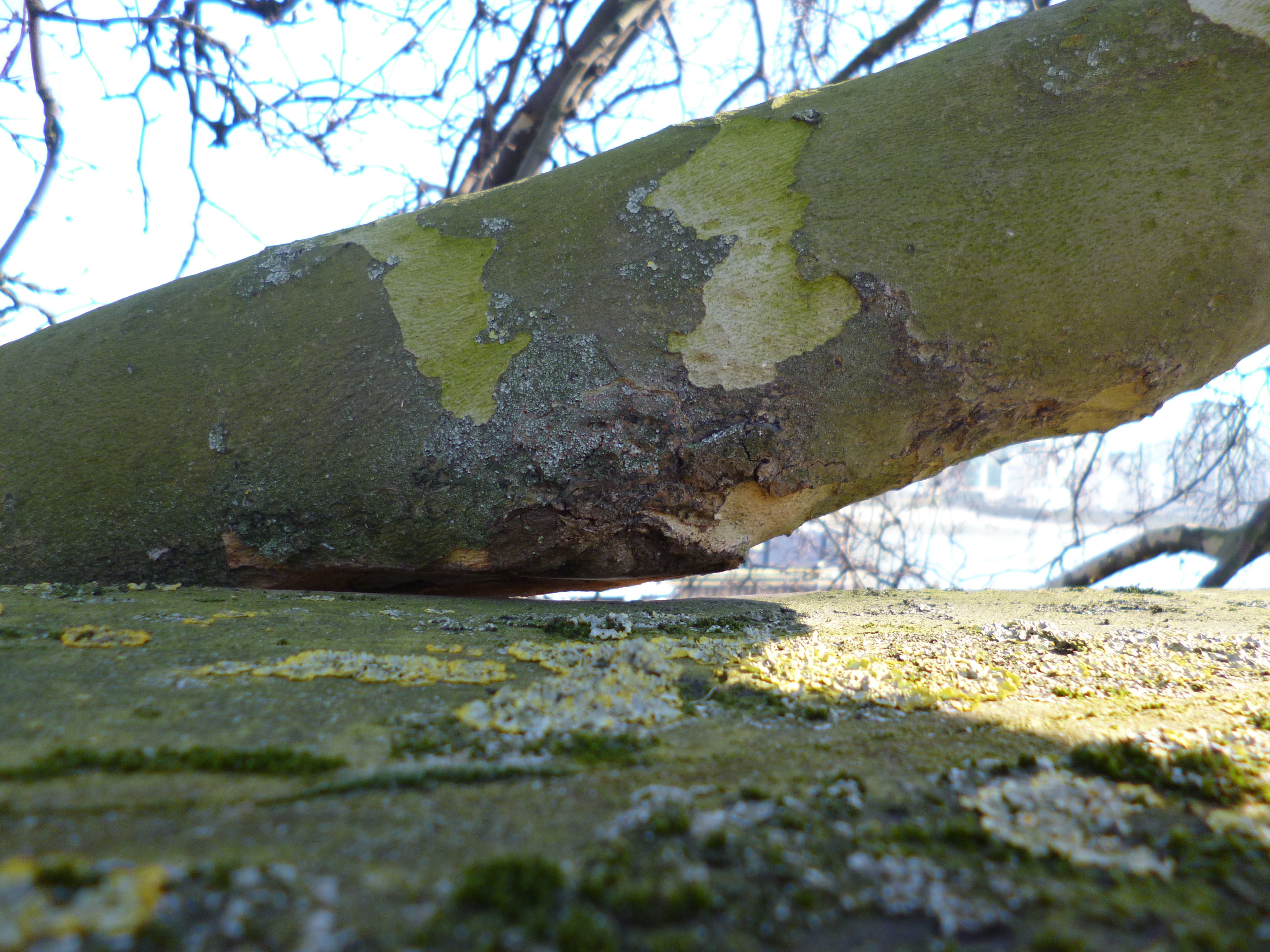
Top of wall covered with lichen and tree with patchy bark, mirroring each other.

Photograph: Christina Egan © 2014


I like to think of a human life as a sequel of seasons:
with glorious midsummer when one is a mature adult!
(‘Midsummer’ around solstice, ‘maturity’ around 35 to 45 years.)
This has also recently become the typical age for marriage
and parenthood. Also, most people now have long lives,
so having a chance to run the course of all seasons.

The two solstices are symbols of the cycles of nature:
at the highest point of the sun, heat and harvest are still to come,
but at the same time, the days are already getting shorter again…
Conversely, the lowest point of the sun sets off the period
of bitter cold and snow, but also of ever longer light and new buds.
The seasons are interlinked, as are all cycles of life and death.


The next post, A Quilt of Light and Shade, describes
the time around summer solstice in London, England.

Ode to London Wall

Ode to London Wall

Moss is conquering your broken stones,
weeds are rooting between your bricks;
but you still stand tall, Wall,
facing the winds, the seasons, the years.

The round foundations of your towers
harbour herbs now, neatly labelled;
but your walkways bore watchmen once,
to guard the goods going round and the people.

You lie at my feet now, tall Wall,
I look down from the walkway above you;
but when I step down by two thousand years,
I see you could shelter me still or crush me.

And then I seem to remember –
we have met before, Wall –
you guarded me indeed –
and I guarded you!

On the treacherous clay we erected you,
in the obnoxious fog and sleet:
even and straight and strong as a rock,
forming a line in the marshy meadow,

forming a square along the vague river,
forming a knot in the net of roads,
from London to Chester and York,
from Paris to Sousse and Palmyra.

O Wall of soldiers and explorers,
O Wall of merchants and accountants:
yes,
you still stand tall and you talk,
you tell me to tell your story to all.

Christina Egan © 2015

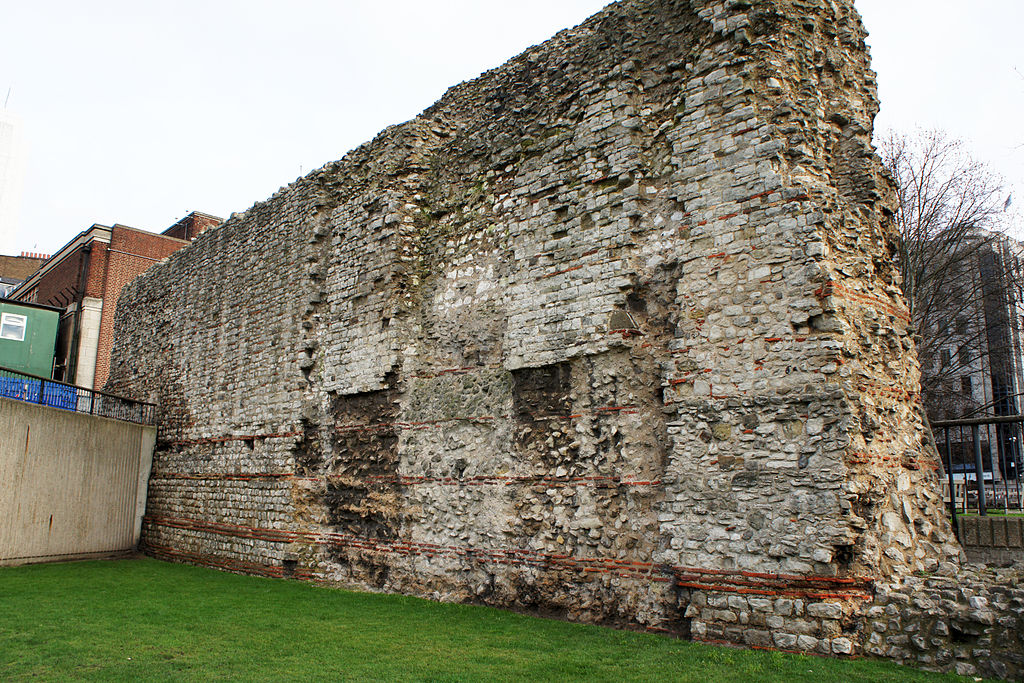
High wall of neatly piled stone and brick in the midst of the city

You can see a section of the Wall of London and learn more about it in the Roman Galleries of the Museum of London. A visit there inspired me to write these lines. I talk to the stones as they talk to me; and I pass their story on.

Photograph: Roman city wall near Tower Hill Tube station,
by Mariordo (Mario Roberto Durán Ortiz).

London Wall Had Fallen Down

London Wall had fallen down,
brick by brick and stone by stone;
in the crenellation’s crown,
storks and starlings built their home.

London Wall stood in the mud,
but we fixed it brick by brick,
and we filled the wasteland up
with new lanes across the grid.

London Wall was melting down,
but we used it stone by stone;
and we built a bigger town
on the ground of proud old Rome!

Christina Egan © 2015

After the end of the Roman Empire, the Roman City of London was left uninhabited for generations, while a new city sprung up next to it; later, the original precincts became the centre again. This area is now known as ‘The City of London’, although it forms only a small part of the centre of town.

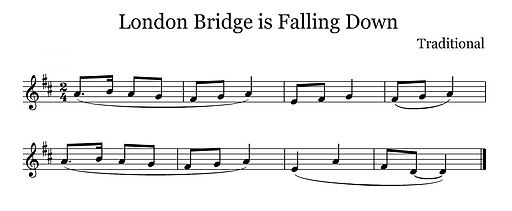
Musical score of 'London Bridge is falling down'


This little song alludes to the nursery rhyme London Bridge is falling down.