Weißer Schnee auf roten Rosen

Weißer Schnee auf roten Rosen

Graue Gänse, grauer Himmel
Stumme Stämme um den Teich
Ungewohntes weißes Flimmern
Und ein Schimmern im Gesträuch

Weißer Schnee auf roten Rosen
Hingesunken über Nacht
Stengel von der Last gebogen
Späte Knospen überrascht
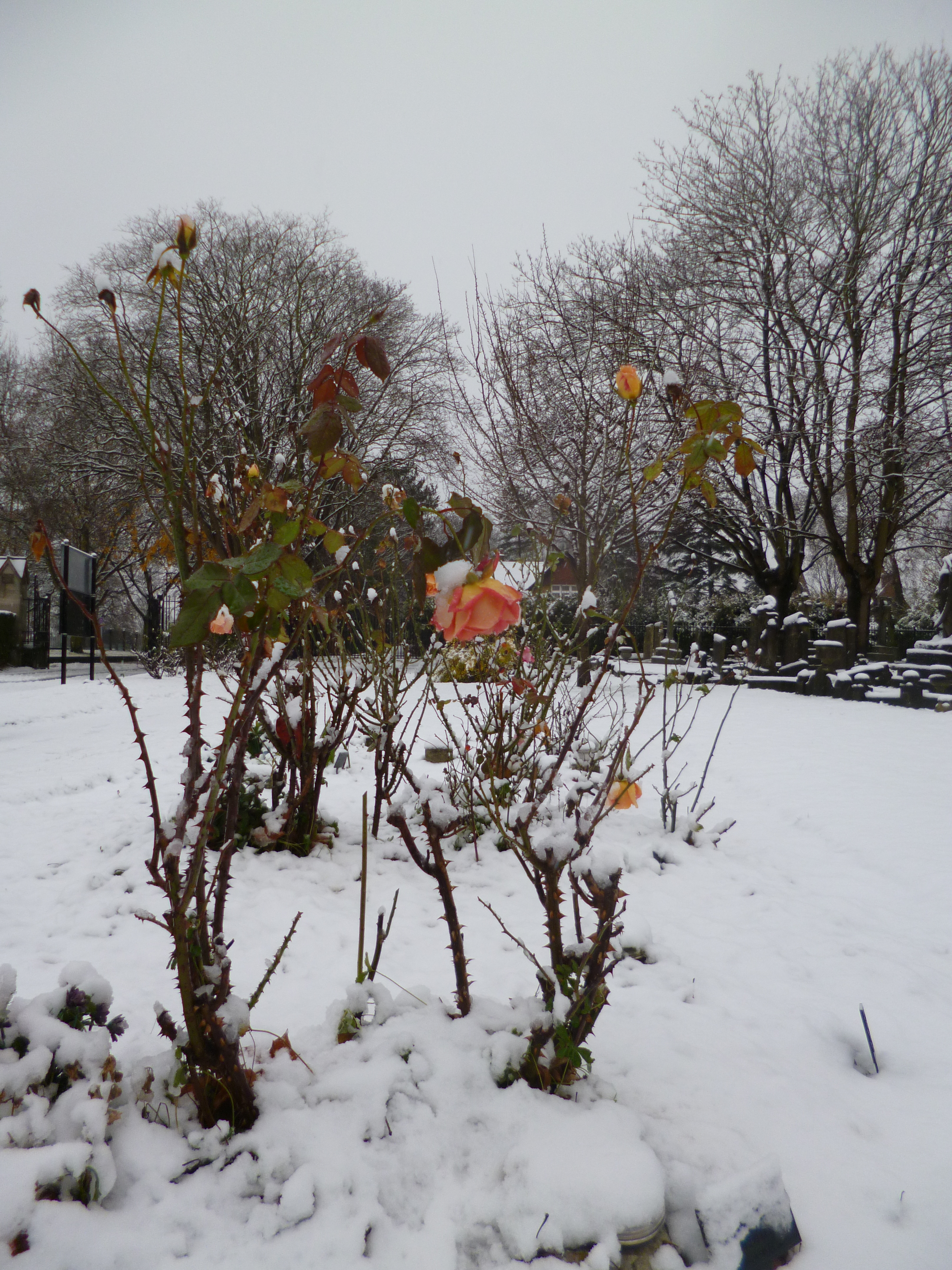
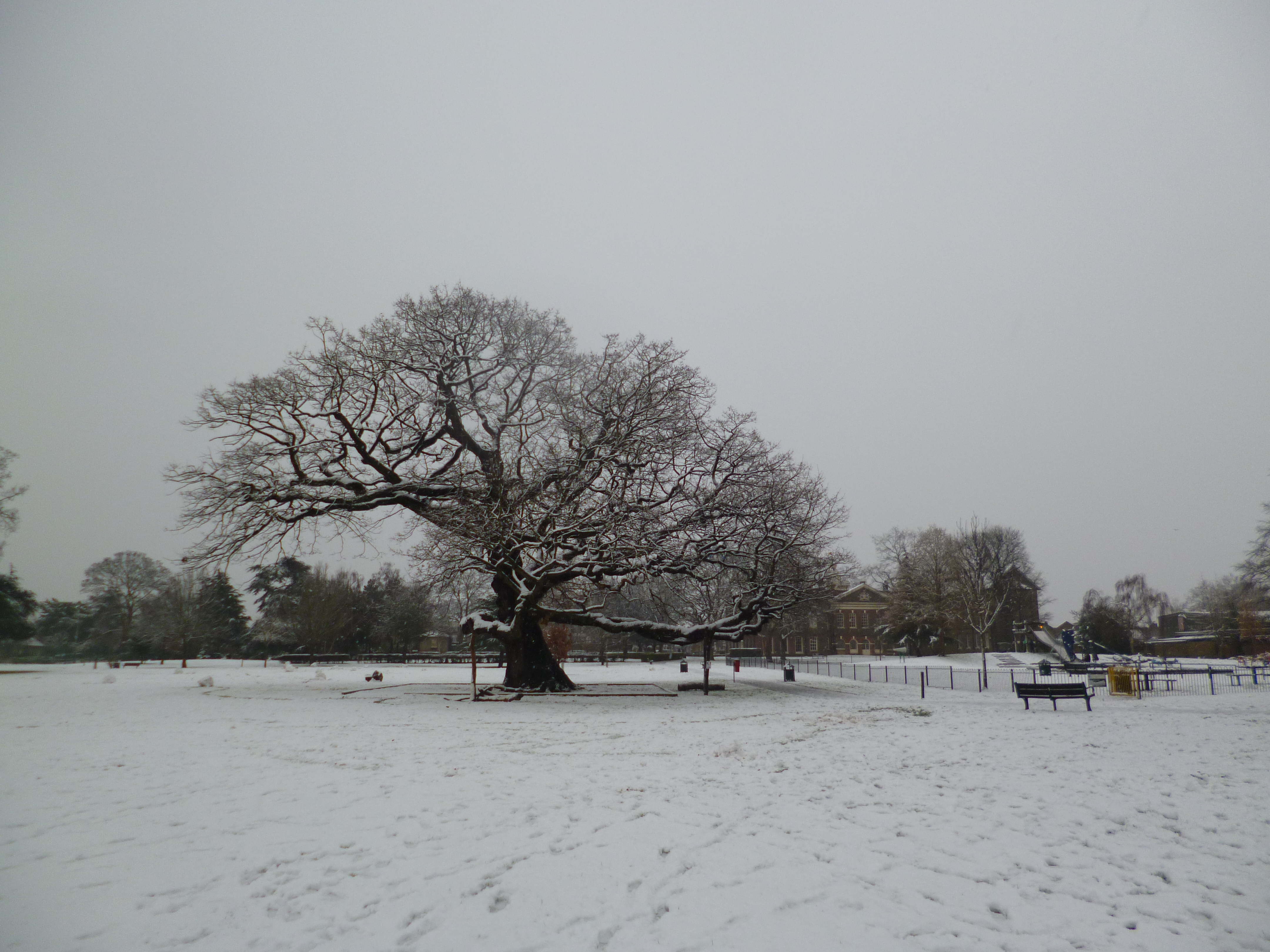
Glowing roses, golden with red rims, standing in thick snow amongst bare trees.Weißer Schnee auf bunter Mütze
Und dein Lachen wie Gesang
Häherschrei von Tannenspitze
Glockenruf minutenlang

Weißer Schnee auf roten Rosen
Weißer Hauch auf rotem Mund
Ja, auch ich hab dich erlesen
Niemals tat ich es dir kund

Erster Schnee auf grauen Gänsen
Jede Flocke wie ein Stern
Weißer Schnee auf roten Rosen
Und ich weiß: Du hast mich gern

Christina Egan © 2017

White snow melting on red roses.
Photograph: Christina Egan © 2017.

This is the second of two love songs which could stand alone or be sung by a woman and a man — from opposite ends of a stage or hall, though…

In White snow on white roses, the first person confesses she (or he) still secretly wishes they had got together a long time ago, and wonders if her friend feels the same.

In White snow on red roses, the second person reveals that he (or she), too, has longed for this relationship all along, but he never lets his friend know… not now either.

Each of them sings into the wind, into the snow… The ‘years that flew away’ like the wild geese in the first poem and the ‘late buds surprised’ by the snow in the second poem show that the pair are at a later stage of life.
Weißer Schnee auf weißen Rosen

Weißer Schnee auf weißen Rosen

Wie die grauen Gänse zogen
Mit dem schneegeladnen Wind
Sind die Jahre uns entflogen
Erst gemächlich dann geschwind

Wie die Flocken niedertaumeln
Daß die Welt zu Weiß gerinnt
deckt die Zeit die bunten Träume
Erst gemächlich dann geschwind

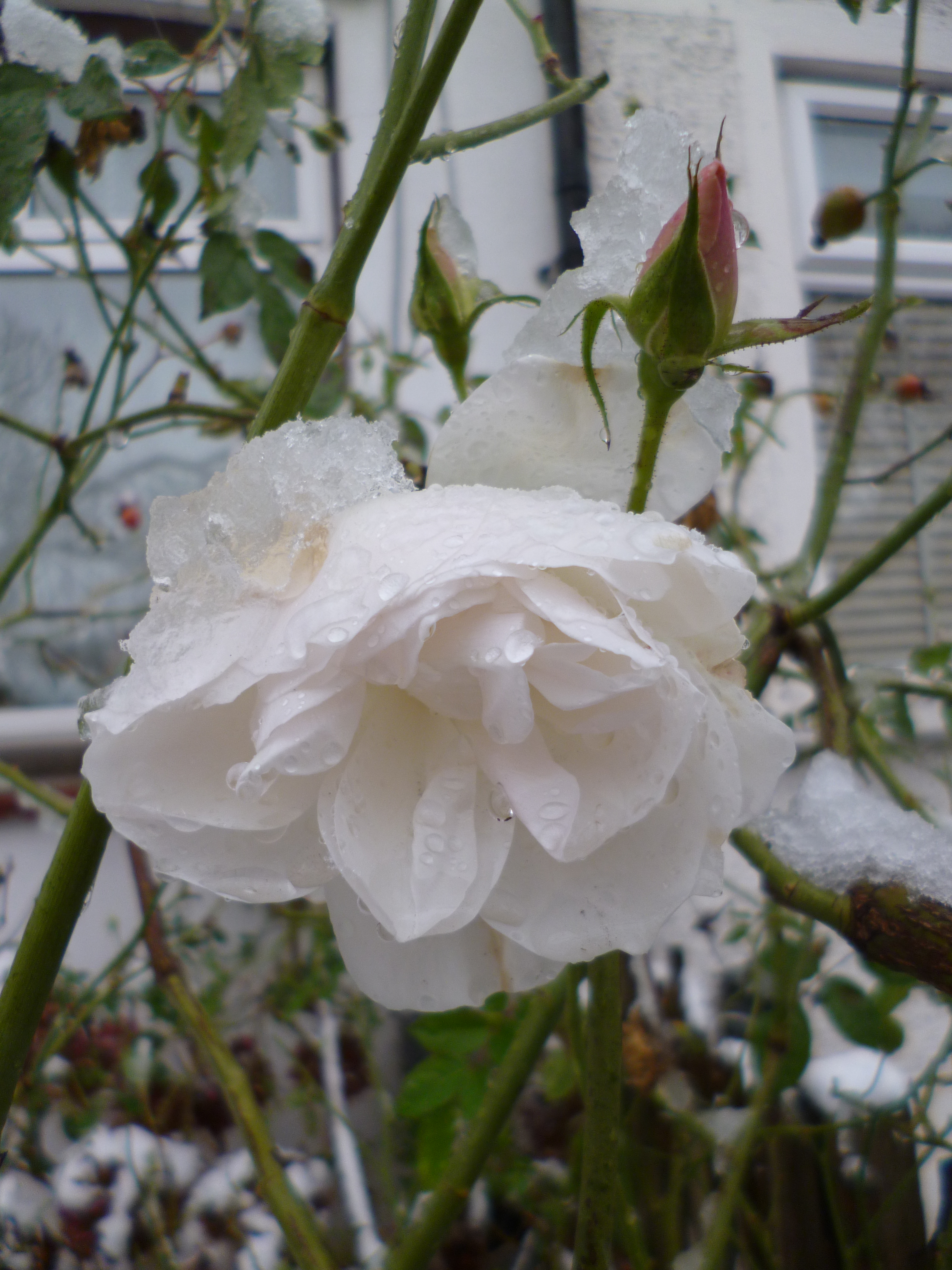
White rose, pink buds, hawthorns, all covered by melting snow.Stehst auch du am stillen Fenster?
Rührt der wilde Schnee auch dich?
Haschst auch du noch Luftgespinste?
Denkst auch du noch stets an mich?

Blumenflammen sind vergangen
Und die Welt wird farbenblind
Niemals hab ich dich umfangen
Niemals gab ich dir ein Kind

Wilder Schnee: ein stummes Tosen
In dem strengen reinen Wind
Weißer Schnee auf weißen Rosen
Erst gemächlich dann geschwind

Christina Egan © 2017

White snow melting on white roses.
Photograph: Christina Egan © 2017.

This is the first of two love songs which could stand alone or be sung by a woman and a man — from opposite ends of a stage or hall, though…

In White snow on white roses, the first person confesses she (or he) still secretly wishes they had got together a long time ago, and wonders if her friend feels the same.

In White snow on red roses, the second person reveals that he (or she), too, has longed for this relationship all along, but he never lets his friend know… not now either.

Each of them sings into the wind, into the snow… The ‘years that flew away’ like the wild geese in the first poem and the ‘late buds surprised’ by the snow in the second poem show that the pair are at a later stage of life.
Die blauen Fernen

Die blauen Fernen

Fernab der Meere und der mächtgen Ströme
liegt meine Hügelheimat hingebreitet;
mit jeder Wendung, Steigung, die ich nehme,
wird mir der Blick auf neue Höhn geweitet.

Was braucht es Meere, wenn uns Wald und Wiesen
und Feld und Felsen und die blauen Fernen
wie Wellenberge, Wellentäler fließen,
den Schritt beflügeln und das Herz erwärmen?

Die Luft ist rein, mit Duft und Kraft geladen,
die Glieder und den Geist mir zu verjüngen;
und winters werden Schnee und Nebelschwaden
des Eismeers Zauber in die Berge bringen.

Christina Egan © 2016


One stanza of this poem is printed in the Rhönkalender 2018 with a photo from that part of the Central German Highlands; the whole poem has been published in the Münsterschwarzacher Bildkalender 2019.

Beetles on the Ark / Urban Copse

My Pack of Cards

            My Pack of Cards

My pack of cards, when it was new,
was green and yellow, red and blue:
            from grass and leaves
            to golden sheaves,
            from glowing grapes
            to frosty flakes!
The leaves peeked out, unfurled, and grew,
flared up, fell off, when they were due.
            The fruits were round,
            the ice was sound.
            My year was clear,
            my joy was sheer.
My pack of cards is worn and torn –
my world is pale, and I’m forlorn.

            Christina Egan © 2016

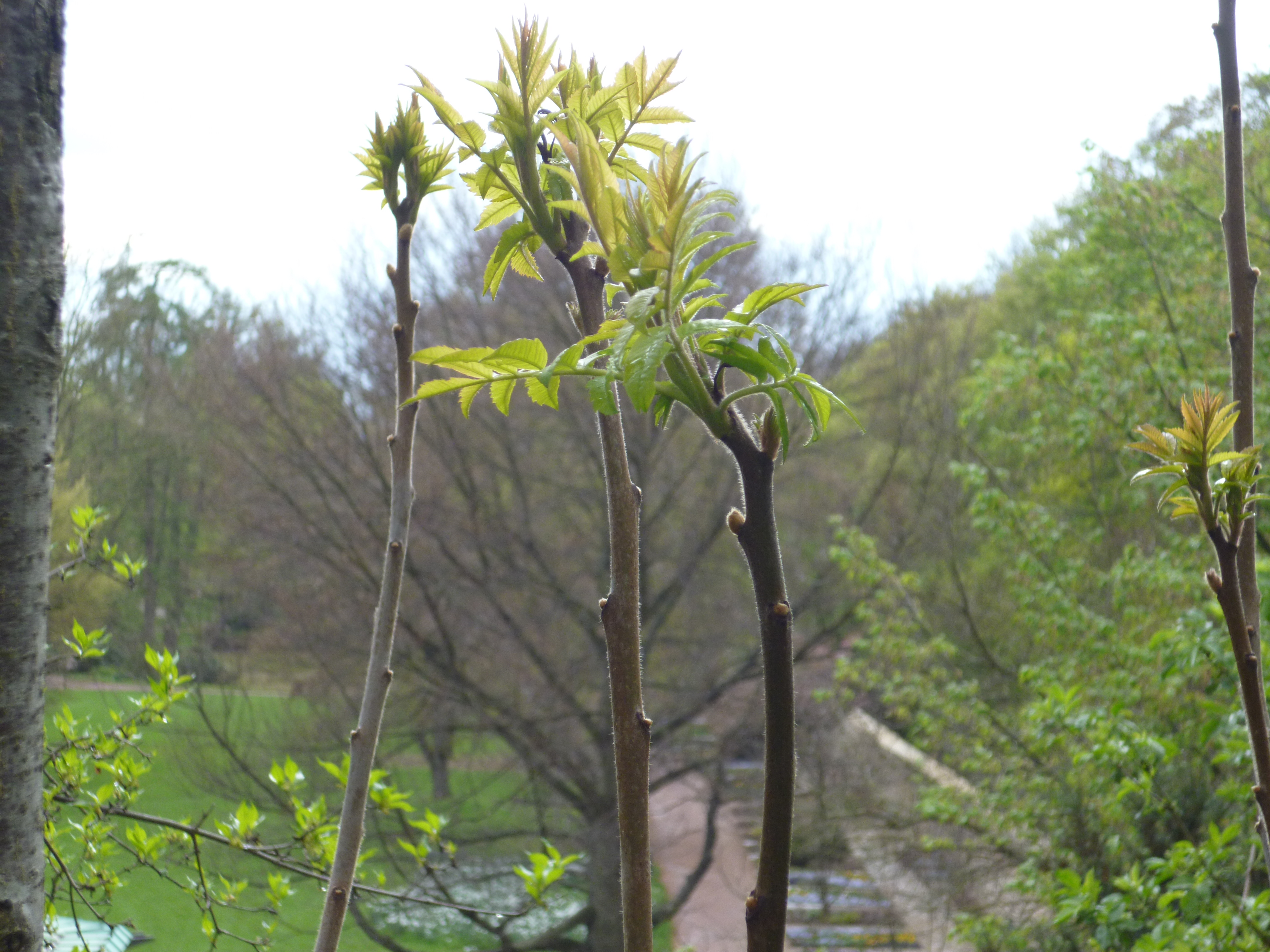
Buds and fresh leaves on top of shoots above a parkIn children’s picture books, the four seasons are sometimes painted in four basic colours; everything is in its place, everything is perfect. Of course, it has never been like this: the weather is always unpredictable, particularly north of the Alps.

However, at the place where I grew up — Central Europe — the seasons were more clearly marked and more stable than on the British Isles. I also believe they were more regular: they seem confused and shifted just now. It is disorientating and worrying…

You can find an impression of undefinable weather at Cimmerian Summer whether it is due to the British climate or to global changes, I do not know.

The poem also expresses nostalgia for childhood, when everything on earth seems in its place. It was inspired by children’s picture books, which often allocate four basic colours to the four seasons.

Photograph: Schloßpark Fulda. Christina Egan © 2014.

Motionless Fire

Motionless Fire
(May Tanka)

Small azalea bush with lurid pink blossom, amongst lush feathery nigella leaves.


A motionless fire,
the azalea unfolds, flares,
and slowly burns out.
From the mud it wrestles force,
colour, and returns to mud.

*


Small azalea bush with brownish wilted blossom, amongst lush green nigella with feathery leaves and blue flowers.

Pink snowflakes drifting?
Forgotten miracle of
the cherry blossom!
Every spring, the petals sail
into death so serenely…


Christina Egan © 2016


Photographs: Pink azalea.
Christina Egan © 2016/2017.

Mitte Februar / Schnee über Nacht

Mitte Februar

Die Welt hat allen Glanz verloren
wie eine ganz verwelkte Frau.
Am Himmel Wolken, Schnee am Boden –
ein Leichentuch von blassem Grau.

Dahinter kämpft mit langem Atem
das fern verbannte Feuerrund:
Unmerklich schmelzen schon die Schatten,
und Farbe braut im Untergrund.

Die schwarzen Zweige sind lebendig,
das nasse Moos voll neuem Saft,
und das ermattete Gelände
wird auferstehn mit satter Kraft.

Christina Egan © 2012


Schnee über Nacht

Der Schnee hat wie ein Federbett
die kahle Erde zugedeckt,
begräbt die Schuld,
begräbt den Schmerz
in Gottes gnädiger Geduld,
in Gottes unbegrenztem Herz.

Christina Egan © 2012


Mitte Februar was published in the Rhönkalender 2015 (entitled Ende Februar). The 2017 calendar includes three poems by me and is still available.

Nonnenkloster

Nonnenkloster

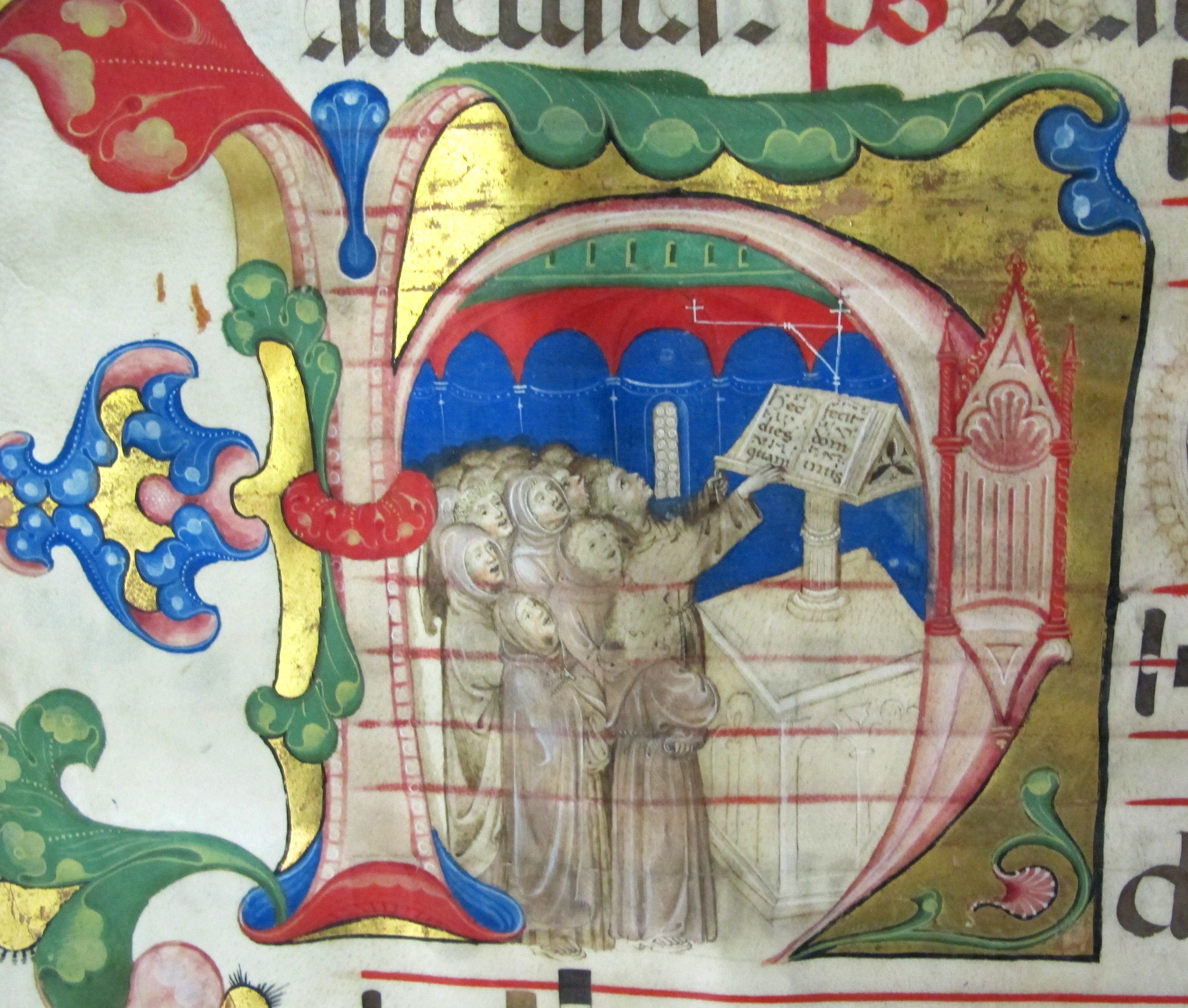
Initial of mediaeval manuscript, filled with monks and nuns singing from such a missal on a lectern above them; in gold and bright red, blue and green

Schneegleich
steigt Schweigen
aus den steilen Wänden,
aus den gefalteten Händen,
den vornübergeneigten Schleiern.
Und doch ist alles ein Feiern,
als sei, wenn es schneit,
ein Staub von Gold
über die Gärten gestreut…

Zeit, Zeit
tickt hier laut
in den langen dunklen Uhren,
in den blankbefliesten Fluren,
weil die Ewigkeit
sie so beschwert
wie Wasser eine weiße Schüssel.
Und jeder geschmiedete Schlüssel,
der gegen ein Gitter klappert,
klingt
wie ein Versprechen,
das Gott nicht brechen will.

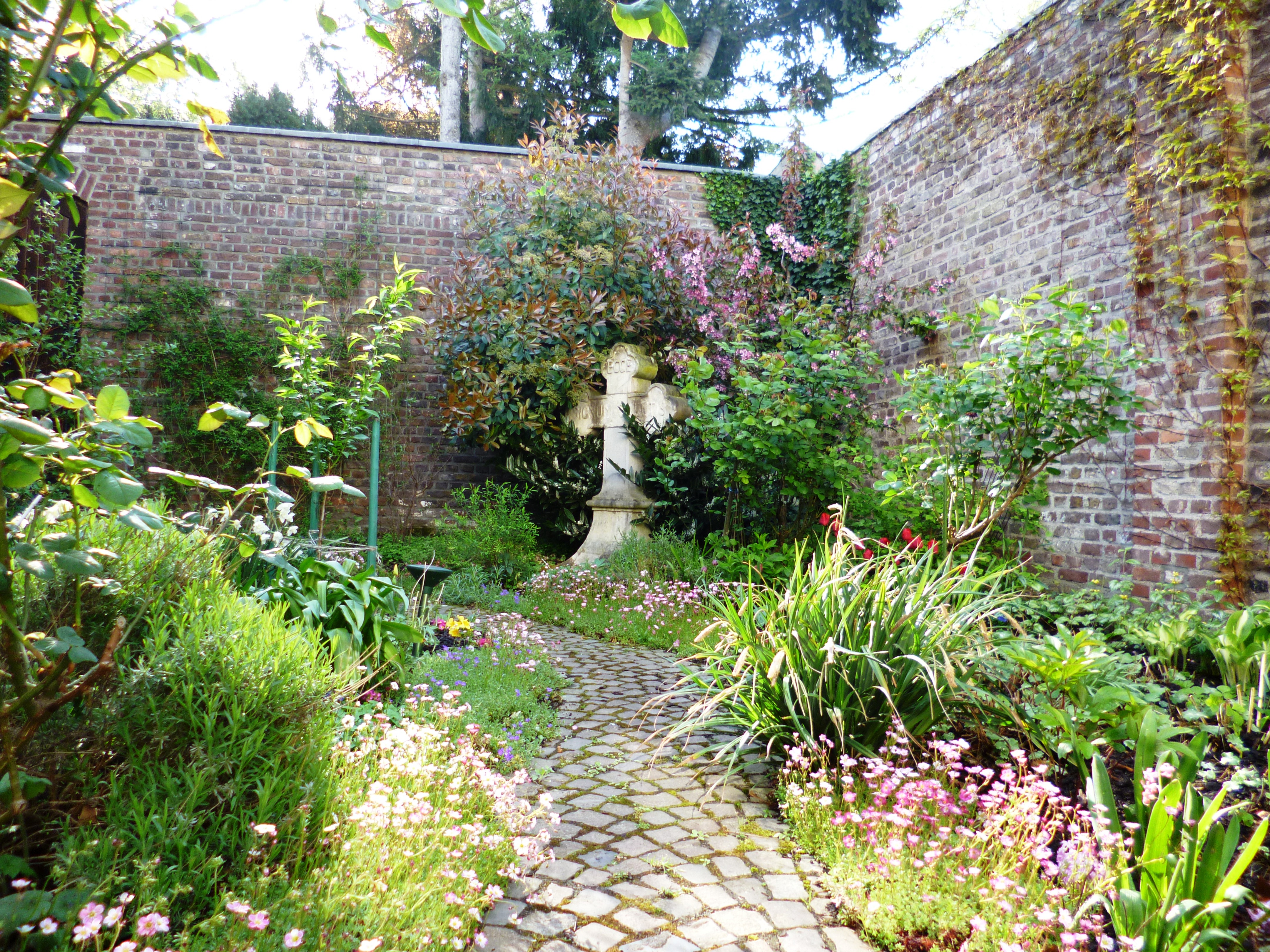
Sunlit walled flower garden with sturdy stone cross in corner

Es singt
am Rasenrand
der Schneeglöckchenchor,
ein besticktes Band.

Und jede ungeschmückte Wand
durchdringt
das goldne Schweigen
wie der Frühlingssonne sanfte Hand.

Christina Egan © 2006

I owe this overpowering experience of peaceful silence to the Carmelite monasteries of London (Most Holy Trinity) and Cologne (Maria vom Frieden), which are based on a philosophy of shared “silence and solitude”.

Photographs:
Liturgical book for Eastertide (1450s).
Sailko via Wikimedia Commons. —
Nunnery garden, hidden in the midst of a big city. Christina Egan © 2014

Fiery Flowers for Valentine’s Day

RedFlowers_2015Dec15_06

To My Valentine

The lily licking like a fire,
the lily luminous like snow:
I find them both in you, my flower,
I bask in their contrasting glow!

Christina Egan © 2016


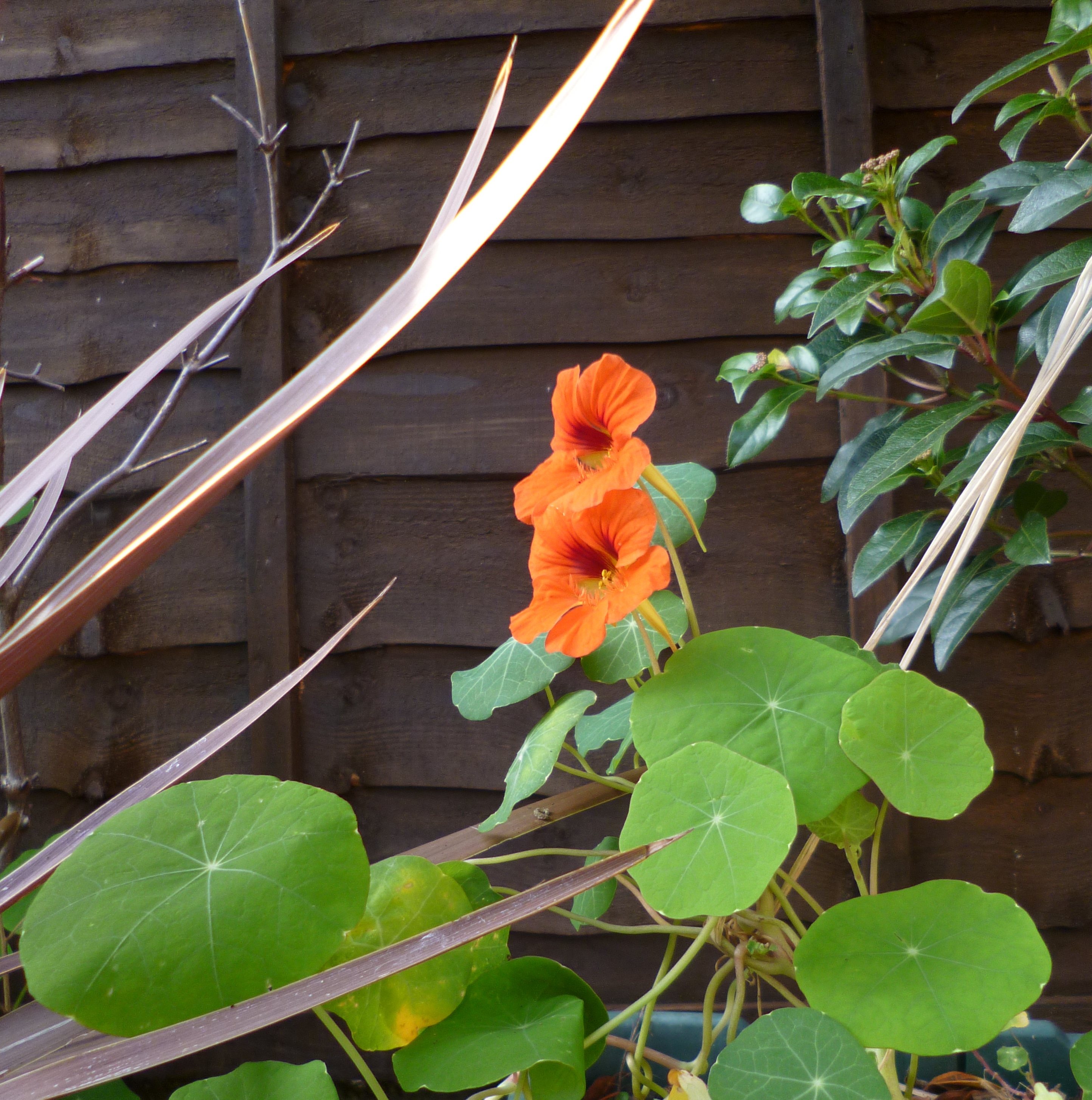
Two nasturtium flowers in very strong orange with some of their large round leaves in fresh green


Zum Valentinstag

In dem feuerfarbnen Blumenstrauß
hab’ ich dir die Sonne eingefangen,
hab’ sie hingezaubert in dein Haus,–
hast du meine Botschaft mitempfangen…?

Christina Egan © 2012

Often, I translate my own verse, but these are two different Valentine poems.

Photographs: Flowers just before Christmas! Christina Egan © 2015

Epithalamium (A Hundred Snowflakes)

Epithalamium

A hundred snowflakes melting in your hair,
and every one a different ornament;
a hundred swallows weaving in the air,
each on its own encrypted message bent;
a thousand roses, beauty pure and bare,
each goblet filled with subtly varied scent;
a thousand leaves consumed in festive flare,
each spelling out its special testament…
So how much more are you – a human face –
unheard-of and unequalled in your blend?
I chose you from a thousand for your grace,
fulfilling and surpassing what I dreamt.
So by your side I take today my place,
while unnamed blessings blossom and descend.

Christina Egan © 2014

An epithalamium is a wedding song; a Continental sonnet
has 8 + 6 lines. Here, the first eight lines present images
from the four seasons; the last six lines state that humans are
more complex and individual than any natural phenomenon.

Some German poems on the uniqueness of each person can be
found at
Einer von Millionen and Hieroglyphe.