Word Weaver

Word Weaver

More purple clouds than I can count
or weigh or paint for you
or snatch and send them underground
with some surrounding blue…

To one whose windows do not stretch
to spy the heaving sky,
I’ll weave my syllables to fetch
the purple passing by.

To one whose dusk and marble moon
are filtered through a rail,
I must thread silver on my loom
to leave a shiny trail.

I must request the best black silk
to mark the balmy dark…
By day I’ll stitch a roaring quilt
to catch the city’s heart!

Christina Egan © 2016

Drawing of the mechanics of a loom (yarn on rolls, without the frame)The poet describes the world to a prisoner who can barely see the majestic ever-changing sky and the bright busy city surrounding them. The sound and rhythm of the lines emulate the warp and weft of life, so that the words reflect the world — read the poem aloud and you will see!

The other person may be imprisoned by a totalitarian state or indeed by a democratic state, or locked up by their employers or indeed their own family, behind walls and perhaps under a garment. There are many millions of human beings who de facto are prisoners or slaves without being called so.

For poems about time (for instance ensuing generations) and space (for instance a big city) as a tissue, see my post Geflecht / Geflechte. All of civilisation and all of humanity is one web.
The Mechanics of Love

The Mechanics of Love

the mechanics of love
have tolled the hour
have chained my heart
are pulling me towards you

the sunlit hills
of your guileless face
the turquoise surf
of your quiet voice

I cannot distinguish
what determines my steps
the mechanics of love
or your silvery forcefield

Christina Egan © 2012


These lines record some of the fundamental insights of my life: that falling in love is always a blend of true fascination with another person and of sheer emotional and physical need; and that one of the main factors attracting a woman to a man is his voice — utterly underrated throughout history! Perhaps because history has largely been written by men, and so have science and literature ? Well, I hope men are at least subconsciously drawn to a melodious voice, too!

Theodor an Emilien

Theodor an Emilien

Mit tausend dicken weißen Kerzen
Prangt der Kastanienbaum am Tor;
Ich steh’ mit hoffnungshellem Herzen
Im späten Dämmer stumm davor.

Der Vogelsang ist längst versickert
Wie Silberspur ins Dunkelblau…
Doch aus dem Gutshaus tröpfelt, zittert,
Quillt das Klavier wie Abendtau.

Ich mach’ im hohen Gartensaale
Den flinken schlanken Schatten aus –
Und werf’ nach jenem Ankerpfahle
Mein Tau mit einem Male aus.

Christina Egan © 2016


The old-fashioned names and inflections signal that this is a scene which happened long ago, a romantic story from the times of Jane Austen, set in Germany. There is a true story behind it, and the ending is happy and sad: the young man waiting hopefully outside the manor house in the summer night, Ernst Theodor Echtermeyermarried Lady Emilie, and they had a child, but they both died very young.

Die Hängenden Gärten / Palmyra Perennis

Die Hängenden Gärten

Schwarz liegt der Strom, von Gestirnen benetzt,
blendend erhebt sich der Herrscher der Nacht
über die Hängenden Gärten,
über den künstlichen Gipfel,
welcher den Hügel ins Flachland versetzt,
welcher den Wald in die Großstadt gebracht,
über die plätschernden Gärten,
über die flüsternden Wipfel…
Flimmernd erhebt sich die Harfe zuletzt,
warm liegt die Stadt in versilberter Pracht.

Christina Egan © 2015

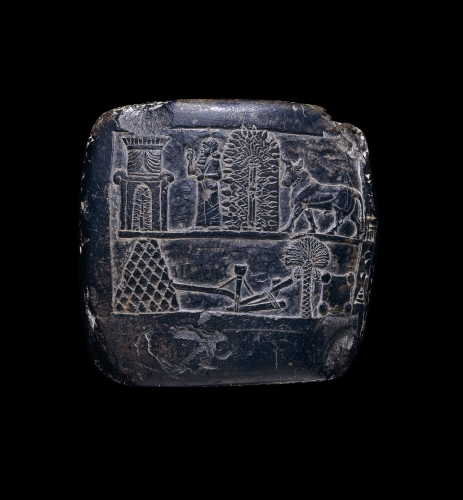
Basalt stone with carved images of trees, with a building, an animal and a man

The city of Babylon. Assyrian, 7th c. BC. —
© The Trustees of the British Museum
(Ref. no. 00032445001)

These musical lines evoke Babylon by night:
the moon and stars reflected in the Euphrates,
the Hanging Gardens rising above the big city,
murmuring fountains and a sparkling harp…
It could be the instrument which rises
sparkling like a star — or its voice.

Palmyra Perennis

Sank auch der stolze Bogen dahin mit dreifachem Seufzer,
ragt uns sein Bildnis im Geist schwerelos über dem Sand.
Sind auch zum Staube gekehrt der Ahnen goldene Hallen,
tragen das Erbe wir fort: sanften Triumph der Vernunft.

Christina Egan © 2015

For a picture of the ruins of Palmyra and a comment on
this poem on enlightenment, please look at my
MOTTO.

The view that cultural vandalism should be recognised as
a war crime akin to genocide has been discussed recently.

Proteus / Daedalus

Proteus

Your beauty is the beauty of the clouds:
as grand and graceful, as remote,
from silver changing into gold,
and changing shape, and changing whereabouts.

Your beauty is the one of Proteus:
I’m bound to watch it swirl and stay,
afraid your heart will likewise sway,
innocuous and gay and treacherous.

Your beauty is the one of Morpheus:
I’m bound to drink it in a dream,
afraid of stumbling on that stream,
with ghostly flowers studded, murderous.

Your beauty is the beauty of the clouds.
your ever-present smile the gleam
behind their soft and tousled seam…
Your soul is what your face reveals and shrouds.

Christina Egan © 2012

Daedalus

I watch the condor pass:
lofty and lonely,
steady and strong,
improbable like Daedalus…

I watch the condor pass
and want to follow him
across the barren peaks –
I want to touch the clouds…

Christina Egan © 2012

Ashen Land (For Syria)

Ashen Land
(For Syria)

The only offspring left calls from the eaves.
Some houses have a hundred hollow wounds,
and hamlets of a dozen centuries
surrender to contending winds their rooms.

The olive-trees stretch out their silver leaves
like angels’ feathers in a cry for peace.
Where is the comfort for a bird that grieves,
the peace for ashen land? Is it beneath?

It is beneath the nettles and the shards,
beneath the venom seeped into the field;
it is above the silver heaps of stars,
seed of unimaginable yield.

Christina Egan © 2016

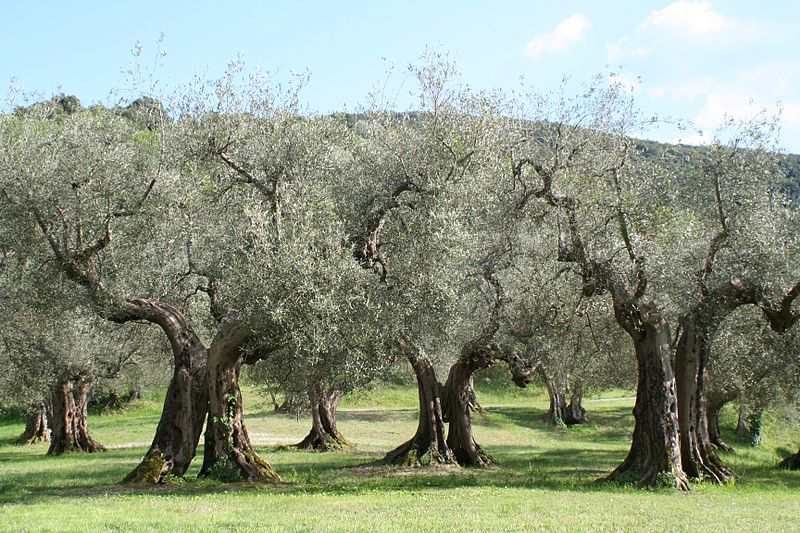
Olive grove, trunks and tree-tops silvery grey, like ashes.Photograph: ‘Olivenbäume in Umbrien’ by Adrian Michael.

I found this marvellous illustration on Wikimedia Commons long after I wrote the poem. I had not even thought of the silver bark and leaves resembling ashes…

In the past few years, millions of Syrians have lost their homes and possessions, or their jobs or studies, or their health or their limbs, or their loved ones or their own lives. The national liberation movement has turned into an apparently bottomless civil war, a literally insane religious war, and a vicarious war of outside powers. This conflict will change the face of the Near East and the face of Europe. Meanwhile, the suffering continues.

Let us pray for peace in Syria. All together.

The Purple Sea / Das lila Meer

The Purple Sea

I’ve seen the sea turn indigo
and greyish green and brilliant blue:
the wine-red sea that Homer saw
was not a blind man’s dream — it’s true.

I’ve swum in waves of indigo,
I’ve swum in eyes of greenish grey:
the fair-eyed gods that Homer saw
may just for moments cross your way.

Christina Egan © 2015

Das lila Meer

Auch indigo färbt sich das Meer
wie gräulichgrün und leuchtendblau:
Wahr war das Weinrot des Homer –
nicht eines blinden Dichters Schau.

Im Indigo schwamm ich sogar
und auch in Augen von Grüngrau:
Ein göttlich lichtes Augenpaar,
das gibt es manchmal noch genau.

Christina Egan © 2015

The Wine-Dark Sea

Where sky and ocean form a line
of glassy indigo,
the water looks indeed like wine,
a strong and sweet Merlot.

This is the sea that heaped up rocks
and beckoned walls to rise,
the ageless mother of these flocks
of sun-enchanted isles.

This is the sea that brought the fleets
to Carthage and to Troy
on silver-green and bright-blue sheets
which wayward gods deploy.

Christina Egan © 2012

These poems refer to the debate around Homer’s strange colour names: e.g. ‘wine-coloured’ (‘oinops’) and ‘purple’ or ‘maroon’ (‘porphyreos’) for the sea; ‘green-eyed’ (‘glaukopis’) for a person or god with eyes of any fair colour.

While people in antiquity were not yet interested in describing colours and 
despite their sophisticated languages — had only very few words for them, I
believe that on occasion, these can be taken literally.

The first two poems are translations of each other. The colour adjectives oscillate between the languages, and within, just like the sea does…

inselstrand / mondstrand

inselstrand

der sand ist durchsponnen
von tausenden rinnen
wo winzige flüsse
perlmuttern erschimmern

sich sammeln sich teilen
erwärmen erschauern
bald rasten bald eilen
erblassen erblauen

der sand is voll salz
und voll sonne gesogen
das leben verbirgt sich
im atmenden boden

das land ist dem wind
und dem wasser verwoben
die seele der enge
der insel enthoben

Christina Egan © 2014

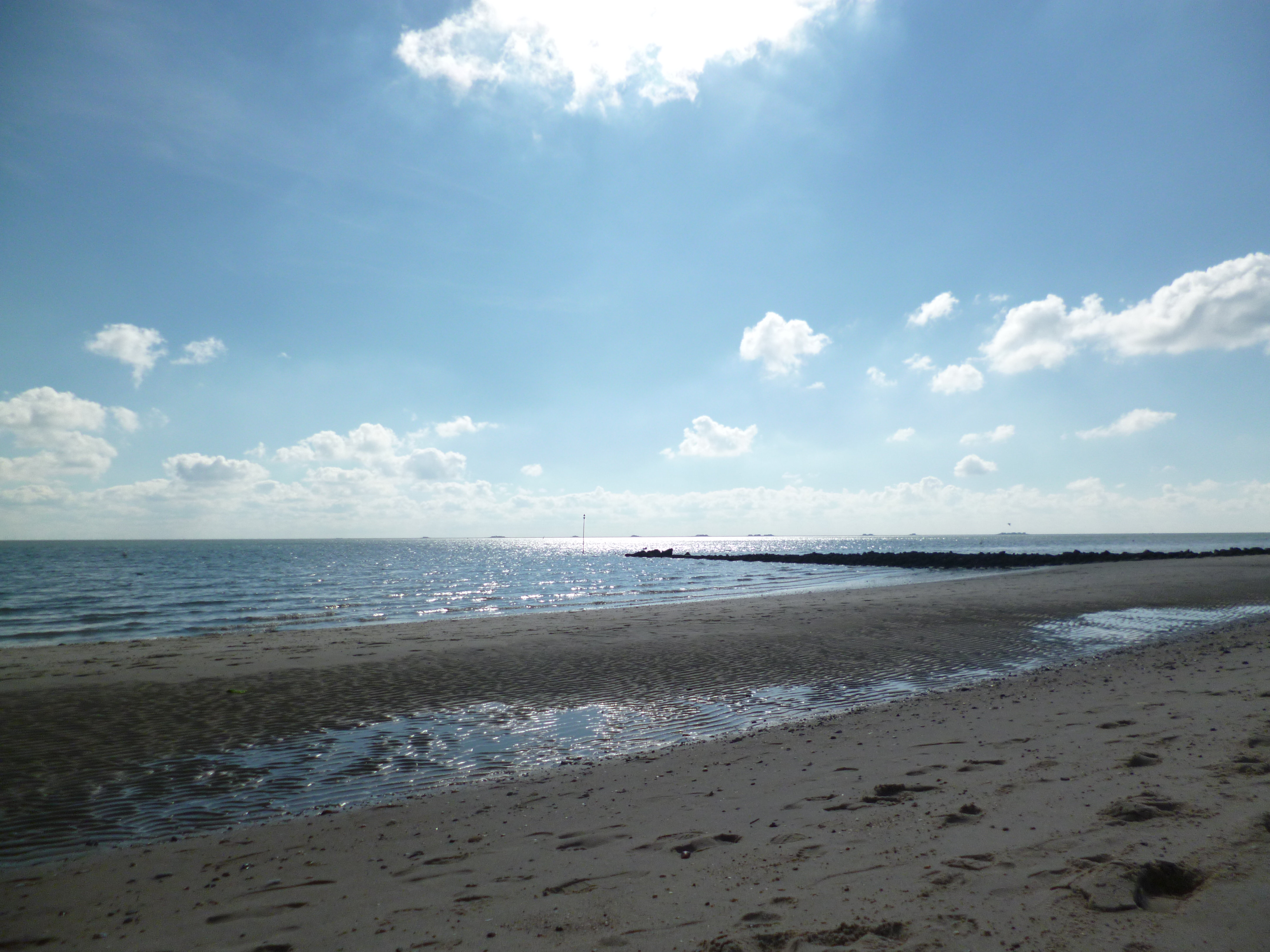
Shallow sandy beach and blue sea water filling lower half of picture, sky-blue sky with a few clouds above. Exudes tranquillity.

Beach of Wyk on Föhr, Germany. Photograph: Christina Egan © 2014.

mondstrand

streckt das meer sich
mondbeglänzt
wacht die erde
nachtentgrenzt

webt die wolke
geisterhaft
um der mondin
zauberkraft

schlägt die schwärze
windbewegt
auf das silber
feingeprägt

pocht die welle
unentwegt
an den sandstrand
sanfterregt

taucht die sohle
heiß und bloß
in die brandung
ruhelos

steigt der schmerz
im raschen blut
fällt die träne
in die flut

steht die hoffnung
fest und fern
hängt das herz
am höchsten stern

Christina Egan © 2014


These lines stem from a visit to two tiny round North Sea
islands, Föhr and Hooge. Besides my walks on the beach —
by day and by night — I was inspired by
Gregor Swoboda’s
paintings
 at Galerie Nieblum.

Find more poems and photos at Views of North Sea Islands
(in German and English).

Screen

Screen

Last night, at last, beside
your arms, you opened wide
your lips – and in the stream
of quivering delight
below the lifted screen
I touched your silver soul –
One moment, I felt whole –
But then you sank away,
it was already day:
you had been but a dream.

Christina Egan © 2015

The Last Advent

The Last Advent

The rolling emerald hills,
the towering topaz rocks,
the earth-girding ocean
in its royal blue roar,
even the starred sky
in its silvery silence –

Like a sumptuous silk robe
and an embroidered curtain,
they will be drawn aside
to reveal the true splendour –
Then they will be discarded
like rough grey sloughs.

And new worlds will arise,
circles of festive fire.
Shadeless, doubtless,
deathless, boundless.
And we shall be alive
for the first time, forever.

Christina Egan © 2012

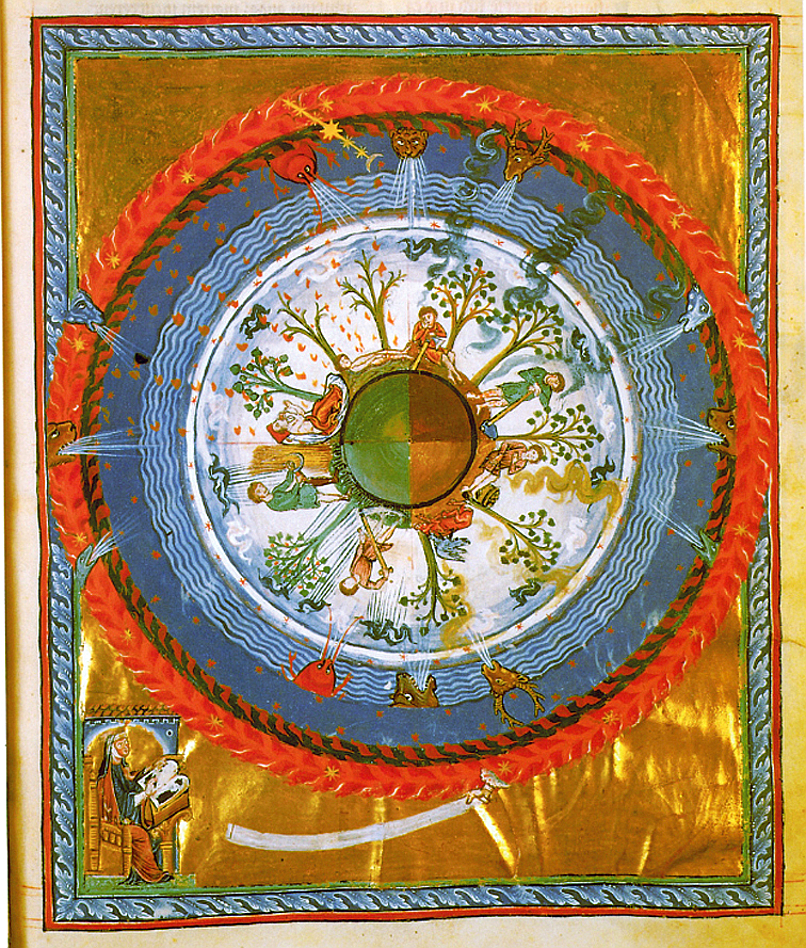
Hildegard_WerkGottes_12Jh_


These lines remind us of the double meaning of ‘Advent’: the first coming of Jesus, when he  was born to Mary, and the second coming at the end of times, when this world will be replaced by an eternal one beyond imagination.

Picture: from a 12th century codex of  Hildegard of Bingen’s Book of Divine Works.