rosengarten (II. sprühendgrau)

rosengarten

II.

sprühendgrau

die ungeahnten sonnenglanz vergießen
die regenschauer und den regenbogen
zu einem milden meeresgrau verwoben
die augen sollen meine verse grüßen.
dem nebelland das immerkalte wogen
in ungestümem reigentanz umschließen
den inseln voller sprühendgrüner wiesen
sind jene augen ursprünglich enthoben.
drum frag ich nicht nach lilien und lavendel
die flammen sprühen auf gebeugtem stengel
noch nach des südens uferlosem blau
nichts brauche ich als meinen kleinen garten
wo alle wunder lächelnd meiner warten
die bunte welt geballt in sprühendgrau.

Christina Egan ©2023

This sonnet is part of a cycle of 14 poems, whereby each line of the first one (rosengarten I. tiefversteckt) furnishes the first line of a new sonnet.

The island described here is Ireland, but the cycle takes you to other islands, as well as to the palace gardens of Würzburg, Germany, which first inspired me.

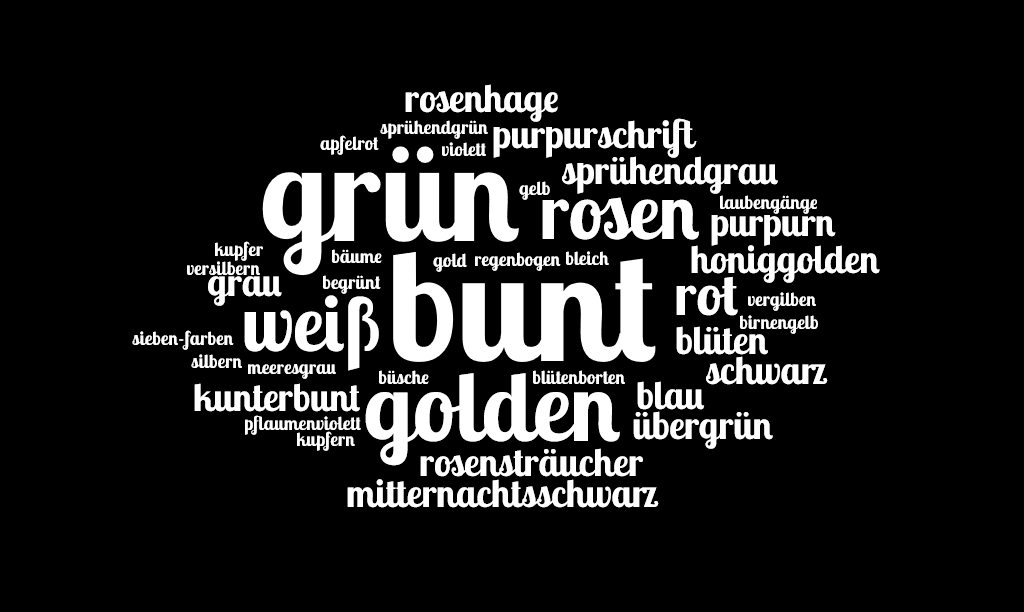
Word cloud of colours and flowers and in white on black; in the middle, "multi-coloured", "green", "golden".

Word cloud of colours in the German sonnet cycle (rosengarten I-XIV), generated on the Simple Word Cloud Generator. In the middle are “colourful”, “green”, and “golden”. Since the colours of the roses are not described, the roses themselves are added.

Gegenwart (Wie Kalksteinhügel)

Gegenwart

Wie Kalksteinhügel liegen deine Wangen
und deine Haare wie ein Pinienwald.
Schon zittert meine Seele vor Verlangen
nach deiner bloß erratenen Gestalt.

Ein dunkler Doppelsee sind deine Augen,
noch beinah unberührt und unergründlich.
Ob sie auch meine Zukunft in sich bergen,
ist beinah ungedacht und unerfindlich.

Und wie das warme Meer rollt deine Stimme,
wenn sich orangerot der Tagstern neigt…
O schautest du nur auf und hieltest inne –
und würdest niemals bloß Vergangenheit!

Christina Egan © 2014

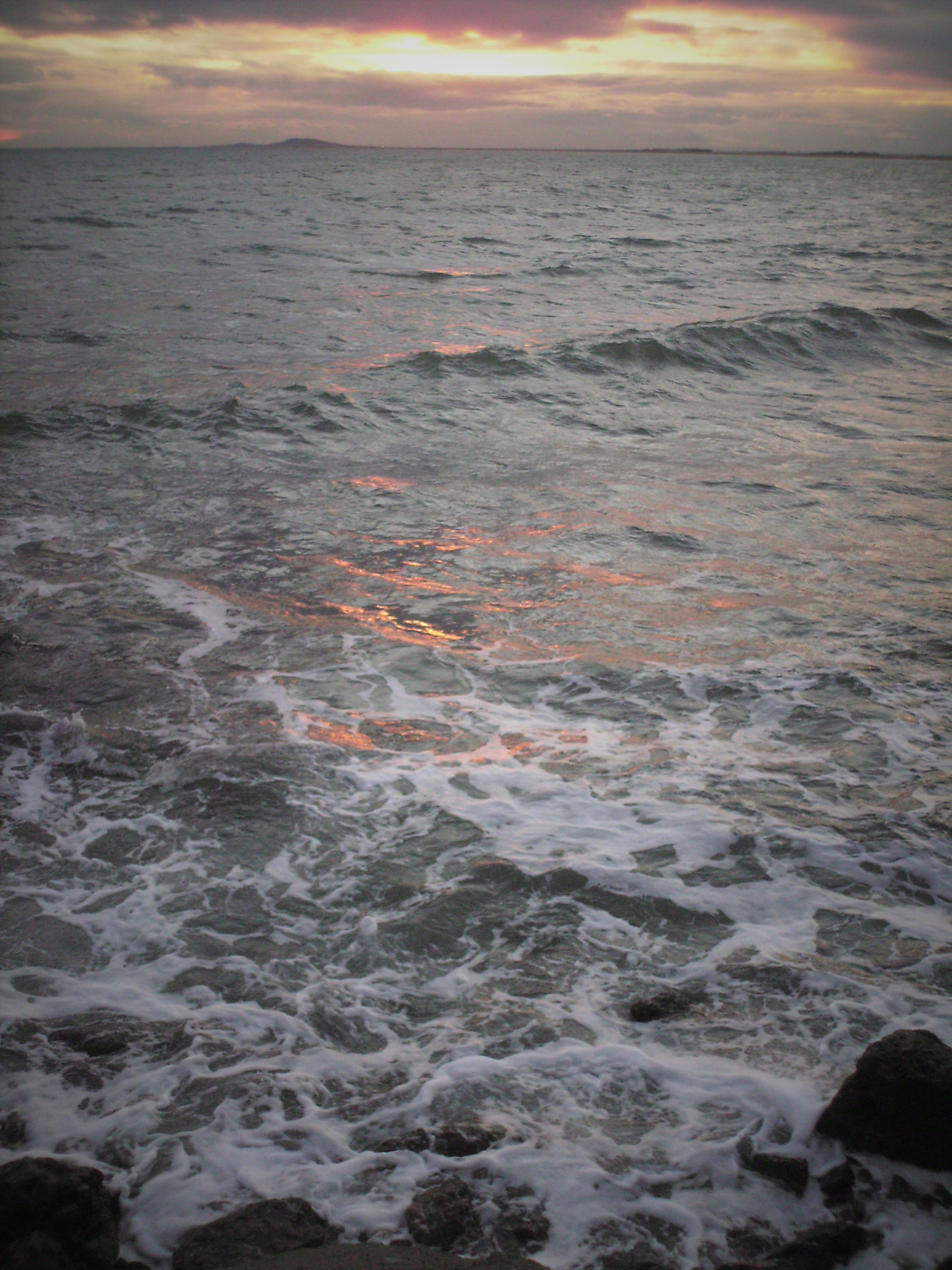
Dusk by the sea: glow of sunset amongst dark clouds and on waves lapping onto the shore.

Description of a new acquaintance in terms of a Mediterranean landscape.

The title plays on the double meaning of the German word “presence” / “present”: the speaker is mesmerised by the other person and already has a faint hope that he or she will become the future… and never slide back into the past.

Sunset on a Mediterranean shore in January. – Photograph: Christina Egan © 2016.

Sonett der drei Seen

Sonett der drei Seen
(São Miguel, Azoren)

Der Teich war gelb, und gelbe Dämpfe stiegen
ins heiße Blau, umringt von dunklen Ranken,
als müde Glieder sich im Gelb entspannten
mit Blättern, die wie Schlick im Strudel trieben.
Der See war grün, und grüne Schimmer hingen
in steilen Hängen und in flachen Tiefen,
worunter ungeheure Feuer schliefen,–
zur rechten grün und himmelblau zur linken.
Und um die gelben, grünen, blauen Kessel
und buntbestickten Ufer lief ein Band
von schwarzen Felsen und von schwarzem Sand;
und darum – ohne Grenze, ohne Fessel
und ohne Form – das Meer, das Element…
O selig, wer die sanften Inseln kennt!

Christina Egan © 2016

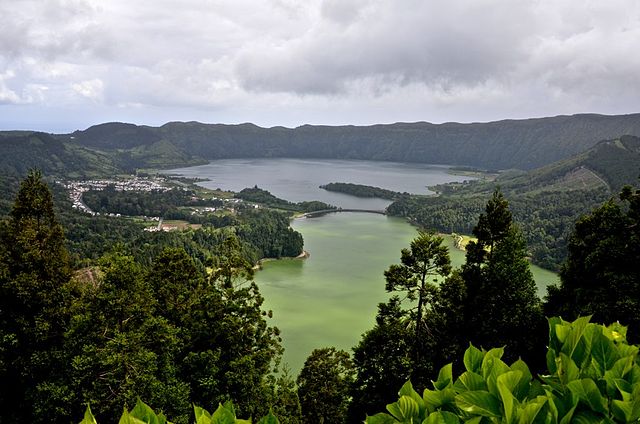
Sete_cidades_(14267780070)


Sete Cidades, (São Miguel, Azores). Photograph by Aires Almeida from Portimão, Portugal, via Wikimedia Commons.


The colours of the water are really like in the photo! See also my verse Acherons Mund  for the darker aspects of these isles.

These poems may work in a translation software, although you only get the meaning, not the sounds, which are like music and like the sounds of nature itself!

On the Volcano’s Rim

On the Volcano’s Rim

Goldstaub
(Lanzarote)

Hoher blauer Himmel,
weißer Wolkenflug,
ungestüme Winde,
rascher Schattenzug

über rote Halden,
über graue Höhn,
über grüne Matten,
wo schon Sterne stehn:

abertausend Blüten
wie ein Frühlingslied,
Goldstaub, den die Sonne
aus dem Erdreich zieht!

Christina Egan © 2015

Gold Dust
(Lanzarote)

Blue sky, ever higher,
white clouds in full flight,
winds wilful and forceful,
swift change of the light

across the red boulders,
across the grey height,
across the green lichen,
where stars tremble bright:

a flourish of flowers
and spring in a splash,
the gold dust the sun
can draw out of the ash!

Christina Egan © 2015

Dreaming Dragon
(Lanzarote)

Dew-drops sparkling in all colours
on the mighty coal-black craggy
shoulder of a dreaming dragon:
so these tiny tender flowers
perch on the volcano’s terrace –
fire, earth and wind distilled
to a dainty dotted quilt.

Ceaseless gales and sleepless fire,
ashes fed with salty dew –
ocean and volcano brew
flora’s early, lacy layer,
magic carpet in the air,
in the boundless brown and blue…
Dreams are real. Dreams come true.

Christina Egan © 2015

The Hoard
(Lanzarote)

As the mountain bears the flower,
as the giant holds the gem,
so the hour bears my poem:
purple speck on silver stem.

Where a myriad wild flowers
sprout behind the dry-stone wall,
I must gather all my powers
till the heavens hear my call.

Christina Egan © 2015

Valentine on the Volcano
(Lanzarote)

We dance on the volcano’s rim –
although its low and sunken side,
although extinct for centuries –
tossed partly by the wild wind’s whim
and partly drunk with liquid life –
suspended over sky-blue seas!
(I found my love above Teguise!)

Christina Egan © 2015

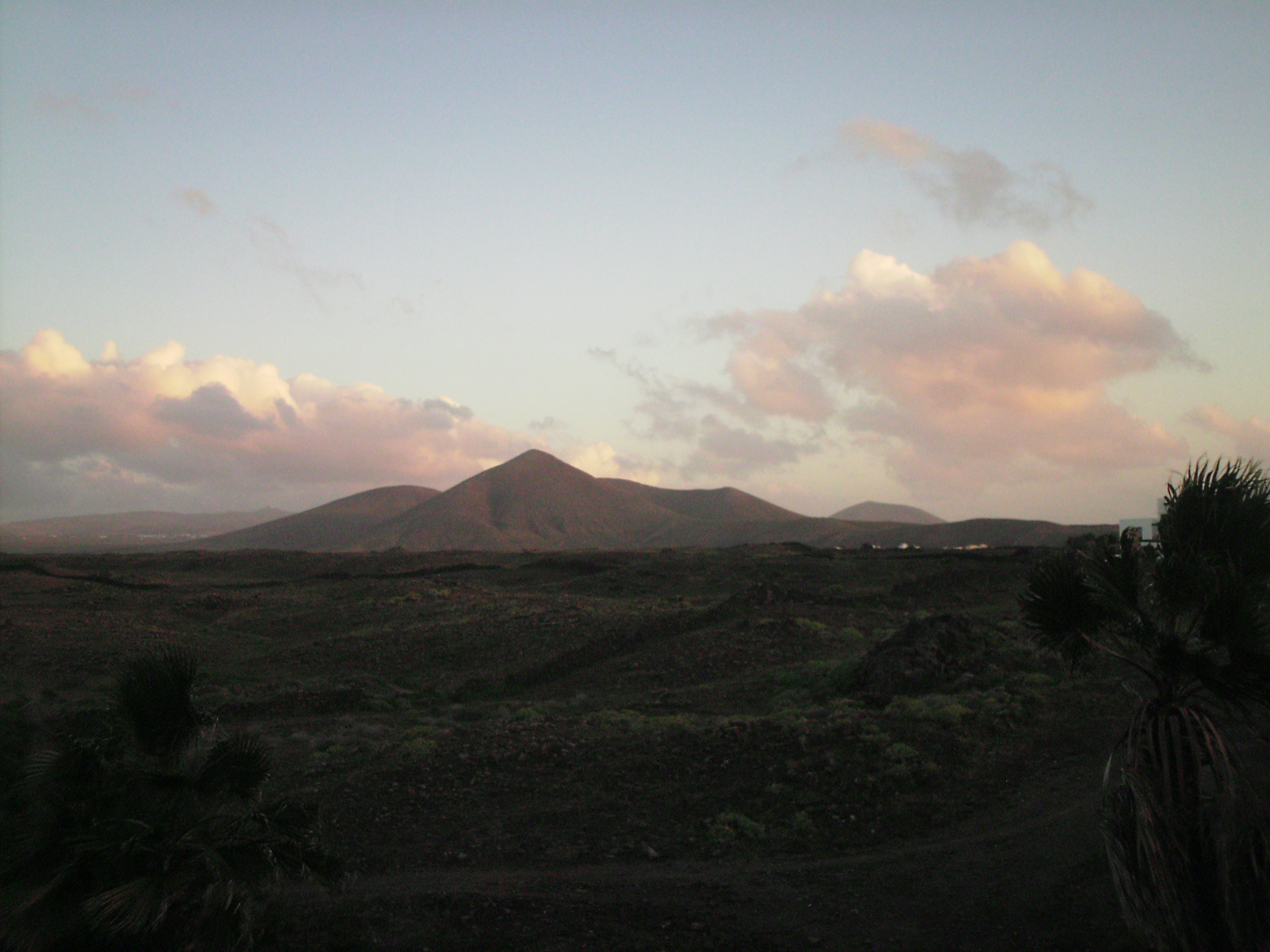
Plain and mountain range with very dark surfaces, rosy clouds in sky

The little volcano. Photograph: Christina Egan © 2015

These lines all sprang from one of the greatest experiences of my life: climbing a little volcano on the isle of Lanzarote, about which you can find a poetic description in German and English at Isle of Bliss / Insel der Seligkeit.

Gold Dust and The Hoard could equally be set in my native Rhön Mountains, also of volcanic origin, but very far inland and much greener.

The three poems in English only may work quite well in an automatic translator. The first two poems are translations of each other, or rather, parallel creations in German and English, where rhythm and rhyme required some changes in wording. It is better to do it this way, since the message is partly conveyed by rhythm and rhyme!

You could leave out the line in brackets to use the poem for a Valentine’s or anniversary card. Copy that line, though, into your list of places to see — both little towns, Teguise and Costa Teguise, because one has got the history and the other one the beach!

This handful of poems almost sums up my work: they describe plants and mountains and the sea; they refer to most basic colours; conclude with thoughts on art and religion and love; and use the beauty of language to capture the beauty of the world.