The Hallowed City

The Hallowed City

I.

Aliusque et idem nasceris

When last I looked upon that golden hill,
the only coal-grey clouds along its crest
were pine-trees of Mediterranean zest,
clear-cut against the blue, timeless and still.
When I surveyed the city from the west,
beyond the river and the seventh hill,
my thirsty eyes rejoiced and drank their fill…
A pilgrimage it was and pagan quest.
Behind me passed the Sun on wheels of fire,
accompanied by Mnemosyne’s lyre.
Was this my long-lost and recovered home?
Born here and buried, had I now returned,
the same and not the same? My eye-lids burned.
This is the hallowed city. This is Rome.

Christina Egan © 2018

Drawing of curving Roman aqueducts crossing over

II.

Pulchrae loca vertor ad urbis

My eyes have seen the marble halls of Rome,
resplendent like the mighty mistress Moon
and multi-coloured like a field in bloom;
I’ve watched the buildings grow in brick and stone.
I’ve stood beneath the proud and perfect dome
which emulates the heavens’ sparkling room
and holds our destiny from dawn to doom.
I’ve roamed those hills and called a roof my home.
I’ve heard the chanting children, sighing harps,
the darting chariots and creaking carts,
the swish of virgin water, purple wine,
I’ve seen the aqueducts descend and curve,
the roads roll into Rome, unite, disperse —
I’ve tasted all that splendour. It was mine.

Christina Egan © 2018


The first blogpost of the year deals, as always, with Roman roads!

The impression of aqueducts, which illustrated one of my parents’ books about ancient civilisations, informed my entire life. Unfortunately, I do not know the artist, but there does not seem to be a copyright on it.

The quotes are from two Roman poems about Rome, Horace’s Carmen saeculare and Ovid’s Tristia.

I apply Horace’s idea that the sun is daily reborn, another and yet the same, to a person who feels he or she was reborn into this world many centuries later, another and yet the same; and I reinterpret Ovid’s lament about remembering his home from exile as a modern person’s longing for antiquity. Mnemosyne is the Greco-Roman divinity of memory, and the Sun and Moon, of course, are mighty gods, or at least representations of gods.
Kerzenbekrönt

Kerzenbekrönt

Senkt sich die Dämmrung an frostigen Tagen
– früher denn jemals, doch zauberhaft blau –
hängt über stolzen gewölbten Mansarden,
hält über giebelgeschmückten Fassaden,
bannt aus dem Geiste das leidige Grau.

Stürzen Gestirne herab in Kaskaden
– feucht ist das Pflaster, doch goldengetönt –
spannen sich Perlen an Faden um Faden
blinkend und bebend von Laden zu Laden
bis an die Kirchtürme, kerzenbekrönt.

Christina Egan © 2016


This poem was inspired by a front page photograph of the superb newspaper Agora  in Fulda, Germany, which I had folded over. Then I noticed that beneath the idyllic historical street lit up for Christmas, an industrial container had been inserted through photo montage: as a makeshift home for a refugee family. I felt I had to write a second poem, which you can find at Farbechte Hoffnung.

The street shown is Friedrichstraße, which gives you quite a good impression of past centuries, despite severe damage during the Second World War and ensuing changes. Fulda is quite good for midwinter holidays because of the Christmas Market, the nativity scenes in the churches, numerous festive events… and the snow in the mountains.

The City Lit Up

The City Lit Up

I lived between Ilex and Salix,
just north of Londinium Town,
and sometimes I climbed to the moss-well
between the oaks and looked down.

I looked at the thatch and the roof-tiles,
as red as the embers beneath,
I looked at the timber and marble,
the highways connecting the heath,

the gates, the walls and the broad bridge,
the fields afloat on the clay;
and I wondered if London would stretch
as vast as the valley one day,

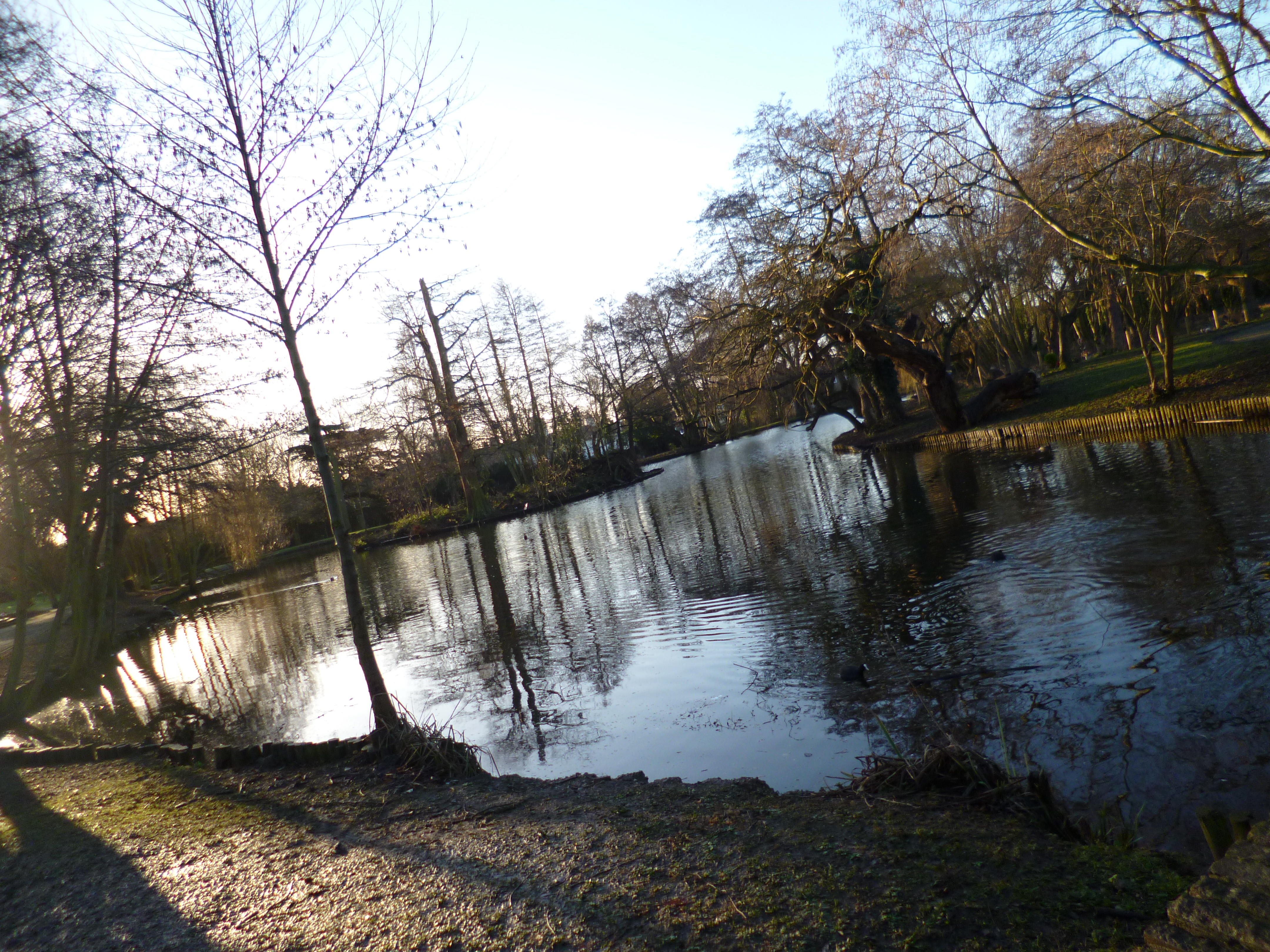
Pond in park, surrounded by bare trees, with tiny island

as vast as Rome, which had risen
from marshes and slopes long ago,
with columns touching the heavens
because the gods willed it so;

and if Rome could ever be shrinking
and sinking into the bog,
or London be burning or flooding
and melting into the fog…

The city lit up in the sunset
and faded away in the dusk;
I felt the chill in the oak-wood,
and down to my villa I rushed.

I entered the gate by the willows
and strode through the dolphins’ yard,
I passed the flickering torches
and stopped by my forefathers’ hearth.

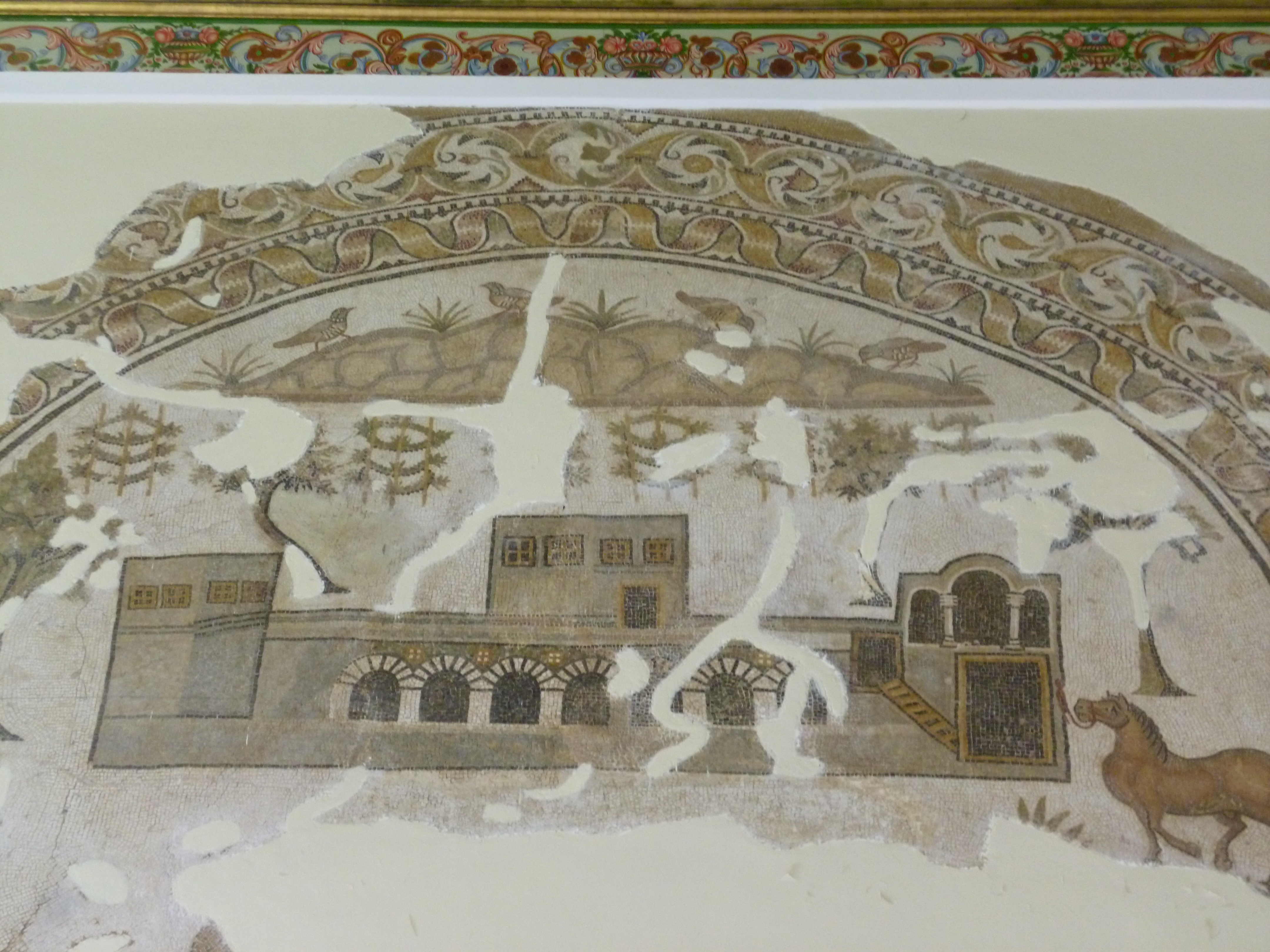
Roman mosaic of a mansion

My name was Appius Felix,
an heir to Aeneas of Troy;
I kept the seals and the idols
to pass them on to my boy.

I used the sword and the saddle,
I held the lyre and quill.
I lived between Ilex and Salix,
at the foot of the Moss-Well Hill.

Christina Egan © 2016


As you can see from the 100-metre-high summit of the Muswell Hill, London does stretch for many miles nowadays, filling the valley to both sides of the meandering River Thames.

You will also notice that there are large patches of green everywhere, some of them left over from ancient marshland and woodland. If you know your way, you can walk across London through woods and meadows, across hills and along rivers for miles!

My Roman observer lives in modern-day Wood Green or Bounds Green, near fictitious hamlets or villas called Ilex (holly or oak) and Salix (willow or osier).

This man firmly believes that gods guard his city and his country and that spirits guard his home and his family. He pursues some useful career in the service of the Empire, but he is also a bit of a poet.

I named him Appius after the statesman of the Republic who had contributed so much to Rome’s infrastructure as well as intellectual life, and Felix because he counts himself lucky.


You can find more on Londinium’s fortifications at Ode to London Wall  and more about its straight or winding highways at Quo vadis?

Photographs: Country villa, late Roman mosaic, Bardo Museum, Tunis. —  Pond in Tottenham, North London. Christina Egan © 2014

The Lavender’s Splendours / dachterrasse

The Lavender’s Splendours

On brittle grey walls,
find brittle grey sheaves
on wire-thin stalks
with tired long leaves…

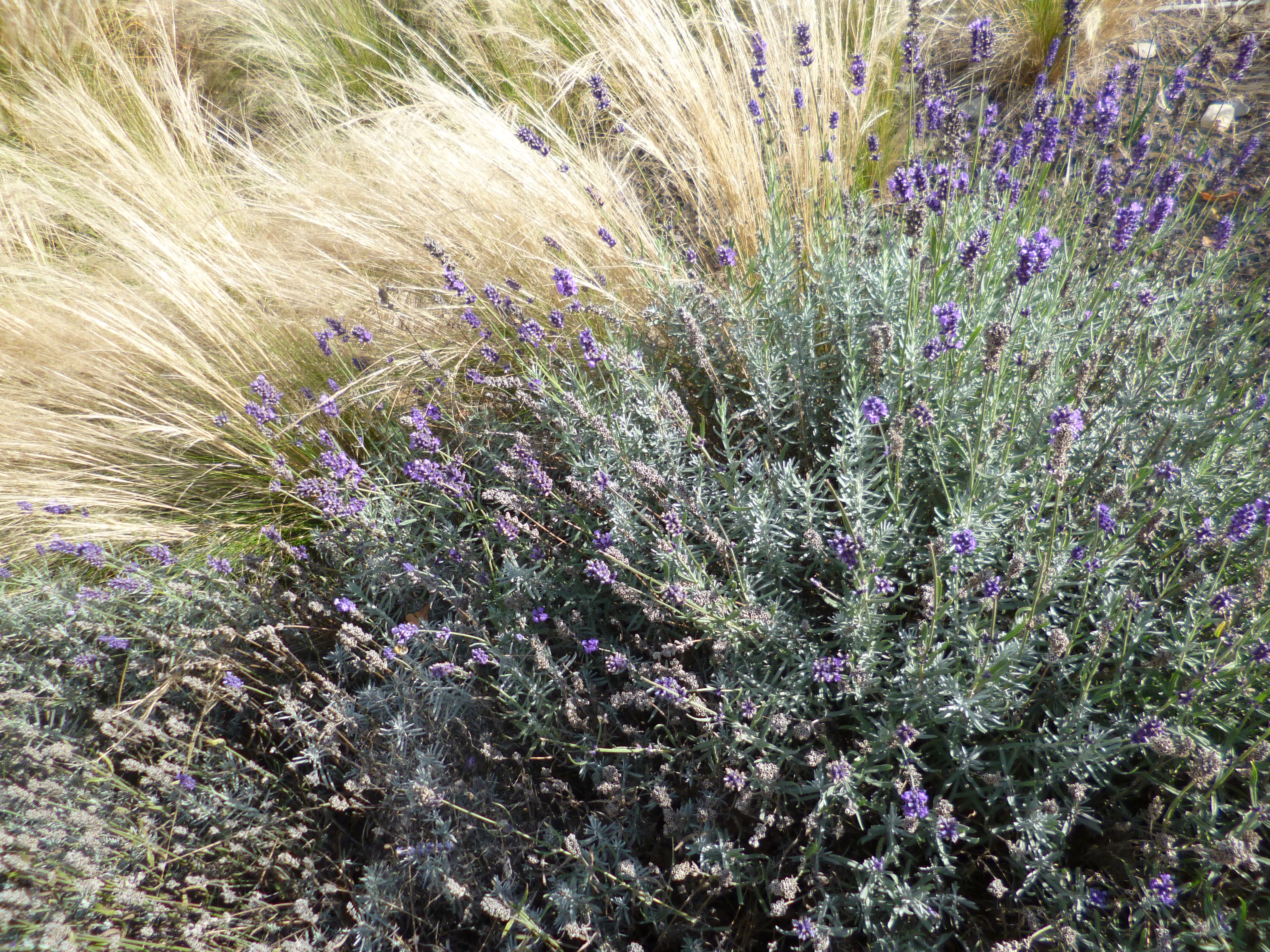
Lavender with fresh and wilted blossom, next to pale-golden grass.

The lavender’s splendours
of indigo spikes
are ashes and embers:
dull grey with mauve lights.

Yet grasp its pale grains
and grind them to flakes –
and dazzling white flames
will rise when it wakes!

Christina Egan © 2016


dachterrasse

dachterrasse
traumgehege

der straßenkreuzung den hinterhöfen
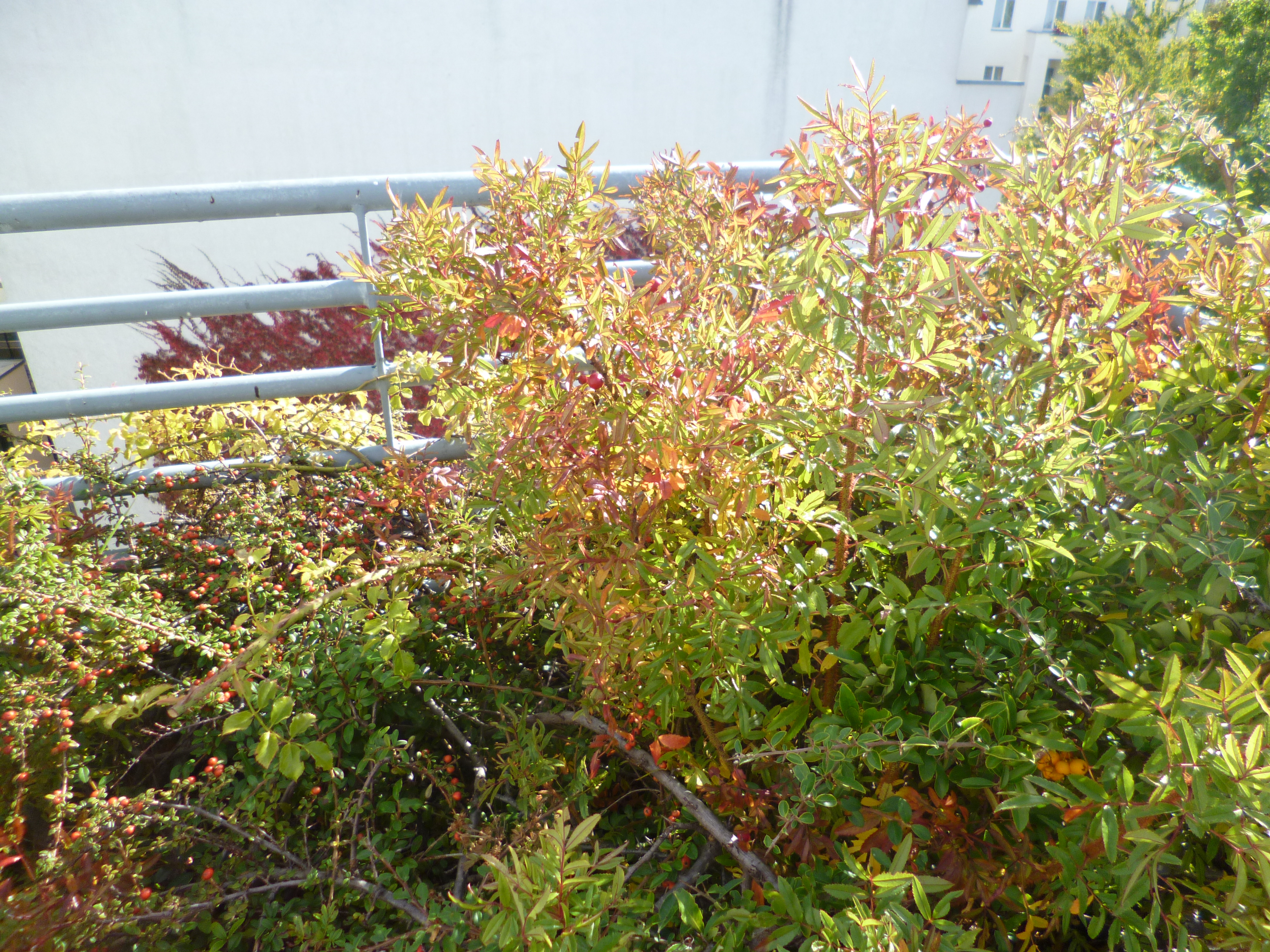
den baustellen enthobenShrub with bright-red berries on a roof-terrace, with deep-red ivy below.

lavendel und rosen
wuchern und welken

der feuerdorn verheißt
lautlose feuerwerke

Christina Egan © 2016

Photographs: Christina Egan © 2016

Ich behaupte das Dach über Dächern

Ich behaupte das Dach über Dächern

I.

Ich behaupte das Dach über Dächern
und Wipfeln und Kuppeln der Stadt,
im sonnengeladenen Himmel
ein lebensgeladenes Blatt!

Eine Fahne in sattesten Farben,
ein Winken: „Ich bin! Ich bin hier!“
Mein Herz reißt sich los aus dem Leibe
und fliegt über Meere zu dir.

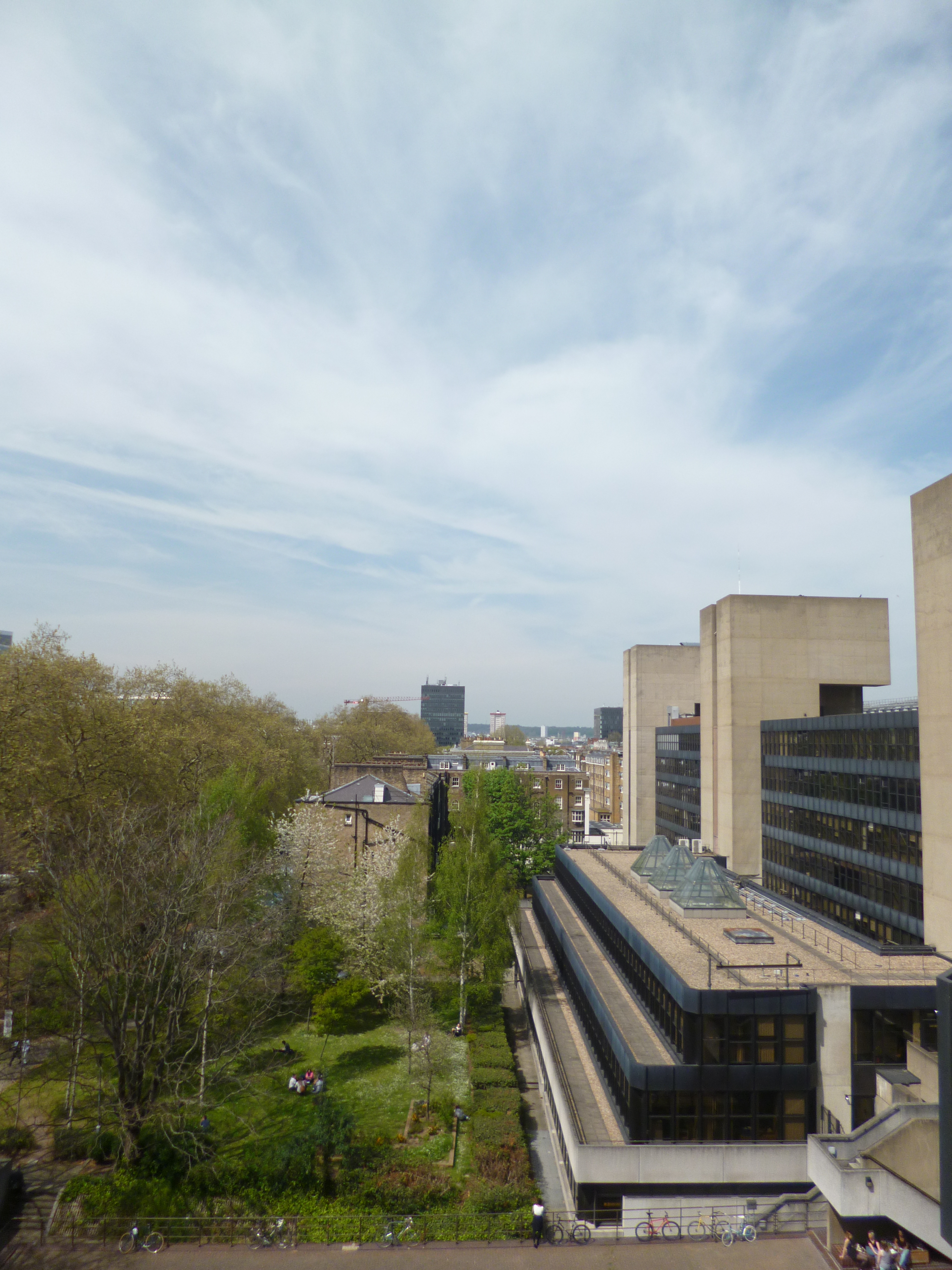
View from high up along building of concrete, steel and glass to the right, with lawn and trees to the left and clouds in blue sky above.

II.

Ich betrachte die Bäume von oben:
erst leuchtend, dann dürr und dann kahl.
Ich zeichne die Großstadt, gewoben
aus Backstein und Kalkstein und Stahl.

Mein Auge drängt aber hinüber
zum Rande der Stadt und des Lands,–
mein Herz glaubt noch immer, es fliege
zu dir mit dem Goldwolkenglanz!

Christina Egan © 2016


Photograph: Christina Egan © 2016


The person who ‘holds the position on the
roof above roofs’ gets the bigger picture:
observing the city, the sky, the seasons;  
aware of being a part of the fabric of life.

But really, she or he just wants to fly beyond
the horizon, to be united with a beloved one…
who might turn out to be an illusion of desire.
These lines evoke immanent transcendence.

These poems may work in a translation software.

Views of North Sea Islands

Views of North Sea Islands Ansichten von Nordseeinseln

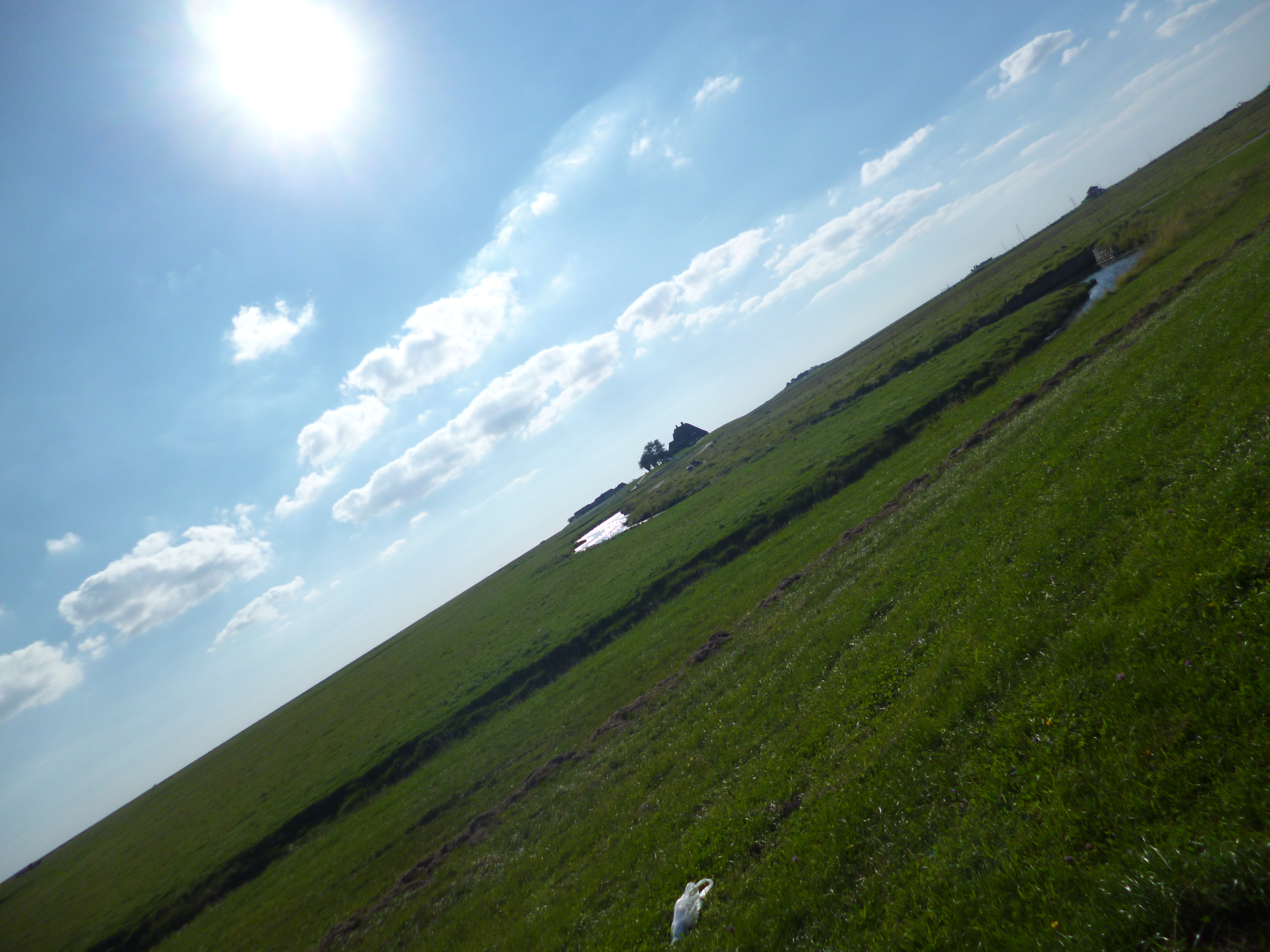
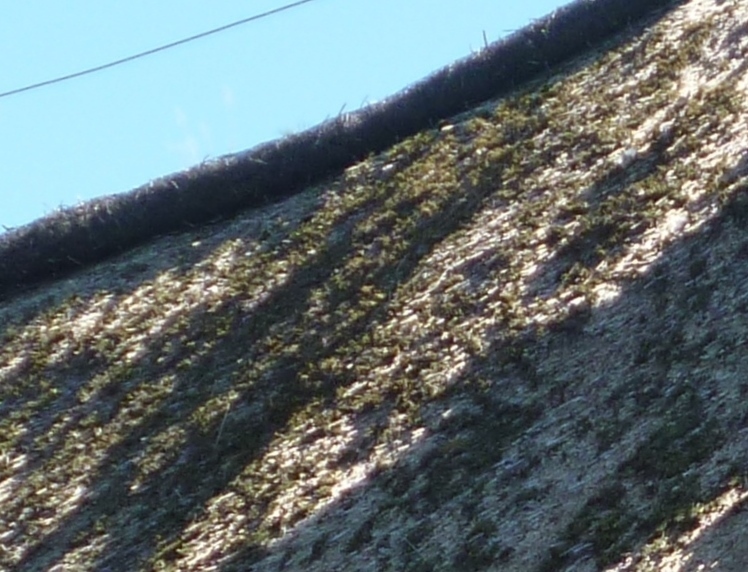
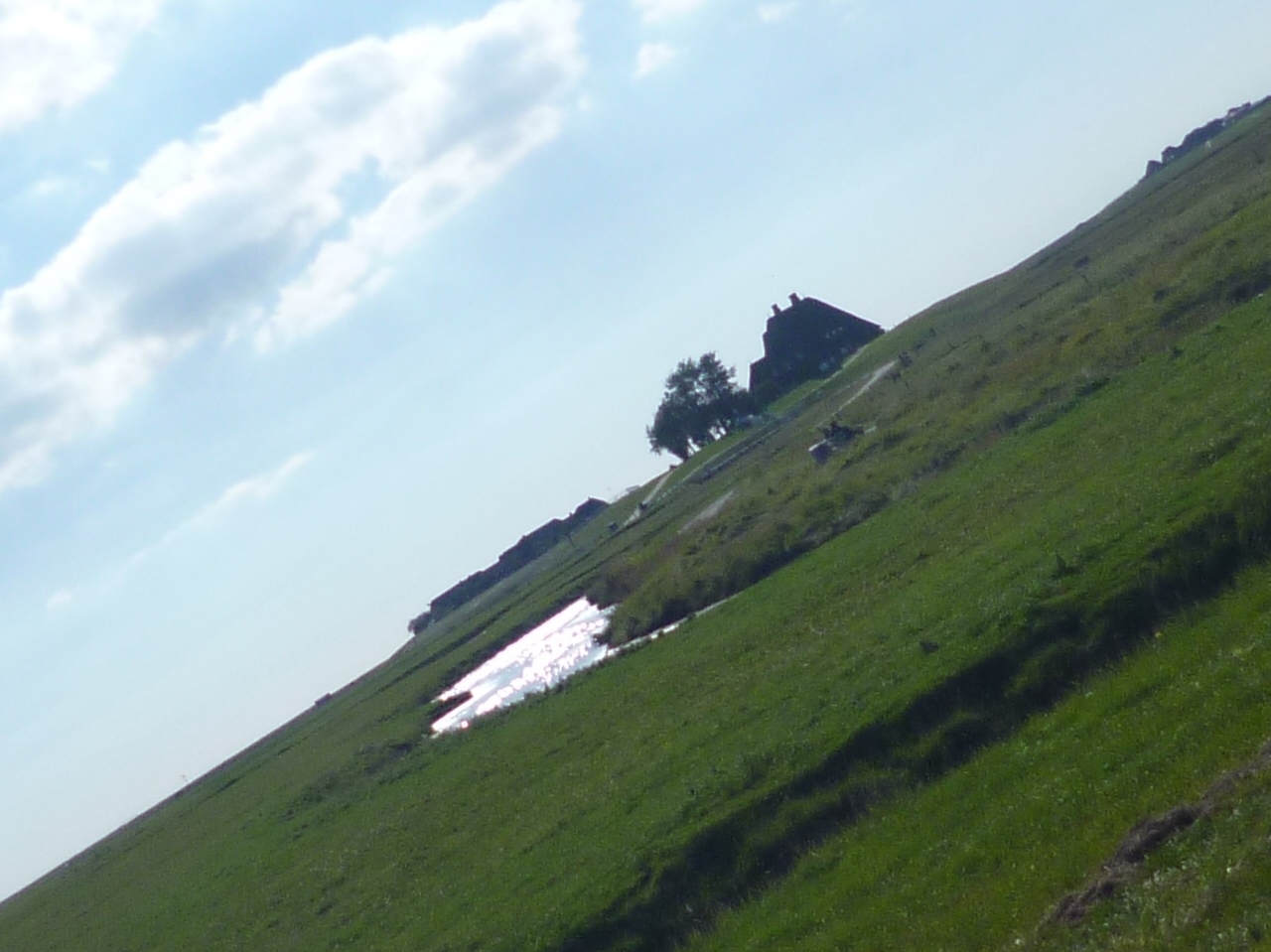
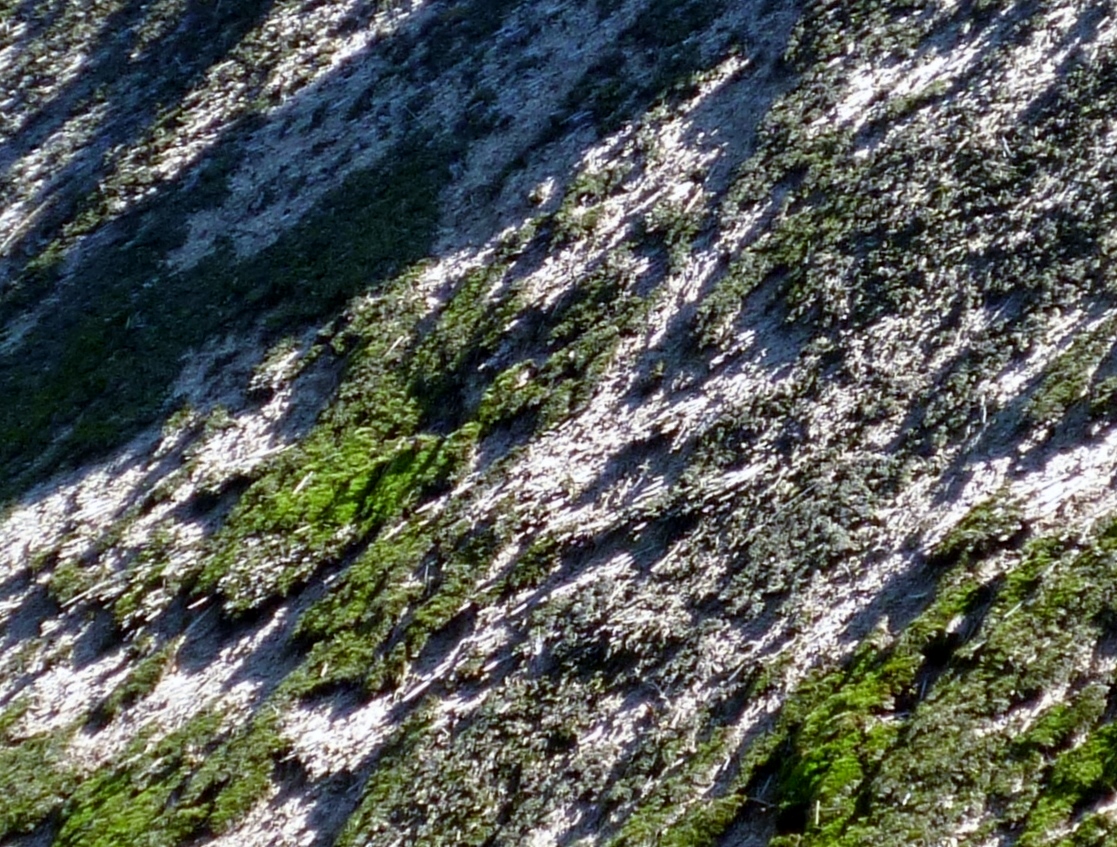
White cottage, steep thatched roof, covered with moss


Thick patches of moss
clustering on rippled thatch
like verdant islands,
like the islands we stand on:
growing in the rough grey sea.

Diagonal horizon, entirely flat between green and blue, with house in middle

Dicke Moospolster
auf dem welligen Reetdach,
gleich grünen Inseln,
gleich diesen Inseln hier,
wachsend im wilden grauen Meer.

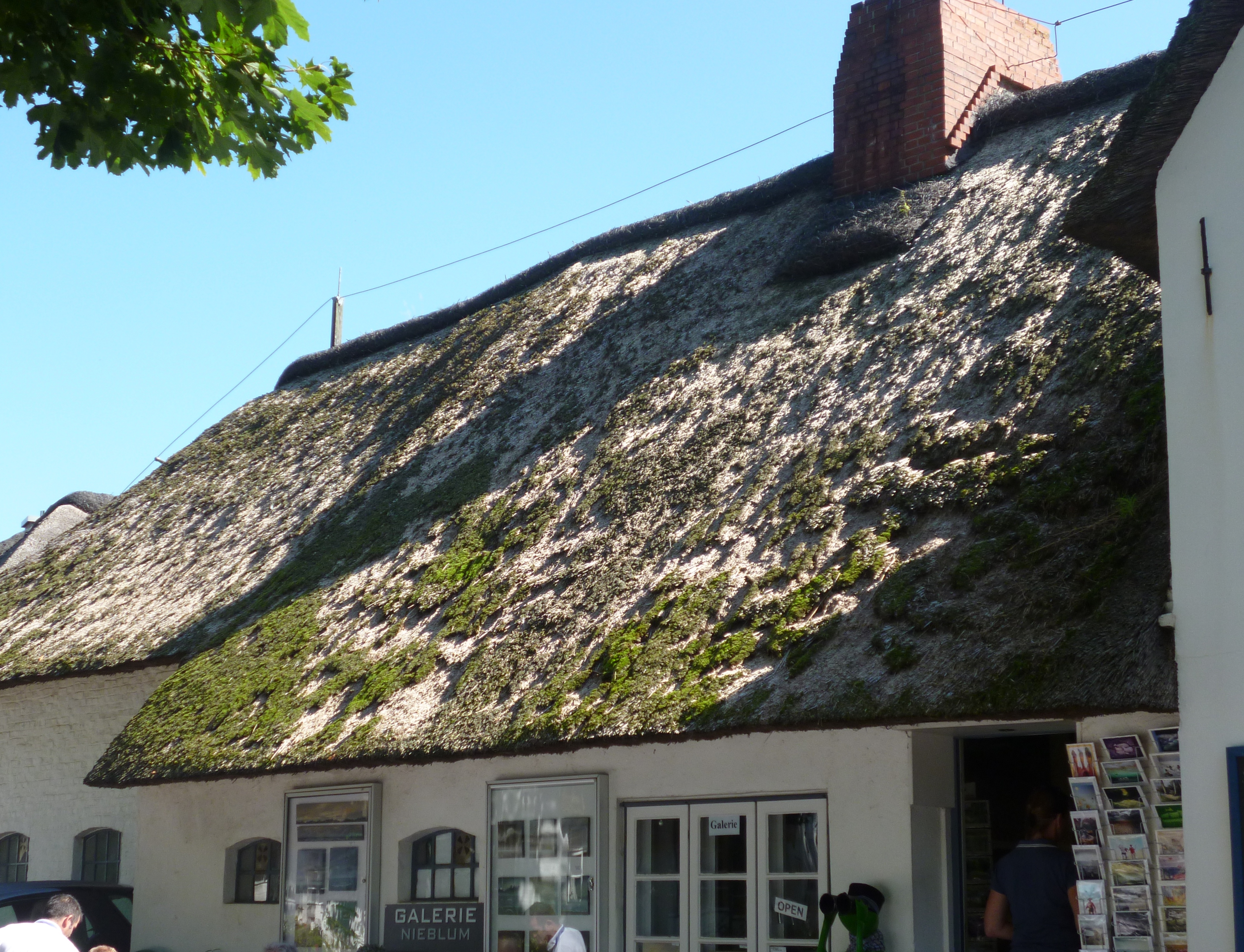
Thatched roof, covered with moss

Red clover blossom:
tiny magenta lanterns
in the green and blue,
feeding on the salty floods
across these flat floating disks.

Diagonal horizon, entirely flat between green and blue, with house in middle


Rosaroter Klee:
winzige Laternen
in all dem Grün und Blau,
genährt von Salzfluten
über schwebende Scheiben hin.

Thatched roof, covered with moss


Huge ships approaching,
or space-ships – or are they hills,
or houses on stilts?
They are houses, hamlets, islets…
a necklace of glass beads.


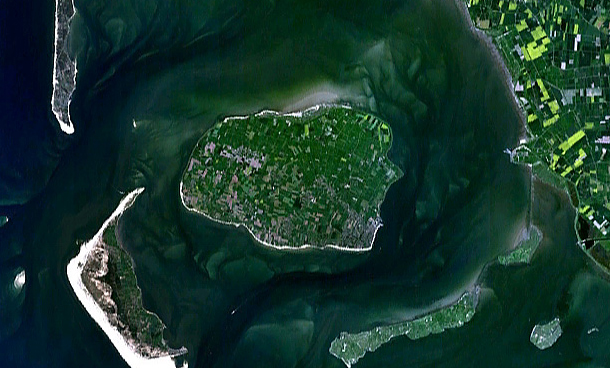
Satellite image of a cluster of small emerald green islands


Da – Riesenschiffe –
Raumschiffe – oder Hügel,
Häuser auf Stelzen?
Häuser, Dörfchen, Inselchen…
eine Glasperlenkette.

English texts: Christina Egan © 2015
German texts: Christina Egan ©2016

Photographs: Christina Egan © 2014
Galerie Nieblum on Föhr; Hallig Hooge.
Satellite picture: NASA via Wikimedia.


From the flat, small, oval island of Föhr, you spot the even flatter, even smaller islands known as ‘Halligen’: their clusters of houses and trees on little dells are visible on the horizon far across the ocean.

The Halligen still get regularly flooded and are occasionally menaced by devastation. All these islands change shape over time, when the forces of wind and water eat away at their edges or add new land.

I wrote about a similar phenomenon observed on the Baltic Sea island of the Darss in Schöpfung (Darß).

There’s Door on Door

There’s Door on Door

There’s door on door of painted wood
with potted plants and polished brass,
there’s row on row of gabled roofs,
there’s brick and plaster, hedge and grass.

There’s floor on floor of balconies,
above the din, above the dust,
inclusive of commodities,
there’s stone and concrete, steel and glass.

There’s door on door, there’s floor on floor,
but not for me, but not for me –
there’s brick and brass, there’s steel and glass,
exclusive of humanity.

There’s door on door, there’s floor on floor,
but not for us, but not for us –
one has a sofa in a store,
one has an archway in the dust.

Christina Egan © 2015

Roof-Tile / Plateau

Roof-Tile
(Béziers)

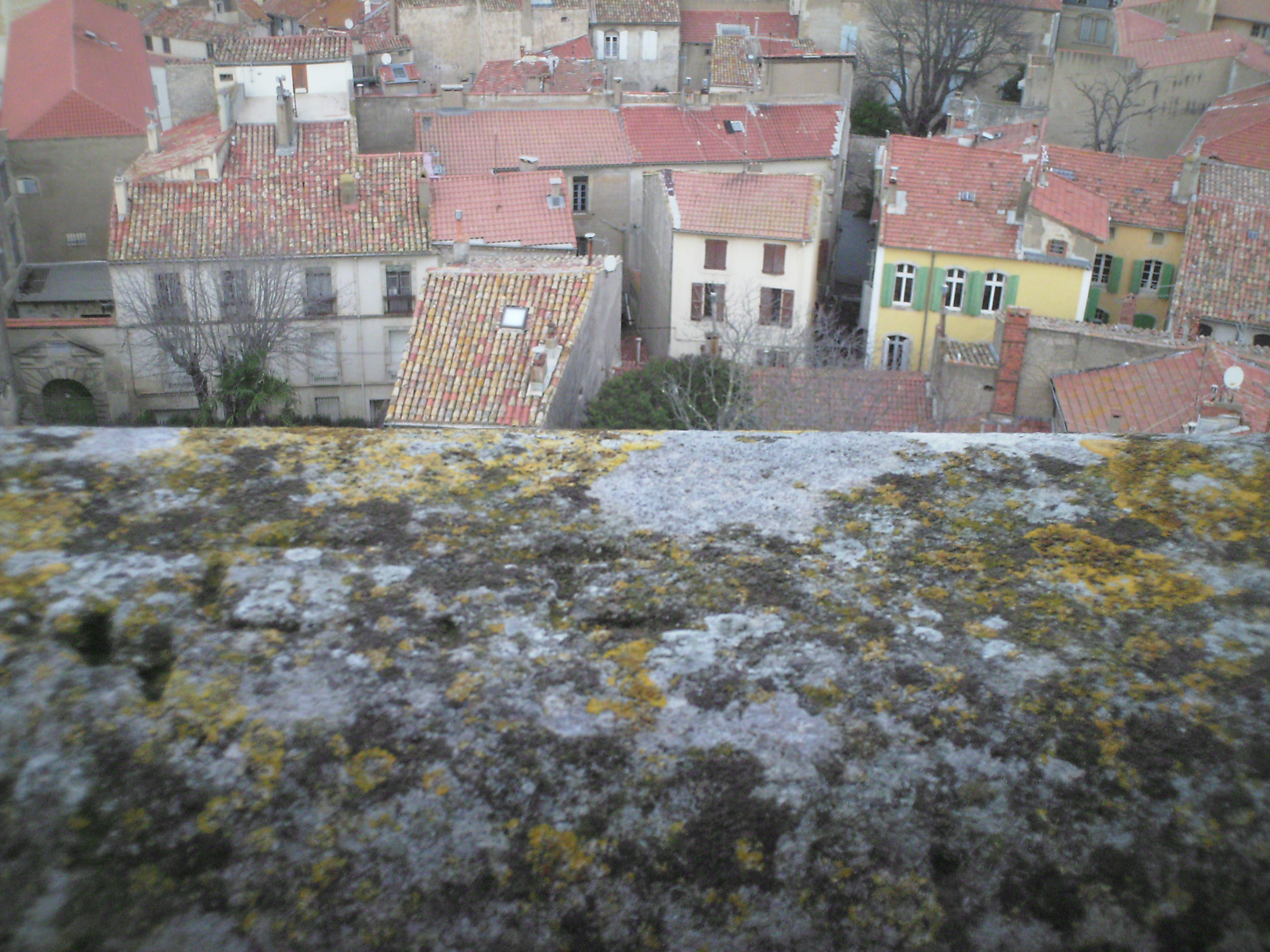
Lower half shows ancient wall with lichen and moss, upper half houses and roofs with motley tiles

A roof-tile, grooved: a hill, a dell,
in broken ochre, earthy red,
with greenish circles in between;
a piece of world, of time a shred.

And then I see: the whole old roof
is such a patch of orange clay –
the whole old town in weathered brown,
resplendent in a tender ray!

Christina Egan © 2016

Plateau
(Béziers)

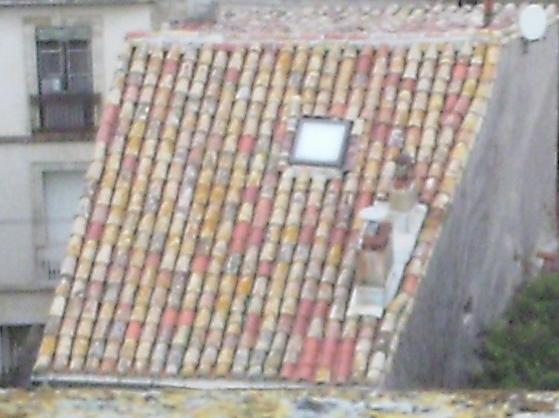
Roof with motley tiles - Detail of above photo

Life is a gnarled and narrow hill,
so steep as scarcely to be climbed:
you scramble, stumble, slide or fall,
you stay below, you stay behind.

Then opens, through a hedge or wall,
a gap, a gate, an avenue,
a whole plateau, a spilling well,
a plain beneath your startled view!

Christina Egan © 2016

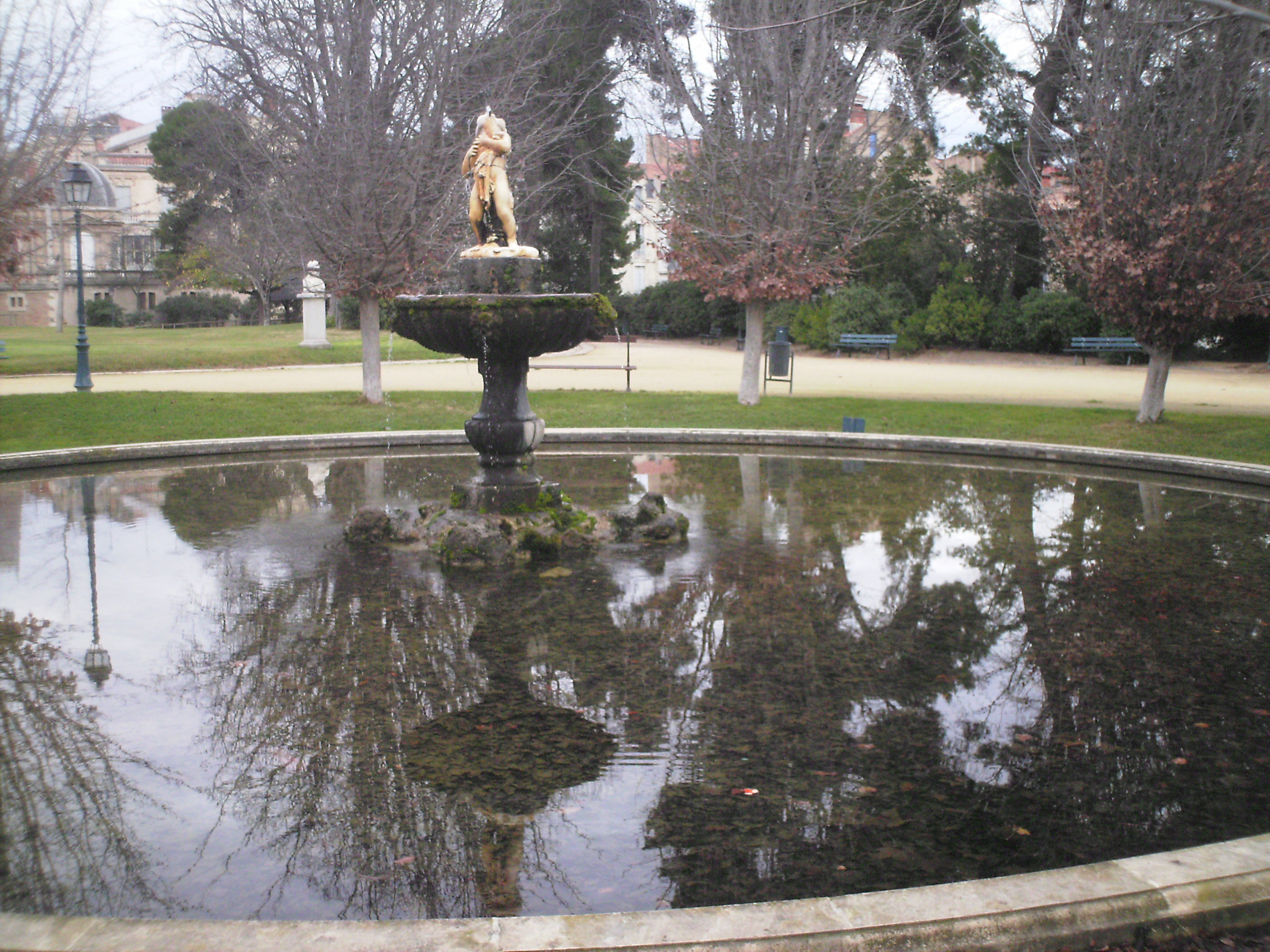
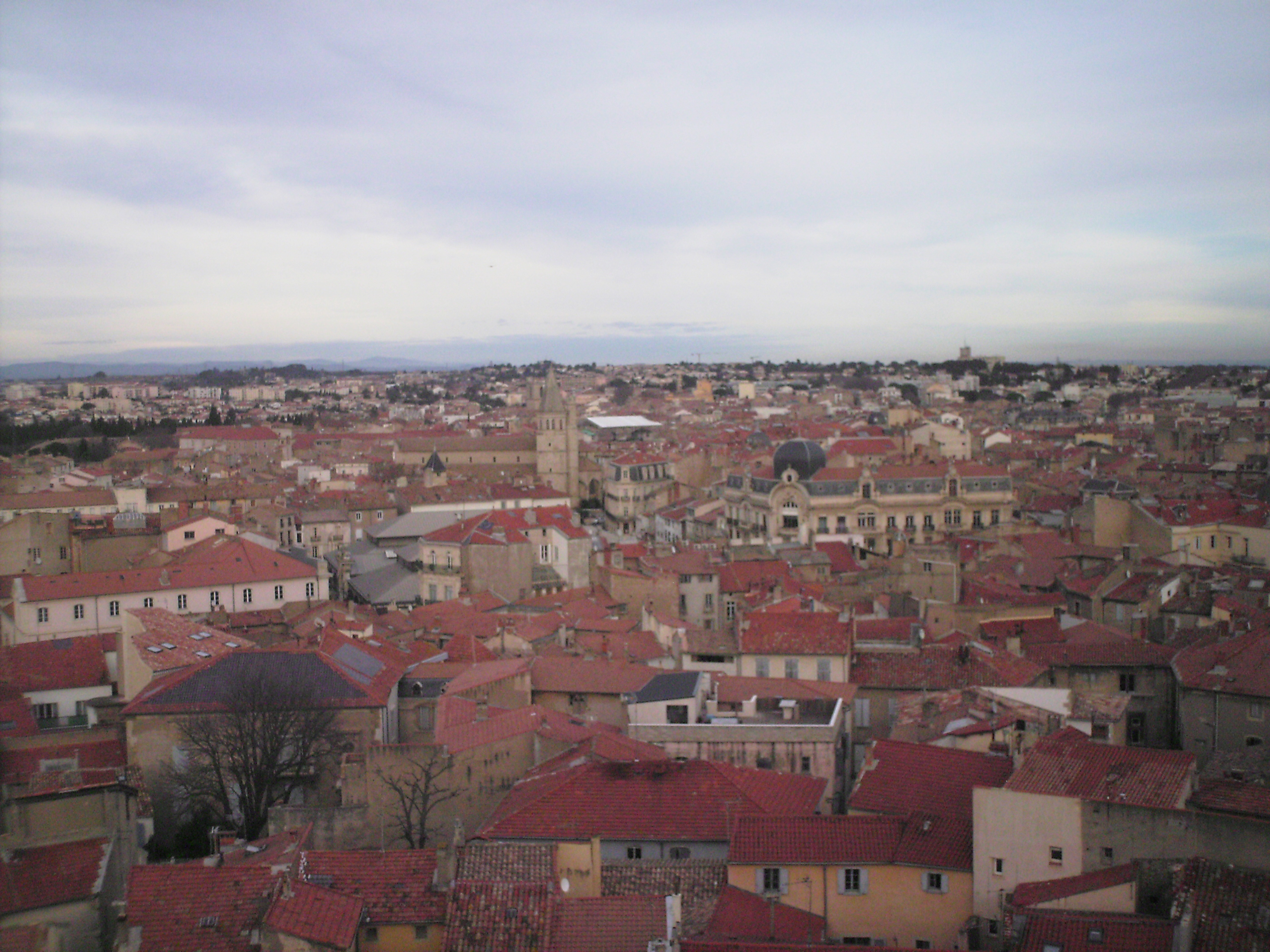
Round basin in park, with trees, houses and statue mirroredTwo views from the ancient city of Béziers in France, which is piled up
on a couple of steep hilltops: the first view is from
the Cathedral tower; the second, from the park called Parc des poètes / Plateau des poètes.

Well… the respite after struggles and setbacks might be found in enjoying or creating art — or in life itself!

Old Town of Beziers, with red roofs dominating, landscape round horizon.While getting lost and strained in the lanes of Béziers reminded me of nightmares, exploring the Cathedral like a giant Crystal Rock  induced me to create the word ‘lightmare’!

Photographs: Béziers from the Cathedral roof ; Parc des poètes. Christina Egan © 2016