Der letzte Tag des Sommers ist gekommen

Der letzte Tag des Sommers ist gekommen

Der letzte Tag des Sommers ist gekommen
mit Tropfen frischen Bluts und Flocken Schnees
entlang des ausgeblichnen Blumenbeets,
mit Sonnenschein, geballt und dann verschwommen,
mit Regenschauern, hart und schon zerronnen,
mit tausendfacher Kraft des Krauts und Klees
und brüchigbraunem Laub entlang des Wegs,
mit Silbernetzen wie aus Luft gesponnen.
Der letzte Tag des Sommers hält die Fahne
von allen Farben in die wilden Winde,
daß sie das Auge ohne Suche finde,
daß sie die Seele ohne Zweifel ahne…
Der letzte Tag des Sommers hängt die Fahne
an gelber Rosen berstendes Gebinde.

Christina Egan © 2014


The first part of this sonnet (8 lines) conjures up scattered petals like drops of blood and flakes of snow, bright sunshine and hard rain, vigorous herbs and brittle leaves and delicate webs. The second part (6 lines) lets the last day of summer hold a colourful banner into the wild winds and hang it onto a lush garland of yellow roses. — See also Poems about roses, life and death (a German and English selection).

Poems about Roses, Life & Death

Poems about Roses, Life & Death

Vase_and_rose_02Sonnengelb

Im sonnengelben Tüllgewand
mit rosarotem Rüschenrand
schwankt sie im satten Bühnenlicht
von Gleichgewicht zu Gleichgewicht:
die königliche Tänzerin,
die Rose namens Harlekin!

Sunny Yellow

Dressed in sunny yellow gauze
hemmed with ruffs like rosy haze,
perfect poise in every pose,
in the lime-light there she sways,
dancing-girl of regal grace:
Harlequin, the motley rose!

Photograph: Christina Egan © 2013  –  Texts: Christina Egan © 2015

          The Giant Rose

Gdn_RoseRed_2009June

The giant rose, pale yellow, slightly flushed,
still opens and expands and grows more lush
            with every breath.
Yet its intoxicating scent deceives:
for through her delicate and ample leaves
            runs silent death.

Photograph: Christina Egan © 2009  –  Text: Christina Egan © 2013

Crimson silk

A cushion of crimson silk
and swelling still,

a mouth of countless lips,
of soundless words,

the red rose
stands

releasing its heavy scent
like crimson streamers, crimson streams,

until I feel it on my tongue
like ivory-coloured marzipan!

Christina Egan © 2015

Gelbe Rose

In Sonnengelb und Aprikose
reckt sich die prallgefüllte Rose
in ihrem reifsten Augenblick,
als eine Frau – in gelb gekleidet,
mit goldnem Haar – vorüberschreitet
mit schwebendem und festem Schritt.

Die Rose weiß noch nichts vom Welken,
entfaltet sich im hohen gelben,
vermeintlich abendlosen Licht…
Die Frau schaut lange, hält den Atem
in jenem festtagsbunten Garten,
wo ihre Jugend jetzt zerbricht.

Christina Egan © 2011

Sonnengelb and Sunny Yellow  are parallel creations. The flower in the vase and the flower in the painting looked exactly the same in their striking shapes and colours as well as in size and maturity…  

Gelbe Rose (Yellow rose) compares a rose in shades of apricot and sunflower and a woman with similar clothes and blond hair. The flower, at the height of her life, does not know that age and death are about to strike; but the woman does.

You will find more roses in the sonnet Der letzte Tag des Sommers ist gekommen.

Midsummernight Far North

Midsummernight Far North
(Darss)

This is the edge of the land.
The number of signals is seven:
The shimmering sand,
the green in the sea,
the red in the sky,
the crescent and star,
the bonfire’s glint,
the lighthouse’s fan,
the flashing afar —

The number of wonders is seven.
This is the midsummernight,
this is the height of the light,
this is the hem of the heavens.

We are alive.
We are together.
This is all here.
This is forever.

Christina Egan © 2015

The Darß (Darss) is a  tranquil strip of land between some lakes and the Baltic Sea.
Around summer solstice, dusk is only between ten and eleven (summertime). 
A German poem about dusk on the Darss is ostseeschlaflied (Baltic Sea Lullaby).

Ecce pratum purpuratum

Ecce pratum purpuratum

Bunte Blumen wünsch’ dir nicht,
einen Regenbogen,–
um die Farbe hat das All
bitter mich betrogen.

Weiße Blumen schick’ ich dir,
ewig unbeschrieben,
schwarze Blumen noch dazu,
schon dem Tod beschieden.

Statt der buntgefächerten
frohen sonnensatten
weiße Blumen wie der Schnee,
schwarze wie der Schatten.

Purpursamen streut der Lenz
über meine Wiese…
Bunte Blumen brech’ ich dir
erst im Paradiese.

Christina Egan © 2015

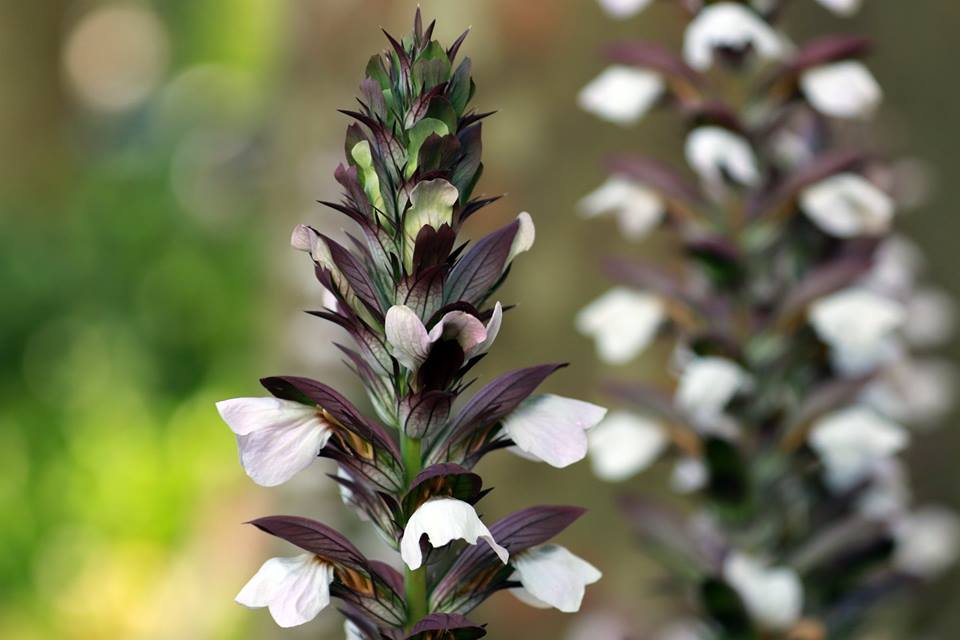
Tall flowers, each part in pale pink and deep purple - almost black and white

Photograph:  ‘Bachblüten’ (Meadow flowers). František Matouš © 2016


Ecce pratum purpuratum

Do not ask for flowers bright,
rainbow blooming boldly –
since the universe deprived
me of colours coldly.

Let me send you flowers white,
virgin leaves forever,
flowers black as sultry night,
life and death together.

From the fanned-out golden glow
on the merry meadow
take some flowers white as snow,
flowers black as shadow.

Purple blossom scatters spring
right beneath my eyes…
Purple flowers I shall bring
you in Paradise.

Christina Egan © 2015


The title is a Latin quote from the mediaeval song cycle Carmina Burana.
The German and English versions were created to match each other.

Quo vadis?

Quo vadis?

Roman mosaic of bottle and cupI drank a cup of strong red wine,
and half of it I somehow spilt…
That was still in another life,
before this winding lane was built…
It was along the straight wide road,
beneath a square of bright-red tiles…
I spilt it from a bright-red cup,
and then I walked from town for miles…
I limped along the riverside,
I lay down in the damp dark fern…
I spilt my wine, I spilt my life:
one day, I shall have to return.

Christina Egan © 2015

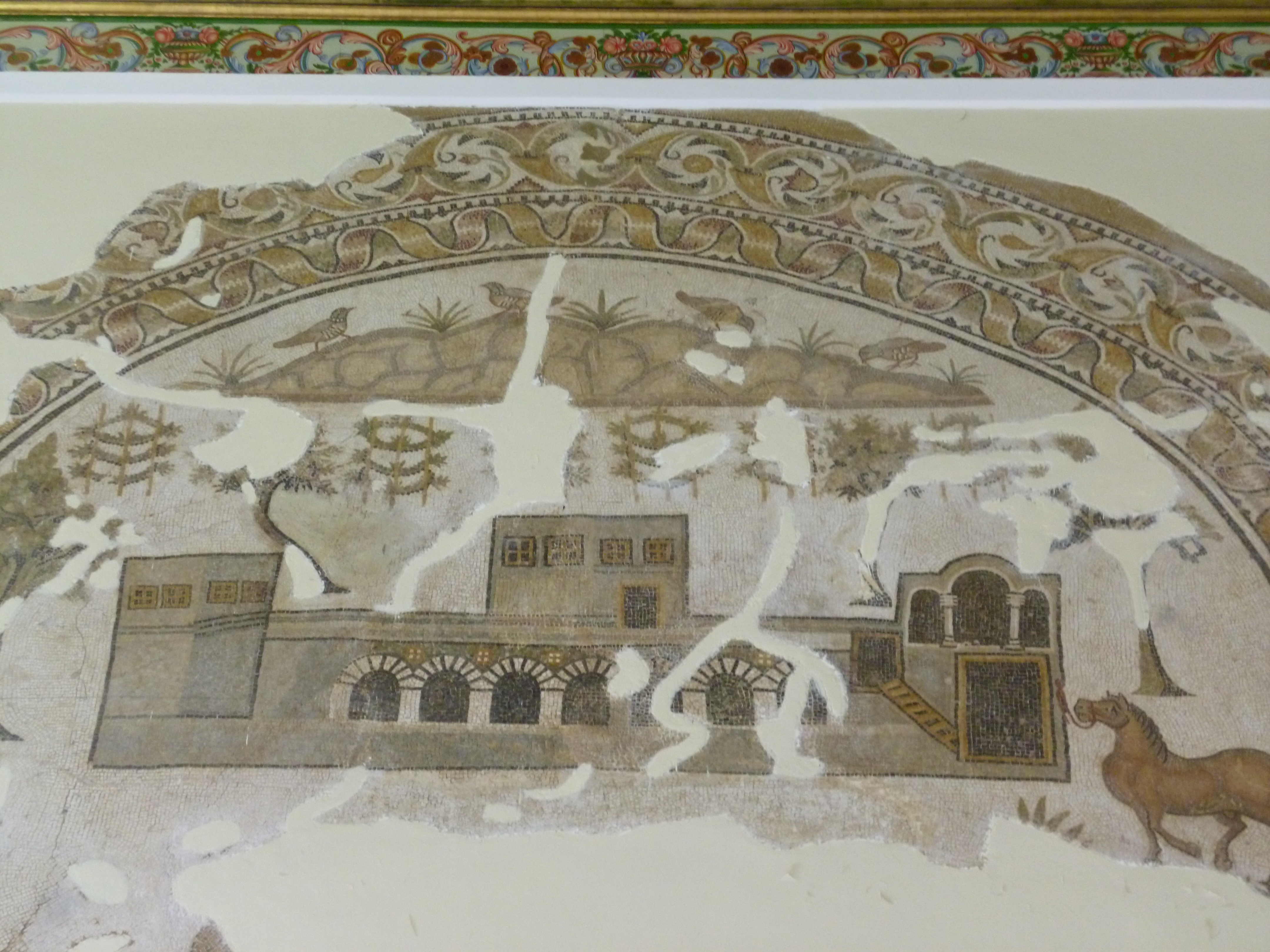
Roman mosaic of a mansion

This story was inspired by the winding highways and the straight Roman road meeting at Tottenham, London, England.

The Latin title means ‘Where are you going?’ and may imply a reproach to someone who is trying to flee their place in life.

See also my poem By the Highway
(in German and English versions).

Roman mosaics, Bardo Museum, Tunis.
Photographs: Christina Egan © 2014