Magical Chimes

Magical Chimes

A silver box with coral lid,
the wintry summer palace glows
atop the steep and even hill.

The pleasure ponds are frozen still;
a thousand windows in neat rows
blink one by one and drink their fill.

A haze hangs in the copse of firs
and birdsong floats, a silver web…
Among the shades, a buzzard stirs.

The clockface on the tower shows
ten in the morning; then it throws
its golden chimes into the wind

like golden coins! The treasure rolls
across the grounds, down to the walls,
across the fields, down to the mill,

where in the yard, a cockerel crows –
as if the land were now awake,
as if today the ice might break.

Christina Egan ©2017


This poem was inspired by walks through the grounds of 18th century palace Schloss Fasanerie, (Eichenzell near Fulda, Germany), which are freely accessible to the public.

One of my best German poems, Aprilabend (Der Tag ist hoch), describes the view across the highlands from there.

You will find another clock tower at Himmelblaue Uhr (Tottenham)  and May Haiku (Bruce Castle); the latter post is in English.
Parkbank im Herbst

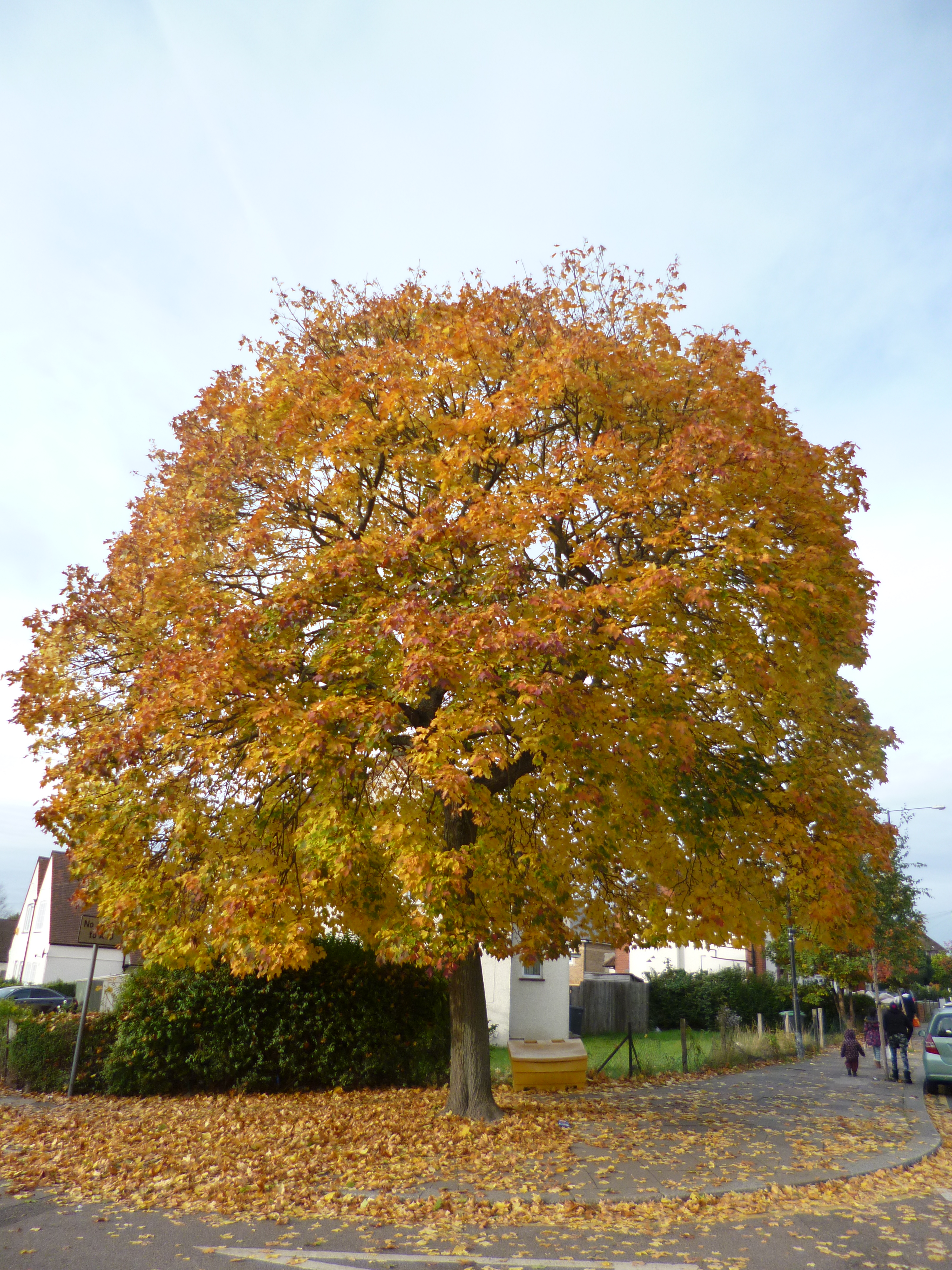
Autumn colours: tree with bright orange leaves, some fallen onto the ground.Parkbank im Herbst

Glühend hängt im Geäst,
welches sich klaglos entblättert,

das hehre Gestirn,
blendend und fern,

ein verspäteter König
ohne Gefolge rosiger Wolken… 

Und ausgeschnitten  aus den Schatten
ersteht ein Geviert von jauchzendem Glanz!

Christina Egan ©2008

Photograph: Christina Egan ©2016.

The Red Helicopter (Tottenham)

I have seen the red helicopter of the emergency services land in parks in Tottenham (Lordship Recreation Ground and Bruce Castle Park). In both cases it was the middle of the day, and in both cases, a teenager had been stabbed, once fatally and once nearly so. Another young man was shot and left to die in Tottenham Cemetery. All these green spaces are vast and idyllic.

See Himmelblaue Uhr (Tottenham) for Bruce Castle Park as a haven of tranquillity and Gedächtnisgarten zu Tottenham for the old cemetery as a garden of peace.

Gedächtnisgarten zu Tottenham

Gedächtnisgarten zu Tottenham

Wie Sternennebel
schweben die schneeweißen Büsche
im Nachtgrün am Rande des Parks,
und aus dem sattschwarzen Grunde
ruft ihrer mehr herauf
das funkelnde Zepter des Mondes,
als lebte der Amsel Perlengesang
das Dunkel hindurch.

Wie übergroße Urwaldblüten
liegen in Schlaf geschmiegt
die silbernen Gänse,
erfroren geglaubte Träume
verlorengegebener Kraft.
Der Duft von überallher
ist schwer, er wiegt,
er ist wirklich.

Die Rinnen der Inschrift
im Granit des Gartentors
füllen sich langsam mit Sinn:
Garten des Friedens.

Christina Egan © 2006

High brick wall with inscription 'Garden of Peace'; iron gate with lawn and palm-trees behind.

Memorial Garden, Tottenham Cemetery. Photograph: Christina Egan © 2013.

Bloomsbury, on the Ides of May

Bloomsbury, on the Ides of May

I will remember: it was on the Ides of May,
the light was lingering late, still bright behind
the fading curtains of clouds, ready to burst
into colourful banners; so were the buds in the parks.
Short were the shades of the columns and those of the crowds
ceaselessly weaving around the corners of concrete.
I will remember the weary assembly of tombstones,
too weathered to count as a witness, the lime-green life
pushing out from the cracks, the benches eager for laughter,
Edge of tomb, with weeds outside and insidethe birds’ unheeded, untiring, Vespers to God.
See: I lay down the unspoken secret in verse.

Christina Egan © 2007


Photograph (taken in Tottenham
in July): Christina Egan © 2013.

Standing in the Slush

Standing in the Slush
(February Haiku )

*

Standing in the slush,
by the bus stop, I’m looking
for lost memories.

*

Wet empty benches,
wet winding sand paths, furrowed
by hurried footsteps.

*

I’m rubbing my eyes,
weighed down by dreams, and there –
first leaves like lances!

*

Christina Egan © 2013


Like February Sparks, these haiku were written at the hardest time of the year, when our strength is about to be exhausted entirely. This is when we have to be strongest, when we have to fight hardest, as the previous post, Venus and Mars, describes. At least, in southern England, flowers appear very early, in winter, really, to cheer you up…!

Beetles on the Ark / Urban Copse

Orange Beads

Orange Beads

I.

I nod to the flower
the colour of dark wine
stalks and spikes that tower
above my legs and spine

twin doors an orange spill
the only one in town?
why is my own door still
an ordinary brown?

O sweet day!

II.

All these parallel roads
the orange doors are where?
again the suburb soaks
in sunshine hello there!

they smile and say hello
all else though stays behind
their sturdy frames and so
I keep my orange find

two bright beads

III.

The hawthorn turns orange
the blackberry turns black
mingling at the park’s fringe
behind the cycle track

the sky is blue as if
this were a normal state
as if we could just live
beyond the iron gate

of summer

Christina Egan © 2016


In London, you can find many front doors painted in red, blue, or green, but I had never spotted an orange one. I have mentioned a striking yellow door elsewhere. I usually go out without a camera, but I capture impressions with my pen!

There are so many green spaces in London that you can walk through parkland for hours. To find blackberries and hawthorns tucked between a duck pond and a little copse is quite normal in this vast city of over eight million people.

The verse pattern is borrowed from the French poet, Jean-Yves Léopold, who does not have a website. Eight short rhymed lines, almost without punctuation, are followed by a ninth line which is even shorter and does not rhyme at all, so it stands out.

Rosen wie Splitter

Rosen wie Splitter
(Juli-Haiku)

*

Rosen wie Splitter
von Mittagsglut, Mondnacht
und Sonnenuntergang.

*

Warm und schwer von Düften
schwappt die Luft durch den Park,
lacht lautlos der Teich.

*

Goldene Blüten,
tausend Trompeten, hörbar
nur für die Engel.

*

Christina Egan © 2001

Two large orange roses in the sunshine, yellow in the middle, with large healthy leaves.

Photograph: Christina Egan © 2014