The Keystone of the Sky

Trefflich (Gazakrieg)

Trefflich

Ach, wozu noch Meeresblau
je beschwören und wozu
Wellenschlag und Morgentau,
wenn ein Paar bestickter Schuh
bunt aus Schutt und Asche schaut,
– angefaucht und fortgefegt –
und die namenlose Braut
nie mehr ihre Füße hebt,
nie ein Kind zum Himmel hält…
Ach, wie bleibt das Meer bloß blau?
Denn es stirbt die ganze Welt,
frißt der Drache eine Frau.
Fällt die Kugel einen Mann,
klagt ein ganzes Engelheer.
Lautlos schreit ein Schlüsselbund
a­­us dem Schrott,– doch hört ihn wer?
Paßt der Schlüssel auch ins Schloß,
hängt die Tür in schräger Wand,
denn ein treffliches Geschoß
riß das Haus halb in den Sand.
Immer wieder gibt es Krieg
voller Lügen, voller Lärm.
Niemals aber gibt es Sieg,
nur die Hoffnung wie ein Stern.

Christina Egan ©2024
(Gazakrieg)

In this poem, War is personalised as a hissing dragon burning, devouring, or blasting away everything in its way.

The title is a pun on an old word for “excellent”, literally “hitting precisely”: in a war, success is based on destruction.

On October 7th, 2023, the Palestinian terror organisation Hamas committed a massacre and mass abduction in Israel, whereupon the Israeli Government launched a war on the Palestinian territory of Gaza. It has since attacked the West Bank and invaded neighbouring country Lebanon, where the terror organisation Hezbollah de facto rules. The aim on both sides is evidently genocide. This is destruction against destruction, revenge upon revenge, genocide versus genocide.

Tepid Tides

Orange and Turquoise (Crete)

Orange and Turquoise
(Crete)

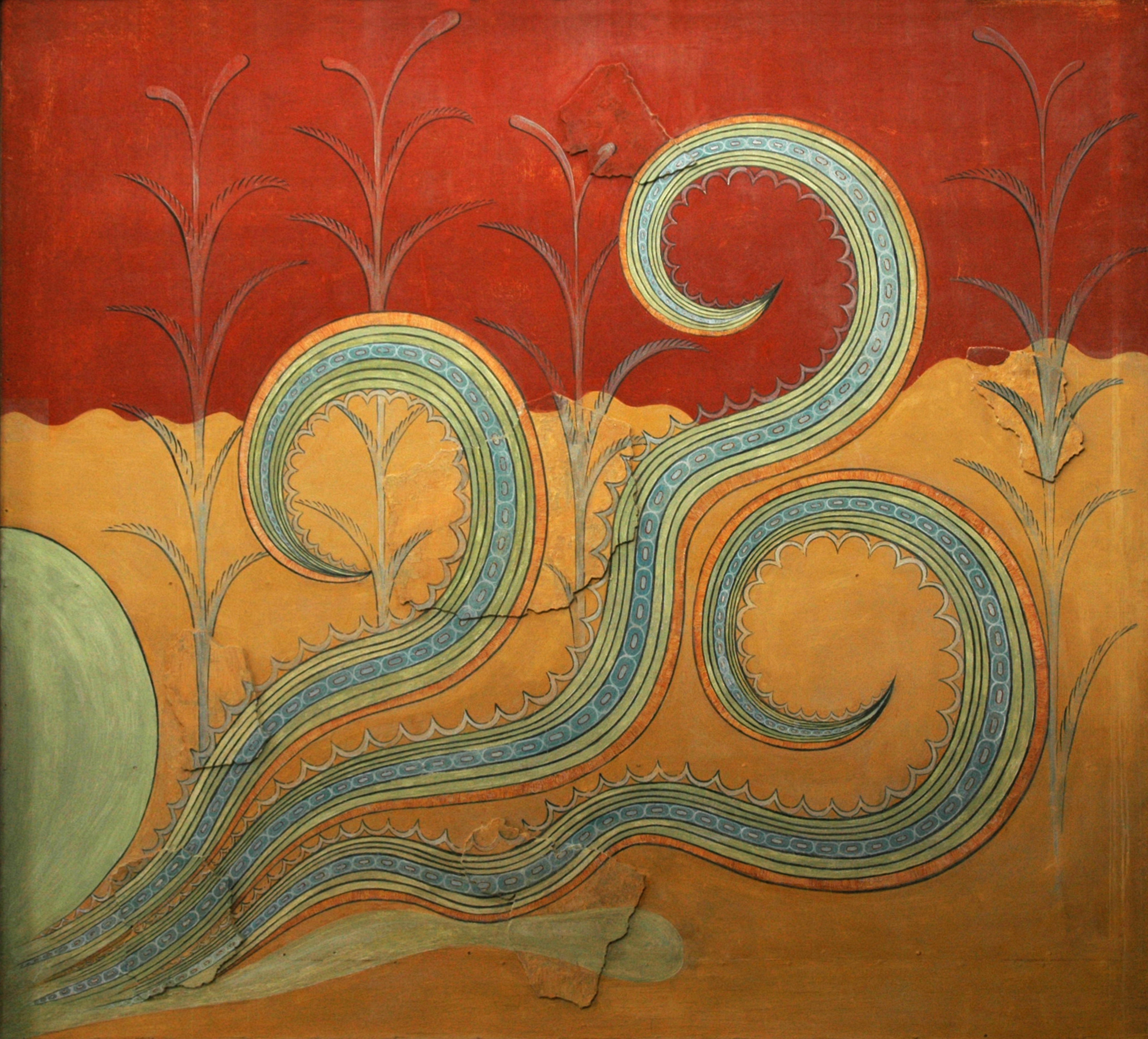
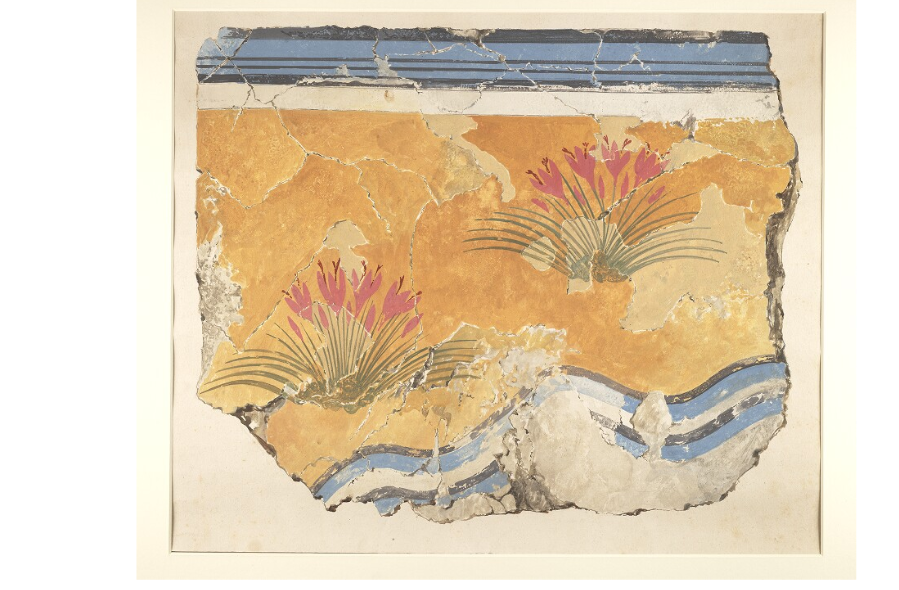
Fresco of red crocuses on orange ground near blue water.orange and amber
the southern soil
like fresh fruit
like lush flesh

turquoise and azure
the sun-steeped sea
like human eyes
like human souls

Christina Egan © 2012


orangerot und türkis
(Kreta)

Flourishes on a mural, turquoise on luminous red and yelloorangerot
und ocker loht
die stille bucht
wie fleisch und frucht

türkis azur
der wellentanz
wie augenglanz
und aurenspur

Christina Egan © 2016


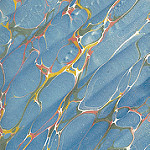
Decorative paper, light-blue with ripples in yellow, red, white, green.A reddish orange and a greenish blue are complementary colours and will therefore be more striking in combination. 

In the Mediterranean, strong light and heat prevail even in late September.

I found this beach at the edge of the five-thousand-year-old town of Chania on Crete.

You can read more about the bright blue and green sea in Kretische Küste and about the reddish soil in The Dittany of Crete.


Murals in the royal palace at Knossos, Crete.
Watercolour of crocuses by Arthur J. Evans: Photograph provided by Digital Bodleian Library under CC BY-NC-SA 3.0.
Photograph of spirals: Harrieta171 via Wikimedia.

Decorative paper. Photograph provided by British Library through Flickr .

Tabucchis Blau

Tabucchis Blau

hochsommerhimmel
über Lissabons hügeln

so blau daß es beinahe beißt
so schön daß es beinahe schmerzt

und vor der gleißenden steilen
vielfach verschachtelten stadt

ruft mit demselben trunknen blau
die bucht dir unbeirrbar zu:

du stehst immer am anfang
einer entdeckungsfahrt!

Christina Egan © 2012

Artistic impression of Mediterranean village on steep coast; landscape in orange, sea in blue, village in white

„con… il sole che splendeva, e con una città che scintillava, letteralmente scintillava sotto la sua finestra, e un azzurro, un azzurro mai visto, sostiene Pereira, di un nitore che quasi feriva gli occhi…”

Antonio Tabucchi, Sostiene Pereira

Antonio Tabucchi (1943-2012) loved Lisbon and lived there. I wrote this poem for him when he died: his last voyage would be the one to another, even more beautiful world. The last line can, however, be interpreted in many other ways.

Illustration: “Elba — Land der Esel” by Ottilie Ehlers-Kollwitz (1955). With kind permission of Galerie Klaus Spermann.

Dankbar für die kleinen Dinge

Dankbar für die kleinen Dinge

Dankbar für die kleinen Dinge,
dankbar für die Jahresringe,
für die weißen Schmetterlinge
und den Sonnenblumenstrauch.

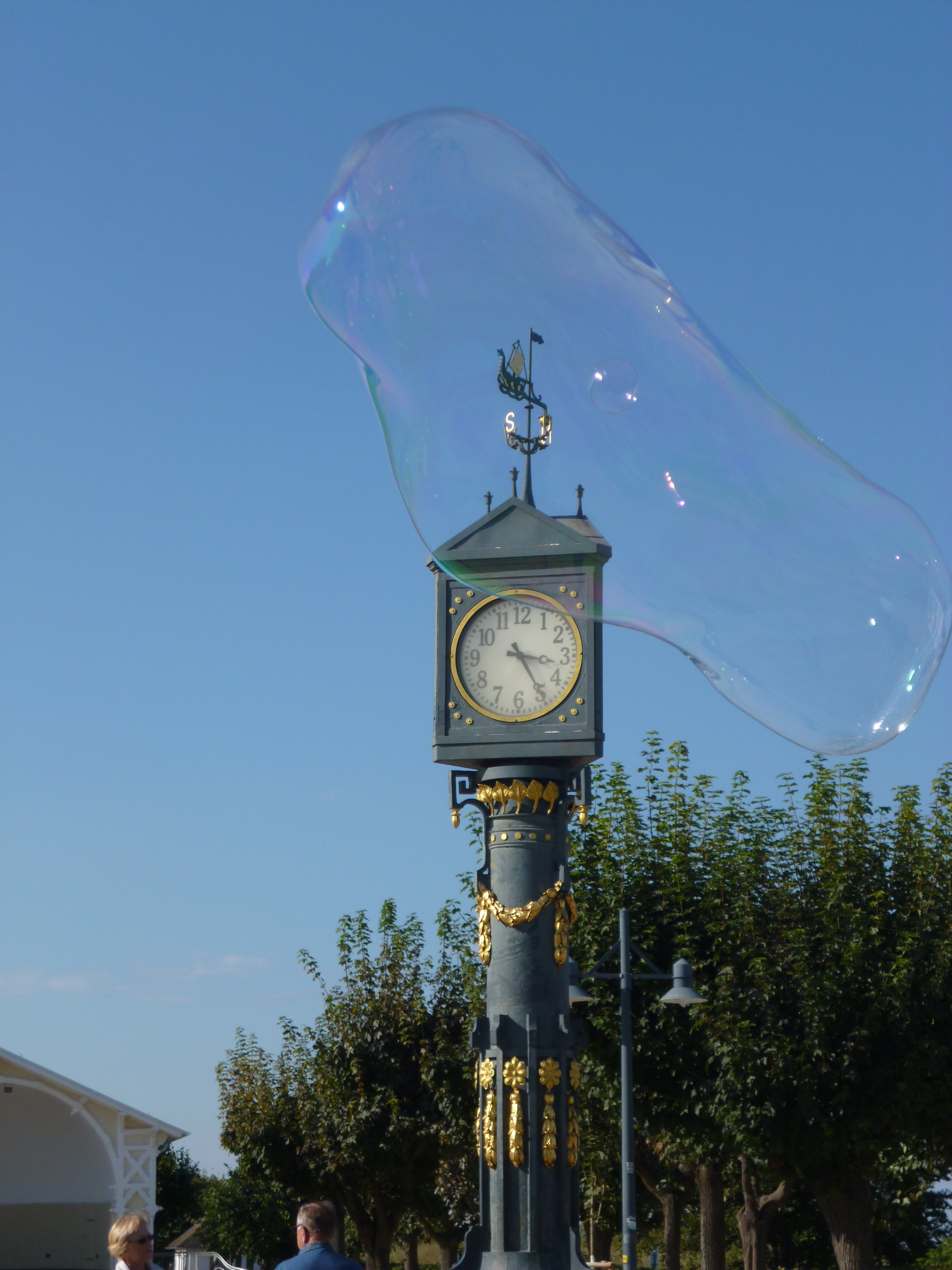
Large standing clock with heavy golden ornaments, with huge soap bubble floating across.Dankbar für die kleinen Wunder,
unverhofft und unbesungen,
für die sonnenfrohen Stunden
und die sternenstillen auch.

Dankbar für die kleinen Pausen,
für des Laubes sanftes Bauschen,
für des Meeres hehres Rauschen
und der Symphonien Rausch.

Dankbar für die kleinen Zeichen,
für ein rasches Händereichen,
für ein Lächeln ohnegleichen
und der Blicke echten Tausch.

Christina Egan © 2018


Clock on the beach promenade,
Ahlbeck on Usedom. Photograph:
Christina Egan © 2017.

Quiet Fire

Quiet Fire

In balmy darkness
I was floating
over sand and salt,
along the garland of lights,
below the curtain of stars…

One fell.
In a flash, I thought of
my distant beloved one,
in a flood, it came back,
the impossible future.

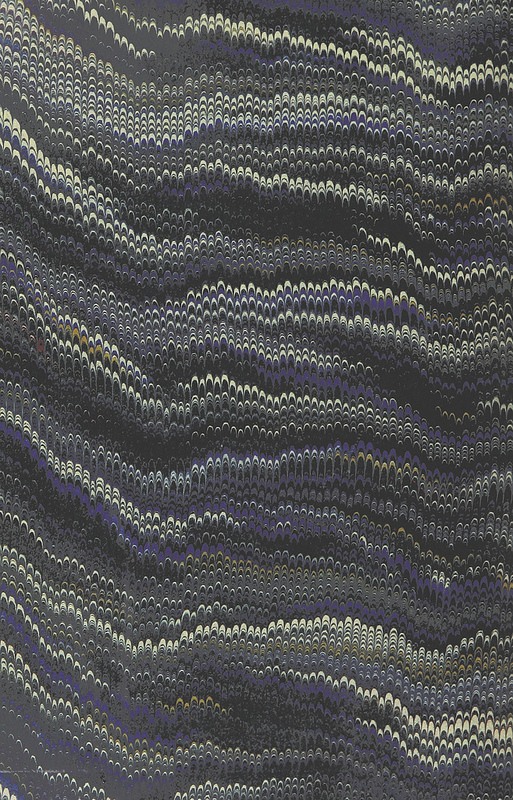
Decorative paper, black with ripples in grey, white, purple.He, too,
had come like a shooting-star,
fair, fast, in a sweeping curve,
with careless grace,
like a message from life.

Cold is the sea now and rough,
with dullness tainted the days
and the sparkling tent of the night.
The quiet fire has passed:
the face that mattered.

Around me is autumn,
and I know that spring will return
and my youth will not.
The voice that struck me is silent;
and my heart eats death.

Christina Egan © 2012

A memory of the Mediterranean Sea, where one can swim, and swim even in after dark, even into autumn…

Decorative paper. Image provided by British Library through Flickr.

Rosenquarzkammern

Rosenquarzkammern

Silberblech, angehaucht
Von allen Winden, schiefergrau
Und goldgekräuselt, rollt aus
Sich die See, bis sie
Des anderen Landes Füße berührt,
Die Türme der Stadt gegenüber.

Durch Rosenquarzkammern
Schimmert der sinkende Tagstern,
Reißt gleißend das Tor auf.

Den weißen Schiffen aber
Gleich menschentragenden Möwen
Folget das Auge hinaus,
Folget das Herz hinüber
Und wünschet sich Brücken,
Aus silbernen Fäden gesponnen,
Geknüpft über Wogen und Wald…

Christina Egan © 2017

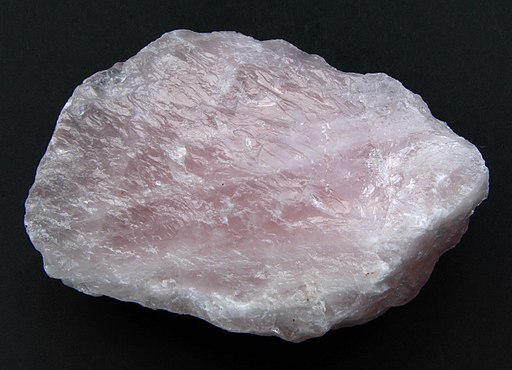
Shimmering, milky, rosy piece of rock, resembling the sea at sunset.

This is the view onto the Öresund bridge which connects two countries, Denmark and Sweden, although it turns into a tunnel in the midst of the water, so that it seems to go under… The style of the poem is that of two hundred years ago, when such long bridges could not yet be constructed; the speaker only wishes for roads across, instead of the sea itself as a path.

I tried to convey the expansion of the elements and the symphony of grey, white, silver, golden, pink.

You can read English poems about a suspension bridges at On the Orange Bridge (San Francisco) and Tranquil Dragon (London).

Photograph of raw rose quarz by Ra’ike [GFDL or CC BY-SA 3.0], via Wikimedia Commons.

Schimmernder Streif

Schimmernder Streif

Ich weiß noch den Teich
zwischen Wiese und Wald,
offnem Meere und Land,
zwischen Süße und Salz,
wo die Dämmerung lang
und unsagbar weich
in den Baumwipfeln hing,
auf dem Wasser verging…

Jener silberne Teich
gleicht dem schimmernden Streif
der Musik, jenem Reich
zwischen Stille und Wort,
Empfindung und Ding,
zwischen Jenseits und Welt,
jenem Raum, der vergeht
und aufs neue ersteht…

Für Anton Bruckner

Christina Egan © 2017

This poem, like others in German and English, was inspired by one of the greatest landscapes I have seen: the strip of land called The Darß (Darss) in the south of the Baltic Sea.

The first stanza can be read as an impression of nature independently of the second, which compares it to Bruckner’s music, or indeed any music. Bruckner, in turn, is one of the greatest composers I know!

Die blauen Fernen

Die blauen Fernen

Fernab der Meere und der mächtgen Ströme
liegt meine Hügelheimat hingebreitet;
mit jeder Wendung, Steigung, die ich nehme,
wird mir der Blick auf neue Höhn geweitet.

Was braucht es Meere, wenn uns Wald und Wiesen
und Feld und Felsen und die blauen Fernen
wie Wellenberge, Wellentäler fließen,
den Schritt beflügeln und das Herz erwärmen?

Die Luft ist rein, mit Duft und Kraft geladen,
die Glieder und den Geist mir zu verjüngen;
und winters werden Schnee und Nebelschwaden
des Eismeers Zauber in die Berge bringen.

Christina Egan © 2016


One stanza of this poem is printed in the Rhönkalender 2018 with a photo from that part of the Central German Highlands; the whole poem has been published in the Münsterschwarzacher Bildkalender 2019.