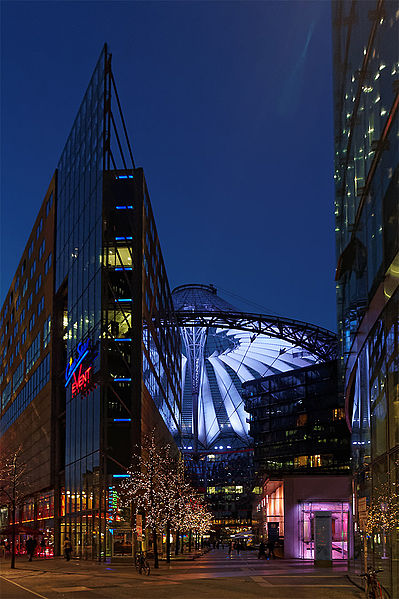
Glass Mountain (Potsdamer Platz)

Glass Mountain
(Potsdamer Platz)

Lights above you, lights around you,
shifting blue and mauve and pink,
lights below you, lights surround you,
pierce the black and loom and shrink.

Glass fronts of enormous silos
mask the dusk and stare and blink,
figures wander in the windows,
lifts in tubes float up and sink.

Water basins spread around you
shifting blue and mauve and pink,
glass roofs open in the ground, too,
names flare up in mirror print.

Glass façades and water fountain
multiply the hum and glint:
you have stepped inside a mountain,
you are trapped in steely pink,

trapped beside a thousand others,
lulled by murmur and gay tunes,
screened from sun and stars and weathers
by a tent-roof in sweet blues.
Futuristic glass buildings, pointed and rounded, illuminated in blue and pink; in the corner, old facade visible beneath.

Then you see the stucco hover,
curling in a livid tint;
chandeliers unfurl and quiver;
then you hear the glasses clink…

Have you dreamt of the Titanic
or of old Potsdamer Platz?
No, this is the real relic,
the hotel that dodged the Blitz

and kept spinning through the nightmare
of the void swept by the wind –
sad and splendid sole survivor
under glass and neon pink.

Christina Egan © 2017

Sony Center on Potsdamer Platz, with old façade visible beneath the glass (here, in pink). Photograph: Pedelecs by Wikivoyage and Wikipedia [CC BY-SA 3.0], via Wikimedia Commons.

For a German poem on the old, vanished, Potsdamer Platz, look at the sonnet Nächster Halt: Potsdamer Platz.
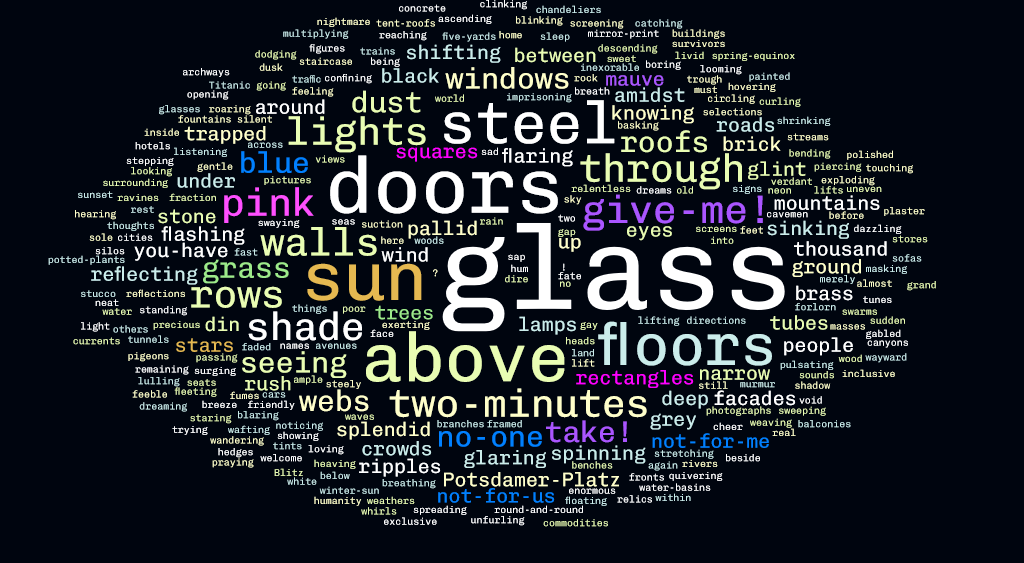
Word cloud on black, most words pale, some words glaring. In the middle, "glass", "steel", "doors", "sun".

Word cloud Steel & Glass. Christina Egan ©2024.
Developed from twelve poems about big cities on
this website, with some colours of the scene above.
See more at When Webs of Steel / Von stählernen Waben.
Many thanks to the Simple Word Cloud Generator.
Ursprung

Ursprung

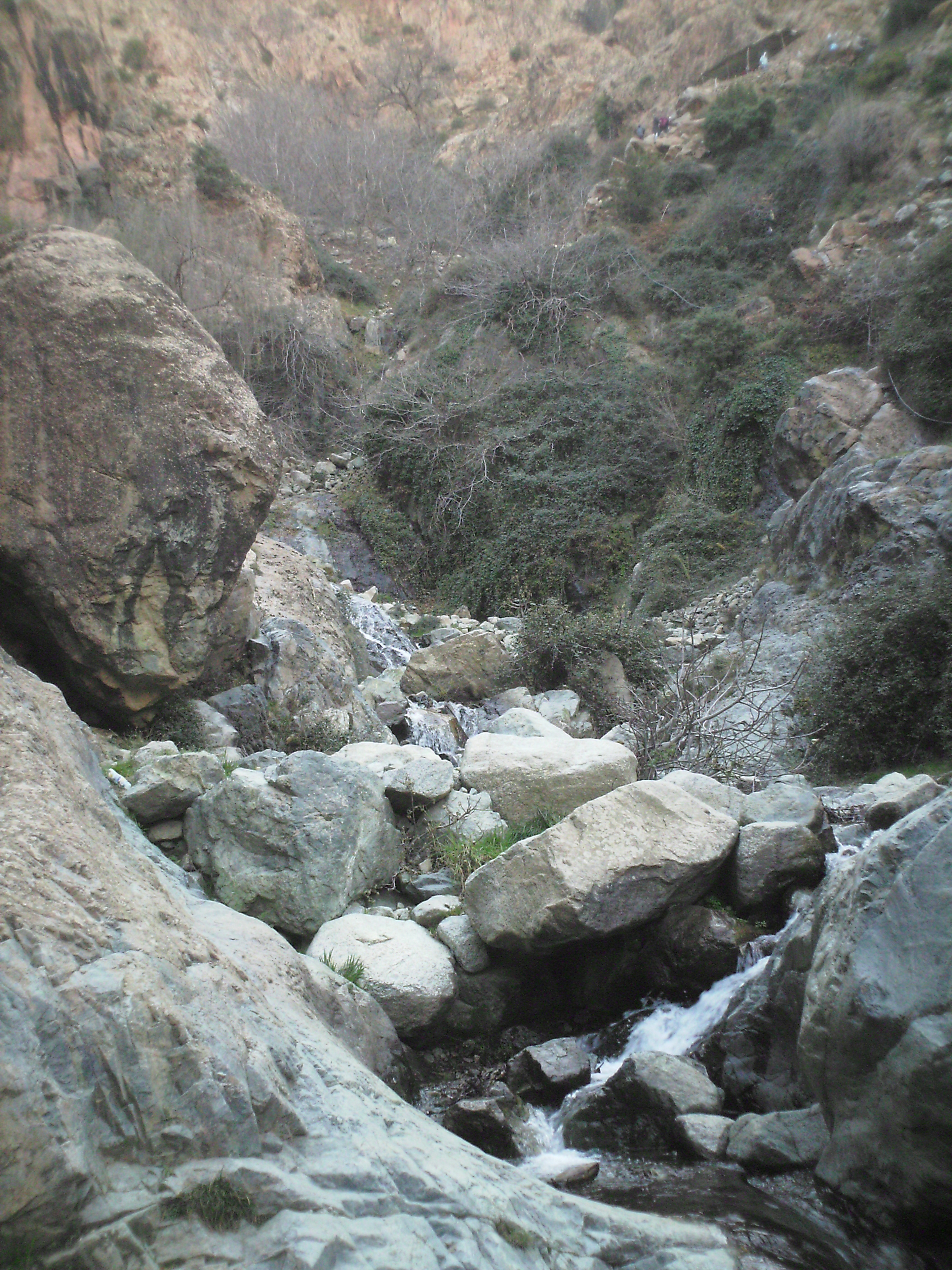
Narrow gorge with stream skipping around boulders and some vegetation on the rocks.Aus dem Felsen springt die Quelle:
So die Schöpfung aus dem Nichts.
Und sie strömet Well’ auf Welle
aufs Geheiß des Herrn des Lichts.

Und sie funkelt, und sie dunkelt,
und sie sprudelt fort und fort;
und sie murmelt, und sie rufet,
da geschaffen durch das Wort.

Und sie schäumet, und sie strebet,
spiegelt, springt empor zum Licht;
denn sie sucht den Herrn des Lebens
Angesicht zu Angesicht.

Christina Egan © 2016


This poem or hymn may work quite well in a translation software.

The text is based on the Jewish-Christian myth of creation: Out of nothingness (or chaos), God called everything into being (and order). Light was the first thing made, and it was all done through the word.

There is also a concept in Christian philosophy that God continues creating the world every moment; if he ever ceased, everything would tumble back into nothing. These ideas are really the opposite of nihilism.

Other thoughts from the Letters of the Apostles (at the end of the Christian part of the Bible) are that the whole of creation is striving and struggling towards God as if in labour; and that at the end of time, we shall emerge from darkness to see God ‘face to face’.

The title, ‘Origin’, means ‘first source’ in German; you can see the word ‘spring’ in it. Yet, I added the title in the end; the image and first lines stood clearly in my mind on waking up: the source springing from the rock, like the world out of nothingness, or life out of lifelessness.

A thought about a person stepping out from a building into the sunshine as if liberating himself or herself from a rockface can be found at Gelbes Licht, with a statue by Michelangelo that must have inspired it.

Photograph: Atlas Mountains, Morocco. Christina Egan © 2012.

Acherons Mund

Acherons Mund
(São Miguel, Azoren)

Das Inselreich spricht
in zitterndem Licht,
in zischenden Quellen,
in schwefligen Schwaden,
in schlaflosem Raunen
aus rissigem Grund
am Unterweltsschlund.

Vast surface of rough black rock to the left, gleaming pools of water and steam rising up to the right, mountains in the far background.Das Erdreich bestellt
am Rande der Welt
dem arglosen Wandrer
die Botschaft der Flammen,
die Mahnung der Schatten
aus Phlegetons und
aus Acherons Mund.

Christina Egan © 2016

Hot springs in Furnas, Sao Miguel Island, Azores.
Photograph
by Henryk Kotowski via Wikimedia.

Acheron is the River of Pain and Phlegeton the River of Fire around Hades.

I believe that some Greeks or Phoenicians sailed to the Canary Islands and others may have reached the Azores; this might have influenced their mythology, describing the realms of the dead as a cave of shadows and as a blissful archipelago. More of the latter at Sonett der drei Seen!