Die Fluten der Stadt

Die Fluten der Stadt

I.

Vor meinem Fenster rauscht die späte Stadt
und glitzert auf im Vollmond, schwarzes Meer;
sie spült Millionen Menschen hin und her,
spielt Fangen, nimmermüd und nimmersatt.
In ihrem Brausen höre ich Willkommen
und lasse mich auf ihren Wellen treiben.
Die Sternbilder der Leuchtreklamen schreiben
sich unter meine Lider… schon zerronnen.
Und nie allein: weil ich alleine bin,
zu Haus im selben Sehnsuchtsleitmotiv
wie jeder andre aufgewühlte Sinn.
Was immer schon in meinen Gliedern schlief,
schäumt ungebärdig zu den Sternen hin:
Ich will dich, will dich wild und meerestief.

II.

Auf vielen Brücken stand ich, ausgespannt
von Stahl und Stein an Themse, Rhein und Main,
und unter allen Himmeln stets allein:
stets einem Unsichtbaren zugewandt.
Es wandeln ja mit jedem neuen Strand
die Menschen wie die Häuser ihr Gesicht,
erstehen anders schon im Morgenlicht;
und immer wieder scheint mir eins verwandt.

Die Fluten wechseln – braun, blau, grau und grün –
die Augen ebenso, die mich gebannt,

sie füllen meine Augen – und entfliehn.
Doch deine, die ich nur von ferne fand,
die kaum mich streiften, seh ich weitersprühn…
Und ihre Farbe hab ich nie gekannt.

Christina Egan © 1995 / 1996
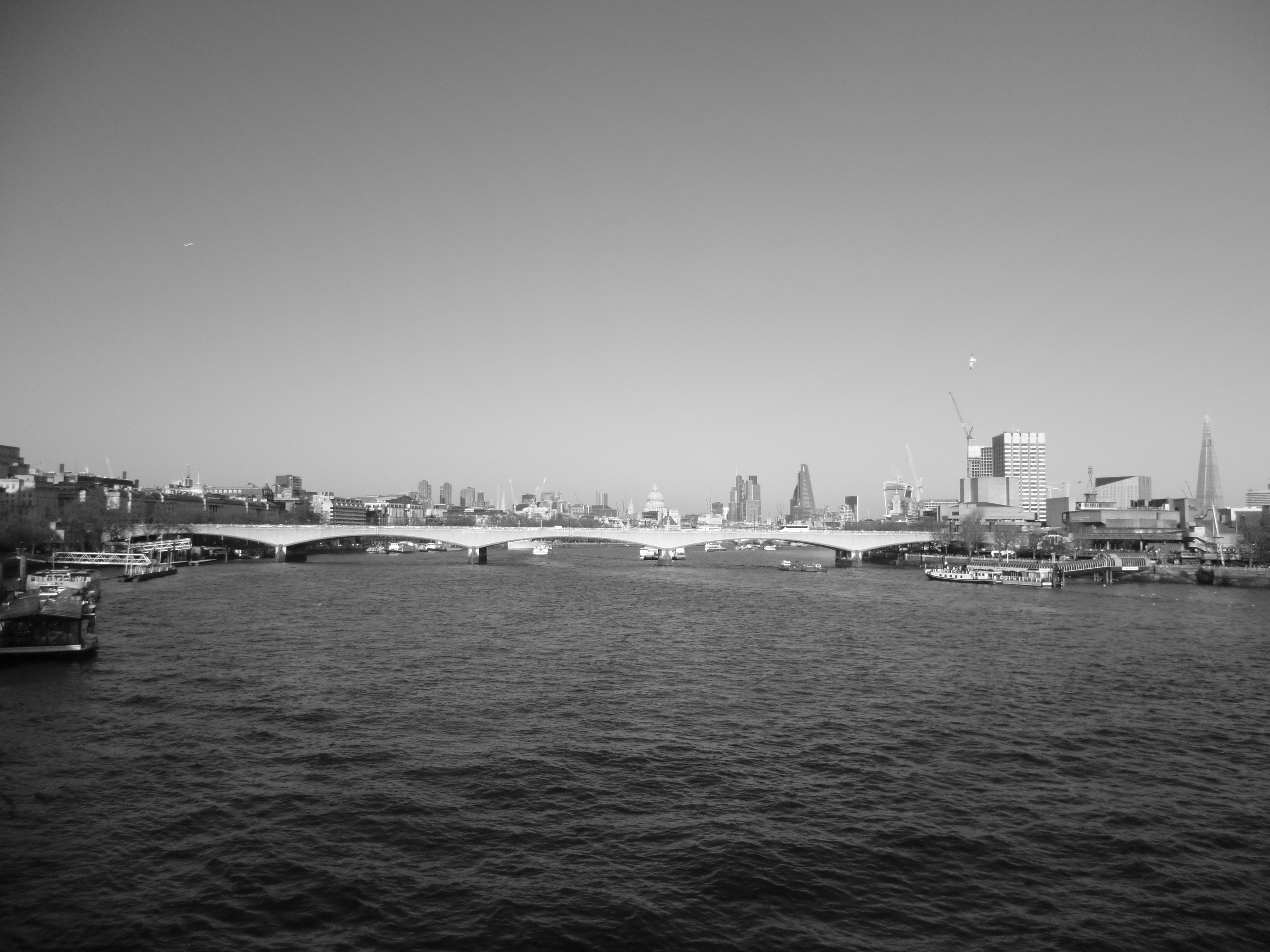
Black and white panorama of London skyline from a Thames bridge, with another bridge, boats, skyscrapers, St Paul's.

London. Photograph: Christina Egan © 2014


The narrator looks for love amidst the masses of the big city by the big river, where the star constellations consist of neon advertisements. She or he adores someone whom she has only seen from afar so that she does not even know the colour of his or her eyes.

Each sonnet makes a paradoxical statement about loneliness: This person is never lonely because many other people in this city share her loneliness; and she is always lonely because she is in the presence of a beloved one who is absent.

Word Weaver

Word Weaver

More purple clouds than I can count
or weigh or paint for you
or snatch and send them underground
with some surrounding blue…

To one whose windows do not stretch
to spy the heaving sky,
I’ll weave my syllables to fetch
the purple passing by.

To one whose dusk and marble moon
are filtered through a rail,
I must thread silver on my loom
to leave a shiny trail.

I must request the best black silk
to mark the balmy dark…
By day I’ll stitch a roaring quilt
to catch the city’s heart!

Christina Egan © 2016

Drawing of the mechanics of a loom (yarn on rolls, without the frame)The poet describes the world to a prisoner who can barely see the majestic ever-changing sky and the bright busy city surrounding them. The sound and rhythm of the lines emulate the warp and weft of life, so that the words reflect the world — read the poem aloud and you will see!

The other person may be imprisoned by a totalitarian state or indeed by a democratic state, or locked up by their employers or indeed their own family, behind walls and perhaps under a garment. There are many millions of human beings who de facto are prisoners or slaves without being called so.

For poems about time (for instance ensuing generations) and space (for instance a big city) as a tissue, see my post Geflecht / Geflechte. All of civilisation and all of humanity is one web.

Rosen wie Splitter

Rosen wie Splitter
(Juli-Haiku)

*

Rosen wie Splitter
von Mittagsglut, Mondnacht
und Sonnenuntergang.

*

Warm und schwer von Düften
schwappt die Luft durch den Park,
lacht lautlos der Teich.

*

Goldene Blüten,
tausend Trompeten, hörbar
nur für die Engel.

*

Christina Egan © 2001

Two large orange roses in the sunshine, yellow in the middle, with large healthy leaves.

Photograph: Christina Egan © 2014

May Haiku (Bruce Castle)

May Haiku
(Bruce Castle)

Glowing orange orbs,
cluster of new-born planets:
this year’s first roses!

*

Dusk, delayed, scented:
the earth emerged from the dark,
bedecked like a bride.

*

Below the half-moon
a low-flying aeroplane
slices up the sky.

*

The tower-clock strikes,
bright, as if an angel called:
Be alive! Alive!

Christina Egan © 2013

You can see a photo of Bruce Castle, Tottenham, London and read some similar poetry in German at Himmelblaue Uhr.

Die Hängenden Gärten / Palmyra Perennis

Die Hängenden Gärten

Schwarz liegt der Strom, von Gestirnen benetzt,
blendend erhebt sich der Herrscher der Nacht
über die Hängenden Gärten,
über den künstlichen Gipfel,
welcher den Hügel ins Flachland versetzt,
welcher den Wald in die Großstadt gebracht,
über die plätschernden Gärten,
über die flüsternden Wipfel…
Flimmernd erhebt sich die Harfe zuletzt,
warm liegt die Stadt in versilberter Pracht.

Christina Egan © 2015

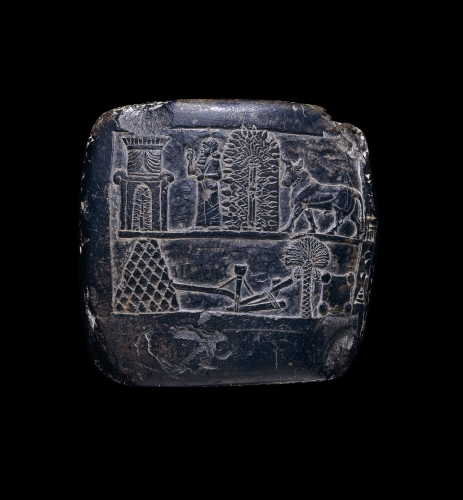
Basalt stone with carved images of trees, with a building, an animal and a man

The city of Babylon. Assyrian, 7th c. BC. —
© The Trustees of the British Museum
(Ref. no. 00032445001)

These musical lines evoke Babylon by night:
the moon and stars reflected in the Euphrates,
the Hanging Gardens rising above the big city,
murmuring fountains and a sparkling harp…
It could be the instrument which rises
sparkling like a star — or its voice.

Palmyra Perennis

Sank auch der stolze Bogen dahin mit dreifachem Seufzer,
ragt uns sein Bildnis im Geist schwerelos über dem Sand.
Sind auch zum Staube gekehrt der Ahnen goldene Hallen,
tragen das Erbe wir fort: sanften Triumph der Vernunft.

Christina Egan © 2015

For a picture of the ruins of Palmyra and a comment on
this poem on enlightenment, please look at my
MOTTO.

The view that cultural vandalism should be recognised as
a war crime akin to genocide has been discussed recently.

In Marrakesch (Einst fiel ein Regenbogen)

In Marrakesch

Einst fiel ein Regenbogen auf die Wüste
zersplitterte in funkelnde Oasen
in Perlen Spiegel abertausend Tücher
in Brunnen Palmen abertausend Rosen

Zum Regenbogen wird der Horizont
zum schwarzen Drachenkamm das Hochgebirg
und über kühnen Türmen hängt der Mond
wenn Dunkelheit das Mauerrund umwirbt

Und immer Hupen Räder Rufen Reden
Laternen Tänzerinnen wie zum Fest
Dies ist die Stadt wo jede Nacht das Leben
ein Feuerwerk ist: Dies ist Marrakesch!

Christina Egan © 2012

There is a longer version of this poem, as lyrics for a love song, for once a happy one…

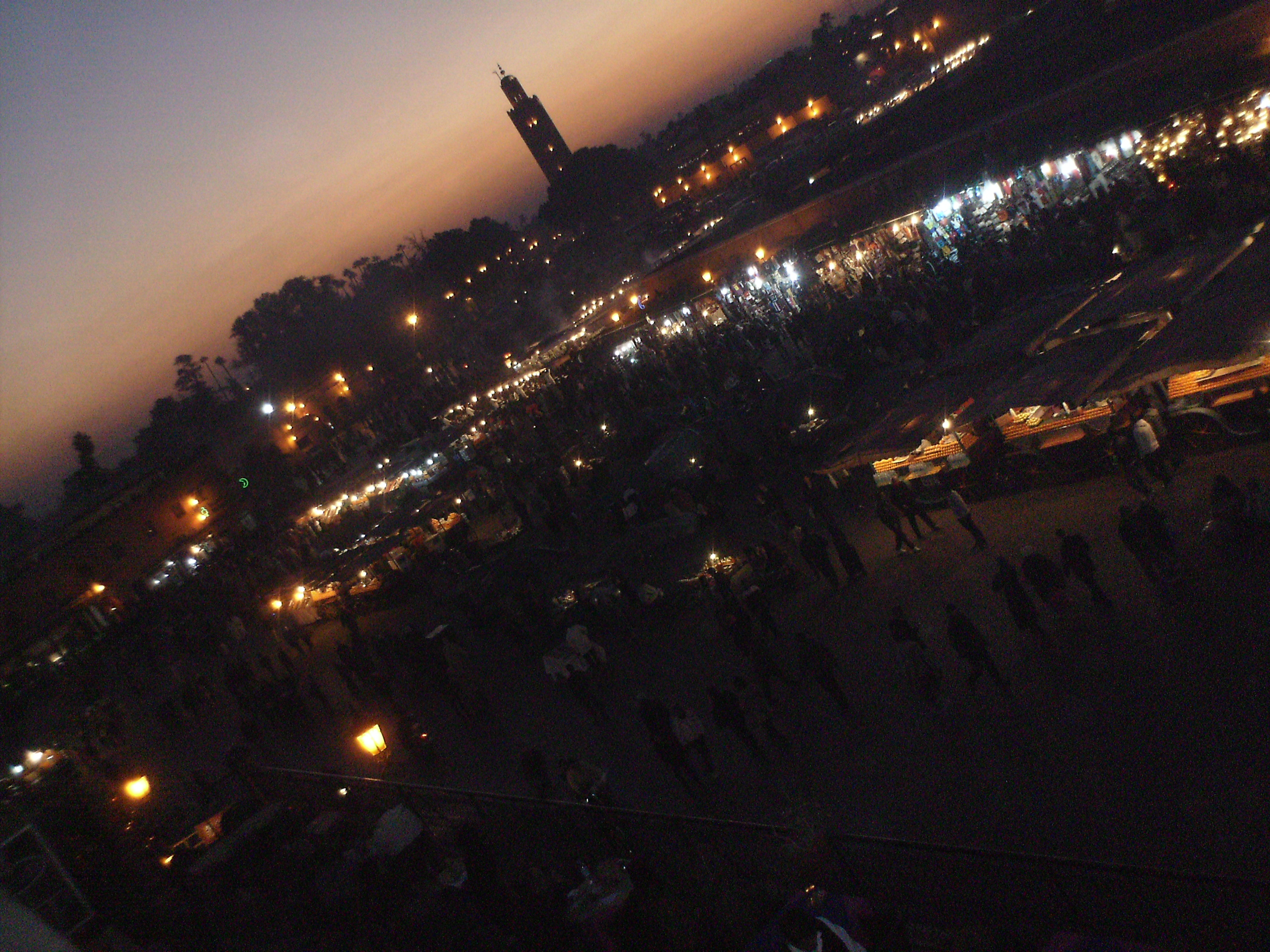
This text may work in a translation software. You can read an English poem about Marrakesh at Winter Sunrise in Morocco.Vast square by night, illuminated by lamps in market stalls, with the sunset along the horizon and a massive minaret showing. The Square of the Dead is incidentally the most lively place on the planet. You must visit it after dusk to get the full experience. Nothing prepares you for Marrakesh!

Photograph: Square of the Dead, Marrakesh, Morocco. Christina Egan © 2012

inselstrand / mondstrand

inselstrand

der sand ist durchsponnen
von tausenden rinnen
wo winzige flüsse
perlmuttern erschimmern

sich sammeln sich teilen
erwärmen erschauern
bald rasten bald eilen
erblassen erblauen

der sand is voll salz
und voll sonne gesogen
das leben verbirgt sich
im atmenden boden

das land ist dem wind
und dem wasser verwoben
die seele der enge
der insel enthoben

Christina Egan © 2014

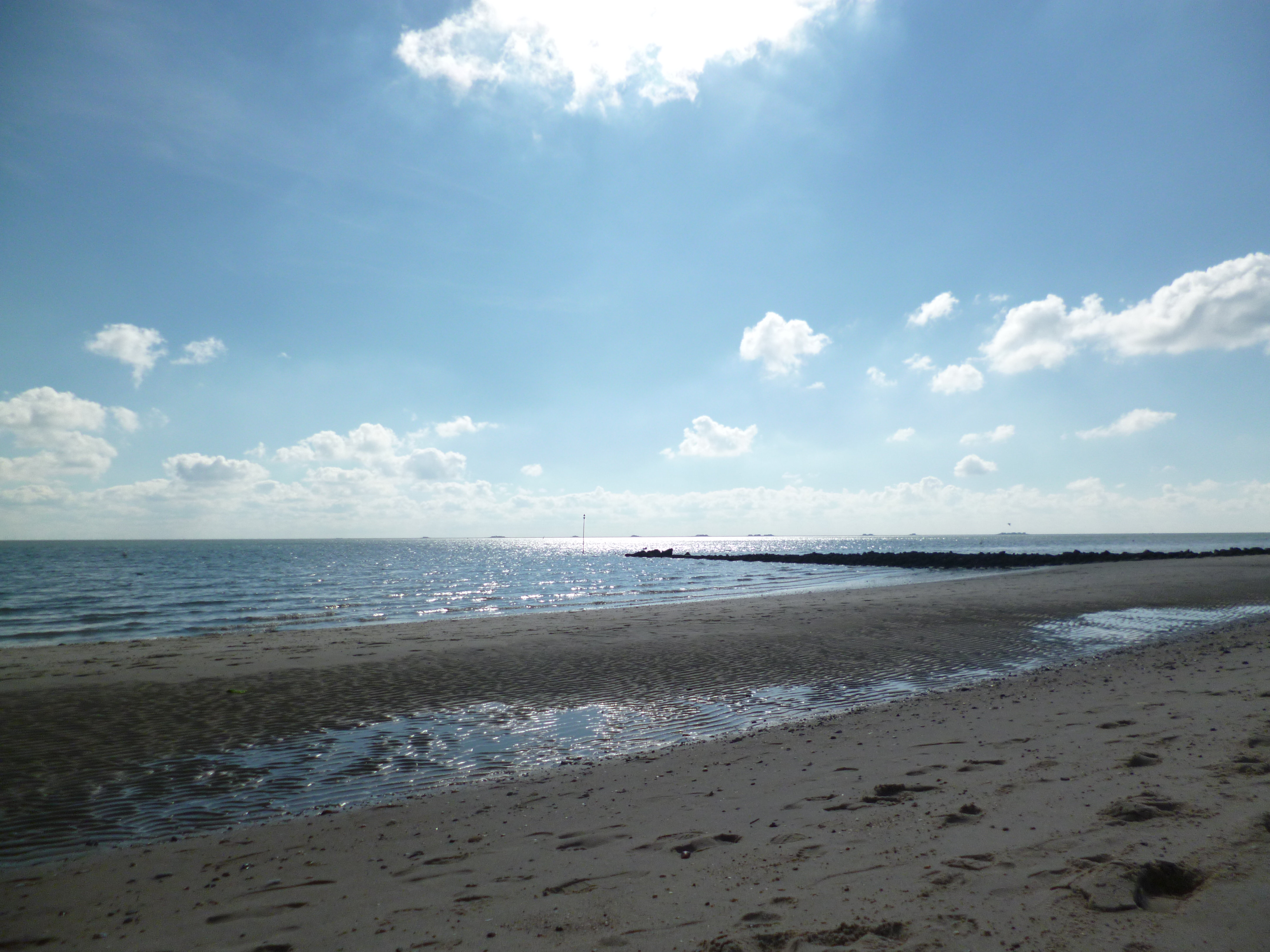
Shallow sandy beach and blue sea water filling lower half of picture, sky-blue sky with a few clouds above. Exudes tranquillity.

Beach of Wyk on Föhr, Germany. Photograph: Christina Egan © 2014.

mondstrand

streckt das meer sich
mondbeglänzt
wacht die erde
nachtentgrenzt

webt die wolke
geisterhaft
um der mondin
zauberkraft

schlägt die schwärze
windbewegt
auf das silber
feingeprägt

pocht die welle
unentwegt
an den sandstrand
sanfterregt

taucht die sohle
heiß und bloß
in die brandung
ruhelos

steigt der schmerz
im raschen blut
fällt die träne
in die flut

steht die hoffnung
fest und fern
hängt das herz
am höchsten stern

Christina Egan © 2014


These lines stem from a visit to two tiny round North Sea
islands, Föhr and Hooge. Besides my walks on the beach —
by day and by night — I was inspired by
Gregor Swoboda’s
paintings
 at Galerie Nieblum.

Find more poems and photos at Views of North Sea Islands
(in German and English).

Winter Views from the Bus

Winter Views from the Bus

*

Pink watering cans
lying flat in the drizzle,
dreaming undisturbed.

*

The yellow front door
in the long row of houses:
It stands out. It smiles.

*

The moon, veiled in mist,
floats in the darkness above
the bright white clockface.

*

Christina Egan © 2012

I was looking at the clocks of St Pancras Station at
King’s Cross, but you could equally observe Big Ben.

There is no ‘London fog’ any more since coal fires were
outlawed — 
yet there are still a lot of mist and fumes…

In northern countries, there is very little colour in winter,
so you need to look out for splinters of colour and rejoice!

Sommergewitter am Meer

Sommergewitter am Meer

Das Meer lag wie ein Teppich,
die Sonne sank mit Prunk.
Die Nacht fiel lau und lieblich,
der Mond stieg stolz und rund.

Der Himmel rührt das Wasser
und zaust den Wald – und jetzt –
ein Tropfen, Klopfen, Prasseln –
und jetzt – der erste Blitz!

Doch in die wilden Zacken,
Licht sonder Maß und Zahl,
dreht eine Leuchtturmfackel
den stillen breiten Strahl.

Christina Egan © 2015

This composition of bright moonshine, wild lightning,
and flashing lighthouse fire recalls the Darß (Darss) at
the very edge of Germany.

You can find more verse on the Baltic Sea in summer
at ostseeschlaflied and Midsummernight Far North,
and when you type ‘Darss’ into the search box.

First Autumn Days / Erste Herbsttage

First Autumn Days
(September Haiku)

*

Fiery flower,
still sucking sunshine, still scaling
the wooden fence.

*

The sky turns deep pink
above the first rusty leaves
and burning berries.

*

The moon, low and large,
a knob of solid silver
on heaven’s sceptre.

***

Erste Herbsttage

*

Feurige Blume,
noch saugst du die Sonne ein,
kletterst den Zaun hoch.

*

Tiefrosa Himmel,
erste rostrote Blätter,
brennende Beeren.

*

Der Mond, niedrig, groß,
solide Silberkugel
am Himmelszepter.

*

Christina Egan © 2015

*

Haiku have 5 + 7 + 5 syllables.
The German haiku are translated
from the English ones.