May Haiku (Bruce Castle)

May Haiku
(Bruce Castle)

Glowing orange orbs,
cluster of new-born planets:
this year’s first roses!

*

Dusk, delayed, scented:
the earth emerged from the dark,
bedecked like a bride.

*

Below the half-moon
a low-flying aeroplane
slices up the sky.

*

The tower-clock strikes,
bright, as if an angel called:
Be alive! Alive!

Christina Egan © 2013

You can see a photo of Bruce Castle, Tottenham, London and read some similar poetry in German at Himmelblaue Uhr.

Himmelblaue Uhr (Tottenham)

Himmelblaue Uhr
(Schloßpark zu Tottenham)

Die Dämmrung senkt sich auf die Flur.
In Vogelsang
tropft Glockenklang
von einer himmelblauen Uhr
an einem himbeerfarbnen Turm.

Die Rosen schimmern wie Laternen.
Von ringsum her
summt der Verkehr.
Ein Flugzeug funkelt zwischen Sternen
und segelt durch Kornblumenfernen…

Die Wetterfahne blinkt am Mast.
Ein Ruf, Gebell,
der Uhrschlag, hell –
Und alle Sorge, alle Hast
kommt zwischen Tor und Tor zur Rast.

Christina Egan © 2016

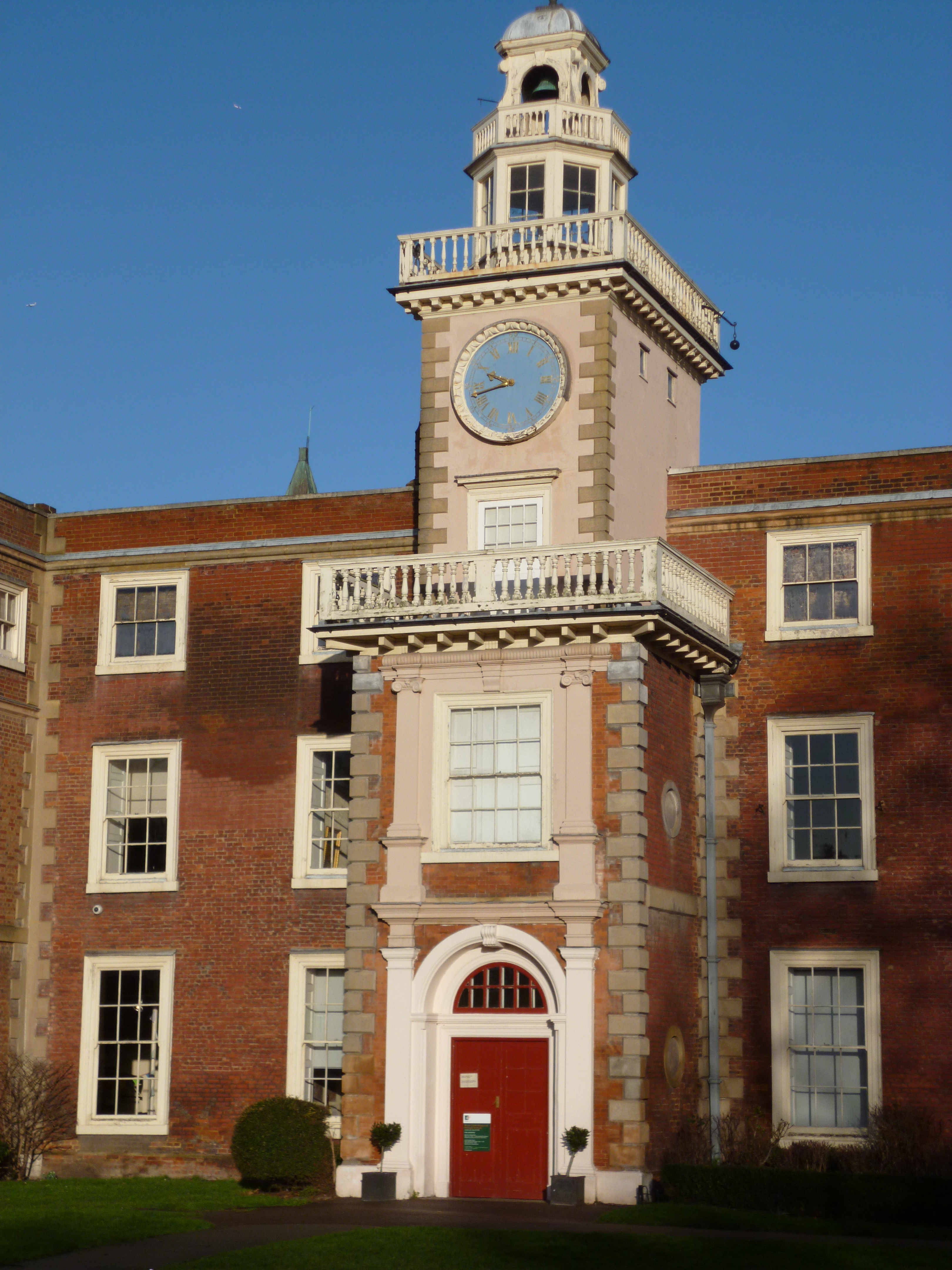
Manor house in red brick, turret painted in pink, with a red door, white decorations, and a bright-blue clockface, under a blue sky.

You can read similar poetry about a walk on a tranquil evening at May Haiku (Bruce Castle).

This is London, too — not only the steel and glass office blocks and underground tunnels I describe in höhlenmenschen / cavemen and related posts, or the bitter poverty I touch on in There’s door on door. London is, in fact, a particularly green city, and Tottenham a very green part of it.

Bruce Castle, Tottenham, London.
Photograph: Christina Egan © 2014

There’s Door on Door

There’s Door on Door

There’s door on door of painted wood
with potted plants and polished brass,
there’s row on row of gabled roofs,
there’s brick and plaster, hedge and grass.

There’s floor on floor of balconies,
above the din, above the dust,
inclusive of commodities,
there’s stone and concrete, steel and glass.

There’s door on door, there’s floor on floor,
but not for me, but not for me –
there’s brick and brass, there’s steel and glass,
exclusive of humanity.

There’s door on door, there’s floor on floor,
but not for us, but not for us –
one has a sofa in a store,
one has an archway in the dust.

Christina Egan © 2015

London, This Moment of May

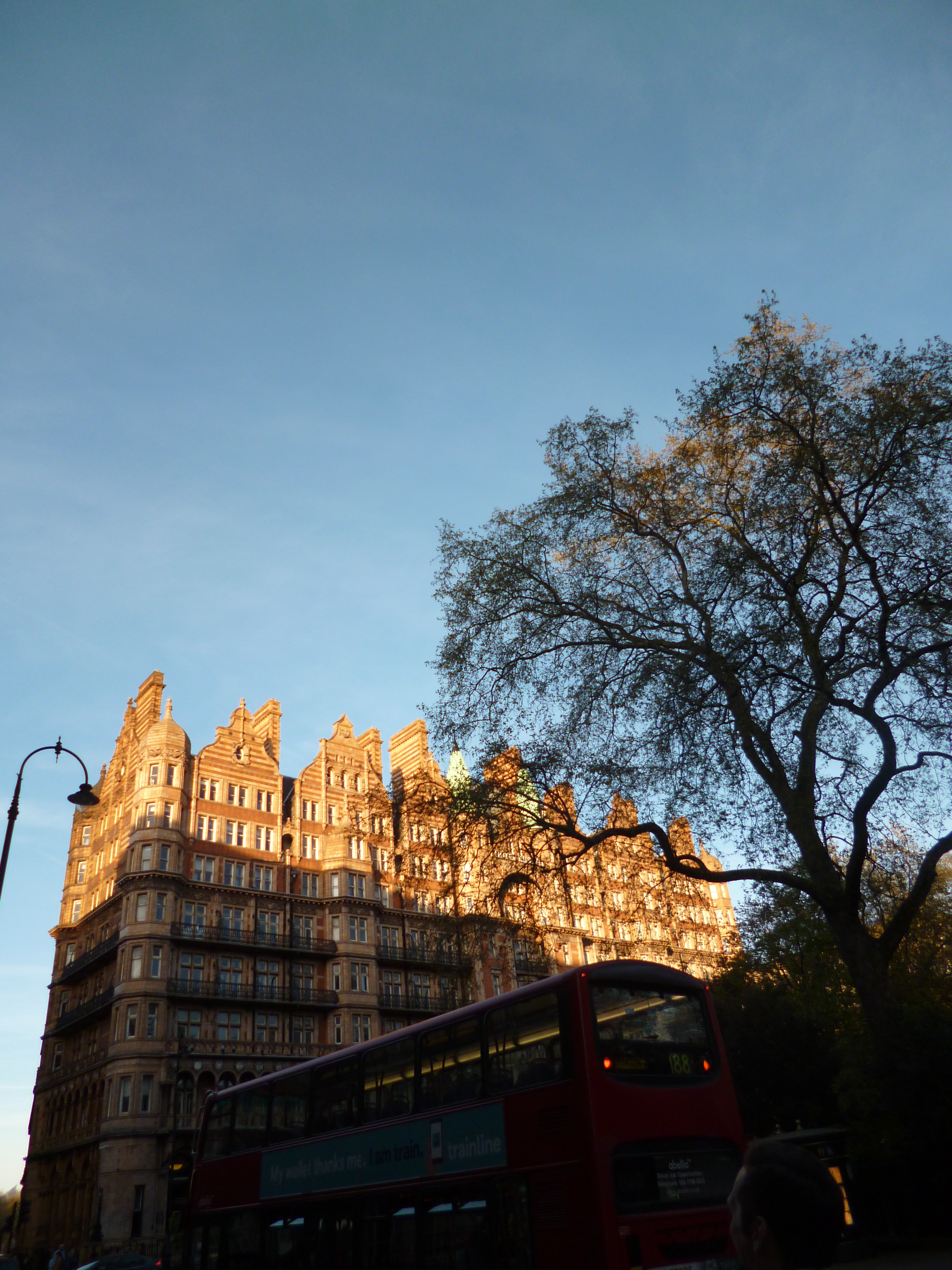
London, This Moment of May I. London, this moment of May. High stately building, lower part in deep shade, upper part brightly lit, with red double-decker bus passing.A Grand Canyon in grey, imperceptibly turning to purple, with an orange glow on its battlements – but teeming in all its cracks, with foam of blossom and bird-flight, with currents of people and cars. Not a city, but a county, a country, a proud world in itself, the planet in a valley, an open oblong fruit, rich with glistening seeds, in the giant hand of clay hollowed out by the Thames.

Photograph: Christina Egan © 2016

II. It is not mine, this city: I borrowed it. I borrowed it for a home, for a while, I borrowed its language, for good. Or it borrowed me, it borrowed my eyes to mount this tall bus, it borrowed my mouth to sing this new song. I run through its veins of walls and windows, of trees and lanterns… A Grand Canyon in grey. Or it runs through my veins, a pale-purple stream, murmuring, glittering… London, this moment of May. Christina Egan © 2013
The title alludes to the famous line by Virginia Woolf: “… what she loved; life; London; this moment of June.” I happened to write my poem in May, on a red bus…
P.S.: A year later, the climate across Europe has slid further into resentment towards foreigners or strangers of any description, be they war refugees or your next-door neighbours. There is a lot of blind anger and fear of vague entities like ‘Europe’ or ‘Islam’. This is the road to racism and fascism. My essay about my identity as an immigrant to England stayed on the front page of trade union UNISON‘s website for weeks: I dream in English. I come from one country, live in another, and plan to move to a third; yet my main identity is European at any rate!
>>> These poems were published in the Haringey Community Press (circulation 15,000) in September 2022.

April Rules the Land

April Rules the Land
(April haiku)

April rules the land,
leaden and golden in turns,
wayward as we are.

*

Oxford Street, busy,
a splintered rainbow, patterns,
shaken and broken.

*

The white narcissus 
sings with a voice as sweet as
her brother blackbird.

Christina Egan © 2000

The last haiku originally referred to ‘the ivory rose’, although in England, outdoor roses do not blossom yet in April. When I changed the wording to ‘the white narcissus’ to link it to the season and month, I did not know that the flower’s official name is Narcissus poeticus, or Poet’s Narcissus!

The ivory rose
sings with a voice as sweet as
her brother blackbird.

Ode to London Wall

Ode to London Wall

Moss is conquering your broken stones,
weeds are rooting between your bricks;
but you still stand tall, Wall,
facing the winds, the seasons, the years.

The round foundations of your towers
harbour herbs now, neatly labelled;
but your walkways bore watchmen once,
to guard the goods going round and the people.

You lie at my feet now, tall Wall,
I look down from the walkway above you;
but when I step down by two thousand years,
I see you could shelter me still or crush me.

And then I seem to remember –
we have met before, Wall –
you guarded me indeed –
and I guarded you!

On the treacherous clay we erected you,
in the obnoxious fog and sleet:
even and straight and strong as a rock,
forming a line in the marshy meadow,

forming a square along the vague river,
forming a knot in the net of roads,
from London to Chester and York,
from Paris to Sousse and Palmyra.

O Wall of soldiers and explorers,
O Wall of merchants and accountants:
yes,
you still stand tall and you talk,
you tell me to tell your story to all.

Christina Egan © 2015
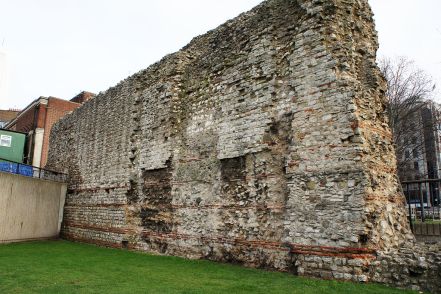
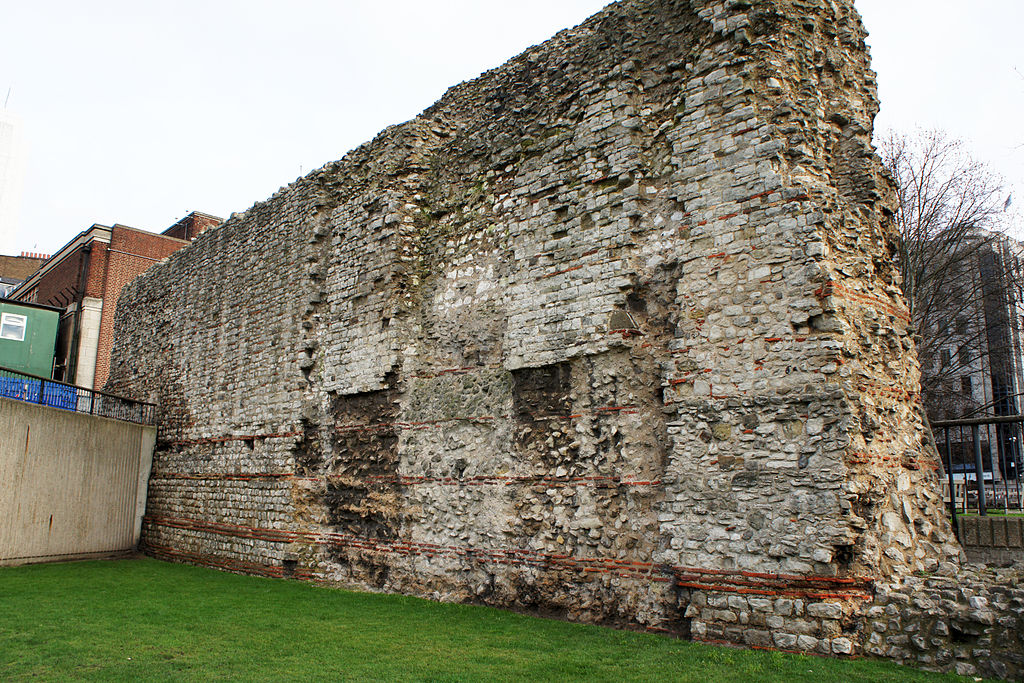
High wall of neatly piled stone and brick in the midst of the city

You can see a section of the Wall of London and learn more about it in the Roman Galleries of the Museum of London. A visit there inspired me to write these lines. I talk to the stones as they talk to me; and I pass their story on.

Photograph: Roman city wall near Tower Hill Tube station,
by Mariordo (Mario Roberto Durán Ortiz).

London Wall Had Fallen Down

London Wall had fallen down,
brick by brick and stone by stone;
in the crenellation’s crown,
storks and starlings built their home.

London Wall stood in the mud,
but we fixed it brick by brick,
and we filled the wasteland up
with new lanes across the grid.

London Wall was melting down,
but we used it stone by stone;
and we built a bigger town
on the ground of proud old Rome!

Christina Egan © 2015

After the end of the Roman Empire, the Roman City of London was left uninhabited for generations, while a new city sprung up next to it; later, the original precincts became the centre again. This area is now known as ‘The City of London’, although it forms only a small part of the centre of town.

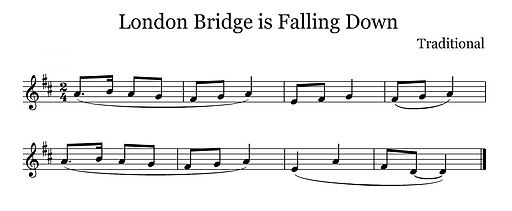
Musical score of 'London Bridge is falling down'


This little song alludes to the nursery rhyme London Bridge is falling down.

Nonnenkloster

Nonnenkloster

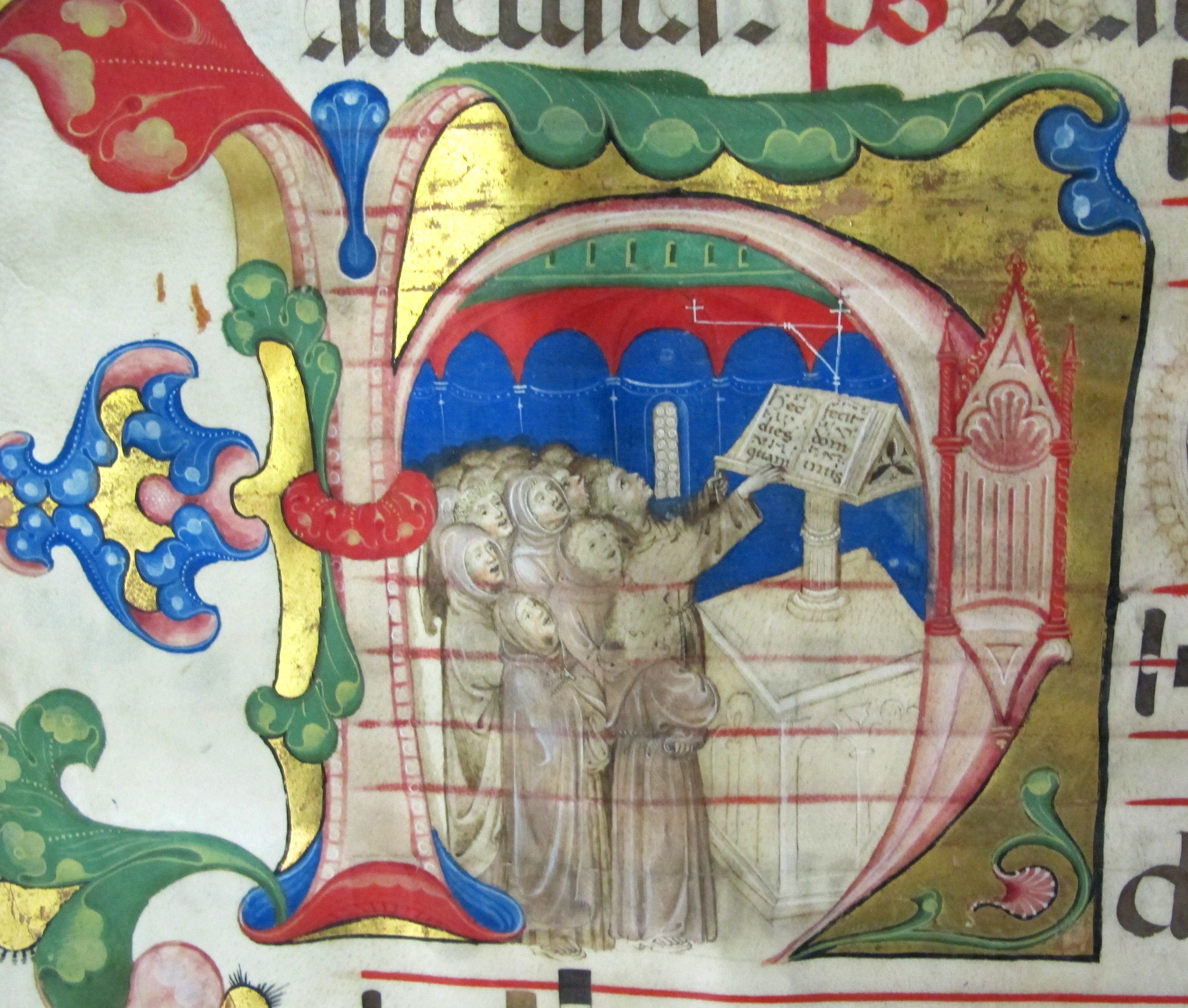
Initial of mediaeval manuscript, filled with monks and nuns singing from such a missal on a lectern above them; in gold and bright red, blue and green

Schneegleich
steigt Schweigen
aus den steilen Wänden,
aus den gefalteten Händen,
den vornübergeneigten Schleiern.
Und doch ist alles ein Feiern,
als sei, wenn es schneit,
ein Staub von Gold
über die Gärten gestreut…

Zeit, Zeit
tickt hier laut
in den langen dunklen Uhren,
in den blankbefliesten Fluren,
weil die Ewigkeit
sie so beschwert
wie Wasser eine weiße Schüssel.
Und jeder geschmiedete Schlüssel,
der gegen ein Gitter klappert,
klingt
wie ein Versprechen,
das Gott nicht brechen will.

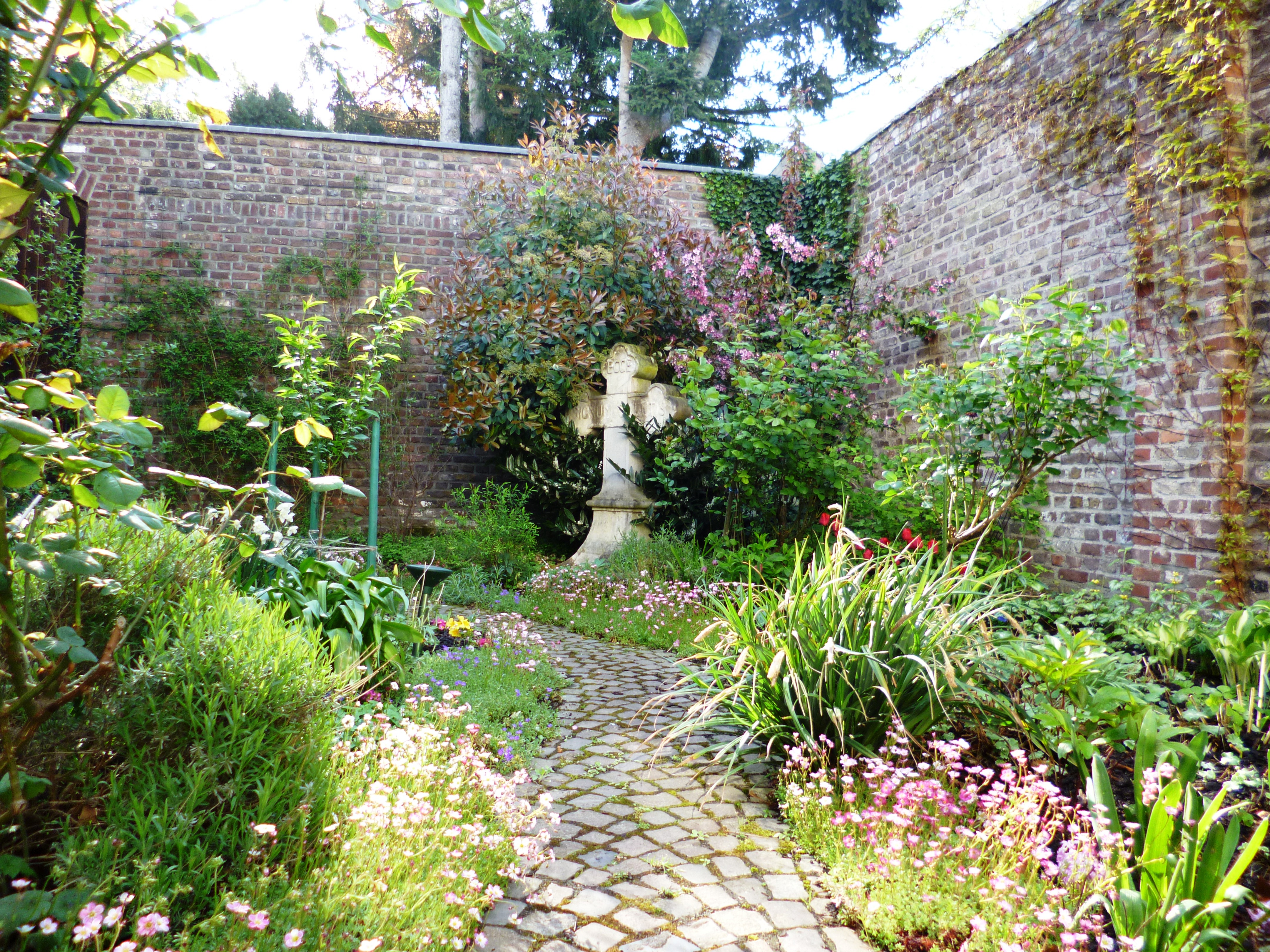
Sunlit walled flower garden with sturdy stone cross in corner

Es singt
am Rasenrand
der Schneeglöckchenchor,
ein besticktes Band.

Und jede ungeschmückte Wand
durchdringt
das goldne Schweigen
wie der Frühlingssonne sanfte Hand.

Christina Egan © 2006

I owe this overpowering experience of peaceful silence to the Carmelite monasteries of London (Most Holy Trinity) and Cologne (Maria vom Frieden), which are based on a philosophy of shared “silence and solitude”.

Photographs:
Liturgical book for Eastertide (1450s).
Sailko via Wikimedia Commons. —
Nunnery garden, hidden in the midst of a big city. Christina Egan © 2014

Winter Views from the Bus

Winter Views from the Bus

*

Pink watering cans
lying flat in the drizzle,
dreaming undisturbed.

*

The yellow front door
in the long row of houses:
It stands out. It smiles.

*

The moon, veiled in mist,
floats in the darkness above
the bright white clockface.

*

Christina Egan © 2012

I was looking at the clocks of St Pancras Station at
King’s Cross, but you could equally observe Big Ben.

There is no ‘London fog’ any more since coal fires were
outlawed — 
yet there are still a lot of mist and fumes…

In northern countries, there is very little colour in winter,
so you need to look out for splinters of colour and rejoice!

Clustering

Clustering

The world has gone weird:
When you switch the screen on,
any time, the news
contain news, the speeches
convey meaning, and the people
speak into the cameras as if
there were a point in speaking.
Can you see their smiles form dimples?

Like fog used to fill the roads,
so rumours waft and can’t be dispelled
that some representatives of the people
represent the people.
Like flocks of birds used to cover the squares,
so citizens cluster and can’t be dispersed,
until they witness those colours rising
which they have proudly painted themselves.

 Christina Egan © 2015

The Man is Not in his Seat

The Man is Not in his Seat

The coffee is still on the table,
the table is still in the street,
the seat is still in the corner:
but the man is not in his seat.

Perhaps he has gone to his office,
perhaps he has gone to the park;
perhaps he’ll be back in a minute,
perhaps he’ll be back before dark.

I think he is due in the morning,
I think he is due every day;
I think we have all of us seen him
whenever the bus passed this way.

The coffee dries out on the table,
the table is still in the street,
the seat is still in the corner:
but the man is not in his seat.

A friend may have called at the café
and lead him away with a smile;
or a man in a car brought a message,
so he said: I might be a while.

Or else he will never return here
to raise his glass to the street:
The stranger who passed was an angel
to take him away from his seat.

Christina Egan © 2015

In memoriam Erdogan Güzel
Murdered in the street in Wood Green,
London, England, on 10.7.2015
Requiescat in pace