Trefflich (Gazakrieg)

Trefflich

Ach, wozu noch Meeresblau
je beschwören und wozu
Wellenschlag und Morgentau,
wenn ein Paar bestickter Schuh
bunt aus Schutt und Asche schaut,
– angefaucht und fortgefegt –
und die namenlose Braut
nie mehr ihre Füße hebt,
nie ein Kind zum Himmel hält…
Ach, wie bleibt das Meer bloß blau?
Denn es stirbt die ganze Welt,
frißt der Drache eine Frau.
Fällt die Kugel einen Mann,
klagt ein ganzes Engelheer.
Lautlos schreit ein Schlüsselbund
a­­us dem Schrott,– doch hört ihn wer?
Paßt der Schlüssel auch ins Schloß,
hängt die Tür in schräger Wand,
denn ein treffliches Geschoß
riß das Haus halb in den Sand.
Immer wieder gibt es Krieg
voller Lügen, voller Lärm.
Niemals aber gibt es Sieg,
nur die Hoffnung wie ein Stern.

Christina Egan ©2024
(Gazakrieg)

In this poem, War is personalised as a hissing dragon burning, devouring, or blasting away everything in its way.

The title is a pun on an old word for “excellent”, literally “hitting precisely”: in a war, success is based on destruction.

On October 7th, 2023, the Palestinian terror organisation Hamas committed a massacre and mass abduction in Israel, whereupon the Israeli Government launched a war on the Palestinian territory of Gaza. It has since attacked the West Bank and invaded neighbouring country Lebanon, where the terror organisation Hezbollah de facto rules. The aim on both sides is evidently genocide. This is destruction against destruction, revenge upon revenge, genocide versus genocide.
Spätes Wiederfinden

Spätes Wiederfinden

I.

Die strohgedeckten Hütten sind verschüttet,
und in den Säulengängen haust der Wind.
Mir ist, als spürt’ ich unter meinen Sohlen,
wo eigne Schritte eingezeichnet sind.

Ich schliff das Pflaster unter den Sandalen,
ich legte jenes Pferd ins Mosaik;
ich wurde dort am Wegesrand begraben
mit meinem Krug voll Kummer und voll Glück.

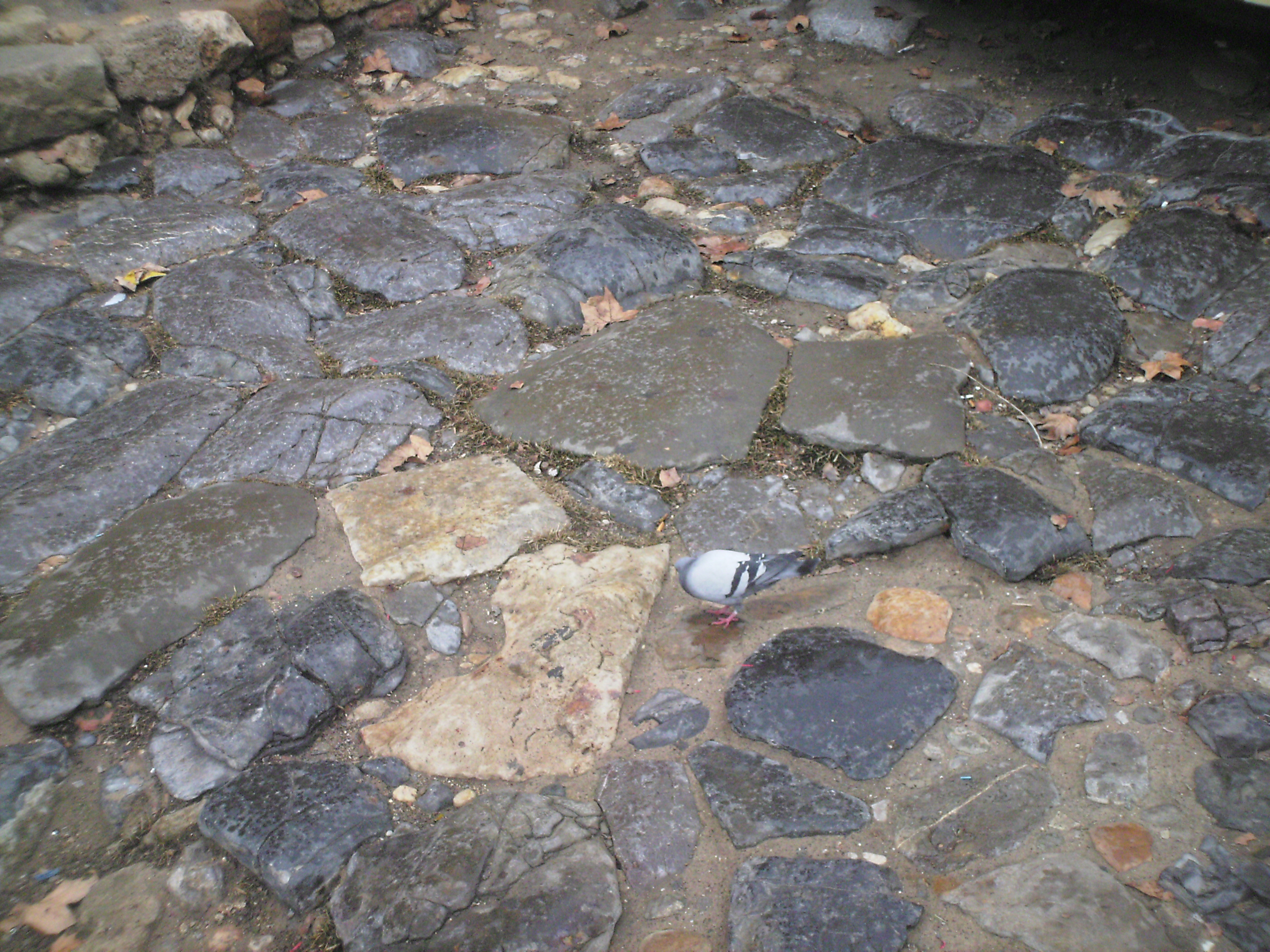
Very irregular pavement.

II.

Mir scheint, ich hätt’ schon vor Jahrhunderten
in deinen Augen wie ein Gast gewohnt.
Und wenn ich nur den Schlüssel wiederfände,
dann hätt’ auch dieses Leben sich gelohnt…

Was zählen da die wenigen Jahrzehnte,
in denen wir einander jetzt versäumt?
Ein kleiner Aufenthalt in deinen Augen
bringt, was ich in Jahrtausenden erträumt.

Christina Egan © 2011


The fifth year of this poetry blog sets off, as always, with a Roman road or another ancient road!

In the first poem, someone finds the place where they lived and died in a former existence; in the second one, they think they have also found their former love…

The location is imaginary. The three images for the former life all have to do with the earth: the feet and shoes; the mosaics in the floor; the grave by the wayside. Two of the images also refer to wandering, our wandering on earth: the soles wearing the pavement down and the horse in the mosaic. The second poem mentions the status of guest; as the psalms express it, we are all guests on earth.


Photograph: Christina Egan © 2016.  International highway, Via Domitia, crossing the forum of Narbonne. I suppose this bit had been much damaged and patched up, since the Romans built entirely straight and smooth roads!

Nonnenkloster

Nonnenkloster

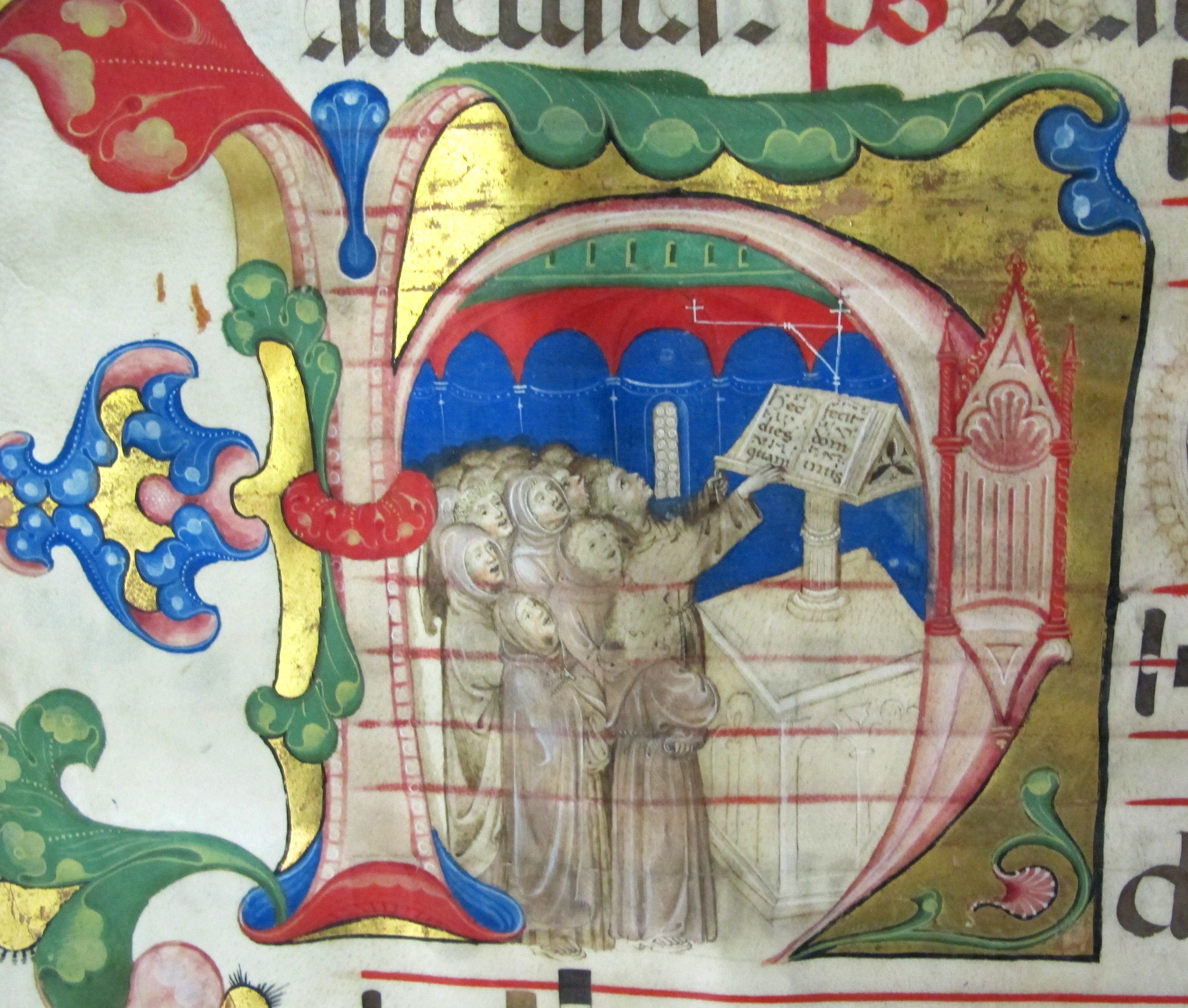
Initial of mediaeval manuscript, filled with monks and nuns singing from such a missal on a lectern above them; in gold and bright red, blue and green

Schneegleich
steigt Schweigen
aus den steilen Wänden,
aus den gefalteten Händen,
den vornübergeneigten Schleiern.
Und doch ist alles ein Feiern,
als sei, wenn es schneit,
ein Staub von Gold
über die Gärten gestreut…

Zeit, Zeit
tickt hier laut
in den langen dunklen Uhren,
in den blankbefliesten Fluren,
weil die Ewigkeit
sie so beschwert
wie Wasser eine weiße Schüssel.
Und jeder geschmiedete Schlüssel,
der gegen ein Gitter klappert,
klingt
wie ein Versprechen,
das Gott nicht brechen will.

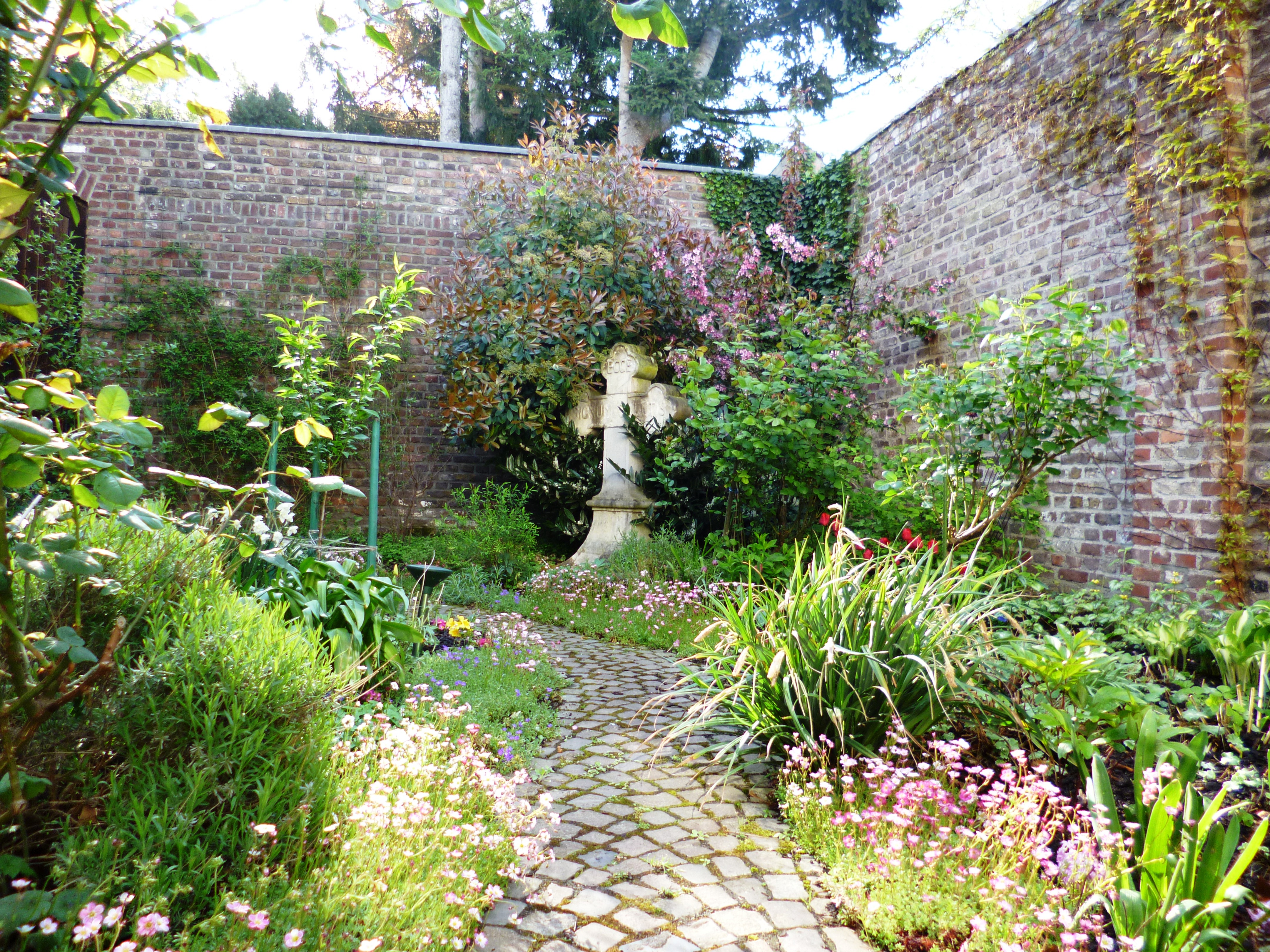
Sunlit walled flower garden with sturdy stone cross in corner

Es singt
am Rasenrand
der Schneeglöckchenchor,
ein besticktes Band.

Und jede ungeschmückte Wand
durchdringt
das goldne Schweigen
wie der Frühlingssonne sanfte Hand.

Christina Egan © 2006

I owe this overpowering experience of peaceful silence to the Carmelite monasteries of London (Most Holy Trinity) and Cologne (Maria vom Frieden), which are based on a philosophy of shared “silence and solitude”.

Photographs:
Liturgical book for Eastertide (1450s).
Sailko via Wikimedia Commons. —
Nunnery garden, hidden in the midst of a big city. Christina Egan © 2014