rosengarten (II. sprühendgrau)

rosengarten

II.

sprühendgrau

die ungeahnten sonnenglanz vergießen
die regenschauer und den regenbogen
zu einem milden meeresgrau verwoben
die augen sollen meine verse grüßen.
dem nebelland das immerkalte wogen
in ungestümem reigentanz umschließen
den inseln voller sprühendgrüner wiesen
sind jene augen ursprünglich enthoben.
drum frag ich nicht nach lilien und lavendel
die flammen sprühen auf gebeugtem stengel
noch nach des südens uferlosem blau
nichts brauche ich als meinen kleinen garten
wo alle wunder lächelnd meiner warten
die bunte welt geballt in sprühendgrau.

Christina Egan ©2023

This sonnet is part of a cycle of 14 poems, whereby each line of the first one (rosengarten I. tiefversteckt) furnishes the first line of a new sonnet.

The island described here is Ireland, but the cycle takes you to other islands, as well as to the palace gardens of Würzburg, Germany, which first inspired me.

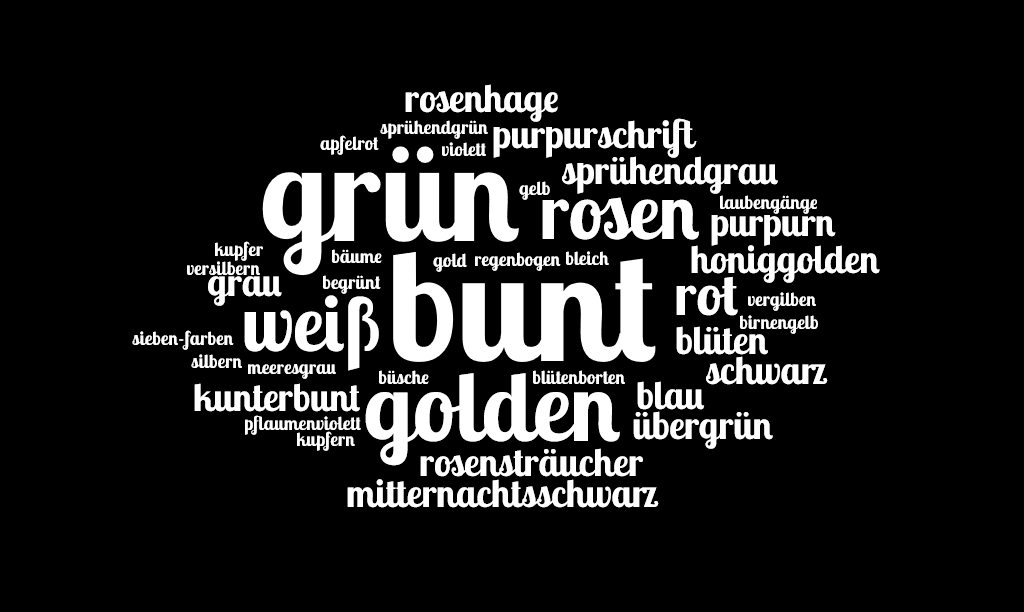
Word cloud of colours and flowers and in white on black; in the middle, "multi-coloured", "green", "golden".

Word cloud of colours in the German sonnet cycle (rosengarten I-XIV), generated on the Simple Word Cloud Generator. In the middle are “colourful”, “green”, and “golden”. Since the colours of the roses are not described, the roses themselves are added.

Hinter dem Olivenbaum

Hinter dem Olivenbaum

Noch hemmen Frost und Nebel allzulang
den bunten Garten,
und fast verstummt der volle Vogelsang,–
noch muß ich warten.

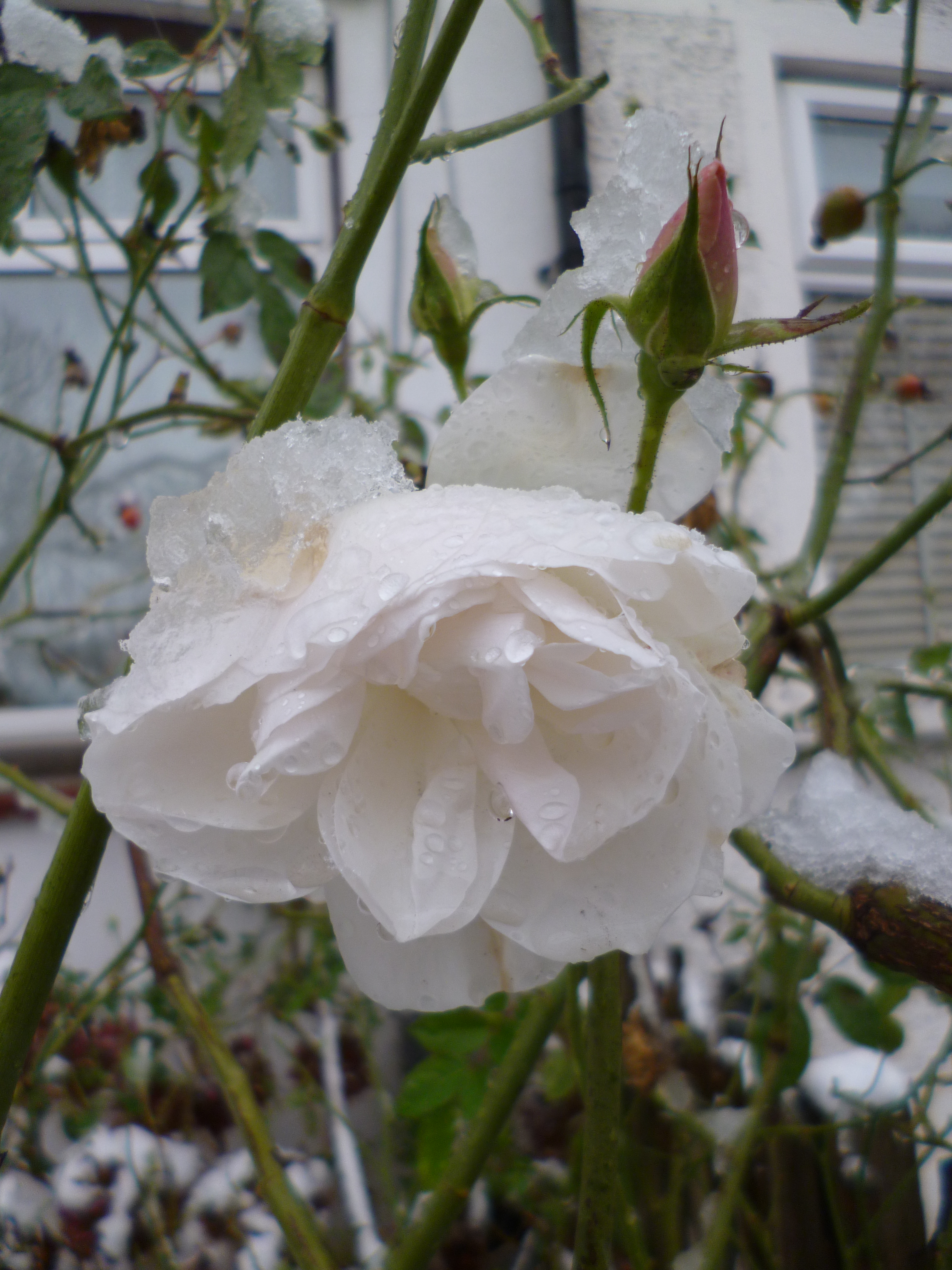
White rose, pink buds, hawthorns, all covered by melting snow.

Im Süden werd’ ich keinen Schnee mehr sehn,
bloß weiße Rosen,
die meine Lippen, wenn sie mannshoch stehn,
verstohlen kosen.

Einst wird mir hinter dem Olivenbaum
Oleander prangen,
und Blumenfluten streifen wie ein Saum
die warmen Wangen…

Christina Egan © 2017


The woman or man surrounded by frost, fog, and snow dreams of a future where she or he will kiss white roses and be caressed by oleander… The encounter with the plants is envisaged like an assignation behind a tree, an olive-tree as a symbol of the Mediterranean region.

Photograph: Christina Egan ©2017.

Nachruf auf einen Gärtner

Photo of walnuts
Photograph: Gokhan Tek via Pixabay.
Title page of calendar: white windmill against blue sky.

Silent Roads

Silent Roads
(Pandemic)

limpid morning
liquid noon
falling stars and
swelling moon

roaming foxes
flitting bats
passing faces
passing steps

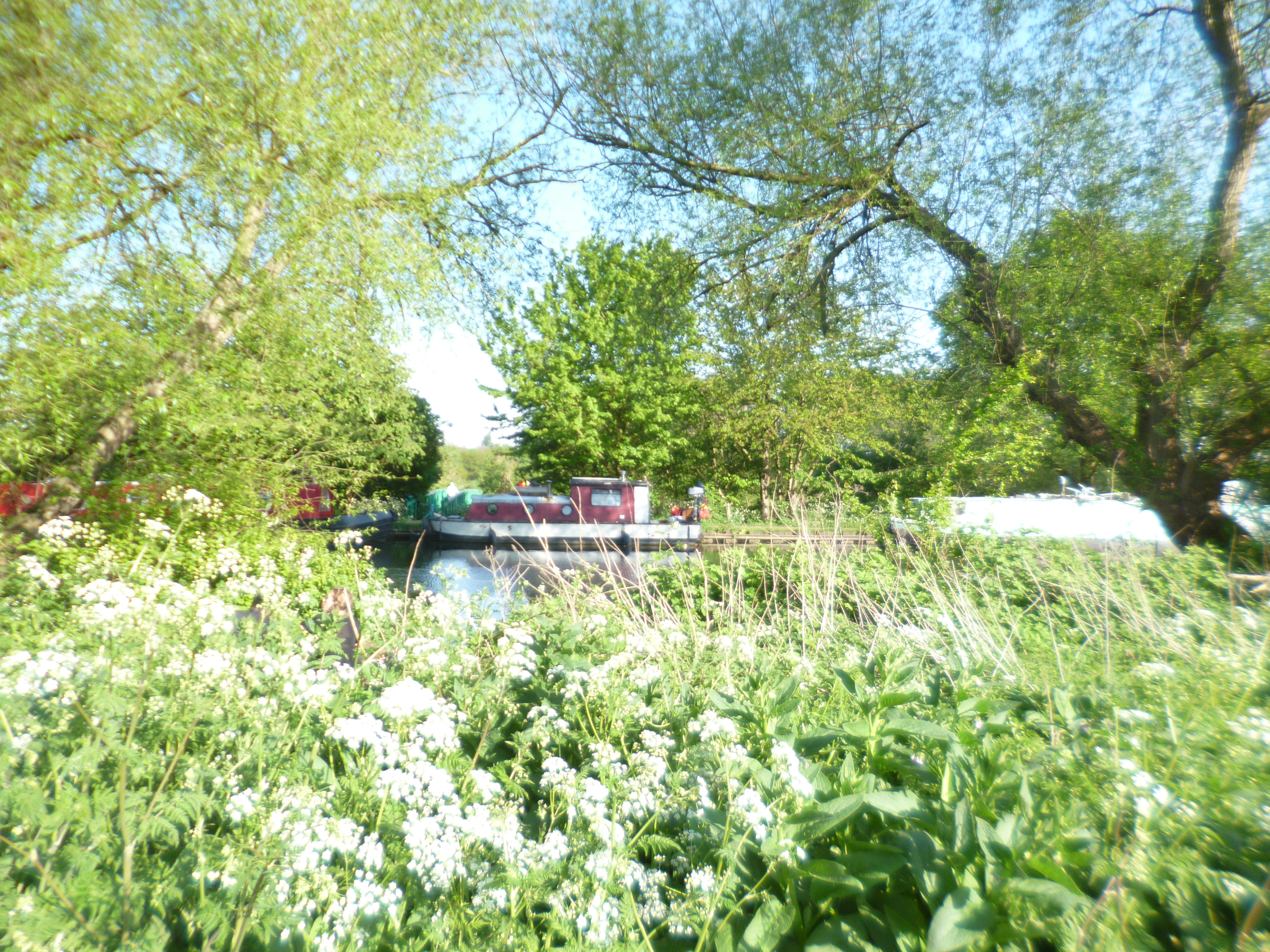
Red houseboats amongst lush trees and blossoming meadows.real colours
newborn light
flowing hours
breathing tide

sweeping herons
floating boats
swelling meadows
silent roads

real flavour
real sound
real labour
on the ground

nimble hands and
muddy boots
curling vines and
twisting roots

real treasures
on your spade
real colours
on your plate

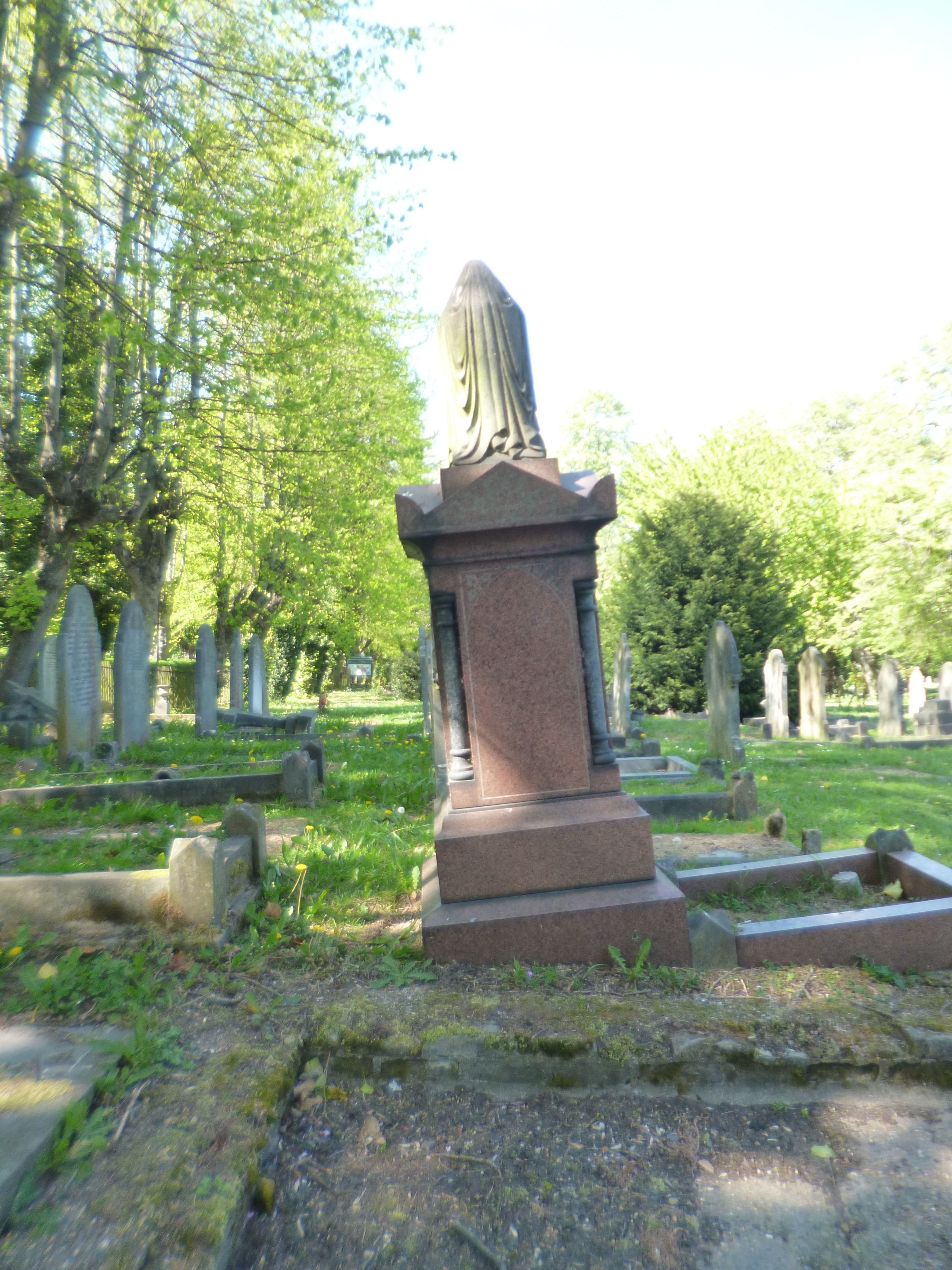
Tall tomb with urn on top, tilting, on old cemetery.real paper
flowing ink
time to wake and
time to think

time to sleep and
time to slow
time to weep and
time to grow

time to rise and
to rejoice
time to hoist your
real voice

Christina Egan © 2020


While London closed down to protect itself from the 2020 coronavirus, I was cut off from my job and from the internet for a while. (This blog ran on as pre-scheduled.)

I was very fortunate to spend many hours outdoors, working in my garden or walking under the countless trees and along the hidden rivers of London, and through the suburban roads, cleared at last of traffic and crowds. Spring brought splendid sunshine, as if it were already high summer.

There was time. There was air. There was life. For many who were not ill or caring for those who were ill, this must have been one of the best times of their life.


Tottenham Marshes / Tottenham Cemetery. Photographs: Christina Egan © 2020.

Curling Up

Curling Up

I’m curling up
against the cold
against the world

its random roar
its lazy contempt
its glacial loneliness

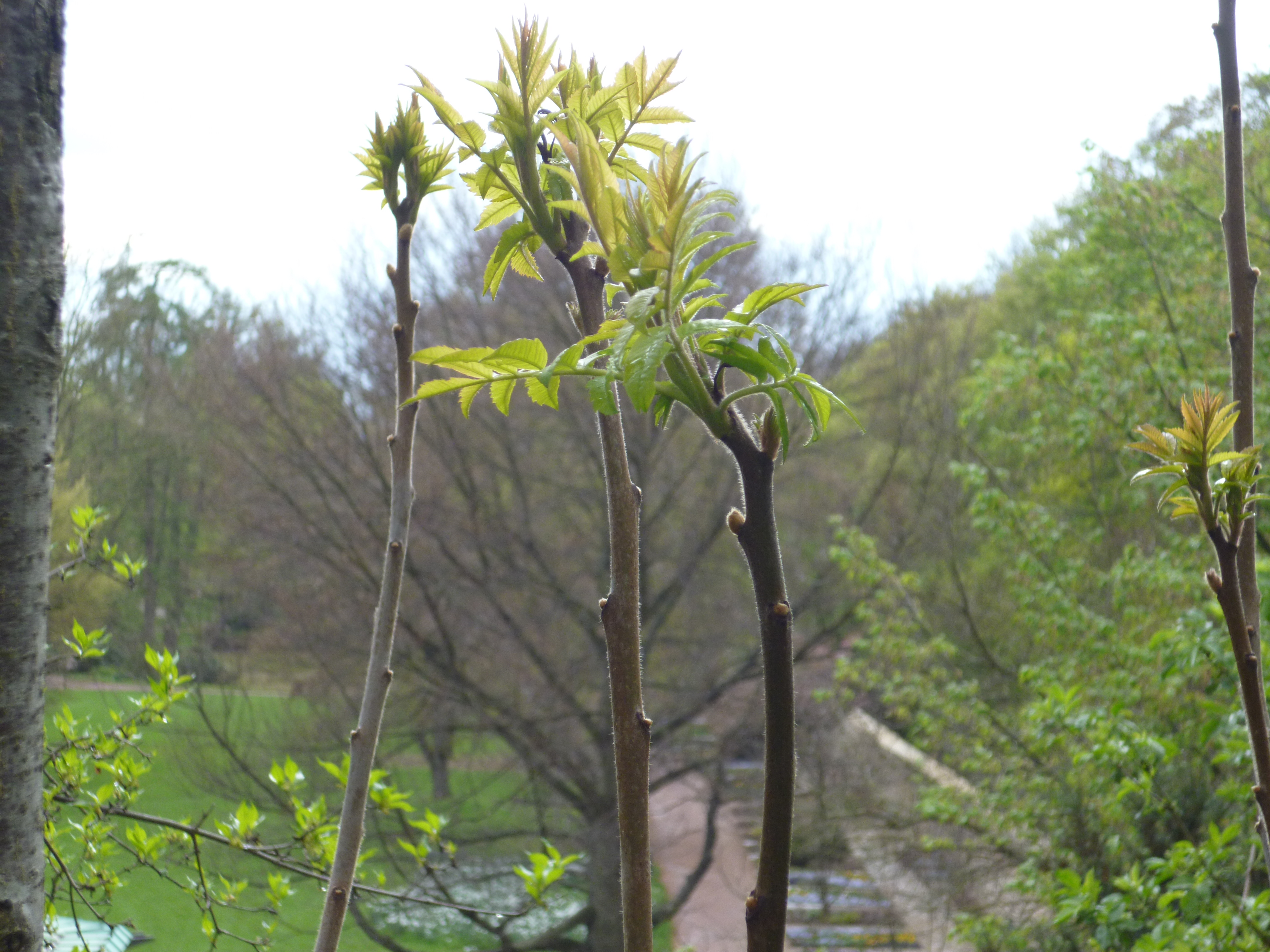
Buds and fresh leaves on top of shoots above a parkI’m curling up
with the sky in my mind
and the sun in my heart

around a seed
already unfurling
and then: uncurling

Christina Egan © 2014


I am at Home in the Darkness

I.

I am at home in the darkness.
At least, dreams shine more brightly here,
lanterns among phantoms,
gold grains in the drifting sand.

Only my dreams
are real,
are true.

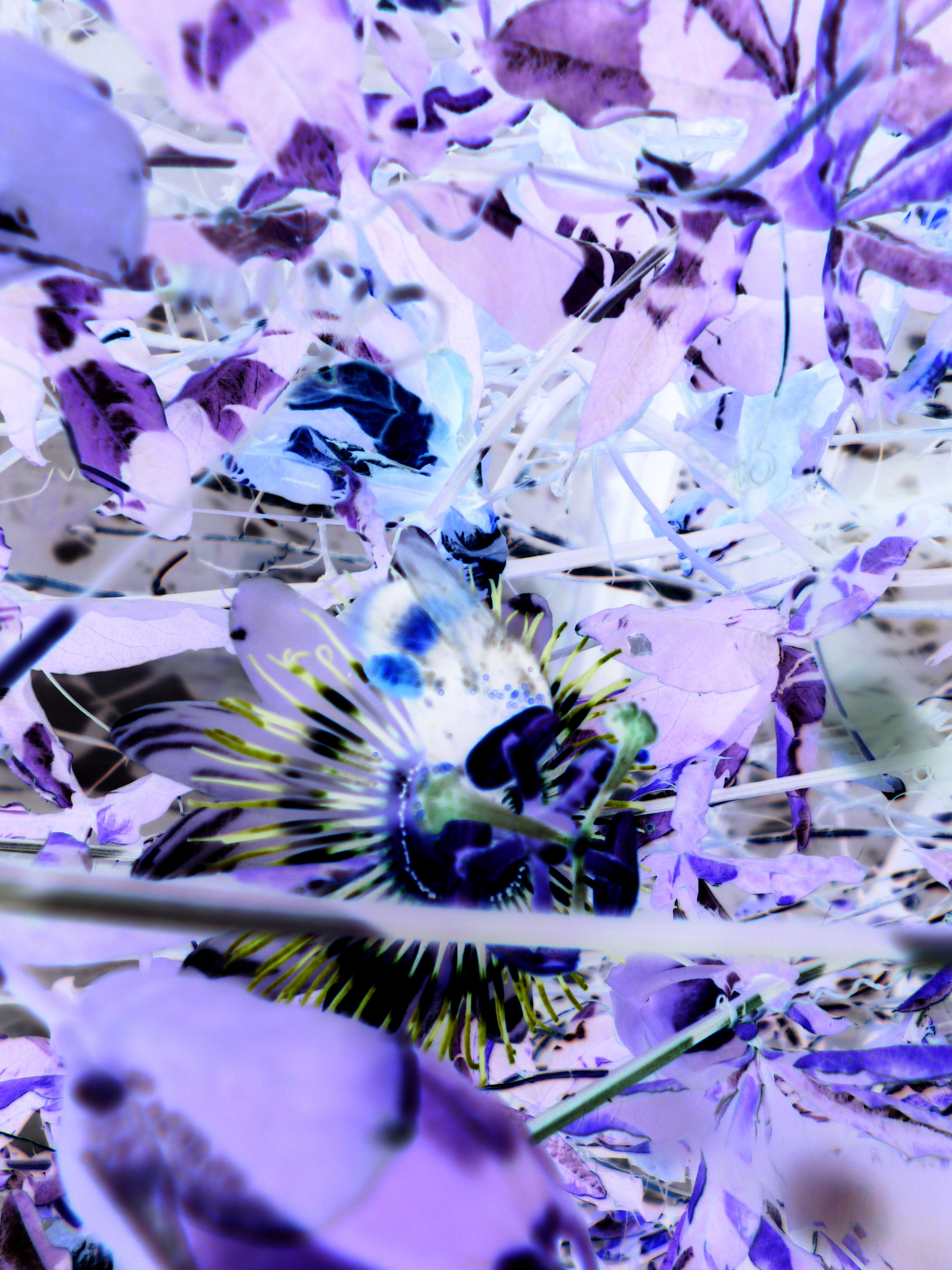
II.Passionflower with bee, colours inverted to create psychedelic purple structure.

All those who wish to die
crave for life, life, lost
in this cavern of wandering shades,
crazed by the thirst for a garden.

Only those who wish to die
are aware,
are alive.

Christina Egan © 2014

Photographs: Christina Egan © 2014 / 2016.


I assume that very, very often when someone feels they want to die or are about to die, they are simply physically unwell — or simply overtired — or simply literally in the dark. If this insight informed our science and our society, we could manage our lives so much better.

The date these three poems were written is significant: it was mid-February, which is when I (like everyone in the northern hemisphere) feels the dark and cold most bitterly, because halfway between winter solstice and spring equinox, the various reserves of our bodies are dangerously low. From late February on, things get better, and this is not a mental phenomenon (little flowers can, after all, not cure leaden fatigue) but a physical fact.

Bunter Zwirn

Bunter Zwirn

Stone trough with dwarf daffodils, dwarf pansies, and other spring flowers, amongst outbuildings of a palace.Gleich Strängen feiner Fäden
in Regenbogenfarben
sieht man die Blüten weben
im neugebornen Garten.

Rost springt aus Rosenrot,
Grün ist zu Gelb gefiedert:
Hier ist, was sonst sich droht,
in stummem Tanz verbrüdert.

Und auch die Düfte wehn
wie bunter Zwirn verwoben,
doch nur die Bienen sehn
den zweiten Regenbogen!

Christina Egan © 2017

Rhönkalender 2019.


Palace grounds of Schloss Fasanerie (Adolphseck) near Fulda, Germany. Photograph: Christina Egan © 2014.

One stanza of this poem in the vein of Eichendorff
has been published in the
Rhönkalender 2019.

Tiefgelb / Tieftürkis

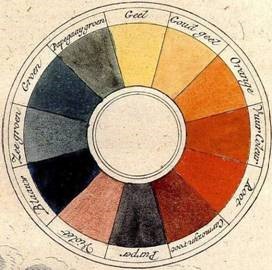
Colour wheel with 18th century labels: clockwise from yellow over red to blue and green; one purple field has paled to pink.Tiefgelb

Die tiefgelbe Blume vor wollweißer Wand,
die frohrosa Büschel vor lehmbraunem Zaun,
der vollblaue Tag über kraftgrünem Land –
der rundbunte Sommer, ein tiefgelber Traum!

Christina Egan © 2016


Tieftürkis

Tieftürkis und lässig prächtig,
sonnensatt und sonnenträchtig
steht der Horizont noch spät.
Schwarze Flammen, schwanken Bäume,
stumm gestaltgewordne Träume,
wenn der wirre Nachtwind weht.

Liegt die Erde endlich nächtig,
scheint der Himmel übermächtig,
unerschöpfter Helle Quell.
Alle Sehnsucht kann noch fruchten
in verborgnen Gartenfluchten
oder einer höhern Welt.

Christina Egan © 2017


Colour adjectives develop only very slowly in languages all over the world. There are still not nearly enough! I don’t see why in German, we have the words ‘deep red’ and ‘deep blue’ — written as one word, even — but no ‘deep yellow’ or ‘deep turquoise’; so I am introducing them. I also made up a number of unusual descriptors for the first poem, leading up to the internally rhyming ‘rundbunt’ for multi-coloured in all colours of the earth or of the colour wheel.

Colour wheel with 18th century labels: clockwise from yellow over red to blue and green; one purple field has paled to pink.


Image: Arnoldus Lobedanius, Utrecht, 1744. (One purple field must have paled to pink.)

Reproduced with kind permission of the Library of Cologne University of Applied Sciences (Fachhochschule Köln).

bei der kapuzinerkresse

bei der kapuzinerkresse

die hohen blättertreppen übersteigt
ein strauß aus scharfen feuerfarbnen blüten
du stehst und schaust und malst dir aus er gleicht
den küssen die das lächeln überbieten

und fragst dich ob in dem verwunschnen garten
umsäumt von fremden roten blumenfächern
wohl wirklich solche gaben dich erwarten
als antwort auf dein grenzenloses lächeln

Christina Egan © 2011


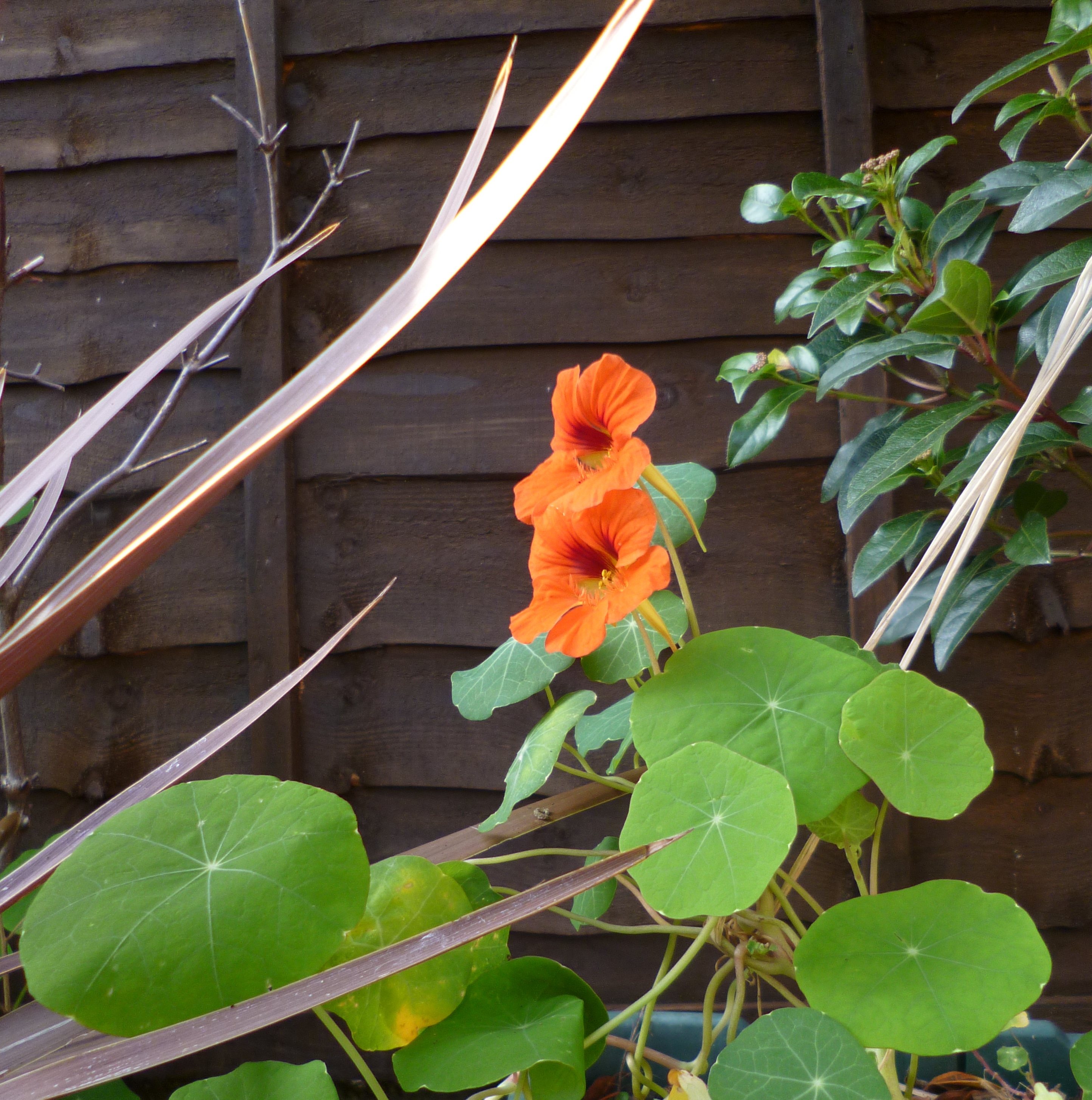
Two nasturtium flowers in very strong orange with some of their large round leaves in fresh green


You can actually eat the petals and young leaves of nasturtium: and they taste as fiery as they look! These were the last of cascades of blossom — in December!


Photograph: Christina Egan © 2015.


Verquer

Verquer

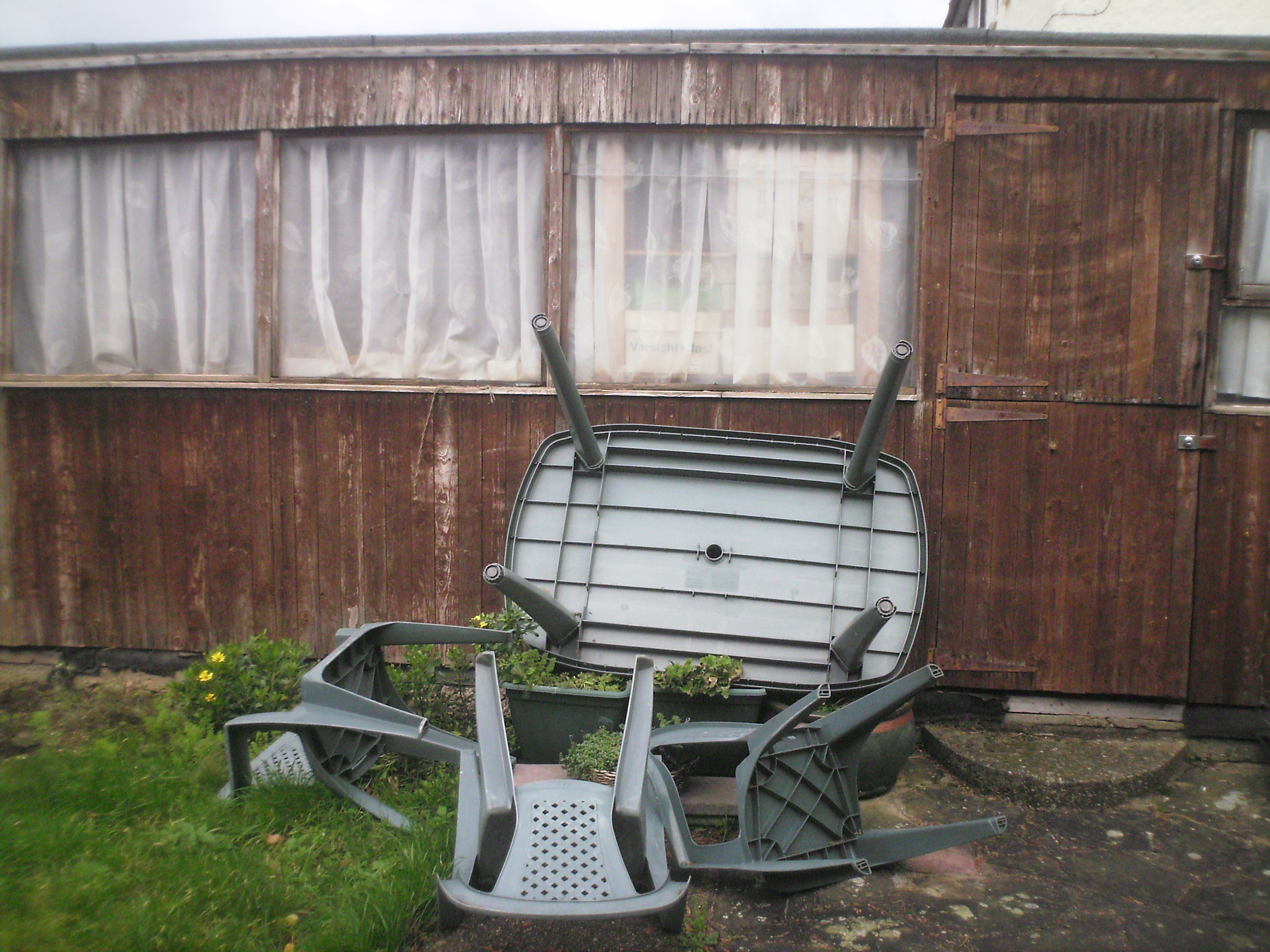
Garden furniture jumbled up by storm in front of old wooden shed.Ich schau auf die Straße:
Doch niemand kommt her.
Die Sonne ist prachtvoll,
die Wolken sind schwer.

Ich schau in den Garten:
Die Stühle sind leer.
Die Welt ist betörend,
die Welt ist verquer.

Und niemand, ach niemand
erahnt meinen Schmerz!
Das Leben – ein Schicksal?
Das Leben – ein Scherz?

Wie Weihrauch denn steige
mein Wort himmelwärts,
daß Gott sich mir neige
und wandle mein Herz.

Christina Egan © 2015

Photograph: Christina Egan © 2012.


Sonnenuhrzeiger / Sundial Garden

Sonnenuhrzeiger

Die Sonne gleißt auf grüner Flur:
Ein jeder wird zur Sonnenuhr.
Der Schattenmensch liegt lang im Gras,
der Abend schrumpft in gleichem Maß.

Die hingestreute Sternenzier
ist mürbes Laub wie Packpapier.
Die weißen Blumen tanzen stumm
um einen dicken Stamm herum.

O trink das Licht mit Haut und Haar:
Noch ist der Himmel hoch und klar!
O trink das Licht mit Aug und Sinn:
Es liegt die Kraft des Alls darin.

Christina Egan © 2016

Top of wall covered with lichen and tree with patchy bark, mirroring each other.

Sundial Garden

The sun will gain ground,
conquer inches of lichen,
of leaves and of lawn.
Across the square garden creeps
the shade of the steep gable.

Christina Egan © 2005


In these poems, a whole gardens turns into a sundial: in the first one, each person in the park is a sundial hand, and in the second, a house with a pointed roof fulfils this function, casting its shadow over a north-facing yard.

The first poem is set in late summer or autumn and in the late afternoon or evening, the second one in late winter or spring and possibly in the morning. The yearly and daily descent of the light is as inevitable as its subsequent rise.

Photograph: Christina Egan © 2016.