Vigil (Du bist die Hand / Your Distant Hand)

Vigil (V)

Du bist die Hand, die mein Gebetbuch hält
in aller Frühe, wenn die laute Welt
noch schlummert wie ein müdgetobtes Kind
und wir die Stimme ihrer Träume sind.
Wir sind der Psalm, der aus der Erde steigt,
wenn Nachtwind noch die Wiesenblumen neigt,
das erste Wechsellied im Weizenfeld…
Du bist die Hand, die mein Gebetbuch hält.

Christina Egan ©1990
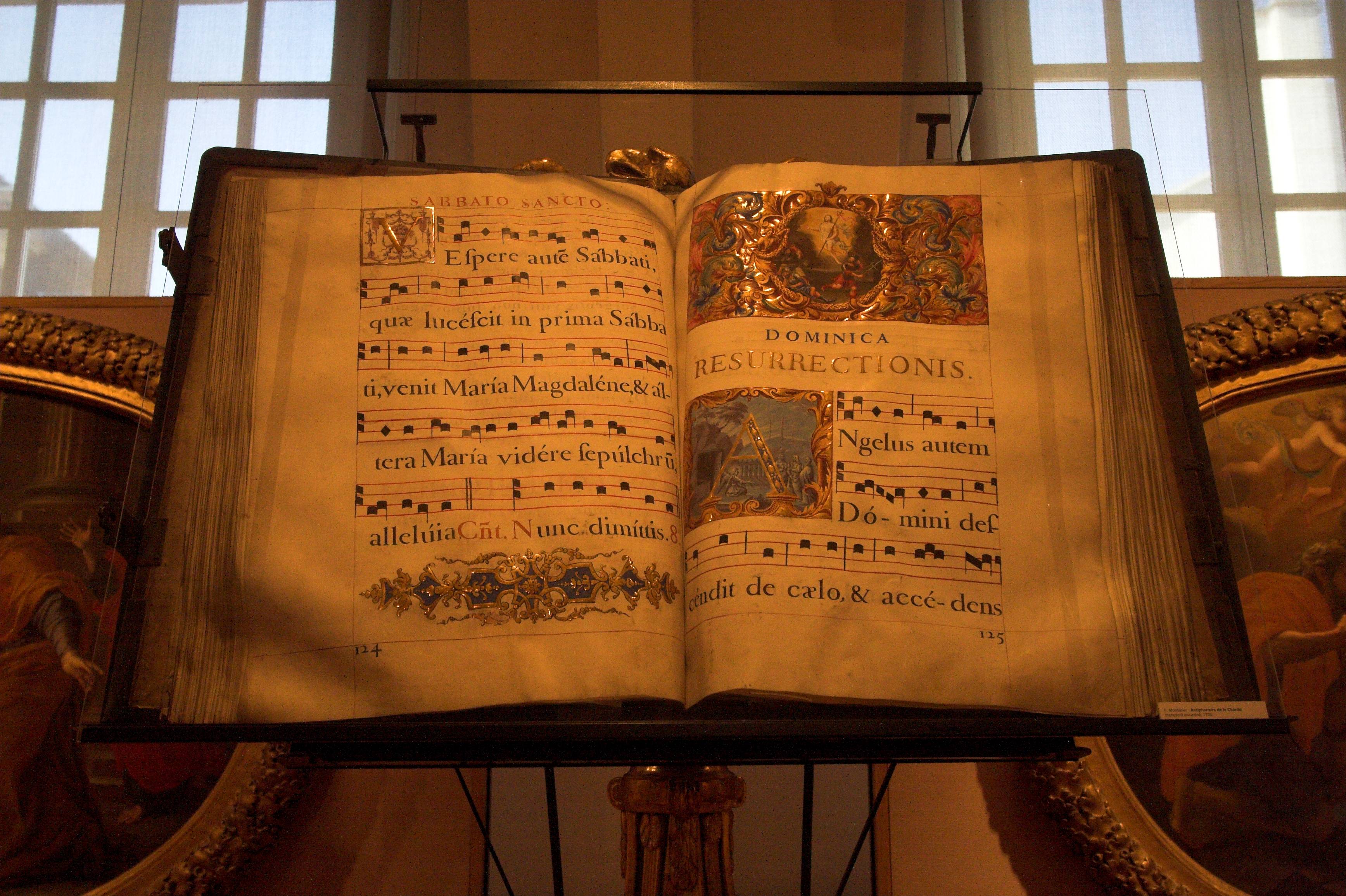
Huge liturgical book with very large writing and music, richly illuminated

Vigil (V)

At dawn, the noisy and unruly world,
just like a tired child, has not yet stirred.
We are the voice of all its dreams: we stand,
my hymnal lifted by your distant hand.
We are the psalm arising from the earth
while night wind is still bending blooming herbs.
We are the chant across the ripening land…
My hymnal lifted by your distant hand.

Christina Egan ©2018

These lines describe the early-morning prayer of Christian monks and nuns: standing up and bowing, chanting and responding to each other… They also imagine an invisible connection between two of them — good friends perhaps, close relatives, or former lovers — who feel that they are praying together across the distance between them.

Photograph: By ignis – Own work, CC BY-SA 3.0.

Dem Freunde

Dem Freunde

Wir brauchen gar nicht viel zu reden
und haben uns doch so rasch erkannt…

Es ist,
als seien wir in einem andern Leben
Hand in Hand
durch die lachenden Felder gerannt
und hätten uns, ernsthaft und atemlos,
ein Versprechen gegeben –

oder als seien unsere Sprachen
eng miteinander verwandt:
dein Gesicht will ich entziffern,
deine Worte erleben
und deine Hand…

Als welche Botschaft, Freund,
sind wir einander gesandt?

Christina Egan © 1990

traurige ernte / Funkenschlag

traurige ernte

purpurn häufen sich die trauben
äpfel rollen dick und gelb
unter meinen müden augen
neben meinem armen feld

unerwidert bleibt mein lächeln
meine tränen ungezählt
unbedeutend rinnt mein leben
und ich sterbe unvermählt

Christina Egan © 2011


Funkenschlag

Ich habe spät beim Wein gesessen
und in die Nacht hinausgedacht:
Ich werde ohne Erben sterben;
was hat mein Leben ausgemacht?

Ich habe nicht umsonst gelitten,
ich habe nicht umsonst gelacht:
Der Funkenschlag geschliff’ner Worte
hat oft schon Flammensprung entfacht.

Christina Egan © 2009


The first person is dejected in the belief that his or her life has not been fruitful; they feel lonely and poor, not necessarily in material terms. The second person is convinced that he or she has not  lived and suffered in vain: they made a difference through their words.

That successful person could be a politician or a novelist, for instance; but it does not matter, because everyone has made a difference to the world and has been irreplaceable. Our heirs are those who inherit our lives, whether in  money, property, things or in achievements, inventions, ideas.

Ich steh’ im Felde wie der Lindenbaum

Ich steh’ im Felde wie der Lindenbaum

Ich steh’ im Felde wie der Lindenbaum,
im Frühlingswind verloren und im Traum…

Ich schaue auf die blauen Höhn,
die kühn wie Vorzeitbauten stehn.
Ich lausche auf den Vogelsang,
in meinen Adern steigt ein Drang!
Ich schaue auf den Horizont,
von dem mir meine Hoffnung kommt.

Ich steh’ im Felde wie der Lindenbaum,
in Frühlingsnacht verloren und im Traum…

Ich schaue auf die Stadt im Tal
mit Erdensternen ohne Zahl.
In meinen Adern steigt der Saft,
ich streck’ mich mit versteckter Kraft!
Bevor noch süß die Linde blüht,
blüht früh und süß der Linde Lied.

Christina Egan © 2012

The mountain range on the horizon is the Rhön and the city in the valley is Fulda, Germany. There are more lines to this poem to make a song of it: part wistful and part hopeful, part heavy-hearted and part light-hearted!

The phrase ‘Town in the valley’ is echoed in the poem of the same name, Stadt im Tal.