Ein Muster aus Muscheln / Greek Islands

Ein Muster aus Muscheln

Ein Muster aus Muscheln und Bernstein und Bein,
mit Karneol und Koralle durchsetzt,
auf lapislazuliblauem Grund:
So leuchten die Inseln im Sonnenschein,
vor dreitausend Jahren… und letzthin… und jetzt:
ein Mosaik, ein vollendeter Fund.

Vors Fenster des sinkenden Flugzeugs gespannt,
vom Guckloch des finsteren Turmes gerahmt
– nur einen Moment – nur einen Moment –
das Muster aufs wartende Auge gebannt,
die Farben ins wache Gedächtnis gemalt:
ein Bild, das nach dreißig Jahren noch brennt.

Christina Egan © 2016
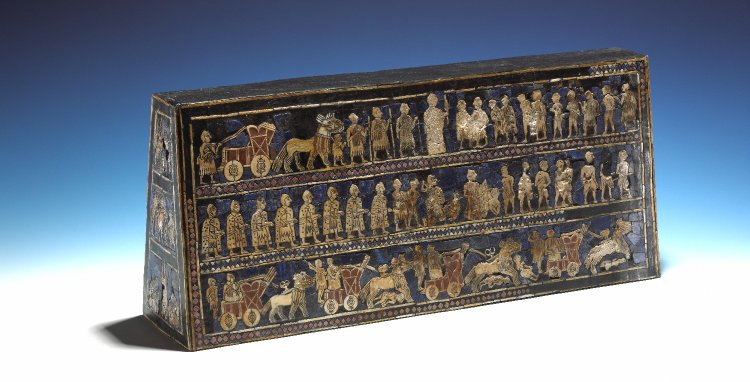
Standard_of_Ur_BM_121201

Standard of Ur (2500 BC). – Photograph© The Trustees of the British Museum.

I am showing this ancient object – twice as old as our classical antiquity – because it must have inspired my poem about Greece. The images on the box are made of shell, lapis lazuli, and red limestone, but I did not remember those details or  even think of the thing. When you have the chance to go to London, do not miss out on the Sumerian galleries of the British Museum!

The longing for a return to Greece, both for the Mediterranean environment and for the ancient civilisation, is also expressed in On Eating Olives / Beim Olivenessen  and in Greek Islands  (below). There are a number of poems about Crete in German and English on this website.


Greek Islands

There is more blue in the air
between here and the horizon,
between morning and evening,
than the cup of the eye can hold.

So my soul may flow over
into the sky,
into the sea,
into this scattered paradise…

Christina Egan © 2012 


On the topic of the blue Mediterranean Sea, see also Meine blaue Mauer  and O Heimatland aus Stein und Licht. On the manifold colours of the same sea, see The Purple Sea / Das lila Meer.
Die Fluten der Stadt

Die Fluten der Stadt

I.

Vor meinem Fenster rauscht die späte Stadt
und glitzert auf im Vollmond, schwarzes Meer;
sie spült Millionen Menschen hin und her,
spielt Fangen, nimmermüd und nimmersatt.
In ihrem Brausen höre ich Willkommen
und lasse mich auf ihren Wellen treiben.
Die Sternbilder der Leuchtreklamen schreiben
sich unter meine Lider… schon zerronnen.
Und nie allein: weil ich alleine bin,
zu Haus im selben Sehnsuchtsleitmotiv
wie jeder andre aufgewühlte Sinn.
Was immer schon in meinen Gliedern schlief,
schäumt ungebärdig zu den Sternen hin:
Ich will dich, will dich wild und meerestief.

II.

Auf vielen Brücken stand ich, ausgespannt
von Stahl und Stein an Themse, Rhein und Main,
und unter allen Himmeln stets allein:
stets einem Unsichtbaren zugewandt.
Es wandeln ja mit jedem neuen Strand
die Menschen wie die Häuser ihr Gesicht,
erstehen anders schon im Morgenlicht;
und immer wieder scheint mir eins verwandt.

Die Fluten wechseln – braun, blau, grau und grün –
die Augen ebenso, die mich gebannt,

sie füllen meine Augen – und entfliehn.
Doch deine, die ich nur von ferne fand,
die kaum mich streiften, seh ich weitersprühn…
Und ihre Farbe hab ich nie gekannt.

Christina Egan © 1995 / 1996

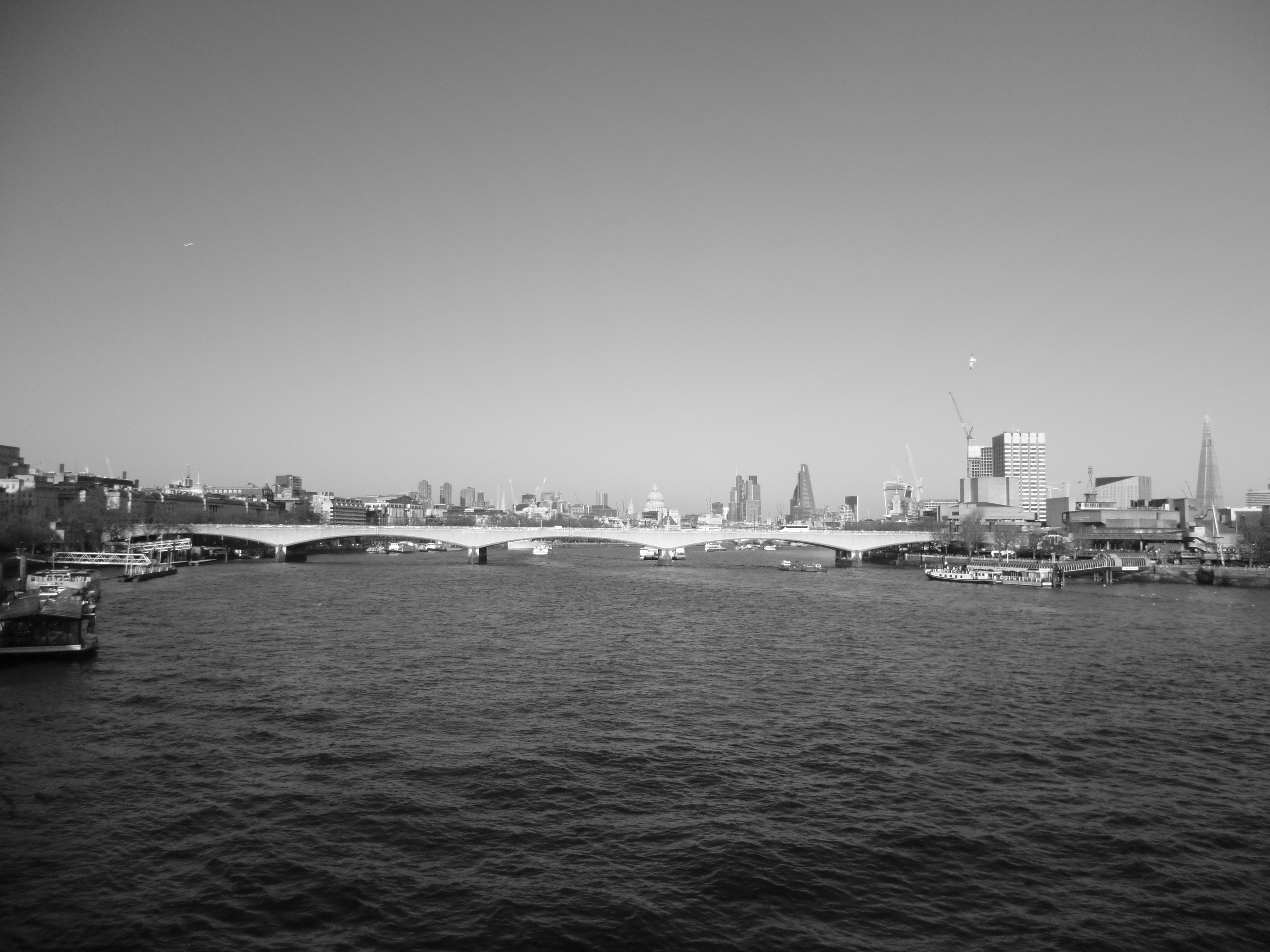
Black and white panorama of London skyline from a Thames bridge, with another bridge, boats, skyscrapers, St Paul's.

London. Photograph: Christina Egan © 2014


The narrator looks for love amidst the masses of the big city by the big river, where the star constellations consist of neon advertisements. She or he adores someone whom she has only seen from afar so that she does not even know the colour of his or her eyes.

Each sonnet makes a paradoxical statement about loneliness: This person is never lonely because many other people in this city share her loneliness; and she is always lonely because she is in the presence of a beloved one who is absent.

das dritte bild

das dritte bild

dein foto ist der neugier aller welt
auf einem internetplatz ausgestellt:
man sieht den hut, viel haar und auch gesicht,
die augenlider, doch die augen nicht.

verschlossen steht und abseits tief in mir
ein anderes, ganz altes bild von dir:
ein überscharfes leuchtendes profil,
als ob’s aus einem traum zersplitternd fiel.

noch in der zukunft liegt das dritte bild,
das meinen wilden durst nach leben stillt:
ich sehe, wie du leuchtest, weil du lebst,
wenn du dich wendest und die augen hebst.

Christina Egan © 2011


The narrator adores a man or woman of whom he or she has gathered only a few impressions: mainly a distant memory and an online photo. These two are the past and the present; the future consists only of imagined images.

Geflecht / Geflechte

Geflecht

Jedes Leben ist verstrickt,
Masche um Masche, Stich um Stich,
in die Leben neben ihm,
ob wir’s wollen oder nicht.

Jede Reihe ist verschlungen,
ohne daß das Garn je bricht,
in das vorige Geflecht,
ob wir’s wissen oder nicht.

Jeder Jahrgang ist der Boden
für die nächste bunte Schicht:
Kaum geboren, sind wir Ahnen
für ein künftiges Geschlecht.

Christina Egan © 2015

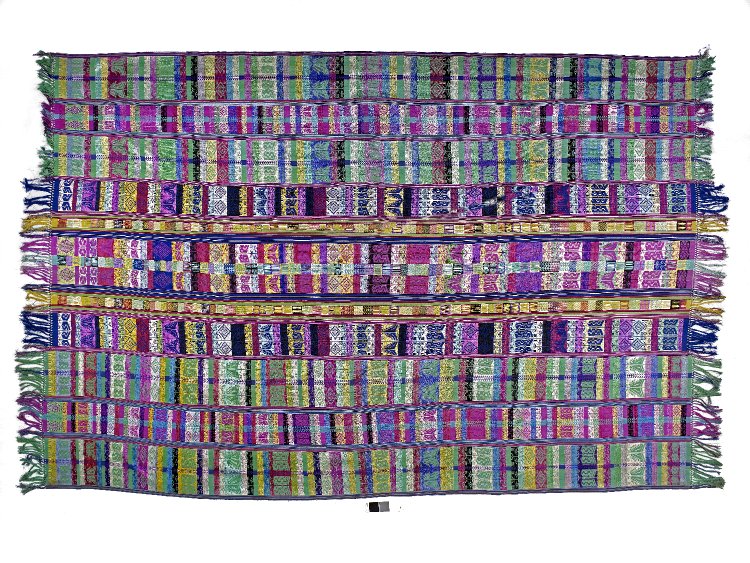
Silk cloth dominated by vivid pinks and greens.

Geflechte
(Altstadt von Köln)

Reihen auf Reihen von Häusern,
hell und freundlich im Frühlingslicht,
Reihen auf Reihen von Fenstern,
schimmernd in allen Augenfarben.

Und hinter einem jeden Fenster
Gesichter… Geschichten… Geflechte.
Und unter einem jeden Pflaster
Pflaster… Pfade… Schwellen.

Stockwerk um Stockwerk von Leben,
hinauf ins ausgelassene Blau!
Schicht um Schicht von Geschichte
bis in den unbetretenen Staub.

Ich strecke mich hin auf dem Mäuerchen hier
und höre die Vögel und höre ein Herz –
Das Herz diese Platzes? Das Herz dieser Stadt?
Mein eigenes Herz, wie es schlägt für die Stadt?

Christina Egan © 2016


These poems describe human life as a knitted or woven tissue: every person is a mesh amongst, above, and below others. Every little life is part of a layer of history, as every modest buidling and ordinary street is.

Every life is interwoven with  others. Every single one of us is history!

I wrote the second poem on the way back from Cologne, where I had briefly rested on a little wall, which turned out to be in the area of the ancient forum and which in hindsight reminded me of excavated foundations.

For a poem on weaving words into a poem, see the previous post, Word Weaver.

Photograph: Silk cloth from Madagascar. – © The Trustees of the British Museum

Zwei Zauberkugeln / Bright Grey Eyes

Zwei Zauberkugeln

Zwei Zauberkugeln, Spiegel
von Wolken, Fluss und Feld
enthalten unter Siegel
die Zukunft, matt erhellt:
Zwei blanke graue Augen
erwecken neuen Glauben
an diese alte Welt.

Christina Egan © 2004


Bright Grey Eyes

With you, there is no waning light
of day, of season or of life;
there’s growing glow and growing sight
of bright grey eyes in bright grey eyes.

With you, there is no wasted time
doomed to oblivion or decay;
each day is gained, each year a line
of our winding, climbing way.

Christina Egan © 2009


These two poems have a similar topic,
but are not translations of each other.

The colour of the writing on this page
emulates the eye colours of the couple.

Die Perle im Acker

Die Perle im Acker

Die eine runde Stunde
in deinem Zauberkreis —
Das Licht im Augengrunde,
von dem du selbst nicht weißt —
Musik aus deinem Munde,
die Seligkeit verheißt —
Die Perle ist gefunden,
ich zahle jeden Preis!

Christina Egan © 2016

Wiederum gleicht das Himmelreich einem Kaufmann,
der gute Perlen suchte, und als er eine kostbare Perle
fand, ging er hin und verkaufte alles, was er hatte, und
kaufte sie.

Mt 13, 45-46

These lines may work in a translation software…
although I would not claim to find ‘salvation’ in
a human being, only ‘bliss’ (but this indeed)!

The Purple Sea / Das lila Meer

The Purple Sea

I’ve seen the sea turn indigo
and greyish green and brilliant blue:
the wine-red sea that Homer saw
was not a blind man’s dream — it’s true.

I’ve swum in waves of indigo,
I’ve swum in eyes of greenish grey:
the fair-eyed gods that Homer saw
may just for moments cross your way.

Christina Egan © 2015

Das lila Meer

Auch indigo färbt sich das Meer
wie gräulichgrün und leuchtendblau:
Wahr war das Weinrot des Homer –
nicht eines blinden Dichters Schau.

Im Indigo schwamm ich sogar
und auch in Augen von Grüngrau:
Ein göttlich lichtes Augenpaar,
das gibt es manchmal noch genau.

Christina Egan © 2015

The Wine-Dark Sea

Where sky and ocean form a line
of glassy indigo,
the water looks indeed like wine,
a strong and sweet Merlot.

This is the sea that heaped up rocks
and beckoned walls to rise,
the ageless mother of these flocks
of sun-enchanted isles.

This is the sea that brought the fleets
to Carthage and to Troy
on silver-green and bright-blue sheets
which wayward gods deploy.

Christina Egan © 2012

These poems refer to the debate around Homer’s strange colour names: e.g. ‘wine-coloured’ (‘oinops’) and ‘purple’ or ‘maroon’ (‘porphyreos’) for the sea; ‘green-eyed’ (‘glaukopis’) for a person or god with eyes of any fair colour.

While people in antiquity were not yet interested in describing colours and 
despite their sophisticated languages — had only very few words for them, I
believe that on occasion, these can be taken literally.

The first two poems are translations of each other. The colour adjectives oscillate between the languages, and within, just like the sea does…

vermächtnis

vermächtnis

und wieder dünen. wieder hohes gras.
und meer und himmel hier mit urgewalt.
und wieder du in deiner wohlgestalt.
und mein verlangen sanft und ohne maß.

ich tauch in deine lichten augen ein…
das meer entweicht. es war nur wellenschaum.
der tag verbleicht. du warst ein sommertraum.
ich bin allein am strand. ich bin allein.

wie mars in seinem kupferfarbnen glanz
entsteigt dem wall des kiefernwalds dein bild.
die brandung klopft. und klopft. der boden quillt.
ich kröne dich mit meiner verse kranz.

Christina Egan © 2015

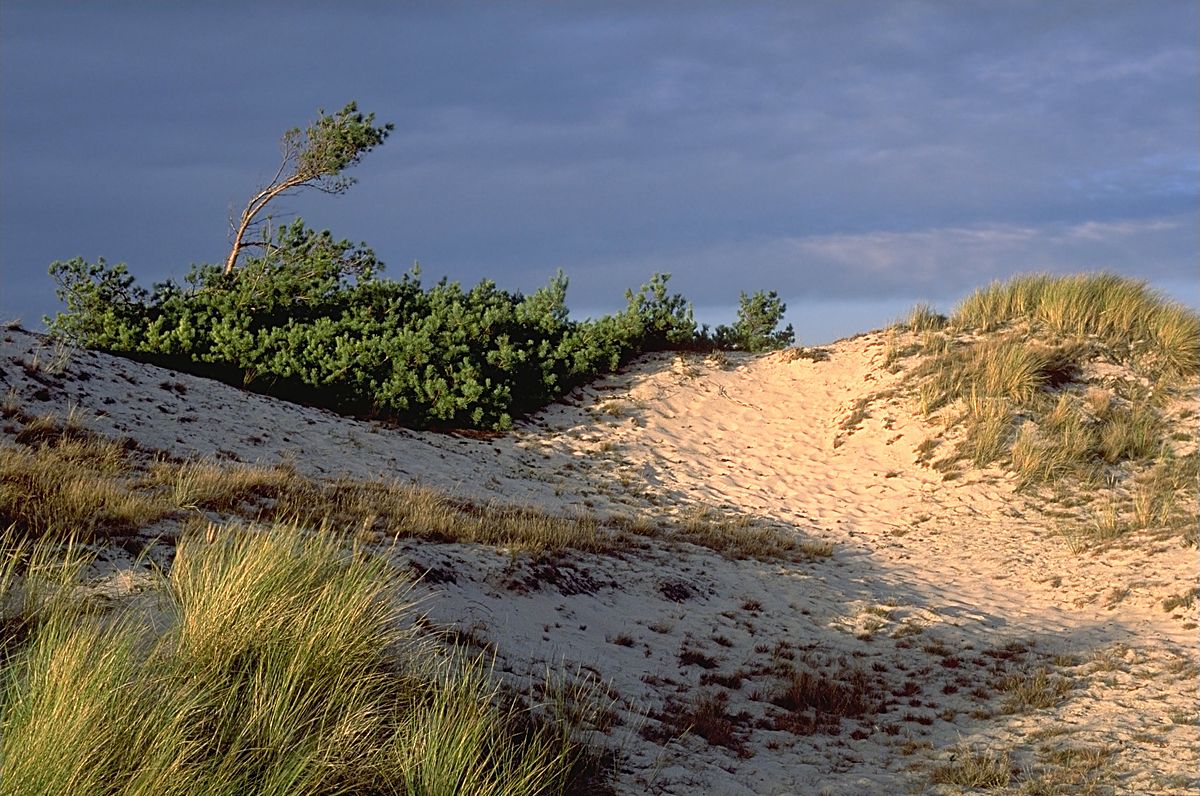
Golden dune, green grass and shrubs, deep-blue sky.


This is my poem of the year 2015! It is, as the title states, my Bequest.

Like many other poems, it was inspired by a holiday on the Darss.


“Dune in Nature reserve Darßer Ort, Baltic Sea”. Photograph: Andreas Tille via Wikimedia Commons.

Verkündigung (In meine helle Stille)

Verkündigung

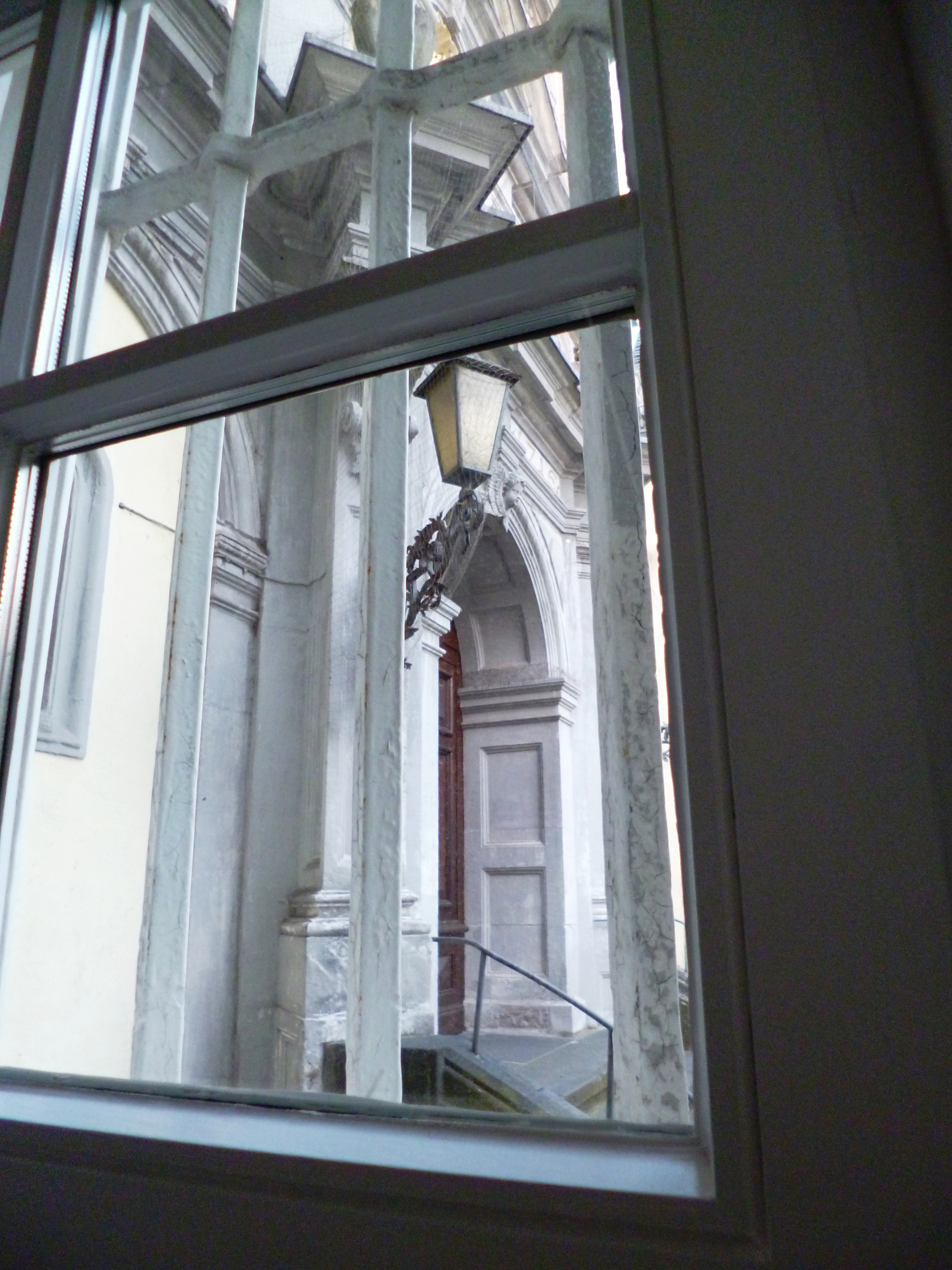
Church portal with iron lantern seen through window with grate; all light-grey and light-blueIn meine helle Stille
fiel Gottes hohes Wort…
Geschehe denn sein Wille
an diesem schlichten Ort,
geschehe denn sein Wirken
an diesem Gnadentag,
daß meine ferne Seele
nun seinen Funken trag’,
bis dieser armen Erde
ein neuer Morgen blaut
und jeder Mensch voll Wunder
in Gottes Auge schaut.

Christina Egan ©2014

Since the ‘Annunciation’ of God’s salvation for this earth to Mary,
everyone can gain eternal hope and immediate access to God.

This poem has been published in the Münsterschwarzacher Bildkalender 2016.

Photograph: Church of Mary as Queen of Peace. Christina Egan ©2014


Buchenland / Heimaterde

Buchenland

Schon der Frühherbst
Schüttet Nebel aus
Über die Hügel hin
Haufenweis.

So verschwimmt mir der Pfad
Bevor noch die Buchen brennen
Und die stolzen Wiesen vergehn
Zu lustlosem Staub.

Doch unterm zerklüfteten Fels
Sitzt sommersatt das Moos
Blüht mondhell die Distel
Aufs Geheiß verborgener Geister.

Christina Egan © 2013

heimaterde

unter der haut
schimmert sie durch
die rote krume
der ich entwuchs

hinter den augen
blinzelt es vor
das urgestein
schwarz und gewaltig

unter dem haar
wirbeln sie hoch
nebel und wind
die mich umfingen

unter der zunge
schlummert sie noch
die fruchtbare sprache
die mich entfachte

Christina Egan © 2013

The first poem describes an autumnal landscape with trees in flaming colours and fog drifting in the dales. The name, Land of Beech Trees, stems from the times when most of Germany was covered by dense forests.

Nature appears as animate, sentient, and even spiritual: the meadow is proud and the moss content, while hidden spirits command a thistle to blossom bright as the moon.

The second poem reminds us that our bodies are made of the world around us — the air and water, the earth and its fruit, the flesh and bone of our ancestors while our minds are moulded by the language of our parents and ancestors.

The speaker imagines that red soil shines through his or her cheeks and black rock blinks through her pupils, while her hair is softened by thick fog and tousled by rough wind.

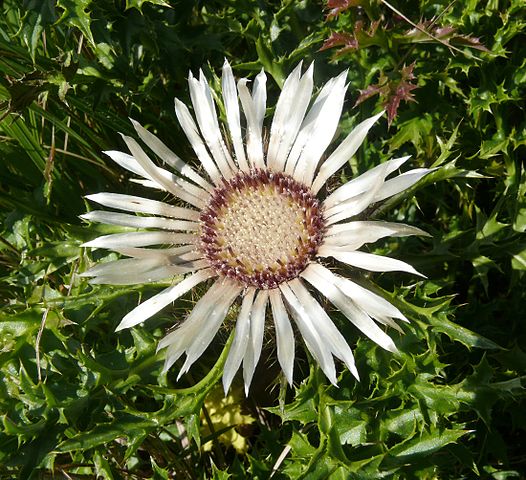
526px-Carlina_acaulis_160907These words were inspired by the landscape and climate of the Rhön Mountains in Germany.

Their symbol is a rare wildflower, the silver thistle.

Photograph: „Carlina acaulis 160907“
by Bernd Haynold via Wikimedia Commons