Zugewogen


One year later:
My 125th post!


Zugewogen
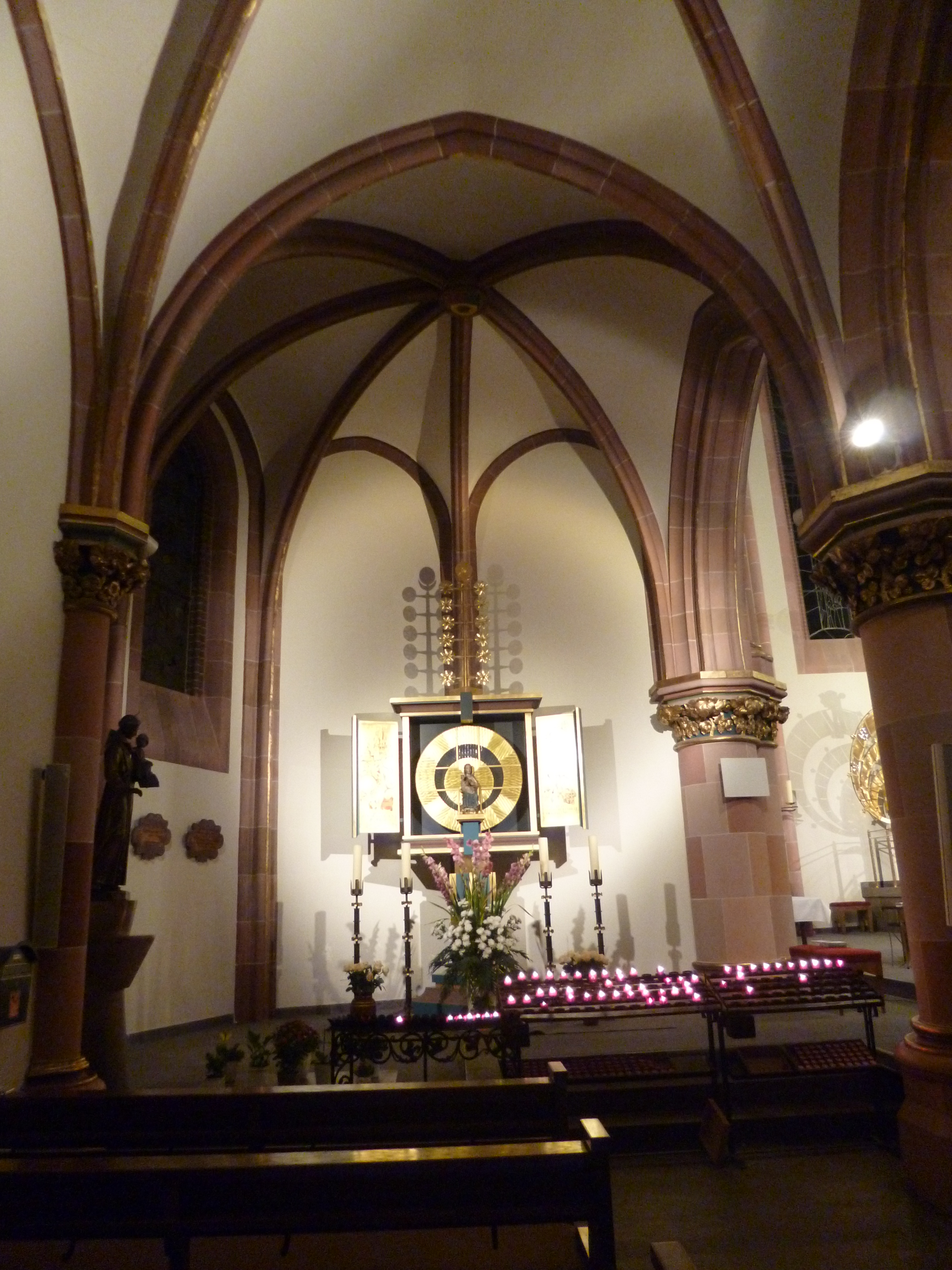
Altar, bright golden, in church, Neo-Gothic, with plenty of lit candles beneath.In den Gezeiten des Lebens,
in dem Getriebe der Stadt
suchst du verzweifelt, vergebens
Liebe, die Zukunft hat.

Tritt ins Portal einer Kirche,
schau’ in die flackernde Flut,
entzünd’ eine winzige Kerze
und wisse: Alles wird gut.

Alles ist zugewogen,
Liebe und Freude und Leid;
niemand wird je betrogen
um Sinn und um Seligkeit.

Christina Egan © 2011

St Ludwig, Berlin (near Ku’damm).
Photograph: Christina Egan © 2016

“Everything is weighed for you, love and joy and suffering; nobody will ever be cheated out of meaning and of bliss.”

I believe this beyond any doubt, although not everything will come all right this side of death. Lighting a candle in a place of worship in the midst of our busy lives gives us comfort and peace at any rate.

This poem on faith and destiny was published in a previous edition of the  Münsterschwarzacher Bildkalender. The 2017 calendar is available now, with 52 photographs and 52 poems and addresses (one of them by me: psalm für dich).

Obsidian Mirror / Orangenzweig

Obsidian Mirror Mirror made of a deep-black polished stone, on a wooden base.

The moonless night, the iron gate,
between the trees the winding path,
the nameless pond: a polished plate,
obscure and truthful looking-glass –

The moonless night, the nameless pond,
the outline of a cruel fate:
the leaves are shed, the blossom gone –
It is too late – It is too late.

Christina Egan © 2015


Orangenzweig

O Traum von Liebe, Traum von Licht
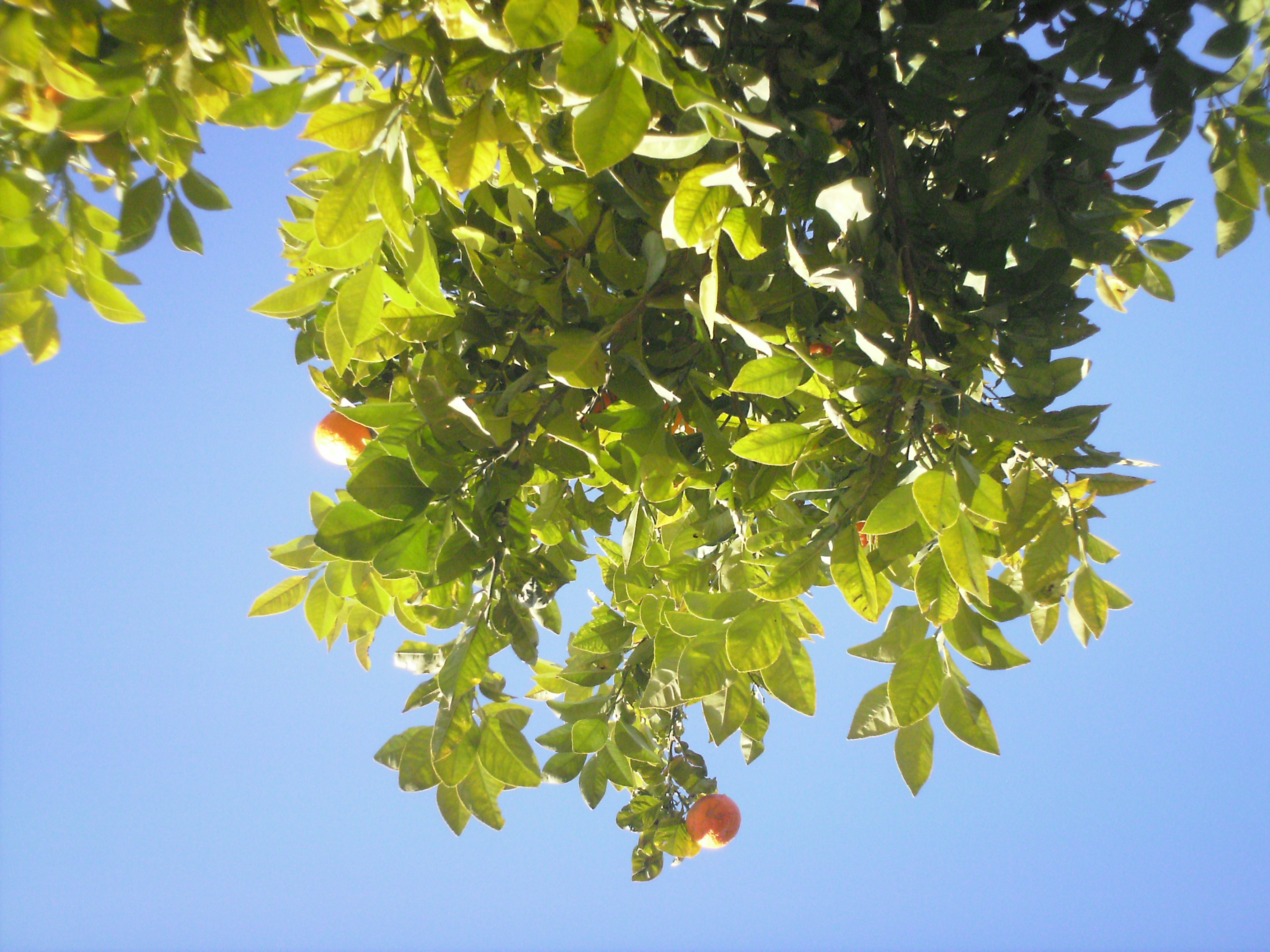
Oranges hanging from branches against blue skyauf einem duftenden Gesicht,
vom kleinen Rosengartenglück
aus einem mächtigen Geschick,
vom Dasein als Orangenzweig,
an Blüte reich und Frucht zugleich,
vom ganz bescheidnen Paradies,
das dir und mir ein Gott verhieß…
O Traum, der niemals untergeht –
Es ist zu spät. Es ist zu spät.

Christina Egan © 2016


The two poems contain an echo, and echo each other, in the phrase ‘It is too late’ — ‘Es ist zu spät’, which emphasises the futility of wishes and plans when fate is irrevocably against them.

Obsidian is a very dark and very hard stone. Some ancient civilisations used polished slabs as mirrors. Apparently, they were also employed for fortune-telling!

Photograph: Aztec mirror, Museum of the Americas, Madrid. – Simon Burchell via Wikimedia Commons. – Orange branch: Christina Egan © 2012.

Am Rad der Weltgeschichte

Ich möcht am Rad der Weltgeschichte stehn

Ich möcht am Rad der Weltgeschichte stehn
Und eine Nacht beharrlich rückwärts drehn
Das Telefon zerfällt in deiner Hand
Der Flachbildschirm entgleitet deiner Wand
Das Internet verweht wie bunter Rauch
Die Rapmusik verebbt im Morgenhauch
Durchs Weltall stürzen Sonden zu uns her
Die schwarze Fahne rutscht vom Schießgewehr
Palmyra schüttelt sich aus Schutt und Sand
Manhattans Splitter fügen sich zum Band

Und wenn die Mauer aus dem Staube steigt
Dann halt ich an – und die Geschichte schweigt

Dann geh ich aus und such und finde dich
Und nichts und niemand hält und hindert mich

Der Rest darf weiterrasseln wie zuvor
Die Mauer stürzt es platzt das Wüstentor
Die rote Fahne sinkt die schwarze steigt
Und Pluto wird gefilmt und Mars erreicht
Das Internet wird um die Welt gespannt
Der Bildschirm schrumpft in deine hohle Hand
Doch mitten in des Lebens Wirbelsturm
Stehn du und ich wie jener Doppelturm

Zweitausendfünfzehn schrieb ich dir dies Lied
Denn ich bin müde und die Zeit entflieht

Christina Egan © 2015


Dense layers of rusty gearwheels.The narrator imagines that he or she can turn back the wheel of history.

Tiny hand-held telephones, huge television screens, and the whole internet dissolve; one after the other, the Arch of Palmyra, the Twin Towers, and the Berlin Wall rise from the debris.

Then the person stops history to find the beloved one this time round and live a new life together, while everything else rolls on as before: the monuments fall, the internet rises, till we arrive back in 2015.

These lines could be developed into a rock song. I imagine hard music which grows more intense until it stops when history stops!


Rusty gear wheels. Photograph by susannp4 (Susann Mielke).

Neunundneunzig Farben / Wirrsal

Neunundneunzig Farben

Neunundneunzig Farben hat der Himmel,
der Gezeiten und Geschöpf regiert.
Neunundneunzig Namen hat der Geist,
der brennend und behutsam unsern führt.

Christina Egan © 2015

Wirrsal und Schicksal

Es scheint, als herrsche Wirrsal und nicht Schicksal,
oder ein Gott, der türmt und niederreißt,–
doch unter allen Wogen spannt sich Stille,
und hinter allen Stürmen wirkt der Geist.

Christina Egan © 2015

Whether the universe around us appears, at one time or another, harmonious and purposeful  or violent and meaningless: the Spirit of God reigns invisibly, but powerfully, creating peace and clarity.

These poems draw from religions other than my own, Christianity; and  I hope they also speak to people of other religions, or indeed, no formal religion.

Quo vadis?

Quo vadis?

Roman mosaic of bottle and cupI drank a cup of strong red wine,
and half of it I somehow spilt…
That was still in another life,
before this winding lane was built…
It was along the straight wide road,
beneath a square of bright-red tiles…
I spilt it from a bright-red cup,
and then I walked from town for miles…
I limped along the riverside,
I lay down in the damp dark fern…
I spilt my wine, I spilt my life:
one day, I shall have to return.

Christina Egan © 2015

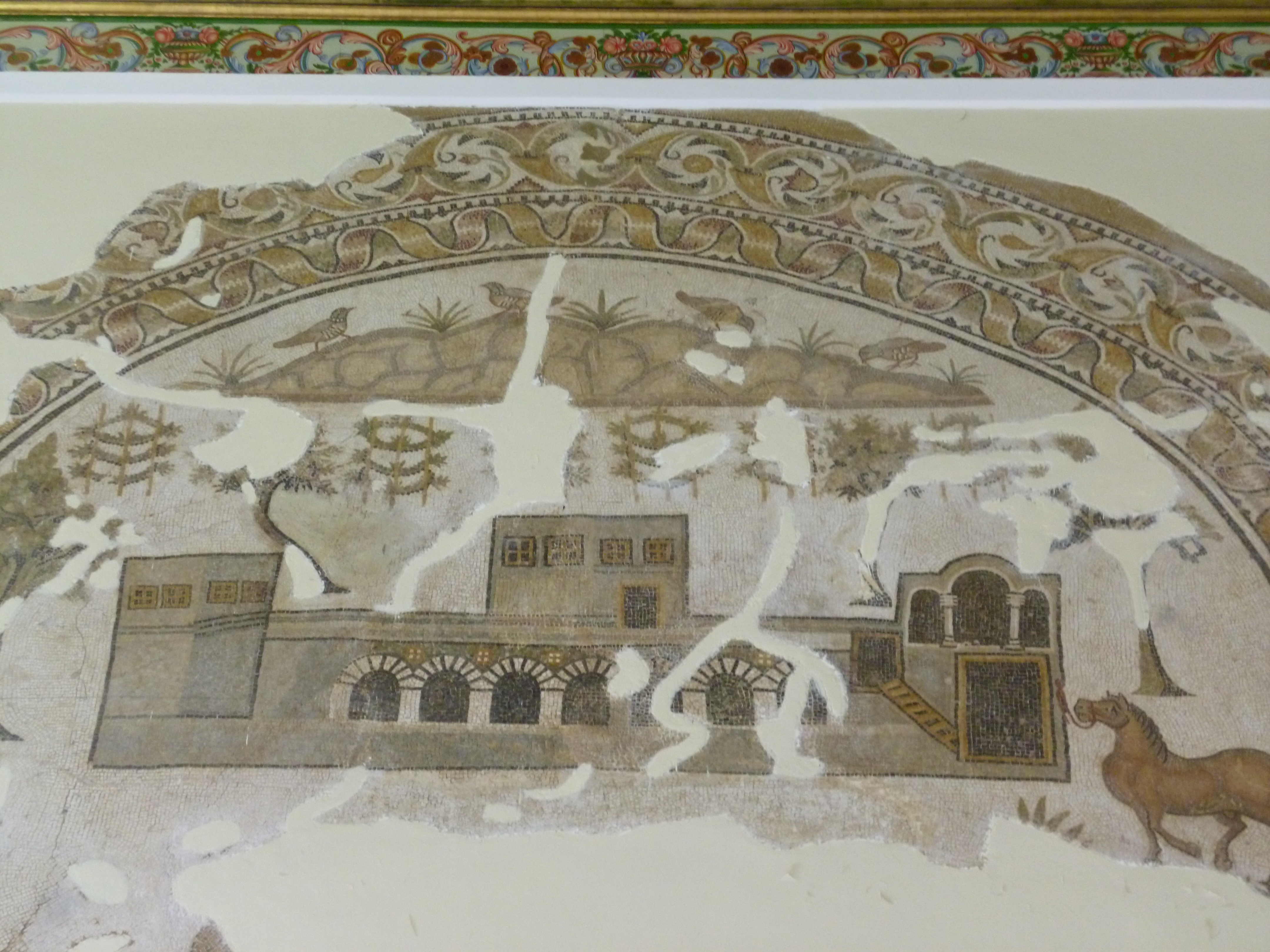
Roman mosaic of a mansion

This story was inspired by the winding highways and the straight Roman road meeting at Tottenham, London, England.

The Latin title means ‘Where are you going?’ and may imply a reproach to someone who is trying to flee their place in life.

See also my poem By the Highway
(in German and English versions).

Roman mosaics, Bardo Museum, Tunis.
Photographs: Christina Egan © 2014

An der breiten Straße / By the Highway

An der breiten Straße

In des Stadttors Schatten steh’ ich,
Wo die Straße sich entrollt:
Und die Stadt ist nicht von Marmor
Und das Pflaster nicht von Gold.

An der breiten Straße sitz’ ich
Eine Stunde und ein Jahr:
Und ich träume, und ich hoffe,
Und ich warte immerdar.

Händler fahren ihre Waren,
Pilger ziehen aus und ein,
Gräber reihen sich allmählich:
Und ich werde selbst zu Stein.

Eines Nachts verkünden Sterne:
Gehe aus und such’ dein Glück!
Eines Tages bringst du’s hierher,
Denn die Stadt ruft dich zurück.

Christina Egan © 2015

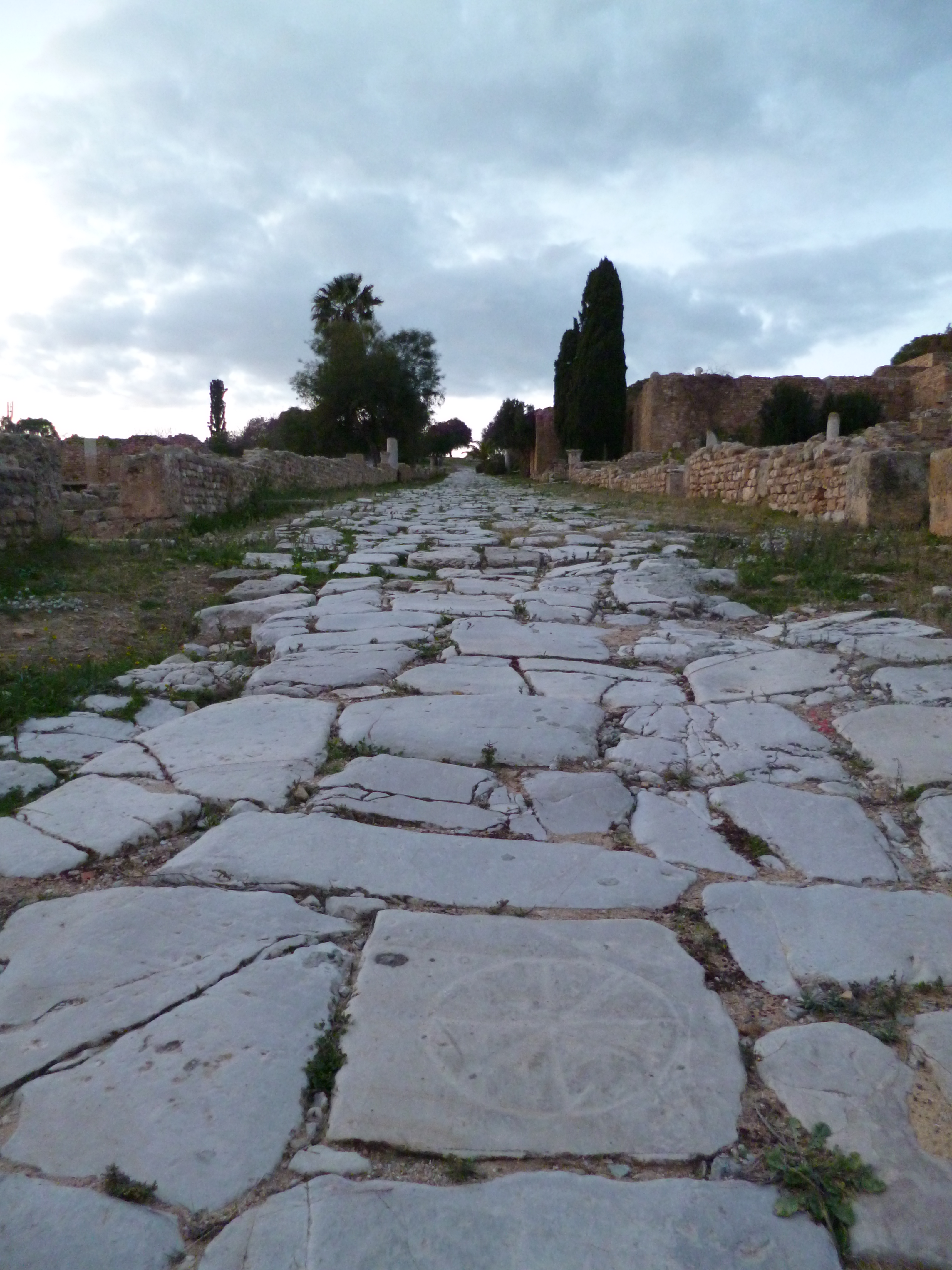
Straight Roman road with ruins and trees to the left and right, in the dusk

Roman road in Carthage, Tunisia.
Photograph: Christina Egan © 2014

By the Highway

In the city gate I’m standing,
Where the outbound road‘s unrolled:
And the city’s not of marble
And the pavement not of gold.

By the highway I am sitting,
First an hour, then a year:
And I’m dreaming, and I’m hoping,
And I’m waiting, sitting here.

Merchants cart their goods to market,
Pilgrims visit and go home,
Tombs line up along the highway:
Slowly, I, too, turn to stone.

Yet one night some stars announce it:
Seek your luck now, seek your track!
And one day bring back your luck here,
When the city calls you back.

Christina Egan © 2015

This poem is timeless. A similar song is part of my play The Bricks of Ur, which is set 4,000 years ago. Another story from a highway outside a Roman city is Quo vadis?.View of Roman Cologne: a large neat grid of buildings with red tiles, located on flat land by a wide river“Roman Cologne, reconstruction” by Nicolas von Kospoth via Wikimedia.

This poem or song was inspired by ancient Roman tombs along Severinstraße, the straight road leading southwards out of Cologne, Germany (left in the picture). Artistic impressions of a Cologne city gate and a highway lined by tombs are online on p. 48 and p. 28-29 of Römer Straßen Köln. When I wrote the poem, I did not know that at times, Severinstraße was known as “Lata platea” or “Breite Straße” (“Broadway”)!

Postscriptum:  This was my first post ever! Roman roads and Cologne are two of my favourite subjects; so you can link to the texts covering them directly.