A Quilt of Light and Shade

A Quilt of Light and Shade

A quilt of light and shade,
a quilt of wind and heat
this solstice has become:
half fervour, half fatigue…

A quilt of sun and rain,
a quilt of green and grey,
brick red and blinding white
this city is today.

The boulevards are streams,
the roundabouts are whirls –
and fleetingly this seems
to be the best of worlds.

Christina Egan © 2012


In London, and in northern Europe in general, the weather is unsteady and unpredictable, even in midsummer. London has got a very great number of buildings in red brick, usually with window frames and decorative features in white, and plenty of trees, gardens, and parks. And it is very, very busy…

The summer solstice is also the subject of the previous post, This Day of June. As I am putting these poems online, there should be daylight till ten at night in England and some blue left in the sky even towards midnight — instead, there is not a ray of sunshine all day, and the sky is dark grey in the afternoon…

Fastenzeit / Lent

Fastenzeit

An bitterem schwarzen Brot
nagt mein Mund.

An bitterer schwarzer Erde
nagt mein Herz.

Grauer Wind
fegt die Fluren rein.

Alles fastet
der Farbenfülle entgegen.

Christina Egan © 1985

Lent

My foot sinks
into bitter black earth.

My heart gnaws
on bitter black bread.

Grey wind
sweeps the fields clean.

Everything fasts
towards the flood of flowers.

Christina Egan © 1999

The church year mirrors the natural seasons  and symbolises our life events: voluntary renunciation in Lent corresponds to the hardships of winter or to emotional deprivation.

I shall shortly post a poem about Easter at ostermorgen, where faith in God and resurrection is linked to the renewed sunshine of spring and to the experience of communion and fulfilment.

Roof-Tile / Plateau

Roof-Tile
(Béziers)

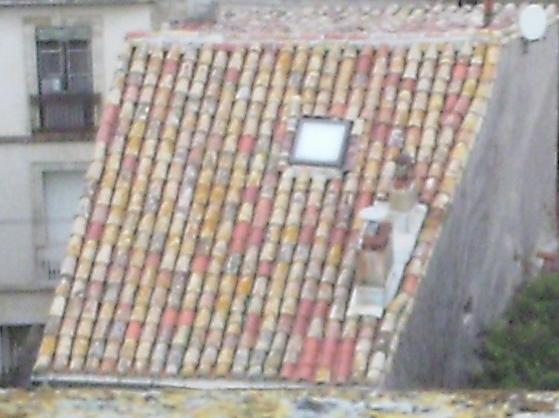
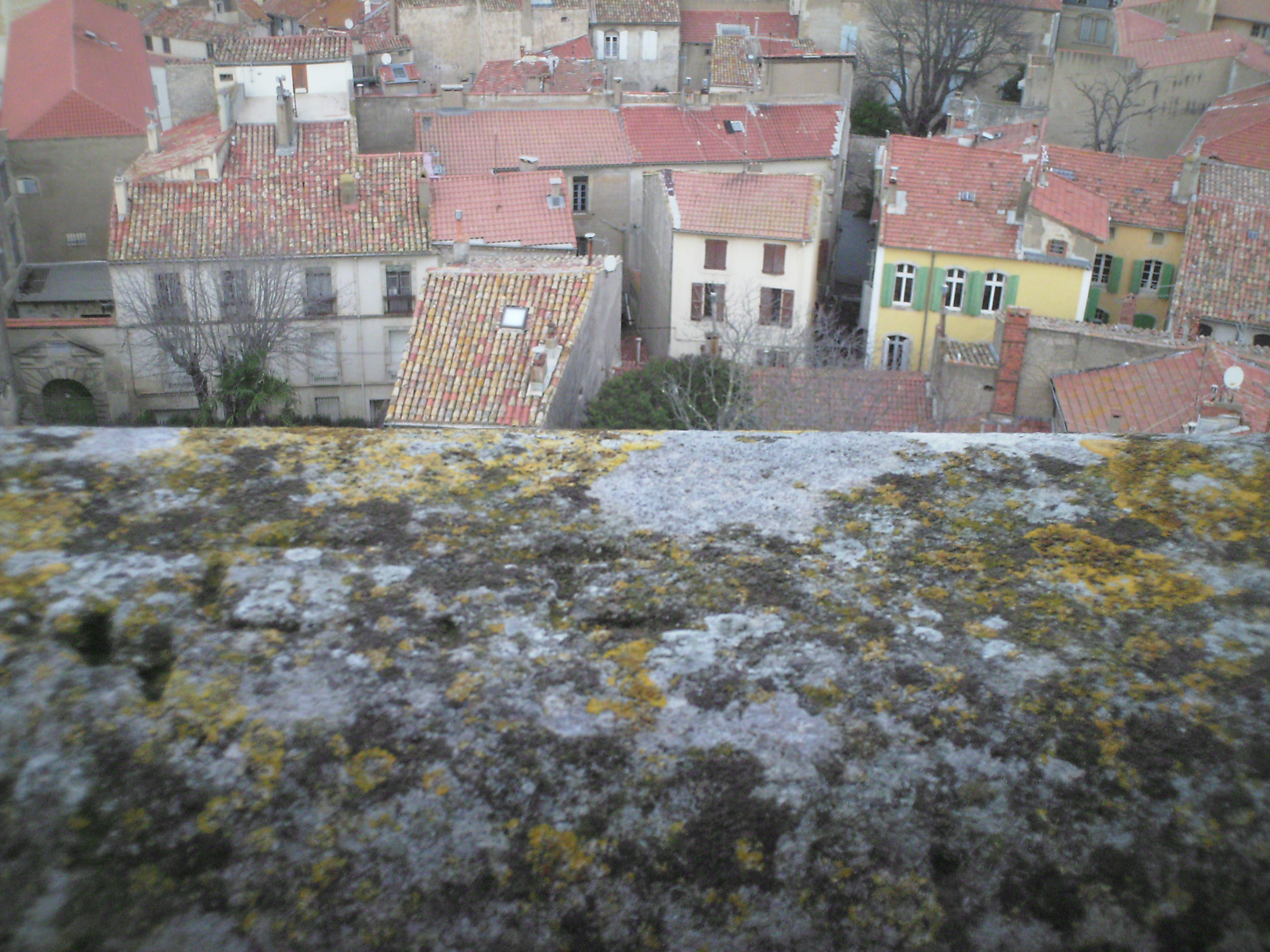
Lower half shows ancient wall with lichen and moss, upper half houses and roofs with motley tiles

A roof-tile, grooved: a hill, a dell,
in broken ochre, earthy red,
with greenish circles in between;
a piece of world, of time a shred.

And then I see: the whole old roof
is such a patch of orange clay –
the whole old town in weathered brown,
resplendent in a tender ray!

Christina Egan © 2016

Plateau
(Béziers)

Roof with motley tiles - Detail of above photo

Life is a gnarled and narrow hill,
so steep as scarcely to be climbed:
you scramble, stumble, slide or fall,
you stay below, you stay behind.

Then opens, through a hedge or wall,
a gap, a gate, an avenue,
a whole plateau, a spilling well,
a plain beneath your startled view!

Christina Egan © 2016

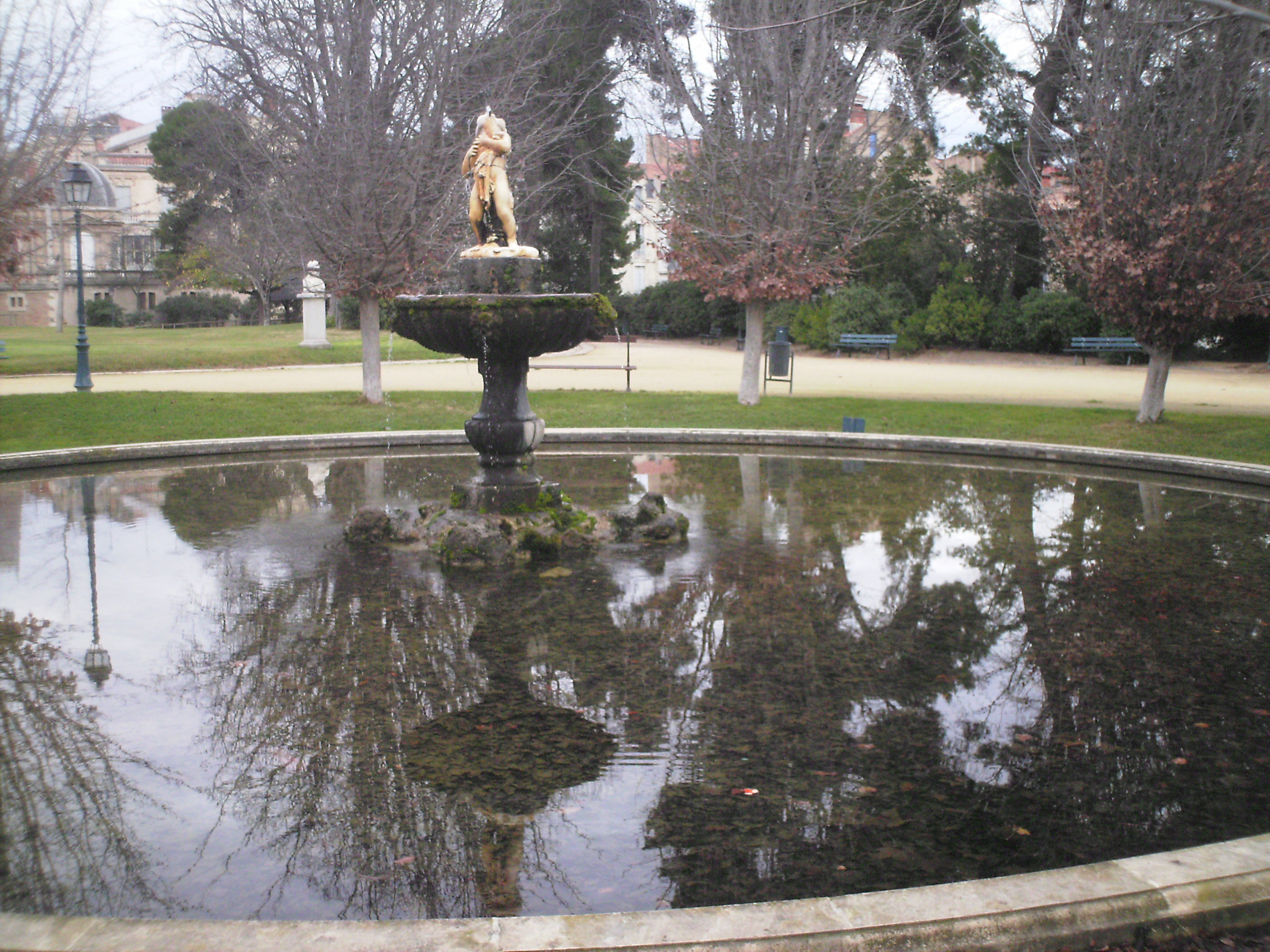
Round basin in park, with trees, houses and statue mirroredTwo views from the ancient city of Béziers in France, which is piled up
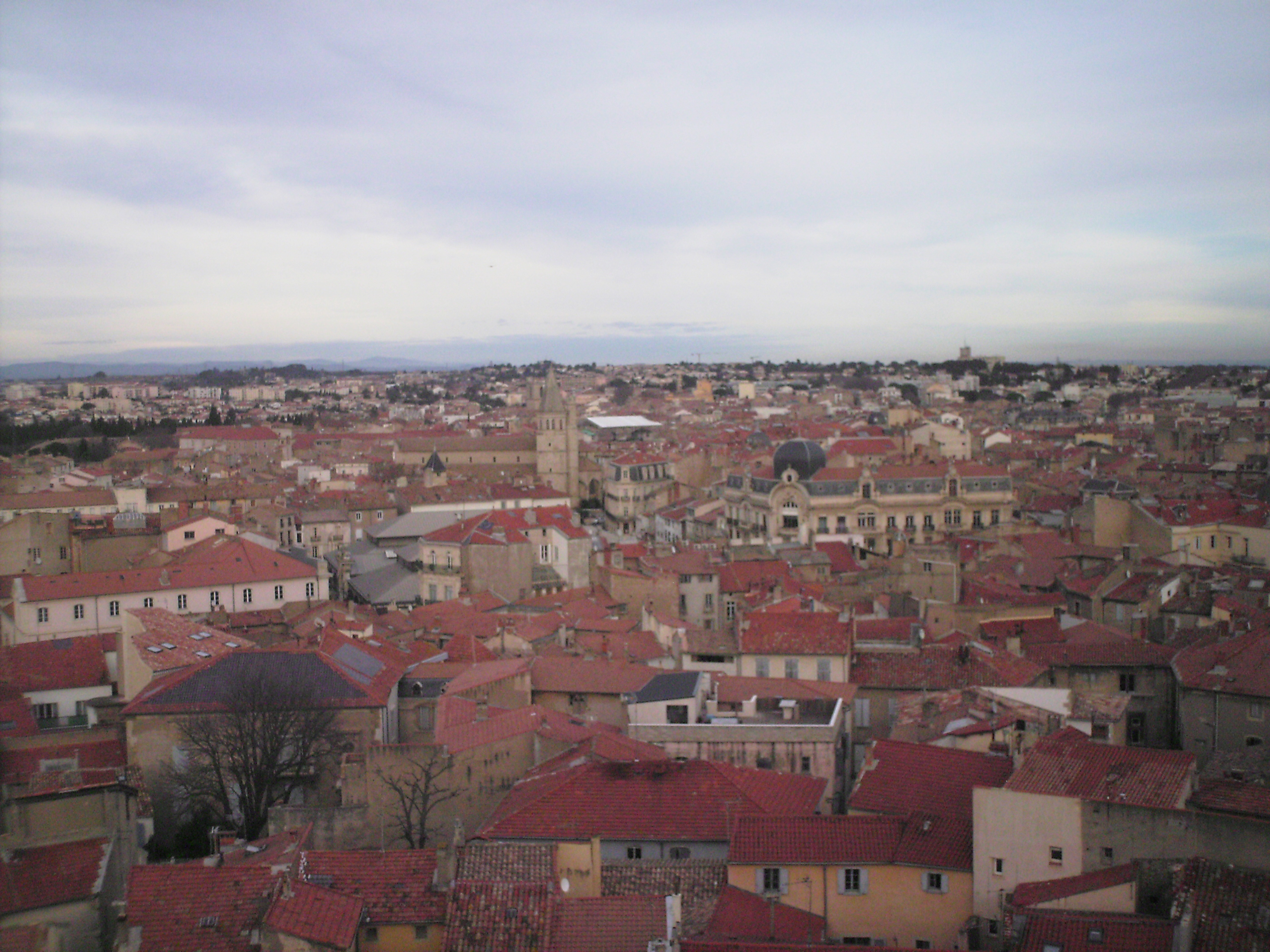
on a couple of steep hilltops: the first view is from
the Cathedral tower; the second, from the park called Parc des poètes / Plateau des poètes.

Well… the respite after struggles and setbacks might be found in enjoying or creating art — or in life itself!

Old Town of Beziers, with red roofs dominating, landscape round horizon.While getting lost and strained in the lanes of Béziers reminded me of nightmares, exploring the Cathedral like a giant Crystal Rock  induced me to create the word ‘lightmare’!

Photographs: Béziers from the Cathedral roof ; Parc des poètes. Christina Egan © 2016

The Purple Sea / Das lila Meer

The Purple Sea

I’ve seen the sea turn indigo
and greyish green and brilliant blue:
the wine-red sea that Homer saw
was not a blind man’s dream — it’s true.

I’ve swum in waves of indigo,
I’ve swum in eyes of greenish grey:
the fair-eyed gods that Homer saw
may just for moments cross your way.

Christina Egan © 2015

Das lila Meer

Auch indigo färbt sich das Meer
wie gräulichgrün und leuchtendblau:
Wahr war das Weinrot des Homer –
nicht eines blinden Dichters Schau.

Im Indigo schwamm ich sogar
und auch in Augen von Grüngrau:
Ein göttlich lichtes Augenpaar,
das gibt es manchmal noch genau.

Christina Egan © 2015

The Wine-Dark Sea

Where sky and ocean form a line
of glassy indigo,
the water looks indeed like wine,
a strong and sweet Merlot.

This is the sea that heaped up rocks
and beckoned walls to rise,
the ageless mother of these flocks
of sun-enchanted isles.

This is the sea that brought the fleets
to Carthage and to Troy
on silver-green and bright-blue sheets
which wayward gods deploy.

Christina Egan © 2012

These poems refer to the debate around Homer’s strange colour names: e.g. ‘wine-coloured’ (‘oinops’) and ‘purple’ or ‘maroon’ (‘porphyreos’) for the sea; ‘green-eyed’ (‘glaukopis’) for a person or god with eyes of any fair colour.

While people in antiquity were not yet interested in describing colours and 
despite their sophisticated languages — had only very few words for them, I
believe that on occasion, these can be taken literally.

The first two poems are translations of each other. The colour adjectives oscillate between the languages, and within, just like the sea does…

Kretische Küste

Kretische Küste

I.

Vor mir ein grünes Meer, ein roter Strand
und hinter mir die himmelhohe Wand
der Weißen Berge, mit Gesträuch schraffiert,
mit Schluchten aufgeteilt, vom Mond berührt.

Es schwindelt mich, so schroff ist es und schön…
ich möchte mitten ins Gebirge gehn,
als sei es eines Mannes Wohlgestalt
und berge sein Gemüt in jedem Spalt.

II.

Der kupferfarbne Sand wird doch zu Gold,
wo er in steiler Woge niederrollt
und sich mit jenem Brennendblau benetzt,
das kommt und nochmals kommt… und jetzt… und jetzt.

Und Disteln starren in dem dürren Strand,
die plötzlich strahlen wie von Zauberhand,
wenn erster Regen flüchtig niedersteigt
und Brautkleidblüten aus den Blättern treibt!

III.

Wo täglich Himmel sich mit Meer vermählt
und Landes Rand von anderm Strand erzählt,
wo trockne Erde wie der Tagstern loht
von silbriggold bis zu orangerot,

wo noch bei Nacht das Wasser, kaum bewegt,
den Leib in schwerelosem Zauber trägt,
bis in das sanfte Schwarz ein Schweifstern stürzt –
dort laß uns warten auf den milden Herbst.

IV.

Mit riesenhaften grünen Pranken greift
das Meer hinein in den geschützten Kreis
des kleinen Hafens, daß die Mole schäumt
und sich die bunte Schar der Boote bäumt.

Des späten Herbstes erstes Fauchen fährt
in letzte schwere Hitze wie ein Schwert.
Fünftausend Jahre aber ragt die Stadt
ins Element, gelassen, sonnensatt.

Christina Egan © 2014

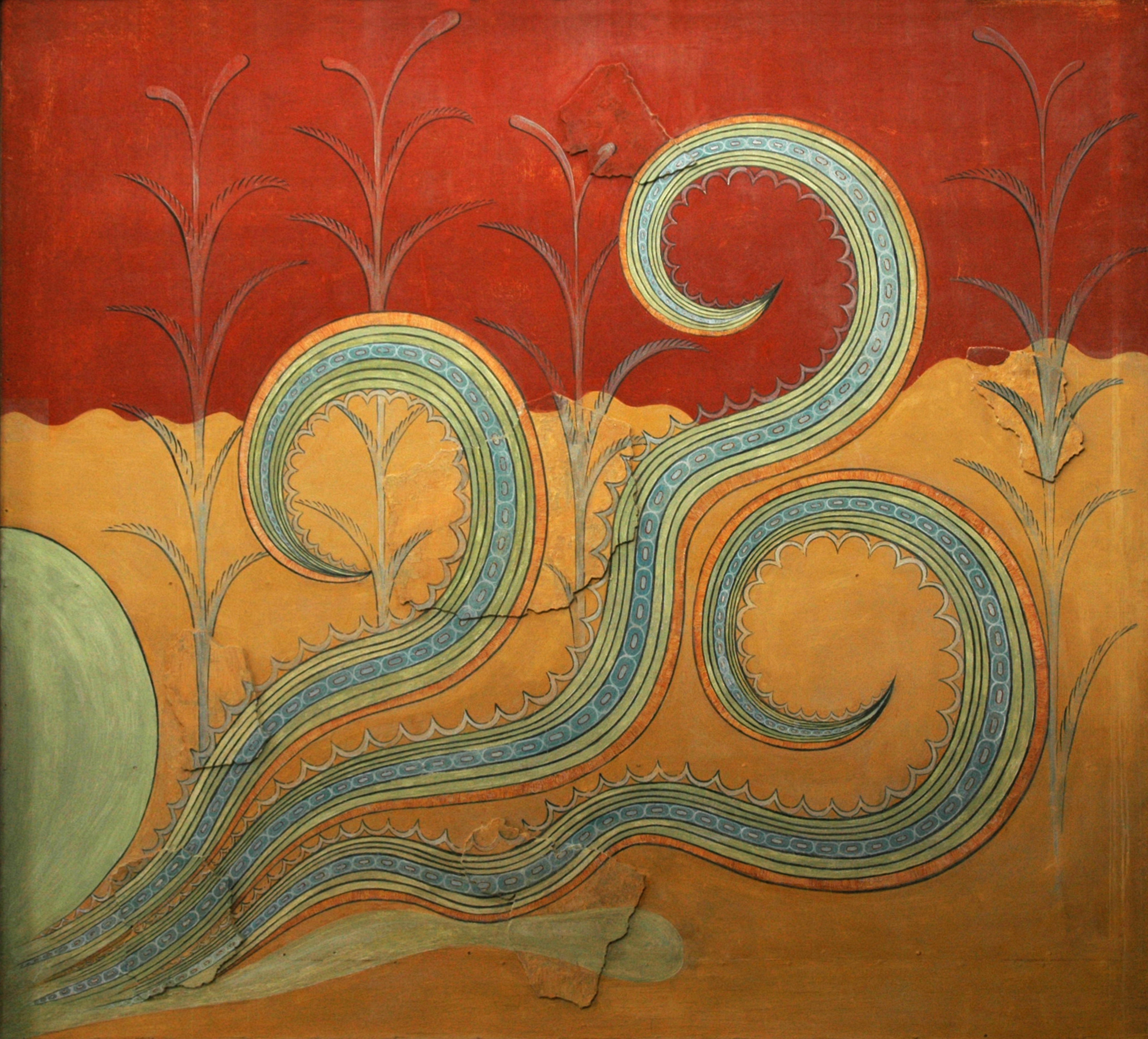
Flourishes on a mural, turquoise on luminous red and yello

For more poetry and information
on Knossos 
and Chania on Crete
see my English poems
The Pattern of a Yesterday and
Golden Dell.


Frieze in the royal palace at Knossos, Crete.
Photograph: Harrieta171 via Wikimedia.

Neunundneunzig Farben / Wirrsal

Neunundneunzig Farben

Neunundneunzig Farben hat der Himmel,
der Gezeiten und Geschöpf regiert.
Neunundneunzig Namen hat der Geist,
der brennend und behutsam unsern führt.

Christina Egan © 2015

Wirrsal und Schicksal

Es scheint, als herrsche Wirrsal und nicht Schicksal,
oder ein Gott, der türmt und niederreißt,–
doch unter allen Wogen spannt sich Stille,
und hinter allen Stürmen wirkt der Geist.

Christina Egan © 2015

Whether the universe around us appears, at one time or another, harmonious and purposeful  or violent and meaningless: the Spirit of God reigns invisibly, but powerfully, creating peace and clarity.

These poems draw from religions other than my own, Christianity; and  I hope they also speak to people of other religions, or indeed, no formal religion.

Der bunte Staub / The Multi-Coloured Dust

Der bunte Staub

Der bunte Staub auf meinem Fensterbrett
– ein Häufchen Blütenblätter, ausgebleicht –
verwandelt sich im Abendsonnenlicht
in einen Schatz, dem kein Geschmeide gleicht.

Christina Egan © 2014

Little vase with flowers in lemon yellow, pale blue, deep pink and red; some petals scattered beneath; garden in background.

The Multi-Coloured Dust

The multi-coloured dust flocks on my desk 
– a heap of petals fading gradually –
gets now transformed by sunshine from the West
into a hoard surpassing jewellery.

Christina Egan © 2015

You can also find petals decaying to dust in the
German hymn Spiritum Sanctum vivificantem.

Photograph: Christina Egan © 2013

On the Volcano’s Rim

On the Volcano’s Rim

Goldstaub
(Lanzarote)

Hoher blauer Himmel,
weißer Wolkenflug,
ungestüme Winde,
rascher Schattenzug

über rote Halden,
über graue Höhn,
über grüne Matten,
wo schon Sterne stehn:

abertausend Blüten
wie ein Frühlingslied,
Goldstaub, den die Sonne
aus dem Erdreich zieht!

Christina Egan © 2015

Gold Dust
(Lanzarote)

Blue sky, ever higher,
white clouds in full flight,
winds wilful and forceful,
swift change of the light

across the red boulders,
across the grey height,
across the green lichen,
where stars tremble bright:

a flourish of flowers
and spring in a splash,
the gold dust the sun
can draw out of the ash!

Christina Egan © 2015

Dreaming Dragon
(Lanzarote)

Dew-drops sparkling in all colours
on the mighty coal-black craggy
shoulder of a dreaming dragon:
so these tiny tender flowers
perch on the volcano’s terrace –
fire, earth and wind distilled
to a dainty dotted quilt.

Ceaseless gales and sleepless fire,
ashes fed with salty dew –
ocean and volcano brew
flora’s early, lacy layer,
magic carpet in the air,
in the boundless brown and blue…
Dreams are real. Dreams come true.

Christina Egan © 2015

The Hoard
(Lanzarote)

As the mountain bears the flower,
as the giant holds the gem,
so the hour bears my poem:
purple speck on silver stem.

Where a myriad wild flowers
sprout behind the dry-stone wall,
I must gather all my powers
till the heavens hear my call.

Christina Egan © 2015

Valentine on the Volcano
(Lanzarote)

We dance on the volcano’s rim –
although its low and sunken side,
although extinct for centuries –
tossed partly by the wild wind’s whim
and partly drunk with liquid life –
suspended over sky-blue seas!
(I found my love above Teguise!)

Christina Egan © 2015
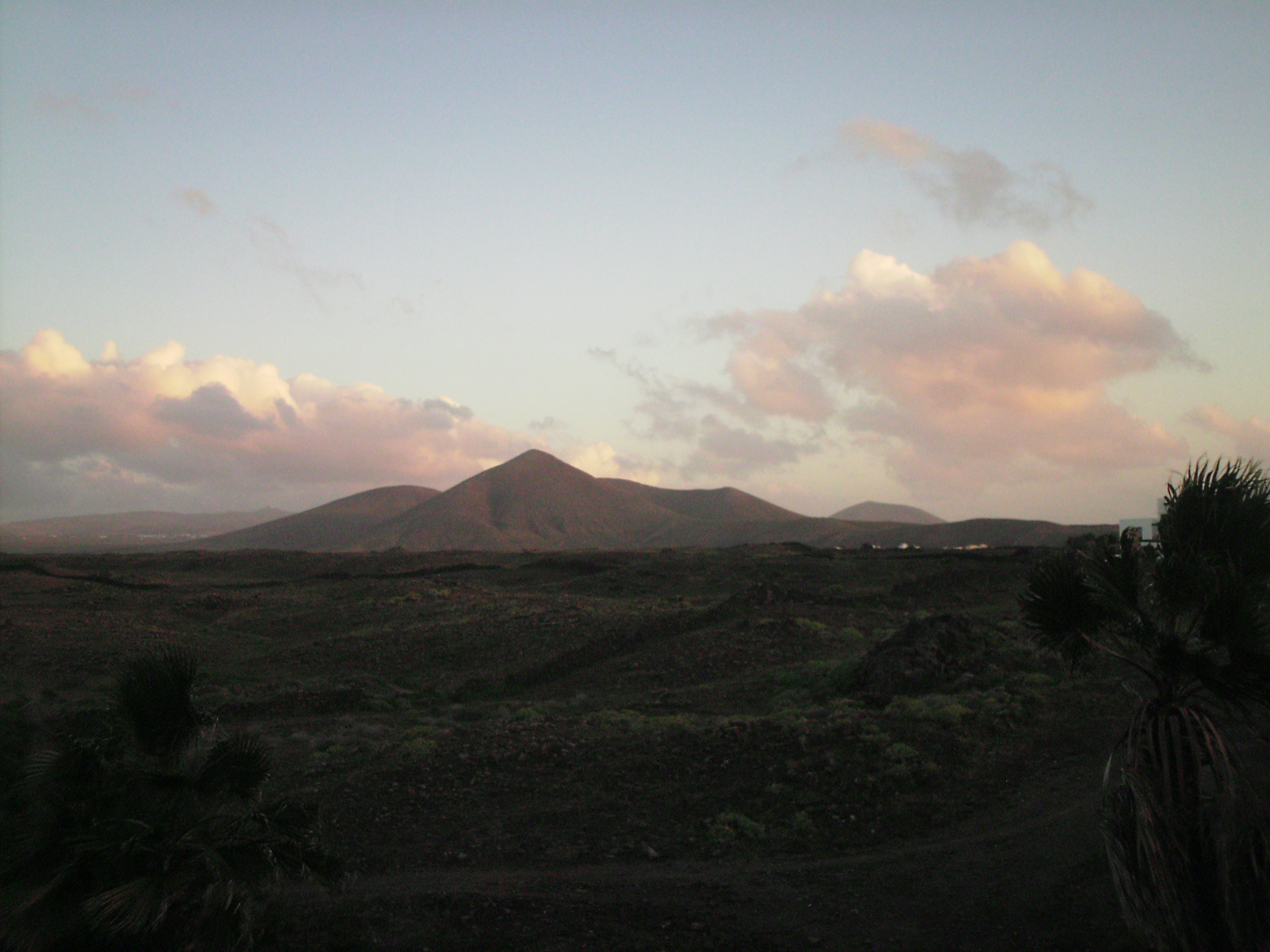
Plain and mountain range with very dark surfaces, rosy clouds in sky

The little volcano. Photograph: Christina Egan © 2015

These lines all sprang from one of the greatest experiences of my life: climbing a little volcano on the isle of Lanzarote, about which you can find a poetic description in German and English at Isle of Bliss / Insel der Seligkeit.

Gold Dust and The Hoard could equally be set in my native Rhön Mountains, also of volcanic origin, but very far inland and much greener.

The three poems in English only may work quite well in an automatic translator. The first two poems are translations of each other, or rather, parallel creations in German and English, where rhythm and rhyme required some changes in wording. It is better to do it this way, since the message is partly conveyed by rhythm and rhyme!

You could leave out the line in brackets to use the poem for a Valentine’s or anniversary card. Copy that line, though, into your list of places to see — both little towns, Teguise and Costa Teguise, because one has got the history and the other one the beach!

This handful of poems almost sums up my work: they describe plants and mountains and the sea; they refer to most basic colours; conclude with thoughts on art and religion and love; and use the beauty of language to capture the beauty of the world.

Buchenland / Heimaterde

Buchenland

Schon der Frühherbst
Schüttet Nebel aus
Über die Hügel hin
Haufenweis.

So verschwimmt mir der Pfad
Bevor noch die Buchen brennen
Und die stolzen Wiesen vergehn
Zu lustlosem Staub.

Doch unterm zerklüfteten Fels
Sitzt sommersatt das Moos
Blüht mondhell die Distel
Aufs Geheiß verborgener Geister.

Christina Egan © 2013

heimaterde

unter der haut
schimmert sie durch
die rote krume
der ich entwuchs

hinter den augen
blinzelt es vor
das urgestein
schwarz und gewaltig

unter dem haar
wirbeln sie hoch
nebel und wind
die mich umfingen

unter der zunge
schlummert sie noch
die fruchtbare sprache
die mich entfachte

Christina Egan © 2013

The first poem describes an autumnal landscape with trees in flaming colours and fog drifting in the dales. The name, Land of Beech Trees, stems from the times when most of Germany was covered by dense forests.

Nature appears as animate, sentient, and even spiritual: the meadow is proud and the moss content, while hidden spirits command a thistle to blossom bright as the moon.

The second poem reminds us that our bodies are made of the world around us — the air and water, the earth and its fruit, the flesh and bone of our ancestors while our minds are moulded by the language of our parents and ancestors.

The speaker imagines that red soil shines through his or her cheeks and black rock blinks through her pupils, while her hair is softened by thick fog and tousled by rough wind.

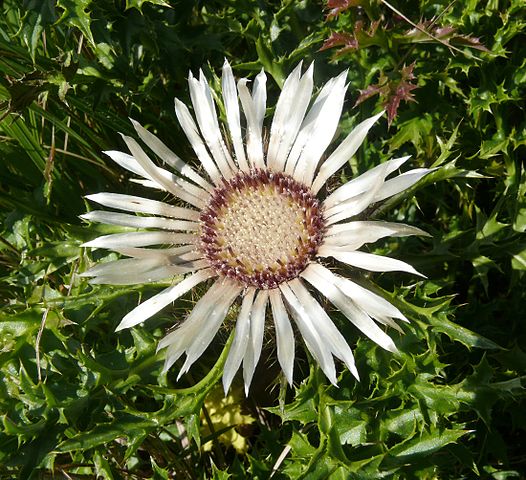
526px-Carlina_acaulis_160907These words were inspired by the landscape and climate of the Rhön Mountains in Germany.

Their symbol is a rare wildflower, the silver thistle.

Photograph: „Carlina acaulis 160907“
by Bernd Haynold via Wikimedia Commons


Spiegelherz

Spiegelherz

Laß uns insgeheim die Spiegel tauschen,–
was soll ich mit einer schönen Frau?
Oder Haaren, die sich bronzen bauschen,
oder Augen von Spätabendblau?

Hast du dein Porträt in Hell und Dunkel
nicht genug geprüft ob seines Werts?
Ich bin an der Reihe, dein Gefunkel
aufzufangen als dein Spiegelherz.

Christina Egan © 2014

In these lines, a beautiful woman suggests to a fascinating man
swapping mirrors so that he can admire her instead of himself!
She also implies that her heart could be the mirror of his heart.

The tone is light-hearted, but the intention is serious. It is the title
of this poem, the made-up word ‘Mirror-Heart’, which lent its name
to the category of love poems on this website: ‘Mirror hearts’.