Wandel (Wo ist der hohle Baum)

Wandel

Wo ist der hohle Baum
im Kreise der steinernen Bänke,
der mit knochigen Fingern
die Netze des Nebels,
mit knorrigen Zehen
das feuchte Gras durchfischte?

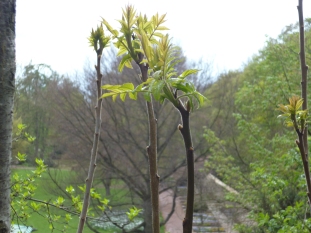
Buds and fresh leaves on top of shoots above a parkAlles ist quellendes Blatt nun
und berstendes Bunt,
Laubzauber, lautloses Lachen,
tiefer Atem langer Tage
zwischen bergendem Grund
und goldenem Wind.

Christina Egan © 2006

Schloßpark Fulda im Frühling.
Photograph: Christina Egan © 2014.

Weißer Schnee auf weißen Rosen

Weißer Schnee auf weißen Rosen

Wie die grauen Gänse zogen
Mit dem schneegeladnen Wind
Sind die Jahre uns entflogen
Erst gemächlich dann geschwind

Wie die Flocken niedertaumeln
Daß die Welt zu Weiß gerinnt
deckt die Zeit die bunten Träume
Erst gemächlich dann geschwind

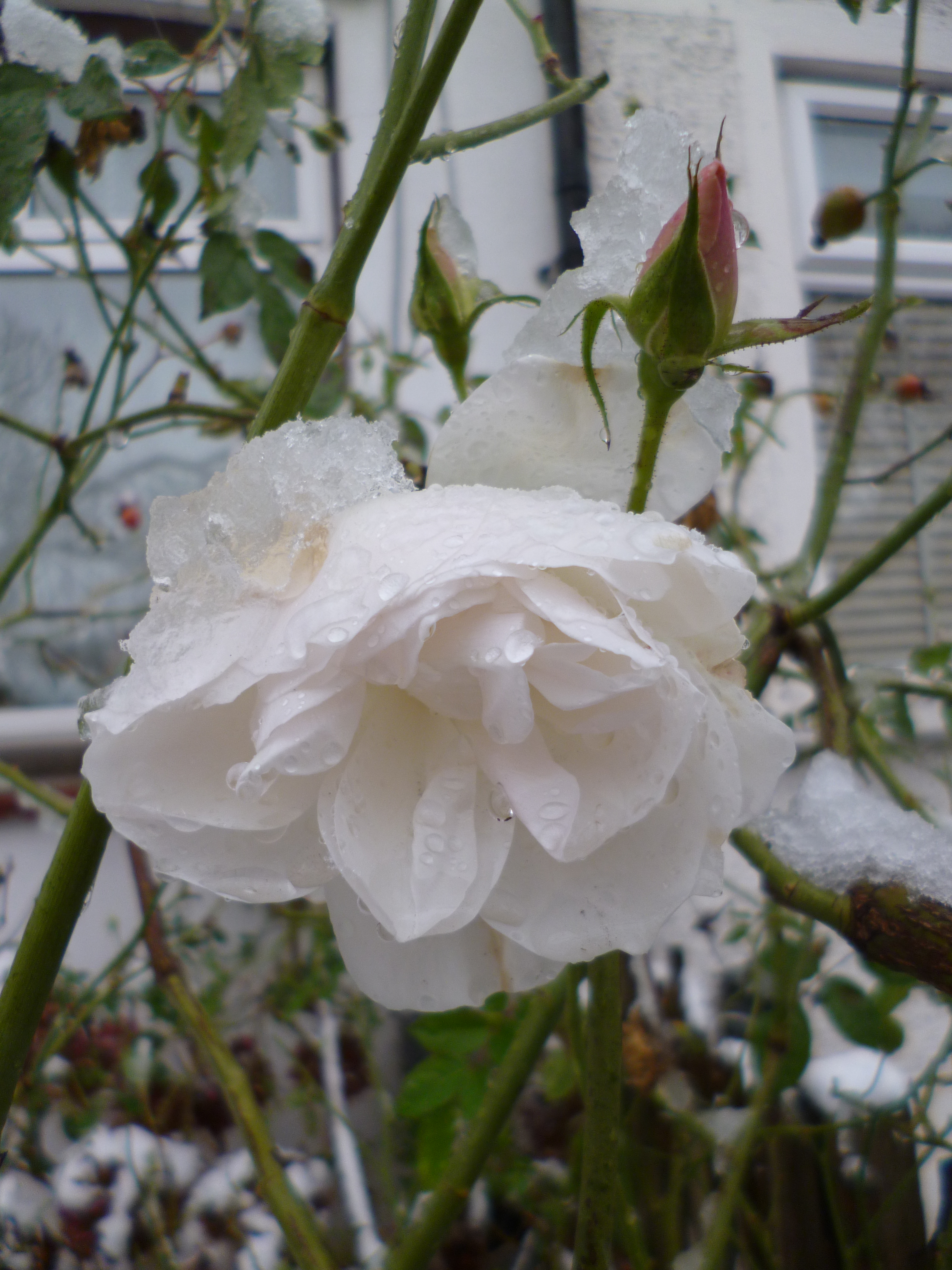
White rose, pink buds, hawthorns, all covered by melting snow.Stehst auch du am stillen Fenster?
Rührt der wilde Schnee auch dich?
Haschst auch du noch Luftgespinste?
Denkst auch du noch stets an mich?

Blumenflammen sind vergangen
Und die Welt wird farbenblind
Niemals hab ich dich umfangen
Niemals gab ich dir ein Kind

Wilder Schnee: ein stummes Tosen
In dem strengen reinen Wind
Weißer Schnee auf weißen Rosen
Erst gemächlich dann geschwind

Christina Egan © 2017

White snow melting on white roses.
Photograph: Christina Egan © 2017.

This is the first of two love songs which could stand alone or be sung by a woman and a man — from opposite ends of a stage or hall, though…

In White snow on white roses, the first person confesses she (or he) still secretly wishes they had got together a long time ago, and wonders if her friend feels the same.

In White snow on red roses, the second person reveals that he (or she), too, has longed for this relationship all along, but he never lets his friend know… not now either.

Each of them sings into the wind, into the snow… The ‘years that flew away’ like the wild geese in the first poem and the ‘late buds surprised’ by the snow in the second poem show that the pair are at a later stage of life.

Mondfische

Mondfische
(Museum moderner Kunst)

Der weiße Dämmer:
von Regenbogenfängern
mit Blüten bestückt.

*

Bunte Mondfische…?
Wirklicher als Wirklichkeit
hier im Tagtraumteich.

*

Praller Löwenzahn,
tausendfach, singt der Sonne
aus voller Kehle!

Christina Egan © 2014

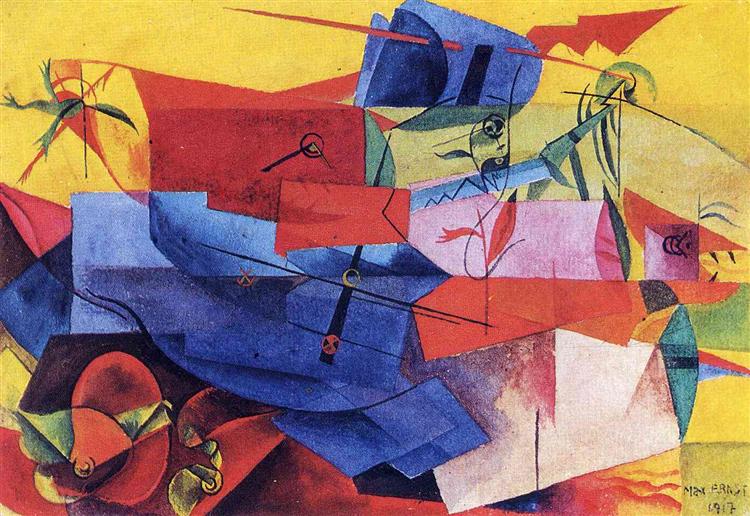
Very bright painting of mainly blue and red shapes on yellow.

Illustration: Max Ernst:  Fish fight. Oil on canvas, 1917.
© Max Ernst. Digital image distributed under FairUse at
  WikiArt.

These poems were inspired by an exhibition of modernist art at the Max Ernst Museum Brühl. Germany. The bizarre and very colourful ‘moonfish’ make an appearance in the painting Mondfische (1917); I show a similar work here.

In a way, visual art is more real than reality. In Quest / Suche, I claim the same for music.

purpurne beeren

purpurne beeren

gleißende wolken
gehäuft und gestaffelt
wispernde rispen
zufriedener pappeln

mannshohe rosen
und silberoliven
letzter lavendel
in hölzernen kübeln

purpurne buchen
mit purpurnem schatten
purpurne beeren
o süßes erwachen

was willst du mehr noch
mit sinnen und streben
schau um dich her doch
hier hier ist das leben

Meadow, lake, copses of diverse trees in the dusk; gleaming clouds, mirrored in lake.bunt ist der sommer
und golden im sinken
schlank ist das weinglas
mit purpurnem blinken

süß ist das lachen
verborgener vögel
stolz setzt der sommer
die gleißenden segel

Christina Egan © 2016

Old Botanical Garden, Dahlem, Berlin.
Photograph: Christina Egan © 2016.

geh aus mein herz

geh aus mein herz

die braunen bauklotzhäuser
mit farbenkastentüren
die weißen blütenkelche
die sich versonnen rühren

im wind aus samt und seide
die schweren purpurrosen
in Salomonis kleide
die deine finger kosen…

der sommer will dich füllen
die erde lädt dich ein
zu laufen und zu schaffen
zu schauen und zu
sein

Christina Egan © 2011


Salomonis Seide

In Purpur zog der Kaiser einst,
in Scharlachrot der Kardinal,
in Violett die Kaiserin
in einen grüngeschmückten Saal.

So prunken die Geranien
in ihrer Sommerprozession
und rufen in das Gartenrund:
“Wir übertrumpfen Salomon!”

Christina Egan © 2014


The appeal ‘Go out and seek joy’ and the metaphor of King Solomon’s silk are taken from the jubilant hymn and folksong Geh aus, mein Herz, und suche Freud, written by Paul Gerhardt in the middle of the 17th century.

The houses in uniform dull colours with front doors in different bright colours are typical for London. So are the little private gardens with geraniums.

The first poem is contemplative and intense, the second one humorous and light. The last line of the first poem is cut up on purpose: to let the word ‘to be’ resound on its own.


For an English poem about the pageant of summer see Lilac and Lime.


Tiefgelb / Tieftürkis

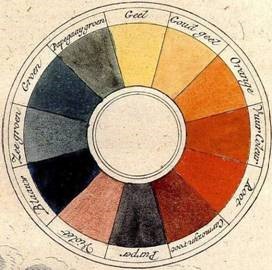
Colour wheel with 18th century labels: clockwise from yellow over red to blue and green; one purple field has paled to pink.Tiefgelb

Die tiefgelbe Blume vor wollweißer Wand,
die frohrosa Büschel vor lehmbraunem Zaun,
der vollblaue Tag über kraftgrünem Land –
der rundbunte Sommer, ein tiefgelber Traum!

Christina Egan © 2016


Tieftürkis

Tieftürkis und lässig prächtig,
sonnensatt und sonnenträchtig
steht der Horizont noch spät.
Schwarze Flammen, schwanken Bäume,
stumm gestaltgewordne Träume,
wenn der wirre Nachtwind weht.

Liegt die Erde endlich nächtig,
scheint der Himmel übermächtig,
unerschöpfter Helle Quell.
Alle Sehnsucht kann noch fruchten
in verborgnen Gartenfluchten
oder einer höhern Welt.

Christina Egan © 2017


Colour adjectives develop only very slowly in languages all over the world. There are still not nearly enough! I don’t see why in German, we have the words ‘deep red’ and ‘deep blue’ — written as one word, even — but no ‘deep yellow’ or ‘deep turquoise’; so I am introducing them. I also made up a number of unusual descriptors for the first poem, leading up to the internally rhyming ‘rundbunt’ for multi-coloured in all colours of the earth or of the colour wheel.

Colour wheel with 18th century labels: clockwise from yellow over red to blue and green; one purple field has paled to pink.


Image: Arnoldus Lobedanius, Utrecht, 1744. (One purple field must have paled to pink.)

Reproduced with kind permission of the Library of Cologne University of Applied Sciences (Fachhochschule Köln).

Snow-White Patches

Snow-White Patches
(July Tanka)

Daisies, buttercups,
scattered across the lush green
like two galaxies:
humble, ephemeral and
full of the glory of God.

*

Those snow-white patches,
patterns on the lawn, the mulch:
hortensia flowers,
as if cut out from the world
of colours and of motion.

Christina Egan © 2012


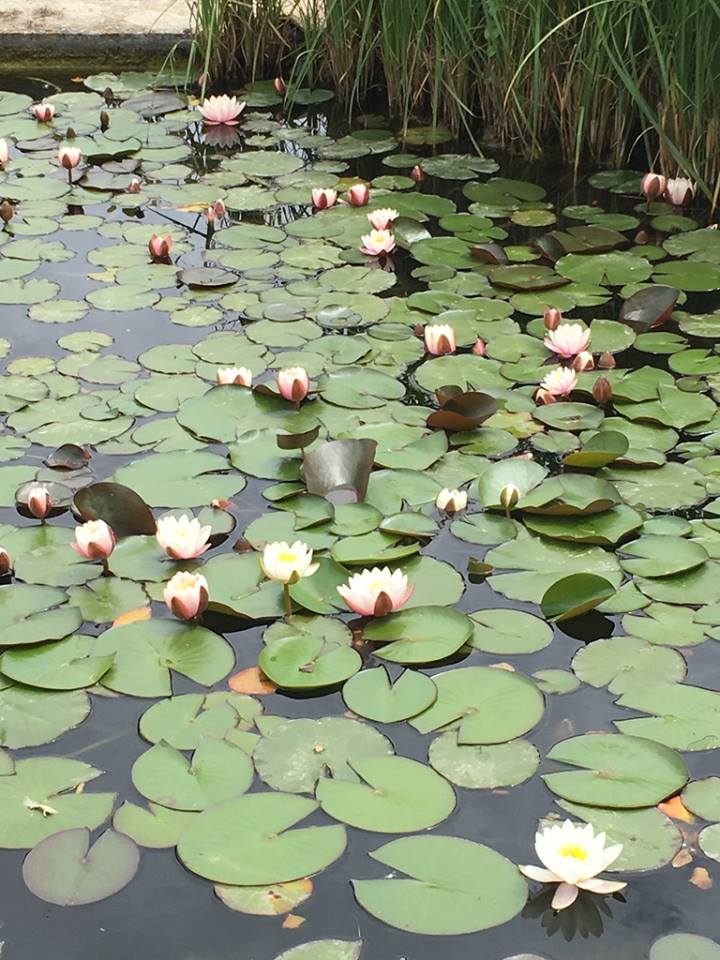
Waterlilies with half-open luminous pink and white flowers.

These poems describe the world as an ensemble of patterns. They also try to make sense of the world, and perhaps the act of discovering order also unveils meaning…

Something tiny resembles something gigantic, the whole of the known world, in fact. Something white appears as a hole or an island in the colourful picture: like a shadow of death or a gate to eternity.


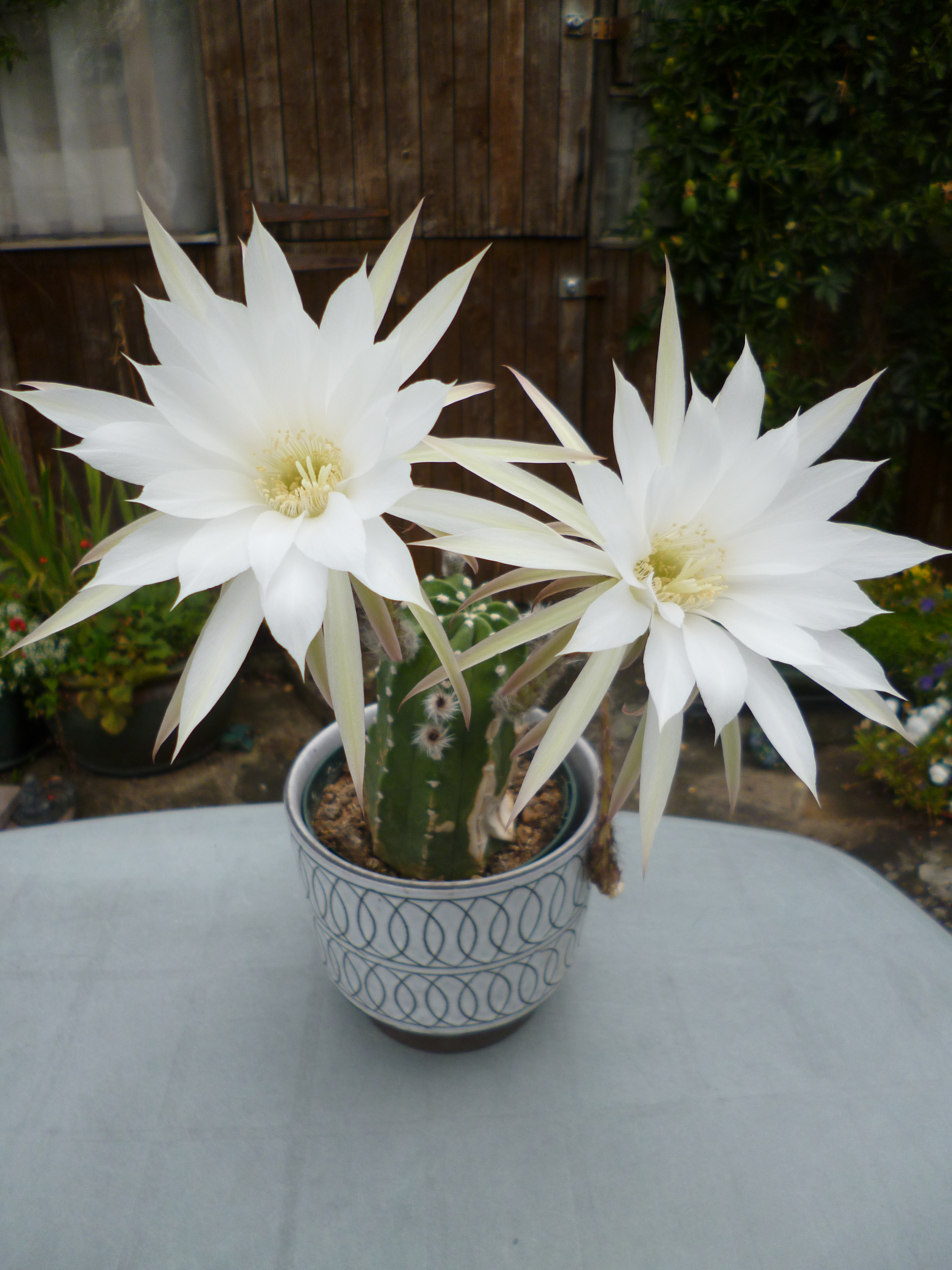
Cactus seen from above, with two star-like flowers bigger than the body of the cactusThe line ‘full of the glory of God’ was inspired by the verse ‘The world is charged with the grandeur of God‘ by Gerald Manley Hopkins.

You can truly ‘see a world in a grain of sand / and a heaven in a wild flower’, as William Blake claimed!

Photographs: Water-lilies. Liu Ye (Ye Liu) © 2016. — Queen of the night. Christina Egan © 2014.

Rear Mirror

Rear Mirror

Telegraph wires:
a flock of birds turns them into
three lines of verse.

*

No flowerbeds here –
but a line of bright washing
dancing in the wind!

*

A palm-tree appears
in the rear mirror, and huts
in the still lagoon.

Christina Egan © 2018

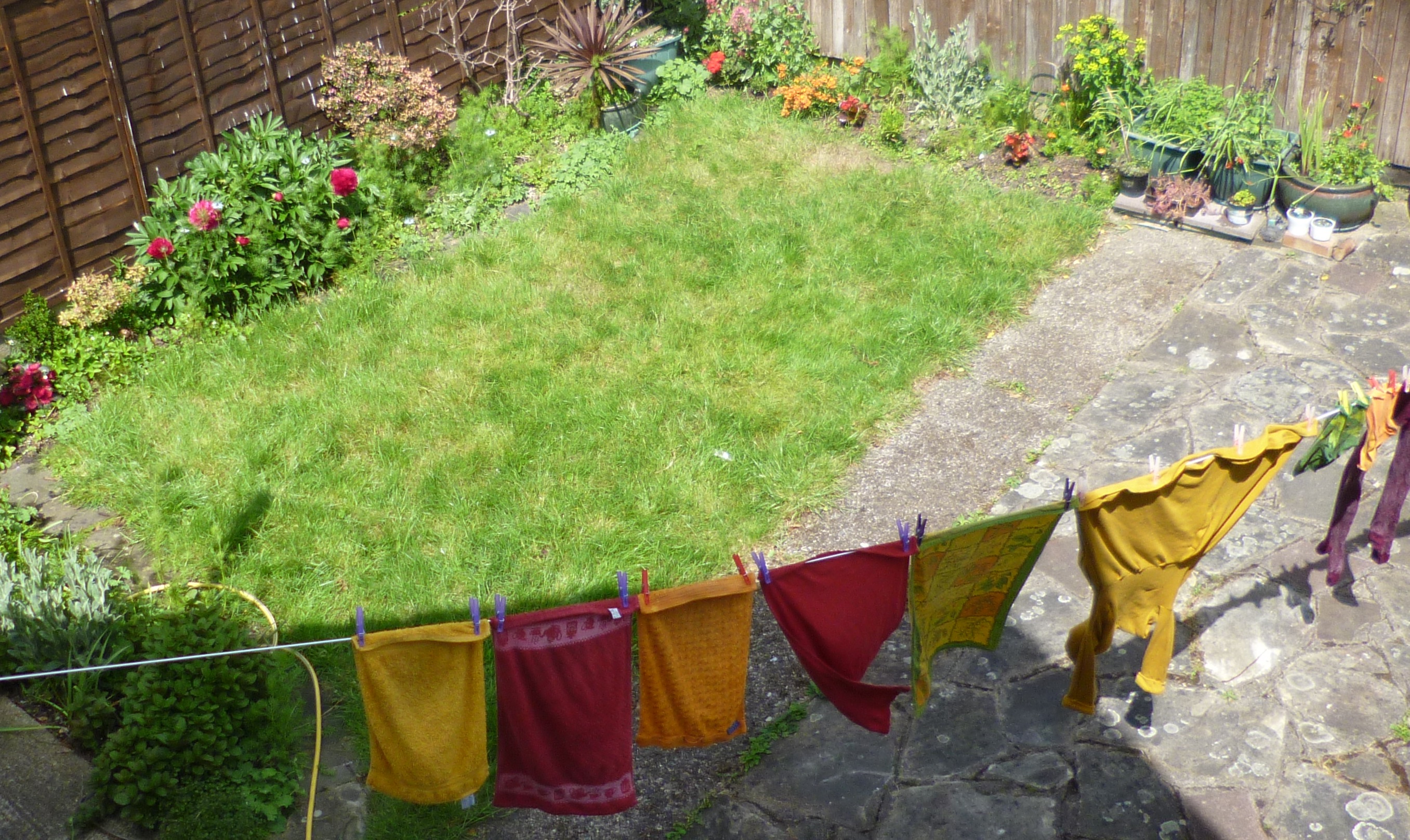
Washing-line with red, orange, yellow, green clothes, forming a triangle with the matching flower-beds behind.

These haiku about haiku were written looking at three picture postcards, where I instantly perceived patterns and metaphors.

Poetry – and painting or photography – are like rear mirrors which make hidden things visible and ordinary places special.

Photograph: Christina Egan © 2016.

Alles drängt vorwärts

Alles drängt vorwärts

*

Fahrzeug um Fahrzeug,
bunte Menschen, Hunderte,
alles drängt vorwärts.
Durch das Adernetz der Stadt
rollt das Leben, das Sterben.

*

Kein einziger Stern,
bloß Wolken, Nebel und Staub
über den Dächern.
Doch Funken stieben, golden
und rot, über die Kreuzung.

*

Christina Egan © 2015/ © 2017

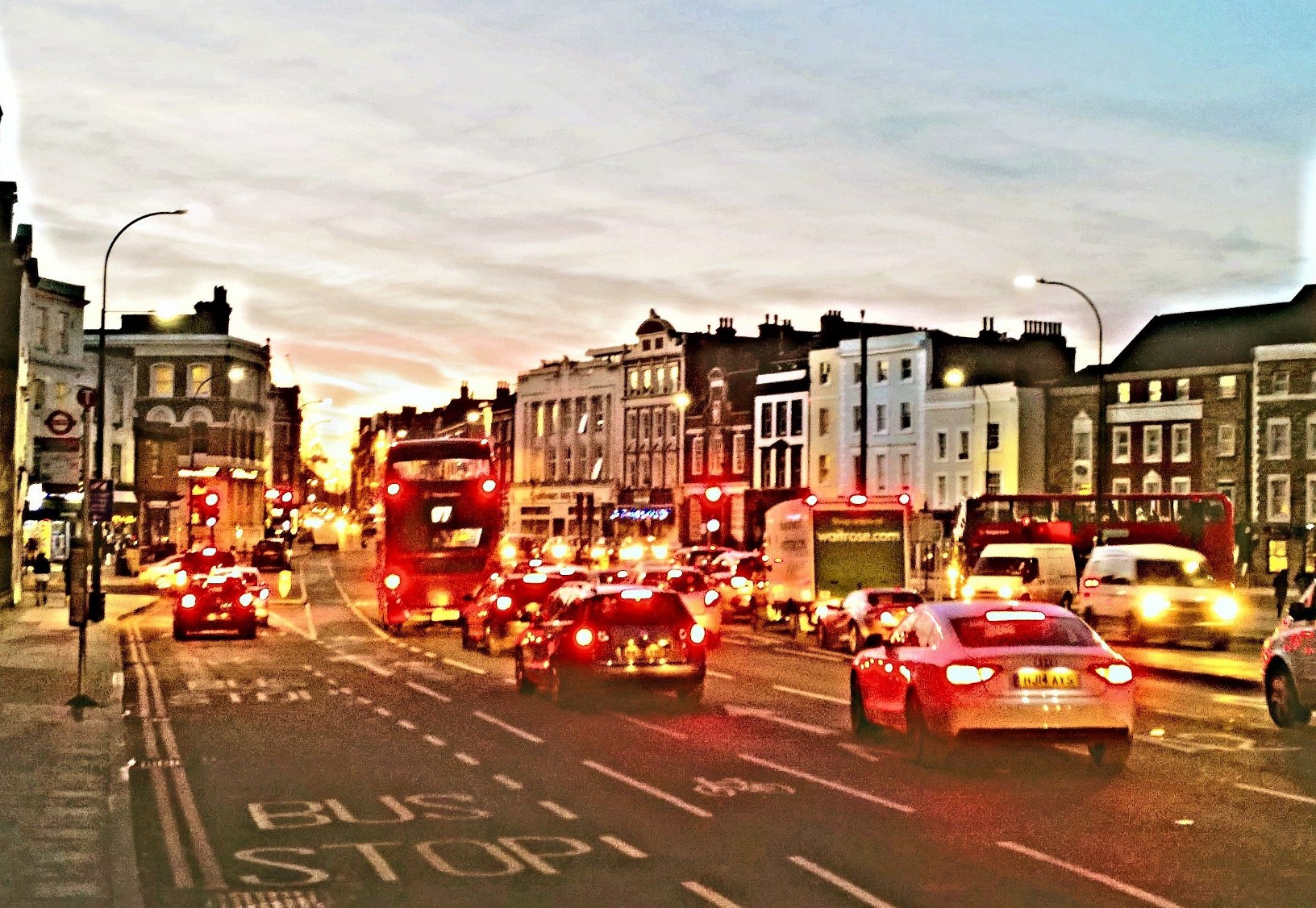
Busy junction in the dusk, with red and yellow lamps of cars and buses glaring.

These tanka were written in Bloomsbury, London,
one in summer and one in winter, one bright light
and one in dim light;  but the seasons and hours
make less difference in London than elsewhere…
For similar poems in English, go to Ripples of People.

Photograph: Deptford Broadway, London.
Michael Oakes © 2016

The Green Dress / Im grasgrünen Kleid

The Green Dress

This green, this green! The purest of greens,
the softest of silk, the smoothest of greens!
It’s mellow and creamy –
and glossy and hard –
it’s distant and dreamy –
and sudden and sharp –
It’s got all the earth in it, fields in full plume,
the glow of the sun and the snow of the moon!
There’s birch in it, ivy –
there’s lemon and lime –
and oceans and icebergs –
and olives and pine –
And the lady beneath the shimmering screen
bears the soul of the earth in the secret of green!
In the gold of her hair
and the blue of her eyes,
in the lines of her limbs
and the flow of her voice
there’s the glow of the sun and the snow of the moon:
a creature of night and a creature of noon.

Christina Egan © 2009


Im grasgrünen Kleid

Ich stehe am Fenster und schaue hinaus,
und niemand bemerkt mein bescheidenes Haus,
und niemand bemerkt mein grasgrünes Kleid,
und niemand bedauert mein aschgraues Leid.

Die Dämmerung wogt, und es rauscht der Verkehr.
Ich stehe und schaue. Und niemand schaut her.
Zuletzt ist es still, und es rauscht nur die Zeit.
Ich weine allein in mein grasgrünes Kleid.

Und einst werd ich fort sein und einst sogar tot,
und nur dieses Liedlein bezeugt meine Not:
Mein Kleid wie der Sommer, mein Haar wie der Herbst,
mein Leben, das niemand als du, Leser, erbst.

Christina Egan © 2016


The woman in the green dress stands for life, fertility, plenty, joy — like the Green Man or Green Woman of ancient pagan traditions, I suppose…