Im Herzen von Köln (St. Andreas)

Im Herzen von Köln (St. Andreas)

Vorm Fenster herrscht
der alte Dom
und unterm Fuß
das alte Rom.

Minutentakt
Der Boden bebt,
die U-Bahn pulst,
die Erde lebt.

Die Straße dröhnt,
die Weltstadt wacht,
der Domplatz zittert
Tag und Nacht.

Der Baulärm grellt,
das Blaulicht greint,
die Flöte lockt,
die Geige weint.

Die Orgel jauchzt,
die Glocke braust,
die Stille ruft,
die Stille rauscht.

Am Kreuz hängt einer
ganz allein
und will das Herz
der Erde sein.

Die heilge Stadt
lebt noch aus ihm.
Sie weiß es kaum;
er gibt sich hin.

Minutentakt:
Der Tunnel braust,
der Erdschlund grollt,
die U-Bahn saust.

O Einsamkeiten –
Mein Herz brennt.
O eigne Sehnsucht –
Mein Herz rennt.

Doch Ruhe ist ja
nur in Ihm…
So knie ich nieder:
Nimm mich hin.

Christina Egan ©1992


Tall remnants of Roman city wall with Cologne Cathedral in the background
Photo: Christina Egan © 2014

The first poem of the year takes place in Roman streets again, in the midst of Cologne, in Sankt Andreas, the mighty mediaeval church right opposite the Cathedral. When you descend into the crypt, you are pretty close to antiquity. All around, Roman walls are displayed, or simply still standing.

For an English poem about Cologne with a similar content and in a similar style, see My City Calls (Grey Roofs Grey Walls). There, it is the city itself which provides comfort and hope, as religious faith does here. I noticed the striking parallel only yesterday on relaunching my poetry blog!
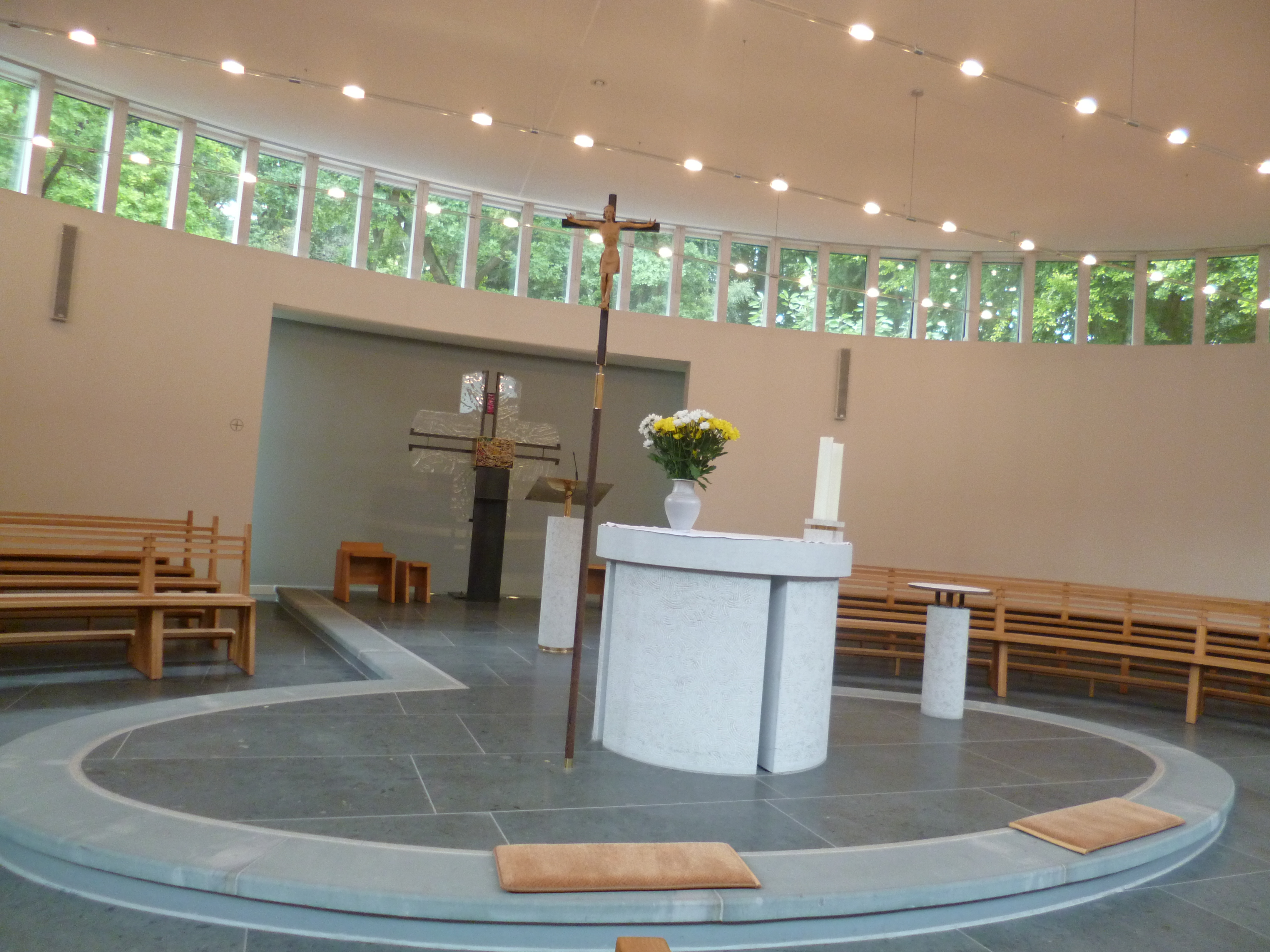
descending (Sankt Andreas)

descending

from the rainbow-crossed twilight
down the narrow winding stairs
to the star-studded nightfall

from the church
to the crypt

from windows
to candles

descending far back in time
back into the sheltering earth
onto the threshold of heaven

from quiet
to silence

from proximity
to presence

the vaulted stairway awaits you
at the back of the ancient church
and hidden in your own heart

Christina Egan © 2018

(Sankt Andreas, Cologne)

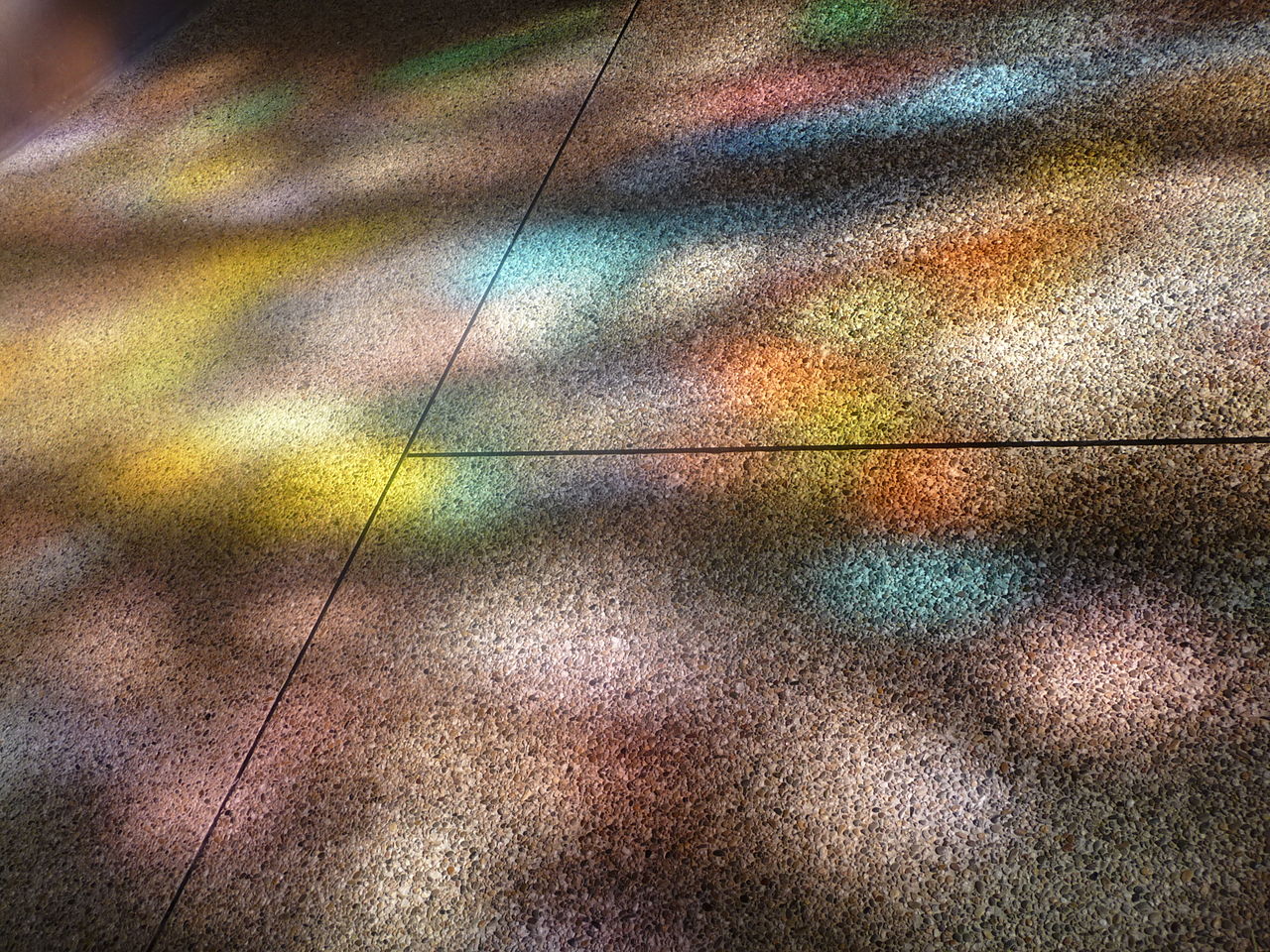
Traces of colour on the floor from church windows: blurred bright patches.

This poem is best read very slowly, as if you were indeed walking down an ancient staircase at the back of a silent church…

Around the world-famous Cathedral, the twelve Romanesque churches of Cologne outdo each other in age, size, and beauty!

For German verse inspired by the mediaeval churches of Cologne, see Zugewogenpoem on faith and destiny published in a previous edition of the Münsterschwarzacher Bildkalender.


Photograph by 3268zauber: Traces of colour from church windows on the floor in Baden-Baden, Germany.

The End of Lent

Sext
(Midday prayer)

Amidst a day of darkness,
amidst a life of fight,
the pillars and the organ
build up a vault of light.

Somebody must be present
to hear the silent screams!
There’s help past understanding,
there’s hope beyond all dreams.

But where do you keep hiding?
O Lord, who has left whom?
Dispense a drop of mercy
on each of us this noon.

Christina Egan © 1998


The End of Lent

There’s more to life behind the troubled scene,
more light than mighty, timeless words can mean:
there is a truth that never lies,
a truth that fills the earth
with fragrant breath.

There’s more than we can fathom and esteem,
or ask for, seek for, need, desire, dream:
there is a love that never dies,
a love that will give birth
in very death.

Christina Egan © 1999

Schläft ein Lied / Sleeping Choir

Schläft ein Lied von tausend Zungen

Schläft ein Lied von tausend Zungen
im geweihten Marmorrund;
und der Stein hebt an zu schwingen,
wenn die Orgel perlt und summt,
und der Stein hebt an zu klingen,
wenn die Orgel schwillt und braust –
Wird das Herz vom Ruf durchdrungen
und der Leib in Glanz getaucht.

Christina Egan © 2017


Sleeping Choir

Sleeping in the marble round
choir of a thousand tongues;
and the stone vibrates and hums,
when the organ wakes to sound,
and the stone pulsates and sings,
when the organ swells and roars –
In your heart the message soars,
steeped in splendour are your limbs.

Christina Egan © 2018


This poem is developed from a key verse of German Romanticism. Joseph von Eichendorff (popular to this day and one of my favourite poets) imagines the world dreaming and a song slumbering within; you need to find the magical word to awaken them.

Schläft ein Lied in allen Dingen,
Die da träumen fort und fort,
Und die Welt hebt an zu singen,
Triffst du nur das Zauberwort.

Joseph von Eichendorff

The lines were also inspired by a Pentecost service at Notre Dame de France at Leicester Square in London: when the organ plays at a high volume, its circular walls — not really marble, but snow-white — seem to vibrate and sing around the visitor.

The German version of this poem will be published in the calendar Münsterschwarzacher Bildkalender 2019 (available from mid-August).

Photograph: Catholic church Stella Maris, Binz on the Isle of Rügen, Germany. Christina Egan © 2016.

Kirchenkonzert / Church Concert


Joint 100th English and 100th German post!


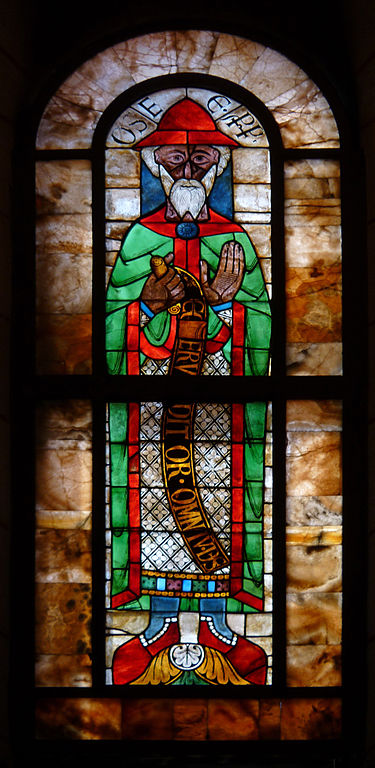
Colourful ancient glass window, prophet in red hat, red shoes, green cloak.


Kirchenkonzert

Ein Dom mit hohen grauen Fensterscheiben
und berstend bunten um den Pfeilerreigen –
und alles, alles aus Musik!
Und unerreichbar fern, unsterblich stark
du stille dunkelblaue Gegenwart,
du mein Geheimnis, mein Geschick.

Christina Egan © 2008


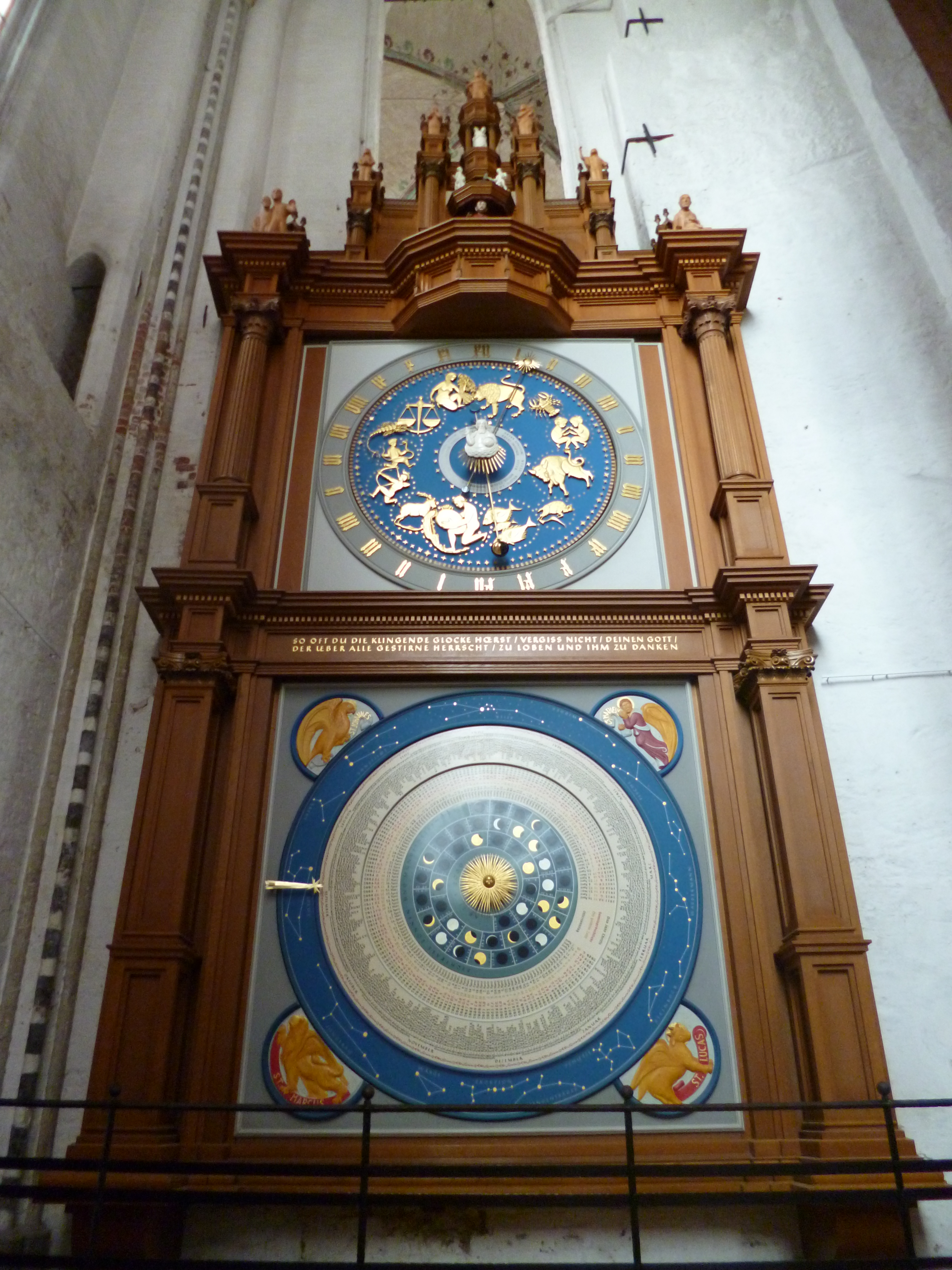
Large astronomical clock with two blue and golden dials in wooden frame.Church Concert

A dance of pillars round the sacred site;
round them, tall windows, grey or burning bright –
and all is made of music, melody!
Unreachable, immortal and immense,
a tranquil deep-blue presence grows more dense:
it’s you, my secret, you, my destiny.

Christina Egan © 2017


Find more poems about the power of music at Quest / Suche  and Auf dem Purpurteppich / On the royal-purple rug.


There are fewer than 200 posts of poetry here, since some show parallel or similar poems in two languages (and some are in French), but almost 300 poems.


Prophet Hosea, window in Augsburg Cathedral, around 1100 (!). Photograph:  Hans Bernhard (Schnobby) (Own work) CC BY-SA 3.0 or GFDL, via Wikimedia Commons. — Astronomical clock with carillon playing hymns (20th c.). Marienkirche, Lübeck, Germany. Photograph: Christina Egan © 2014.

Zugewogen


One year later:
My 125th post!


Zugewogen

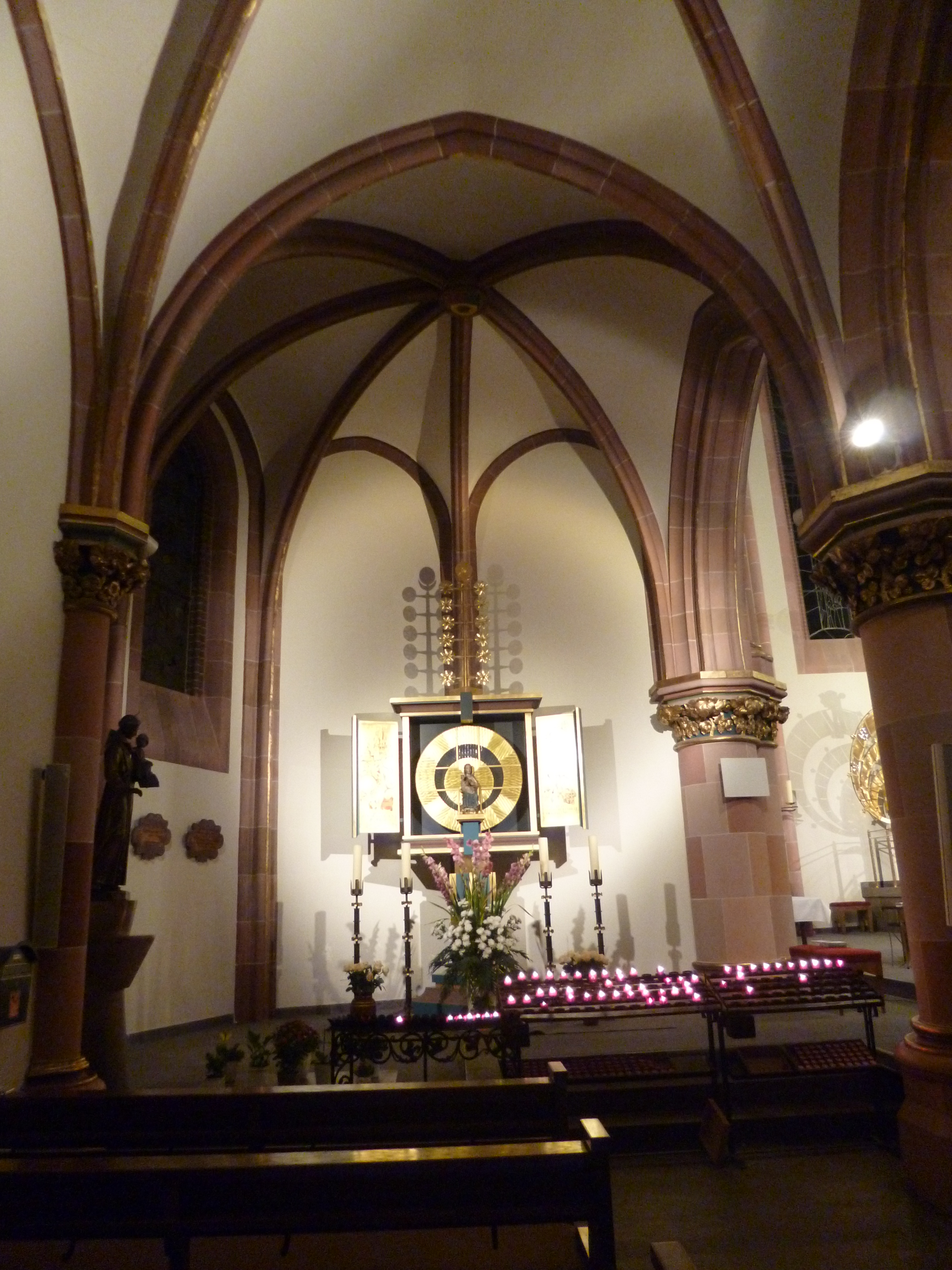
Altar, bright golden, in church, Neo-Gothic, with plenty of lit candles beneath.In den Gezeiten des Lebens,
in dem Getriebe der Stadt
suchst du verzweifelt, vergebens
Liebe, die Zukunft hat.

Tritt ins Portal einer Kirche,
schau’ in die flackernde Flut,
entzünd’ eine winzige Kerze
und wisse: Alles wird gut.

Alles ist zugewogen,
Liebe und Freude und Leid;
niemand wird je betrogen
um Sinn und um Seligkeit.

Christina Egan © 2011

St Ludwig, Berlin (near Ku’damm).
Photograph: Christina Egan © 2016

“Everything is weighed for you, love and joy and suffering; nobody will ever be cheated out of meaning and of bliss.”

I believe this beyond any doubt, although not everything will come all right this side of death. Lighting a candle in a place of worship in the midst of our busy lives gives us comfort and peace at any rate.

This poem on faith and destiny was published in a previous edition of the  Münsterschwarzacher Bildkalender. The 2017 calendar is available now, with 52 photographs and 52 poems and addresses (one of them by me: psalm für dich).

Heimkehr nach Köln

Heimkehr nach Köln

Die türmenden Inseln
der Kirchen,
die aschgrauen Schachteln
der Häuser,
die lärmenden Räder
der Plätze –

Geborgen bin ich
im Schoß meiner Stadt,
die mich die Sprache lehrte,
die vergessene Sprache,
die schlichten Gesänge
verschütteten Glücks.

Ein goldenes Antlitz taucht
aus dem bunten Dämmer hervor.
Wer bist du?
Geh nicht fort, Gesicht
ohne Namen, leihe mir
mein Geheimnis heut nacht!

Christina Egan © 1992

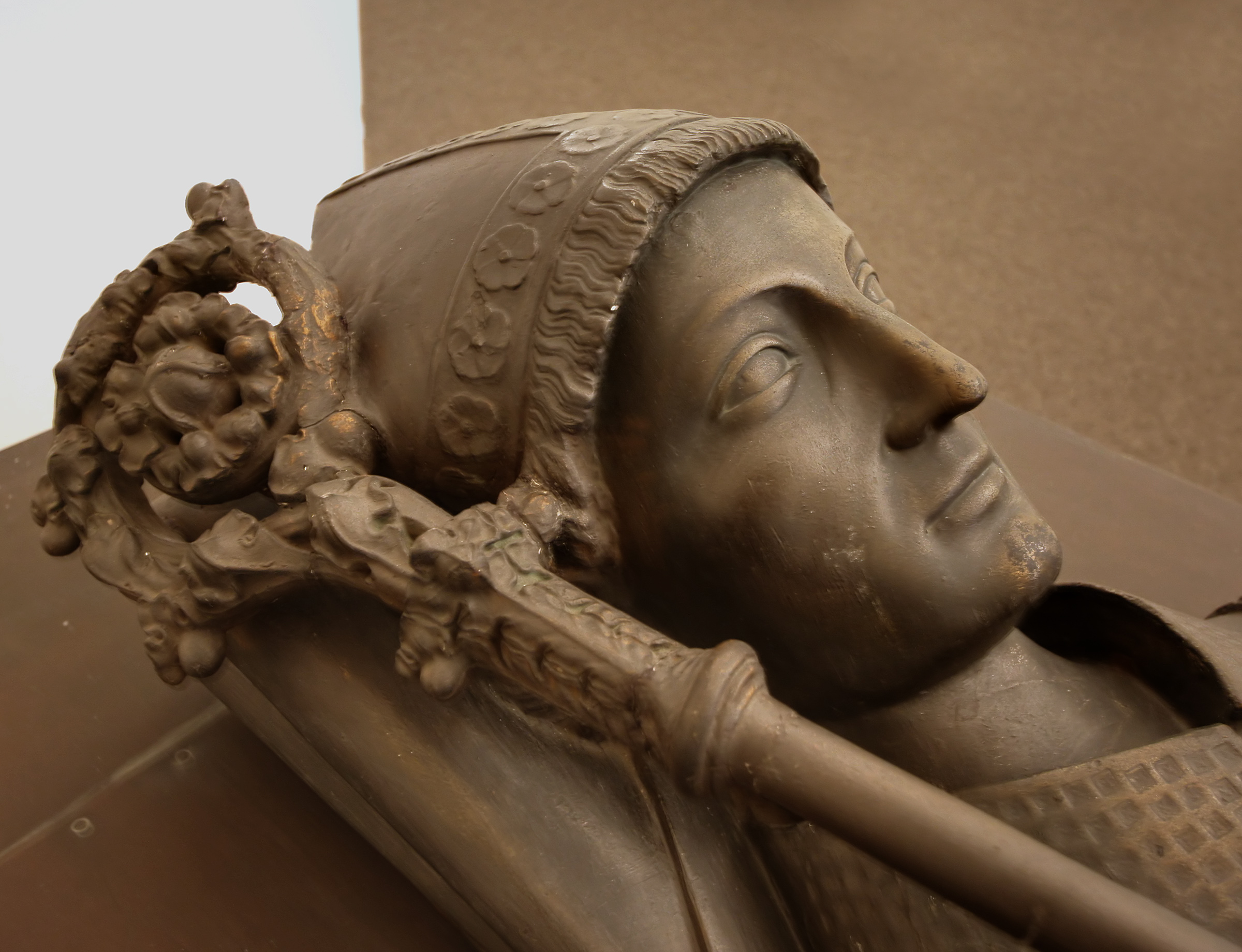
This poem about homecoming to a big city could refer to a place where someone grew up; or where they lived in the past; or where they may have lived in a former life on earth.

Bronze head of a bishop, mediaeval yet classical in appearance.Therefore, the mysterious golden face which is the key to the past could be a late relative; or a lost friend; or else a historical figure. I was thinking of this portrait at the back of Cologne Cathedral.

Photograph: „Grabmal Konrad von Hochstaden Gipsabdruck“ von Elke Wetzig (Elya)

Crystal Rock

Crystal Rock
(Béziers)

View from Gothic cathedral, almost vertical, onto structures forming a pattern

You follow a hidden winding staircase
and step down inside a crystal rock.

You have become very small and dark
or the space around you tall and light.

You stand on the ground of a tower of ice,
a polygon of translucent stone.

Is it a cavern? Is it a glacier?
No, it’s a chapel beneath a chapel!

Gothic cathedral in winter, dark grey against light blue

It is a cell in an ancient cluster:
a grey cathedral crouched on a rock.

Your soles touch a surface beneath the soil,
your eyes reach a tent of light like the sky.

This staircase does not lead to a nightmare:
it should be baptised a lightmare instead.

That era should not be known as Dark Ages:
it ought to be honoured as Ages of Light!

Christina Egan © 2016

Photographs: Christina Egan © 2016

These lines refer to the same ancient town of Béziers as the last post, Roof-Tile / Plateau. There, you can see more views from the roofs of the Cathedral.


Spätherbst (Feuer der Erde)

Spätherbst

Feuer der Erde
trieft aus den Früchten,
fließt aus dem Efeu,
sprüht aus den Dahlien,
fächert in Blättern,
schießt in Raketen,
fällt in Gestirnen,
tropft in Laternen.

Dann wandert die Sonne
nach innen,
in kerzenverzauberte Kirchen,
in wundererwartende Mienen,
in goldbestickte Musik.

Christina Egan © 2010

These lines refer to German winter customs,
which actually go far beyond Christmas:
after the fiery glow of autumn leaves, berries,
and flowers has gone, at certain times between
November and February
paper lanterns, real
candles, fireworks,
and bonfires are summoned
to dispel the gloom and cold!