inselstrand / mondstrand

inselstrand

der sand ist durchsponnen
von tausenden rinnen
wo winzige flüsse
perlmuttern erschimmern

sich sammeln sich teilen
erwärmen erschauern
bald rasten bald eilen
erblassen erblauen

der sand is voll salz
und voll sonne gesogen
das leben verbirgt sich
im atmenden boden

das land ist dem wind
und dem wasser verwoben
die seele der enge
der insel enthoben

Christina Egan © 2014

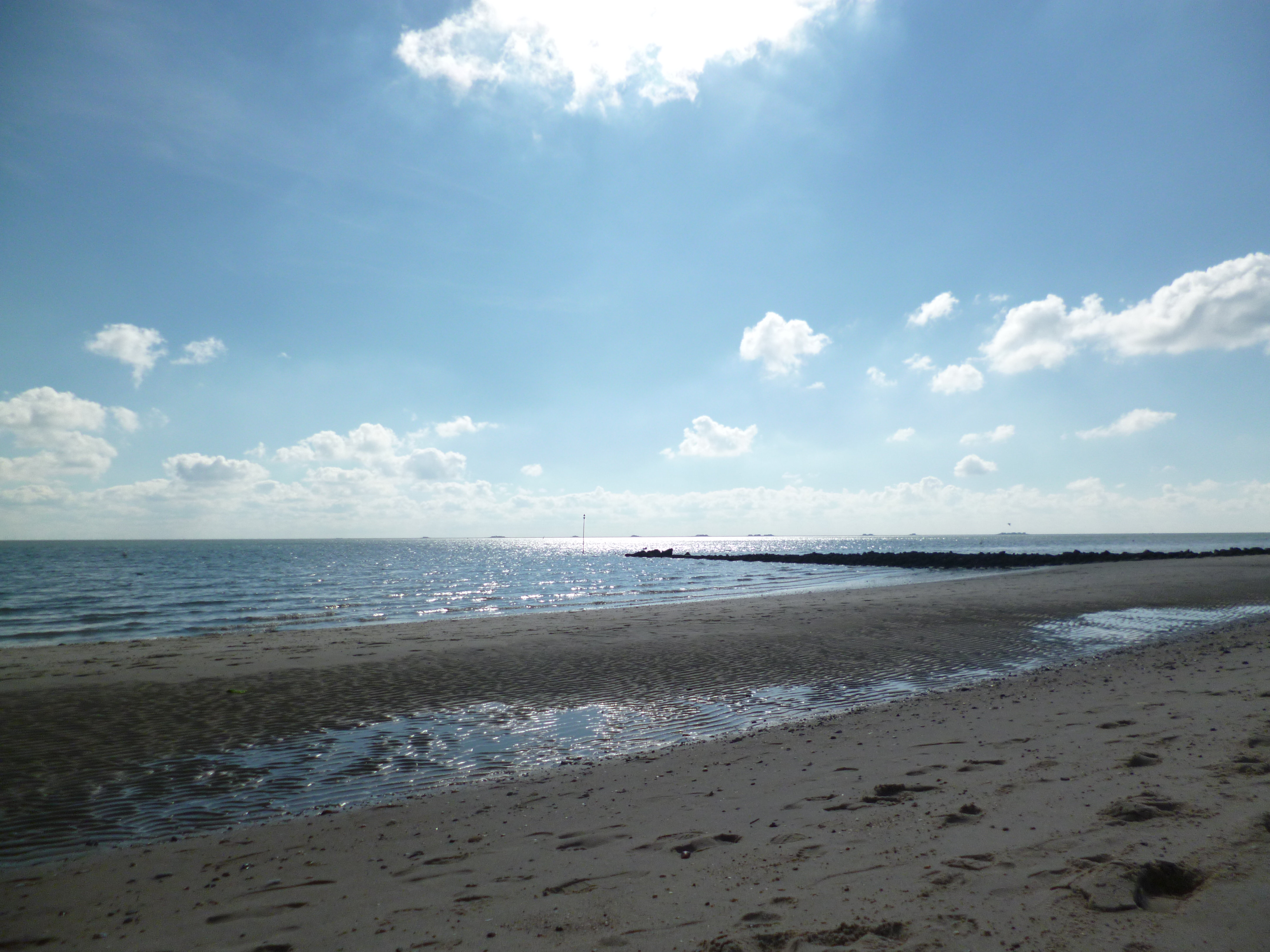
Shallow sandy beach and blue sea water filling lower half of picture, sky-blue sky with a few clouds above. Exudes tranquillity.

Beach of Wyk on Föhr, Germany. Photograph: Christina Egan © 2014.

mondstrand

streckt das meer sich
mondbeglänzt
wacht die erde
nachtentgrenzt

webt die wolke
geisterhaft
um der mondin
zauberkraft

schlägt die schwärze
windbewegt
auf das silber
feingeprägt

pocht die welle
unentwegt
an den sandstrand
sanfterregt

taucht die sohle
heiß und bloß
in die brandung
ruhelos

steigt der schmerz
im raschen blut
fällt die träne
in die flut

steht die hoffnung
fest und fern
hängt das herz
am höchsten stern

Christina Egan © 2014


These lines stem from a visit to two tiny round North Sea
islands, Föhr and Hooge. Besides my walks on the beach —
by day and by night — I was inspired by
Gregor Swoboda’s
paintings
 at Galerie Nieblum.

Find more poems and photos at Views of North Sea Islands
(in German and English).

The Pattern of a Yesterday / Golden Dell

The Pattern of a Yesterday
(Knossos, Crete)

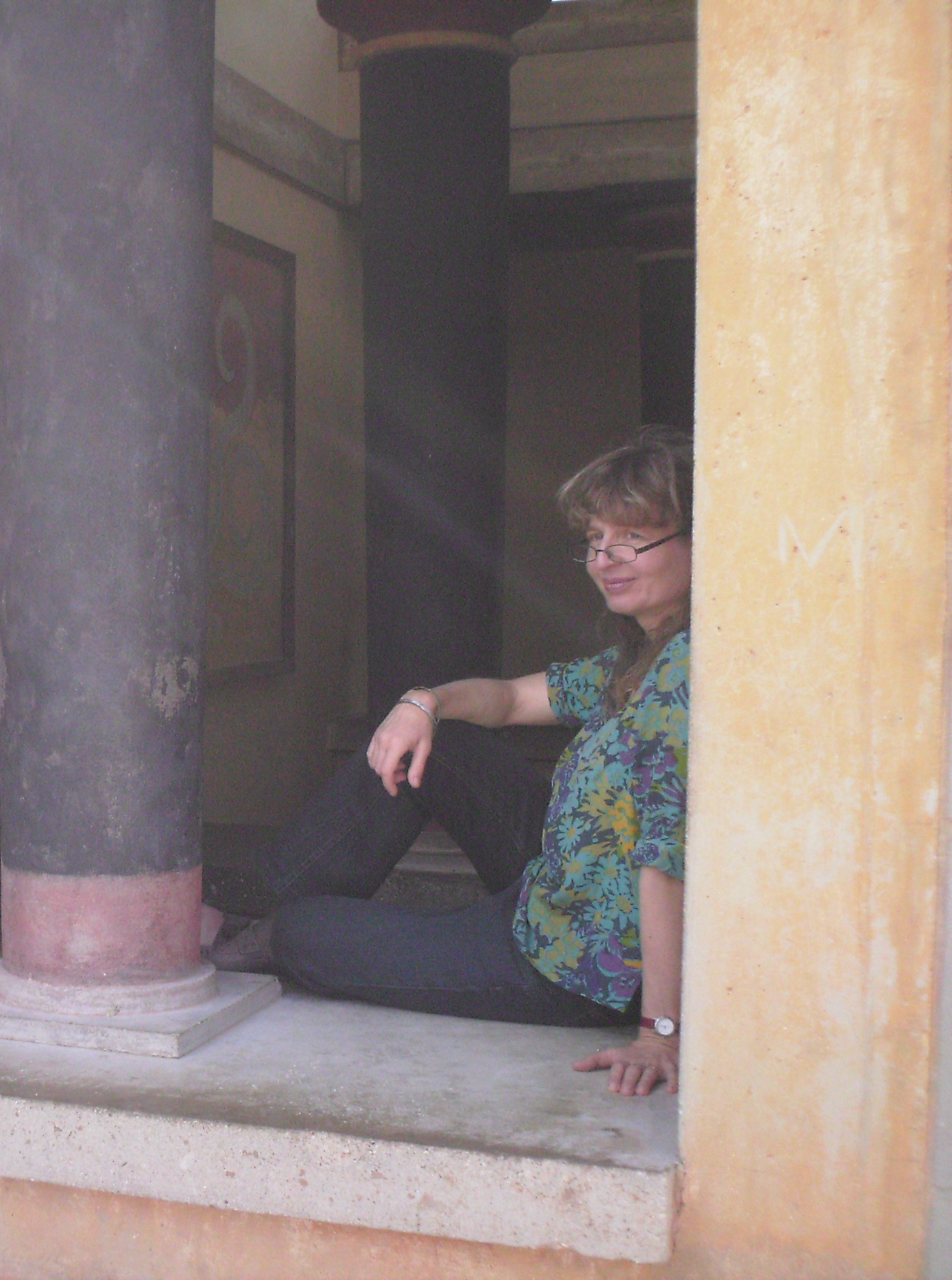
Knossos: woman in very colourful blouse sitting in a reconstructed window of the palace, in front of the same very colourful mural shown in the other photo.

the colossal columns
of the proud pine-trees
that lofty canopy offering shelter
from the flood of sun

the black and white and blood-red pillars
in the serene maze of the palace
those patches in the pattern of a yesterday
which is millennia past

Christina Egan © 2012


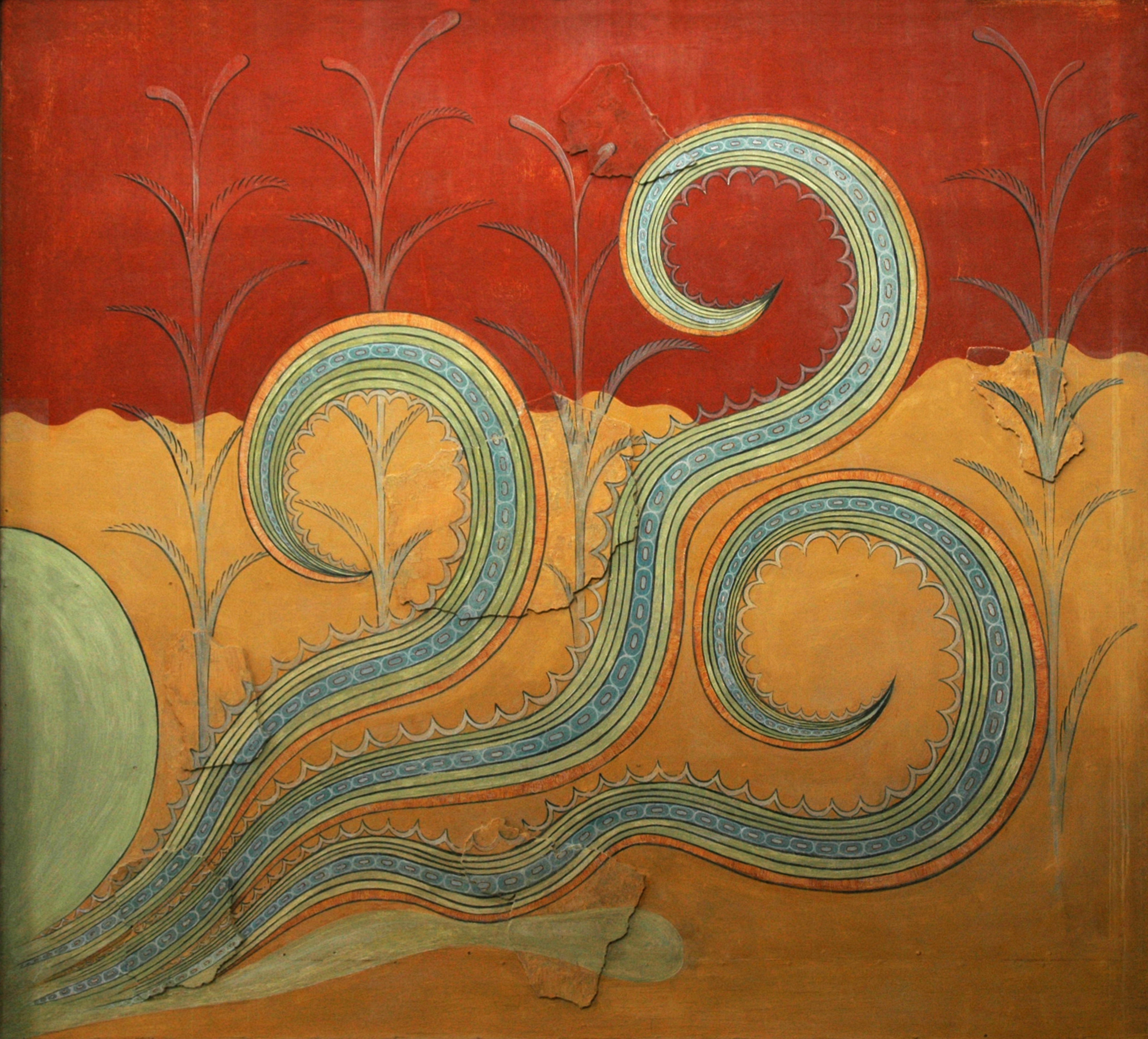
Flourishes on a mural, turquoise on luminous red and yello


The same mural in the palace
at Knossos, Crete. 
Photograph:
Harrieta171 via Wikimedia.

For German poems about Crete,
go to the cycle Kretische Küste.
For more about Crete, see below!


Golden Dell
(Chania, Crete)

You sip your coffee in the market-square
lapped by a sky and sea which both are blue;
you notice other folk from everywhere
and read this was the Roman forum, too.

You pass a corner with a golden dell:
stairs down and down, a hundred ages’ span…
The layers blur, solidify and swell,
and history unfolds, a dazzling fan.

Christina Egan © 2015


The Minoan civilisation is the oldest urban civilisation in Europe. The royal palace at Knossos, dating back almost 3,500 years, has the first stone street of Europe. Chania on Crete, a city of stone even 5,000 years ago, is one of the oldest continously inhabited European settlements. You look back on 100 and more generations…

My German translation of the first poem is called gesternmuster.

Kretische Küste

Kretische Küste

I.

Vor mir ein grünes Meer, ein roter Strand
und hinter mir die himmelhohe Wand
der Weißen Berge, mit Gesträuch schraffiert,
mit Schluchten aufgeteilt, vom Mond berührt.

Es schwindelt mich, so schroff ist es und schön…
ich möchte mitten ins Gebirge gehn,
als sei es eines Mannes Wohlgestalt
und berge sein Gemüt in jedem Spalt.

II.

Der kupferfarbne Sand wird doch zu Gold,
wo er in steiler Woge niederrollt
und sich mit jenem Brennendblau benetzt,
das kommt und nochmals kommt… und jetzt… und jetzt.

Und Disteln starren in dem dürren Strand,
die plötzlich strahlen wie von Zauberhand,
wenn erster Regen flüchtig niedersteigt
und Brautkleidblüten aus den Blättern treibt!

III.

Wo täglich Himmel sich mit Meer vermählt
und Landes Rand von anderm Strand erzählt,
wo trockne Erde wie der Tagstern loht
von silbriggold bis zu orangerot,

wo noch bei Nacht das Wasser, kaum bewegt,
den Leib in schwerelosem Zauber trägt,
bis in das sanfte Schwarz ein Schweifstern stürzt –
dort laß uns warten auf den milden Herbst.

IV.

Mit riesenhaften grünen Pranken greift
das Meer hinein in den geschützten Kreis
des kleinen Hafens, daß die Mole schäumt
und sich die bunte Schar der Boote bäumt.

Des späten Herbstes erstes Fauchen fährt
in letzte schwere Hitze wie ein Schwert.
Fünftausend Jahre aber ragt die Stadt
ins Element, gelassen, sonnensatt.

Christina Egan © 2014

Flourishes on a mural, turquoise on luminous red and yello

For more poetry and information
on Knossos 
and Chania on Crete
see my English poems
The Pattern of a Yesterday and
Golden Dell.


Frieze in the royal palace at Knossos, Crete.
Photograph: Harrieta171 via Wikimedia.

On the Volcano’s Rim

On the Volcano’s Rim

Goldstaub
(Lanzarote)

Hoher blauer Himmel,
weißer Wolkenflug,
ungestüme Winde,
rascher Schattenzug

über rote Halden,
über graue Höhn,
über grüne Matten,
wo schon Sterne stehn:

abertausend Blüten
wie ein Frühlingslied,
Goldstaub, den die Sonne
aus dem Erdreich zieht!

Christina Egan © 2015

Gold Dust
(Lanzarote)

Blue sky, ever higher,
white clouds in full flight,
winds wilful and forceful,
swift change of the light

across the red boulders,
across the grey height,
across the green lichen,
where stars tremble bright:

a flourish of flowers
and spring in a splash,
the gold dust the sun
can draw out of the ash!

Christina Egan © 2015

Dreaming Dragon
(Lanzarote)

Dew-drops sparkling in all colours
on the mighty coal-black craggy
shoulder of a dreaming dragon:
so these tiny tender flowers
perch on the volcano’s terrace –
fire, earth and wind distilled
to a dainty dotted quilt.

Ceaseless gales and sleepless fire,
ashes fed with salty dew –
ocean and volcano brew
flora’s early, lacy layer,
magic carpet in the air,
in the boundless brown and blue…
Dreams are real. Dreams come true.

Christina Egan © 2015

The Hoard
(Lanzarote)

As the mountain bears the flower,
as the giant holds the gem,
so the hour bears my poem:
purple speck on silver stem.

Where a myriad wild flowers
sprout behind the dry-stone wall,
I must gather all my powers
till the heavens hear my call.

Christina Egan © 2015

Valentine on the Volcano
(Lanzarote)

We dance on the volcano’s rim –
although its low and sunken side,
although extinct for centuries –
tossed partly by the wild wind’s whim
and partly drunk with liquid life –
suspended over sky-blue seas!
(I found my love above Teguise!)

Christina Egan © 2015
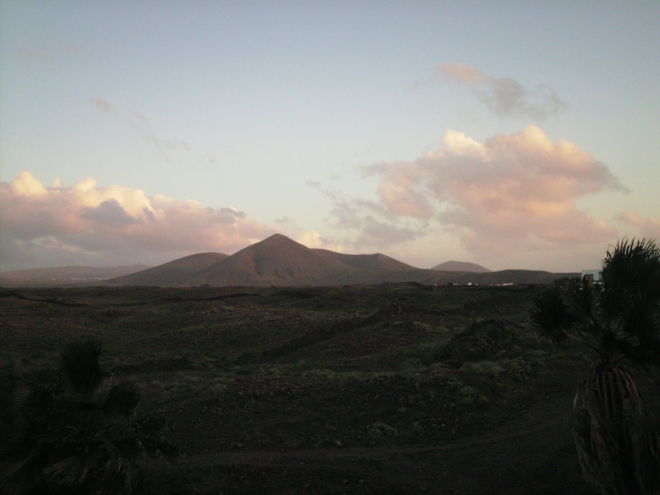
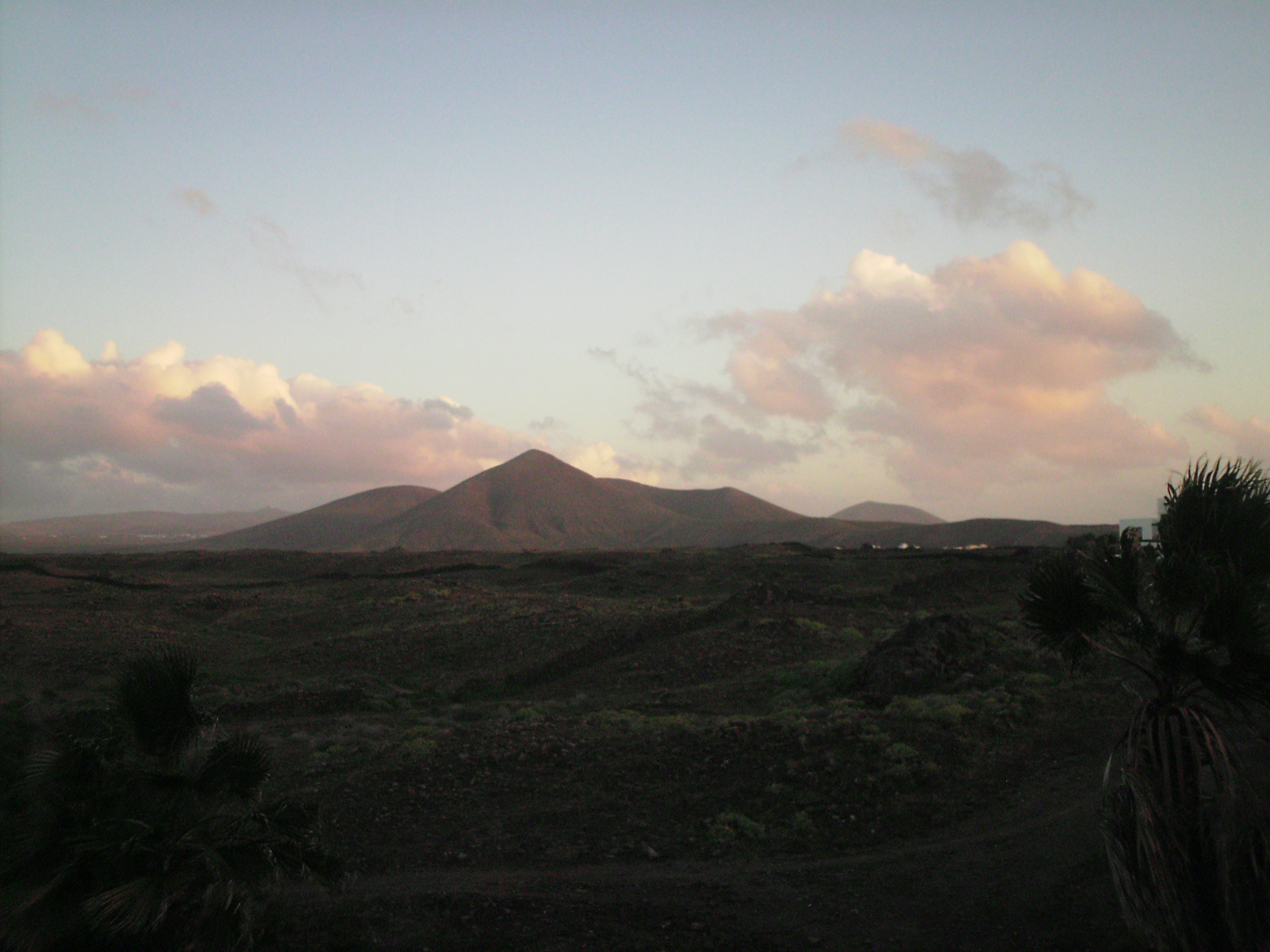
Plain and mountain range with very dark surfaces, rosy clouds in sky

The little volcano. Photograph: Christina Egan © 2015

These lines all sprang from one of the greatest experiences of my life: climbing a little volcano on the isle of Lanzarote, about which you can find a poetic description in German and English at Isle of Bliss / Insel der Seligkeit.

Gold Dust and The Hoard could equally be set in my native Rhön Mountains, also of volcanic origin, but very far inland and much greener.

The three poems in English only may work quite well in an automatic translator. The first two poems are translations of each other, or rather, parallel creations in German and English, where rhythm and rhyme required some changes in wording. It is better to do it this way, since the message is partly conveyed by rhythm and rhyme!

You could leave out the line in brackets to use the poem for a Valentine’s or anniversary card. Copy that line, though, into your list of places to see — both little towns, Teguise and Costa Teguise, because one has got the history and the other one the beach!

This handful of poems almost sums up my work: they describe plants and mountains and the sea; they refer to most basic colours; conclude with thoughts on art and religion and love; and use the beauty of language to capture the beauty of the world.

Buchenland / Heimaterde

Buchenland

Schon der Frühherbst
Schüttet Nebel aus
Über die Hügel hin
Haufenweis.

So verschwimmt mir der Pfad
Bevor noch die Buchen brennen
Und die stolzen Wiesen vergehn
Zu lustlosem Staub.

Doch unterm zerklüfteten Fels
Sitzt sommersatt das Moos
Blüht mondhell die Distel
Aufs Geheiß verborgener Geister.

Christina Egan © 2013

heimaterde

unter der haut
schimmert sie durch
die rote krume
der ich entwuchs

hinter den augen
blinzelt es vor
das urgestein
schwarz und gewaltig

unter dem haar
wirbeln sie hoch
nebel und wind
die mich umfingen

unter der zunge
schlummert sie noch
die fruchtbare sprache
die mich entfachte

Christina Egan © 2013

The first poem describes an autumnal landscape with trees in flaming colours and fog drifting in the dales. The name, Land of Beech Trees, stems from the times when most of Germany was covered by dense forests.

Nature appears as animate, sentient, and even spiritual: the meadow is proud and the moss content, while hidden spirits command a thistle to blossom bright as the moon.

The second poem reminds us that our bodies are made of the world around us — the air and water, the earth and its fruit, the flesh and bone of our ancestors while our minds are moulded by the language of our parents and ancestors.

The speaker imagines that red soil shines through his or her cheeks and black rock blinks through her pupils, while her hair is softened by thick fog and tousled by rough wind.

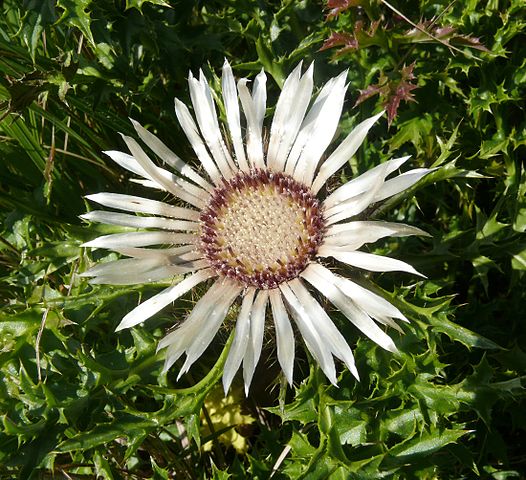
526px-Carlina_acaulis_160907These words were inspired by the landscape and climate of the Rhön Mountains in Germany.

Their symbol is a rare wildflower, the silver thistle.

Photograph: „Carlina acaulis 160907“
by Bernd Haynold via Wikimedia Commons


Portraits of Marble and Verse

silberblech

ich hämmere aus silberblech
aus makellosem mondenlicht
ein lebensvolles angesicht

ich bilde nach mit meiner glut
den sanften glanz den gott erschuf
dies sei mein einziger beruf

Christina Egan © 2015


Im Vorübergehn

II.

Es gibt von dir, mein Freund, kein Marmorbild,
in dem das Leben lautlos überquillt,
in dem ein andrer Mensch mit Meisterhand
in Stein das flüchtge Spiel der Züge bannt
und deine Stirn ins Licht des Südens taucht,–
nur Verse, im Vorübergehn gehaucht.

III.

Hinweg mit Ebenholz und Elfenbein,
hinweg mit Binnenreim und Gleichlautreim,–
kein Zeilensprung hält deine Schläfen und
kein Meißel schlägt aus Marmor deinen Mund!
Die sanfte Kraft der Adern übersteigt
ein jedes Bildwerk… bis es steht und schweigt.

Christina Egan © 2014


“I hammer from silver sheets”  claims that the foremost task of a sculptor – or any other artist – is to celebrate human beauty; and that he or she recreates the splendour of God’s creation.

“There is of you no marble image” suggests that the image of a person can be as full of life as the person itself; and that verse can make as good a classical monument as marble.

“Away with ebony and ivory” equates those materials with poetic devices – using them while naming them! – and concludes that human beauty, after all, surpasses any work of art.


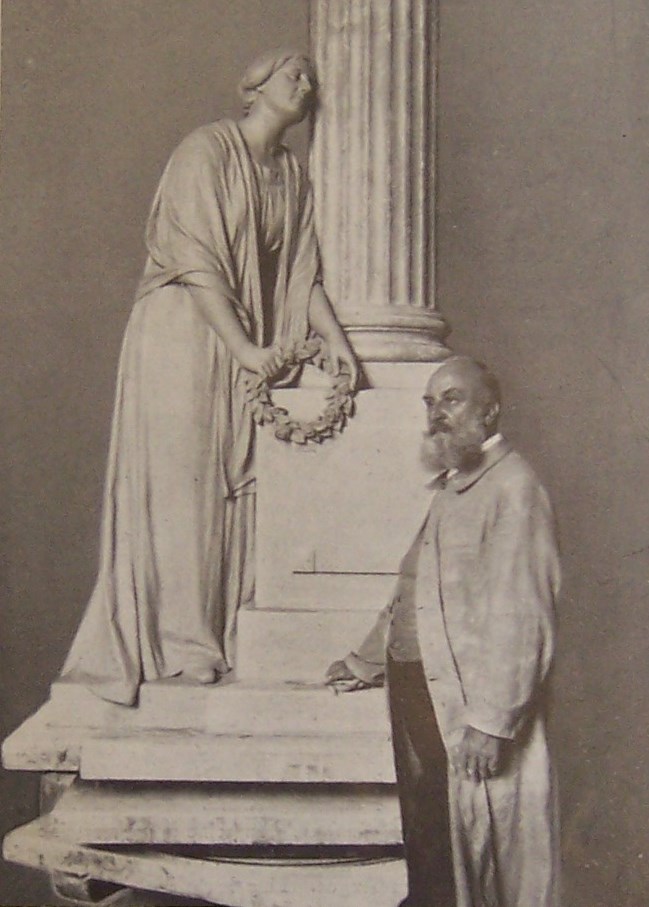
CarlEchtermeyer


My ancestor Carl Echtermeier with the model of his last work in 1910.


Photograph: „CarlEchtermeyer“ von Unbekannt – Scan Illustrirte Zeitung, Nr. 3502, 11.August 1910. Lizenziert unter PD-alt-100 über Wikipedia –


Marmorrose

Auch dieses Gedicht,
knospengroß,
elfenbeinfarben,
morgenbetaut,

ist letzten Endes
gefrorener Atem,
eine Rose
aus Stein.

Mein eigenstes Eigentum
und deines
und das eines jeden,
mein geschenktes Geschenk.

Immerhin
eine Marmorrose,
dem Leben abgewonnen,
dem Tode abgerungen.

Christina Egan © 2014

Harvest Moon

Harvest moon

A crystal ball suspended
above the park, black, blurred:
as if a god descended
onto this worn-out world.

The branches stretch their fingers,
the flowers crane their necks
towards the orb that shimmers
into the deepest cracks.

Tonight we see the largest
and brightest star that blooms:
this is the moon of harvest,
this is the moon of moons.

Christina Egan © 2015

Isle of Bliss / Insel der Seligkeit

Isle of Bliss
(Lanzarote)

The viscous flood of orange fire
gives birth to black and craggy rock;
The earth bereft of path and water
gives birth to wine of luscious stock!

The sweet white drop rolls on my palate,
the pure wild wind plays on my face…
And what was hurt is bound to heal here,
and what was loose falls into place.

Christina Egan © 2015

Insel der Seligkeit
(Lanzarote)

Die zähe Flut aus schierem Feuer
gebiert den schroffen schwarzen Stein;
die weg- und wasserlose Erde
gebiert den süßen weißen Wein!

Der wilde Wind kost meine Wangen
und jener Tropfen meinen Mund…
An seinem Ort liegt alles Lose,
und alles Wunde wird gesund.

Christina Egan © 2015

Lanzarote is part of the Canary Islands, off the
coast of North-West Africa.

The German and English versions of this song
of praise were created to match each other.

You can find more poems about Lanzarote in
German and English at On the Volcano’s Rim.


Ecce pratum purpuratum

Ecce pratum purpuratum

Bunte Blumen wünsch’ dir nicht,
einen Regenbogen,–
um die Farbe hat das All
bitter mich betrogen.

Weiße Blumen schick’ ich dir,
ewig unbeschrieben,
schwarze Blumen noch dazu,
schon dem Tod beschieden.

Statt der buntgefächerten
frohen sonnensatten
weiße Blumen wie der Schnee,
schwarze wie der Schatten.

Purpursamen streut der Lenz
über meine Wiese…
Bunte Blumen brech’ ich dir
erst im Paradiese.

Christina Egan © 2015

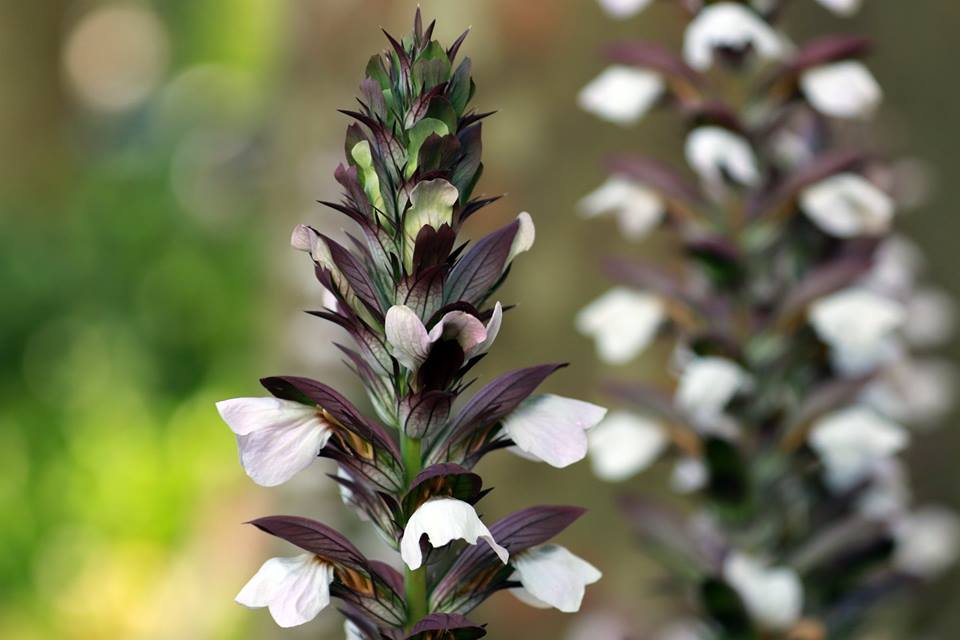
Tall flowers, each part in pale pink and deep purple - almost black and white

Photograph:  ‘Bachblüten’ (Meadow flowers). František Matouš © 2016


Ecce pratum purpuratum

Do not ask for flowers bright,
rainbow blooming boldly –
since the universe deprived
me of colours coldly.

Let me send you flowers white,
virgin leaves forever,
flowers black as sultry night,
life and death together.

From the fanned-out golden glow
on the merry meadow
take some flowers white as snow,
flowers black as shadow.

Purple blossom scatters spring
right beneath my eyes…
Purple flowers I shall bring
you in Paradise.

Christina Egan © 2015


The title is a Latin quote from the mediaeval song cycle Carmina Burana.
The German and English versions were created to match each other.

ostseeschlaflied (Darß)

ostseeschlaflied
(Darß)

hinaus tritt aus dem hohen wald und schau
wie sand auf see und see auf himmel trifft
wie sich am abend spiegelklares blau
in unverhofftes violett verwischt
wie sich der wellen und der wolken grau
in hundert regenbogenschatten bricht
zurück nun tauche in die dunkle au
die nacht ist nah doch ewig ist das licht

Christina Egan © 2015

The Darß (Darss) is a majestic primeval
island at the very edge of Germany.

You can read an English poem about
the Darss at Midsummernight Far North
and more German ones at Schöpfung (Darß).