Regenbogenbotschaft

Tall brilliant rainbow in black clouds over fields and village.

Regenbogenbotschaft

Innen leuchtet rot die Liebe,
dann orangerot die Kraft,
sonnengelb die Heiterkeit,
Hoffnung schimmert erdengrün,
meeresblau verströmt sich Friede,
Weisheit wölbt sich indigo,
Glaube krönt sie violett:
Regenbogen will uns blühn,
will uns eine Zukunft weisen
und die Ewigkeit verheißen!
Schon verhangen, schon vergangen,
doch die Seele bebt noch froh…

Christina Egan ©2020

Title page of calendar: white windmill against blue sky.

This poem, Rainbow Message, is spiritual but not bound to a certain religion. I hope it radiates serenity and confidence, as the rainbow does.

It is published in the calendar, Münsterschwarzacher Bildkalender 2024 (circulation 80.000) with the photo above. (Photograph: Albrecht Fietz via Pixabay.)

For verse from a colourless winter world, see the recent post, A Speck in the Dark, where a few flashes of colour and light provide the magic of beauty and hope.

dream laundry

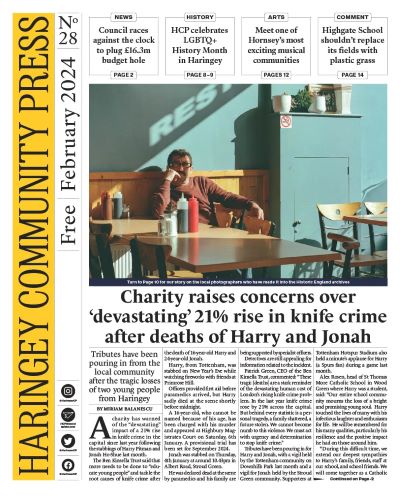
Front page of newspaper

This poem is also published in a local paper today, in print and online: Haringey Community Press, February 2024 (circulation 15,000).


The title is taken from Ingeborg Bachmann’s poem Reklame (1956), where she coins the word “Traumwäscherei” (dream laundry, laundry of dreams or through dreams?). The omnipresent publicity and cheerful music soothe your worries and questions – until they stop and leave you in “Totenstille” (deadly silence, or silence of the dead?).

The idea of downloading memories and dreams comes from science-fiction such as Ridley Scott’s movie Blade Runner (1982), M. T. Anderson’s novel Feed (2002), and Kazuo Ishiguro’s novel Klara and the Sun (2021). All three are superb and thoroughly disquieting.

The line “boots on the beach” comes from a particularly stupid – and sexist – video advertising hard drink by showing a young woman in a very scanty dress and very heavy boots. It played on a loop on several screens in a railway station so that there was no escape from it.

The line “music on the pillow” is inspired by Ray Bradbury’s novel Fahrenheit 451 (1953), where he predicts ceaseless entertainment broadcast onto our walls, even inviting participation, and into our ears, continuing into our sleep. The result is isolation and despair.

A Speck in the Dark

A Speck in the Dark

Grey buildings, grey branches,
black streets in the rain…
Dark coats and pale faces,
white sky yet again.

Drained off is the rainbow:
there’s shade and there’s rust.
Smudged world in the window,
and noon feels like dusk.

There: sunrise is flashing,
an orange-red spark,
with sky-blue unfolding –
a speck in the dark!

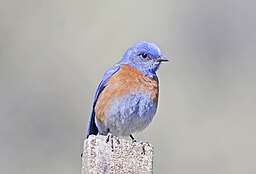
Western bluebird, Washington State. Photograph: Vickie J Anderson. CC BY-SA 4.0 via Wikimedia Commons.

The bluebird’s alighting
on quivering twigs;
the buds were awaiting
a signal like this!

The bluebird is glowing,
alive and alert,
and colours are brewing
in heaven and earth.

Christina Egan ©2018

Nachruf auf einen Gärtner

Photo of walnuts
Photograph: Gokhan Tek via Pixabay.
Title page of calendar: white windmill against blue sky.

Still Here (Still striding)

Still Here

Still here:
still striding into the drizzle
across the buzzing roads
and straight across the green
with my hair getting frizzy
and my eyes getting dazzled
by the purple orbs
on the tale pale thistles

Still off-screen:
mounting the white cliff
of the sky-scraper
with my own eyes
still off-air
echoing the whistle
of the lime-green parrot
with my own voice
still off-map
facing the buffets
of the wilful winds
with my own face

Still no gloss
on top of the gloss
still no sheen
on top of the cream
upon the click of a button
the command of a machine

Still here:
still pounding
the moistened pavement
with my own feet
still brushing
the sparkling bush
with my own hands
still whispering
some half-rhymed lines
with my own lips

Christina Egan ©2023

Abstract painting of bright squares and rectangles in blue, green, orange, and yellow tones.
Paul Klee: Polyphony (1932). Kunstmuseum Basel.

Im Herzen von Köln (St. Andreas)

Im Herzen von Köln (St. Andreas)

Vorm Fenster herrscht
der alte Dom
und unterm Fuß
das alte Rom.

Minutentakt
Der Boden bebt,
die U-Bahn pulst,
die Erde lebt.

Die Straße dröhnt,
die Weltstadt wacht,
der Domplatz zittert
Tag und Nacht.

Der Baulärm grellt,
das Blaulicht greint,
die Flöte lockt,
die Geige weint.

Die Orgel jauchzt,
die Glocke braust,
die Stille ruft,
die Stille rauscht.

Am Kreuz hängt einer
ganz allein
und will das Herz
der Erde sein.

Die heilge Stadt
lebt noch aus ihm.
Sie weiß es kaum;
er gibt sich hin.

Minutentakt:
Der Tunnel braust,
der Erdschlund grollt,
die U-Bahn saust.

O Einsamkeiten –
Mein Herz brennt.
O eigne Sehnsucht –
Mein Herz rennt.

Doch Ruhe ist ja
nur in Ihm…
So knie ich nieder:
Nimm mich hin.

Christina Egan ©1992


Tall remnants of Roman city wall with Cologne Cathedral in the background
Photo: Christina Egan © 2014

The first poem of the year takes place in Roman streets again, in the midst of Cologne, in Sankt Andreas, the mighty mediaeval church right opposite the Cathedral. When you descend into the crypt, you are pretty close to antiquity. All around, Roman walls are displayed, or simply still standing.

For an English poem about Cologne with a similar content and in a similar style, see My City Calls (Grey Roofs Grey Walls). There, it is the city itself which provides comfort and hope, as religious faith does here. I noticed the striking parallel only yesterday on relaunching my poetry blog!

This anthology of poetry is back!

Light-blue sky and light-green ocean in the background, white tombs in the foregrund; in the front, a flat marble slabs decorated with two large pink flowers, one in clay and one in plastic.
Paul Valéry’s tomb on the Cimetière marin. Photograph: Christina Egan ©2016
Creative Commons Licence

Christina Egan by Christina Egan is licensed under a Creative Commons Attribution-NonCommercial-NoDerivatives 4.0 International License.

Der Nebel hebt sich

Der Nebel hebt sich

(Schloß Fasanerie bei Fulda)

Der Nebel hebt sich,
und der Rauhreif auf den Weiden,
feine Spitze, glitzert auf.

Aus dichten Fichtenschirmen sprühn
kapellenglockenhelle
Stimmen ohne Zahl.

Ein Vöglein folgt, dort oben, sieh,
mit dunklen Flügeln, gelber Brust,
ein Sonnenstrahl!

Ein niedrer Wolkenstreif muß weichen,
und der bleiche Mond, des Dunkels Geist,
desgleichen.

Der ausgelaugte Himmel blaut,
der federnd-feste Boden taut,
gurgelt und gärt…

Noch wehrt der Winter sich,–
bezwungen ist er schon.
Die Erde atmet wieder tiefer…

Und wer nur auf den Hügel steigt
und schaut und hört und spürt,
kriegt neue Kraft und Lust!

Christina Egan © 2017

A new poetic form: three lines in each stanza, with irregular lenght and irregular rhymes — but each stanza having ten stressed syllables, with one unstressed syllable in between, making the flow of the language regular, natural and musical at the same time!

The poem was written on February 14th. The Rhön mountains have a harsh climate with long winters characterised by cold and snow and fog. All the more is spring welcome, even the early signs of it…

Vision (In den Augen den Mittag)

Vision

Woman leaning on a sandstone wall, looking out on green fields and blue ocean, her blond hair lifted by the wind.In den Augen den Mittag,
den Mittelmeermittag –
In den Haaren die Nacht,
braunsamtene Nacht –

In den Augen die Sonne,
im Wellenspiel glitzernd –
In den Haaren den Wind,
wildseidenen Wind –

Christina Egan © 2014

A luminous winter day on a Mediterranean island… or rather, the beginning of a lush spring as early as February. – Photograph: Christina Egan © 2018.

Gegenwart (Wie Kalksteinhügel)

Gegenwart

Wie Kalksteinhügel liegen deine Wangen
und deine Haare wie ein Pinienwald.
Schon zittert meine Seele vor Verlangen
nach deiner bloß erratenen Gestalt.

Ein dunkler Doppelsee sind deine Augen,
noch beinah unberührt und unergründlich.
Ob sie auch meine Zukunft in sich bergen,
ist beinah ungedacht und unerfindlich.

Und wie das warme Meer rollt deine Stimme,
wenn sich orangerot der Tagstern neigt…
O schautest du nur auf und hieltest inne –
und würdest niemals bloß Vergangenheit!

Christina Egan © 2014

Dusk by the sea: glow of sunset amongst dark clouds and on waves lapping onto the shore.

Description of a new acquaintance in terms of a Mediterranean landscape.

The title plays on the double meaning of the German word “presence” / “present”: the speaker is mesmerised by the other person and already has a faint hope that he or she will become the future… and never slide back into the past.

Sunset on a Mediterranean shore in January. – Photograph: Christina Egan © 2016.