Mer de miel

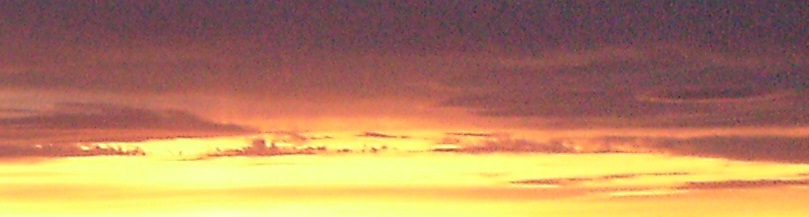
 Clouds in hte sunset, looking like a bright yellow sea, an orange coast and purple sky. An optic illusion above a real coast (not visible here).

Mer de miel
(Sète)

Levez vos yeux vers ce vitrail doré,
d’un jaune plus doux, d’un jaune plus pâle possible :
une baie cernée de hauts rochers
d’un bleu brumeux… Un crépuscule paisible.

Clignez vos yeux à ce vitrail distant,
mer de miel, montagne mauve, sauvage :
tout flotte au dessus de l’horizon –
des eaux de feu, une terre de nuages !

Ce paysage d’un or incomparable
s’évanouit et passe, une image…
Ou serait ça la côte impérissable
et notre terre et mer le grand mirage ?

Christina Egan © 2016


This poem takes up an idea from ancient pagan and Christian philosophy: our world may be only a pale reflexion of a higher, perfect, world. Those ‘heavens’, however, are an inaccessible and unimaginable place — beyond our universe — for which the visible sky is only an image.

The fiery sunset which took me quite literally ‘out of this world’ occurred in midwinter on one of the northernmost beaches of the Mediterranean, at the outskirts of Sète. For a daytime poem and photograph on the sea around Sète, see La Mer, enfin.
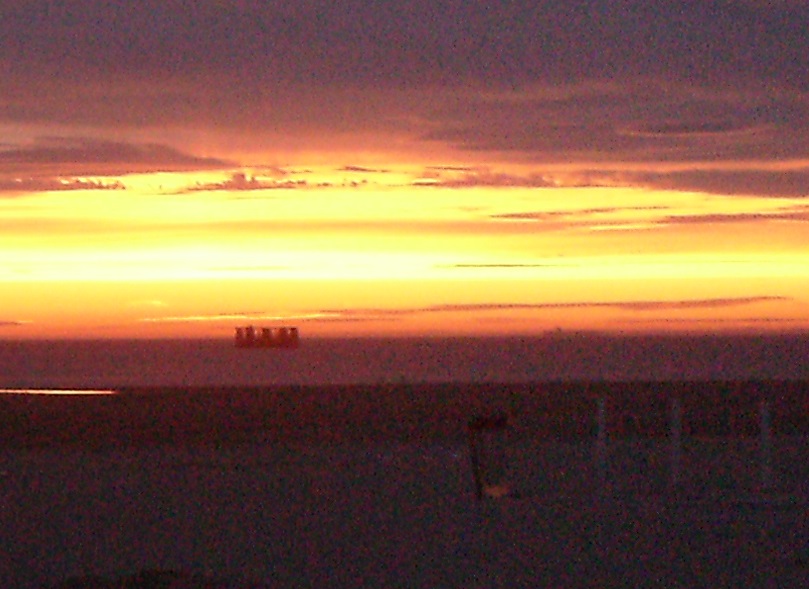
Clouds in the sunset, looking like a bright yellow sea, an orange coast and purple sky. An optic illusion above a real coast (also visible here).

Photographs: The sky above the coast in Sète, France. Christina Egan © 2016
Orange Beads

Orange Beads

I.

I nod to the flower
the colour of dark wine
stalks and spikes that tower
above my legs and spine

twin doors an orange spill
the only one in town?
why is my own door still
an ordinary brown?

O sweet day!

II.

All these parallel roads
the orange doors are where?
again the suburb soaks
in sunshine hello there!

they smile and say hello
all else though stays behind
their sturdy frames and so
I keep my orange find

two bright beads

III.

The hawthorn turns orange
the blackberry turns black
mingling at the park’s fringe
behind the cycle track

the sky is blue as if
this were a normal state
as if we could just live
beyond the iron gate

of summer

Christina Egan © 2016


In London, you can find many front doors painted in red, blue, or green, but I had never spotted an orange one. I have mentioned a striking yellow door elsewhere. I usually go out without a camera, but I capture impressions with my pen!

There are so many green spaces in London that you can walk through parkland for hours. To find blackberries and hawthorns tucked between a duck pond and a little copse is quite normal in this vast city of over eight million people.

The verse pattern is borrowed from the French poet, Jean-Yves Léopold, who does not have a website. Eight short rhymed lines, almost without punctuation, are followed by a ninth line which is even shorter and does not rhyme at all, so it stands out.

gesternmuster / Zeit-Räume

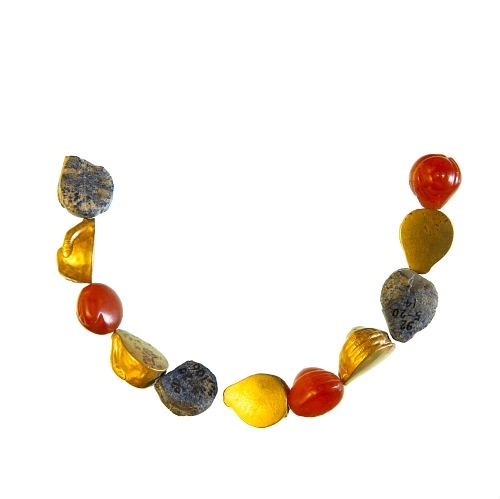
A dozen beads of gold, lapis lazuli, cornelian.gesternmuster
(Knossos)

die kolossalen säulen
der stolzen pinien
jener erhabene baldachin
der schutz vor der sonnenflut bietet

die schwarzen weißen blutroten pfeiler
im heiteren palastlabyrinth
jene flecke in einem gesternmuster
das jahrtausendealt ist

Christina Egan © 2016

This is a translation of The pattern of a yesterday . At that post, you can find some photos and a link to an artistic impression of the palace 3,500 years ago.

Photograph: Minoan beads from Crete in gold, lapis lazuli, cornelian, ca. 1700-1500 BC. – © The Trustees of the British Museum.

Zeit-Räume
(Knossos)

Terrassen, Treppen, rote Säulen
zwischen himmelhohen Bäumen,
Marmorschwellen, rote Wände,
um die Ecken neue Treppen…

Wie im Traume muß man wandern
durch die Höfe, durch die Säle,
durch die Wärme, durch die Kühle,
still von einem Raum zum andern…

Schlanke Bäume, schlanke Menschen
stehn vor heitrem Himmel drinnen
in den buntbemalten Zimmern
heute wie vor tausend Jahren.

Keine Läden vor den Fenstern,
in den Türen keine Flügel,
keine Grenzen zwischen Innen,
Außen, Unten oder Oben,

keine Pforten zwischen Heute,
Gestern oder Vorvorgestern
zwischen einem bunten Zeit-Raum
unter Pinien und dem andern.

Christina Egan © 2016

Die Fluten der Stadt

Die Fluten der Stadt

I.

Vor meinem Fenster rauscht die späte Stadt
und glitzert auf im Vollmond, schwarzes Meer;
sie spült Millionen Menschen hin und her,
spielt Fangen, nimmermüd und nimmersatt.
In ihrem Brausen höre ich Willkommen
und lasse mich auf ihren Wellen treiben.
Die Sternbilder der Leuchtreklamen schreiben
sich unter meine Lider… schon zerronnen.
Und nie allein: weil ich alleine bin,
zu Haus im selben Sehnsuchtsleitmotiv
wie jeder andre aufgewühlte Sinn.
Was immer schon in meinen Gliedern schlief,
schäumt ungebärdig zu den Sternen hin:
Ich will dich, will dich wild und meerestief.

II.

Auf vielen Brücken stand ich, ausgespannt
von Stahl und Stein an Themse, Rhein und Main,
und unter allen Himmeln stets allein:
stets einem Unsichtbaren zugewandt.
Es wandeln ja mit jedem neuen Strand
die Menschen wie die Häuser ihr Gesicht,
erstehen anders schon im Morgenlicht;
und immer wieder scheint mir eins verwandt.

Die Fluten wechseln – braun, blau, grau und grün –
die Augen ebenso, die mich gebannt,

sie füllen meine Augen – und entfliehn.
Doch deine, die ich nur von ferne fand,
die kaum mich streiften, seh ich weitersprühn…
Und ihre Farbe hab ich nie gekannt.

Christina Egan © 1995 / 1996

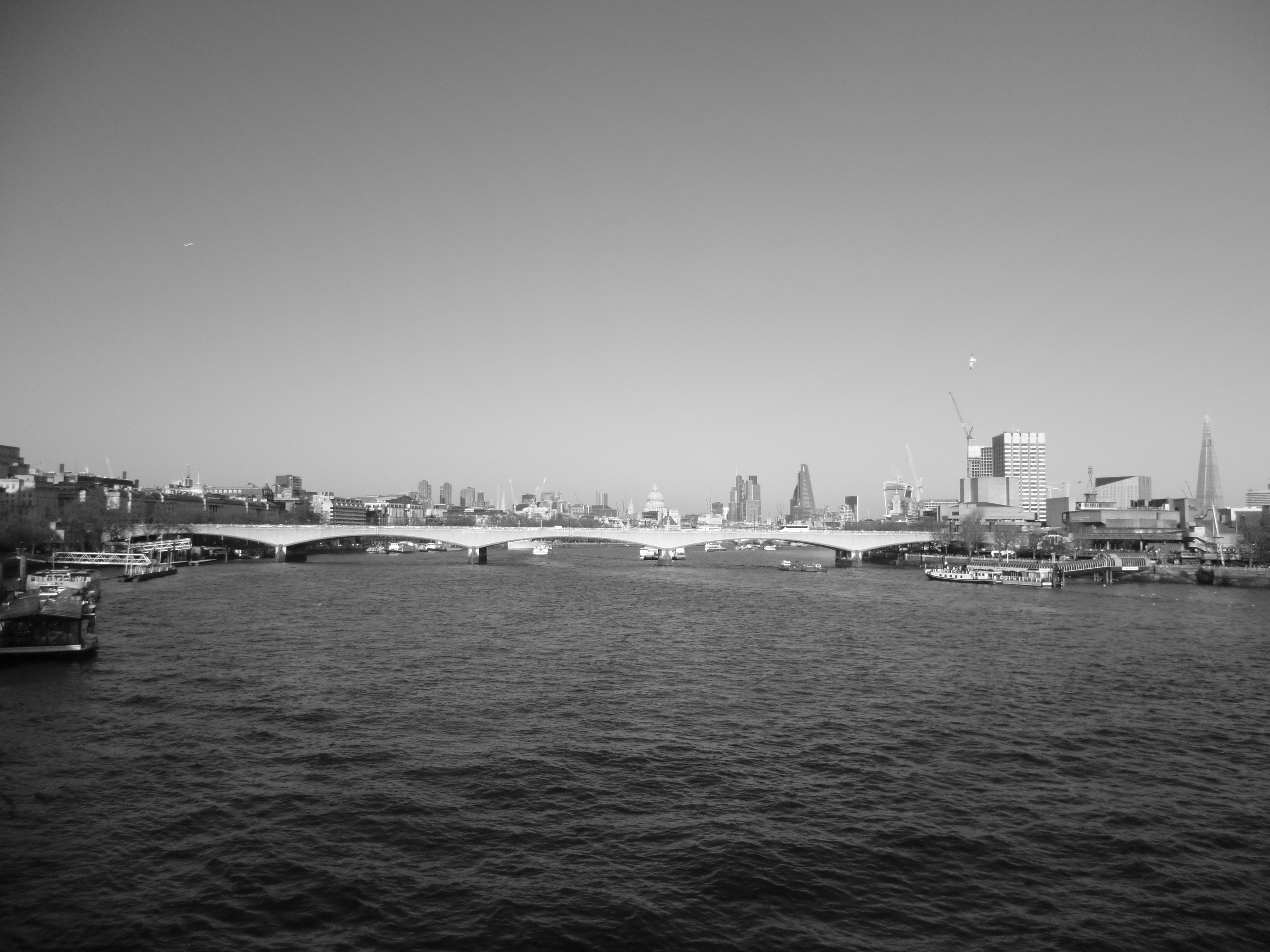
Black and white panorama of London skyline from a Thames bridge, with another bridge, boats, skyscrapers, St Paul's.

London. Photograph: Christina Egan © 2014


The narrator looks for love amidst the masses of the big city by the big river, where the star constellations consist of neon advertisements. She or he adores someone whom she has only seen from afar so that she does not even know the colour of his or her eyes.

Each sonnet makes a paradoxical statement about loneliness: This person is never lonely because many other people in this city share her loneliness; and she is always lonely because she is in the presence of a beloved one who is absent.

dans le verre / Mother-of-Pearl

dans le verre

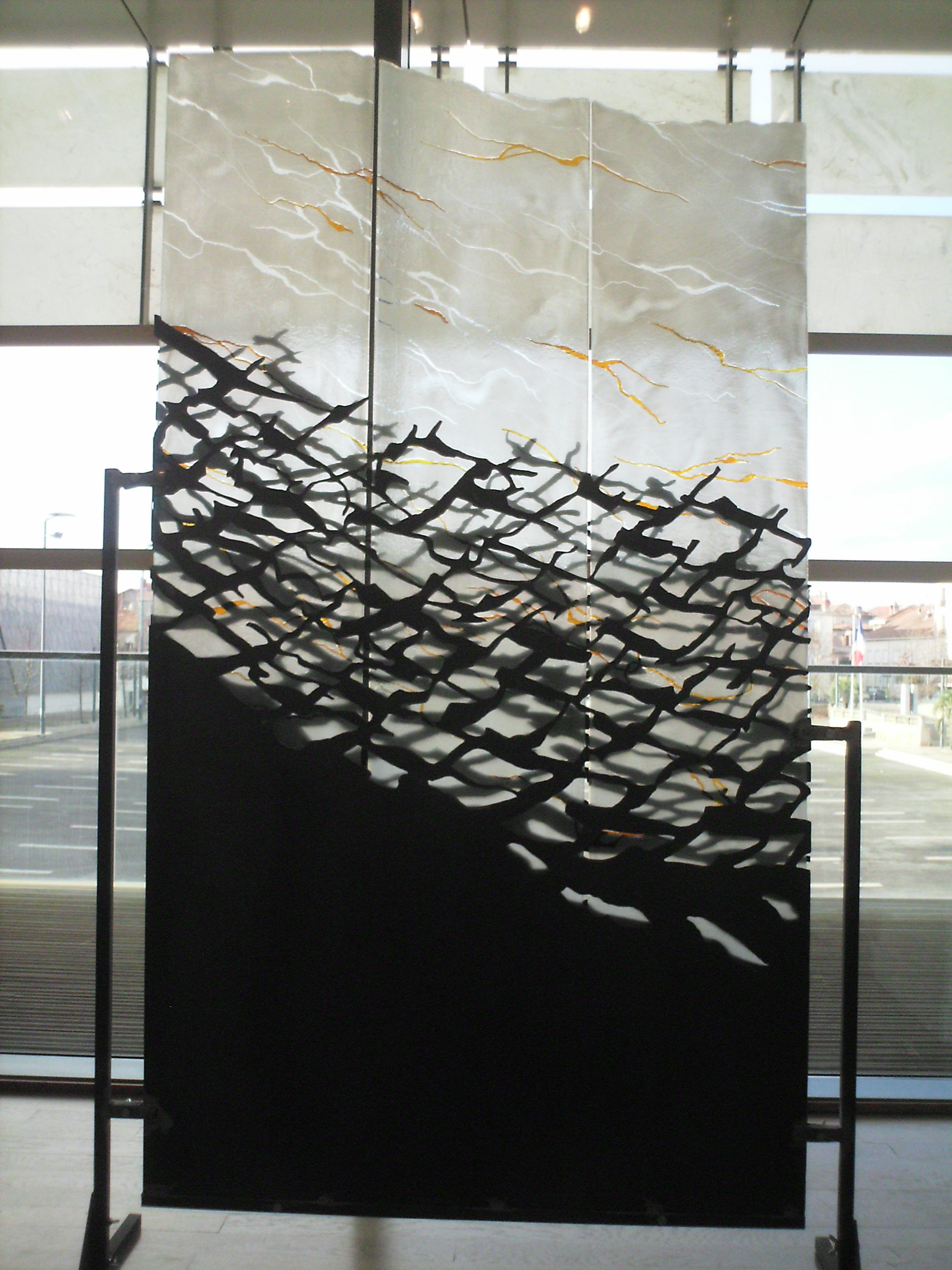
Glass screen with patterns in black, white and gold, resembling surf and seagulls.les couleurs de la mer
sont versées dans le verre
du présent du souvenir
faites-les resurgir

les couleurs de la mer
de l’argent jusqu’au vert
améthyste et saphir
laissez-les reluire

dans ce vers

Christina Egan © 2016


Mother-of-Pearl

The sea is not blue,
no more is the sky:
that is a child’s view,
a picture-book’s lie.

Whenever the rainbow
touches the sea,
it sprinkles a faint glow
of eternity.

From indigo ink,
to raspberry pink,
with peppermint green
and gold-leaf between…

The sea is not blue,
or grey of some hue:
the sea is a swirl
of mother-of-pearl!

Christina Egan © 2016


Photograph: ‘Rhizome’. Sculpture by Laurence Bourgeois (Lô).
Verse pattern of French poem after Jean-Yves Léopold (J. Y. L.).

das dritte bild

das dritte bild

dein foto ist der neugier aller welt
auf einem internetplatz ausgestellt:
man sieht den hut, viel haar und auch gesicht,
die augenlider, doch die augen nicht.

verschlossen steht und abseits tief in mir
ein anderes, ganz altes bild von dir:
ein überscharfes leuchtendes profil,
als ob’s aus einem traum zersplitternd fiel.

noch in der zukunft liegt das dritte bild,
das meinen wilden durst nach leben stillt:
ich sehe, wie du leuchtest, weil du lebst,
wenn du dich wendest und die augen hebst.

Christina Egan © 2011


The narrator adores a man or woman of whom he or she has gathered only a few impressions: mainly a distant memory and an online photo. These two are the past and the present; the future consists only of imagined images.

The Dittany of Crete

The Dittany of Crete

I’ve found the place where red and blue,
where earth and sea and sky all meet;
I’ve even climbed the ashen rock
to pick the dittany of Crete:

to weave a spell about your eyes,
to wake your smiling silent mouth,
to share with you the flaming light
and heavy flavours of the south.

Christina Egan © 2012

Hanging oblong flowers in bright green with bright pink.


The ‘dittany of Crete’ is a rare wild plant, gathered as a flavouring, medicine, aphrodisiac, or love token. I tried it on Crete in a delicious and wholesome tea!

The red colour in the poem could be the pink and orange surf in the sunset, or the pink and orange beaches of Crete. The sea might be bright blue and then again bright green

Origanum dictamnus.
Photograph:
HelenaH via Wikimedia.

Hochsommerhimmel

Hochsommerhimmel

Himmel, wolkenlos
schon am Morgen. Schwalbenflug
bestickt das Hellblau.

*

Himmel, weich und warm
über Mittag. Seidentuch,
endlich einfach blau!

*

Himmel, licht und sanft
noch am Abend. Holzspanduft
umwebt die Rosen.

Christina Egan © 2015

Geflecht / Geflechte

Geflecht

Jedes Leben ist verstrickt,
Masche um Masche, Stich um Stich,
in die Leben neben ihm,
ob wir’s wollen oder nicht.

Jede Reihe ist verschlungen,
ohne daß das Garn je bricht,
in das vorige Geflecht,
ob wir’s wissen oder nicht.

Jeder Jahrgang ist der Boden
für die nächste bunte Schicht:
Kaum geboren, sind wir Ahnen
für ein künftiges Geschlecht.

Christina Egan © 2015

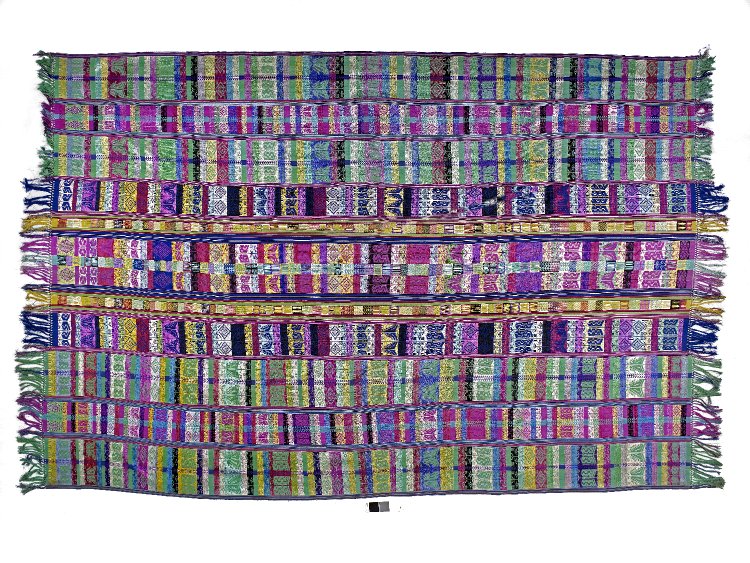
Silk cloth dominated by vivid pinks and greens.

Geflechte
(Altstadt von Köln)

Reihen auf Reihen von Häusern,
hell und freundlich im Frühlingslicht,
Reihen auf Reihen von Fenstern,
schimmernd in allen Augenfarben.

Und hinter einem jeden Fenster
Gesichter… Geschichten… Geflechte.
Und unter einem jeden Pflaster
Pflaster… Pfade… Schwellen.

Stockwerk um Stockwerk von Leben,
hinauf ins ausgelassene Blau!
Schicht um Schicht von Geschichte
bis in den unbetretenen Staub.

Ich strecke mich hin auf dem Mäuerchen hier
und höre die Vögel und höre ein Herz –
Das Herz diese Platzes? Das Herz dieser Stadt?
Mein eigenes Herz, wie es schlägt für die Stadt?

Christina Egan © 2016


These poems describe human life as a knitted or woven tissue: every person is a mesh amongst, above, and below others. Every little life is part of a layer of history, as every modest buidling and ordinary street is.

Every life is interwoven with  others. Every single one of us is history!

I wrote the second poem on the way back from Cologne, where I had briefly rested on a little wall, which turned out to be in the area of the ancient forum and which in hindsight reminded me of excavated foundations.

For a poem on weaving words into a poem, see the previous post, Word Weaver.

Photograph: Silk cloth from Madagascar. – © The Trustees of the British Museum

Word Weaver

Word Weaver

More purple clouds than I can count
or weigh or paint for you
or snatch and send them underground
with some surrounding blue…

To one whose windows do not stretch
to spy the heaving sky,
I’ll weave my syllables to fetch
the purple passing by.

To one whose dusk and marble moon
are filtered through a rail,
I must thread silver on my loom
to leave a shiny trail.

I must request the best black silk
to mark the balmy dark…
By day I’ll stitch a roaring quilt
to catch the city’s heart!

Christina Egan © 2016

Drawing of the mechanics of a loom (yarn on rolls, without the frame)The poet describes the world to a prisoner who can barely see the majestic ever-changing sky and the bright busy city surrounding them. The sound and rhythm of the lines emulate the warp and weft of life, so that the words reflect the world — read the poem aloud and you will see!

The other person may be imprisoned by a totalitarian state or indeed by a democratic state, or locked up by their employers or indeed their own family, behind walls and perhaps under a garment. There are many millions of human beings who de facto are prisoners or slaves without being called so.

For poems about time (for instance ensuing generations) and space (for instance a big city) as a tissue, see my post Geflecht / Geflechte. All of civilisation and all of humanity is one web.