Steigt später Morgen

Steigt später Morgen

Im nackten Gehölz
am Horizont gen Osten
steigt später Morgen:
das schwächste, stillste Feuer,
der dennoch gleißende Kreis.

Christina Egan © 2015


Laub leuchtet auf

Durch die Wolken bricht
Glanz, Gleißen. Laub leuchtet auf,
rührt sich und flüstert.
Nur diesen Augenblick
haben wir, aber auf ewig.

Christina Egan © 2015


The first tanka celebrates the sunrise 
in midwinter; the second conjures up
a flare of sunshine in midsummer.

Eternity can be experienced in this life:
in the moment — and perhaps in the
moment alone.

For another experience of tranquillity 
through light and dark in midwinter, go to
In Praise of Darkness / Lob der Stille.

Arles im Winter

Arles im Winter

Die Fensterläden wie ein Farbenkasten,
kornblumenblau und flieder und türkis;
die goldnen Wände, die im Wind verblaßten,
die Gasse, die den kurzen Schnee verschlief.

Die Bogengänge wie bestickte Bänder,
die Krippenbilder wie ein Glockenspiel…
Und das Theater wechselnder Gewänder,
wo nie – seit Rom – der letzte Vorhang fiel.

Die weiche Luft am weiten Strom von Norden,
wo beißendkalter Wind bis eben blies,–
er wälzt sich meerwärts, kostet wohl schon morgen
Kornblumenblau und Flieder und Türkis!

Christina Egan © 2016

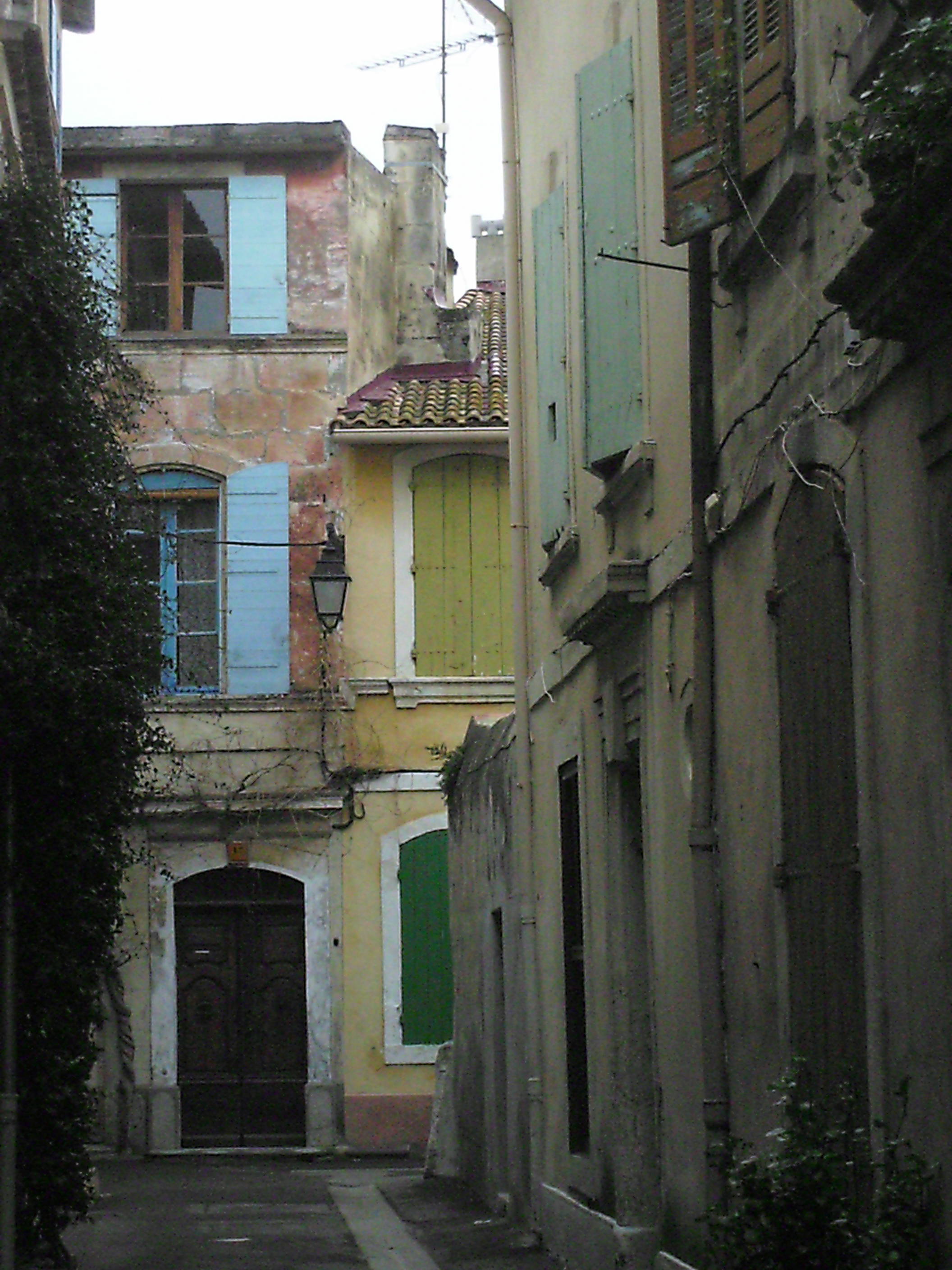
Lane with old houses, window shutters in various shades of turquoise and green.The Old Town of Arles is huddled together within the precincts of the Roman city, next to the vast River Rhône  and close to its mouth into the Mediterranean Sea – with the churches built of the stones of the temples and the houses built with the stones of the theatre.

Down the funnel of the river valley, there is a forceful and often icy wind, the Mistral; but there is also a mild wind from south, the Wind from the Sea, which may warm up the city in the midst of winter, so that you can sit in the Roman ruins…

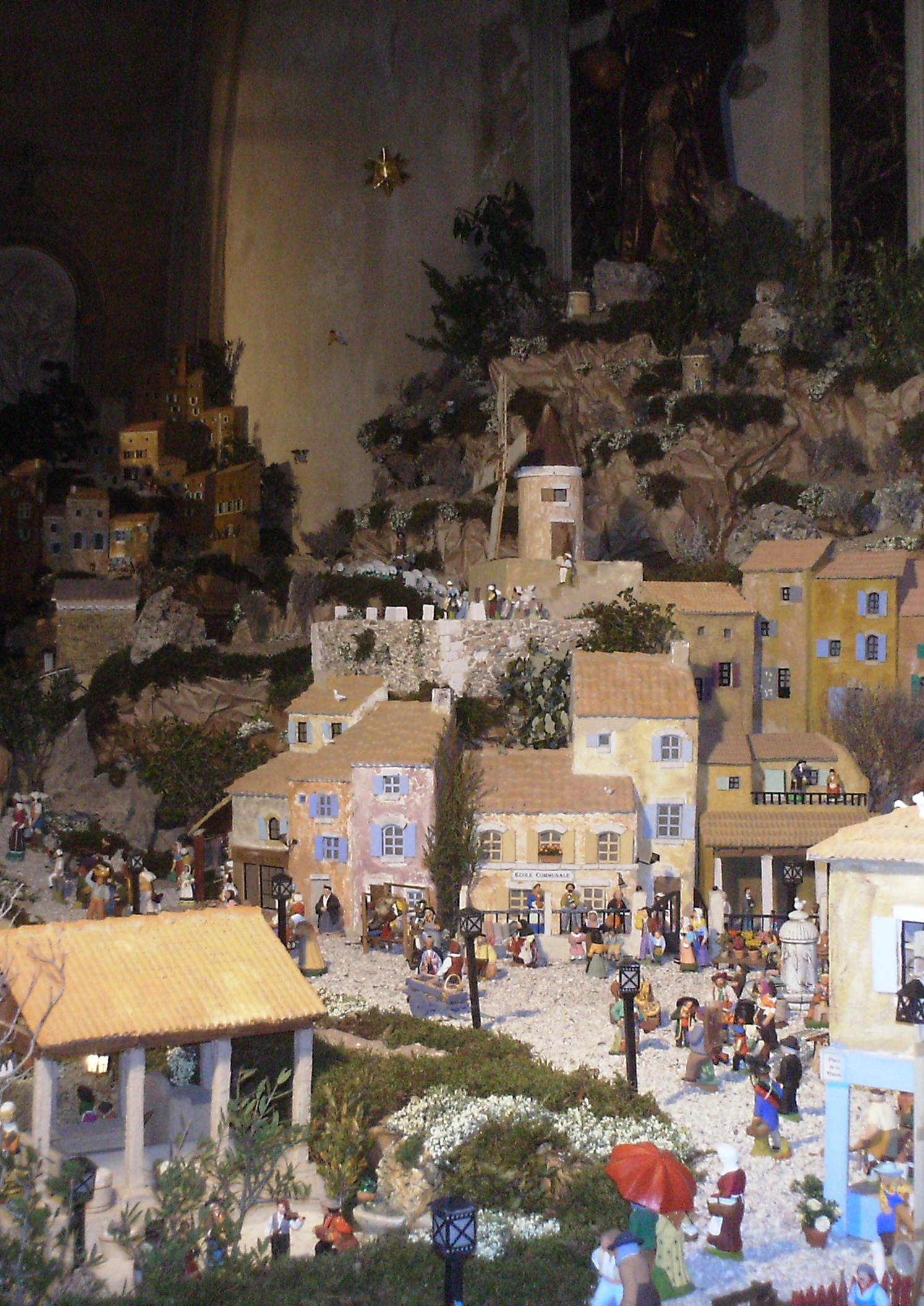
Model village on steep hills as backdrop to a nativity scene

There are exhibitions of nativity scenes and figurines in all styles, even contemporary, at Saint-Trophime; in another mediaeval church, a whole side-chapel is filled with a model village with rocks and trees, running water and flickering fire, and hundreds of tiny local people.

I have written another poem on Arles and the Vent de la mer  in French and English. This one here may work quite well in a translation software.

Photographs: Arles. Christina Egan © 2011.

The City Lit Up

The City Lit Up

I lived between Ilex and Salix,
just north of Londinium Town,
and sometimes I climbed to the moss-well
between the oaks and looked down.

I looked at the thatch and the roof-tiles,
as red as the embers beneath,
I looked at the timber and marble,
the highways connecting the heath,

the gates, the walls and the broad bridge,
the fields afloat on the clay;
and I wondered if London would stretch
as vast as the valley one day,

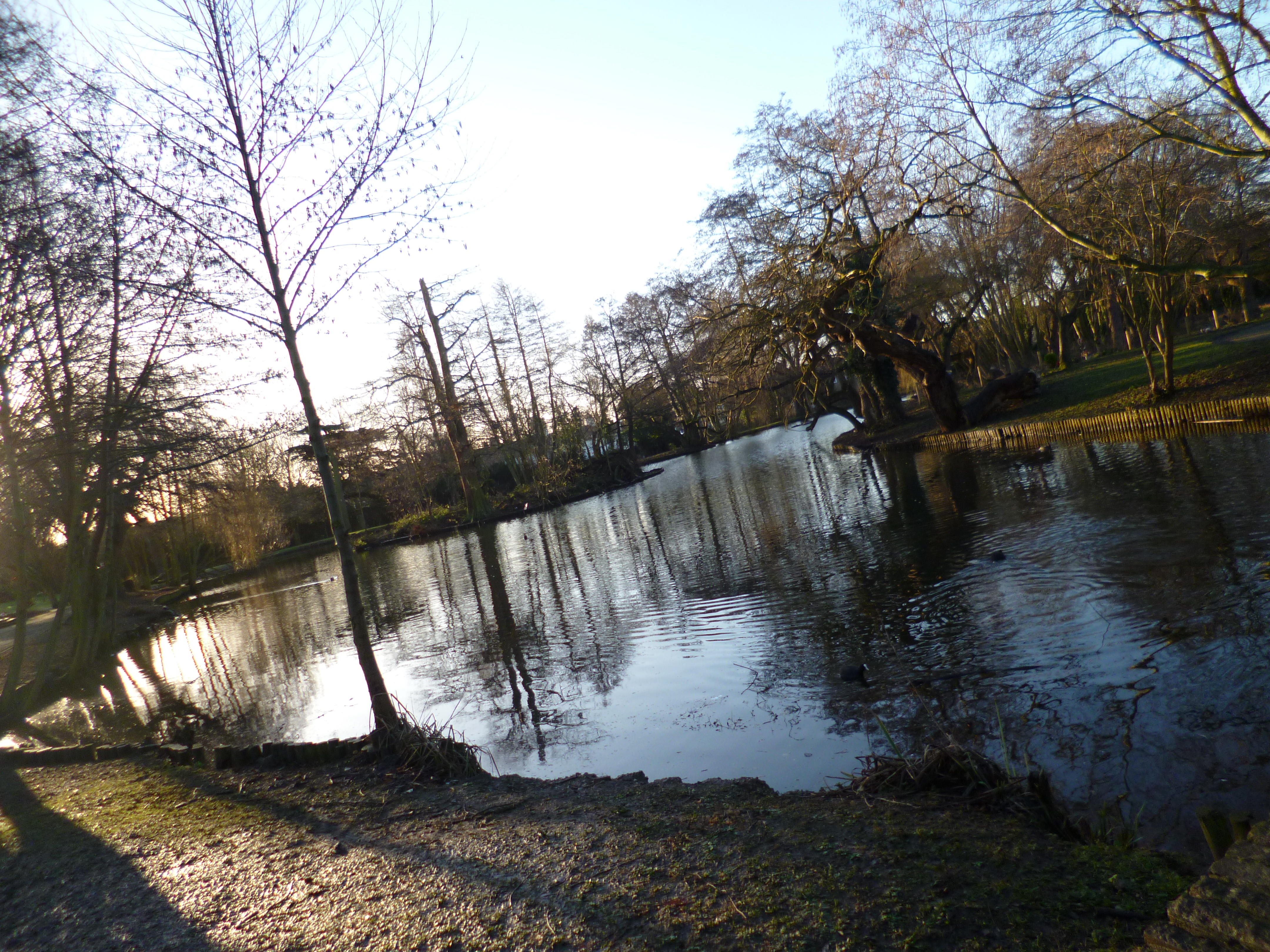
Pond in park, surrounded by bare trees, with tiny island

as vast as Rome, which had risen
from marshes and slopes long ago,
with columns touching the heavens
because the gods willed it so;

and if Rome could ever be shrinking
and sinking into the bog,
or London be burning or flooding
and melting into the fog…

The city lit up in the sunset
and faded away in the dusk;
I felt the chill in the oak-wood,
and down to my villa I rushed.

I entered the gate by the willows
and strode through the dolphins’ yard,
I passed the flickering torches
and stopped by my forefathers’ hearth.
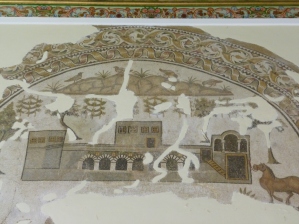
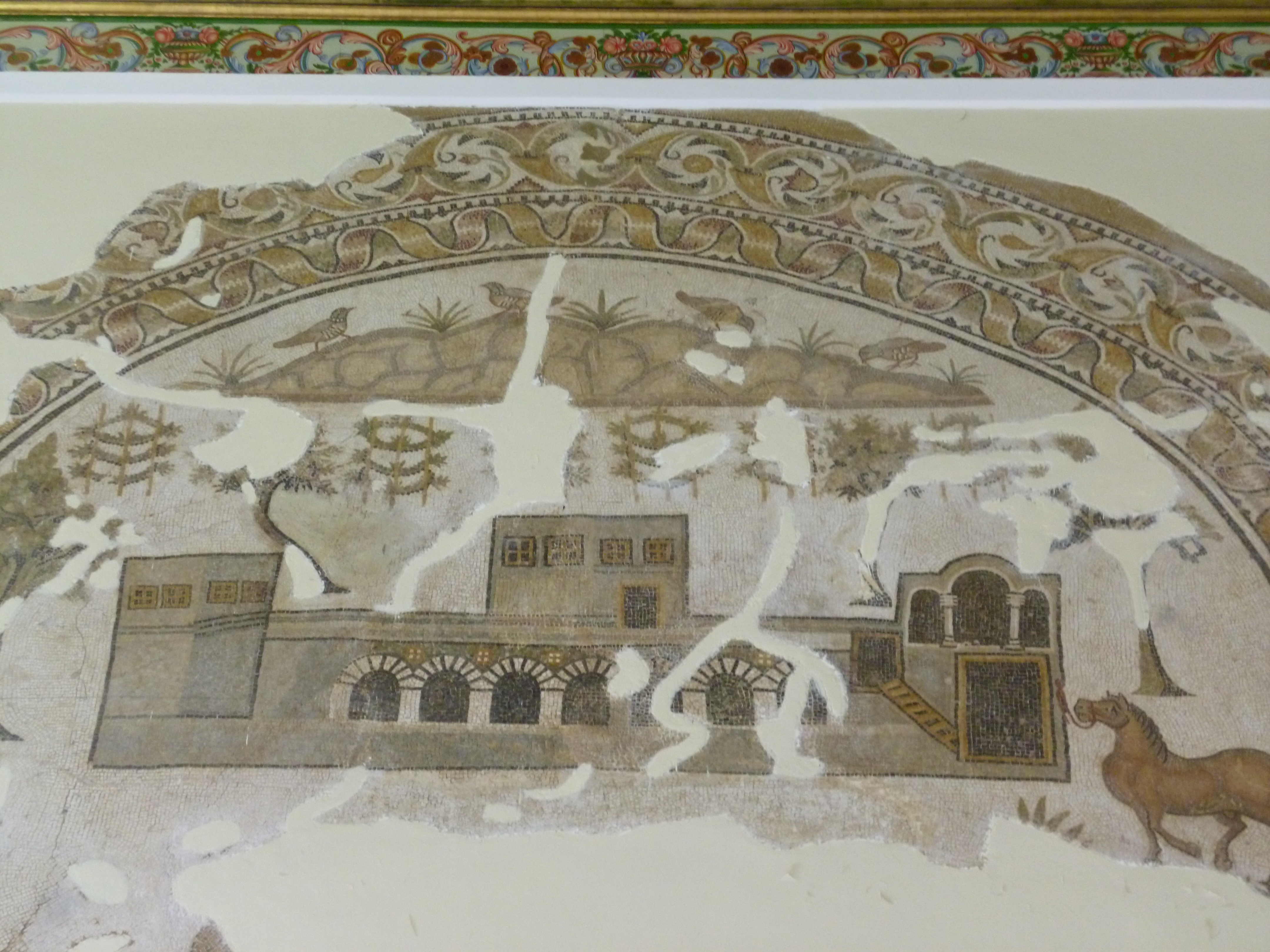
Roman mosaic of a mansion

My name was Appius Felix,
an heir to Aeneas of Troy;
I kept the seals and the idols
to pass them on to my boy.

I used the sword and the saddle,
I held the lyre and quill.
I lived between Ilex and Salix,
at the foot of the Moss-Well Hill.

Christina Egan © 2016


As you can see from the 100-metre-high summit of the Muswell Hill, London does stretch for many miles nowadays, filling the valley to both sides of the meandering River Thames.

You will also notice that there are large patches of green everywhere, some of them left over from ancient marshland and woodland. If you know your way, you can walk across London through woods and meadows, across hills and along rivers for miles!

My Roman observer lives in modern-day Wood Green or Bounds Green, near fictitious hamlets or villas called Ilex (holly or oak) and Salix (willow or osier).

This man firmly believes that gods guard his city and his country and that spirits guard his home and his family. He pursues some useful career in the service of the Empire, but he is also a bit of a poet.

I named him Appius after the statesman of the Republic who had contributed so much to Rome’s infrastructure as well as intellectual life, and Felix because he counts himself lucky.


You can find more on Londinium’s fortifications at Ode to London Wall  and more about its straight or winding highways at Quo vadis?

Photographs: Country villa, late Roman mosaic, Bardo Museum, Tunis. —  Pond in Tottenham, North London. Christina Egan © 2014

The First of December

The First of December

The ample, even, hand-like leaves
carelessly crumpled up by the frost
overnight,

the luscious colonies of moss
dusted with ice in the colourless light
of the day.

And we cannot deny this is still only autumn:
the yearly slow and sure descent
towards the cold.

This is the month of shrinking days,
of darkening hair and shivering skin
touched by damp.

This is the season of flickering lights,
some of them real, all of them glimmering
drops of hope.

Christina Egan © 2012

Glazed Clay

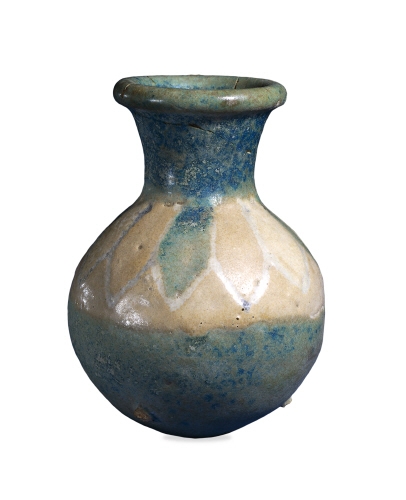
Jar, elegantly curved, with brown and blue glaze.Glazed Clay

Two mighty rivers’ ceaseless flow
beneath a high and cloudless sky;
to either side the ochre glow
of arid countries rolling by;

and here and there a golden maze,
the buildings’ cubes, the cities’ grid:
this jar with blue and brownish glaze
from Babylon still mirrors it.

Christina Egan © 2016

Mesopotamian jar (9th to 7th c. BC) Photograph: © The Trustees of the British Museum.

The city and country of ‘Babylon’ were under Assyrian rule at the time the little jar was made, but I just used the name as the most familiar for all the civilisations of Mesopotamia.

For a German poem about Babylon with the Euphrates and the Hanging Gardens, see Die Hängenden Gärten.

The perfect elegance of this tiny everyday object is an example for the simple beauty I call for in Fewer Things, where you can also see a red Roman bowl. 

My City Calls (Grey Roofs Grey Walls)

My City Calls

Grey roofs grey walls
Make up this place
A rough and kind
Familiar face

The spires chimneys
Market stalls
Suspended bridges
Station halls

Oh face of walls
So great so mild
My city calls
Come here my child

My city calls
With golden chime:
While winter falls
Stay here some time

The sky is full
Of rain and snow
Of miracles
To fall and grow

So many faces
In the street
Yet far away
The one I need

Far is my dear
So far away
But I am here
Just day to day

My city calls
Me with her charms
My heartbeat falls
into her arms

Christina Egan © 1995 / 2012


For a similar German poem, see Im Herzen von Köln. Like in Heimkehr nach Köln, the big city is seen as a mother. There are other poems or songs where I describe it as a person — man or woman, although I feel that a city is female. It is a personal relationship: my heart beats for the city, as I claim in Geflecht / Geflechte.

Acherons Mund

Acherons Mund
(São Miguel, Azoren)

Das Inselreich spricht
in zitterndem Licht,
in zischenden Quellen,
in schwefligen Schwaden,
in schlaflosem Raunen
aus rissigem Grund
am Unterweltsschlund.

Vast surface of rough black rock to the left, gleaming pools of water and steam rising up to the right, mountains in the far background.Das Erdreich bestellt
am Rande der Welt
dem arglosen Wandrer
die Botschaft der Flammen,
die Mahnung der Schatten
aus Phlegetons und
aus Acherons Mund.

Christina Egan © 2016

Hot springs in Furnas, Sao Miguel Island, Azores.
Photograph
by Henryk Kotowski via Wikimedia.

Acheron is the River of Pain and Phlegeton the River of Fire around Hades.

I believe that some Greeks or Phoenicians sailed to the Canary Islands and others may have reached the Azores; this might have influenced their mythology, describing the realms of the dead as a cave of shadows and as a blissful archipelago. More of the latter at Sonett der drei Seen!

Sonett der drei Seen

Sonett der drei Seen
(São Miguel, Azoren)

Der Teich war gelb, und gelbe Dämpfe stiegen
ins heiße Blau, umringt von dunklen Ranken,
als müde Glieder sich im Gelb entspannten
mit Blättern, die wie Schlick im Strudel trieben.
Der See war grün, und grüne Schimmer hingen
in steilen Hängen und in flachen Tiefen,
worunter ungeheure Feuer schliefen,–
zur rechten grün und himmelblau zur linken.
Und um die gelben, grünen, blauen Kessel
und buntbestickten Ufer lief ein Band
von schwarzen Felsen und von schwarzem Sand;
und darum – ohne Grenze, ohne Fessel
und ohne Form – das Meer, das Element…
O selig, wer die sanften Inseln kennt!

Christina Egan © 2016

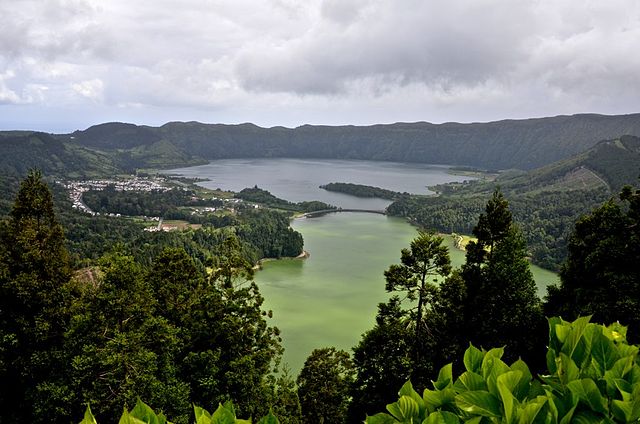
Sete_cidades_(14267780070)


Sete Cidades, (São Miguel, Azores). Photograph by Aires Almeida from Portimão, Portugal, via Wikimedia Commons.


The colours of the water are really like in the photo! See also my verse Acherons Mund  for the darker aspects of these isles.

These poems may work in a translation software, although you only get the meaning, not the sounds, which are like music and like the sounds of nature itself!

You Want to Read This Poem

You Want to Read This Poem

You want to read this poem
time or no time
rhyme or no rhyme.

You want to know
that your face is a flame
in the hidden temple
of someone else’s heart
trembling and steady.

You want to dwell
on the deep-blue dusk
of her dress
of her eyes
of her soul.

You want to believe
one last time
that three hours are enough
to fuel three years of delight
and from there three thousand.

You want to be sure
she will never be too close
never too far
like surges of birdsong
like surf.

You want to read this poem
as if it were a prayer
as if it were a promise.

Christina Egan © 2011


You Do Not Want to Read this Poem

You do not want to read this poem
however much sunlight
however much midnight.

You do not want to plough
through luminous ciphers
of your own beauty
you want to hear it in someone’s voice
you want to see it on someone’s lips.

You want to lift your eyes from the paper
onto her face
you want to lift your hand from the paper
onto her arm
let it rest.

You want to step through this poem
as if it were a secret gate
to the tiered garden
of an ancient manor house
you heard of in a novel.

You do not want a host of poems
a pavement of paper
a quilt of hopes
you want a host of moments
a quilt of memories.

You do not want to read this poem
you want sudden life
before the sun has sunk.

Christina Egan © 2011

Gelbes Licht

Gelbes Licht

Statue of young man, unfinished, as if the figure were wrestling itself free of the stone.

I.

Du trittst aus dem Beton hervor,
als trätest du aus einer Wand
und durch ein großes goldnes Tor
in blühndes dufterfülltes Land…

Dabei ist’s bloß ein Platz, ein Park
und gelbes Licht und gelbes Laub;
doch wirst du wieder froh und stark
von etwas Wärme auf der Haut.


II.Table surface of bright yellow mosaic, with café chairs on the grass, sunlit.

O milder honiggoldner Wein
im Riesenkelch aus Bergkristall:
Noch fließt das Herbstlicht süß und rein.
O Augenblick! O Sonnenstrahl!

Noch fließt die Kraft, noch fließt der Trost,
solang der Himmel zaghaft blaut.
Man weiß nicht, was das Auge kost:
Ist’s gelbes Licht? Ist’s gelbes Laub?

Christina Egan © 2016


‘Young Slave’ by Michelangelo.  Photograph by Jörg Bittner Unna (own work) via Wikimedia Commons.

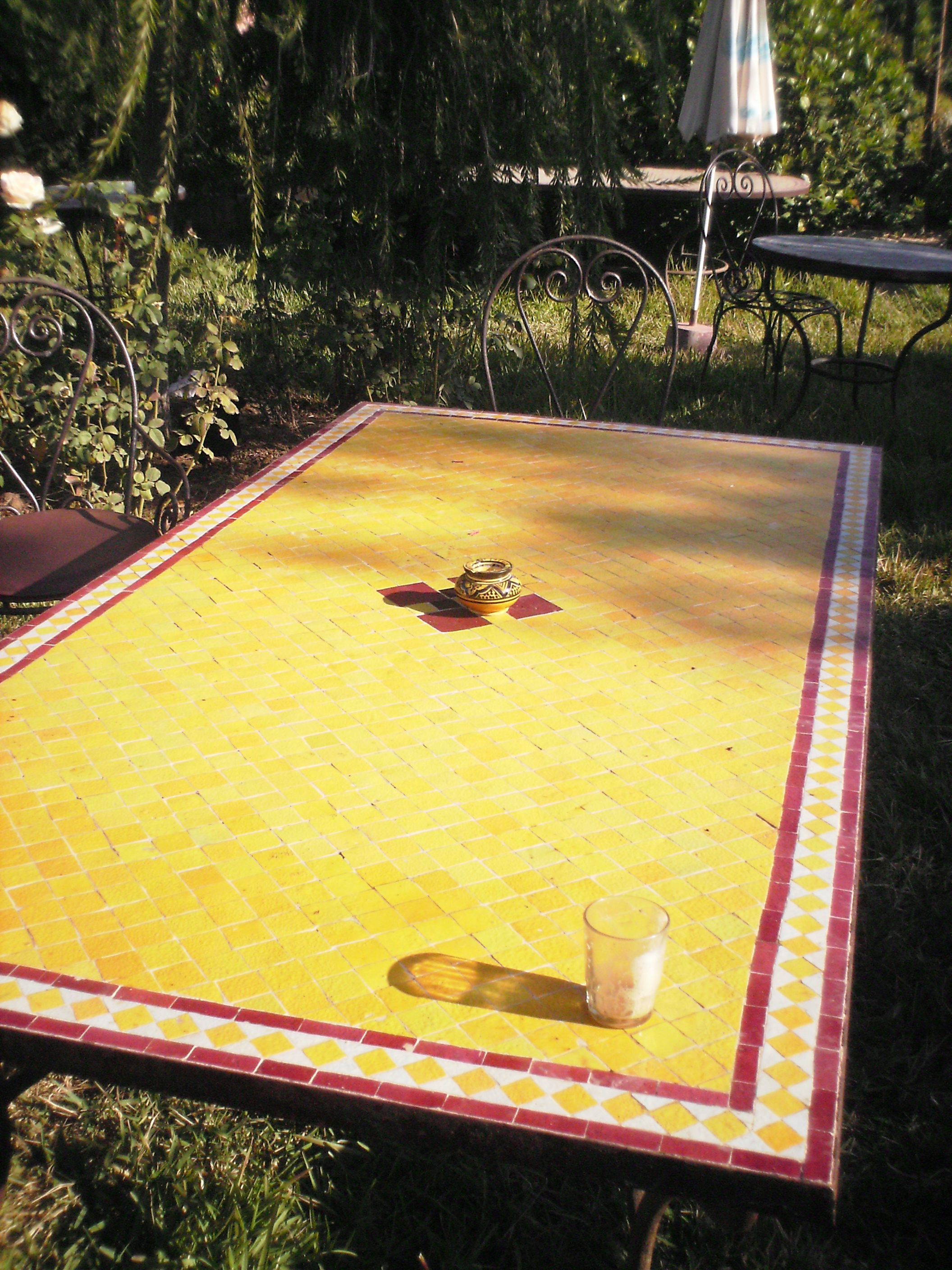
Roadside café in Morocco in midwinter. Photograph: Christina Egan © 2012.


“Still the autumn light flows, sweet and pure… I felt it in England this afternoon, on top of a high building! Yet the line of the last pleasant sunshine is moving inexorably downwards from the northernmost regions through the temperate ones, its duration is shrinking, and so the space you can catch it at… When the light is lowest, though, it starts rising again, growing again.

By the way: “No matter what happens, the sun will rise in the morning, and America will still be the greatest nation on Earth,” President Barack Obama announced during election night 2016. Not so: the United States have definitely exposed themselves not to be the greatest country on earth; and the sun would be darkened on an occasion like 9/11, or a nuclear bomb anywhere in the world, or a natural disaster due to technologies like fracking.