Persephone (die quellenden blüten)

Persephone

die quellenden blüten
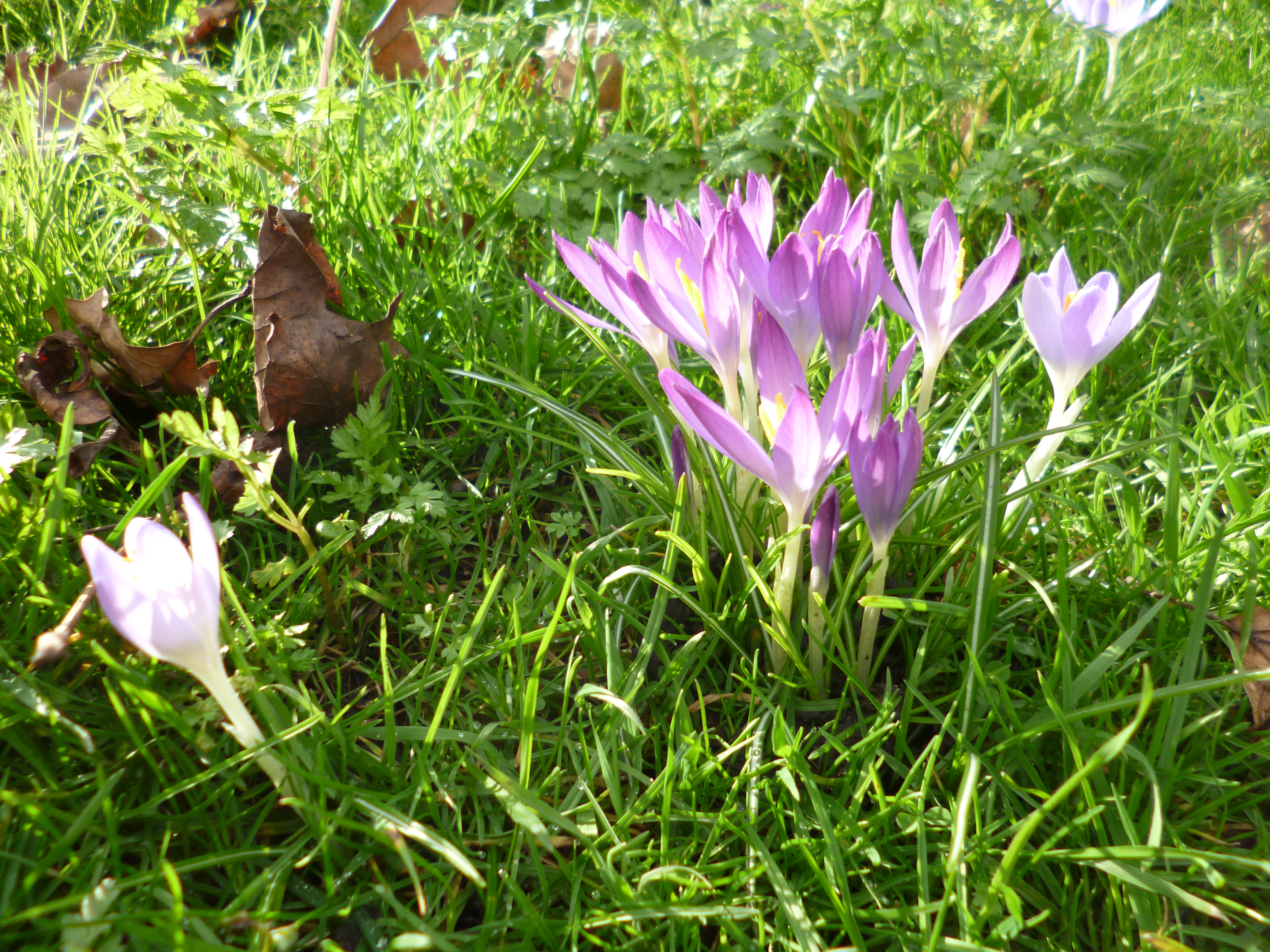
Bundle of mauve crocusses, seen fro mthe side, transparent in the sunlight.die rollenden wolken
wie flüchtige schrift –
die dürstenden blätter
der perlende regen
das spielende licht –

der sprühende frühling
das leuchtende lächeln
gesicht zu gesicht –
die atmende erde –
das leben – das leben –
und dann das gedicht –

Christina Egan © 2015

Here is this fortnight’s poem in the
photo calendar
Rhönkalender 2017!

Photograph: Christina Egan © 2017.

Friday in Lent

Friday in Lent

Friday morning.
The city is busy and tired
under the closely curtained sky.

The headlines shout out:
Things fall apart,
trains, towns,
countries, couples.

Life hurts.

The day is a prison, a lenient one,
with gardens and books as windows
and magical messages beamed onto screens,
with the freedom of speech
and the purple pursuit of the heavens.

Christina Egan © 2001


Purple is the colour of Lent, representing suffering; you will find churches decorated —and their statues covered up — with purple fabrics. Purple (violet, lilac, mauve) is a slightly melancholy colour, but it also has dreamlike and spiritual qualities. My ‘purple pursuit’ has all these shades of meaning; ‘the heavens’ could refer to religious faith or simply to a decent and fulfilled life on earth, as in ‘Liberty and the pursuit of Happiness’.

Friday is the time when Christians remember Jesus’ passion and keep some fasting, a miniature Lent within each week… or at least the time when they do remember their faith during Lent. The positive messages on your screen could come from a friend — or from God, if you believe in Scriptures!

For a German and English poem about Lent, go to Fastenzeit / Lent.

I Peel Potatoes Round and Round

I Peel Potatoes Round and Round

The pots and pans are stacked away
The fruit and flour packed away
The spoons and ladles tied away
And half my life is lied away

I peel potatoes round and round
And see the muddy peelings mount
I peel and chop and boil and feel
My lifetime passing with the peel

The dust and crumbs are sucked away
The sheets and covers tucked away
The mud and mildew brushed away
And half my life is washed away

I am a woman and a wife
And all of you deny my life
Cast speeches of equality
And stifling silence over me

The socks and shirts are stacked away
The boots and woollens packed away
The shears and shovels tied away
And half my life is lied away

I am a woman and a wife
And all of you deny my strife
Is this two thousand seventeen?
My shackles hurt me more unseen

Christina Egan © 2016

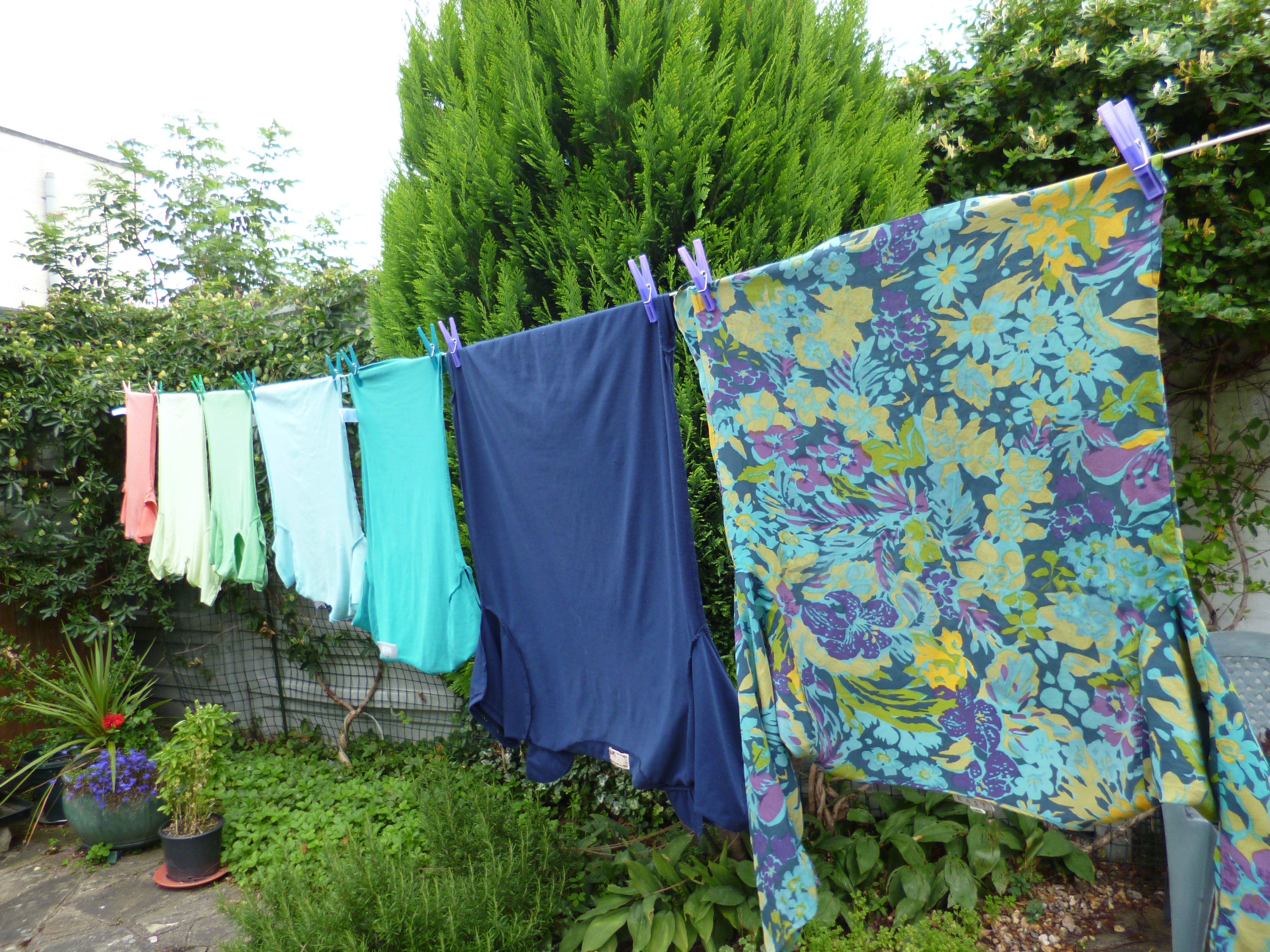
Line of washing outdoors, very colourful, above greenery and flower-pot.

Photograph: Christina Egan © 2013.

Pretended liberation of women = Double shifts for women = New servitude of women

Read more in the essay  The Tea Turned Cold in the Cup  at FEMINISM.


Le tesson / The Shard

Le tesson

En février givré, je fouille
les feuilles mortes pour des fleurs
modestes et fortes et courageuses :
soldats contre la froideur

ou des pierres précieuses
éparpillées en bas, fragments
pâlis de la Cité Céleste
que quelques éblouis attestent.

Parfois, une sphère lumineuse
me frappe, vive mais tranquille :
plutôt que le premier bouton
ton œil est le tesson qui brille.

Christina Egan © 2017

A pair of mauve crocusses, wide open, in bright sunlight, with honey-bee hovering above.

The Shard

In frosty February, I scour
decaying leaves for the first flower:
some modest soldiers, strong and bold
against the kingdom of the cold,

or precious stones on muddy ground,
some faded fragments of the round
of Heavenly Jerusalem,
that dazzling more-than-real realm.

At times a circle full of light,
as calm as lively, strikes my sight:
but rather than spring’s early guard
your eye is the resplendent shard.

Christina Egan © 2017


For a German and English parallel poem about the first spring flowers, go to my previous post, King Spring / König Frühjahr.

Photograph: Christina Egan © 2017.
Crocusses with honey-bee, captured in London in mid-February!

King Spring / König Frühjahr

King Spring

The highway under my window is suddenly flooded with sun.
I see a strange person passing – his face is greenish and long,
his hat is purple and pointed – and followers thronging, hatless.
Is it a pharaoh? A druid? A dancer in fancy-dress?
I’ve spotted a spearhead of petals, magenta pushed up into blue,
the first magnolia flower: King Spring and his retinue!

Christina Egan © 2016

Large long buds above a road, with one opening in bright magenta, the folded petals looking like a hight hat.

König Frühjahr

Die Landstraße unter dem Fenster liegt plötzlich im Sonnenlicht.
Da geht ein fremder Geselle mit grünlichem langem Gesicht
und purpurner spitzer Mütze; Barhäuptige folgen ihm.
Ein Pharaoh? Heidenpriester? Ein Tänzer im Narrenkostüm?
Es ist eine Lanzenspitze, rosenrot hochgereckt,
die erste Magnolienblüte: Ich hab’ König Frühjahr entdeckt!

Christina Egan © 2016

Photograph:  Magnolia buds (England, February). Christina Egan © 2016.

Mitte Februar / Schnee über Nacht

Mitte Februar

Die Welt hat allen Glanz verloren
wie eine ganz verwelkte Frau.
Am Himmel Wolken, Schnee am Boden –
ein Leichentuch von blassem Grau.

Dahinter kämpft mit langem Atem
das fern verbannte Feuerrund:
Unmerklich schmelzen schon die Schatten,
und Farbe braut im Untergrund.

Die schwarzen Zweige sind lebendig,
das nasse Moos voll neuem Saft,
und das ermattete Gelände
wird auferstehn mit satter Kraft.

Christina Egan © 2012


Schnee über Nacht

Der Schnee hat wie ein Federbett
die kahle Erde zugedeckt,
begräbt die Schuld,
begräbt den Schmerz
in Gottes gnädiger Geduld,
in Gottes unbegrenztem Herz.

Christina Egan © 2012


Mitte Februar was published in the Rhönkalender 2015 (entitled Ende Februar). The 2017 calendar includes three poems by me and is still available.

Siegeskranz

Siegeskranz

Vor fünfzehnhundert Jahren,
da hab’ ich einen Kranz
aus Lorbeer und aus Ölzweig
gelöst und eingepflanzt.

Mein einst mit dunklem Lorbeer
gekröntes goldnes Haar
blieb fortan ungefeiert
und bleichte Jahr um Jahr.

Nach sieben Sommern aber
bot meine Ölbaumschar
die  bittersüßen Früchte
mit stolzem Lächeln dar.

Und Völker schwollen, ebbten,
und Rom verging in Rauch;
doch aus dem Kreis von Zweigen
entsproß noch Strauch um Strauch.

Und Bäume blühten, dorrten
und sanken in den Staub;
doch immer wieder grünte
das zähe Ölbaumlaub.

Nach fünfzehnhundert Jahren
betret’ ich einen Hain
aus silberhellen Hölzern
und spüre: Er ist mein.

Christina Egan © 2015
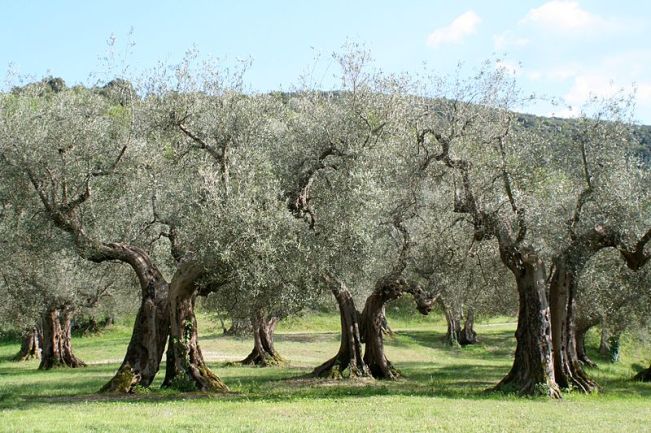
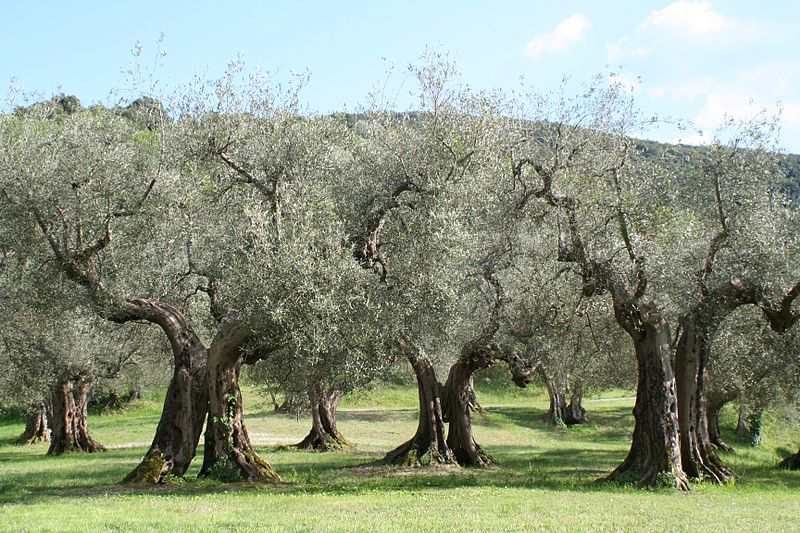
Olive grove, trunks and tree-tops silvery grey, like ashes.

Someone plants an olive grove towards the end of the Roman Empire, comes back to earth fifteen hundred years later — and recognises the descendants of her or his trees, which have survived the Dark Ages and are still thriving.

The narrator had taken the original olive shoots from her (more likely, his) victory garland, for instance for a poetic contest; so they could be an image for a contribution to civilisation in late antiquity which is relevant to this day.

For an English story about the end of Rome and its afterlife, go to The City Lit Up.

Photograph: ‘Olivenbäume in Umbrien’ by Adrian Michael.

Fewer Things!

Fewer Things!

We need to churn out fewer words,
we need to burn out fewer lamps,
we need to fashion fewer things,
Roman_bowl_01_MusLon
but those, of perfect elegance:

a shallow bowl with turned-out rim,
just like a pale and slender hand;
a silver ring with single stone,
as if the sky and moon descend. 

Christina Egan © 2013

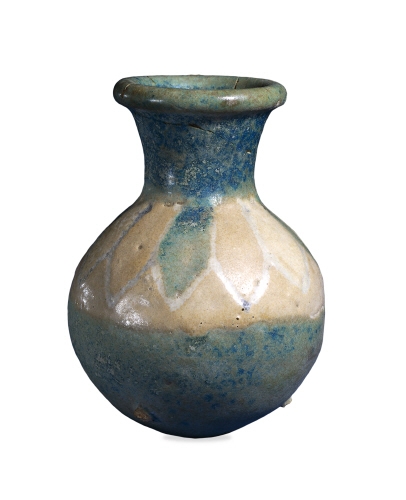
Jar, elegantly curved, with brown and blue glaze.


Roman bowl. Photograph from the
website of the Museum of London.

See also my musings on the little
Mesopotamian jar, Glazed Clay.

Assyrian jar, glazed pottery. Photograph:
© The Trustees of the British Museum.

Get Up and Follow Me

Get Up and Follow Me

Love sometimes does  pass our little lives
and stops and speaks: Get up and follow me.
We look, look up, into each other’s eyes,
get up, leave all and follow hand in hand.
There is a love that’s larger than the sun,
it knows the shade, the night, it knows no end,
it’s definite and infinite, it flows
through our hearts, till two are truly one.

Christina Egan © 2000


These lines were inspired by the biblical stories of Jesus calling his followers, who literally got up, left everything behind and — followed him. Just imagine you are getting up from your desk this minute to walk out of your life!

I wrote this poem for my own wedding and recommend it also for anniversaries; a long time together is not eternity yet, but a great achievement and a great gift. Perhaps you could even use it for Valentine’s Day.

Venus and Mars

Venus and Mars

The darker the night,
the stronger the stars,
the fiercer the fight
of Venus and Mars.

They fight not each other
but darkness and cold,
they each hold a banner
embroidered with gold.

The later the hour,
the likelier dawn,
with fire and flower
in splendour reborn!

Christina Egan © 2016


This poem takes up my thoughts about the elements in the previous post: here, the male and female principles are involved in a common struggle rather than a struggle against each other.

‘Dawn’ refers to the dawn of the new year in early spring as much as to the time of the day; and springtime is even more unpredictable than daylight, precisely in a northern country.