The Tea Turned Cold – IV

Please note the fourth part of an essay at POLITICS .

The Tea Turned Cold in the Cup,

or, Why Women’s Work is No Work

IV.

Imagine that in times of austerity, companies and organisations started sending out new job descriptions, proposing that everyone could keep their job if they agreed to do some additional unpaid work.

Since there were no funds any more for cleaning and catering nor for gardening, all staff would have to hoover offices and clean bathrooms, buy and prepare lunches and snacks, serve coffees and wash up, mow lawns and water flower-beds.

The schedules, we would be assured, would be very flexible, so that everyone could to a great extent choose at what hours to carry out these extra duties or whether to come in on Saturdays or Sundays. No one should be worried about their prospects because they would be kept on if they had to change their working patterns or go down on their hours.

There would be no law passed about this; it would be a general consensus of an enlightened society.

Read more here.

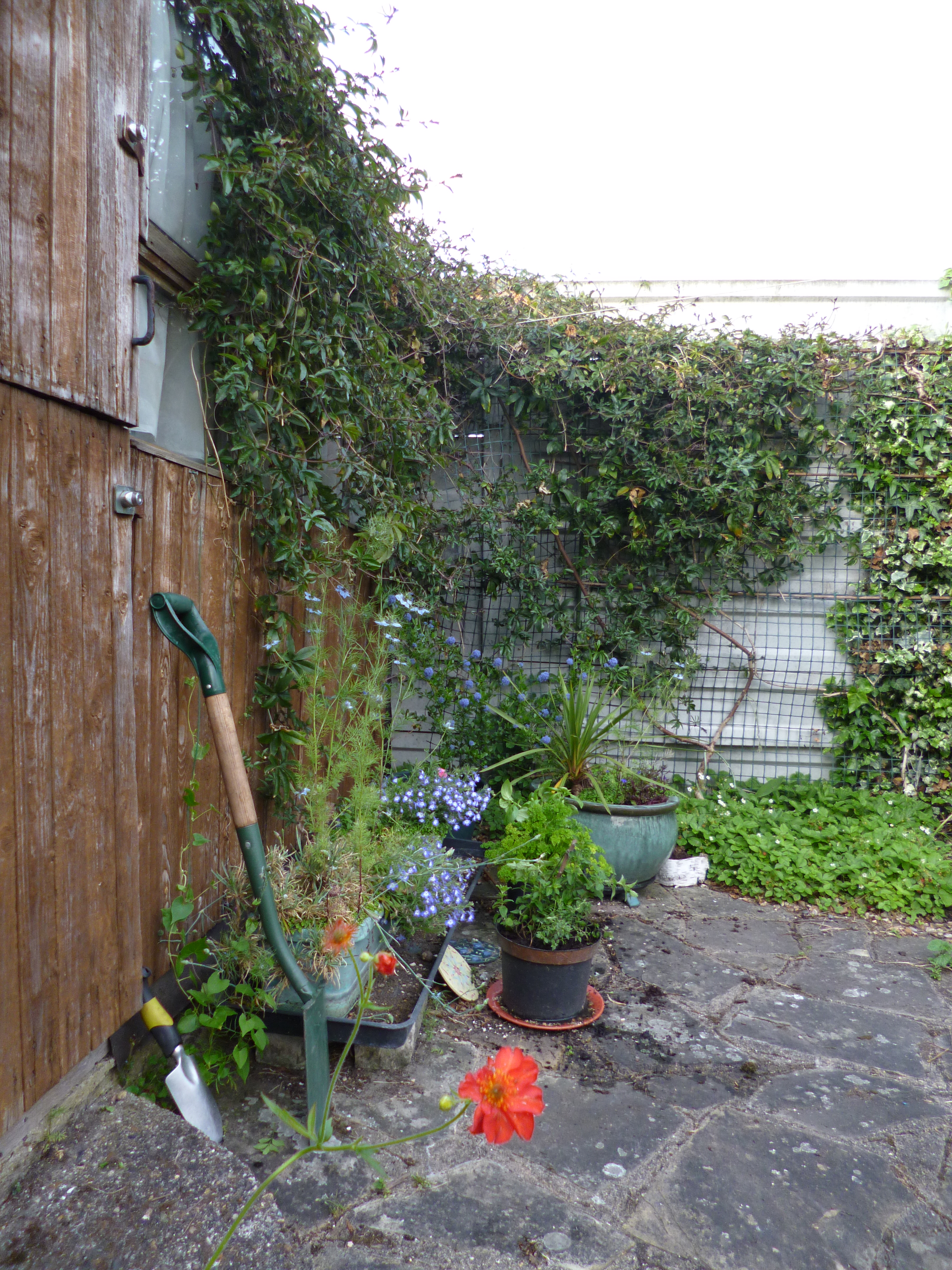
Corner of garden with flowers and climbers, spade and trowel.Garden planted from scratch. Photograph: Christina Egan © 2013.

Minerva’s Voyage

Minerva’s Voyage

I.

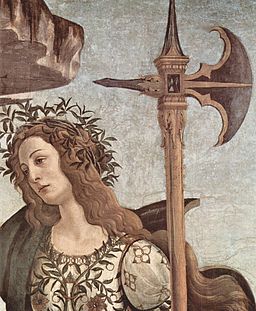
Minerva by Botticelli

Her hair is the offspring of river and fire,
her robe has been woven from flowers and wind.
Her foot cannot rest and her flesh cannot tire,
her arm is in flow and her eye will inspire
a voyage for wisdom with one  fleeting glint.

II.

Minerva on the Academy of Athens

She dived like a hawk from her shadowless sphere,
the shield on her arm like the sun in the west –
She looms on the roof with her helmet and spear
to capture the lightning, conduct it down here
and spark our restless and glittering quest.

Christina Egan © 2016

Delicate, pale, portrait of the goddess as a young woman in armour.Minerva is the Roman goddess of wisdom and knowledge, arts and applied arts; she came to be identified with the Greek goddess Athena, patron of Athens.

The two poems were  inspired by the two artworks mentioned, as well as a temple on the Agora of Athens dedicated to her as patron of artists and artisans.

Illustration: Minerva by Sandro Botticelli (ca. 1482-83), via Wikimedia Commons (Public Domain).

The Ice-cream Van is Coming

The Ice-cream Van is Coming

(Nice, Bastille Day 2016)

The ice-cream van is coming
It’s huge and fast and white
And filled with little portions
Of summerly delight

The ice-cream van is coming
It’s driving round the bend
Along the cheerful sea-front
Towards the feast-day’s end

The pretty bunting’s dancing
The solemn banners too
The fireworks are sparkling
Above the silver moon!

The ice-cream van is coming
It’s huge and fast and white
Dispersing now at random
Its freight into the night

It hisses metal bullets
An evil dragon’s breath
A sinister last drumroll
A fireworks of death

The ice-cream van is coming
It’s huge and fast and white
A giant metal bullet
Right into Europe’s side

A land of stone has brandished
The whip of slavery
Against the joy of living
The land of liberty

It will now stand up stronger
In grief and unity
It will now last yet longer
In joy and liberty

Christina Egan © 2016

Vive la France !
Vive l’Europe !
Vive la Liberté !

Early July (The vast transparent vessel)

Early July

I.

The vast transparent vessel of the sky
is filled at last with light up to the rim.
The twigs and leaves and petals wave and cry:
“The feast of heat and harvest can begin!”

II.

The days are still long, the sky is still light
and already strong the glorious heat,
the grass is still lush, the flowers still bright
and already ripe the sweet golden wheat!

Christina Egan © 2015


Those magical weeks just after summer
solstice are also captured in the German
poems Erster Juli / Eimerrand.

Erster Juli / Eimerrand

Erster Juli

Die Erde atmet durch ein jedes Blatt,
von Sonne, Wind und Regen rund und satt.
Die Kletterpflanze streckt sich aus und birst
in weiße Kreise bis zum Schuppenfirst.
Die Nelkenwurz erbebt im Hummelflug,
die Beeren filtern dunkelblaues Blut.
Und selbst die totgeglaubte Nelke glüht
in einem starken Rosa, das genügt.

Christina Egan © 2014


Eimerrand

So mit Sonne vollgesogen
ist das nördlich schöne Land
funkelndbunter Wassertropfen
an des Schöpfers Eimerrand!

Christina Egan © 2015

Red geraniums, pink verbena, blueberries around lawn

Photograph: Christina Egan © 2014

I have also written English poems about the magical time of Early JulyThere are more plants bursting with life at Green Blood: four German and English poems for the four seasons.

What must be the shortest poem on this website, other than haiku, is a powerful one: a whole stretch of land is only a sparkling drop on God’s bucket. The lines were inspired by a verse in Isaiah claiming that the nations are just drops on a bucket and grains of sand.

The Ship’s Spirit

The Ship’s Spirit

*

A sail,
out in the wind,
white, vast, and fast,
like a cloud in the currents
of the sky and the sea, flowing,
fluttering, flying – what could be better
than being a sail? I will tell you: being a flag! I
bear the colours and I bear the crown,
the crescent, the dragon, the skull;
I dance more nimbly; I spy,
I spot the lands, I am
the ship’s spirit:
a flag!

*

The Ship’s Servant

*

High
above me
the bright dot
of the flag laughs,
while I unfurl, white
and wide like the dawn,
I hurl myself into the wind,
the world, pulling the mighty
ship along!          When it is calm,
I drift… watch…        let the sky smile
through the window in my midst; I swap
stories with my mates, you hear us whisper,
hear us rustle if you listen; and sometimes I rest,
I sleep curled up, in the sweet sleep of a proud sail!

*

Christina Egan © 2016

kairos (eben im zenith)

kairos

eben im zenith des tages
tret ich in ein helles haus
und ich folge seinen stufen
und ich find nie mehr hinaus

eben im zenith des jahres
fällt dein flammendes gesicht
in den brunnen meines auges
mit dem hohen sonnenlicht

eben im zenith des lebens
flutet sanft mein goldnes haar
in die schale deiner hände
und die liebe wird uns wahr

denn du findest meinen namen
den geheimen dachtürknauf
und im purpurroten buche
deines schicksals scheint er auf

Christina Egan © 2015


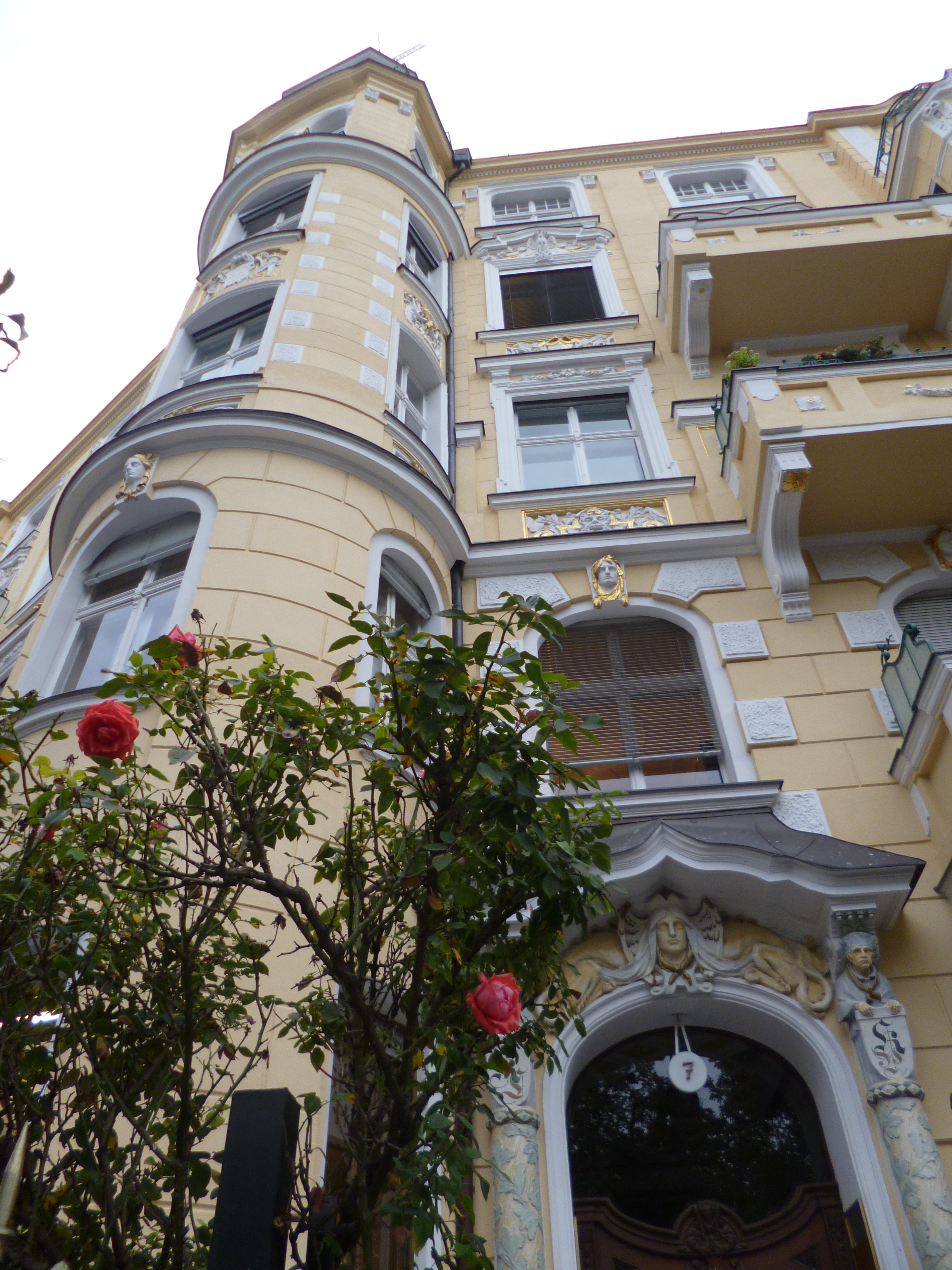
Noble townhouse with rich stucco ornaments and rose-tree.In Greek philosophy, the kairos is the moment — the right moment or the destined moment. The incident takes place at a triple zenith: at twelve noon, around midsummer solstice, and at the highest point of life. The latter, if it exists, will be different for everyone…

Possibly, the story happens only in the narrator’s mind: she imagines that one day in June, she steps into an unknown building and “never leaves again”, because her name was written in someone else’s book of destiny — so they fall in love at first sight.

Photograph: Christina Egan © 2016.

Water-Lilies and Reed

Water-Lilies and Reed

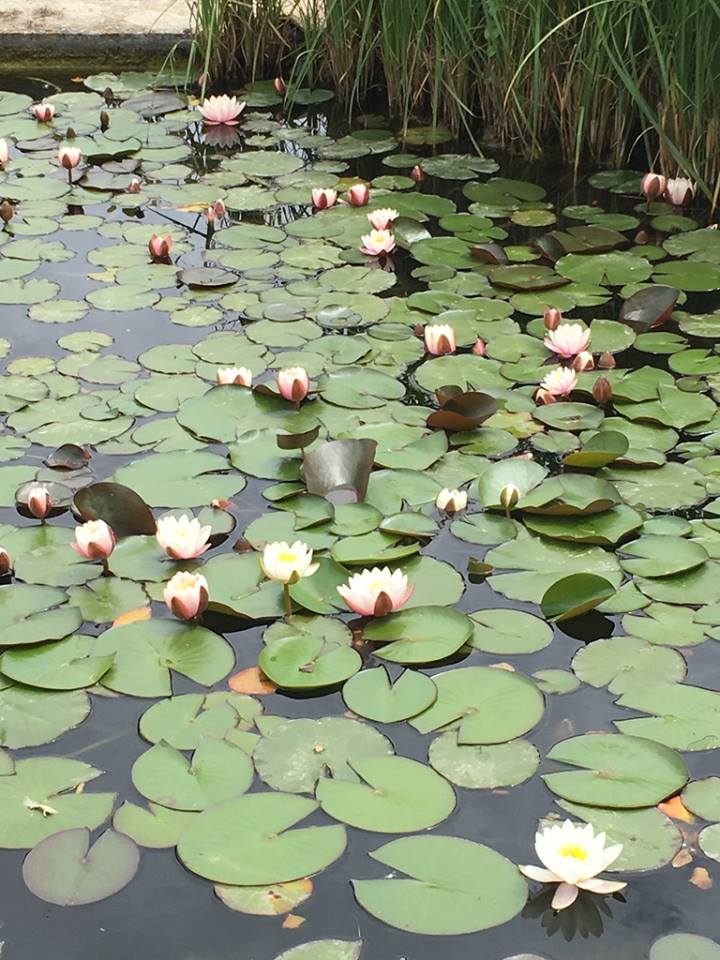
Waterlilies with half-open luminous pink and white flowers.White water-lilies,
opening with a pink glow,
like eyes of new-borns,
like the dawn rising and
looking at itself in wonder.

*

The reed unfolding,
tall green screen, finely woven,
around green water.
A forest of reed, towering
above ducks, children, yourself.

For Liu Sun Ye

Christina Egan © 2016

Photograph: Liu Sun Ye (Ye Liu) © 2016.

Prag, golden

Prag, golden

Im Meerblau des Abends,
im Windschutz der Burg
ersteigen die steilen
sandfarbnen Stufen
zwei Schatten und flüstern
und lachen und schweigen.

Schleier, besetzt
mit zahllosen Perlen,
die Büsche im Regen;
Kelche, geblasen
aus purpurnem Glas,
die berstenden Blüten.

Landschaft von Türmen,
spiegelnde Schluchten –
Bilder in Winkeln
des unruhigen Herzens,
Erinnerung an Träume,
an Heimat der Zukunft.

Reigen von Brücken,
behütet von Engeln,
von Helden der Vorzeit.
Türmende Treppen,
hängende Gärten,
Stadt ohne Alter.

Christina Egan © 2004


 My impression may work quite well in a translation software.

If you have the opportunity to visit one city only in Europe north of the Alps, let it be Prague. It is Central Europe in a nutshell. And it is enchanted…

The Czech Republic is a lovely little country anyway, with countless hills and lakes, mediaeval castles and market squares — absurdly romantic!

By the way, two other excellent destinations in Europe, other than Mediterranean, are Tallinn (Estonia) and Bruges (Belgium).

The Tea Turned Cold – III

Please note the third part of an essay at POLITICS .

The Tea Turned Cold in the Cup,

or, Why Women’s Work is No Work

III.

The notion that women are paid less although they work as much and as hard is erroneous: women are paid less although they work more and harder than men. In fact, women are paid less because they work more than men.

If you take into account that women spend much of their time and energy on domestic chores, it stands to reason that they have less space left for their education, training, development, paid and unpaid work, and are less likely to be promoted.

You wonder why someone devotes an essay to something as humble as cleaning toilets or filling washing-machines, and why this should be a political issue. Well, it is a question of principle but also a question of scale.

If you work out that a woman’s additional labour – by comparison to the life partner or other male peers – may well amount to 1,000 hours per year, you reach the figure of 10,000 hours rather soon across a lifetime. This is supposedly sufficient to become a veritable expert or great artist; and this is cut out of women’s lives, with no one noticing a hole as big as the Bermuda Triangle.

Read more here.


Line of washing outdoors, very colourful, above greenery and flower-pot.Photograph: Christina Egan © 2013.