My Pack of Cards

            My Pack of Cards

My pack of cards, when it was new,
was green and yellow, red and blue:
            from grass and leaves
            to golden sheaves,
            from glowing grapes
            to frosty flakes!
The leaves peeked out, unfurled, and grew,
flared up, fell off, when they were due.
            The fruits were round,
            the ice was sound.
            My year was clear,
            my joy was sheer.
My pack of cards is worn and torn –
my world is pale, and I’m forlorn.

            Christina Egan © 2016

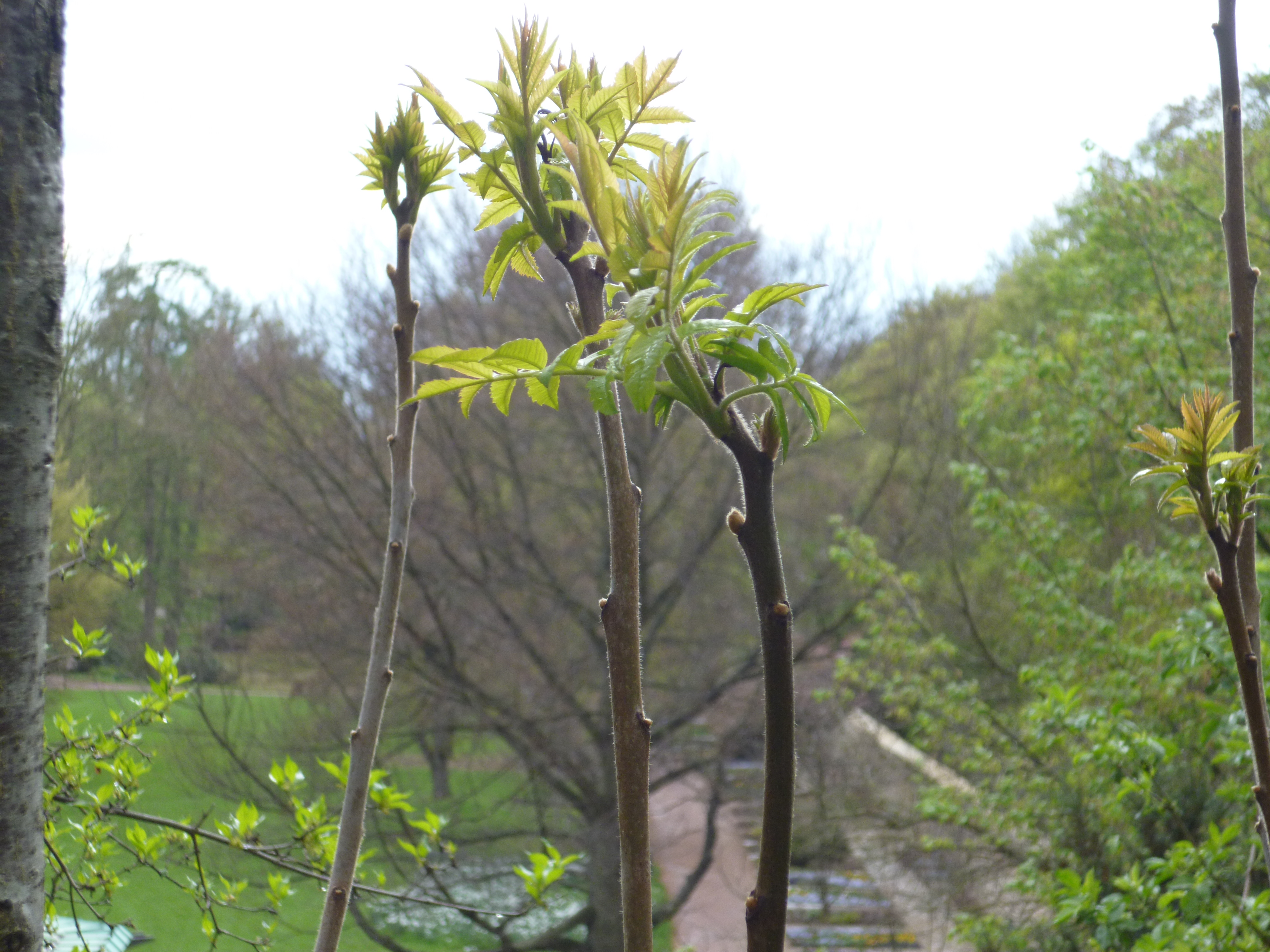
Buds and fresh leaves on top of shoots above a parkIn children’s picture books, the four seasons are sometimes painted in four basic colours; everything is in its place, everything is perfect. Of course, it has never been like this: the weather is always unpredictable, particularly north of the Alps.

However, at the place where I grew up — Central Europe — the seasons were more clearly marked and more stable than on the British Isles. I also believe they were more regular: they seem confused and shifted just now. It is disorientating and worrying…

You can find an impression of undefinable weather at Cimmerian Summer whether it is due to the British climate or to global changes, I do not know.

The poem also expresses nostalgia for childhood, when everything on earth seems in its place. It was inspired by children’s picture books, which often allocate four basic colours to the four seasons.

Photograph: Schloßpark Fulda. Christina Egan © 2014.

Cimmerian Summer

Cimmerian Summer

This lifeless gloom: is it the dusk?
This pale white disc: is it the moon?
Is this a mild day in November?
No: in the land of ceaseless mist
this is the sun; the afternoon;
the lightless first day of September.

Christina Egan © 2015


“ἔνθα δὲ Κιμμερίων ἀνδρῶν δῆμός τε πόλις τε,
ἠέρι καὶ νεφέλῃ κεκαλυμμένοι.”

There are the land and city of the Cimmerians,
wrapped in mist and cloud.”  

Homer, Odyssey, 11:14-15


“Britain is set in the Sea of Darkness.
It is a considerable island. This country is most fertile,
its inhabitants brave, active and enterprising….
but all is in the grip of perpetual winter.”

Muhammad al-Idrisi of Sicily, ca. 1154


Homer never ceases to inspire us. Incidentally, I saw a retelling of the Odyssey  last night, at a London playhouse, or rather, amphitheatre! (On this first day of September, the weather is in fact glorious.)

The memory of four clearly marked seasons, full of bright leaves and fruits, and the sorrow about the apparent confusion of the climate are depicted in My Pack of Cards.

Der Knauf / Schnellgeschrieben

Der Knauf

Schon viele haben Blumen dir gepflückt,
von Löwenzahn bis hin zu Feuerlilien,

vielleicht auch mancher einen Edelstein –
doch niemand pflückte je dir einen Stern.

Und wenn ich tausend Jahre leben muß,
und wenn ich tausend Jahre lieben muß:

Ich hole dir den kupferfarbnen Knauf
vom ungeheuren Sternengittertor

zur dämmerdunkelblauen Seligkeit
und leg ihn sanft in deine hohle Hand.

Christina Egan © 2012


Schnellgeschrieben

Sterne ans Firmament zu setzen ist mir ein Leichtes:
Funkelnde Verse schleif flink ich mit sicherer Hand.
Sterne hingegen vom Himmel zu greifen geschieht nur im Traume:
Sprühende Küsse erhascht selten der federnde Fuß.

Christina Egan © 2016


In The Knob, the person wants to pick for her beloved one something better than a flame-coloured flower, better than a sparkling gem: a copper-coloured star!

In the distichon Written Quickly, the poet states that she can easily put stars up, that is, her verse, but rarely picks stars, that is, kisses, other than in dreams…

These poems would not work in a translation software because the first one invents words and the second one jumbles up the word order, like the ancients did.

Sunface

Sunface

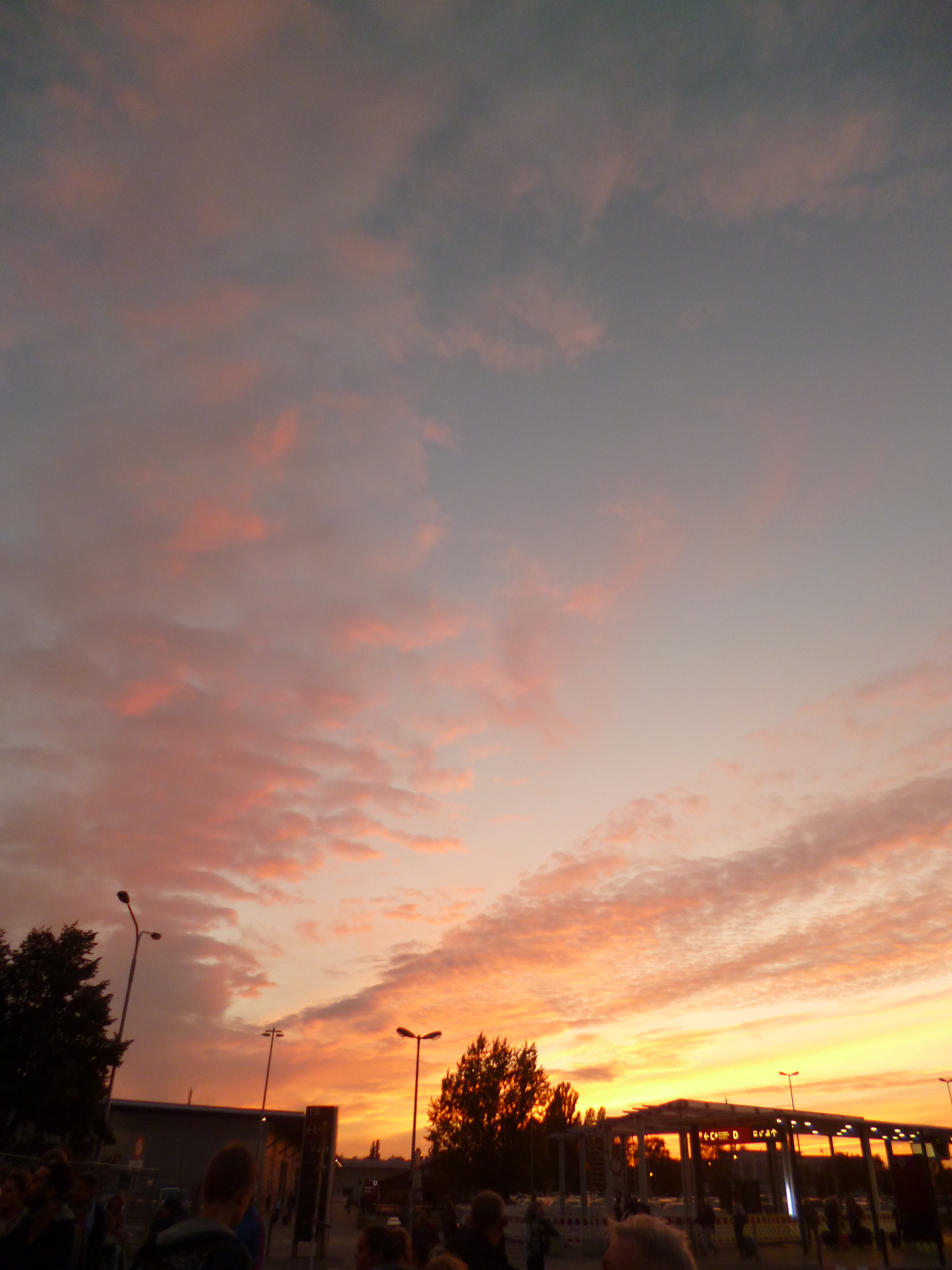
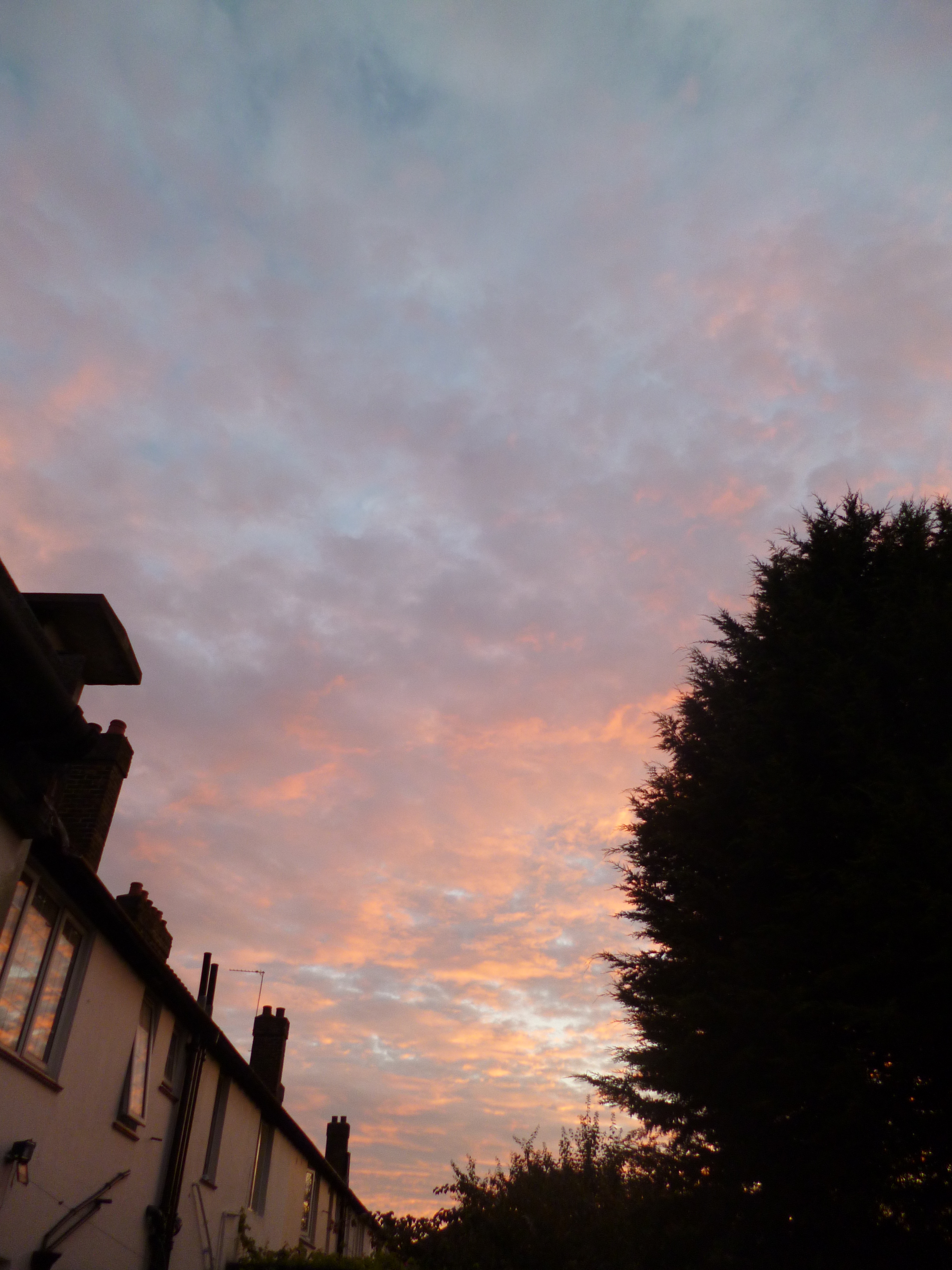
Orange clouds on blue sky, mirrored in windows of terraced houses to the left, with silhouettes of large trees to the right.

I smile at the sunface
and soak up the rain
I gather a garland
and wait for the grain

I forage the forest
and furrow the earth
I gaze at the sunset
and wait for the bird

I follow the swallow
its call and its course
it cries and it circles
it sinks and it soars

Christina Egan © 2016

Photograph: Christina Egan © 2014.

This was the tree the bird sang from so sweetly… It has since been felled, so that my garden gets much more light and thrives; so the tree behind it, the bird’s new home! 


Tausend blaue Sterne

Tausend blaue Sterne

“Tausend blaue Blumen –
eine Galaxie!”
Liest du es und lächelst:
“Welche Phantasie…”?

“Bläulichweiße Sterne
himmelfarbne gar,
lila strahlt die Sonne,
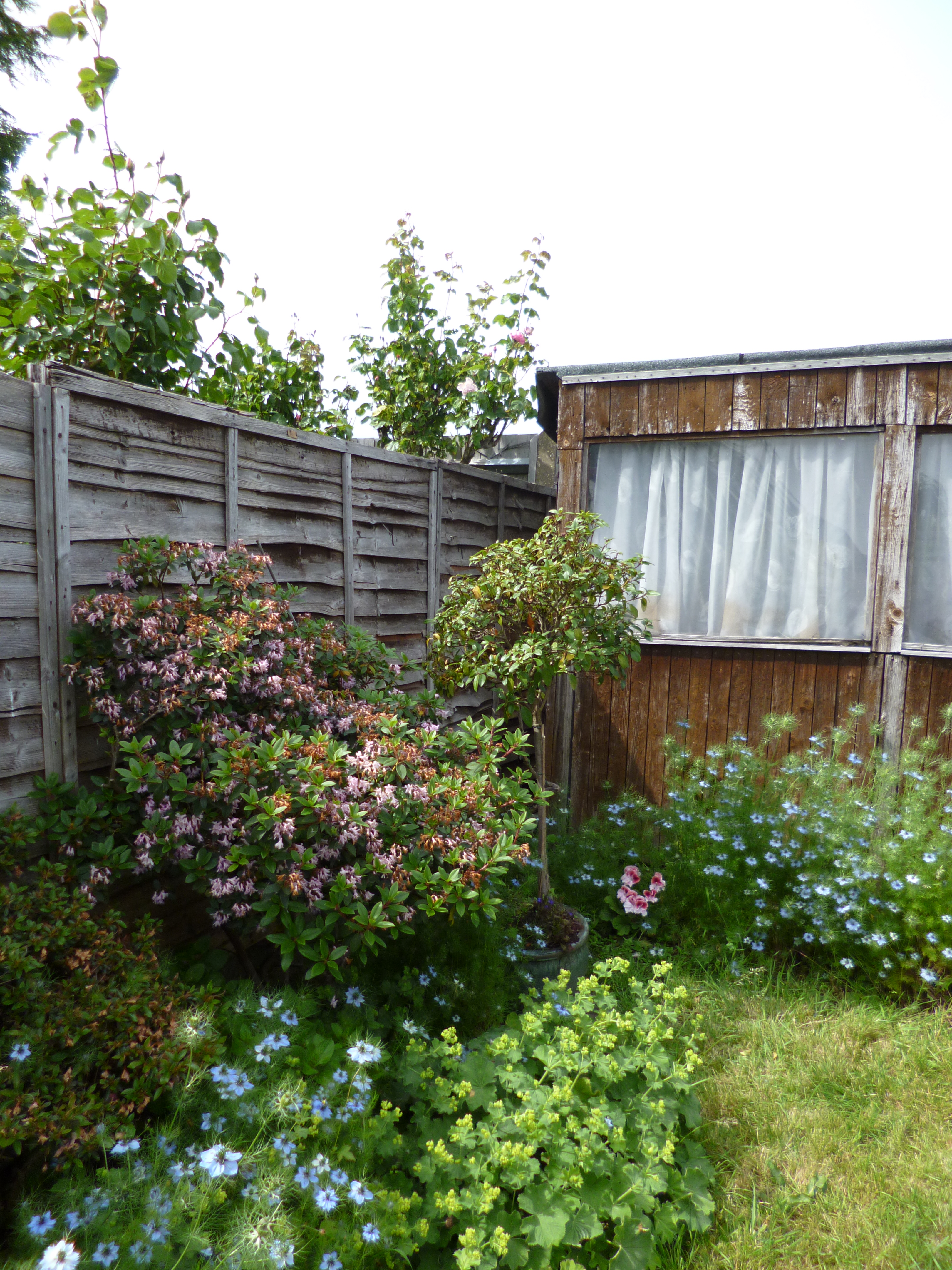
alabasterklar…”Rhododendron (pink blossom), lady's mantle (yellow blossom), nigella (blue blossom) in front of old shed and fence.

Meinst du nicht, ich sehe
was, was du nicht siehst,
der du in der Ferne
diese Verse liest?

Federfeine Blüten
aus der Kümmelsaat,
erste Passiflora
wie ein Wagenrad!

Und die runde Blume
lächelt in das Licht
wie ein schattenloses
Kinderangesicht…

Christina Egan © 2014

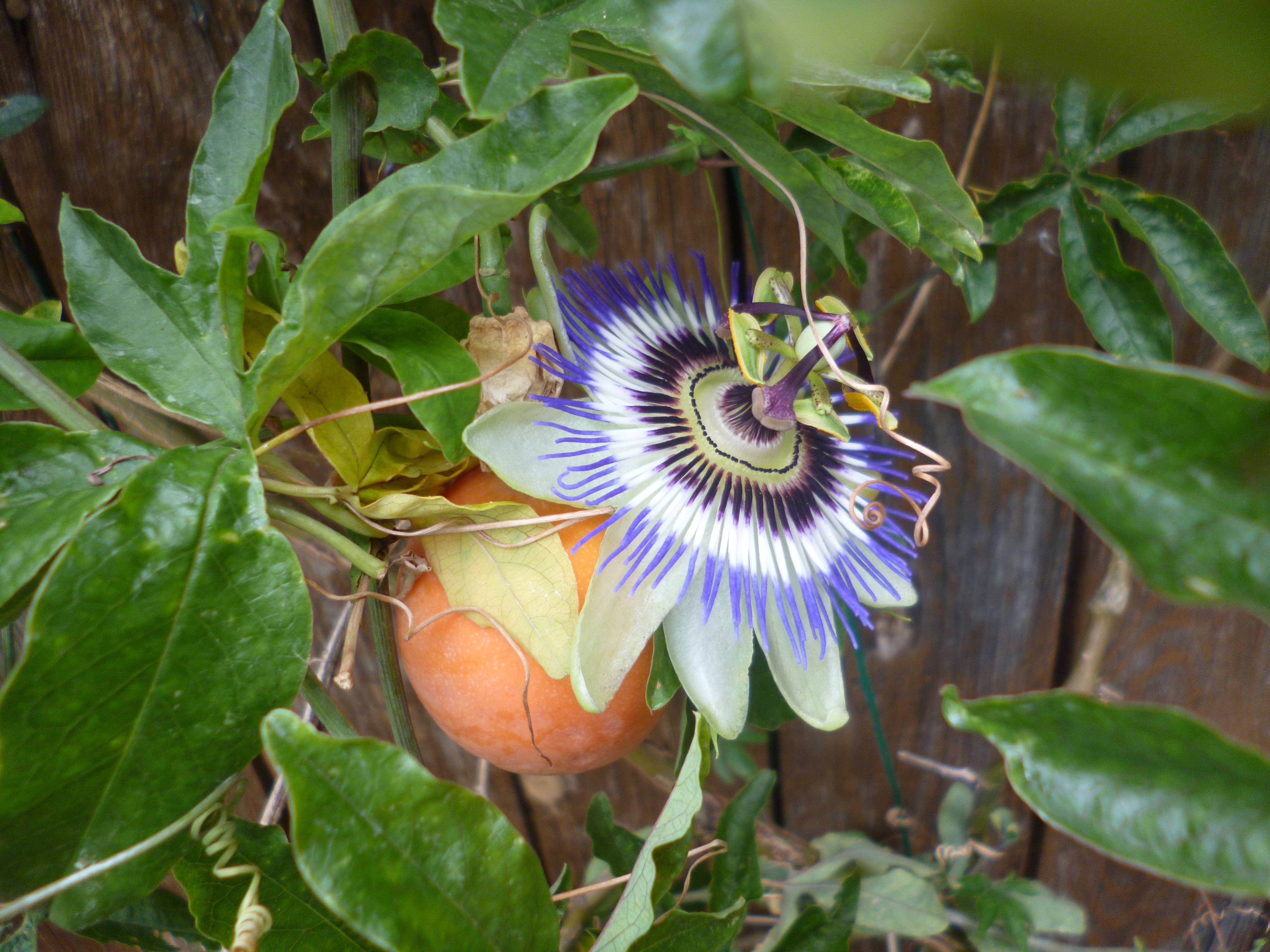
Large flat flower in white and purple, with long purple stem, small orange fruit, shiny green leaves.


The sky-blue galaxy and purple and alabaster sun of the verse!

Photographs:
Christina Egan © 2013/2016.

Three Stars / Drei Sterne

Three Stars

Three stars in the sky…
Three lines only to tell you
all my hopes for us.

*

Sneeze

Your sweet face – a sneeze –
as sudden and explosive
as your sweet haiku.

Christina Egan © 2013

Stamp with bright artistic impression of spaceship flying between planets and stars.

Drei Sterne

Drei Sterne am Himmel…
Drei Zeilen für dich, für
all meine Hoffnung.

*

Nieser

Dein liebes Gesicht
– ein Nieser – plötzlich, heftig
,
wie deine Haikus!

Christina Egan © 2016


A haiku is a Japanese poetic form; each poem has only three lines and seventeen syllables, which amounts sometimes to only a dozen words, even with a title. Yet you can say a lot in three lines… The word game is more difficult in German than in English, since the words are longer; translation can be a challenge.

A traditional haiku starts with an image from nature indicating the season; you will see on my haiku pages that I largely follow this rule. These here are different: one is simply romantic and one humorous, and both are about reading and hearing haiku!


Illustration: Stamp of 1963. (Scanned by Darjac) [Public domain], via Wikimedia Commons.

Im Spiegelsaal / Unter der Fontäne

Im Spiegelsaal
(Stadtschloß zu Fulda)

Die buntbemalten Wände spiegeln sich
mit blanken Splittern Gegenwart darin.
Sie zeigen hundertfältig dich und mich,
und hunderfach scheinst du mir auf im Sinn.

Doch die Porträts in alten goldnen Rahmen
sind ausgewischt nach einem Augenblick –––
Es bleiben nur im Buche unsre Namen
und in den Herzen hundertfaches Glück.

Christina Egan © 2000


Unter der Fontäne

Park with flowerbeds leading to fountain and elegant rococo palace

Du stehst und schaust versunken
dem hohen Springquell zu:
die Flut von hellen Funken
strömt Leben aus und Ruh.

Der Silberstimme lauschst du,
als sei’s ein Lied für dich,
und deine eigne bauschst du

und wirfst sie über mich.

Das Lautspiel meiner Lieder
ist Widerschall von dir,
und deine Lieder wieder
nimmst, Liebster, du von mir.

Christina Egan © 2004


The first poem was written for my own wedding and the second one for one of our wedding anniversaries. We got married in a palace with mirror cabinets and with tall fountains in the gardens (see picture and link to 3D-tour of the sparkling rooms).

In the first poem, the words and sounds reflect each other, just like the people and scenes in the mirrors. Similarly, the music of the water features in the second poem is echoed in the songs or poetry which the couple compose for each other — and in the music of these lines.

Photograph: City Palace Gardens, Fulda, Germany (Schloßpark Fulda). Christina Egan © 2014.

Glasperlenlied

A dozen beads of gold, lapis lazuli, cornelian.Glasperlenlied

Die Stadt ist endlich dunkel, endlich still.
Und in der regenreinen Ruhe quillt
herauf, was unter dem Getümmel lag:
das Teppichmuster unterm Alltagstag.

Die Stunden ziehen bunt an mir vorüber,
verdichten, runden sich: Glasperlenlieder.
Mein Leben ist gering. Ich bin allein.
Doch brennt mein Herz und leuchtet wie der Wein.

Christina Egan © 2011

Minoan beads from Crete, of gold, lapis lazuli and cornelian, at least 3,500 years old.
Photograph
© The Trustees of the British Museum.

The Tea Turned Cold – IV

Please note the fourth part of an essay at POLITICS .

The Tea Turned Cold in the Cup,

or, Why Women’s Work is No Work

IV.

Imagine that in times of austerity, companies and organisations started sending out new job descriptions, proposing that everyone could keep their job if they agreed to do some additional unpaid work.

Since there were no funds any more for cleaning and catering nor for gardening, all staff would have to hoover offices and clean bathrooms, buy and prepare lunches and snacks, serve coffees and wash up, mow lawns and water flower-beds.

The schedules, we would be assured, would be very flexible, so that everyone could to a great extent choose at what hours to carry out these extra duties or whether to come in on Saturdays or Sundays. No one should be worried about their prospects because they would be kept on if they had to change their working patterns or go down on their hours.

There would be no law passed about this; it would be a general consensus of an enlightened society.

Read more here.

Corner of garden with flowers and climbers, spade and trowel.Garden planted from scratch. Photograph: Christina Egan © 2013.

Minerva’s Voyage

Minerva’s Voyage

I.

Minerva by Botticelli

Her hair is the offspring of river and fire,
her robe has been woven from flowers and wind.
Her foot cannot rest and her flesh cannot tire,
her arm is in flow and her eye will inspire
a voyage for wisdom with one  fleeting glint.

II.

Minerva on the Academy of Athens

She dived like a hawk from her shadowless sphere,
the shield on her arm like the sun in the west –
She looms on the roof with her helmet and spear
to capture the lightning, conduct it down here
and spark our restless and glittering quest.

Christina Egan © 2016

Delicate, pale, portrait of the goddess as a young woman in armour.Minerva is the Roman goddess of wisdom and knowledge, arts and applied arts; she came to be identified with the Greek goddess Athena, patron of Athens.

The two poems were  inspired by the two artworks mentioned, as well as a temple on the Agora of Athens dedicated to her as patron of artists and artisans.

Illustration: Minerva by Sandro Botticelli (ca. 1482-83), via Wikimedia Commons (Public Domain).