Inside the Rainbow

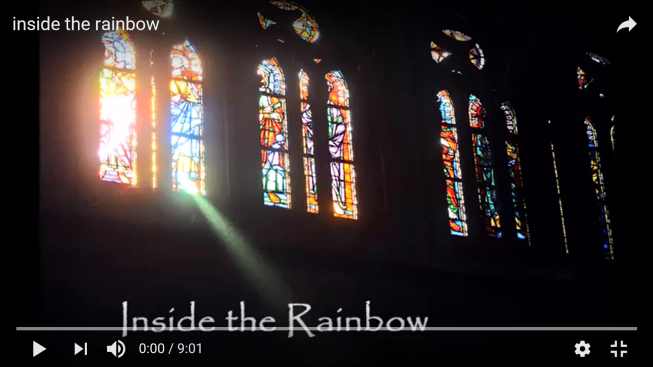
Please note the video Inside the Rainbow  by Francis Logan which was inspired by my verse on this internet site!

Im Inneren des Regenbogens describes a mesmerising encounter inside the rainbow of stained-glass windows — with a person or with God… The composer interpretes it as an encounter with Jesus, who is both a person and God himself; but you need not share this faith to be stirred by these sounds of celestial harmony.

You will find the entire text in English below. Please pass on Francis Logan’s beautiful music: tranquil and transcendent… Image: Still from Inside the Rainbow on YouTube. Music and video: Francis Logan © 2018. Also available on SoundCloud.

Inside the Rainbow

Inside the rainbow
In the glimmer of the glass windows
In the waterfall of grace
In the antechamber of the sky

I saw you
I felt you
I held you
I recognized you

In a luminous joy
In a sparkling silence
In a durable moment
In a house of light

Christina Egan © 2018

As Limpid as the Moon / Alabasterschale

As Limpid as the Moon

Some people are as luminous,
as limpid as the moon:
with truthfulness amidst the lies
or happiness in gloom.

They float and glow across the road
or mesmerise a room;
they never fade, and when they’ve died,
they leave a shining tomb.

Christina Egan © 2016


Alabasterschale

Überm schwarzen Heer der Bäume,
überm grauen Heer der Gräber
ruft durch dunkelblaue Räume
eine Glocke unbeirrt.
Balanciert auf spitzem Pfahle,
schimmert ferne feingeädert
eine Alabasterschale:
fremdes riesiges Gestirn.

Überm schwarzen Heer der Bäume,
blätterlos und blütenträchtig,
überm grauen Heer der Steine
lädt die Glocke zum Gebet.
Überm hingestreckten Tale
steigt gemessen, schlicht und prächtig,
jene Alabasterschale,
bis sich uns das Herz erhebt.

Christina Egan © 2017


As Limpid as the Moon remembers my radiant parents-in-law.

Alabasterschale compares the full moon to a bowl of alabaster; the scene is the vast old Tottenham Cemetery in London. The poem integrates awe before Nature and faith in God (as worshipped in church etc.).

This text will be printed in the Münsterschwarzacher Bildkalender 2019.

Ex tenebris (The day is like a daffodil)

Ex tenebris

The day is like a daffodil. Yet
the green garland of the garden,
the golden garland of the sunset
cannot dispel the dark of the depth.

On the crests of the hills,
tiny blue brushstrokes,
you can watch them wander,
the deceased and the unborn.

My heart is a fist in my chest.
My tears are grapes of glass.
No one sees them: no one sees me.
I am alone with the angels.

Christina Egan © 2017

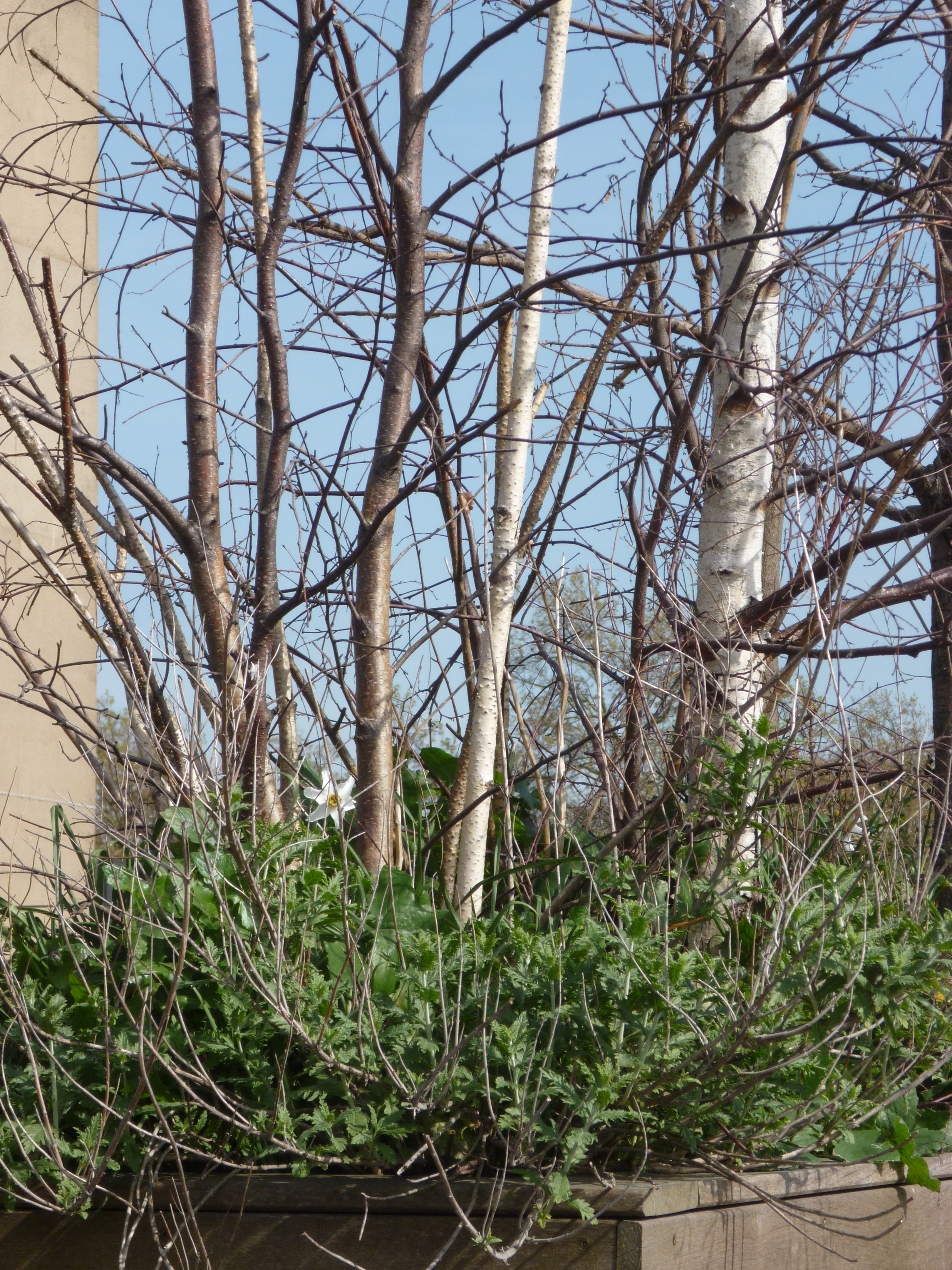
Daffodils and narcissus growing thickly around a fivefold gnarled treetrunk.Photograph: Christina Egan © 2013.

weiße borke / Roof-Top Sculpture

weiße borke

rasch zogen weiße wolken hin
im tanz von sonne regen schnee
und weiße wolken hingen tief
mit zarten düften im geäst
als ich noch beinah winterschlief

ich gähnte und ich dehnte mich
und rührte plötzlich wie im traum
an einen kleinen toten baum
der hinter mir im winde stand
mit einer borke weiß wie schnee

ein birkenschößling manneshoch
den man einst pflanzte und vergaß
in einem kübel ohne raum
um seine füße wogte gras
und unkraut voller übermut

die blanken zweige ohne grün
die weiße borke ohne schrift
minutenlang im rampenlicht
blendende botschaft ohne wort
die ich alleine schweigend las

die tote birke tat mir weh
geschöpf das langsam nur verdorrt
dann nahm ich einen kleinen stift
und schrieb ihr diese elegie.
denn schönheit stirbt und schwindet nie.

Christina Egan © 2016

Slim dead tree trunks, brown and white, with thick weeds and a narcissus around the bottom, all in a large box.

Roof-Top Sculpture

Tall slender trunks with silver bark,
pale crinkled copper-gold the leaves:
it is a sculpture, spectral, stark,
the haunting beauty of dead trees,
of roof-top birches left to die
when no one heard their silent cry.

Christina Egan © 2015


Photograph: Dead trees with white narcissus flower. Christina Egan © 2015

Der Lebensbaum / Golden Flower

Der Lebensbaum

Du bist für mich der Liebestraum,
dessen Glanz die Seele nährt,
du bist für mich der Lebensbaum,
dessen Frucht der Leib begehrt.

Bleibt mir auch die Himmelstür
durch den Diebstahl einst verwehrt,
hab’ auf Erden ich dafür
noch vom Paradies gezehrt!

Christina Egan © 2011

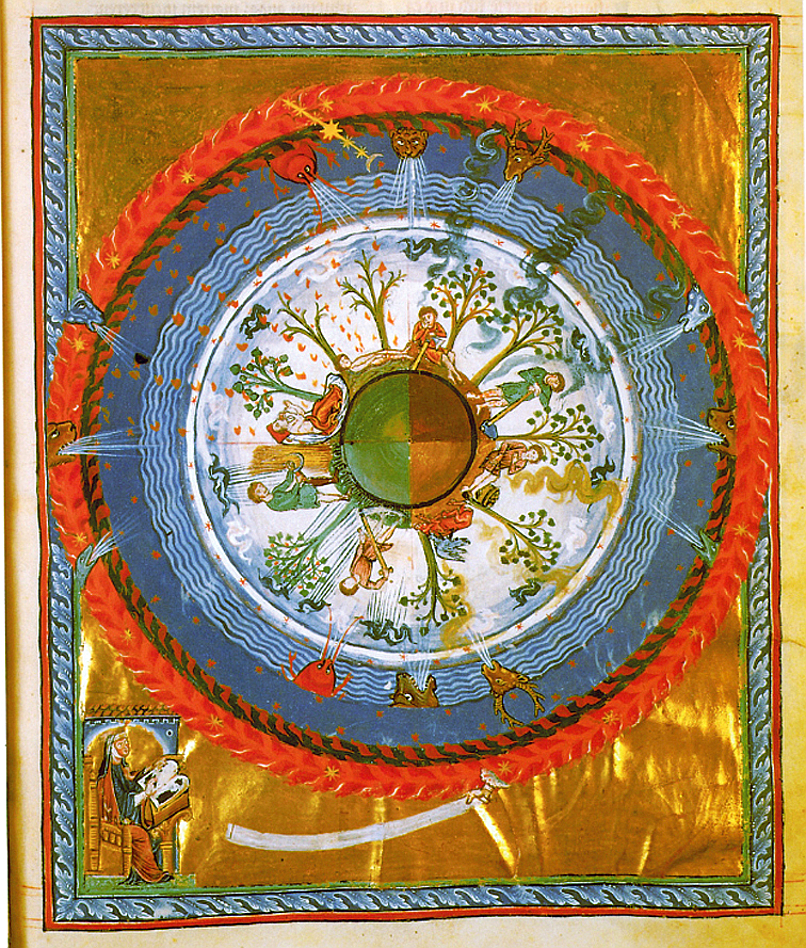
Very bright painting of the earth and universe in concentric circles on a golden background.


The beloved one is seen as the tree of life which bears the fruit of paradise. Between Paradise at the beginning of our journey and Heaven at the end, earthly love offers us a taste of both…

Illustration: 12th century depiction of the world, illustrating a work by 11th century author Hildegard of Bingen (who is shown in the corner).


Golden Flower

O let the golden flower of my flesh
live on, live on, untouched by age and death
within the space I’ve out of all preferred:
your eyes, your eyes, my paradise on earth!

Christina Egan © 2012

The Tea Turned Cold – VII

Please note the seventh part of an essay at POLITICS .

The Tea Turned Cold in the Cup,

or, Why Women’s Work is No Work

VII.

There are many impressive novels about humble women’s lives in former times, written both at the time and since, written by both women and men. Thomas Hardy’s Tess, a farmhand, toils in the field as if in a chain gang; Elizabeth Gaskell’s Mary Barton, a seamstress, languishes at the workshop into the night; Claire Etcherellli’s Elise, a factory worker, rushes and sweats at the conveyor belt.

They all get exploited; they all get exhausted. Yet none of these women seems to wash any sheets by hand on top of that; none of them is seen heaving pots of stew around; none of them does as much as sweeping the floor of her dwelling. When a girl has a baby, someone has to care for it, but no one seems to boil and mash food or soak and scrub linen for it. It all gets done by itself.

It all gets done magically. It all gets done in the wings. The never-ending chores are performed by invisible girls and women; by hands which get worn over the years without ever receiving a penny in return; by hands presumably too busy to drink the cup of tea turning cold in the cup.

Read more here.

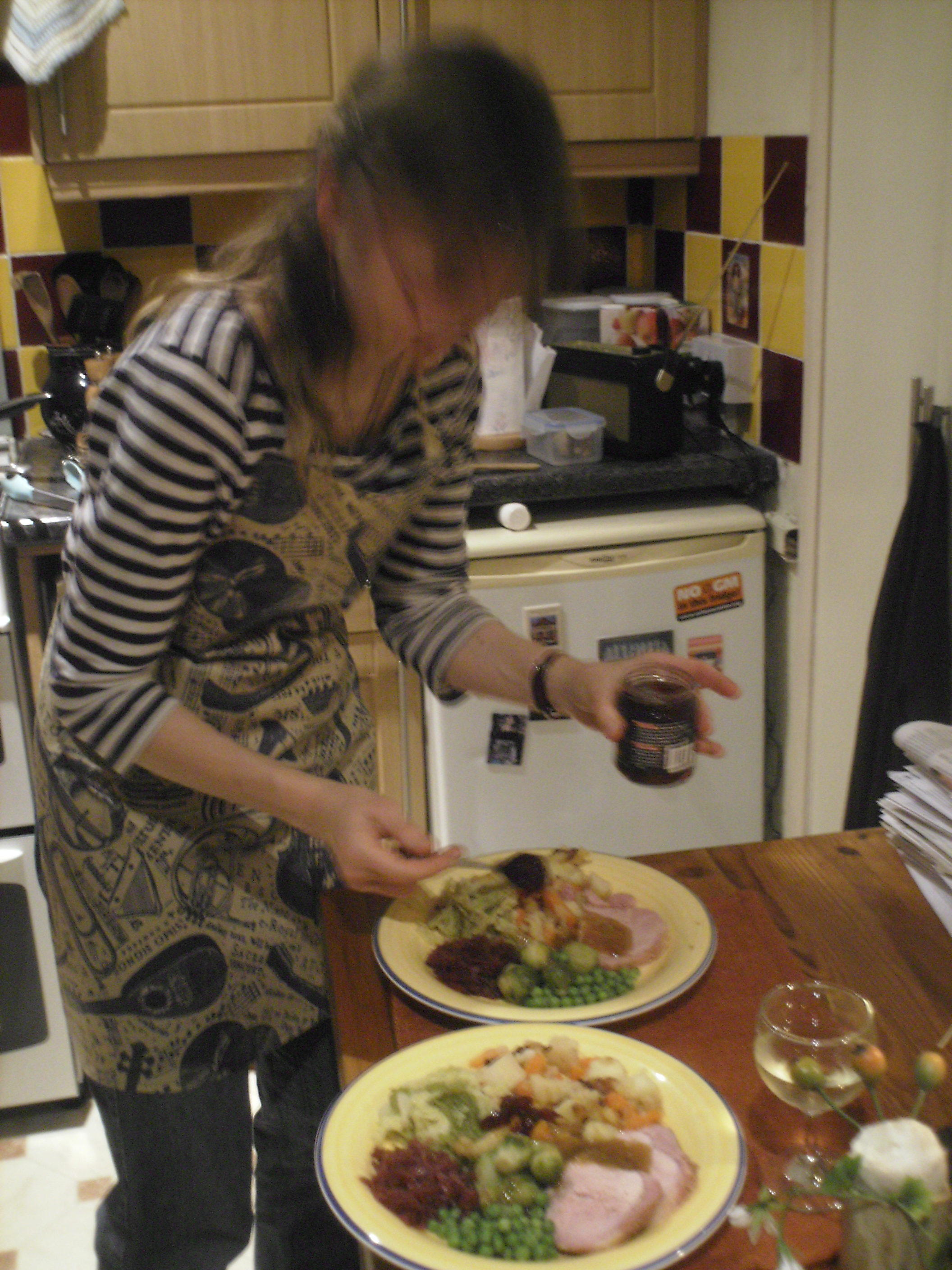
Woman with apron filling plates with roast and many different vegetables.Woman worker “during her “time off”:
“not working”  while cooking
&”not working” while writing.
Photograph: Christina Egan © 2015.

Westminster Bridge, Mitte März

Westminster Bridge, Mitte März

Im Überfluß hingeschüttet, schimmernd
und erstmals wieder erquickend
der Sonnenschein, und schon erstreckt sich
aus silbernen Plättchen gehämmert
das Straßenpflaster, entrollt sich
die hellblaue Teppichbahn
des Stromes, schon stemmen sich,
stumme starke Löwenflanken,
die Brückenpfeiler empor, ragen
lotrecht die Honigwaben
der Sandsteinfassaden, rasselt
endlos das bunte Geröll
der Menschenmassen vorüber…

Und unabwendbar naht sich
die Machtergreifung des Lichtes.

Christina Egan © 2014


The rhythmic stream of words recreates an everyday and vibrating scene: the enlivening flow of the spring sunshine; the rolling-out of a silver carpet and a blue carpet — Westminster Bridge and the River Thames; an avalanche of colourful boulders or pebbles people from all over the world; and the upward pull of the bridge pillars and mighty buildings — the Houses of Parliament.

La veille / Nightwatch

La veille

Quelqu’un compte pour nous
les heures sans sommeil,
quelqu’un garde pour nous
les fleurs sans pareil.

Quelqu’un compte toujours
les larmes sans oreille,
quelqu’un garde toujours
les charmes de la veille…

Christina Egan © 2012

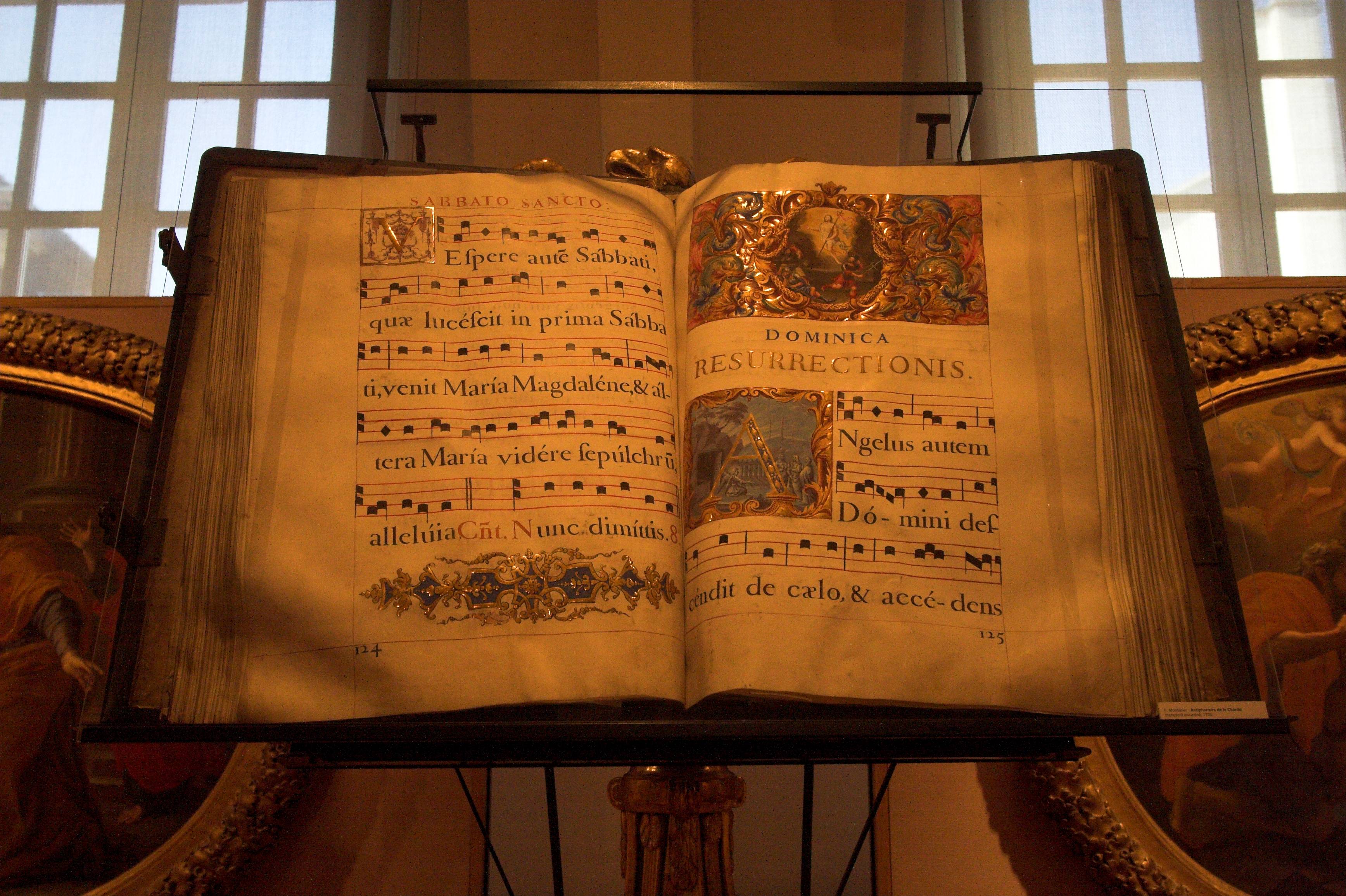
Huge liturgical book with very large writing and music, richly illuminated

Nightwatch

Someone counts, rest assured,
inconsolable hours,
keeps all prayers secured,
incomparable flowers.

Someone counts day and night
tears unseen and unheard,
guards the circle of light
round a mind deeply stirred…

Christina Egan © 2016


I was thinking of angels or saints when I wrote these lines (twice, in French and in English); other humans might prefer to think of spirits or the only God. I hope there is no one on earth who has no comfort of this sort at all!


Photograph by ignis, via Wikimedia Commons [GFDL, CC-BY-SA-3.0  or CC BY-SA 2.5-2.0-1.0].

The Tea Turned Cold – VI

Please note the sixth part of an essay at POLITICS .

The Tea Turned Cold in the Cup,

or, Why Women’s Work is No Work

VI.

We squeeze ourselves against the walls rather than driving the elephant out of the room. We keep patching broken china together or replacing it rather than acknowledging the existence of the elephant.

This is the early 21st century, and women all over the world, including all Western countries, are de facto second-class citizens. Most women – with or without children – live in servitude through domestic labour, while declaring themselves free from all shackles. Most women – whether poor or rich – are left behind men from childhood onwards, while deluding themselves that they possess equal opportunities.

Why is a housewife officially a housewife and stays so all her life, while an unemployed nurse is a nurse, a retired cleaner is a cleaner, and a sick teacher a teacher? Does the nurse not give her child dinner any more? Does the cleaner not clean her own home any more? Does the teacher not change her bed any more? Have they not all been homemakers besides their paid employment? Why is this simple fact denied? Why are homemakers derided, and any homemaking also?

Read more here.

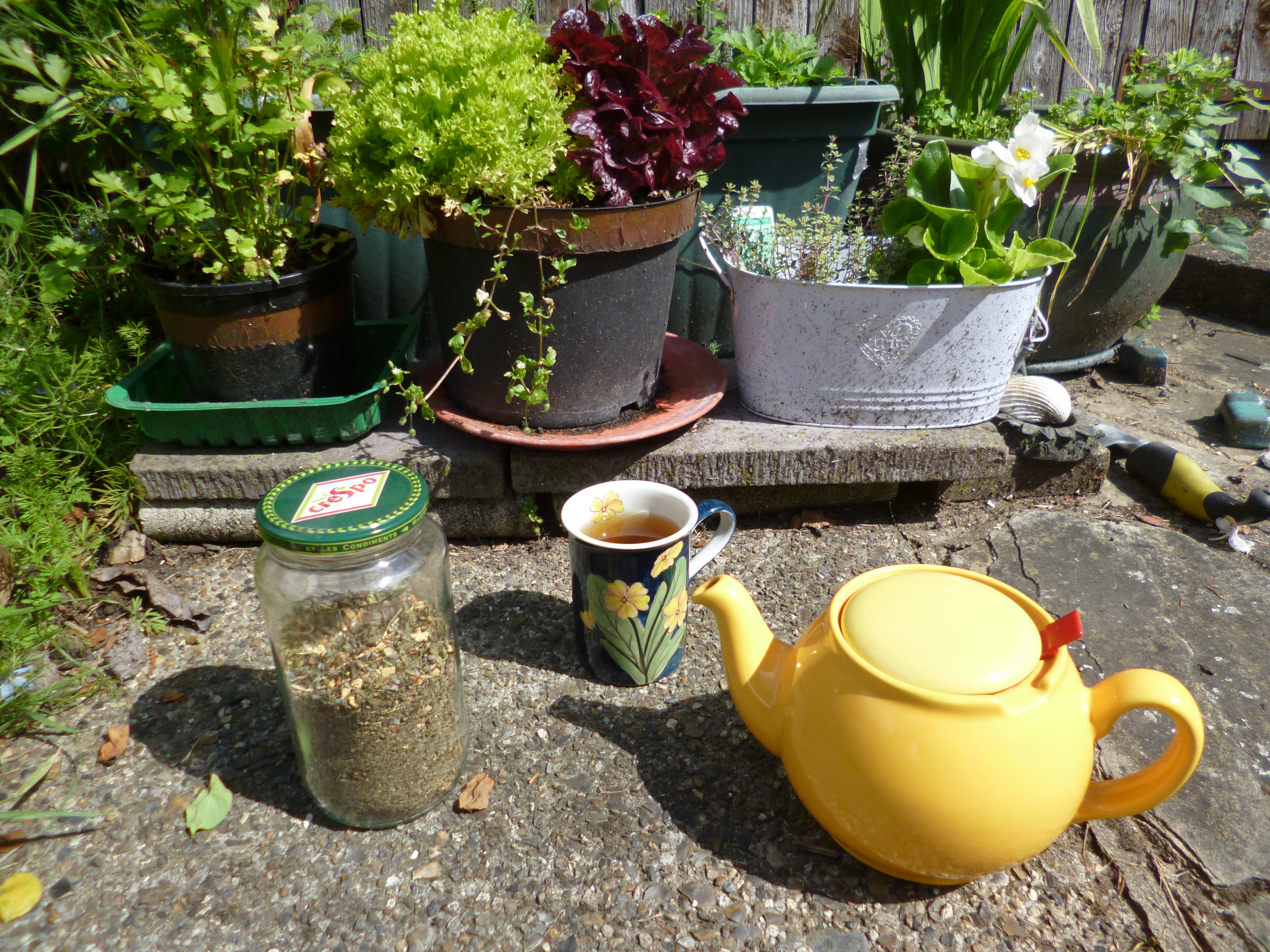
Yellow teapot, full teacup, and jar of tea, in front of lettuce and herbs in little pots.Homemade herbal tea from the garden.
Photograph: Christina Egan © 2016.