Weißer Schnee auf weißen Rosen

Weißer Schnee auf weißen Rosen

Wie die grauen Gänse zogen
Mit dem schneegeladnen Wind
Sind die Jahre uns entflogen
Erst gemächlich dann geschwind

Wie die Flocken niedertaumeln
Daß die Welt zu Weiß gerinnt
deckt die Zeit die bunten Träume
Erst gemächlich dann geschwind

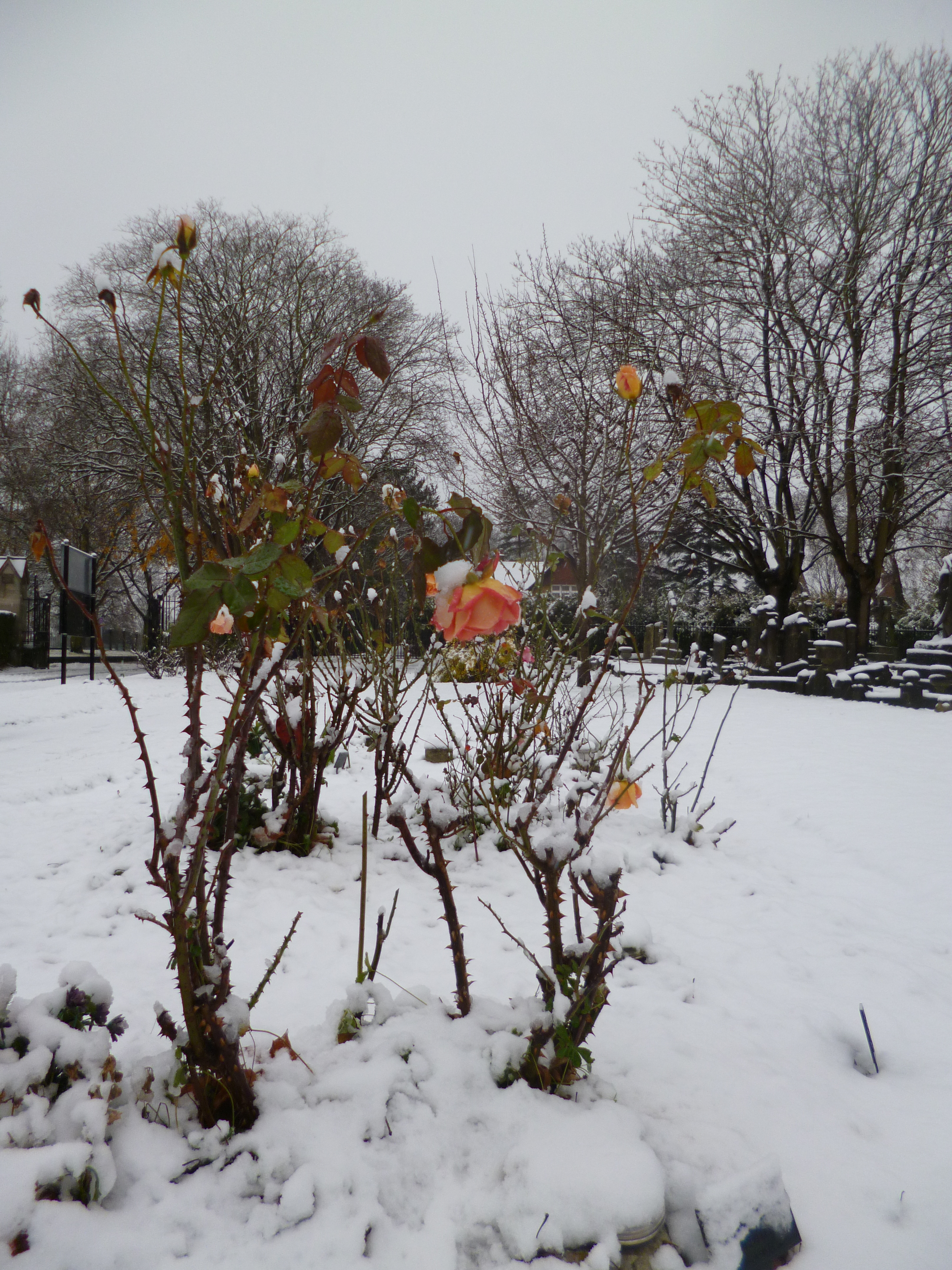
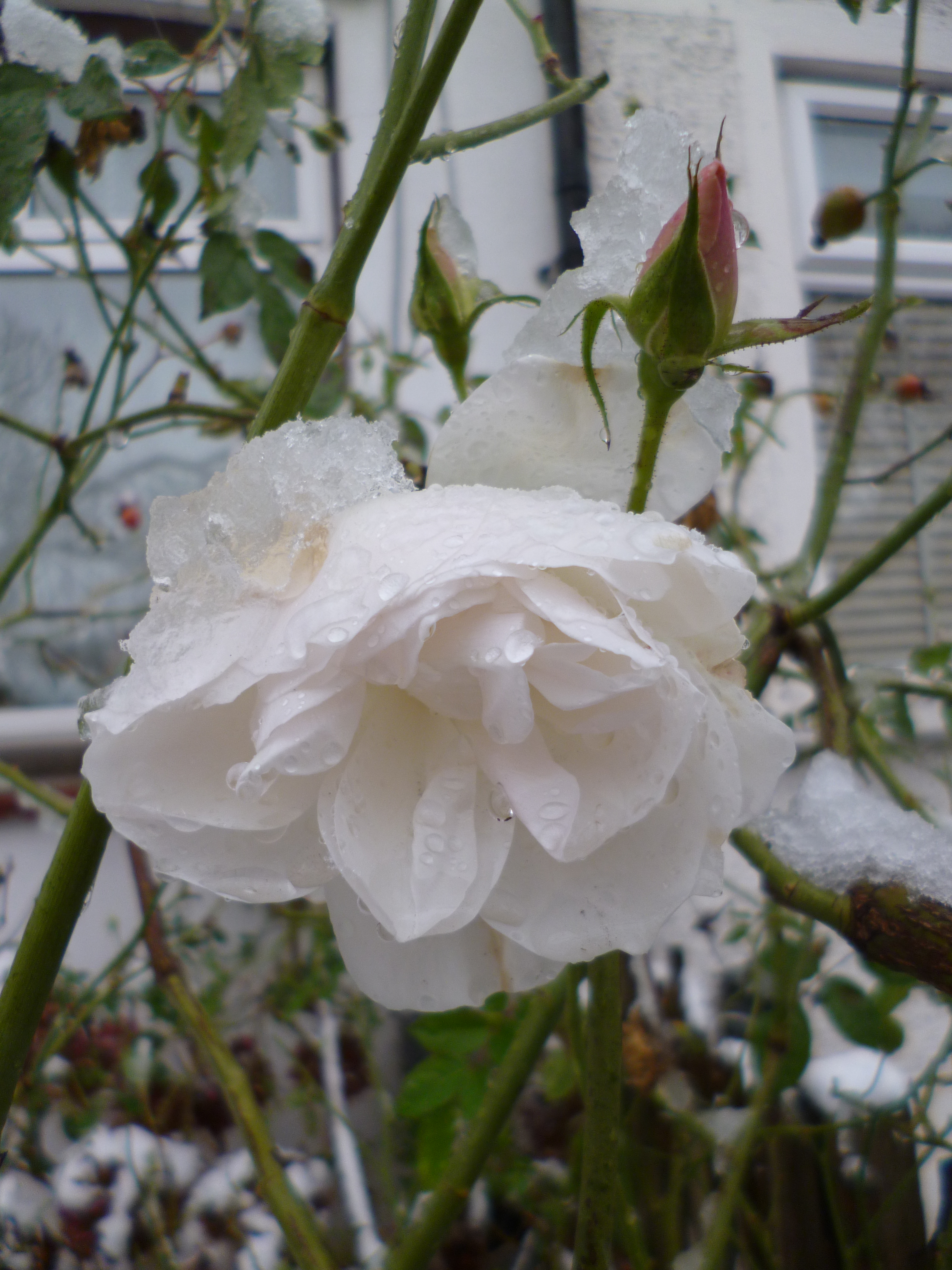
White rose, pink buds, hawthorns, all covered by melting snow.Stehst auch du am stillen Fenster?
Rührt der wilde Schnee auch dich?
Haschst auch du noch Luftgespinste?
Denkst auch du noch stets an mich?

Blumenflammen sind vergangen
Und die Welt wird farbenblind
Niemals hab ich dich umfangen
Niemals gab ich dir ein Kind

Wilder Schnee: ein stummes Tosen
In dem strengen reinen Wind
Weißer Schnee auf weißen Rosen
Erst gemächlich dann geschwind

Christina Egan © 2017

White snow melting on white roses.
Photograph: Christina Egan © 2017.

This is the first of two love songs which could stand alone or be sung by a woman and a man — from opposite ends of a stage or hall, though…

In White snow on white roses, the first person confesses she (or he) still secretly wishes they had got together a long time ago, and wonders if her friend feels the same.

In White snow on red roses, the second person reveals that he (or she), too, has longed for this relationship all along, but he never lets his friend know… not now either.

Each of them sings into the wind, into the snow… The ‘years that flew away’ like the wild geese in the first poem and the ‘late buds surprised’ by the snow in the second poem show that the pair are at a later stage of life.

If Only It Could Happen

If Only It Could Happen

If only it could happen
More real than before
If only it could happen
Once more, oh, just once more

More than a memory
There never to return
More than a fantasy
There never to be born

If only it could happen
More real than before
If only it could happen
Once more, oh, just once more

More than an accident
From sadness or despair
More than an overspend
Of pity or of care

More than a fairground ride
Of wild delight, distress
More than a mounting tide
Of wandering tenderness

If only it could happen
More real than before
If only it could happen
Once more, oh, just once more

If only it could happen
And swallow up the past
If only it could happen
As lasting as it’s fast

If only it could happen
As lasting as it’s fast

More than a flower, gay,
Unfurling just to die
More than a night, a day,
A lonesome lullaby

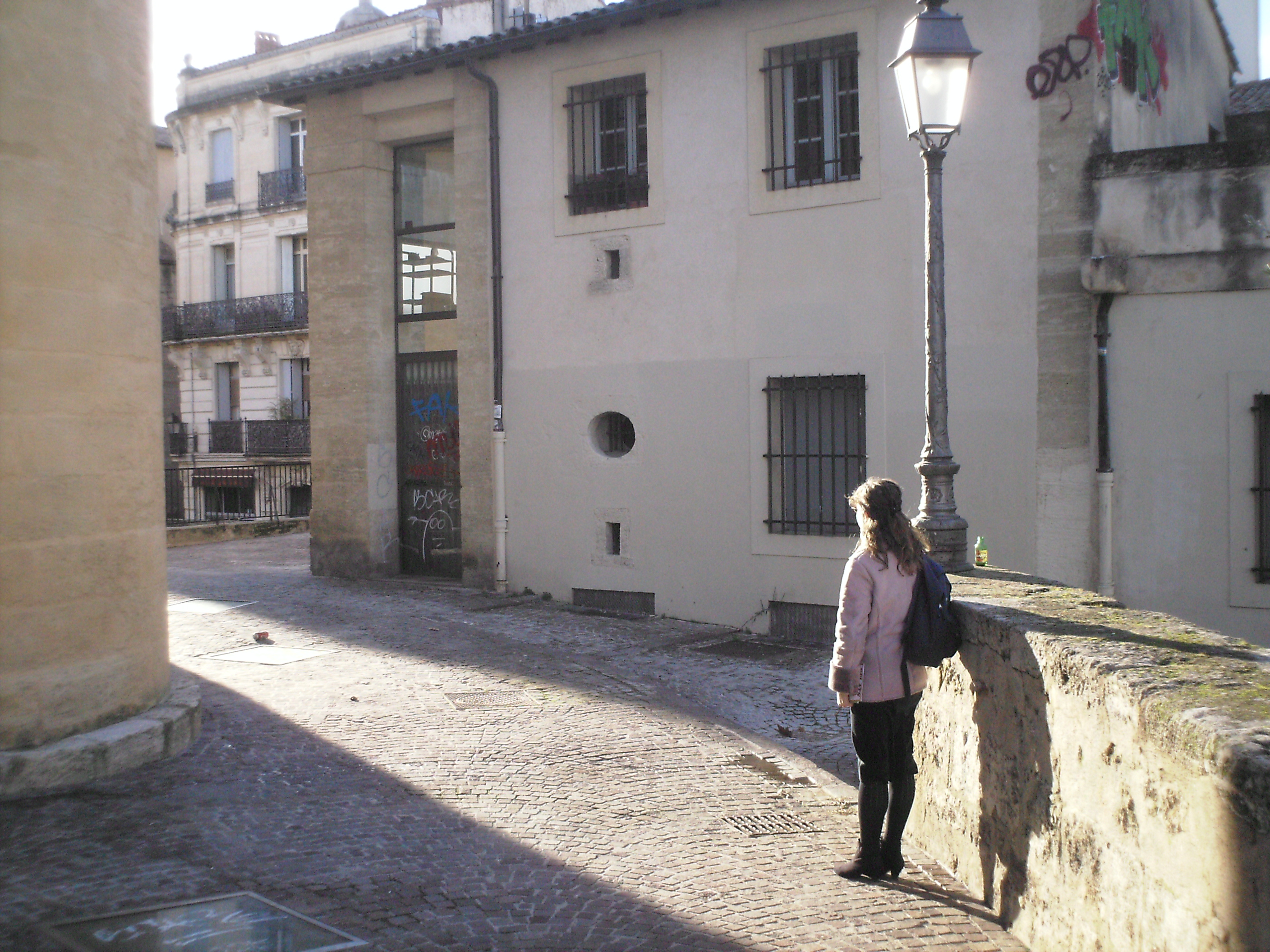
Woman in winter clothes waiting under lantern in sunlit lane.

If only it could happen
More happy than before
I think I’ll let it happen
Once more, oh, just once more

I think I’ll let it happen
Once more, oh, just once more

Christina Egan © 2006

Photograph: Montpellier, France, in midwinter. Christina Egan © 2010.

Spätes Wiederfinden

Spätes Wiederfinden

I.

Die strohgedeckten Hütten sind verschüttet,
und in den Säulengängen haust der Wind.
Mir ist, als spürt’ ich unter meinen Sohlen,
wo eigne Schritte eingezeichnet sind.

Ich schliff das Pflaster unter den Sandalen,
ich legte jenes Pferd ins Mosaik;
ich wurde dort am Wegesrand begraben
mit meinem Krug voll Kummer und voll Glück.

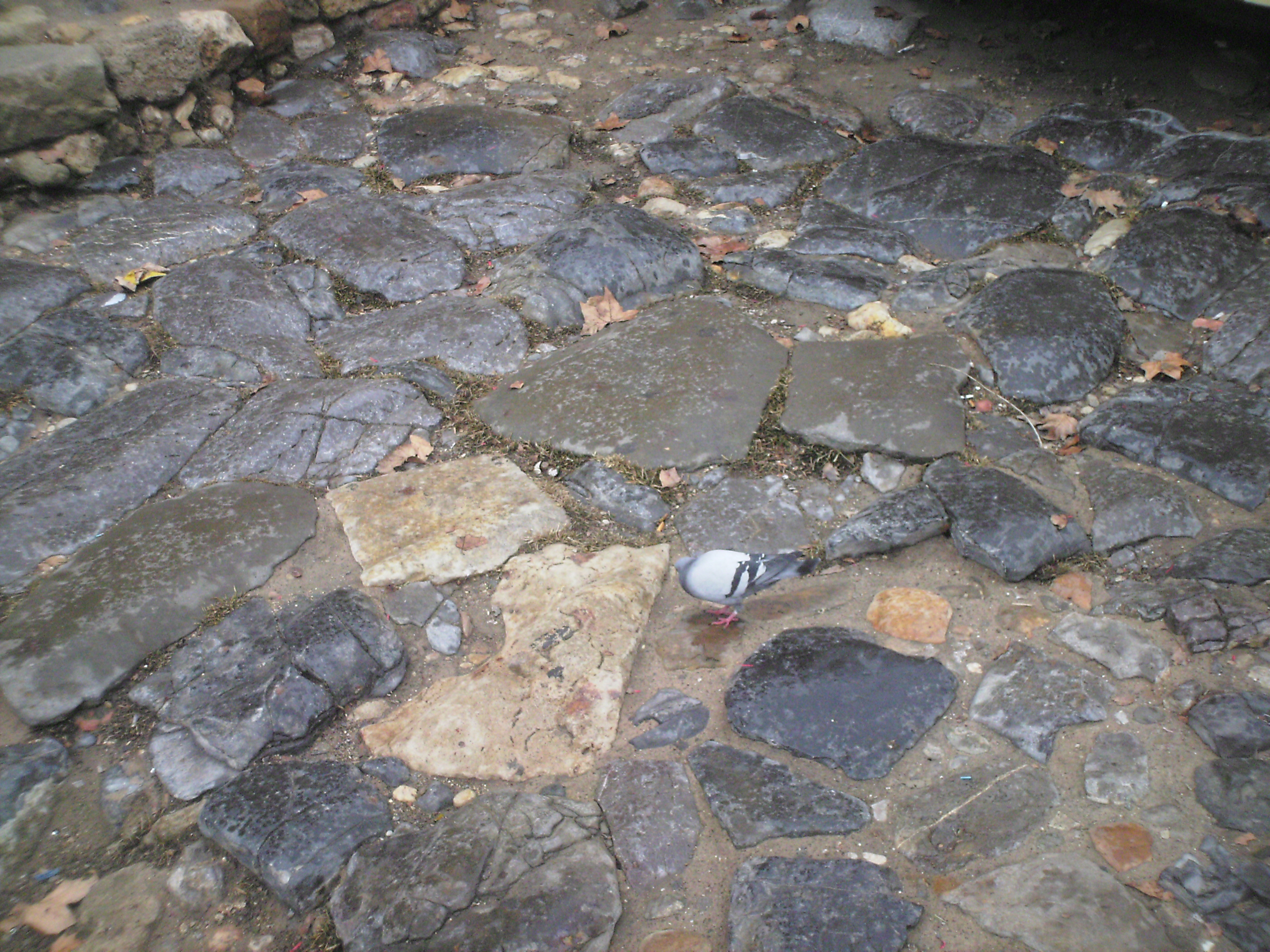
Very irregular pavement.

II.

Mir scheint, ich hätt’ schon vor Jahrhunderten
in deinen Augen wie ein Gast gewohnt.
Und wenn ich nur den Schlüssel wiederfände,
dann hätt’ auch dieses Leben sich gelohnt…

Was zählen da die wenigen Jahrzehnte,
in denen wir einander jetzt versäumt?
Ein kleiner Aufenthalt in deinen Augen
bringt, was ich in Jahrtausenden erträumt.

Christina Egan © 2011


The fifth year of this poetry blog sets off, as always, with a Roman road or another ancient road!

In the first poem, someone finds the place where they lived and died in a former existence; in the second one, they think they have also found their former love…

The location is imaginary. The three images for the former life all have to do with the earth: the feet and shoes; the mosaics in the floor; the grave by the wayside. Two of the images also refer to wandering, our wandering on earth: the soles wearing the pavement down and the horse in the mosaic. The second poem mentions the status of guest; as the psalms express it, we are all guests on earth.


Photograph: Christina Egan © 2016.  International highway, Via Domitia, crossing the forum of Narbonne. I suppose this bit had been much damaged and patched up, since the Romans built entirely straight and smooth roads!

Eat the World (When you get older)

Eat the World

When you get older,
you want to eat the world
for breakfast.

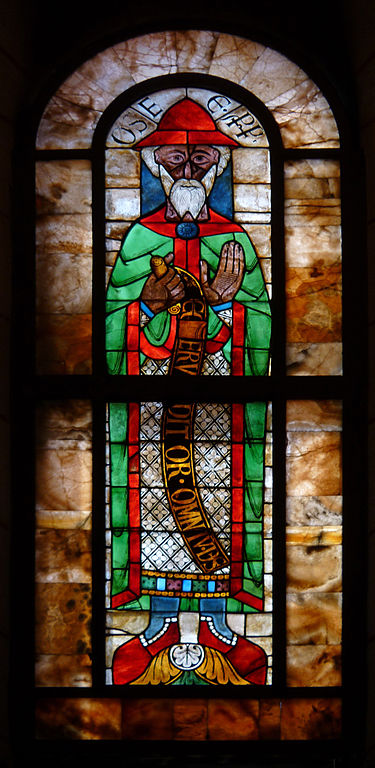
Colourful ancient glass window, prophet in red hat, red shoes, green cloak.When you get older,
you want to consult the radiant prophets
in the high sky-blue windows,
to soak up the tranquil cathedrals
of soaring silvery tree-trunks,
before the acid turns all of this
into sooty ruins.

You want to sprint to the station tonight
and jump on the train, shooting
through tunnels, under the city,
under the ocean, under the mountains,
through to the other side of the earth!

You want to slip into sleek capsules
to float up slopes, up skyscrapers,
up cliffs, up lighthouses,
up towards the clouds and
through the clouds!

When you get older,
you feel as if you could almost fly
into the sun already.

Christina Egan © 2017

Photograph: Prophet Hosea, window in Augsburg Cathedral, around 1100. By Hans Bernhard (Schnobby) (Own work) [CC BY-SA 3.0 or GFDL], via Wikimedia Commons.

Beginenhof in Ghent

Beginenhof in Ghent

wie finde ich sie wieder
die reihen schwarzer türen
die zu den treppengiebeln
und tulpenbäumen führen

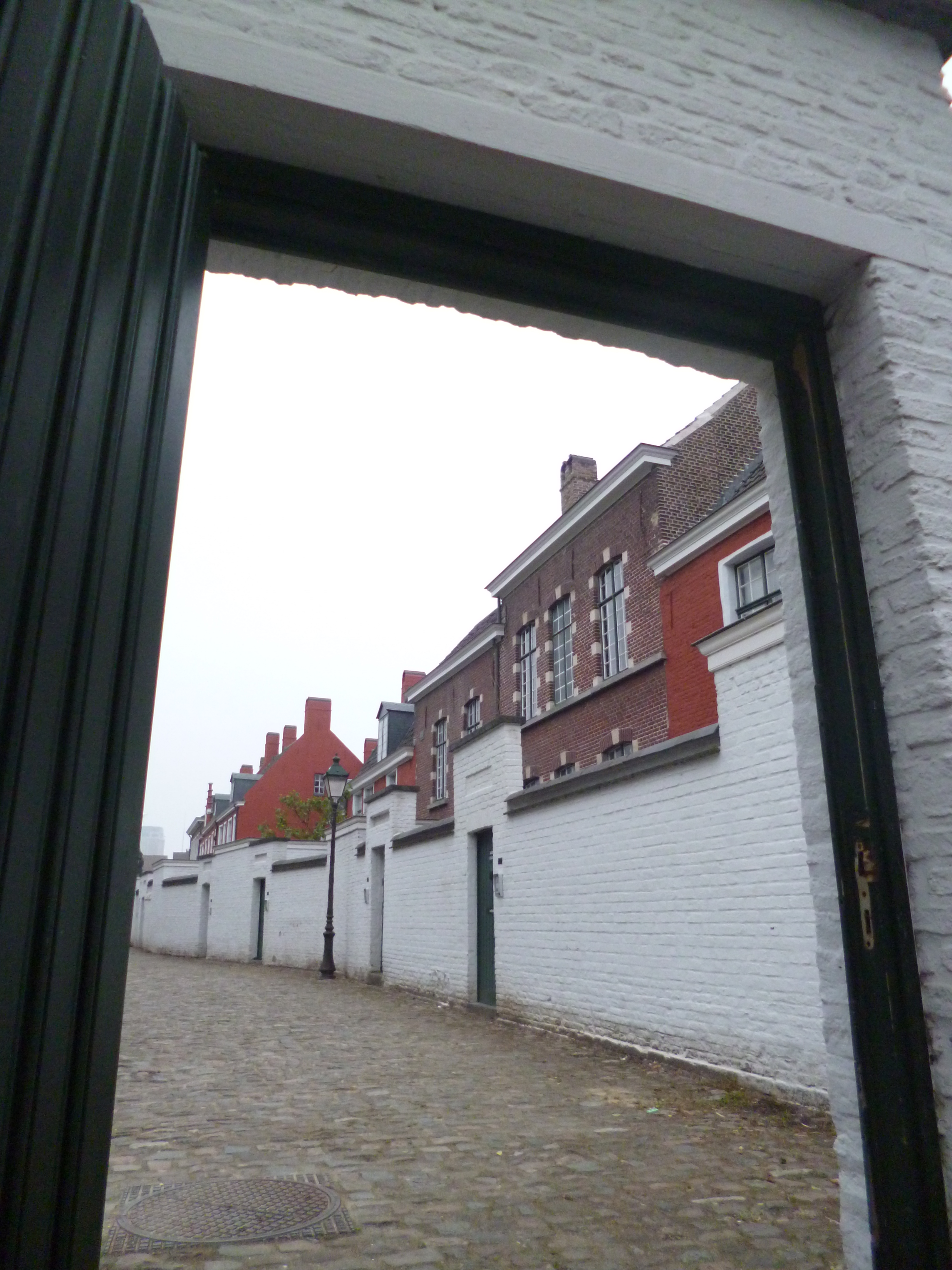
Gate into cobblestone lane with white walls, black doors, and red buildings behind.wie kann ich sie entdecken
die schlichten weißen mauern
die um erblühnde hecken
und rote häuser dauern

gewunden sind die gassen
versperrt von breiten flüssen
geborsten ist das pflaster
und meine schuh zerschlissen

wo nisten die gestalten
in schwarz und weißen trachten
wie hundert flinke schwalben
über den grauen grachten

wo sind die schönen schriftzüge
die weiß auf schwarz verkünden
die heiligen drei könige
wärn manchmal anzufinden

wie finde ich sie wieder
die schweren blanken türen
die durch bestirnte lieder
ins glühnde schweigen führen

Christina Egan © 2018

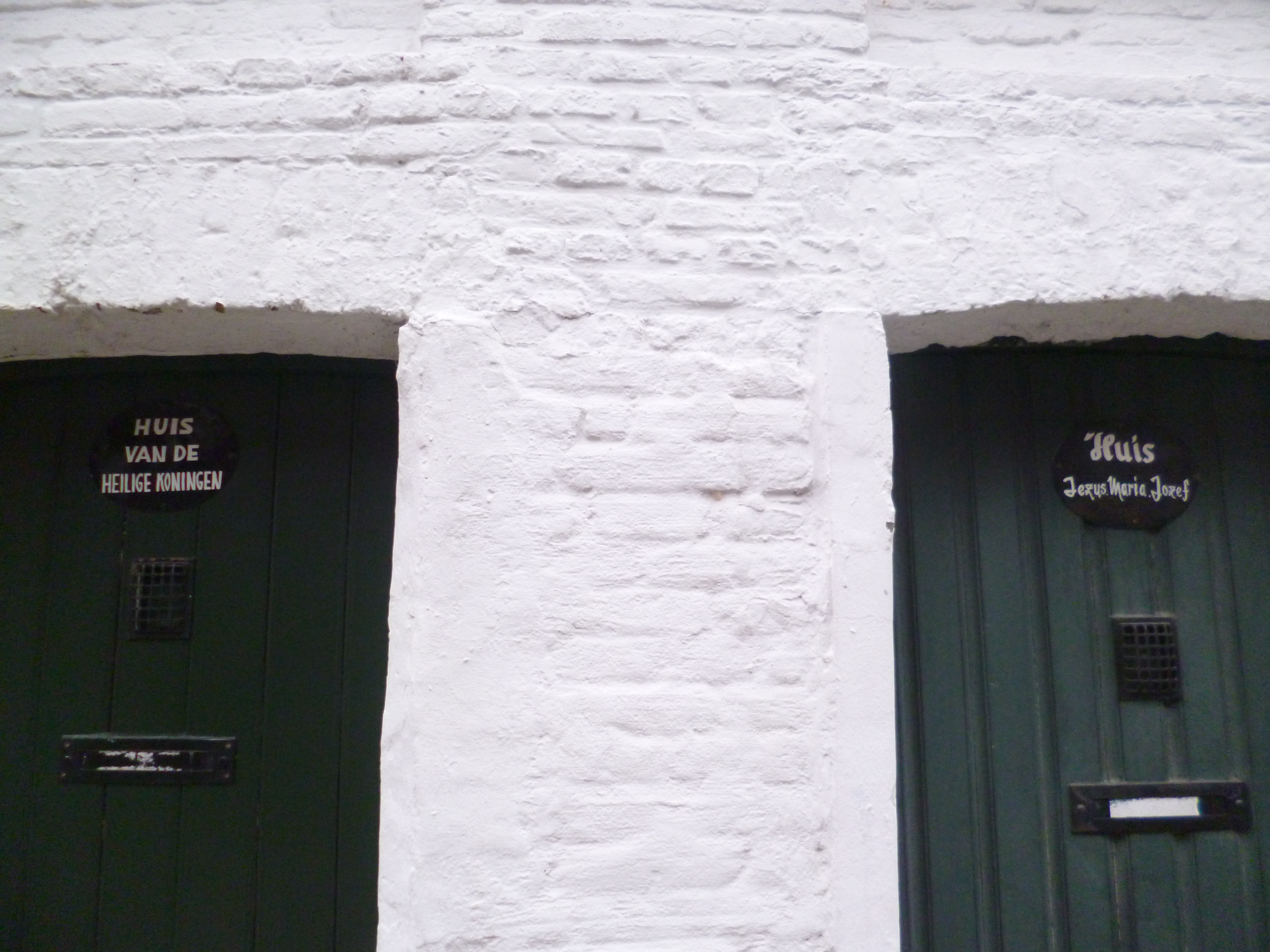
Two heavy black wooden doors in a white brick wall, with inscriptions as below.

“House of the Three Wise Men” (Three Holy Kings, in other languages) and “House Jesus, Mary, Joseph” at a former Beguinage in Ghent (Klein Begijnhof).

This was a type of convent where the sisters were allowed to go out and also to leave after each year of service. I imagined the story of a woman who wants to rejoin the community and for some reason ‘cannot find it any more’.

Photographs: Christina Egan © 2018.

Hollow Oak / feuerrad

Hollow Oak
(Anglo-Saxon spell)

Two round brooches with circular ornaments in gold and garnet, also glass and shell.Under the circle of branches,
under the tent of the tree,
inside the ring of the brambles,
sit on the roots with me!

Sit on the roots emerging
under the perfect round,
crouch by the tree-trunk surging
hollow from hallowed ground.

Under the circle of oak-leaves,
under the tent of the sky,
blue like the lakes in the valley,
come and sit closer by.

Very bright painting of the earth and universe in concentric circles on a golden background.Sheltered by tangled brambles,
held by the hollow oak,
tingled by ancient prayers,
kiss me and kindle hope!

Christina Egan © 2018

(Epping Forest, Essex)

feuerrad

das eichenlaub vergeht in goldesglanz
als sich das feuerrad der sonne senkt
die eiche hebt die wurzeln wie zum tanz
indes sie ihre hundert äste schwenkt

der eichenstamm rotiert als starke nabe
in jenem reigen zwischen tag und nacht
sein hohlraum bildet eine honigwabe
vom drachenzahn des brombeerstrauchs bewacht

die eiche streckt sich stolz am waldessaum
der sich zum wasserreichen tale neigt
wie gold und kupfer loht der alte baum
der tagstern sinkt das mondrund aber steigt

Christina Egan © 2018

(Epping Forest, Essex)


Illustrations: Anglo-Saxon disc brooches. Author: BabelStone [CC BY-SA 3.0], from Wikimedia Commons. — 12th century depiction of the world, illustrating a work by 11th century author Hildegard of Bingen.

Burgberg

Burgberg

I.

Aus dem Nebel tauchen Mauern, scharlachumrankt –
ein Hauch auf der Haut, ein Traum gegen Morgen.

Der Burgberg, ein Eswareinmal,
das sich eine Auferstehung ertrotzt.

Deine Stimme, eine schwingende Brücke,
golden und lockend und unbetretbar.

Dein Gesicht, von den Jahren klarer geschnitzt,
das ich lesen will, lange, wie deine Stadt –

II.

Und wieder Laubhaufen, knöchelhoch, kniehoch,
Nebelschwaden, als wanderte man durch Wolken.

Dem ungreifbaren Weiß enttaucht ein Spitzbogen,
ein Tor: Es führt nirgendwohin.

Der neben einem geht, mit einem redet,
bleibt schemenhaft. Vielleicht ist er ein Traum.

Und wieder November. Dreißig Sommer
entblätterten sich in den Wind, in den Wind.

Christina Egan © 2001 (I) / 2017 (II)

Mondfische

Mondfische
(Museum moderner Kunst)

Der weiße Dämmer:
von Regenbogenfängern
mit Blüten bestückt.

*

Bunte Mondfische…?
Wirklicher als Wirklichkeit
hier im Tagtraumteich.

*

Praller Löwenzahn,
tausendfach, singt der Sonne
aus voller Kehle!

Christina Egan © 2014

Very bright painting of mainly blue and red shapes on yellow.

Illustration: Max Ernst:  Fish fight. Oil on canvas, 1917.
© Max Ernst. Digital image distributed under FairUse at
  WikiArt.

These poems were inspired by an exhibition of modernist art at the Max Ernst Museum Brühl. Germany. The bizarre and very colourful ‘moonfish’ make an appearance in the painting Mondfische (1917); I show a similar work here.

In a way, visual art is more real than reality. In Quest / Suche, I claim the same for music.

The Odd Word

The Odd Word

In this noise this dust this waste
of the traffic the toil
the relationships the part-time
part-heart commitments
the remorseless rap from the radio
the news of murder and treason the trash
worth millions of dollars the scraps
of subtle philosophy the divine
passionate percussion solos
something went missing
and the problem is
we don’t miss it.

In a café full of words and music
like lightning
somebody mentions Hölderlin
(a poet who went mad
after they had treated him
in a lunatic asylum)
and I remember his odd expression
‘the God’
odd isn’t it
‘the’
must be Classical Greek
I’ll clarify that.

Christina Egan © 1998

The phrase ‘words and music’ allude to 
a poetry event where I met my partner!
At a later reading, I presented this poem.