Nach Zimtsternen duftete die Welt oder nach Zwetschgenkuchen und Kakao. Jeder Morgen war ein Malkasten, und jegliches Wetter machte Spaß.
Mit dem Strandkorb segelte man übers Meer und mit dem Stockbett sogar unterm Meer. Und übermorgen wäre man wirklich dort, auf Madagaskar oder auf der Alm.
The German poem was written as a pendant to the English poem. For children, there is no need for confidence or hope: their belief in the future is so firm that it feels like knowledge. There is no doubt you will be an explorer or an inventor or an artist, or a mother or father, or anything else…
The poppies and the stars are not just images for the happiness of childhood: there were flowers in the crop fields before pesticides eradicated them, and there were more stars visible until pollution veiled them. ‘Cinnamon stars’ are typical Christmas biscuits and cake covered with fresh plums a typical summer treat.
I suppose the ideas for travelling over land, over sea, under the sea, and in outer space stem from the timeless masterpiece Heidi, the unsurpassable television series Star Trek, the science-fiction novel Twenty Thousand Leagues Under the Sea, and the documentary novel for children, Monika fährt nach Madagaskar.
In the cool of the evening, silver-lit, when the tide of noise has receded at last, God walks along the coal-black beach to listen out for the whispering waves, to listen out for prayers and sighs, to look for golden gems in the sand, to look for purity in the hearts.
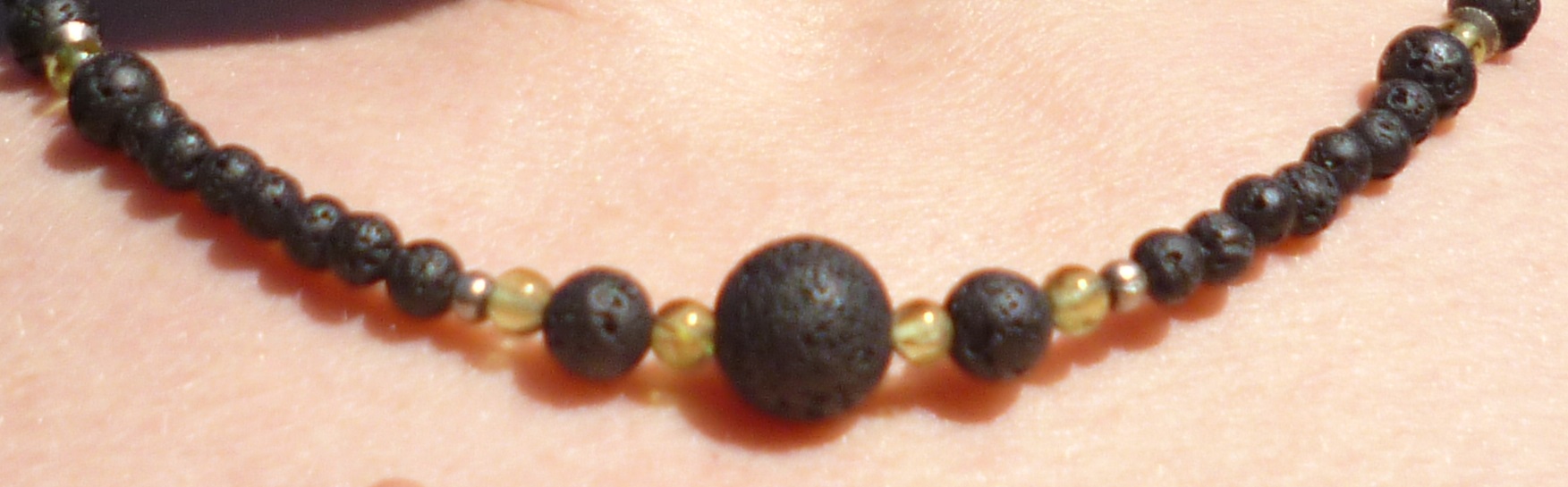
These lines were inspired by the pristinedeep-black beaches ofLanzarote,where you can find lava and, in some rare places, tiny shards of olivine.
The strange idea that God walks on earth in the evening to observe humans stems from the story of Adam and Eve, when they are still in paradise but have lost their purity of heart (Genesis 3,8).
zehn jahre nach dem blitzschlag vorm bildschirm und der wirklichgewordenen sonnenwende im büro mache ich schluß mit der nichtbeziehung.
die blauen briefe die taumelnden niegelesenen nieabgeschickten fliegen endlich in den reißwolf denn du hast durchweg ausdrücklich geschwiegen.
mondenhelle augen und kein lichtstrahl fiel auf mich wellenschlag der stimme und kein wörtchen fiel mir zu.
die aufgehäuften gedichte geschliffen und gleißend sind alle noch da berstend von bildern die sich auffächern vom ersten goldfisch bis zum letzten falken.
schweres gebräu gefiltert zum salböl und abgefüllt in die phiolen von zweimal zwei reimen oder vierzehn zeilen.
den drachenschwanz der letzten wortkette hänge ich in die wolken für die nachwelt.
Du bist die Hand, die mein Gebetbuch hält in aller Frühe, wenn die laute Welt noch schlummert wie ein müdgetobtes Kind und wir die Stimme ihrer Träume sind. Wir sind der Psalm, der aus der Erde steigt, wenn Nachtwind noch die Wiesenblumen neigt, das erste Wechsellied im Weizenfeld… Du bist die Hand, die mein Gebetbuch hält.
At dawn, the noisy and unruly world, just like a tired child, has not yet stirred. We are the voice of all its dreams: we stand, my hymnal lifted by your distant hand. We are the psalm arising from the earth while night wind is still bending blooming herbs. We are the chant across the ripening land… My hymnal lifted by your distant hand.
These lines describe the early-morning prayer of Christian monks and nuns: standing up and bowing, chanting and responding to each other… They also imagine an invisible connection between two of them — good friends perhaps, close relatives, or former lovers — who feel that they are praying together across the distance between them.
Is this moon new or young, a sliver or a crescent, silver or golden in the deep blue, the newly deep sky, is it striking or dazzling or mesmerising?
Is this a late spring, belated and all the more welcome, bursting with life, with green, bright green, saturated with rain and sunshine, saturated with colour and heat, heat unfamiliar and all the more welcome, or is it sudden summer?
Is this life at last, is this joy, is this joy of life, is it zest, is it just new life-force or is it happiness or elation or bliss?
Reality, as it laps up against the shores of your eyes and your ears and your nose, reality as it washes over the leas of your skin and seeps beneath, cannot be captured in words, not even in verse: reality, so dense it feels like a dream, is not a dream cloud nor a word cloud.
Although this poem would make a good one, with the message of sudden summer sounding out like birdcall, flooded with light and colour, steeped in joy, as if words were written from life and for life, as if words were part of life, of the wide earth and the deep sky and the reality beyond, of the ever-flowing life-force.
Word cloud of the poem Sudden Summer (colours edited but randomly allocated).
Happiness Beyond (Word Cloud)
Your life is a green reality, it reads in large green letters, and newly young; the sky is golden at last, it states in fine golden letters, and saturated with joy; eyes and ears are bursting with wide bright light, it adds in silvery white; and at the edge there is happiness beyond colour on deep-blue ground.
These are welcome words, sudden and possibly deep, a mesmerising message from slivers of verse in your ears, from the new dream poem, from the word cloud of Sudden summer: Your life is a green reality saturated with joy under the newly young moon.
One poem has a person with dark hair and a person with fair hair falling in love at first sight. In German, the words for ‘junction’ and ‘to cross’ come from the same root: ‘Kreuzung’ and ‘kreuzen’.
The other poem describes a beautiful beloved man (or, by changing one word, a woman) with greying hair. The stars write the lover’s delight onto the sky, and the beloved one’s soul shines like a star.
Raindrops on window, with flowers showing in each drop. Photograph by Kumiko Shimizu on Unsplash.
One Drop of Rain
If one still drop of rain contains a rose and if my eye encompasses your face, a secret crystal must exist that holds the sparkling galaxy in one round space.
You may wonder why I label philosophical musings “Religion” or why my poems on “Religion” do not refer more to a certain creed. Yet for me personally, there is no philosophy without religion. God is present everywhere, whether we feel it or not, and our life is a search for God, whether we know it or not.
As regards Christianity, my poetry is very much inspired by the Scriptures, the hymns, the liturgy, the imagery. I probably owe more to Martin Luther than to any other writer. All German speakers do. It also seems to me that in this secular society, I would most put people off by mentioning that I am a Catholic.