If Only It Could Happen

If Only It Could Happen

If only it could happen
More real than before
If only it could happen
Once more, oh, just once more

More than a memory
There never to return
More than a fantasy
There never to be born

If only it could happen
More real than before
If only it could happen
Once more, oh, just once more

More than an accident
From sadness or despair
More than an overspend
Of pity or of care

More than a fairground ride
Of wild delight, distress
More than a mounting tide
Of wandering tenderness

If only it could happen
More real than before
If only it could happen
Once more, oh, just once more

If only it could happen
And swallow up the past
If only it could happen
As lasting as it’s fast

If only it could happen
As lasting as it’s fast

More than a flower, gay,
Unfurling just to die
More than a night, a day,
A lonesome lullaby
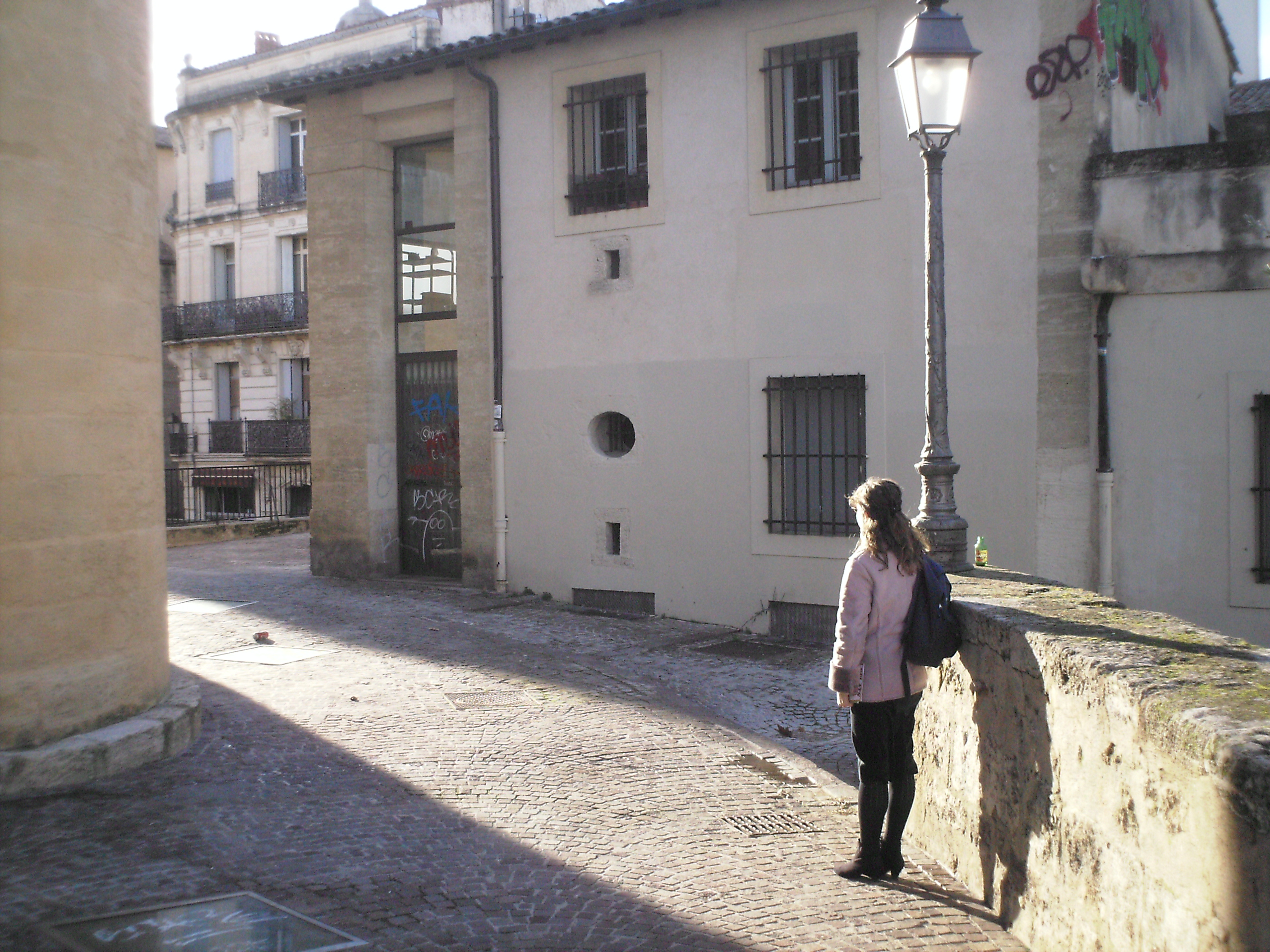
Woman in winter clothes waiting under lantern in sunlit lane.

If only it could happen
More happy than before
I think I’ll let it happen
Once more, oh, just once more

I think I’ll let it happen
Once more, oh, just once more

Christina Egan © 2006

Photograph: Montpellier, France, in midwinter. Christina Egan © 2010.
The Dance of the Sacks

The Dance of the Sacks

There’s the war tax and the peace tax
There’s the core tax and the fleece tax
There’s the fish tax and the spice tax
There’s the poll tax and the vice tax!

There’s the whisper of a tax-plan
There’s the whistle of the tax-man!

There’s the old tax and the new tax
There’s the wool tax and the wheat tax
There’s the old tax for the new sacks
And the new tax for the old sacks!

There’s the tax-man with his tablet
It’s a state-protected racket!

Christina Egan © 2011

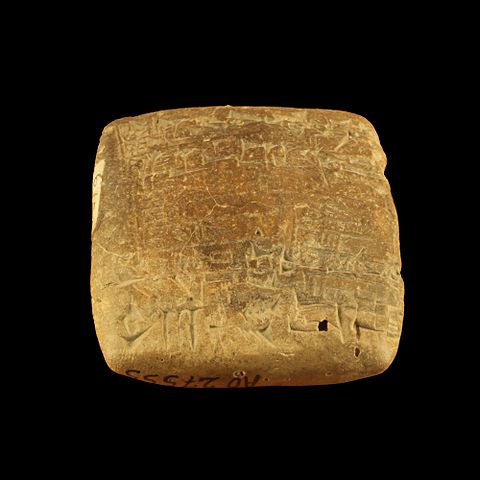
Small clay tablet with cuneiform text.

This comical song for a jig is taken from my stage play The Bricks of Ur  (© 2011) set around 2000 BC.

The tax collectors could wield either Sumerian clay tablets or 21st century electronic tablets!

I must have been inspired by a hilarious jig in one of the first seasons of Shakespeare’s Globe in London…

Receipt for 13 woolen garments, ca. 2038 BC. Photograph by Rama, Cc-by-sa-2.0-fr [CeCILL or CC BY-SA 2.0 fr] via Wikimedia Commons.

I Peel Potatoes Round and Round

I Peel Potatoes Round and Round

The pots and pans are stacked away
The fruit and flour packed away
The spoons and ladles tied away
And half my life is lied away

I peel potatoes round and round
And see the muddy peelings mount
I peel and chop and boil and feel
My lifetime passing with the peel

The dust and crumbs are sucked away
The sheets and covers tucked away
The mud and mildew brushed away
And half my life is washed away

I am a woman and a wife
And all of you deny my life
Cast speeches of equality
And stifling silence over me

The socks and shirts are stacked away
The boots and woollens packed away
The shears and shovels tied away
And half my life is lied away

I am a woman and a wife
And all of you deny my strife
Is this two thousand seventeen?
My shackles hurt me more unseen

Christina Egan © 2016

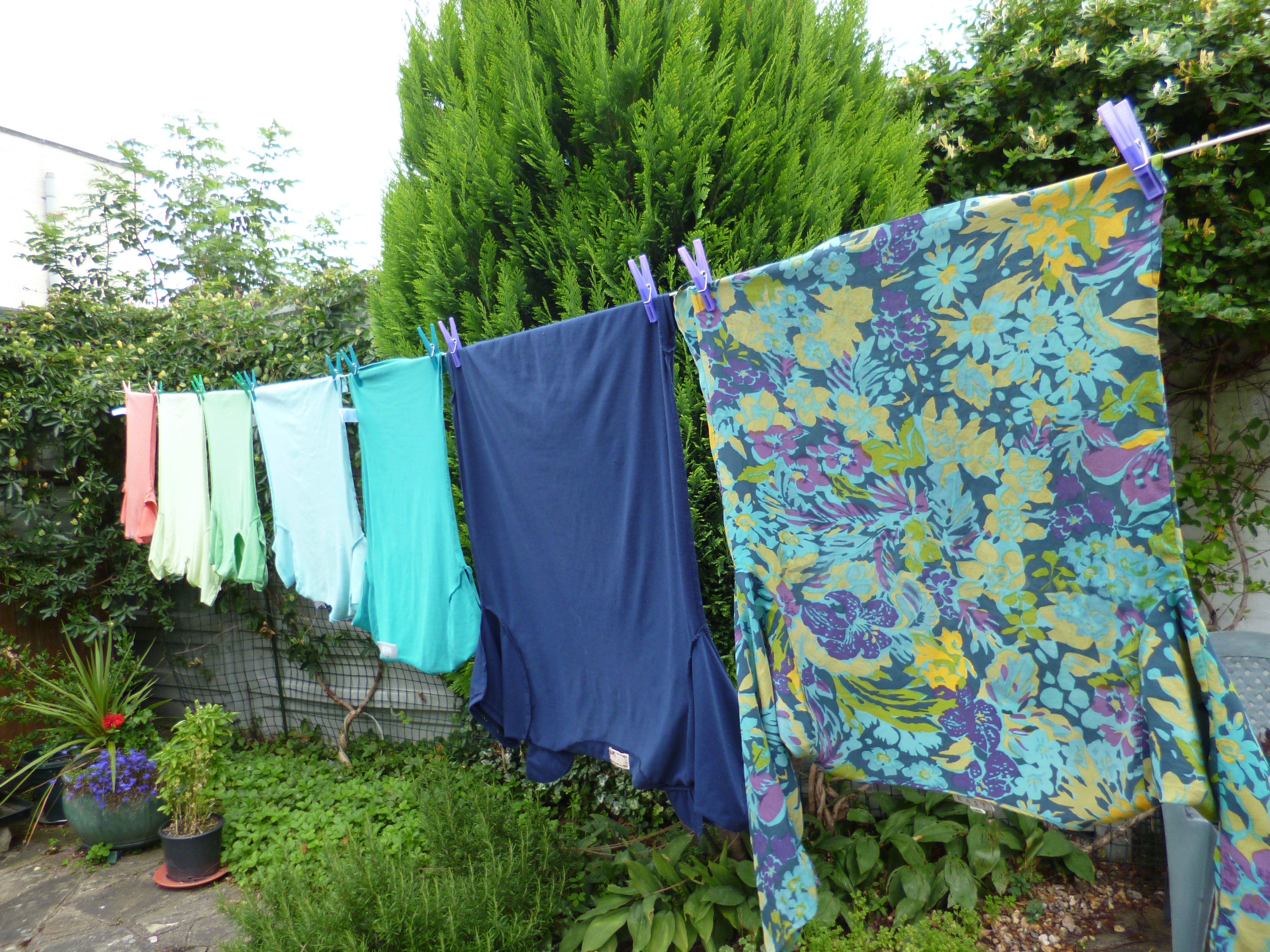
Line of washing outdoors, very colourful, above greenery and flower-pot.

Photograph: Christina Egan © 2013.

Pretended liberation of women = Double shifts for women = New servitude of women

Read more in the essay  The Tea Turned Cold in the Cup  at FEMINISM.


Ursprung

Ursprung

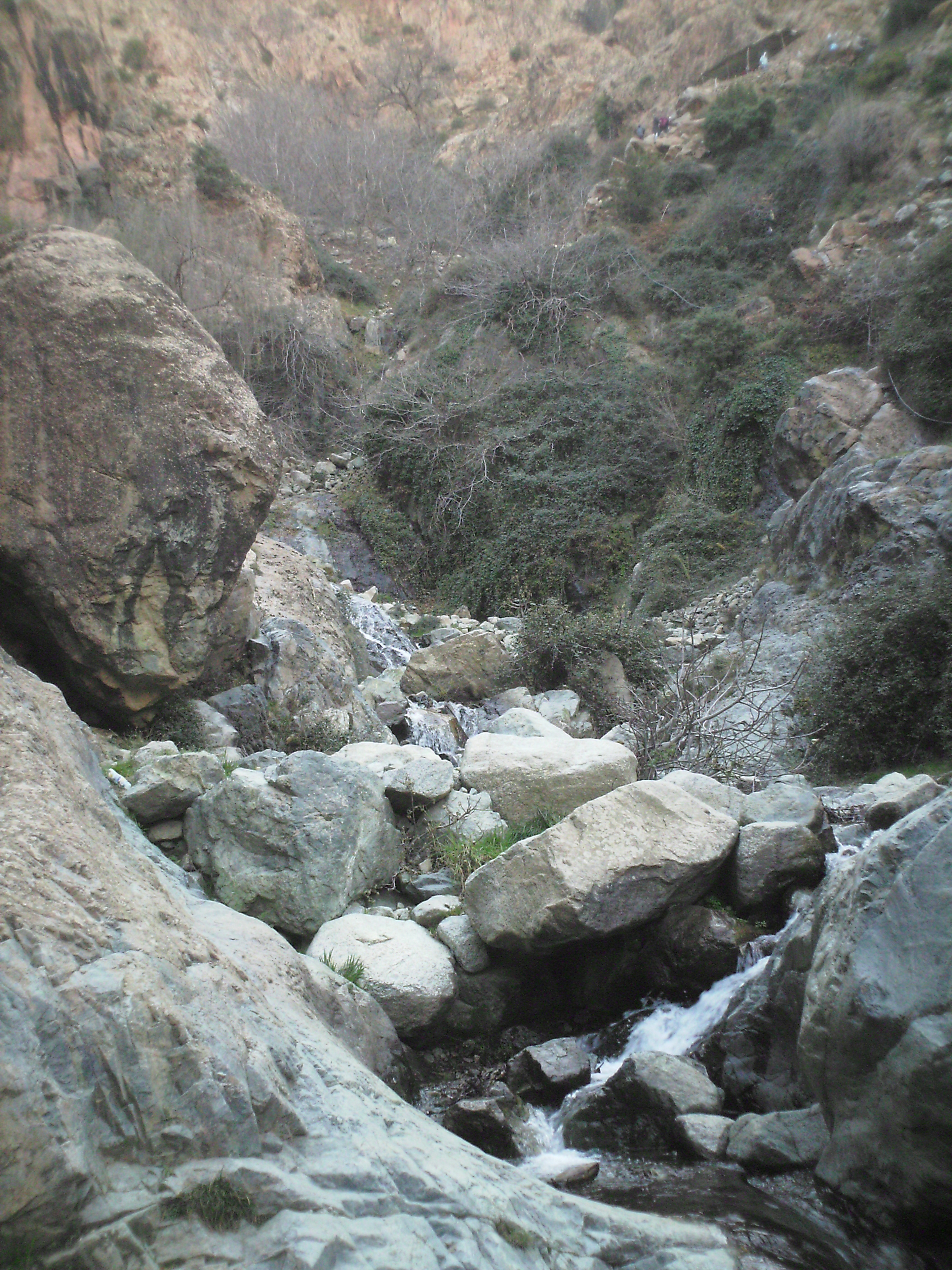
Narrow gorge with stream skipping around boulders and some vegetation on the rocks.Aus dem Felsen springt die Quelle:
So die Schöpfung aus dem Nichts.
Und sie strömet Well’ auf Welle
aufs Geheiß des Herrn des Lichts.

Und sie funkelt, und sie dunkelt,
und sie sprudelt fort und fort;
und sie murmelt, und sie rufet,
da geschaffen durch das Wort.

Und sie schäumet, und sie strebet,
spiegelt, springt empor zum Licht;
denn sie sucht den Herrn des Lebens
Angesicht zu Angesicht.

Christina Egan © 2016


This poem or hymn may work quite well in a translation software.

The text is based on the Jewish-Christian myth of creation: Out of nothingness (or chaos), God called everything into being (and order). Light was the first thing made, and it was all done through the word.

There is also a concept in Christian philosophy that God continues creating the world every moment; if he ever ceased, everything would tumble back into nothing. These ideas are really the opposite of nihilism.

Other thoughts from the Letters of the Apostles (at the end of the Christian part of the Bible) are that the whole of creation is striving and struggling towards God as if in labour; and that at the end of time, we shall emerge from darkness to see God ‘face to face’.

The title, ‘Origin’, means ‘first source’ in German; you can see the word ‘spring’ in it. Yet, I added the title in the end; the image and first lines stood clearly in my mind on waking up: the source springing from the rock, like the world out of nothingness, or life out of lifelessness.

A thought about a person stepping out from a building into the sunshine as if liberating himself or herself from a rockface can be found at Gelbes Licht, with a statue by Michelangelo that must have inspired it.

Photograph: Atlas Mountains, Morocco. Christina Egan © 2012.

My City Calls (Grey Roofs Grey Walls)

My City Calls

Grey roofs grey walls
Make up this place
A rough and kind
Familiar face

The spires chimneys
Market stalls
Suspended bridges
Station halls

Oh face of walls
So great so mild
My city calls
Come here my child

My city calls
With golden chime:
While winter falls
Stay here some time

The sky is full
Of rain and snow
Of miracles
To fall and grow

So many faces
In the street
Yet far away
The one I need

Far is my dear
So far away
But I am here
Just day to day

My city calls
Me with her charms
My heartbeat falls
into her arms

Christina Egan © 1995 / 2012


For a similar German poem, see Im Herzen von Köln. Like in Heimkehr nach Köln, the big city is seen as a mother. There are other poems or songs where I describe it as a person — man or woman, although I feel that a city is female. It is a personal relationship: my heart beats for the city, as I claim in Geflecht / Geflechte.

Die Störche entflohen dem Norden

Die Störche entflohen dem Norden

Die Störche entflohen dem Norden,
Und nie mehr ziehn sie zurück:
Mir ist mein Kindlein gestorben,
Und nie mehr find ich mein Glück.

Mein einziges Kind ist gestorben,
Und niemand hat es bemerkt –
Denn niemals sah es den Morgen,
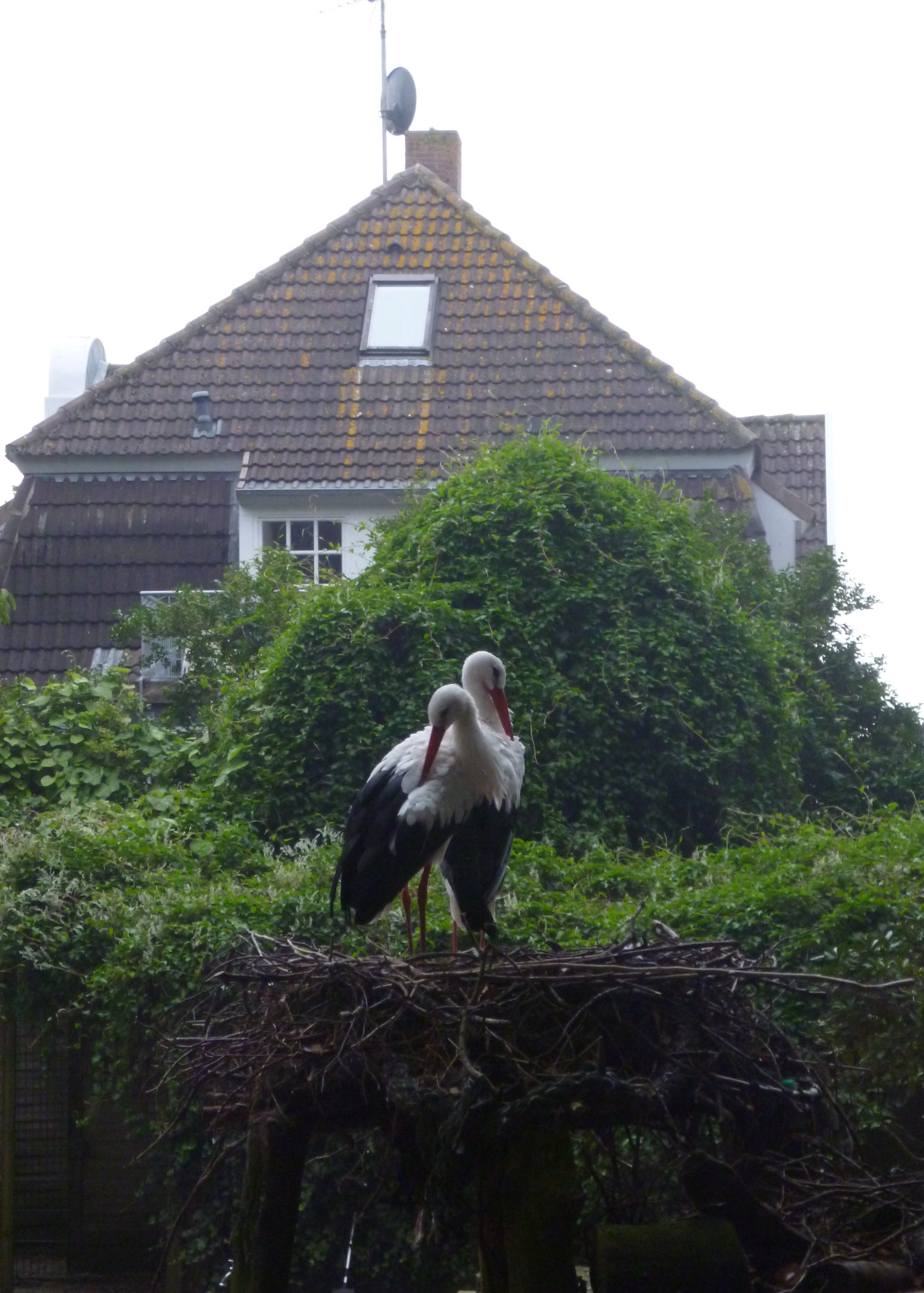
Und niemand hat mich gestärkt.Two storks in a nest, standing very close together, surmounted by a triangular tree and a steep roof, in the dusk.

Mein Lächeln muß ich mir borgen,
Wenn Frühjahr die Täler doch färbt:
Mir ist es, als wär ich gestorben,
Und niemand hätt’ mich beerbt.

Mir ist es, als wär’ ich im Norden,
Auf Nebelinseln, daheim:
Der Sommer hatt’ mich umworben
Und ließ mich dann achtlos allein.

Die Störche sind immer geborgen
In Kreisen von Sonne und Wind…
Doch ich erwache in Sorgen:
Mir lachte im Traume das Kind.

Christina Egan © 2013

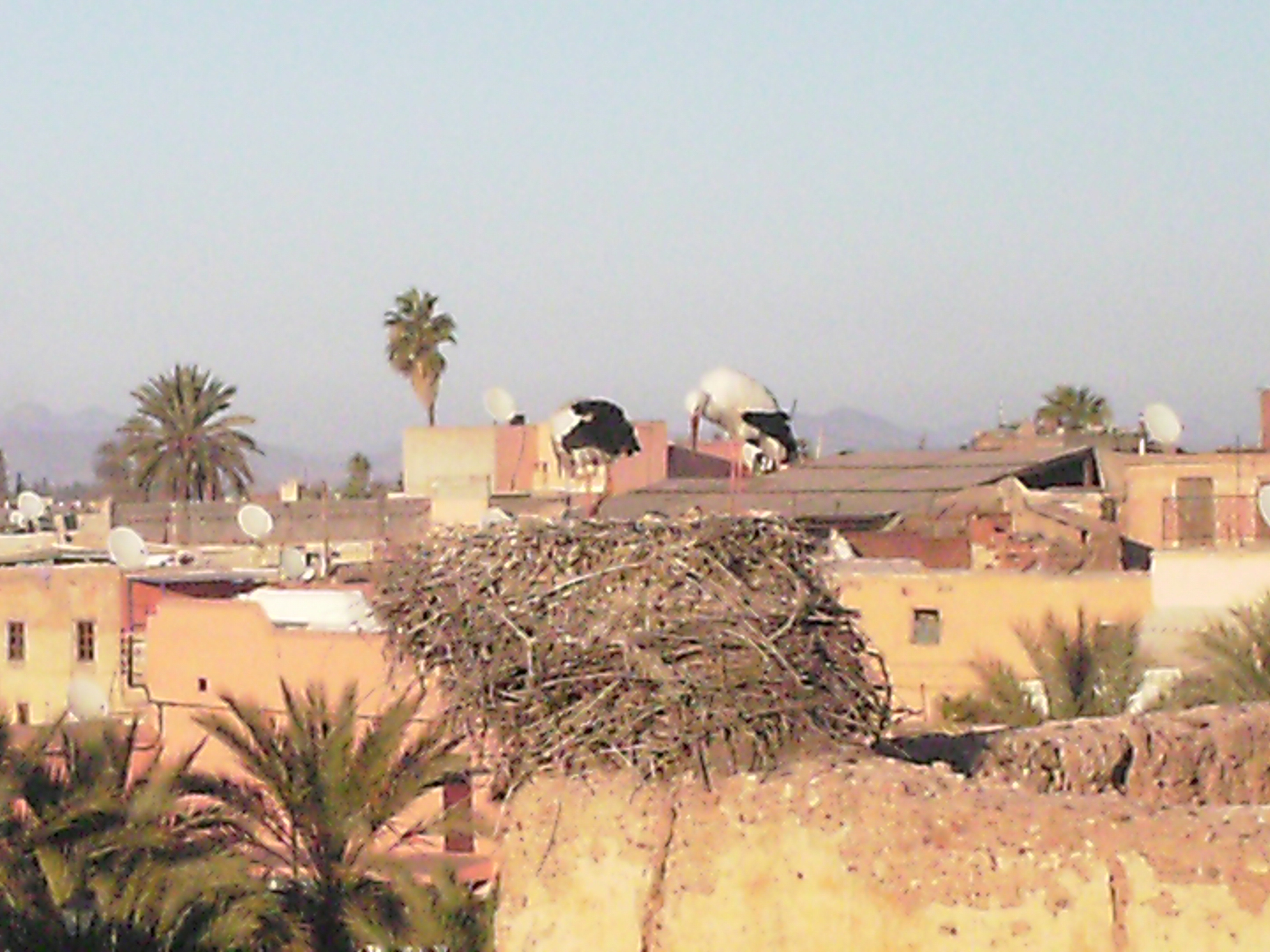
Nest with two storks in North African city with crumbling walls and palm trees.

This is the story of a woman who lost her only child before birth or at birth, or who never had one at all and will never have one.

This poem sounds like a folksong and could be set to music.It may also work well in a translation software.


Photographs: Wyk on Föhr, Germany / Marrakesh, Morocco. Christina Egan © 2014/2012.

There’s Door on Door

There’s Door on Door

There’s door on door of painted wood
with potted plants and polished brass,
there’s row on row of gabled roofs,
there’s brick and plaster, hedge and grass.

There’s floor on floor of balconies,
above the din, above the dust,
inclusive of commodities,
there’s stone and concrete, steel and glass.

There’s door on door, there’s floor on floor,
but not for me, but not for me –
there’s brick and brass, there’s steel and glass,
exclusive of humanity.

There’s door on door, there’s floor on floor,
but not for us, but not for us –
one has a sofa in a store,
one has an archway in the dust.

Christina Egan © 2015

Ich steh’ im Felde wie der Lindenbaum

Ich steh’ im Felde wie der Lindenbaum

Ich steh’ im Felde wie der Lindenbaum,
im Frühlingswind verloren und im Traum…

Ich schaue auf die blauen Höhn,
die kühn wie Vorzeitbauten stehn.
Ich lausche auf den Vogelsang,
in meinen Adern steigt ein Drang!
Ich schaue auf den Horizont,
von dem mir meine Hoffnung kommt.

Ich steh’ im Felde wie der Lindenbaum,
in Frühlingsnacht verloren und im Traum…

Ich schaue auf die Stadt im Tal
mit Erdensternen ohne Zahl.
In meinen Adern steigt der Saft,
ich streck’ mich mit versteckter Kraft!
Bevor noch süß die Linde blüht,
blüht früh und süß der Linde Lied.

Christina Egan © 2012

The mountain range on the horizon is the Rhön and the city in the valley is Fulda, Germany. There are more lines to this poem to make a song of it: part wistful and part hopeful, part heavy-hearted and part light-hearted!

The phrase ‘Town in the valley’ is echoed in the poem of the same name, Stadt im Tal.

In Marrakesch (Einst fiel ein Regenbogen)

In Marrakesch

Einst fiel ein Regenbogen auf die Wüste
zersplitterte in funkelnde Oasen
in Perlen Spiegel abertausend Tücher
in Brunnen Palmen abertausend Rosen

Zum Regenbogen wird der Horizont
zum schwarzen Drachenkamm das Hochgebirg
und über kühnen Türmen hängt der Mond
wenn Dunkelheit das Mauerrund umwirbt

Und immer Hupen Räder Rufen Reden
Laternen Tänzerinnen wie zum Fest
Dies ist die Stadt wo jede Nacht das Leben
ein Feuerwerk ist: Dies ist Marrakesch!

Christina Egan © 2012

There is a longer version of this poem, as lyrics for a love song, for once a happy one…

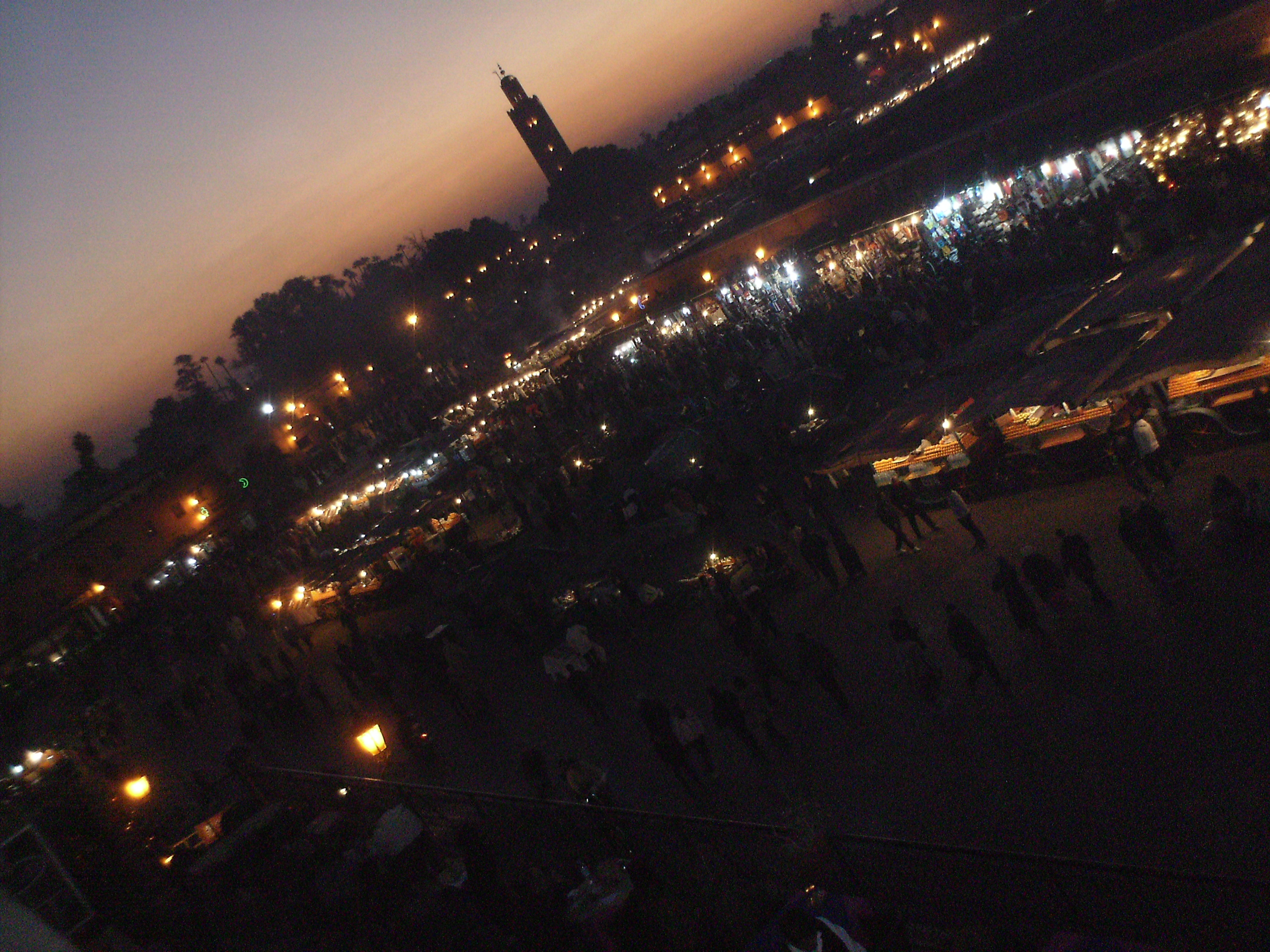
This text may work in a translation software. You can read an English poem about Marrakesh at Winter Sunrise in Morocco.Vast square by night, illuminated by lamps in market stalls, with the sunset along the horizon and a massive minaret showing. The Square of the Dead is incidentally the most lively place on the planet. You must visit it after dusk to get the full experience. Nothing prepares you for Marrakesh!

Photograph: Square of the Dead, Marrakesh, Morocco. Christina Egan © 2012

Am Rad der Weltgeschichte

Ich möcht am Rad der Weltgeschichte stehn

Ich möcht am Rad der Weltgeschichte stehn
Und eine Nacht beharrlich rückwärts drehn
Das Telefon zerfällt in deiner Hand
Der Flachbildschirm entgleitet deiner Wand
Das Internet verweht wie bunter Rauch
Die Rapmusik verebbt im Morgenhauch
Durchs Weltall stürzen Sonden zu uns her
Die schwarze Fahne rutscht vom Schießgewehr
Palmyra schüttelt sich aus Schutt und Sand
Manhattans Splitter fügen sich zum Band

Und wenn die Mauer aus dem Staube steigt
Dann halt ich an – und die Geschichte schweigt

Dann geh ich aus und such und finde dich
Und nichts und niemand hält und hindert mich

Der Rest darf weiterrasseln wie zuvor
Die Mauer stürzt es platzt das Wüstentor
Die rote Fahne sinkt die schwarze steigt
Und Pluto wird gefilmt und Mars erreicht
Das Internet wird um die Welt gespannt
Der Bildschirm schrumpft in deine hohle Hand
Doch mitten in des Lebens Wirbelsturm
Stehn du und ich wie jener Doppelturm

Zweitausendfünfzehn schrieb ich dir dies Lied
Denn ich bin müde und die Zeit entflieht

Christina Egan © 2015


Dense layers of rusty gearwheels.The narrator imagines that he or she can turn back the wheel of history.

Tiny hand-held telephones, huge television screens, and the whole internet dissolve; one after the other, the Arch of Palmyra, the Twin Towers, and the Berlin Wall rise from the debris.

Then the person stops history to find the beloved one this time round and live a new life together, while everything else rolls on as before: the monuments fall, the internet rises, till we arrive back in 2015.

These lines could be developed into a rock song. I imagine hard music which grows more intense until it stops when history stops!


Rusty gear wheels. Photograph by susannp4 (Susann Mielke).